
This post contains affiliate links. We may earn a small commission when you buy through our links — at no extra cost to you.
You’ve checked the weather and packed an umbrella, but stepping off the plane into a downpour, the ‘waterproof’ jacket you brought soaks through in twenty minutes. For travelers, a packable rain shell is essential, but the internet is full of budget jackets that claim waterproofing yet fail at the first real shower. The difference comes down to construction details most buyers skip over: fully taped seams, a true waterproof membrane, and — if you plan to walk any distance — pit zips that let heat escape.
This guide cuts through the marketing noise to answer the question every traveler faces: which rain jackets actually keep you dry when it matters, without turning into a portable sauna. Whether you’re a casual sightseer, a bike commuter, or an eco-conscious backpacker, you’ll find a pick that matches your travel style — and know which ‘waterproof’ bargains to skip.



Best for Travel, Commuting
Columbia Watertight II
Key Features
- Waterproofing & Seams: Omni-Tech membrane, fully sealed
- Breathability Features: Mesh lining, no pit zips
- Weight & Packed Size: 16 oz, packs into pocket
- Zipper & Seam Durability: Durable zippers
- Fit Consistency: Generous fit, runs large
- Price: Mid-Range
The Watertight II’s Omni-Tech membrane and fully seam-sealed construction keep rain out where many budget shells let moisture through. The jacket packs into its own hand pocket, making it a straightforward addition to any carry-on or daypack. Weighing 16 ounces, it offers solid coverage without weighing you down.
The nylon shell and polyester mesh lining hold up to regular use over multiple seasons. The four zippered pockets provide secure storage for essentials, and the hood adjusts enough to stay put in wind. Build quality here matches what you’d expect from a jacket at twice the price, though the lack of pit zips means you’ll want to unzip the front for airflow during active use.
This jacket suits travelers, commuters, and casual hikers who need dependable rain protection for walks, errands, and everyday outings. The roomy cut accommodates a mid-layer underneath, but those with a slimmer build should order one size down for a closer fit. If your routine involves sustained exertion – think jogging or steep climbs – the missing underarm vents will be noticeable, and a shell with pit zips would serve you better.
Pros
- Effective waterproofing from fully taped seams and Omni-Tech membrane.
- Self-packing design stows into its own pocket for no-fuss portability.
- Durable build that holds up to repeated wear over years.
- Strong value – delivers features often found in more expensive jackets.
Cons
- For a trim fit without heavy layering, the generous cut may feel oversized; ordering a size smaller resolves this.
- During active use like brisk walking or uphill sections, the lack of pit zips can make the interior feel clammy.
For travelers and everyday users who want a dependable rain shell that packs small and performs well in wet weather, the Watertight II offers a practical balance of cost and capability.
Best for Eco-Conscious Backpackers
Marmot Precip Eco
Key Features
- Waterproofing & Seams: NanoPro membrane, fully taped, PFC-free
- Breathability Features: Pit zips, breathable membrane
- Weight & Packed Size: 305 g, packs into pocket
- Zipper & Seam Durability: Durable zippers
- Fit Consistency: Roomy, large hood
- Price: Premium
The Marmot Precip Eco stands apart from the top pick by using 100% recycled nylon and adding pit zips for active ventilation — a combination rarely seen at this weight. The NanoPro membrane and fully taped seams provide solid waterproofing for most conditions, while the jacket packs into its own pocket for travel.
This jacket is a strong match for eco-conscious hikers and backpackers who want breathable waterproofing and are willing to pay a bit more for recycled materials. The pit zips make a real difference when wearing a heavy pack on uphill sections. However, the hood is roomy even when cinched — best suited for helmet use or wearing a baseball cap underneath. In extended heavy rain, the membrane can eventually wet through, so treat it as a dependable rain shell for typical weather rather than a storm-proof barrier.
Pros
- 100% recycled nylon shell with PFC-free DWR lowers environmental impact without sacrificing weather protection.
- Pit zips dump heat during active use — a rare ventilation feature on a jacket this light.
- At 305g and packs into its own pocket, it stows easily in a daypack or carry-on.
Cons
- The hood remains large even after adjustment — more suitable for wearing over a helmet or hat than for a snug fit.
- After hours of steady rain, the waterproof membrane may eventually saturate — adequate for passing showers, less so for sustained storms.
For eco-conscious travelers who prioritize sustainable materials and active ventilation, the Marmot Precip Eco delivers a well-rounded rain jacket that outperforms budget shells — just keep expectations in check for prolonged downpours and hood fit.
Best for Urban & Trail Style
Helly Hansen Seven J
Key Features
- Waterproofing & Seams: Waterproof shell, taped seams
- Breathability Features: Mesh lining, no pit zips
- Weight & Packed Size: 2 lbs, packable
- Zipper & Seam Durability: Durable zippers
- Fit Consistency: Athletic slim, runs small
- Price: Premium
Helly Hansen’s Seven J jacket pairs exceptional Scandinavian build quality with a sleek, athletic cut that stands apart from bulkier rain coats. Where the lined, warmer option in this set adds insulation, the Seven J remains a pure, uninsulated shell — ideal for active use in wet conditions when you want to control warmth with midlayers. The fabric feels sturdy and well-tuned for wind protection without weighing you down.
It’s designed for outdoor enthusiasts heading into rain on hiking trails, sailboats, or city streets who appreciate a refined european fit. The athletic cut runs small, so those aiming to layer a thick fleece underneath will need to order a size up. If a trim, modern cut matches your build and style, this jacket fits like it was tailored.
Pros
- Premium materials and precise construction that withstands hard use.
- Waterproof shell that sheds rain and snow without soaking through.
- Lightweight build with effective wind-blocking for blustery conditions.
Cons
- Without underarm vents, the jacket can trap heat during strenuous uphill hikes.
This Helly Hansen shell pairs Scandinavian style with waterproof performance that transitions seamlessly from trail to pub, a smart pick for those who appreciate a fitted, modern cut that doesn’t compromise on protection.
Best for Layer-Friendly Travel
Eddie Bauer Rainfoil
Key Features
- Waterproofing & Seams: Waterproof shell, taped seams
- Breathability Features: Mesh lining, no pit zips
- Weight & Packed Size: Lightweight, packs into pocket
- Zipper & Seam Durability: Sturdy zippers
- Fit Consistency: Generous cut, long sleeves
- Price: Mid-Range
Where the top pick focuses on self-stowing packability, this Eddie Bauer jacket takes a different approach — it’s cut generously for layering over sweaters or fleeces, making it a better companion for cool, wet days. Waterproofing is on par, with fully taped seams and a windproof membrane that sheds sustained rain. At a mid-range price, it undercuts many technical shells while delivering comparable weather protection.
Travelers who want room to move and the option to layer will appreciate the relaxed fit. Sleeves run long, so shorter builds may need to roll cuffs. It’s not the lightest option for ultralight backpacking, but for everyday use and urban travel, the extra room and durable construction make it a smart value.
Pros
- Waterproof and windproof membrane keeps you dry in sustained rain
- Generous cut leaves room for layering without feeling bulky
- Materials and stitching hold up well under regular use
Cons
- Sleeves may run long for shorter builds — checking the size chart is wise if you’re under average height
If layering room and dependable waterproofing matter more than shaving ounces, this jacket is a practical, well-built choice for cool, wet days.
Best for Budget Hikers
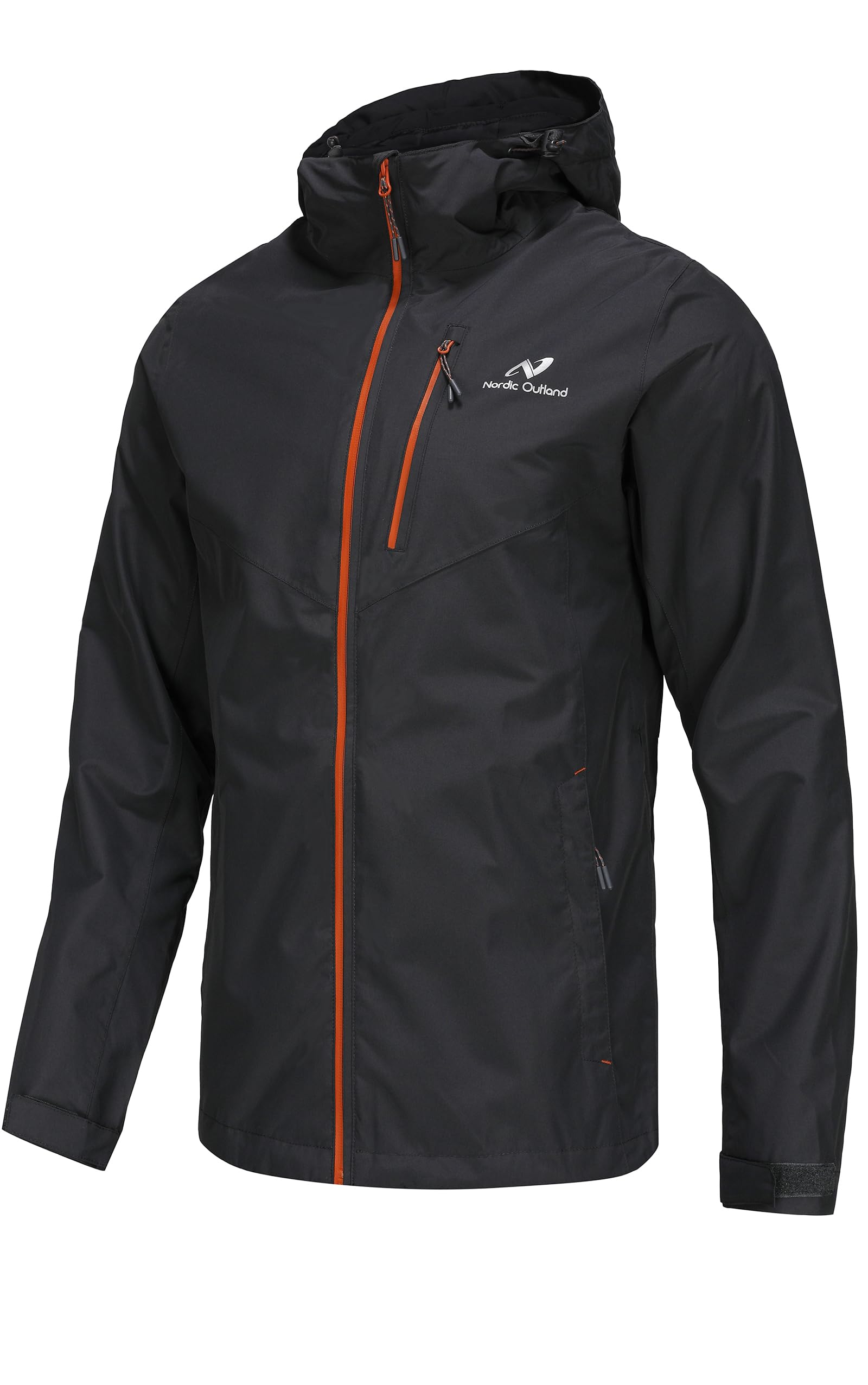
Nordic Outland Rain Shell
Key Features
- Waterproofing & Seams: Taped seams, waterproof zippers
- Breathability Features: Mesh-lined, pit zips
- Weight & Packed Size: 1.1 lbs, stuffs into pocket
- Zipper & Seam Durability: Quality zippers
- Fit Consistency: Standard fit
- Price: Mid-Range
While other rain jackets with pit zips come from premium outdoor brands at double the price, the Nordic Outland Rain Shell packs sealed seams, waterproof zippers, and full underarm ventilation into a mid-range package. It stuffs into its own chest pocket and weighs barely over a pound, making it easy to stow when the sun returns. The waterproofing holds up in sustained rain, keeping you dry without trapping heat thanks to those pit zips.
This jacket suits hikers and travelers who prioritize active ventilation and don’t want to pay Gore-Tex money. The left-side zipper (European orientation) takes a few outings to feel natural — a fair tradeoff if you’re budget-conscious. Long-term durability under heavy, daily use is less documented; the inner lining may show wear after repeated rough treatment. For occasional to moderate outdoor use, the feature-to-price ratio is hard to ignore.
Pros
- Waterproof construction with taped seams and sealed zippers keeps you dry in heavy rain.
- Underarm pit zips dump heat fast during uphill hikes or active travel.
- Surprisingly good feature set for the price, including self-stowing into a chest pocket.
Cons
- Left-side zipper orientation (European style) may feel awkward to those accustomed to right-side zippers.
- Inner lining may peel over time with frequent heavy use.
For budget-minded hikers who need pit zips and taped seams, this jacket delivers solid ventilation and rain protection — just allow a few wears to acclimate to the left-side zipper.
Best for Cyclists & Runners
baleaf Active Rain Jacket
Key Features
- Waterproofing & Seams: Waterproof coating, sealed seams
- Breathability Features: No pit zips, limited breathability
- Weight & Packed Size: Lightweight, packable
- Zipper & Seam Durability: Standard zippers
- Fit Consistency: Athletic cut, runs small
- Price: Mid-Range
The baleaf carves out a specific niche: high reflectivity and a cycling-friendly silhouette. While some jackets in this price band chase pit zips for ventilation, this one leans into rear visibility and a longer back that stays put in a riding tuck. Zippered pockets, including a rear cycling pocket, keep essentials accessible without flapping.
Runners and cyclists who want a packable, wind-resistant shell for wet commutes will appreciate the low weight and athletic cut. Breathability is the main tradeoff — during sustained high-output efforts, moisture can build up inside. Sizing also runs noticeably small, so order up if you plan to layer.
Pros
- Reflective accents, dropped rear hem, and a dedicated cycling pocket suit bike commuters perfectly.
- Effective waterproofing and solid wind resistance keep you dry in steady rain.
- Packs into its own pocket for easy stashing in a pannier or running belt.
Cons
- Athletic cut runs small; sizing up is often necessary for a comfortable fit or layering.
- Breathability can be insufficient during high-output exercise, leading to internal condensation.
A purposeful choice for cyclists and runners who prioritize visibility and a bike-specific cut over all-day breathability — just size up.
Best for Emergency Shell
Columbia Glennaker Lake II

Key Features
- Waterproofing & Seams: Water-resistant coating, not taped
- Breathability Features: No mesh, no pit zips
- Weight & Packed Size: Ultralight, packs into pocket
- Zipper & Seam Durability: Standard zippers
- Fit Consistency: Runs large, boxy
- Price: Budget
The Glennaker Lake II folds into a tiny bundle and adds almost no weight to a daypack — a compelling advantage for travel or festivals. But its thin nylon construction and coating-based water resistance give way under steady rain. It’s a windbreaker with light rain protection, not a jacket that keeps you dry through a downpour. Casual users in warm, drizzly climates will find it a handy layer; anyone facing real rain should look at the fully taped top pick instead.
Pros
- Folds into its own pocket, shrinking to a highly packable size.
- Weighs very little — easy to stash as a just-in-case layer.
Cons
- Water resistance relies on a coating that can fail during sustained rain, leaving you damp.
- Boxy, oversized cut may look unflattering; sizing down is often needed for a trimmer fit.
The Glennaker Lake II makes sense as a just-in-case layer for warm climates with brief sprinkles, where saving space matters more than staying dry in a storm.
Best for Budget Emergency
33,000ft Packable Shell

Key Features
- Waterproofing & Seams: Water-resistant coating, not sealed
- Breathability Features: No pit zips, thin
- Weight & Packed Size: 10.86 oz, stuff sack
- Zipper & Seam Durability: Standard zippers
- Fit Consistency: Standard fit
- Price: Budget
The jacket’s standout asset is its packability — it compresses into its own stuff sack and weighs around 10.9 ounces, vanishing into a daypack or carry-on. Wind and water resistance hold up fine for typical travel drizzles and light rain. Seams can eventually come apart under regular use, and prolonged downpours cause wetting through, so it’s best treated as an emergency layer for occasional showers rather than a daily rain shell.
Pros
- Lightweight and extremely packable into its own stuff sack — disappears into a daypack.
- Holds up well against wind and light rain in typical travel showers.
Cons
- Water resistance can be overcome in prolonged heavy rain, causing seepage.
- Seams may eventually tear or come apart with repeated wear.
A smart buy for travelers packing a backup shell for light rain, but not a substitute for a full waterproof jacket in consistently wet climates.
Best for Stylish Casual
North Face Antora

Key Features
- Waterproofing & Seams: Waterproof shell
- Breathability Features: Mesh lining
- Weight & Packed Size: Lightweight, packable
- Zipper & Seam Durability: Durable zippers
- Fit Consistency: Long sleeves, standard fit
- Price: Premium
The Antora delivers effective waterproofing and wind protection that keeps you dry even in sustained downpours. The product page is light on hard specs — no weight, denier, or membrane specifics — so direct side-by-side comparison with the top pick isn’t straightforward. Sleeves also run long, which may require an exchange if you lack long arms. For casual wearers who trust the North Face badge and simply want a dependable shell for travel or daily use, those gaps fade into the background.
Pros
- Excellent waterproofness — keeps you dry even in heavy rain
- Lightweight construction layers easily over a sweater or fleece
Cons
- Sleeves run long, which can force a size exchange for shorter arms
- Missing technical details like weight and denier hinder objective comparison
If brand reputation and a proven waterproof shell matter more than spec-sheet details, the Antora delivers — but anyone comparing fabrics and weights will find better transparency elsewhere.
Best for Cool Weather Commute
Helly Hansen Dubliner

Key Features
- Waterproofing & Seams: Waterproof shell, lined
- Breathability Features: Breathable, lined
- Weight & Packed Size: Lightweight, lined
- Zipper & Seam Durability: Durable zippers
- Fit Consistency: Runs very small
- Price: Premium
Lightly lined for cool weather, the Helly Hansen Dubliner provides waterproof and windproof protection without the bulk of an insulated coat. It’s warmer than a bare shell, well-suited for windy, damp shoulder-season days. Sizing can be so snug that buyers may need to order one or two sizes larger than their usual — making it a risky purchase without trying on first.
Pros
- Waterproof and windproof performance keeps you dry in harsh conditions.
- Surprisingly warm for a lightweight shell — ideal for breezy, cool days.
Cons
- The cut can run so small that a proper fit may require ordering one or even two sizes larger than your usual size.
If you can try this on in-store or measure precisely, it’s a dependable cool-weather rain coat. For blind online orders, look elsewhere.
How to Choose
A travel rain jacket lives or dies by the integrity of its seams and the quality of its waterproof membrane — not just the ‘waterproof’ label.
Waterproofing & Seam Sealing
Fully taped seams and a genuine waterproof membrane (like Omni-Tech, NanoPro, or Gore-Tex) prevent water from sneaking through stitch holes and fabric under pressure.
Cheaper jackets rely on a water-repellent coating (DWR) that beads water at first but eventually wets out, especially where backpack straps press. For any trip where you’ll face more than a five-minute drizzle, look for ‘seam-sealed’ in the spec sheet.
Breathability Features
Even breathable rain jackets turn clammy when you’re hiking or speed-walking through an airport terminal unless they have underarm pit zips.
Mesh linings help with airflow but can’t match the instant heat dump of a zippered vent. If your travels involve any exertion — or you run warm — prioritize a jacket with pit zips, or accept that you’ll unzip the front when the rain stops.
Weight & Packed Size
A packable jacket that stows into its own pocket saves precious carry-on space and doubles as a travel pillow.
But the lightest shells often use thinner fabrics that compromise wind resistance and long-term durability. For everyday travel, a jacket in the 10–16 oz range offers the best balance; anything under 8 oz should be reserved for emergency-only use.
Zipper & Seam Durability
Zipper failures are the most common complaint on budget rain jackets. Look for at least YKK or branded zippers, and check that stress points like armpits and pocket openings are reinforced with bar tacks or double stitching. A jacket that rips at the shoulder seam on day three of a trip isn’t a bargain — it’s a liability.
Fit Consistency
Travel rain jackets are deliberately cut roomy to accommodate layers; if you wear a size medium t-shirt, a medium jacket may still fit over a fleece. However, European brands like Helly Hansen run a full size smaller. Always consult the brand’s size chart and read fit reviews — ordering your usual size without checking could leave you with a jacket that’s either a tent or a straightjacket.
FAQ
Why does my waterproof jacket wet through in heavy rain after only a few uses?
Most budget jackets rely on a durable water repellent (DWR) coating that wears off quickly, especially where backpack straps rub. Without a membrane and taped seams, water pressure forces moisture through the fabric. To stay dry, choose a jacket with a true waterproof/breathable membrane and fully sealed seams.
Do I need pit zips in a rain jacket for travel?
If you plan to walk more than a few blocks, hike, or wear a daypack, pit zips are a game-changer for releasing heat while keeping rain out. For strictly urban use with minimal exertion, a mesh-lined jacket without pit zips can work, but you’ll still notice a clammy buildup in humid conditions. In short, they’re not mandatory, but they dramatically improve comfort for active travel.
What is the most packable waterproof jacket for carry-on only travel?
The Columbia Watertight II and Marmot Precip Eco both pack into their own pockets and weigh under a pound, making them perfect for one-bag travel. The Watertight II is the lighter and more compact of the two, but the Precip Eco adds pit zips. For absolute minimal weight, the 33,000ft shell is even smaller, though its waterproofing is less reliable.
Can I use a lightweight rain jacket as a windbreaker on cool days?
Absolutely — most waterproof jackets also block wind effectively. However, an unlined shell will need a baselayer for warmth; some jackets like the Helly Hansen Dubliner have a light lining for chilly weather. If wind is your primary concern, a dedicated windbreaker might be more breathable, but a rain jacket doubles as excellent wind protection.