
This post contains affiliate links. We may earn a small commission when you buy through our links — at no extra cost to you.
Finding a rain jacket that actually keeps you dry in a downpour often means sorting through conflicting claims. Many budget options under $30 market themselves as ‘waterproof’ but start soaking through after a few uses or fail at the zipper. The frustration is real, but the solution is simpler than you think.
The truth is that reliable rain protection doesn’t require a premium Gore-Tex price tag. Jackets in the $55–$70 range — from brands like Columbia, Marmot, and Baleaf — deliver taped seams, durable water repellent (DWR) coatings, and packability that holds up over time. That’s the sweet spot where performance meets value.
Whether you’re a commuter dodging showers, a hiker needing breathable protection, or a traveler packing light, this guide focuses on the jackets that balance price and real-world performance. You don’t need to overpay — just choose the right tool for your specific use.


Best for Daily Commuters
Columbia Watertight II
Key Features
- Waterproof Membrane: Omni-Tech
- Hood Design: Adjustable brimmed
- Price: $$
With over three decades of Columbia’s Omni-Tech membrane and taped seams, the Watertight II sheds moderate rain without fuss. At 250 grams, it stows into its own hand pocket – a natural fit for day packs and carry-on luggage. The shell material resists abrasion through seasons of use, holding up to zipper pulls and pack straps better than many jackets in this price range.
The cut runs slightly long in the sleeves and body for some body types, so checking Columbia’s size chart before ordering is worth a minute. There are no pit zips; during sustained exertion like a steep climb or jog, the interior will warm up. For the daily commute, errands in drizzle, or standing on a ferry deck, the Watertight II stays dry and comfortable.
Pros
- Keeps you dry in light to moderate rain with fully taped seams.
- Stows into its own pocket – easy to toss in a bag for unexpected weather.
- Build quality carries through years of regular use without delamination.
Cons
- Sleeves and torso may fit long for shorter frames; worth checking size chart.
- No pit zips – gets stuffy during high-output activities like running or steep hiking.
A straightforward, go-to rain shell for anyone who needs waterproofing without bulk. It earns its place by doing the basics well at a reasonable cost.
Best for Serious Hikers
Marmot Precip Eco
Key Features
- Waterproof Membrane: NanoPro
- Hood Design: Adjustable stowable
- Price: $$$
The Marmot Precip Eco stands out for its breathability—pit zips and a NanoPro membrane allow airflow that other shells in this price tier lack. This makes it a strong choice for hikers and backpackers who prioritize sweat management over absolute weight savings. The hood is roomy enough for a helmet, but can feel oversized without one; the DWR finish will need periodic renewal to keep rain beading.
Pros
- Pit zips provide controlled ventilation on steep climbs.
- Packs into its own pocket for easy backpack storage.
- Made from 100% recycled nylon without compromising waterproofing.
Cons
- Hood may feel oversized for those not wearing a helmet.
- Water repellency can fade after extended use; DWR re-treatment may be needed.
For hikers who run warm and want a lighter environmental footprint, the Precip Eco delivers breathability and packability that the top pick doesn’t offer.
Best for Runners Cyclists
baleaf Rain Jacket
The baleaf Rain Jacket is a lightweight, packable shell designed for movement: the extended back hem stays put when bent over a bike, and the reflective strips improve low-light visibility. It handles moderate rain without soaking through, making it a sensible budget option for those who need a visible, active layer. However, sizing runs small—plan to order one size up—and limited breathability means sweat buildup is likely during high-exertion efforts. This tradeoff works for short commutes or cool-weather runs where staying dry from rain matters more than staying dry from perspiration.
Pros
- Lightweight and packs into a small bag for storage on the go.
- Reflective strips enhance visibility for early morning or evening activity.
- Water resistance holds up in moderate rain, suitable for daily use.
Cons
- Sizing runs small; ordering one size up is recommended if layering.
- Limited airflow may cause sweat buildup during intense exercise – less an issue in cooler conditions or shorter efforts.
If your primary need is a visible, packable rain jacket for running or cycling on a budget, the baleaf delivers—just account for the sizing and accept that you’ll manage sweat rather than avoid it.
Best for Trade Workers
Carhartt Rain Defender
Carhartt’s Rain Defender delivers the brand’s signature ruggedness in a lightweight jacket that handles cool-weather job sites and casual daily wear without wearing out. The relaxed fit allows layering over a hoodie or work shirt, and the Rain Defender finish sheds light to moderate showers. Where it differs from the top pick is intent: this is a work-first shell, not an active outdoor piece. The hood barely clears a baseball cap, and the fabric lacks ventilation for elevated heart rates, making it a poor match for hikers or cyclists. Best for tradespeople or anyone who wants a no-nonsense jacket that can take scrapes and still look decent off the clock.
Pros
- Carhartt build quality that survives job site abuse and repeated wear.
- Relaxed fit works over layers without feeling bulky.
- Lightweight enough for cool weather but doesn’t overheat in mild conditions.
Cons
- Hood is small – may not cover a baseball cap or hard hat adequately.
- Water resistance handles light rain but can wet out in sustained downpours.
If your priority is durability on a work site or commuting in light weather, this jacket delivers. For active outdoor use, look to the top pick.
Best for Hikers Commuters
TNF Antora
Key Features
- Waterproof Membrane: DryVent
- Hood Design: Adjustable stowable
- Price: $$$
The Antora’s DryVent membrane handles sustained downpours without wetting out, and the trim cut layers well under a pack or shell. It’s lightweight and packs into its own pocket for travel. Sleeves run long—this suits movement and layering but can be excessive for shorter arms. As a pure shell, it provides no warmth, so a midlayer is required. This jacket fits hikers and commuters in wet climates who want a packable, trim-fit waterproof from a trusted brand, but accept the higher cost for a feature set that omits insulation and pit zips.
Pros
- Effective waterproofing keeps you dry in sustained heavy rain.
- Trim fit accommodates a midlayer without feeling bulky.
- Lightweight and packs into its own pocket for easy travel.
Cons
- Sleeve length can be excessive for users with shorter arms.
- Pure shell with no insulation; requires layering for warmth.
A capable rain shell for those who prioritize waterproofing and a trim fit, but the premium price and lack of insulation mean it best with a midlayer added.
Best for Sailing Fishing
HH Seven J
Key Features
- Waterproof Membrane: Helly Tech
- Hood Design: Adjustable stowable
- Price: $$
The Seven J brings Helly Hansen’s marine-grade waterproofing to a trim, packable shell that moves with you. Its Helly Tech membrane and taped seams shed rain and snow without the bulk of a heavy-duty rain suit. The tradeoff for this active fit: the jacket runs small, so ordering up one size is necessary for any layering. And while the zipper works fine initially, occasional reports of stiff operation or wear after extended use suggest it’s not built for endless abuse. This jacket suits sailors, fishermen, and hikers who want dependable wet-weather protection without feeling wrapped in plastic – just budget a size larger and handle the zipper with care.
Pros
- Keeps you dry in steady rain and snow with Helly Tech waterproofing.
- Light enough to pack for day trips and stow in a bag when not needed.
Cons
- Sizing runs small; a size up is needed for layering or a relaxed fit.
- Zipper can become stiff or fail after moderate use in some cases.
Right for active outdoor work in wet conditions where a slim, mobile shell matters – just go a size up.
Best for Casual Daily Wear
Columbia Glennaker

Key Features
- Waterproof Membrane: Hydroplus
- Hood Design: Stow-away drawcord
- Price: $$
The Columbia Glennaker looks sharp and packs into its own chest pocket, making it an easy addition to a travel bag or daily commute. The Hydroplus nylon shell sheds light drizzle without adding bulk. But in heavy rain or steady downpours, water can soak through over time, and the hood lacks a cinch to stay put in wind. This jacket serves best as a backup layer for occasional light rain rather than a primary rain shell for hiking or cycling in wet weather.
Pros
- Lightweight and comfortable for everyday wear.
- Great value – affordable yet functional.
Cons
- Water resistance may give out during prolonged heavy rain.
A budget-friendly option that works for light drizzle and casual errands, but not the jacket to rely on in a downpour.
Best for Travel Backup
33,000ft Rain Jacket

This jacket shines for its weight and packability – ideal for tossing in a carry-on for unexpected showers. Wind protection is solid. However, water resistance diminishes after a few outings, and seam durability may be an issue if used regularly. It’s best as an occasional backup, not a primary rain jacket.
Pros
- Extremely lightweight and packs into a small pouch – perfect for travel.
- Solid wind protection for a budget shell.
Cons
- Seam tears have been reported after several uses – best suited as an emergency backup.
Ideal for travelers or golfers needing a lightweight shell for light rain, but not for daily commuting or extended wet conditions.
Best for Casual Hikers
OTU Rain Jacket

This budget jacket provides a comfortable fit and breathable fabric for light hiking or daily commutes, with useful extras like an inner pocket. In sustained heavy rain, however, the water resistance can let moisture through—making it a better match for light showers than downpours.
Pros
- Lightweight and breathable for active use
- Great value for the price
Cons
- Hood design is oversized and difficult to adjust in wind
If your outdoor plans involve only occasional light rain and you’re watching your budget, this jacket works. For heavier weather, consider a more waterproof option.
Best for Style Commuters
Tommy Hilfiger Rain Jacket

The Tommy Hilfiger jacket delivers sharp, casual style that works for commuting or smart-casual wear. Its lightweight build makes it comfortable to wear in light drizzle, but the water resistance stops at that — heavier rain can soak through. Zipper durability has been inconsistent, with some units developing issues after limited use. This jacket fits best when fashion matters more than outdoor performance.
Pros
- Polished appearance for casual and smart-casual outfits.
- Lightweight and comfortable for everyday wear.
Cons
- Zipper may become problematic after a few weeks of use.
Only consider this if your priority is fashion over function and you’ll only face light rain during daily commutes.
Best for Golfers
Outdoor Ventures Rain Shell

This jacket is light enough to stow in a daypack for unexpected showers, but its water resistance handles light rain only – it’s not built for sustained downpours. Sizing runs small, so ordering up is necessary if you plan to layer underneath. Ideal for short walks or as an emergency shell for travelers.
Pros
- Weighs almost nothing and packs into its own bag for easy storage.
- Budget-friendly price for occasional use without a big commitment.
Cons
- Water resistance is limited to light rain; may soak through in heavy showers.
Good for tossing in a bag for unexpected drizzle, but not for planned rain exposure or wet climates.
Best for Cyclists Runners
APEXUP Rain Jacket
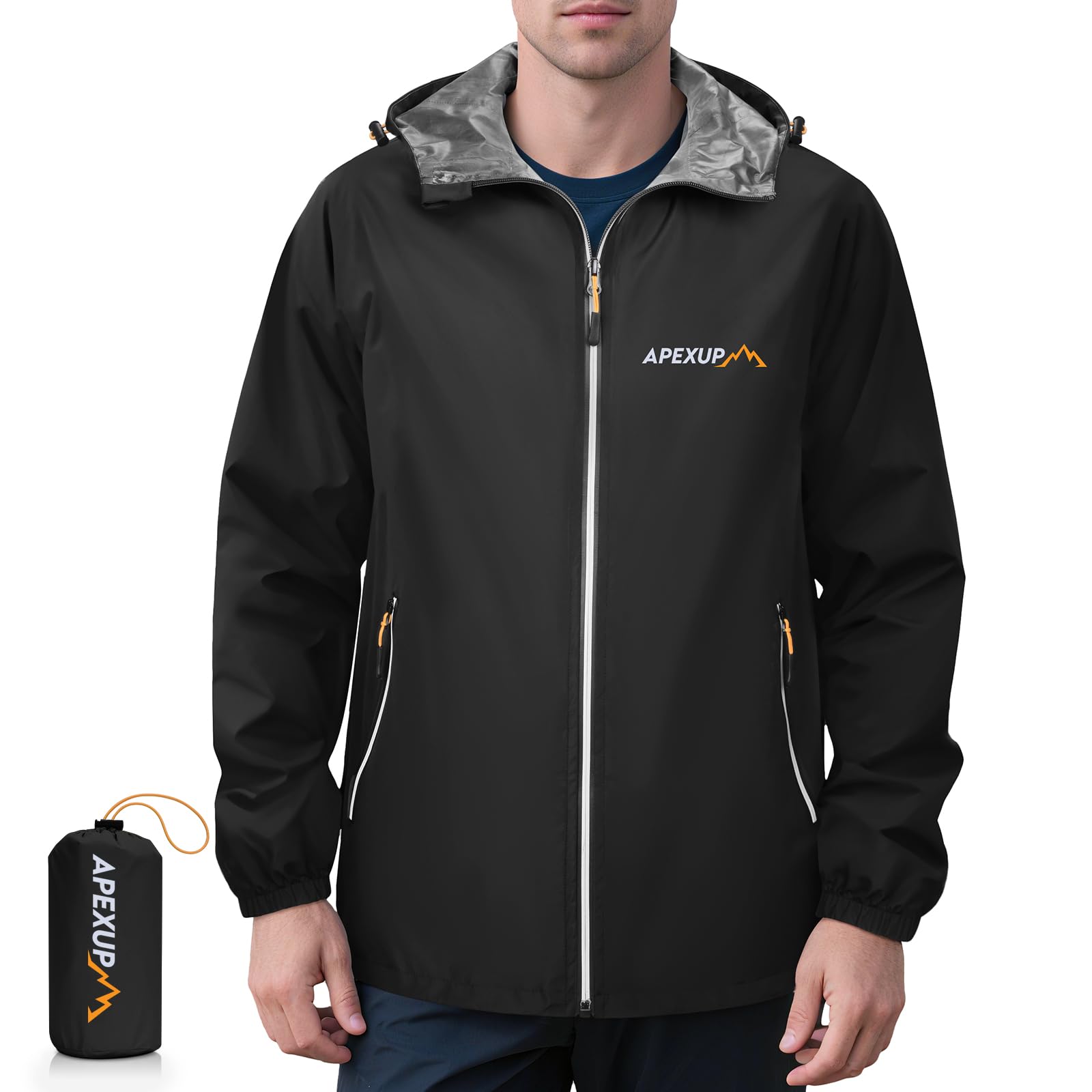
The APEXUP Rain Jacket delivers a lightweight, packable design with reflective zipper details that improve visibility for cyclists and runners. The waterproof polyester fabric handles light rain well, but breathability is limited during exertion, and the zipper can feel stiff. This makes it a suitable option for quick commutes or emergency backup rather than all-day wear in steady rain.
Pros
- Lightweight and packs into its carrying case for easy storage.
- Reflective zipper enhances visibility in low-light conditions.
Cons
- Breathability is poor; becomes clammy during physical activity — best for short, low-exertion use.
A practical pick for budget-conscious cyclists and travelers who need a compact shell for occasional light rain.
Best for Construction Work
HH Mandal

Key Features
- Waterproof Membrane: PVC coating
- Hood Design: Attached snap
- Price: $$
This PVC-coated jacket delivers strong waterproofing and durability for stationary outdoor work in heavy rain. Its weight and lack of breathability make it unsuitable for hiking, cycling, or daily wear where mobility and packability matter. Sizing may require trial and error.
Pros
- Strong waterproofing keeps you dry in heavy storms.
- Very durable construction for work environments.
Cons
- Heavy and stiff construction makes it impractical for packing or active movement.
Best left for stationary outdoor work in heavy rain – not suitable for hikers, cyclists, or daily commuters needing mobility and packability.
How to Choose
The most important factor in a rain jacket is the waterproof membrane and seam sealing – without them, you’re wearing a windbreaker that will soak through within minutes.
Waterproof Membrane & Seam Sealing
A waterproof membrane like Omni-Tech, NanoPro, or DryVent is a thin layer that blocks liquid water while allowing vapor to escape. Without it, the jacket relies solely on a DWR coating, which wears off quickly. Fully taped seams prevent water from seeping through stitch holes – a must for any jacket that’s advertised as waterproof.
For travel and daily use, a 2-layer membrane (common in mid-range jackets) offers a good balance of durability and packability. 3-layer membranes are lighter but more expensive and require careful care. If you see ‘100% seam-taped’ on the tag, that means all critical seams are sealed – a reliable indicator of genuine waterproofing.
Weight & Packability
A rain jacket that weighs more than a pound is unlikely to be packable for travel. Look for jackets under 12 ounces that can fold into their own pocket or a small pouch. However, a jacket that packs into its own pocket often feels heavier than one that uses a separate stuff sack, because the zipper and fabric of the pocket add bulk.
For hiking and backpacking, every ounce matters. A jacket like the Marmot Precip Eco (under 10 oz) is ideal. For daily commuting, an extra few ounces won’t matter, but packability still helps when the rain stops.
Breathability & Ventilation
Breathability is measured in grams of moisture vapor that can pass through a square meter per day (g/m²/24h). A rating above 10,000 is good for moderate activity. But even the best membranes can’t keep up with high exertion – that’s where mechanical ventilation comes in.
Pit zips (underarm zippers) are the most effective way to dump heat without unzipping the main zipper. Mesh-lined pockets can also act as vents. If you plan to hike or cycle, a jacket with pit zips (like the Marmot Precip Eco) is a practical upgrade. Without them, you’ll likely end up clammy inside.
Hood Design
A hood that doesn’t fit right is the most common frustration. Look for an adjustable hood with a stiff brim that sheds rain away from your face. A stowable hood (one that rolls into the collar) is convenient for travel – you can use the jacket as a windbreaker on dry days.
Helmet-compatible hoods are larger and often have a cinch at the back to tighten around a climbing helmet. For everyday use, a simpler adjustable hood that stays put in wind is sufficient. Avoid hoods without any drawcord – they tend to blow off.
Fit
Rain shells are meant to be worn over a mid-layer, so size up if you intend to layer a fleece or hoodie underneath. An athletic cut (slim through the torso) moves well for hiking but may feel restrictive over thick layers. A relaxed fit (like Carhartt’s) is easier to move in for work or casual use.
Sleeve length matters: too long and they’ll get in the way, too short and they’ll ride up when you reach. Many brands have distinct sizing quirks – for example, Columbia Watertight II sleeves run long for some. If you’re between sizes, order the larger one and cinch the waist drawcord.
FAQ
Why does my rain jacket soak through after a few months?
The DWR (durable water repellent) coating on the outer fabric wears off over time, causing the face fabric to absorb water instead of beading it. This is called ‘wetting out’ – the jacket still blocks liquid water but feels heavy and clammy. You can restore repellency with a DWR spray or wash-in treatment. For jackets with a membrane, if water is actually leaking through seams, the jacket may need seam sealing reapplied.
Do I need a rain jacket with pit zips for hiking?
If you’re hiking at a steady pace or carrying a pack, yes. Pit zips allow hot air to escape without unzipping the main zipper, which dumps heat more efficiently than any membrane can. Without them, you’ll likely get damp from sweat even if the jacket is ‘breathable.’ For casual walking or commuting, pit zips are optional.
How do I restore the water repellency (DWR) on my rain jacket?
First, clean the jacket with a technical wash (like Nikwax Tech Wash) to remove dirt and oils that block DWR. Then, apply a DWR spray or wash-in treatment. Let it air dry, then tumble dry on low heat for 20 minutes to activate the treatment. Avoid fabric softeners and ironing, which damage the membrane.
What does 100% seam-taped mean and is it important?
Seam-taping means a waterproof tape is heat-bonded over every stitch hole where the shell is sewn together. Without it, water seeps through the needle holes even if the main fabric is waterproof. ‘100% seam-taped’ indicates all seams are sealed, not just critical ones. For a jacket used in moderate to heavy rain, this is essential – skip jackets that only claim ‘critically taped seams’ if you expect sustained wet weather.