
This post contains affiliate links. We may earn a small commission when you buy through our links — at no extra cost to you.
A good night’s sleep on the trail depends on one thing above all: a sleeping pad that stays inflated. But the budget section of any outdoor store is filled with inflatable pads that look great on paper — lightweight, thick, under $40 — yet reviews tell a different story. Many lose air within hours, turning a restful night into a cold, ground-level wake-up.
This guide separates the pads that hold air from those that don’t. We’ve focused on verified air retention, real insulation performance, and the trade-off between pack weight and comfort. Whether you’re a side sleeper needing extra cushion or a fast-and-light hiker wanting minimal bulk, the right pad here balances durability with your specific use case.
The choice often comes down to warmth versus weight: a high R-value pad adds ounces but extends your season. A lighter pad saves weight but limits you to summer trips. The picks below make that trade-off clear so you can match the pad to your trail.


Best for All-Season Backpacking
Gear Doctors ApolloAir
Key Features
- Type: Inflatable (insulated)
- Weight: 17 oz
- R-Value: 5.2
- Thickness: 3.25 in
- Inflation: Pump sack
- Price: Premium
The ApolloAir’s 5.2 R-value provides genuine warmth for sub-freezing nights, yet it weighs just 17 ounces – a combination that typically costs over $100 more. The included pump sack inflates the pad in under a minute, and it packs down to the size of a water bottle, leaving plenty of room in your pack for other gear.
This pad suits all-season backpackers who prioritize warmth without sacrificing weight. However, the mummy shape (22 inches wide at the shoulders) may feel narrow for broad-shouldered or tall individuals. Additionally, while most units hold air consistently, occasional slow leaks have been noted – a far less frequent issue than with budget alternatives.
Pros
- True 4-season warmth at a weight that won’t weigh down your pack.
- Packs down to bottle size, making it easy to stow in any backpack.
- Pump sack makes setup quick and frustration-free.
Cons
- 22-inch width tapers at the shoulders, which may feel restrictive for broader frames or taller sleepers.
- Some units may develop slow leaks over time, requiring occasional re-inflation.
The ApolloAir delivers 4-season insulation, a lightweight build, and a price that undercuts premium rivals – a strong match for hikers who want consistent warmth without the premium price tag.
Best for Ultralight Minimalists
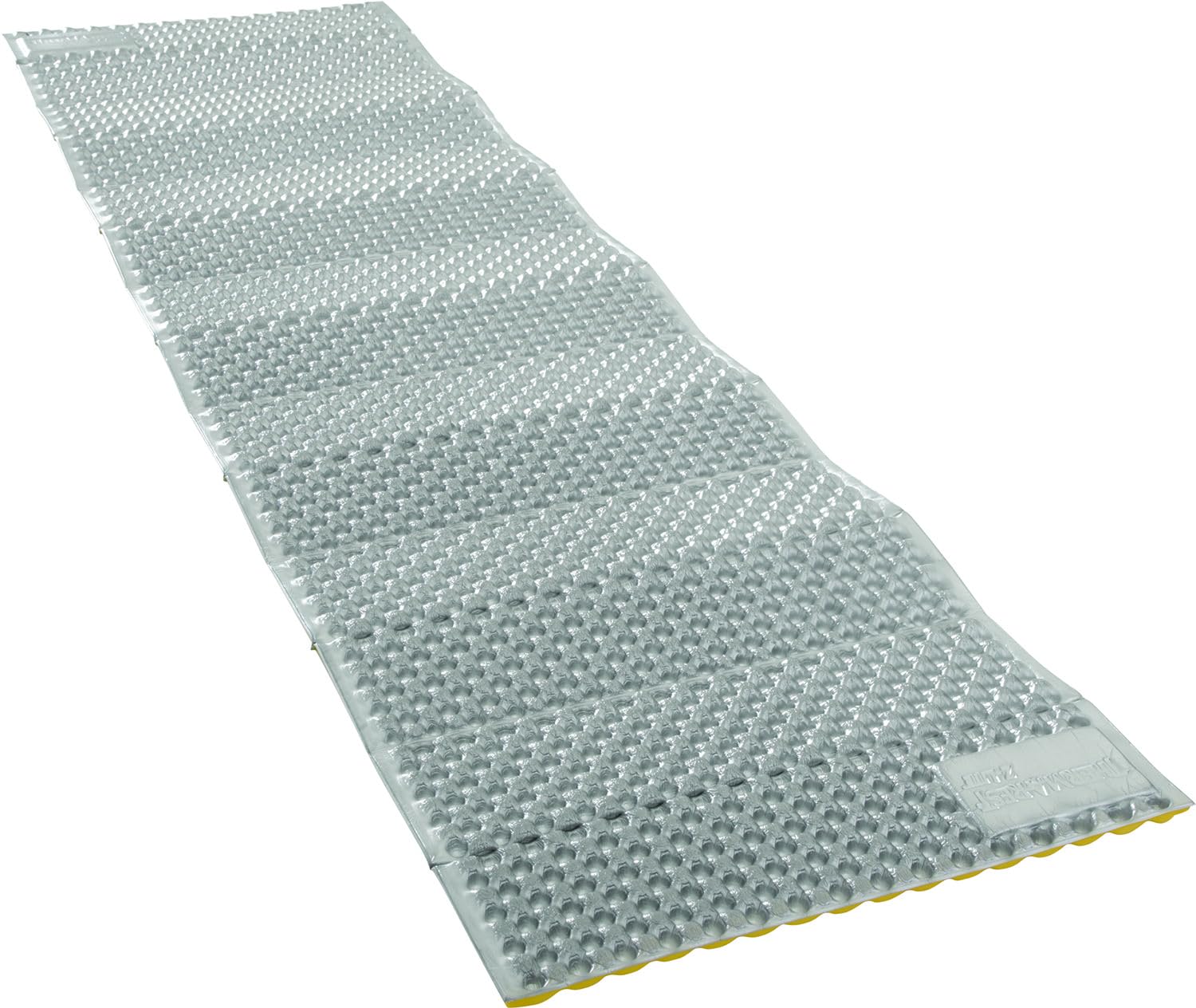
Therm-a-Rest Z Lite Sol
Key Features
- Type: Closed-cell foam
- Weight: 14 oz
- R-Value: 2.6
- Thickness: 0.75 in
- Inflation: None (foam)
- Price: Budget
The Z Lite Sol trades plushness for near-indestructibility. Its closed-cell foam construction eliminates any risk of punctures or leaks, making it a go-to for ultralight backpackers who prioritize durability and minimal weight. The accordion fold straps to the outside of any pack, and the R-2.6 rating handles most three-season nights when used as part of a sleep system. However, the 0.75-inch thickness offers minimal cushioning – side sleepers and those with sensitive hips will find it uncomfortable without an additional pad underneath. This is an intentional tradeoff for a foam pad that doubles as a sit pad or supplemental insulation in cold weather.
Pros
- Virtually indestructible – no punctures or leaks, even after years of rough use
- Lightweight at 14 ounces – easy to strap to any pack without adding bulk
- Solid R-Value of 2.6 – provides reliable three-season warmth when combined with a sleeping bag
Cons
- Thin 0.75-inch foam provides minimal cushioning – side sleepers and those with sensitive hips will need extra padding
- Mylar coating may peel over time, though the pad’s function remains unaffected
A durable, lightweight foam pad for ultralight backpackers who value toughness over comfort – side sleepers should plan to add a sit pad or use it under an inflatable for insulation.
Best for Warm-Weather Backpacking
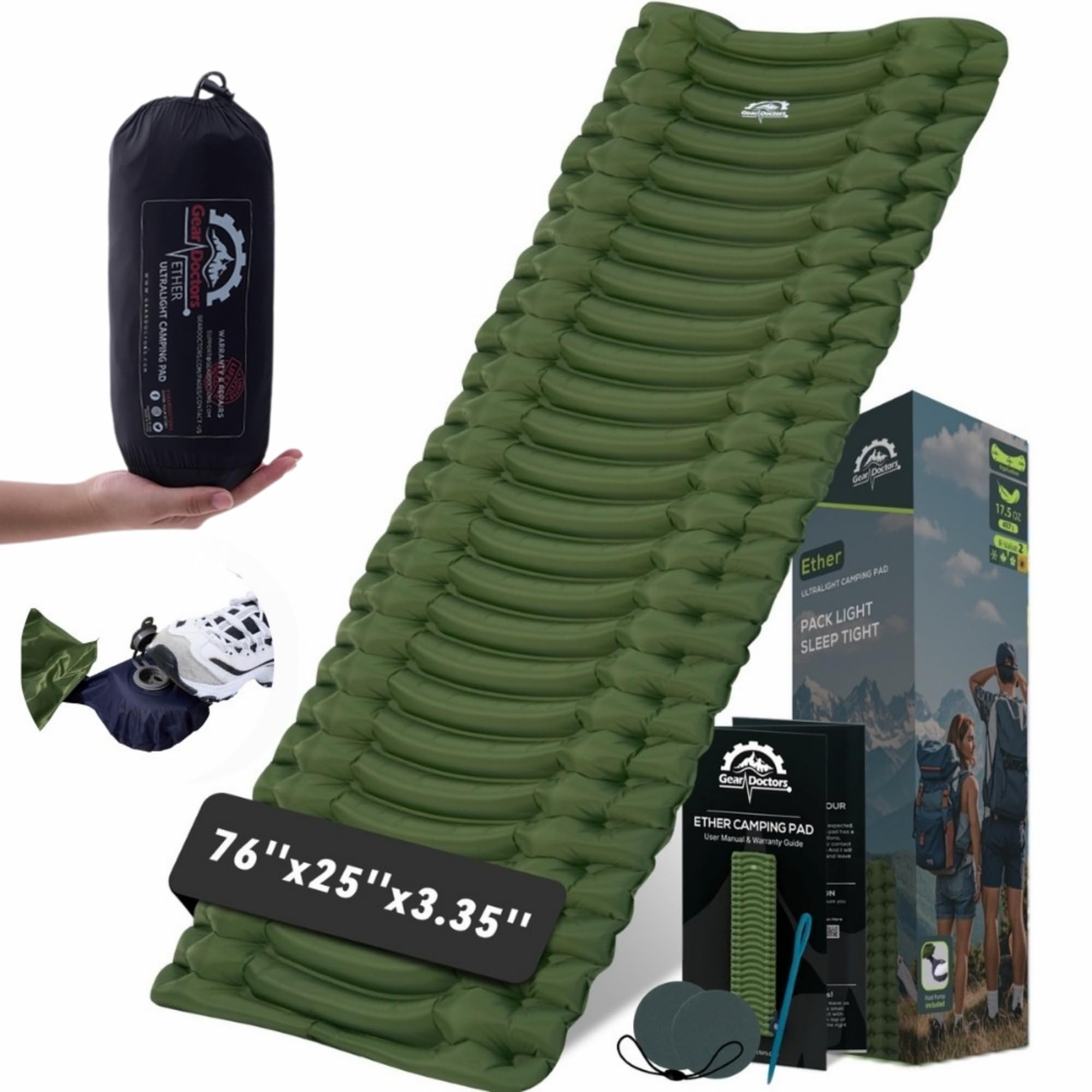
Gear Doctors Ether
Key Features
- Type: Inflatable (2-season)
- Weight: 17.5 oz
- R-Value: 2.0
- Thickness: 3.25 in
- Inflation: Foot pump
- Price: Budget
The Gear Doctors Ether swaps insulation for 25 inches of width and a 3.25-inch thickness that side sleepers will appreciate — at 17.5 ounces and a foot pump that fills it in under two minutes, it’s a clear option for warm-weather backpackers who prioritize comfort over cold-weather capability. The R-value of 2.0 means ground chill seeps through below 50°F, so this pad stays in the pack for spring through early fall outings. Air retention has been inconsistent across units — some pads lose pressure overnight, making it worth checking before each trip.
Pros
- Wide 25-inch surface and 3.25-inch thickness rival many car-camping pads
- Built-in foot pump inflates quickly with no breath moisture inside
- Packs down to 8.6 x 3.1 inches — easy to stow in a weekend pack
Cons
- R-value 2.0 limits use to summer and mild spring/fall; cold sleepers will feel the ground below 45°F
- Some pads may develop slow air leaks over time
If you camp only in warm weather and want a wide, plush pad without spending for insulation you won’t use, the Ether delivers good value — just keep an eye on air retention.
Best for Car Camping Comfort
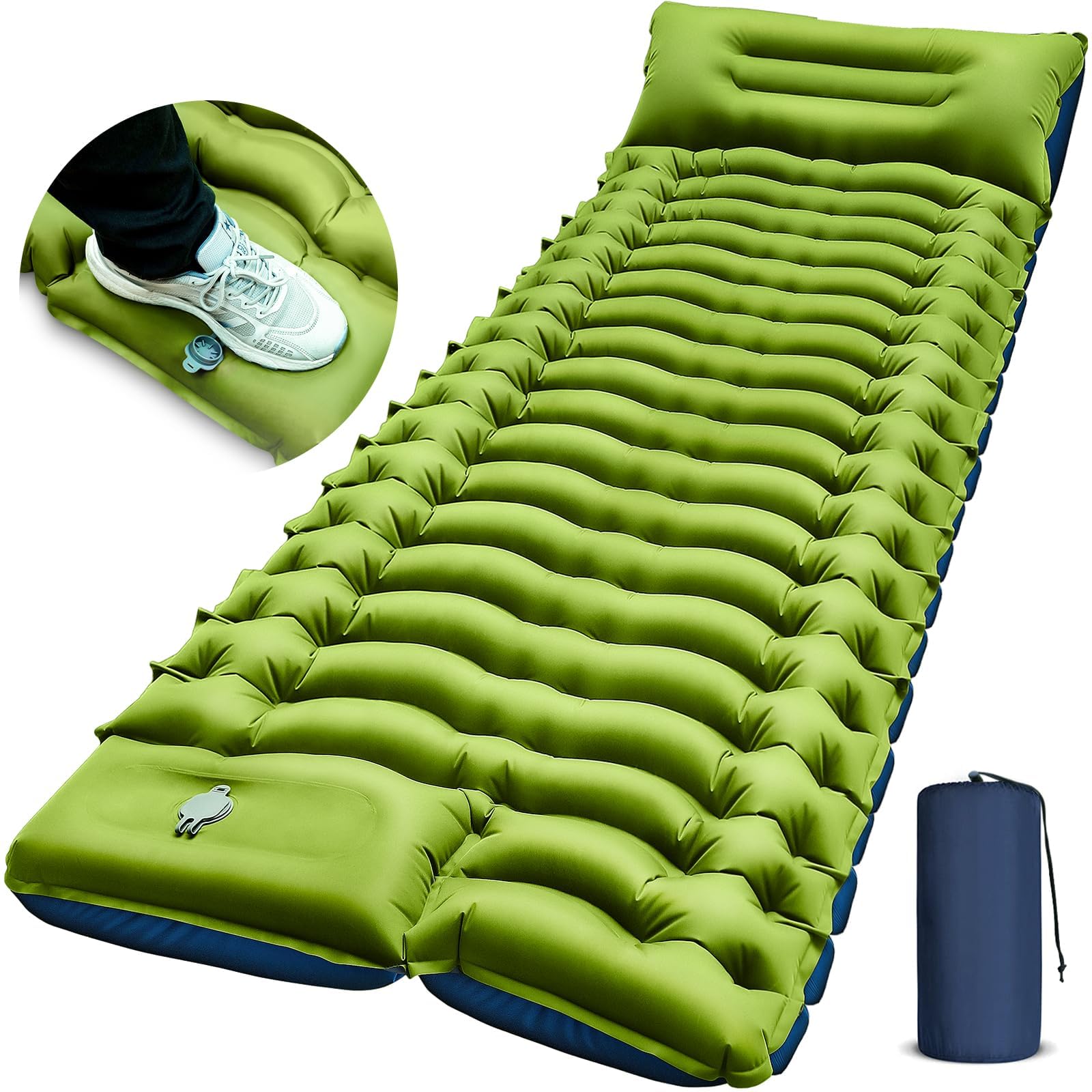
RusChic Foot Pump Pad
Key Features
- Type: Inflatable w/ pillow
- Weight: 1.5 lb
- Thickness: 4 in
- Inflation: Foot pump
- Price: Budget
For campers who prioritize comfort over pack weight, the RusChic pad delivers a 4-inch thick sleeping surface with a built-in pillow and foot pump that inflates quickly. Its 1.5-pound weight and absence of insulation make it a summer-only option, better suited to car camping or basecamp use than multi-day backpacking where every ounce counts.
Pros
- 4-inch thickness provides bed-like comfort for side sleepers
- Built-in pillow eliminates need for separate camping pillow
- Foot pump inflates pad in under a minute
Cons
- At 1.5 lb, it’s heavy for a summer pad without insulation
- No R-value rating limits use to warm temperatures only
A thick, comfortable pad for car campers or fair-weather trips, but not a top choice for weight-conscious backpackers.
Best for Extra-Wide Sleeping
FUN PAC Foot Pump Pad
Key Features
- Type: Inflatable w/ pillow
- Weight: 1.5 lb
- Thickness: 3 in
- Inflation: Foot pump
- Price: Budget
The 27-inch width of this inflatable pad gives restless sleepers and couples room to spread out without elbowing the ground. The built-in foot pump inflates in under a minute and the attached pillow adds head support without extra gear. However, with no R-value and a 1.5-pound weight, this is a summer‐only pad for car camping or base camps — not for backpacking or cold nights. It fits best for families who want to connect two pads into a double bed or casual campers who prioritize width over packability.
Pros
- Extra-wide 27-inch surface for sprawling sleep
- Built-in foot pump inflates in 30–60 seconds
- Integrated pillow adds comfort without packing extra
Cons
- No insulation – cold ground seeps through below 50°F
- Foot pump valve can fail to seal after several uses
A smart choice for car campers who value space and quick setup — skip it for backpacking or chilly nights.
Best for Car Camping Cold
Gear Doctors Oxylus

Key Features
- Type: Self-inflating foam
- Weight: 35.2 oz
- R-Value: 4.3
- Thickness: 1.5 in
- Inflation: Self-inflating
- Price: Mid-Range
The Oxylus delivers warm, comfortable nights thanks to its thick foam insulation and self-inflating design that saves fumbling with pumps. At 35.2 ounces and bulky when packed, it’s a solid choice for car camping or short walks from the car – not a pad you’d want to carry miles into the backcountry.
Pros
- True 4-season insulation keeps you warm in sub-freezing temperatures.
- Self-inflates quickly with just a few breaths to fine-tune firmness.
Cons
- At 2.2 pounds, it’s noticeably heavier than inflatable alternatives – a tradeoff for car camping trips where weight isn’t critical.
If you’re driving to the campsite and want consistent insulation without inflating, this is a cost-effective option – for backpackers, look at lighter inflatables.
Best for Premium Foam Backup
NEMO Switchback

Key Features
- Type: Closed-cell foam
- Weight: 14.8 oz
- R-Value: 2
- Thickness: 0.75 in
- Inflation: None (foam)
- Price: Premium
The NEMO Switchback packs smaller than most foam pads and won’t ever puncture or deflate. Its accordion fold and denser foam make it a reliable backup or sit pad for ultralight backpackers who already carry an inflatable. At $60 it’s nearly twice the price of a RidgeRest, and the 1.5‑in nodes still feel firm — side sleepers will find it lacking. This is a durable, warm-for-its-weight option, but only for those who prefer foam’s simplicity over inflatable comfort.
Pros
- Folds compactly — smaller packed size than traditional foam pads
- Virtually indestructible foam construction — no punctures or leaks
Cons
- Firm cushioning — not enough for side sleepers even with taller nodes
Worth the premium for ultralight hikers who want a bulletproof backup or sit pad and already accept foam’s firm feel.
Best for Ultra-Budget Emergency
Therm-a-Rest RidgeRest

Key Features
- Type: Closed-cell foam
- Weight: 14 oz
- R-Value: 2.0
- Thickness: 0.63 in
- Inflation: None (foam)
- Price: Budget
The Therm-a-Rest RidgeRest Classic is the cheapest foam pad you can trust – 14 oz, R-2.0 insulation, and no risk of punctures or leaks. At just 0.63 inches thick, it’s firm and unforgiving; side sleepers or anyone wanting cushion should look elsewhere. Its bulky roll also eats up pack space. Best as a sit pad, emergency backup, or ground cloth for ultralight back sleepers who value indestructibility over plushness.
Pros
- Virtually indestructible – closed-cell foam won’t puncture or leak, lasting for years of abuse.
- Lightest foam option for the price at 14 oz, with decent R-2.0 insulation for moderate conditions.
Cons
- Only 0.63 inches thick – too thin for side sleepers or anyone who needs more than minimal cushion.
A smart choice for backpackers who sleep on their back and want a failsafe backup pad, but not for primary comfort.
Best for Ultralight Summer
Sleepingo Ultralight Mat

Key Features
- Type: Inflatable
- Weight: 0.9 lb
- Thickness: 2 in
- Inflation: Mouth
- Price: Budget
The Sleepingo Ultralight Mat delivers exactly what its name promises: an inflatable pad that’s light enough to forget in your pack and cheap enough to leave buyers with cash for other gear. Mouth inflation takes seconds, and the 2-inch thickness provides adequate cushioning for back sleepers on warm ground. The tradeoff is a lack of insulation (no R-value listed) and a risk of pinhole leaks that may develop after a few nights out — a patch kit solves the latter, but the former keeps this pad strictly in the 50°F+ category. For first-time backpackers or budget hikers focused on saving weight and money, it works as a stepping stone into ultralight camping.
Pros
- Weighs 0.9 lb and packs smaller than a water bottle
- Budget-friendly price for an inflatable pad with 2-inch thickness
Cons
- Occasional pinhole leaks can develop after several uses — carrying a patch kit is recommended
If you camp only in warm weather, want to keep pack weight minimal, and don’t mind carrying a patch kit, this mat offers the most value per ounce in the budget segment.
Best for Car Camping Budget
HiiPeak Foot Pump Pad

Key Features
- Type: Inflatable w/ pillow
- Weight: 2.05 lb
- Thickness: 3 in
- Inflation: Foot pump
- Price: Budget
The HiiPeak inflates quickly via its built-in foot pump and offers a roomy 3-inch thick surface with a pillow for most sleeping positions. The trade-off for the low price is that air retention can vary between units — some owners find the pad loses pressure overnight. This pad works best for car campers who want immediate comfort on a budget and are okay with replacing it if needed, but it’s too heavy at 2.05 lb and lacks an R‑value for backpacking trips.
Pros
- Wide, 3‑inch thick surface with built-in pillow for comfortable sleep.
- Foot pump inflates the pad in about 30 seconds — no huffing or separate pump needed.
Cons
- Some units may develop slow leaks, leading to overnight deflation.
Fine for occasional car camping if you don’t mind a potential swap; avoid for hiking or any trip where air loss would spoil sleep.
How to Choose
The most overlooked spec in sleeping pads is air retention: many cheap inflatables lose pressure within a night, turning a comfortable pad into a cold ground sheet.
Weight and Packed Size
Lightness comes at a cost: ultralight inflatables use thinner materials that are more prone to punctures. Foam pads are heavier but indestructible. For backpacking, every ounce matters, but a pad that fails saves no weight.
A pad that straps to the outside of your pack saves internal space but can snag on branches. Internal packing protects it. Consider your pack’s volume and whether you can afford the bulk of a foam pad.
Insulation (R-Value)
R-value measures how well the pad resists ground chill. A value of 2.0 works for summer, 4.0+ for freezing conditions. Inflatable pads achieve higher R-values through internal baffles or reflective layers, which add weight and cost.
Foam pads have a fixed R-value that doesn’t change. For cold trips, a foam pad under an inflatable creates an effective double layer, but adds significant weight.
Thickness and Comfort
Side sleepers need at least 3 inches of thickness to keep hips off the ground. But thicker pads are heavier and harder to pack. Some budget inflatables claim 4 inches but deflate enough overnight to negate that advantage.
Foam pads rarely exceed 1 inch, making them unsuitable for side sleepers unless paired with a second pad. Material firmness also matters: a thick, soft pad can feel unstable if you toss and turn.
Inflation Method
Mouth inflation is efficient but introduces moisture that can cause internal mold. Pump sacks are lightweight and push dry air, but require a separate bag. Foot pumps are convenient and build-in, but they add weight and the valve can fail.
Self-inflating pads combine foam and air – you open the valve and they expand on their own, but they’re heavier and take longer to pack. For car camping, foot pumps are fine; for backpacking, a pump sack is the lightest reliable option.
Durability and Air Retention
Air retention is the #1 failure mode for inflatable pads. Cheap pads often use thin films that develop pinhole leaks at seams or valves. Checking reviews for “leak” and “deflate” reveals the true failure rate – often above 30% in budget models.
Foam pads never lose air, making them ideal for rough terrain or as a backup. If you’re set on an inflatable, pay attention to the warranty and patch kit included. A pad with a loyal following usually earns it through consistent quality control.
FAQ
Why does my inflatable sleeping pad lose air every night?
Most leaks come from seam failures, valve defects, or pinholes in thin materials. Check the valve first – a simple dip test (submerge the inflated pad and look for bubbles) can locate the leak. If it’s a seam, patch kits only work temporarily; consider returning the pad. For long-term reliability, choose a pad with a proven low leak rate from verified reviews.
How thick should a backpacking sleeping pad be for side sleepers?
Side sleepers need at least 3 inches of thickness to keep hips and shoulders from contacting the ground. However, thickness alone isn’t enough – the pad must also be firm enough to prevent bottoming out. Inflatable pads with 3–4 inches and good structural baffles work well. Foam pads under 1 inch are not suitable unless doubled up.
Can I use a foam sleeping pad in cold weather?
Yes, foam pads work in cold weather because they don’t lose insulation if they leak (they don’t leak). But foam pads have a fixed R-value (typically 2.0–2.6), which is insufficient for ground temps below freezing by itself. For winter camping, combine a foam pad under an insulated inflatable to boost total R-value above 4.0.
Are built-in foot pumps worth the extra weight?
Built-in foot pumps are convenient for car camping and casual use – they inflate a pad in under a minute without bending over. But they add 3–5 ounces compared to a pump sack, and the valve assembly can fail. For backpacking, a separate pump sack (or even mouth inflation) is lighter and more reliable. Reserve foot pumps for pads you car-camp with.