
This post contains affiliate links. We may earn a small commission when you buy through our links — at no extra cost to you.
Waking up on a deflated pad halfway through the night is a campsite misery that most backpackers have experienced. Budget inflatables often sacrifice air retention for weight savings, leaving you sleeping on cold ground before dawn.
Foam pads eliminate that risk entirely, but their thin profile punishes side sleepers. The real decision isn’t weight alone — it’s how much insulation you need, whether you can tolerate occasional re-inflation, and how much width your sleeping position demands.
This guide cuts through the noise by focusing on which pads actually hold air through the night, match your preferred sleep style, and cover the temperature range you’ll actually encounter. The right choice lets you sleep soundly without carrying extra ounces.



Best for 3-Season Backpackers
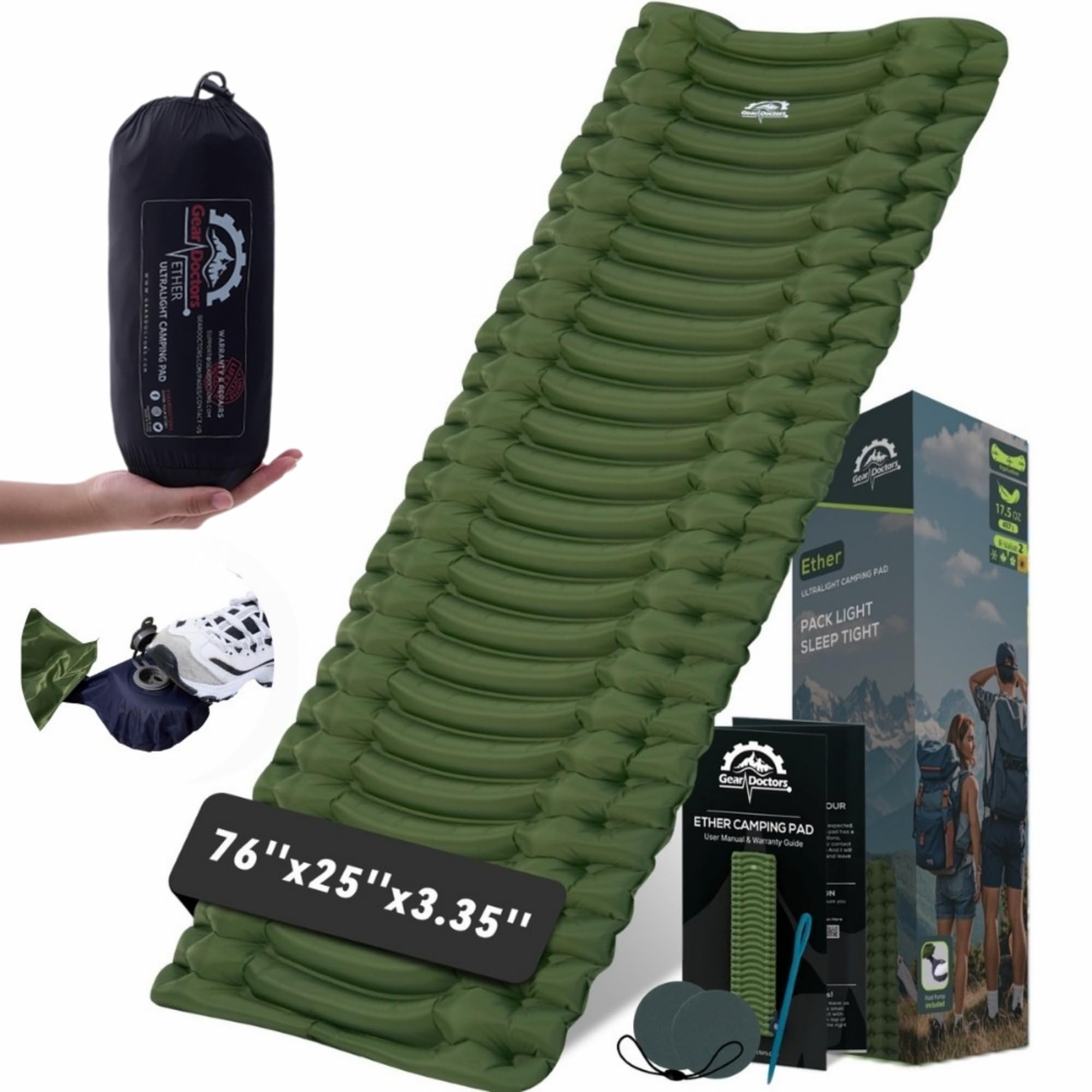
Gear Doctors Ether
The Gear Doctors Ether hits a sweet spot for ultralight backpackers: 17.5 ounces, 25 inches of width for side sleepers who toss, and a detachable foot pump that makes inflation a no-bend chore. The 20-denier nylon and 3.35-inch thickness deliver comfort that rivals pricier three-season pads, all while packing down small enough to fit inside a bear can.
For a small number of pads, overnight air loss has been noted — testing the seal before a long hike is wise. That tradeoff aside, the Ether delivers 80% of the warmth and all the width of premium alternatives at a third the cost. It suits 3-season backpackers who want a wide, light pad without spending on winter insulation or risking a foam pad’s thin cushion.
Pros
- 25-inch width and 3.35-inch thickness for side sleepers
- Lightweight (17.5 oz) and packs very small
- Detachable foot pump makes inflation easy without bending
Cons
- R-value 2.0 limits use to warm-weather camping
- Air retention can be inconsistent – some pads may lose air overnight
For 3-season backpackers who want a wide, light pad without spending on premium insulation, this is the budget pick to beat — just test the seal before a long trip.
Best for 4-Season Backpackers
Gear Doctors ApolloAir
The ApolloAir stands out with an R-value of 5.2 packed into just 17 ounces — a warmth-to-weight ratio that leaves most ultralight pads behind. It inflates quickly using the pump sack and provides comfortable support for side and back sleepers within its 22-inch width. However, that width is a tight fit for broad-shouldered users, and air retention can vary between units. This makes it a strong choice for cold-weather ultralight backpackers who prioritize insulation over space, especially compared to the wider but less insulated top pick.
Pros
- Exceptional R-value 5.2 keeps you warm in sub-freezing conditions.
- Weighs only 17 ounces and compresses small for backpacking.
- Inflation is quick and easy with the included pump sack.
Cons
- 22-inch width feels narrow for broad-shouldered sleepers; average builds will find it adequate.
- Air retention consistency can vary; checking for leaks before a trip is wise.
For winter backpackers who demand maximum warmth at minimum weight, and who fit within the 22-inch width, the ApolloAir is a top-tier insulated pad that justifies its premium price.
Best for Budget Backpackers
Sleepingo Ultralight Mat
At 0.9 lb and roughly the size of a water bottle, this pad prioritizes packability and affordability above all else. It inflates easily by mouth and offers decent comfort for back and stomach sleepers, making it a practical choice for warm-weather trips where every ounce counts.
This mat suits budget-conscious backpackers who camp in mild conditions and aren’t bothered by cold ground — it has no insulation and minimal R-value. Some units can develop slow leaks over time, so it works best as a seasonal or occasional pad rather than a long-term investment. If you prefer a bombproof foam pad that never deflates, the Therm-a-Rest Z Lite is a more durable alternative, though it lacks the plushness of an inflatable.
Pros
- Weighs only 0.9 lb and packs down smaller than a jacket
- Provides adequate cushioning for back and stomach sleepers despite its 2-inch thickness
- Mouth inflation takes under a minute and requires no pump or bag
Cons
- No insulation means cold ground penetrates easily — suitable only for summer camping
- Some units can develop slow air leaks over time, requiring periodic re-inflation during the night
For summer trips where weight and price are the limiting factors, this mat gets the job done without breaking the bank or your pack. If you need insulation or long-term reliability, look to a foam pad instead.
Best for Ultralight Backpackers
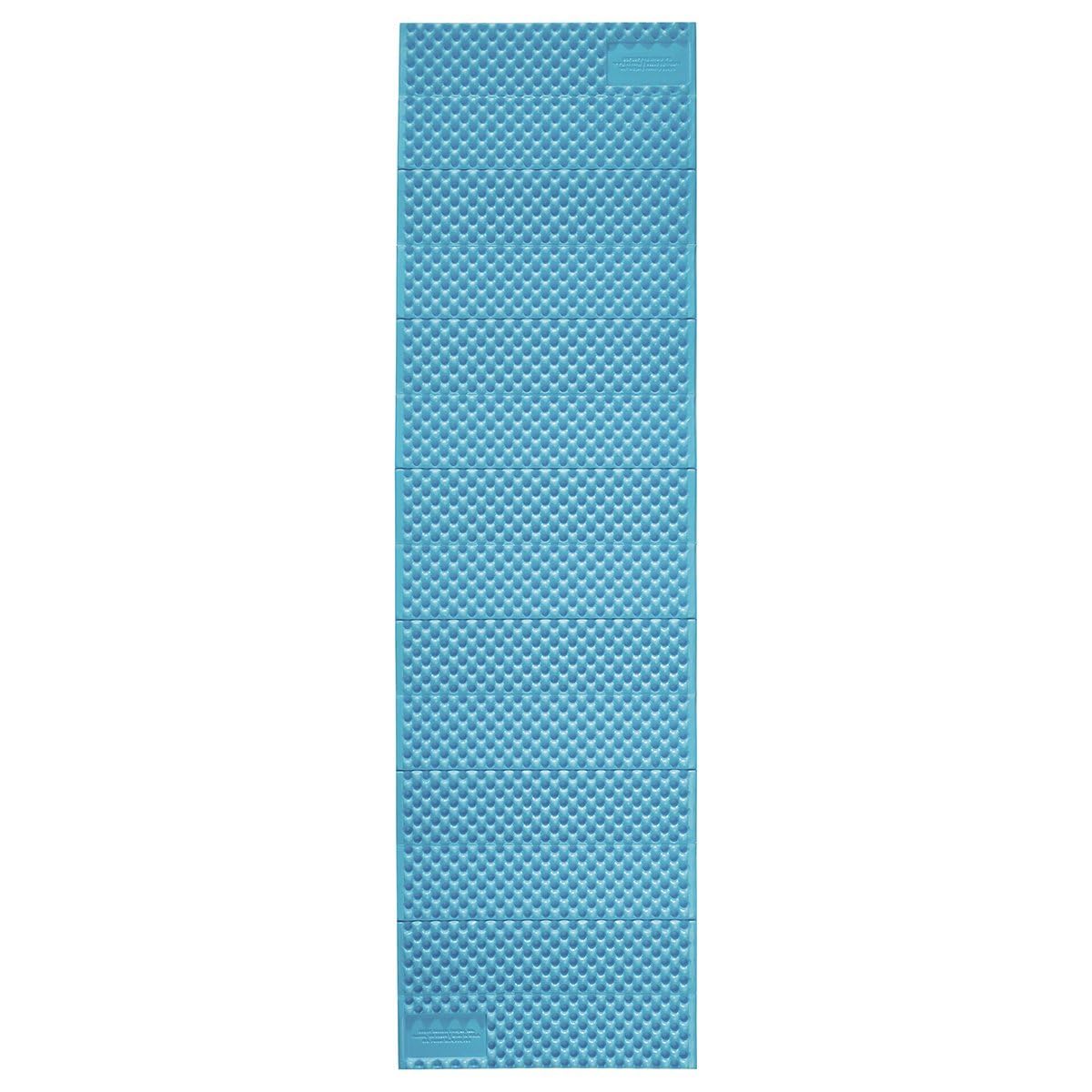
Therm-a-Rest Z Lite
At 14 ounces, the Z Lite is lighter than many inflatables and simply cannot leak air. Unlike the pump-equipped top pick, this closed-cell foam pad trades plush comfort for total reliability on the trail. Best for warm-weather trips where a thin 0.75-inch pad is acceptable — the firm surface suits stomach and back sleepers better than side sleepers. Its R-value of 2.0 covers summer use but won’t cut it in cold conditions.
Pros
- Weighs only 14 ounces — lighter than most inflatable pads
- Never deflates; no pump or patch kit needed
- Doubles as a sit pad or insulation layer under an inflatable
Cons
- Thin 0.75-inch foam can feel hard for side sleepers
- R-value 2.0 insufficient for winter camping
A smart choice for weight-conscious backpackers who want a pad that won’t fail, as long as comfort and warmth are secondary priorities.
Best for Car Campers
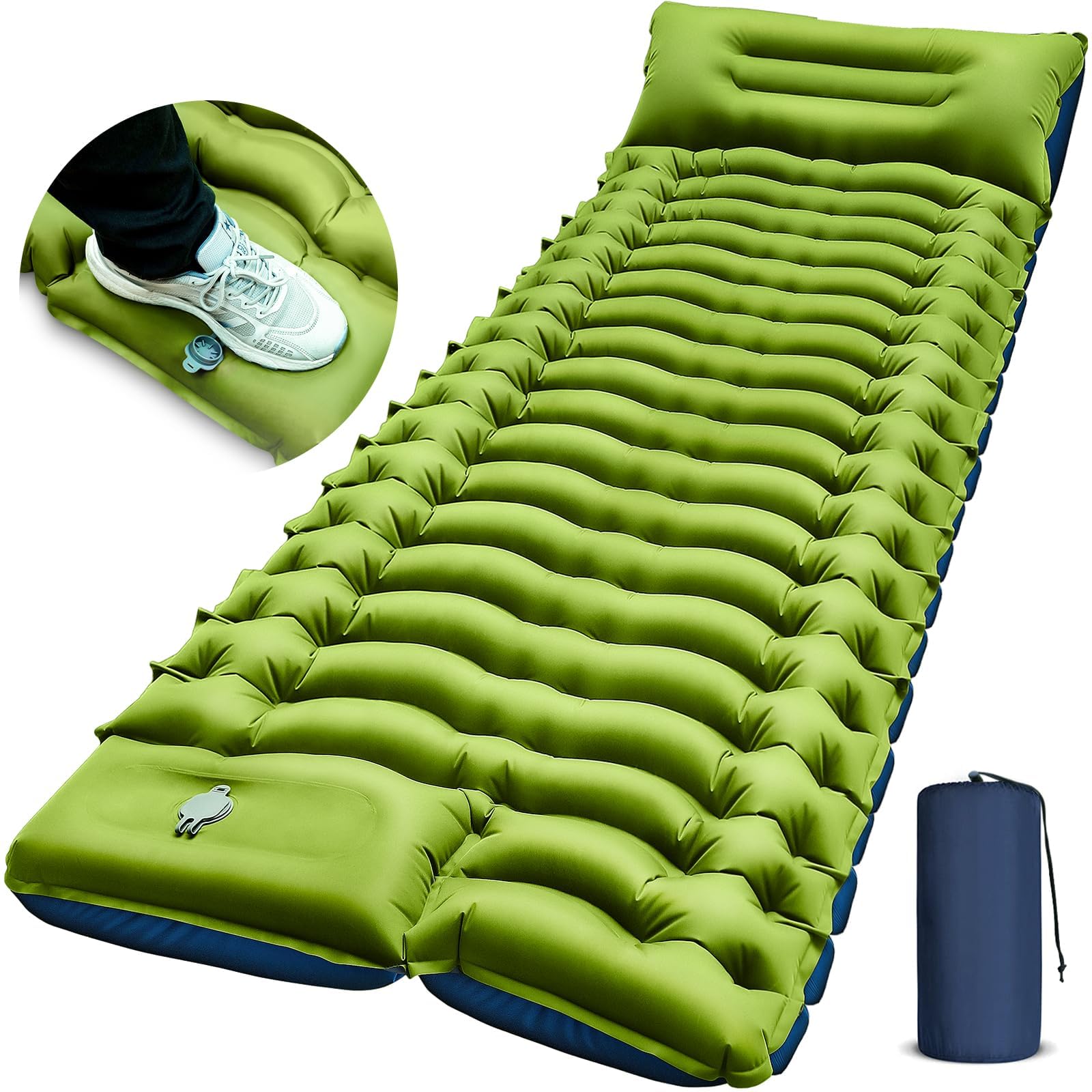
FUN PAC Foot Pump
The 27-inch width and integrated pillow make this pad substantially more spacious than most options under 2 pounds. Inflation is handled by a built-in foot pump — no separate sack or breath inflation needed.
Best suited for car campers or backpackers who prioritize sleeping width over minimum weight. At 1.5 pounds it falls within the 2-pound threshold, but ultralight hikers will find it heavier than dedicated options. The foot pump can be slower than a standard inflation sack and may lose efficiency with repeated use.
Pros
- Spacious 27-inch width accommodates side sleepers and restless campers comfortably.
- Built-in foot pump eliminates need for a separate inflation device or breath inflation.
- Budget-friendly price for a wide pad with integrated pillow and pump.
Cons
- Foot pump can be slower to operate than a separate inflation sack, and occasional pump issues have been noted.
- At 1.5 pounds, it’s heavier than dedicated ultralight pads – a tradeoff for the added width and features.
A practical choice for campers who value space and convenience over absolute weight savings.
Best for 3-Season Backpackers
ECOTEK Hybern8
The ECOTEK Hybern8 uses a contoured FlexCell honeycomb design that adapts well to different sleep positions – side sleepers in particular find it supportive without pressure points. It inflates in about 7-10 breaths and packs down small enough for a backpack, though the 18-ounce weight is moderate rather than ultralight. The R-value of 2.2 is standard for 3-season pads, so it’s not suitable for cold-weather trips. Air retention has been inconsistent in some units, so it’s wise to test for slow leaks before a multi-night outing. This pad works best for backpackers who prioritize comfort and ease of inflation over minimum weight or winter capability.
Pros
- Honeycomb chamber design provides even support for side and back sleepers
- Lightweight and packs small for backpacking trips
- Inflation takes only 7-10 breaths with no pump needed
Cons
- R-value 2.2 keeps warmth limited to 3-season use
- Some pads may develop slow leaks over time – worth checking before a long trip
Buy this if you want a comfortable, easy-inflate pad for warm-weather backpacking and don’t mind checking for air retention quirks now and then.
Trekology Ul80
Trekology UL80

The Trekology UL80 offers a thick 3.9-inch profile that side sleepers on a budget will appreciate, and its 19.8-ounce weight keeps pack weight reasonable. Where it stumbles is overnight air retention — some pads may lose enough pressure to require a top-up by morning, making it less dependable for extended backcountry trips than the Ether’s more consistent design.
Pros
- 3.9-inch thickness rivals premium pads at a fraction of the cost
- Lightweight and packs small for its comfort level
Cons
- Air retention may drop overnight, requiring re-inflation on multi-night trips
A good pick for car campers or weekend backpackers who don’t mind a possible midnight puff-up, but not the one to grab for a week-long trek.
Best for Ultralight Backpackers
Nemo Switchback

NEMO’s closed-cell foam delivers solid insulation and packs small, but the 51-inch length limits its use to shorter campers or as an under-pad. At a premium price, it’s a niche pick for ultralight trips where weight is critical.
Pros
- Lightweight and durable closed-cell foam
- Good thermal protection (R-value 2.0) for a foam pad
Cons
- 51-inch length may leave taller users’ legs exposed to the ground
This pad fits short ultralight backpackers or as an under-pad for inflatables – not a primary pad for anyone over 5’6".
Best for Budget Backpackers
RusChic Foot Pump

The RusChic pad offers a comfortable built-in pillow and quick inflation via its foot pump, packing down compactly for the feature set. Long-term durability data is limited, and air retention can vary between units — best suited for weekend car campers rather than multi-night backpacking.
Pros
- Built-in pillow improves sleep comfort without extra gear.
- Foot pump inflates the pad quickly with minimal effort.
Cons
- Air retention may vary between units, worth testing before an extended trip.
Grab it for car camping or short trips where convenience and low cost matter most, but consider a more established option if you need reliable overnight use.
Best for Ultralight Minimalists
FOCHIER Foam Pad

At 13.8 oz and folding into a compact block, the FOCHIER pad is among the lightest closed-cell options for backpacking. Its waterproof IXPE foam doubles as a sit pad or ground sheet for extra cushion under an inflatable. However, the thin foam offers minimal padding — side sleepers may find it inadequate — and occasional reports of tearing suggest durability is a risk, especially compared to similarly priced foam pads from established brands. For the price, you’re paying a premium for weight savings without the comfort or longevity that cheaper alternatives deliver.
Pros
- Very lightweight at 13.8 oz for easy packing.
- Folds compactly and is fully waterproof.
Cons
- Thin foam may be uncomfortable for side sleepers; occasional durability concerns reported.
Worth a look only if you already own a comfortable sleeping pad and need an ultralight backup, sit pad, or ground sheet — not as your primary sleep system.
Best for Ultralight Backpackers
Featherstone El Cordion

This foam pad packs an impressive R-value for its weight, making it a smart choice for ultralight hikers who sleep on their back. But at 22 inches wide and under an inch thick, it’s too narrow for broad shoulders and too thin for side sleepers — better as a warmth booster under an inflatable than a solo pad.
Pros
- Lightweight foam with above-average insulation for its category
- Solid closed-cell construction won’t deflate or puncture on the trail
Cons
- Thin profile and narrow width may leave side sleepers and broader users cold
If you’re an ultralight backpacker who sleeps on your back and needs a sturdy insulated pad under an inflatable, this is a cost-effective option.
Best for Car Campers
AKSOUL Thick Pad

The AKSOUL pad delivers an extra-thick 3.9-inch profile and generous 27-inch width at a budget-friendly price, with a built-in foot pump that makes inflation simple. However, air retention varies between units — some pads lose air overnight, making it a gamble for multi-night use. At 1.87 lb, it’s also heavier than most backpacking pads, limiting its appeal for weight-conscious hikers.
Pros
- Extra thick (3.9 in) and wide (27 in) for comfort
- Built-in foot pump makes inflation quick and effortless
Cons
- Air retention may be inconsistent – some pads lose air overnight
Best for car campers or short trips where you can test the pad ahead and don’t need guaranteed overnight performance.
How to Choose
The single most important factor in choosing a lightweight sleeping pad is matching its insulation (R-value) and comfort profile to the coldest night you’ll actually encounter and your dominant sleeping position.
Weight
Every ounce matters on a backpacking trip, but weight savings often come from thinner materials or less insulation. A 14-ounce foam pad is bulletproof, but a 14-ounce inflatable may sacrifice durability or R-value to hit that number.
For multi-day trips, the difference between 18 and 24 ounces becomes noticeable in your pack. Decide whether you’re willing to trade an extra few ounces for better comfort or warmth.
R-Value
R-value measures thermal resistance. A pad with R-value 2.0 is fine for summer and mild spring/fall. Below 40°F, you need at least 3.0; for snow camping, aim for 5.0 or higher. Cheap inflatables often skip this spec entirely, meaning cold ground will suck heat from you all night.
A foam pad with R-2.0 can outperform a thin inflatable with no rating because foam doesn’t compress under your body weight. Don’t trust marketing claims—look for ASTM F3340 testing or verified user reports of actual warmth.
Thickness
Thickness directly affects comfort and insulation. A 2-inch inflatable can feel adequate for back sleepers, but side sleepers need at least 3 inches to keep hips and shoulders from hitting the ground. Foam pads rarely exceed 1 inch, which is why they’re uncomfortable for many.
Thicker pads also have more air volume, so they take longer to inflate and are more prone to slow leaks. A 3.9-inch pad like the Trekology UL80 offers great loft but risks overnight deflation.
Packed Size
Inflatable pads pack much smaller than foam – some roll down to the size of a water bottle. Foam pads, even folded, are bulkier and must be lashed to the outside of a pack. If you use a smaller pack (under 40 liters), an inflatable gives you interior space.
However, an external foam pad adds protection or doubles as a sit pad during breaks. Consider how much volume you can spare and whether you mind external storage.
Comfort for Side Sleepers
Side sleepers need a pad with sufficient thickness (3+ inches) and some lateral stability to prevent rolling off. Honeycomb or V-chamber designs distribute weight more evenly than simple grid patterns. Width also matters – 25 inches gives room to draw knees up without slipping off.
Foam pads are generally unsuitable for side sleepers unless used as an underpad for an inflatable. If you sleep on your side, prioritize an inflatable with good horizontal support and enough loft to keep your hip off the ground.
Air Retention
No inflatable is completely immune to slow leaks, but some brands have a much higher defect rate than others. In reviews, air retention complaints above 25% indicate a significant risk of waking up on the ground. Budget pads are especially prone to faulty valves or seam leaks.
Test any new pad at home before your first trip: inflate it fully and leave it overnight. If it loses pressure, return it immediately. A small repair kit can fix punctures, but valve defects are often permanent.
FAQ
Why does my inflatable sleeping pad lose air overnight?
The most common cause is a faulty valve that doesn’t seal completely – especially on budget pads. Seam failures and pinprick punctures from debris are next. Always test a new pad at home by inflating it fully and checking for pressure loss after 8 hours. If it drops, return it before your trip.
Can I use a closed-cell foam pad alone for backpacking?
Yes – foam pads are durable, never leak, and offer decent insulation (R-2.0) for summer and mild conditions. But they provide minimal cushioning (0.75–1 inch), so they’re best for back sleepers who don’t mind a firm surface. Most ultralight hikers pair a foam pad with a thin inflatable for comfort and redundancy.
What R-value do I really need for 3-season camping?
For temperatures above 40°F, an R-value of 2.0–2.5 is sufficient. If you camp in early spring or late fall where nights dip into the 30s, aim for 3.0–4.0. Anything below 2.0 is summer-only; below 1.5 will leave you cold even on mild nights.
Is a built-in foot pump better than a separate pump sack?
Built-in foot pumps are convenient – you never lose them – but they tend to be slower and can fail over time. Separate pump sacks are more reliable, double as a dry bag, and inflate faster with fewer breaths. For multi-night trips where reliability matters, a pump sack is a better long-term choice.