
This post contains affiliate links. We may earn a small commission when you buy through our links — at no extra cost to you.
Every camper faces the same choice: a foam pad that never fails but offers little cushion, or an inflatable that cradles you like a bed but risks a slow leak at 2 a.m. The market splits cleanly along this line – durability versus comfort – and the right answer depends entirely on how and where you sleep.
The good news is that recent improvements in materials and valve design have narrowed the gap. A few inflatables now combine four-season insulation with sub-20-ounce weights, while foam pads have added reflective coatings for better warmth without adding bulk. The trick is knowing which spec trade-offs actually matter for your trip length, weather, and sleep position.



Best for Ultralight Backpacking
Gear Doctors ApolloAir
Key Features
- R-Value: 5.2
- Weight: 17 oz
- Thickness: 3.25 in
- Inflation Method: Pump sack
- Price: $$
The Gear Doctors ApolloAir delivers insulation that competes with pads twice its weight. At 17 ounces, it packs small enough for a backpacking load while keeping you warm down to freezing conditions. The included pump sack inflates the pad in under 60 seconds, removing the hassle of breath inflation or separate pumps.
The 22-inch width is a deliberate tradeoff for weight savings. Side sleepers and broad-shouldered users will notice the narrow profile — it suits slim-frame backpackers who prioritize pack size over sprawl room. The 3.25-inch thickness provides good ground isolation, though air retention can vary; checking the valve seal before each trip is a simple precaution.
Pros
- Exceptional warmth for its weight – 5.2 R-value at 17 oz
- Pump sack inflates quickly and cleanly with minimal effort
- Supportive cushioning that distributes pressure evenly through the night
Cons
- 22-inch width can feel restrictive for side sleepers or broad shoulders
- Some units may develop slow air leaks over time
For ultralight backpackers who need reliable winter insulation without a weight penalty, this is the best value in its class.
Best for Ultralight Backpacking
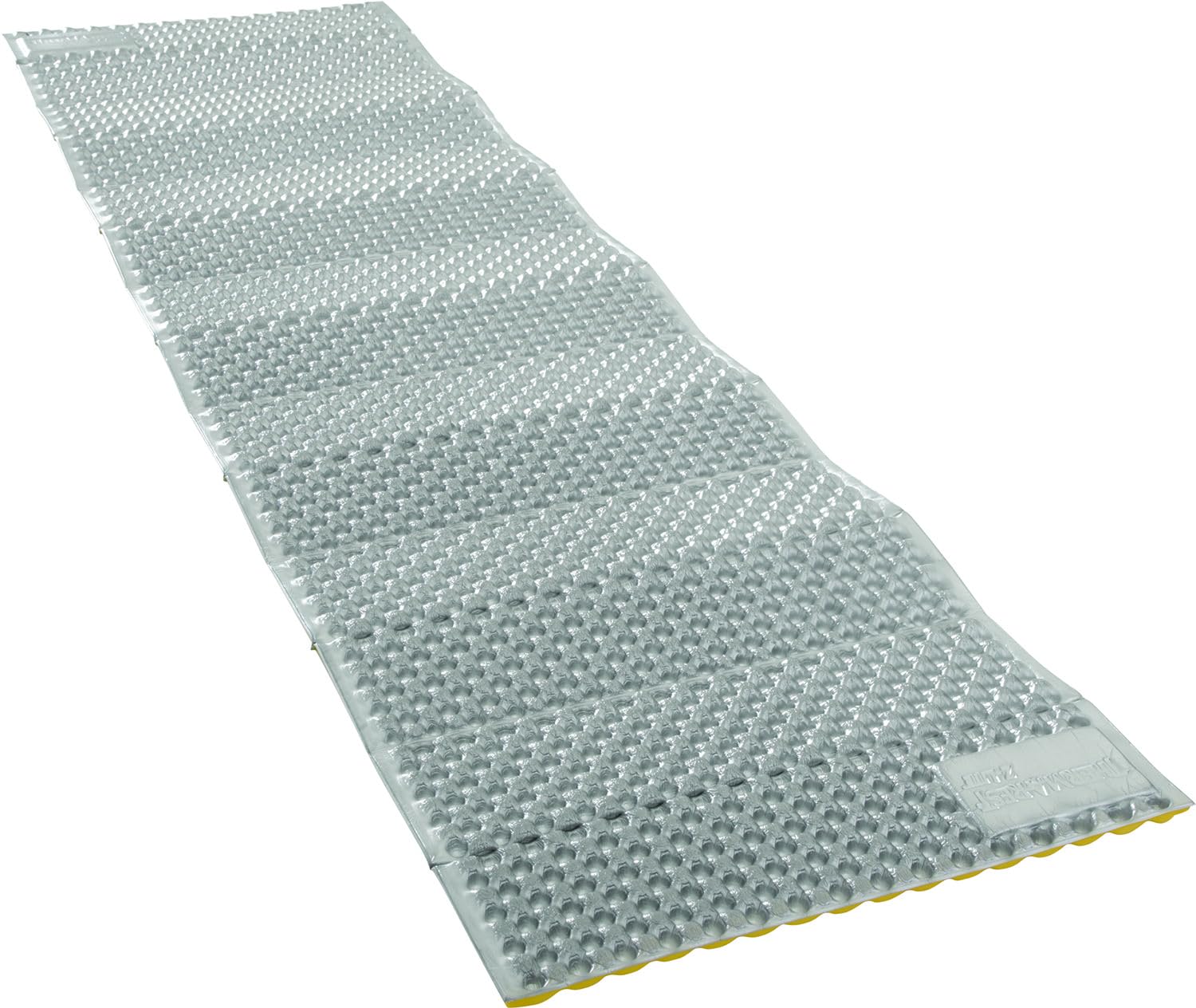
Therm-a-Rest Z Lite Sol
Key Features
- R-Value: 2.6
- Weight: 14 oz
- Thickness: 0.75 in
- Inflation Method: None (foam)
- Price: $
The 2.6 R-value at 14 ounces makes this the warmest sub-$40 foam pad you can buy, and its closed-cell construction means zero risk of punctures or overnight air loss. Backpackers who sleep on their back or stomach will appreciate the reliable insulation and easy rectangular fold. Side sleepers, however, will find the 0.75-inch thickness offers minimal cushion — a tradeoff that’s manageable when stacked with an inflatable pad for extra comfort.
Pros
- Lightweight and packs easily
- Good warmth for its weight
- Durable closed-cell foam lasts through years of use
Cons
- Thin pad can be uncomfortable for side sleepers
A smart no-fuss foam pad for weight-conscious campers who don’t side-sleep — or as a supplemental insulation layer under an inflatable.
Best for Side Sleepers, 3-Season
Klymit Insulated Static V
Key Features
- R-Value: 4.4
- Weight: 25 oz
- Thickness: 2.5 in
- Inflation Method: Inflatable (mouth)
- Price: $$
The V-chamber design cradles hips and shoulders, making this one of the more comfortable inflatable pads for side sleepers. It packs down small and weighs 25 ounces with a 4.4 R-value that handles three-season conditions. Air retention varies between units – some owners find the pad needs a top-up overnight, especially in colder weather. This limits its use to trips where a slight deflation isn’t a dealbreaker, rather than multi-night backcountry crossings.
Pros
- V-chamber support works well for side and back sleepers
- Lightweight and packs small for backpacking
- Good warmth for spring through fall use
Cons
- Can lose some air overnight – a risk worth testing before multi-night trips
A comfortable pad for side sleepers on three-season trips, provided you’re willing to check for leaks before relying on it.
Best for All-Season Camping
Gear Doctors Oxylus
Key Features
- R-Value: 4.3
- Weight: 2.2 lbs
- Thickness: 1.5 in
- Inflation Method: Self-inflating
- Price: $$
The Gear Doctors Oxylus delivers a 4.3 R-value and self-inflating foam core that removes the need for a pump — just open the valve and let it expand. That warmth suits three-season to winter use, and the 1.5-inch thickness provides cushion for side sleepers. At 2.2 pounds and a packed size larger than pure inflatables, it’s not meant for ultralight backpacking, but for car camping or short backpack trips where weight and bulk are secondary concerns.
This pad works best for campers who prioritize fast setup and consistent insulation over packability. The foam layer adds stability that pure air pads lack, and the self-inflation feature means no fumbling with pumps or inflation bags. The tradeoff is the packed volume — it’ll take up more space in a car trunk than a comparable inflatable, but the convenience trade is worthwhile for base-camp or family trips.
Pros
- Warmth and cushion for all-season use without needing a pump
- Self-inflates quickly and adjusts easily to desired firmness
- Solid value compared to similarly insulated self-inflating pads
Cons
- Packed size is larger than pure inflatables — less suitable for tight storage or ultralight loads
If you want warm, self-inflating convenience for car camping or short trips and can accept the bulk, the Oxylus delivers reliable insulation without a pump.
Best for Cot Camping Luxury
TETON Outfitter Sleeping Pad
Key Features
- Weight: 6 lbs
- Thickness: 2 in
- Inflation Method: Self-inflating
- Price: $$$
This thick foam pad delivers plush support on cots or tent floors without needing inflation – just unroll and lie down. At 6 pounds and a bulky roll, it’s strictly for car camping or base camp; not for backpacking or space-conscious trips. Ideal for side sleepers and those who want a cushy, durable surface without worrying about air leaks.
Pros
- Thick foam cushioning that cradles side sleepers and cot users comfortably.
- Sturdy construction with quality materials that hold up to repeated trips.
Cons
- Firmness may feel too plush or too firm depending on body type – try before committing.
- Heavy and bulky design makes it impractical for any trip that involves carrying gear on foot.
If you sleep on a cot and drive to camp, this pad offers unmatched thickness and durability – just don’t plan to carry it.
Best for Car Camping Comfort
CYMULA Memory Foam Camping Pad
Key Features
- Weight: 7.5 lbs
- Thickness: 3 in
- Inflation Method: None (foam)
- Price: $$
Unlike the top pick’s ultralight inflatable design, the CYMULA pad delivers true memory foam cushioning that side and back sleepers appreciate. The CertiPUR-US foam and removable, washable cover add hygiene and longevity. At 7.5 pounds and a bulky rolled size, this pad is strictly for car camping, glamping, or spare bedding — not for carrying into the backcountry. Some users have noted the thickness may come up slightly short of 3 inches, but most find the comfort level very good for its intended use.
Pros
- Memory foam provides a bed-like sleeping surface, especially comfortable for side sleepers.
- Removable, washable cover keeps the pad clean and extends its lifespan.
- Rolls up easily for storage and transport despite the bulk.
Cons
- Advertised 3-inch thickness can be slightly less in some units, reducing cushion on uneven ground.
- Heavy and large when rolled — not practical for backpacking or hiking trips.
Best for car campers and glampers who prioritize comfort over packability — the CYMULA pad turns a tent floor into a real bed.
Best for Budget Foam Fan
Therm-a-Rest Z Lite Original

Key Features
- R-Value: 1.7
- Weight: 14 oz
- Thickness: 0.75 in
- Inflation Method: None (foam)
- Price: $
At the lowest price among closed-cell foam pads, the Z Lite provides proven durability and lightweight portability. Its 0.75-inch thickness and 1.7 R-value mean it’s best as a sit pad or summer backpacking supplement rather than a primary sleep pad for cold nights or side sleepers. Only choose this if you need the absolute cheapest foam pad and accept its warmth limitations.
Pros
- Lightweight at 14 oz for ultralight packing
- Closed-cell foam construction holds up to years of use
Cons
- Side sleepers will find the 0.75-inch thickness insufficient for hip pressure
Best for ultralight backpackers who need a budget sit pad or an extra layer under an inflatable for mild weather trips.
Best for Summer Ultralight
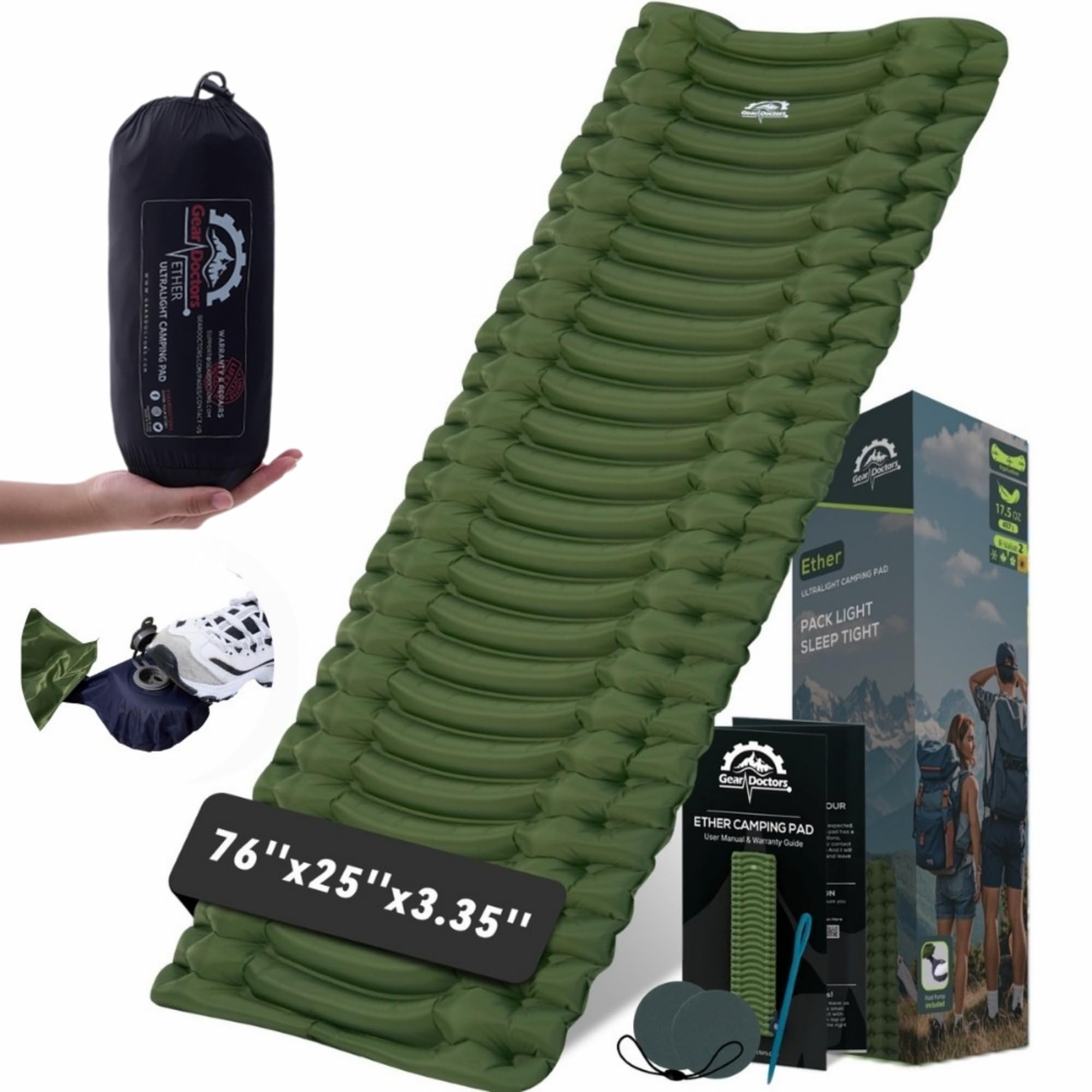
Gear Doctors Ether
Key Features
- R-Value: 2.0
- Weight: 16 oz
- Thickness: 3.25 in
- Inflation Method: Inflatable (pump sack)
- Price: $
At under $35 and 16 ounces with pump sack, the Ether is a lightweight summer pad. Its 3.25-inch thickness suits back and side sleepers. The low R-value restricts it to warm nights. Occasional pin holes may occur; test before extended use.
Pros
- Extremely lightweight and compact at 16 ounces
- Comfortable for back and side sleepers
Cons
- Low R-value (2.0) offers no cold-weather insulation — summer use only
The Ether is a smart pick for ultralight summer backpacking on a budget, but only if you won’t need warmth below 40°F.
Best for Budget Backpacking
TREKOLOGY UL80

Key Features
- R-Value: 1.6–2.0
- Weight: 19.8 oz
- Thickness: 3.9 in
- Inflation Method: Inflatable (mouth)
- Price: $
The UL80 packs down small and offers decent support for its weight, making it a budget option for three-season backpackers. Its R-value below 2 limits warmth in cooler conditions, and some pads may lose air overnight – a tradeoff you accept at this price point.
Pros
- Very lightweight and compact for backpacking
- Surprisingly comfortable with good support
Cons
- Air retention can be inconsistent – some pads may lose air overnight
A decent pick for short warm-weather trips if you don’t mind the occasional need to reinflate mid-trip.
Best for Family Car Camping
Coleman Self-Inflating Pad

Key Features
- Weight: 6.4 lbs
- Thickness: 2.5 in
- Inflation Method: Self-inflating
- Price: $$
The Coleman Self-Inflating Pad inflates on its own and includes a built-in pillow, making it a convenient setup for short car camping trips. Its 2.5-inch thickness provides decent comfort for family use. However, the carry straps are prone to tearing, and some users find they need to manually top off the air to maintain firmness. This pad is heavy and bulky, best suited for occasional car camping rather than backpacking or frequent use.
Pros
- Self-inflating design with attached pillow for quick setup.
- Comfortable 2.5-inch thickness supports good sleep on short trips.
Cons
- Carry straps may tear under normal use, reducing portability.
Best for occasional family car camping where convenience matters more than pack weight and strap resilience.
Best for Ultralight Short Campers
NEMO Switchback

Key Features
- R-Value: 2.0
- Weight: 16 oz
- Thickness: 0.9 in
- Inflation Method: None (foam)
- Price: $$$
Thick 0.9-inch closed-cell foam with a 2.0 R-value in a lightweight, well-built package. The 51-inch length limits use to sleepers under 5’6", and the firm cushion may not suit side sleepers. It costs more than the Z Lite Sol for a noticeably shorter pad.
Pros
- Lightweight at 16 ounces – easy to pack and carry
- Durable closed-cell construction with a premium feel
Cons
- 51-inch length is too short for users over 5’6" – may need to add gear for head or feet coverage
Best for ultralight backpackers under 5’6" who want a premium closed-cell pad and accept the shorter length for weight savings.
Best for Budget Car Camping
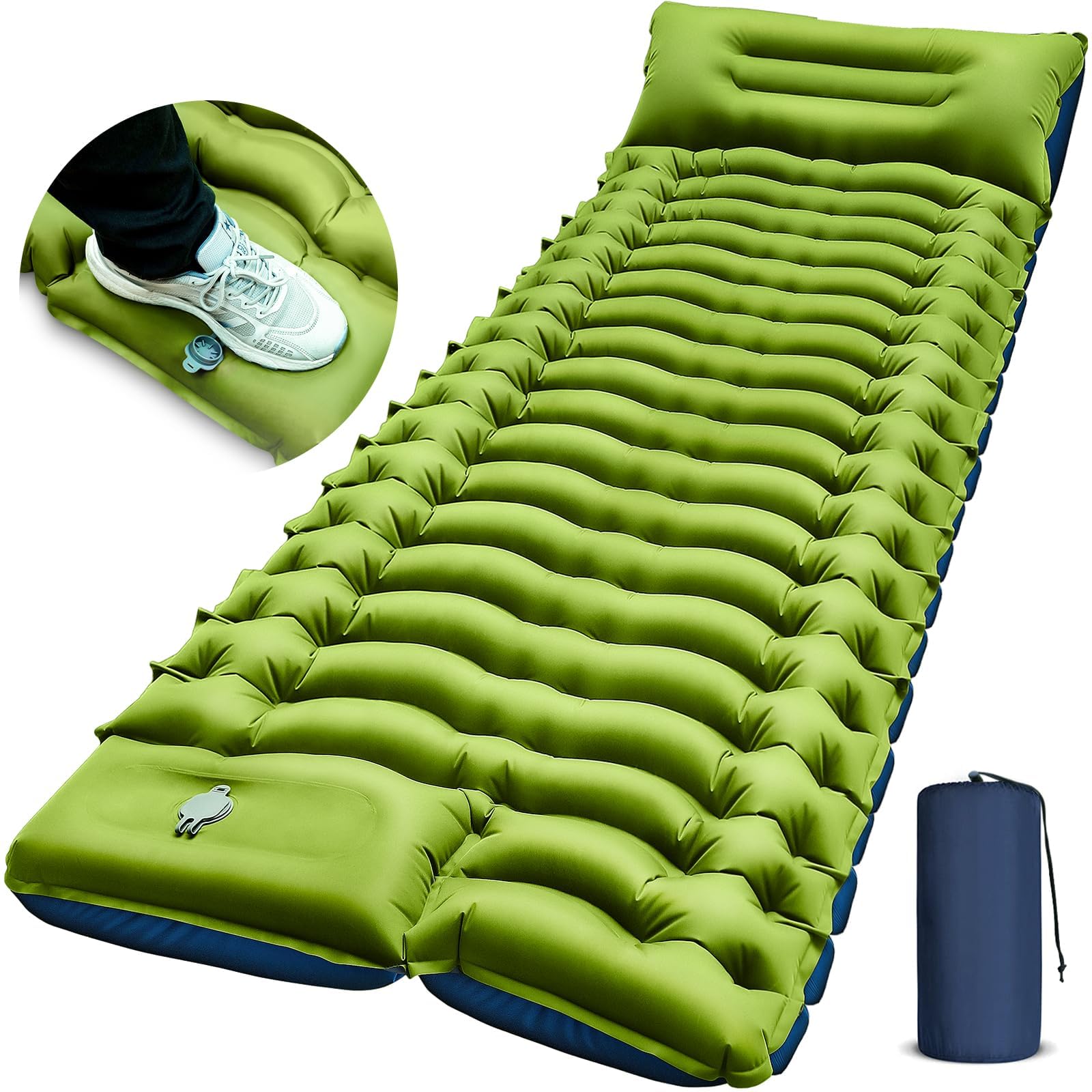
FUN PAC Camping Sleeping Pad
Key Features
- Weight: 1.5 lbs
- Thickness: 3 in
- Inflation Method: Foot pump
- Price: $
Inflates quickly using the built-in foot pump and includes a comfortable pillow for occasional car camping. The foot pump and valve may develop leaks after a few uses, making this pad better suited for short, casual trips rather than regular outings.
Pros
- Quick inflation via built-in foot pump – no separate pump needed
- Built-in pillow adds comfort for side sleepers
Cons
- Foot pump and valve may leak after a few uses – best for short trips
Best for occasional car camping trips where quick setup matters and durability is less critical.
Best for Thick Budget Pad
FNARMW 5-Inch Camping Pad

Key Features
- Weight: 2 lbs
- Thickness: 5 in
- Inflation Method: Foot pump
- Price: $
This pad’s 5-inch thickness rivals luxury models at a fraction of the cost, making it a solid choice for budget car camping or kids’ sleepovers. At 2 pounds, it’s too heavy for backpacking, and some owners find the pad may lose air overnight — a tradeoff worth checking before multi-night trips.
Pros
- 5-inch thickness provides plush cushioning for restful sleep on hard ground.
- Built-in foot pump inflates the pad in under a minute without extra gear.
Cons
- Air may leak overnight in some units, requiring reinflation before use.
Best for budget car campers or occasional sleepovers where a few pounds don’t matter and a quick top-up is acceptable.
Best for Extreme Budget
MOXILS Sleeping Pad

Key Features
- Weight: 1.9 lbs
- Thickness: 3.5 in
- Inflation Method: Foot pump
- Price: $
This budget inflatable inflates quickly via its integrated foot pump and packs down small, making it an easy grab for a last-minute trip or as a spare for unexpected guests. The 3.5-inch thickness offers decent comfort for a night or two. However, air retention can degrade after a handful of uses, so this pad is best reserved for situations where a leak won’t ruin your sleep — think car camping backup rather than a multi-day backpacking companion.
Pros
- Built-in foot pump inflates in under a minute with no extra gear.
- Packs down small enough for backpacking when deflated.
Cons
- Air retention may decline after several nights of use, requiring top-offs or replacement.
Use this as a low-cost backup or for a single night where a leak won’t be a crisis. For any trip where sleep reliability matters, choose a more robust option.
Best for Wide Budget Pad
HiiPeak Sleeping Pad

Key Features
- Weight: 2.05 lbs
- Thickness: 3 in
- Inflation Method: Foot pump
- Price: $
Its wide surface and 3-inch thickness provide comfortable support for sprawlers, and the built-in foot pump inflates quickly. Air retention can be a concern — the pad may lose some firmness overnight, making it better suited for short car camping trips where topping off is easy.
Pros
- Comfortable support from 3-inch thickness and wide surface
- Quick inflation via built-in foot pump
Cons
- Air retention can be inconsistent; pads may lose firmness overnight
A reasonable choice for budget car campers who value width and can manage occasional reinflation.
How to Choose
The single most important buying insight: your sleep position and trip length dictate whether foam or inflatable is right – not the price tag.
R-Value (Insulation)
R-Value measures how well a pad resists heat loss. A rating of 1–2 is fine for summer, 3–4 covers three seasons, and anything above 4 handles winter ground cold. But not all R-Values are created equal: budget brands often test in lab conditions that don’t match real-world ground temperature. Stick with established brands like Therm-a-Rest or Gear Doctors for trustworthy numbers.
Weight
Weight is critical for backpackers but less so for car campers. Every ounce saved on a foam pad means less cushion; every ounce saved on an inflatable means thinner materials that may puncture more easily. A 14-ounce foam pad gives up comfort for durability, while a 25-ounce inflatable like the Klymit Static V offers plushness at the cost of pack weight.
Thickness
Thickness directly affects comfort for side sleepers. Pads under 1 inch force hips and shoulders into the ground, causing restless sleep. Side sleepers need at least 2.5 inches of loft to keep hips off the ground. But thicker inflatables take longer to inflate and are more prone to wobbling. Foam pads rarely exceed 1 inch because the material can’t compress further without losing insulation.
Inflation Method
Inflation method separates casual users from serious backpackers. Self-inflating pads (open the valve, let foam expand) are convenient but heavy. Built-in foot pumps inflate quickly on paper but often fail after a few trips – the valves lose seal or the pump bladder tears. Separate pump sacks, like the one included with the Gear Doctors ApolloAir, are more reliable because they don’t integrate the pump into the pad’s structure. Mouth inflation is the lightest option but adds moisture inside the pad, which can reduce insulation over time.
FAQ
Can a foam sleeping pad keep you warm in winter?
Foam pads with an R-Value above 4 can handle winter, but most foam pads (like the Z Lite Sol at 2.6) are only good for three-season use. For real winter camping below freezing, look for an inflatable with a certified R-Value of 5 or higher, or layer a foam pad on top of an inflatable for extra insulation.
Why does my inflatable camping pad lose air overnight?
The most common cause is a faulty valve seal or a tiny puncture from sharp ground debris. Inflatable pads with built-in foot pumps are especially susceptible because the valve mechanism has more moving parts. To minimize leaks, always use a groundsheet, inflate to firmness just before sleeping, and carry a repair kit. If air loss happens regularly, the pad likely has a manufacturing defect.
Is a self-inflating pad better than an air pad for backpacking?
Self-inflating pads are heavier and bulkier than air pads of the same R-Value, making them a poor choice for ultralight backpacking. They are better for car camping or short hikes where setup speed and durability outweigh weight. For backpacking trips over a few miles, a dedicated inflatable pad with a pump sack is the lighter, more packable option.
How thick should a sleeping pad be for side sleepers?
Side sleepers need at least 2.5 inches of thickness to prevent hips and shoulders from hitting the ground. Thinner pads (0.75–1.5 inches) force side sleepers to curl uncomfortably. Look for inflatable pads with 3 inches or more – like the Klymit Static V (2.5 inches) or the FNARMW 5-inch pad – and check that the pad’s width (20+ inches) is enough for your shoulders.