
This post contains affiliate links. We may earn a small commission when you buy through our links — at no extra cost to you.
The best earplugs for sleeping aren’t the ones with the highest decibel rating. They’re the ones that seal properly in your specific ear canal all night long. Too many people buy based on the NRR number, only to wake up with the plug half out and the snoring still audible.
Across the most popular earplugs in foam, silicone, and wax, one consistent truth stands out: your ear shape dictates which material and size works, not the marketing claim. Whether you’re a side sleeper, have small ear canals, or need to block a snoring partner, the right choice depends on matching the plug to your anatomy.
Once you find that seal, the noise reduction you need follows. Use this guide to identify your fit profile and pick the earplug that stays put all night.


Best for Light Sleepers
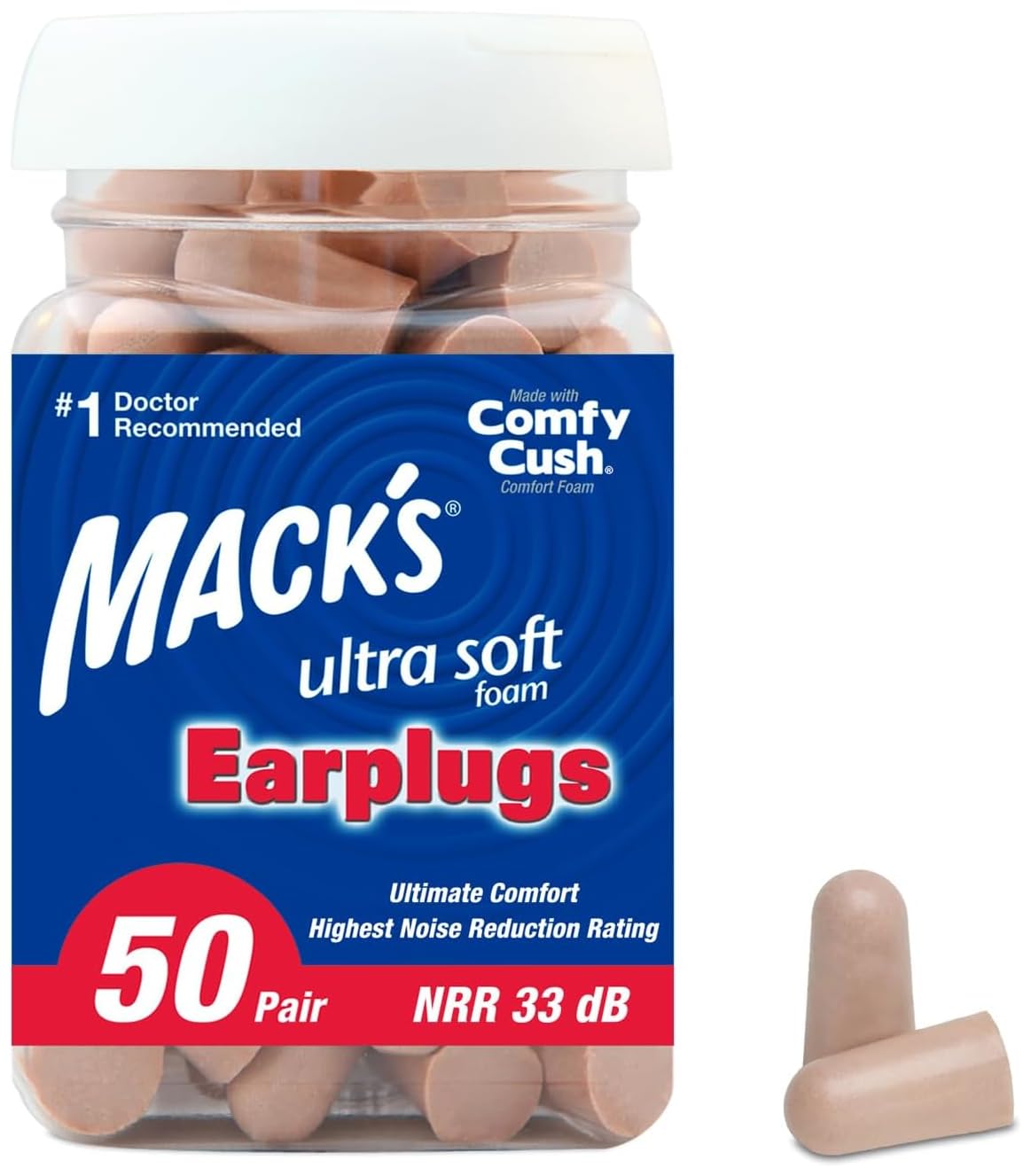
Mack’s Ultra Soft Foam 33dB
With a 33 dB NRR, these foam earplugs block a wide range of noise — from snoring to traffic — making them effective for sleeping. The 50-pack keeps the cost per pair negligible, so you can replace them frequently without concern.
The slow-release, low-pressure foam compresses easily and expands gently, which reduces ear pressure during long wear. Side sleepers benefit from the low profile that doesn’t push against pillows. For sleepers with larger ear canals, the plugs may not achieve a secure seal and can loosen overnight — a limitation that matters most in that specific scenario.
These are a strong match for light sleepers who need consistent noise blocking on a budget, and for side sleepers with average to small ear dimensions. The high quantity per purchase suits frequent use, and the overall comfort supports all-night wear without ear pain.
Pros
- Blocks noise effectively for sleeping and snoring
- Comfortable for all-night wear without ear pain
- High value with 50 pairs per purchase
- Improves sleep quality for light sleepers
Cons
- Plugs may loosen overnight for sleepers with larger ear canals
For light sleepers with average to small ear canals who want maximum noise reduction per dollar, this 50-pack is a cost-effective and comfortable solution.
Best for Side Sleepers
Becheln Silicone Reusable
Where foam earplugs win on noise reduction, the Becheln silicone plugs win on all-night comfort. The moldable material conforms to the ear without pressure, stays in place for side sleepers, and causes no soreness even after hours of use — a clear advantage over Mack’s foam top pick for those who toss and turn.
This set suits budget-conscious side sleepers, swimmers, and travelers who value a secure, waterproof seal and don’t need total silence. Noise reduction is moderate; very loud snoring or traffic may still be audible, so heavy snoring environments may require a higher-NRR foam alternative.
Pros
- Extremely comfortable – no ear pain during all-night use, even for side sleepers.
- Effective noise cancellation for the price, blocking most household and snoring noise.
- Secure fit – stays in place all night for most users without falling out.
Cons
- Noise reduction is moderate – very loud snoring or traffic may still be audible.
A budget-friendly pick for side sleepers who want reusable, comfortable earplugs without the pressure of foam — just don’t expect total silence in very noisy rooms.
Best for Travelers
Loop Quiet 2 Reusable
Four ear tip sizes and a soft silicone build let the Loop Quiet 2 sit flush in the ear – no pressure points for side sleepers, and the included case keeps them clean on the go. The 24 dB SNR reduction handles conversations, office hum, or light traffic, but falls short for loud snoring or heavy machinery.
This is a good fit for travelers and commuters who want a discreet, reusable plug that doesn’t cause ear pain overnight. For light sleepers needing to block a partner’s snoring, foam alternatives at the same price deliver noticeably more attenuation – the Quiet 2’s value is in comfort and reuse, not maximum silence.
Pros
- Very comfortable for side sleepers – stays in place without ear pain
- Helps fall asleep and stay asleep in moderate noise environments
- Durable build and minimalist design in a portable case
Cons
- Noise reduction is modest – may not block heavy snoring or loud traffic
- Price is higher than foam alternatives that offer stronger noise blocking per dollar
A comfortable, reusable option for moderate noise environments, but foam delivers more silencing at a lower cost.
Best for Side Sleepers
Mack’s Pillow Soft Silicone
Key Features
- NRR: 22 dB
- Material: Silicone putty
- Reusability: Reusable
- Price: $$
The key difference between these putty earplugs and a foam alternative is a no-pressure seal that conforms to your ear shape without expanding. Side sleepers often find foam plugs painful after a few hours, but the silicone here distributes weight evenly across the outer ear, eliminating the sore spots that keep light sleepers awake. With a 22 dB NRR, it blocks moderate snoring and background hum well enough for most bedrooms, though it won’t match the 33 dB reduction of the top foam pick.
This design also works for swimmers—the putty seals the ear canal so water stays out during casual dips. The tradeoff is that the sticky surface can pick up hair or lint from your pillow, and if you toss and turn, the plug may loosen and need a quick re-mold. That minor maintenance is worth it for anyone who has given up on foam plugs because of ear pain or a poor fit. Just keep a pair on your nightstand and reshape them right before lying down.
Pros
- Blocks snoring and background noise effectively for consistent sleep.
- No ear pressure or pain even after hours of side sleeping.
- Creates a waterproof seal for swimming and water protection.
Cons
- Sticky surface attracts hair or pillow fibers and may need re-molding during the night for active sleepers.
- Lower noise reduction than foam plugs – very loud snoring may still be audible.
For side sleepers or swimmers who find foam plugs painful or leaky, these putty earplugs offer a comfortable, custom seal that stays put with a simple re-shape—just don’t expect them to silence a jet engine.
Best for Noise Blocking
Moldex Softies 33dB 20pk
The Moldex Softies match the 33 dB NRR of the top pick, and the tapered foam shape provides a snug fit for average-sized ear canals. All-night comfort is a standout — the soft foam stays comfortable even after hours of wear. The included travel case keeps 20 pairs organized.
This model works best for sleepers with average ear canals who want strong noise blocking. The fit is not universal: some find the plugs too large or too small, leading to fallouts. If your ear canals are on the narrow or wide side, a different shape may be worth considering.
Pros
- Blocks snoring and loud noises effectively at 33 dB NRR
- Comfortable for all-night wear with no ear pain
- High build quality and durability
Cons
- Fit can be inconsistent – some users find the plugs too large or too small, causing them to fall out
A capable noise blocker for sleepers with average ear canals who prioritize comfort and high NRR, though fit may require a bit of trial.
Best for Side Sleepers
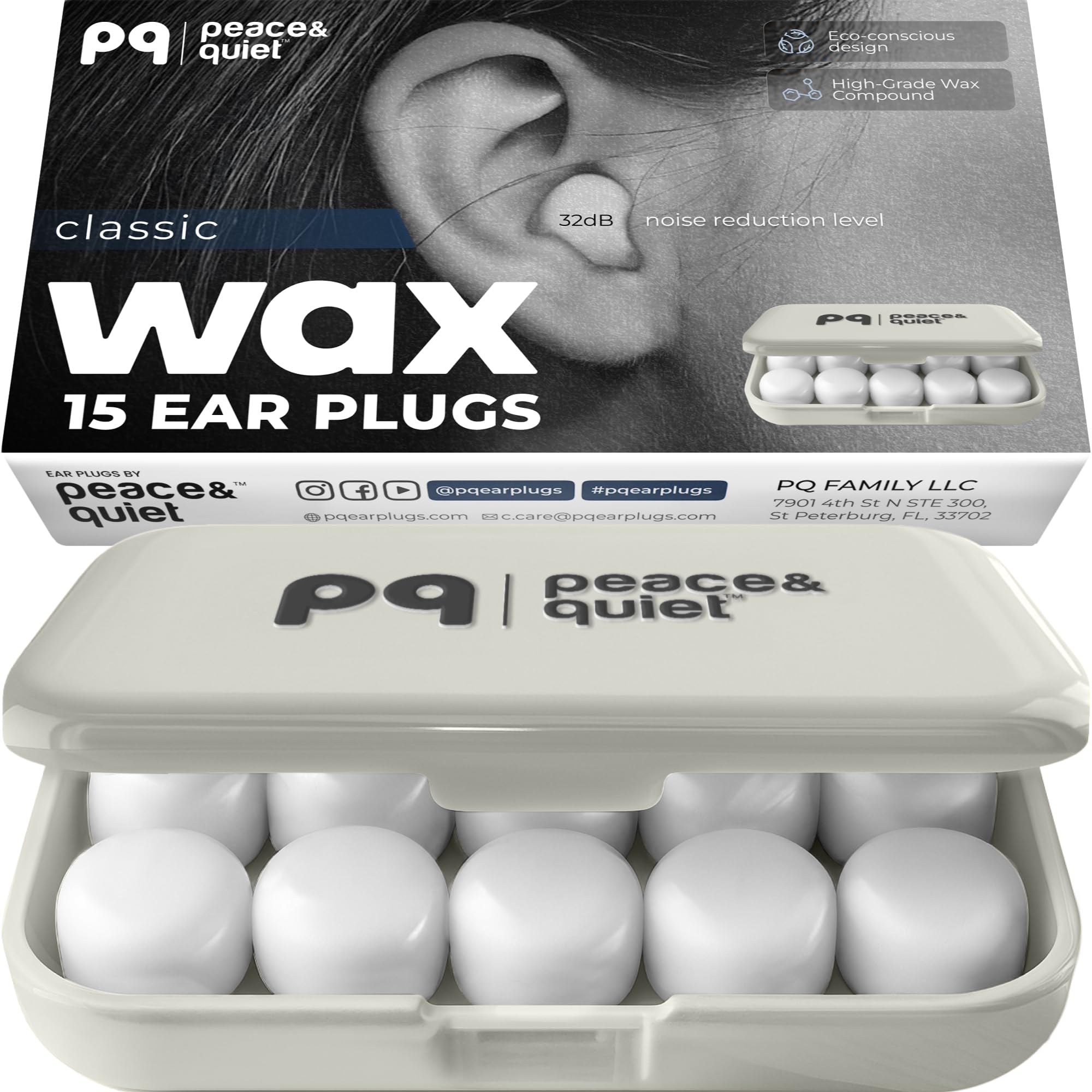
Peace&Quiet Wax 32dB
Unlike foam plugs that push against ear canals, these wax pillows soften with body heat and press into the outer ear for a low-profile seal that stays put when you roll over. The waterproof material also makes them a practical choice for swimming. However, real-world noise blocking tends to land around 29 dB rather than the advertised 32 dB, so very loud snoring may still get through.
This product is best for side sleepers who dislike the pressure of foam plugs and want something that conforms to their ear shape without protruding. The wax can soften further in warm conditions and may leave a slight residue on pillows or hair, so those who prefer a clean, dry material should consider a silicone alternative instead.
Pros
- Comfortable and stays in place for side sleepers without causing ear pain.
- Effective at muffling background noise, helping light sleepers rest better.
- Improves sleep quality noticeably for those sensitive to ambient sounds.
Cons
- Wax can soften and stick to pillowcases or hair, especially in warm rooms.
- Noise reduction may be closer to 29 dB than the claimed 32 dB in practice.
A comfortable wax option for side sleepers who want a custom fit, but expect slightly lower noise blocking and some residue on bedding.
Best for Budget Buyers
Flents Protechs 33dB Foam

Flents Protechs delivers a high 33 dB noise reduction at a budget-friendly price, packaged with a case for storage. The foam is soft and blocks snoring and general noise effectively. However, fit consistency is a gamble — some users find the plugs too small for their ear canals or they loosen and fall out during the night, meaning the seal is not guaranteed. For sleepers with average-sized ear canals who are willing to adjust insertion technique, this remains a solid value, but fit variability keeps it from competing with top contenders.
Pros
- Blocks snoring and general noise effectively
- Good value for the price
Cons
- Plugs can be too small or fall out, making the seal unreliable for some ear shapes
A good pick for light sleepers on a tight budget who have average ear canals and don’t mind occasional resealing — but not a reliable choice for deep sleep or consistently loud environments.
Best for Budget Shoppers
LYSIAN Ultra Soft 60pk
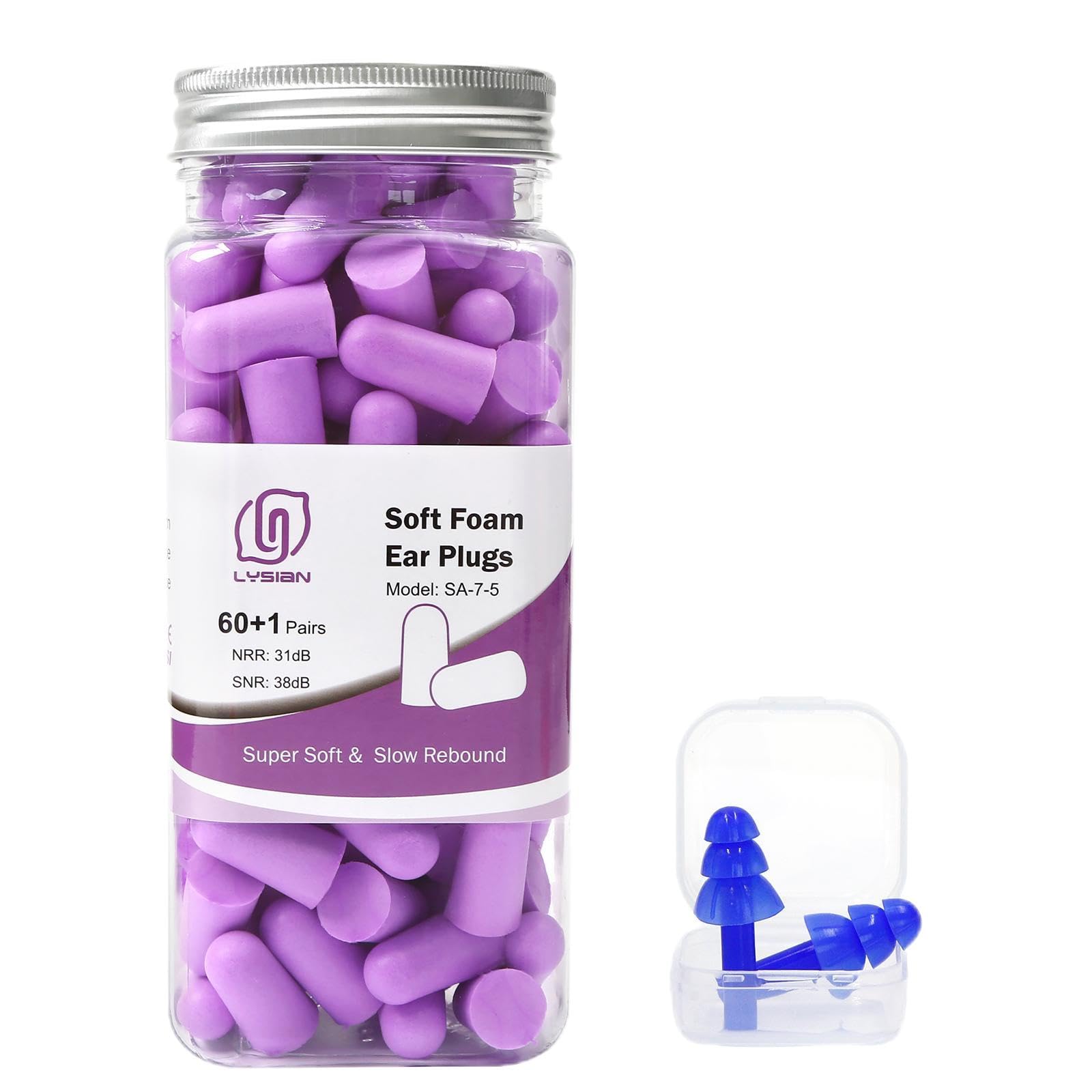
LYSIAN’s foam earplugs deliver comfortable all-night wear and exceptional value with 60 pairs plus a bonus silicone set. Noise cancellation can be inconsistent, and fit may vary – some users find the plugs don’t stay in place or block as much sound as desired. For budget shoppers willing to experiment with insertion technique, these can work for moderate noise, but they aren’t on par with top foam picks for consistent performance.
Pros
- Very comfortable for sleeping – soft and easy to wear all night.
- Good value for the quantity and bonus silicone plugs.
Cons
- Noise cancellation can be inconsistent – doesn’t always block as much sound as expected.
- Fit issues – plugs may fall out during sleep due to rapid expansion or small size.
Best for budget shoppers who need a large supply and can accept variable fit and noise blocking – for consistent performance, consider the top foam picks like Mack’s Ultra Soft Foam.
Best for Side Sleepers
ANBOW Silicone 3pk

The ANBOW silicone plugs offer impressive comfort for side sleepers and stay put through the night at a budget-friendly price. Their reusable design works well for blocking background noise. However, the noise reduction is limited – snoring and alarms may still be audible. Additionally, the stem can protrude, causing discomfort for those with smaller ear canals. These compromises keep it from competing with options that deliver both comfort and stronger noise blocking.
Pros
- Stays put and comfortable for side sleepers all night long.
- Good noise cancellation for the price – blocks most background noise.
Cons
- Snoring and alarms may still be audible – not for those needing total silence.
- Stem can protrude and cause discomfort for side sleepers with small ear canals.
Best for budget-conscious side sleepers who prioritize comfort and can tolerate some background noise, but need a different option if snoring or small ear canals are dealbreakers.
Best for Heavy Users
AZEN 100pk Foam 32dB

This AZEN pack delivers 100 pairs of soft foam plugs with a 32 dB NRR, making the per-pair cost almost negligible. The foam is genuinely comfortable for extended wear, and the noise reduction works well when the plugs get a good seal. The catch is that fit consistency varies: some ear canals find them too large, others too small, and the rapid expansion can cause them to loosen and fall out overnight. That makes this a solid choice for high-volume use where occasional misfits are acceptable, but not for light sleepers who need a dependable seal every night.
Pros
- Massive 100-pair box keeps per-pair cost extremely low
- Soft foam stays comfortable even when worn all night
Cons
- Fit size can be too large or too small for some canals, causing the plugs to loosen and fall out
Ideal for heavy users who burn through earplugs and want maximum value, as long as they can tolerate occasional fit issues — not for those who need a guaranteed seal every night.
Best for Occasional Use
YUNHAN 8pk Silicone

The YUNHAN set delivers eight pairs of colorful silicone earplugs for a low cost, and they work fine for swimming or blocking moderate noise during a short nap. But the noise blocking is noticeably weaker than many foam alternatives – snoring and TV sounds may still come through – and the firm silicone can cause ear pain during extended wear. This makes them a poor fit for light sleepers who need consistent overnight quiet, but a handy backup to keep in a gym bag or travel kit.
Pros
- Eight reusable pairs for a low price – good value for occasional or backup use.
- Silicone material is easy to clean and insert without rolling.
Cons
- Noise reduction may be insufficient for loud snoring or TV – some sound still gets through.
- Comfort can become an issue during all‑night wear – the silicone may feel stiff or cause ear soreness.
Best kept as a spare pair for swimming or short naps – not the right choice for overnight sleepers who need reliable quiet.
How to Choose
The most important factor in earplug performance is not the decibel rating on the package – it’s whether the plug forms a complete seal with your ear canal.
Noise Reduction Rating (NRR)
NRR measures maximum attenuation under ideal lab conditions. Real-world performance is often 10–15 dB lower because of imperfect insertion and seal quality. A plug with NRR 33 that fits poorly will block less noise than a well-sealed plug with NRR 25.
If you need to block snoring or traffic, look for NRR 30 or above. For lighter noise like ambient hum, NRR 25–28 is sufficient and often more comfortable for all-night wear.
Material Type
Foam earplugs expand to fill the canal and offer the highest NRR per dollar. They are disposable and require rolling before insertion. Silicone plugs are reusable, washable, and don’t expand, so they rely on being pushed into place – easier for some, but less forgiving of wrong sizing.
Wax and putty are the most forgiving for irregular canal shapes and side sleeping. They mold to the outer ear and don’t create pressure inside the canal. The trade-off is that they can stick to hair or pillow, and their noise reduction is often lower than high-NRR foam.
Size Options
Ear canals vary significantly in diameter and depth. Standard foam plugs assume an average canal size, which is why they work for most but not all. If standard plugs cause pain or fall out, look for slim or small-specific models, or try moldable materials that conform to your unique shape.
Some reusable plugs come with multiple ear tip sizes (XS–L). This lets you fine-tune the fit, but the stem or body may still protrude – a problem for side sleepers. Always check the physical length and profile before buying.
Reusability
Disposable foam earplugs offer the lowest cost per use and highest NRR, but create waste. Reusable silicone or wax plugs need regular cleaning (soap and water) and gradually stiffen or lose tackiness over months. Most manufacturers recommend replacing reusable plugs every 2–3 months.
For travelers, reusable plugs with a carrying case are convenient. For home use where noise is consistent, foam is simpler. Budget-conscious buyers who go through plugs quickly may prefer bulk disposable packs.
FAQ
Why do my earplugs keep falling out while I sleep?
The most common reason is that the plug is too small for your ear canal or not inserted deep enough. Foam plugs must be rolled thin before insertion and held in place until they expand. If they still fall out, try a larger size or switch to a moldable silicone or wax plug that conforms to your ear shape.
Are silicone earplugs better for side sleepers than foam?
Yes, in most cases. Silicone and wax plugs sit at the ear opening rather than in the canal, so they don’t create pressure when your head is pressed against a pillow. Many side sleepers find foam plugs uncomfortable because the rigid stem of the expanding foam pushes against the ear’s sensitive tissue. Reusable silicone with a low profile is the safest bet.
Can earplugs completely block snoring?
They can reduce snoring to a faint sound, but complete silence is unlikely. A high-NRR foam plug (33 dB) can lower background noise by about 25–30 dB in real use, which is enough to mask most snoring. However, light sleepers may still hear loud, close snoring – pairing earplugs with a white noise machine or fan is more reliable.
How do I insert foam earplugs correctly for maximum noise reduction?
Roll the plug between your fingers into a thin, crease-free cylinder. Reach over your head with one hand and pull the opposite ear upward and outward to straighten the canal. Insert the compressed plug and hold it in place with a fingertip for 30–45 seconds while it expands. A proper seal should feel snug, not painful, and you should hear immediate muffling.