
This post contains affiliate links. We may earn a small commission when you buy through our links — at no extra cost to you.
Campers often face a frustrating trade-off: an inflatable pad that promises comfort but might leave you on the cold ground by morning, or a closed-cell foam pad that’s nearly indestructible yet feels more like a gym mat than a mattress.
The key is matching the pad to your camping style: a thru-hiker needs every ounce to count, while a family car camper can sacrifice weight for plushness. The specs that truly matter—R-value for insulation, packed size for your pack, and thickness for side-sleeping comfort—determine whether a pad feels like a luxury or a liability.
The biggest decision may be whether to go with an inflatable’s extra cushion and insulation, or stick with the foolproof reliability of foam. A foam pad can’t pop, but an inflatable with the right R-value can keep you warmer on frozen ground. Both have their place, and the right answer depends on the terrain and temperatures you expect to face.



Best for Three-Season Backpacking
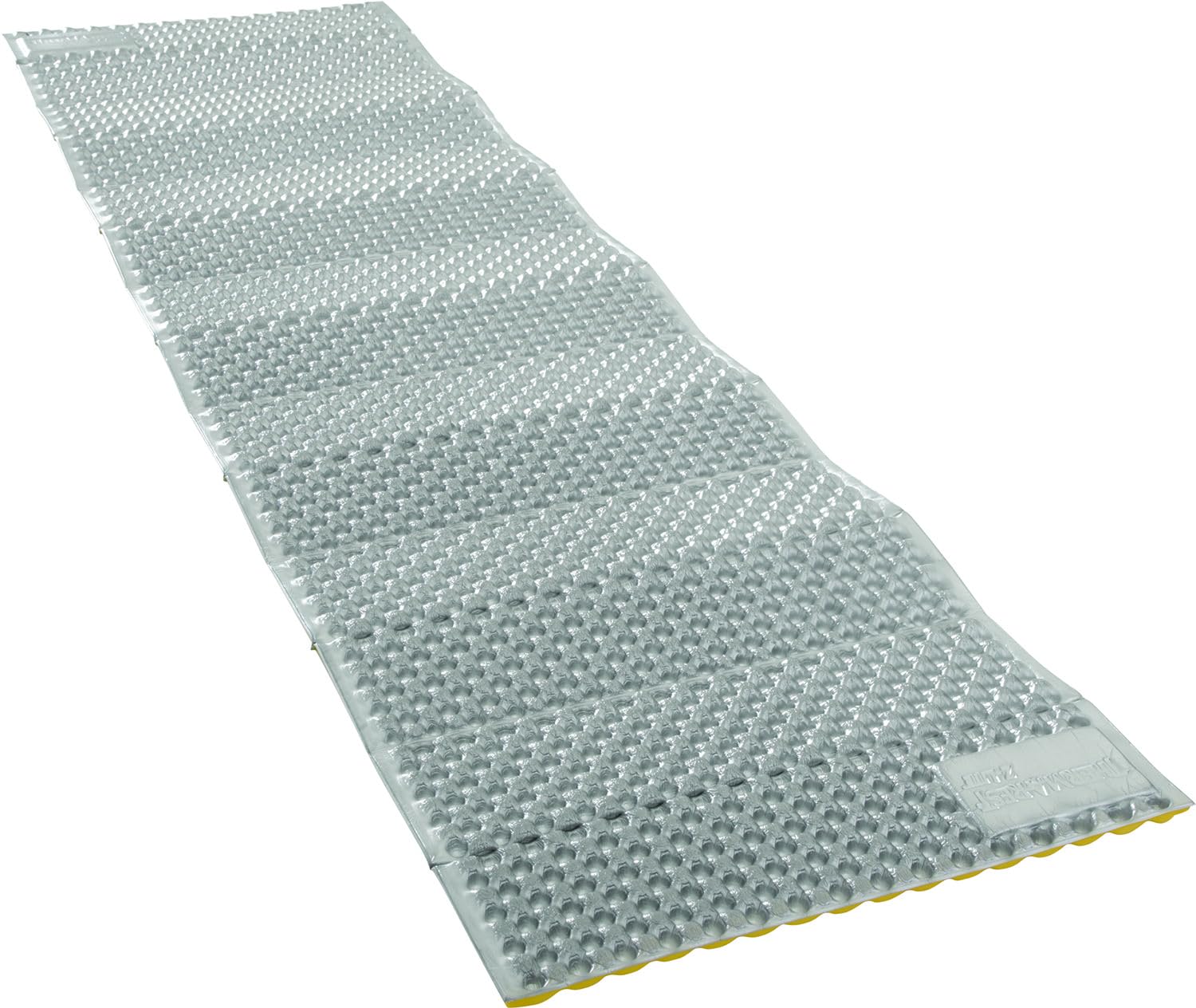
Therm-a-Rest Z Lite Sol
Key Features
- Weight & Packed Size: 14 oz, accordion fold
- Thickness & Comfort: 0.75 in
- Construction Type: Closed-cell foam with reflective coating
- Durability: Puncture-proof
- Price: $
The Z Lite Sol uses a closed-cell foam core with a reflective ThermaCapture layer to achieve an R-2.6 value that handles spring through fall temperatures. At 14 ounces, it straps easily to any pack and eliminates the risk of punctures or valve failures that inflatable pads carry.
This pad suits backpackers who want ground insulation without constant inflation checks, hammock campers who need an underquilt supplement, and budget-minded shoppers who expect years of service from a single purchase. Side sleepers will find the 0.75-inch profile too firm — that’s the tradeoff for a foam pad that can’t leak or deflate.
Pros
- R-2.6 warmth from reflective coating insulates well for three-season use.
- 14-ounce weight makes it simple to carry on the outside of a backpack.
- Closed-cell foam resists punctures and shows little wear after extended use.
Cons
- 0.75-inch thickness feels hard for side sleepers — back or stomach positions are more comfortable.
- Reflective coating can peel with rough handling, though the foam underneath still works.
For backpackers who prioritize durability and simplicity over cushion, the Z Lite Sol delivers consistent warmth at a weight and price that is hard to beat.
Best for Cold-Weather Backpacking
Gear Doctors ApolloAir
Key Features
- Weight & Packed Size: 17 oz, pump sack
- Thickness & Comfort: 3.25 in
- Construction Type: Inflatable air pad with insulation
- Durability: 40D nylon
- Price: $$
At 17 ounces, the ApolloAir delivers a true 5.2 R-value — insulation normally reserved for pads twice its weight. The included pump sack doubles as a stuff sack and inflates the pad quickly without introducing moisture from breath into the insulation. Unlike the puncture-proof foam top pick, this inflatable offers 3.25 inches of cushion and far more warmth, but it requires careful site clearing to avoid punctures.
It’s built for ultralight backpackers and year-round campers who prioritize insulation and packed size over roominess. The 22-inch width is intentional to shave ounces; side sleepers under 200 pounds will likely find it adequate, but broad-shouldered users may feel confined.
Pros
- High warmth-to-weight ratio with an R-5.2 rating
- Compresses to the size of a water bottle and weighs just 17 oz
- Quick, moisture-free inflation via the included pump sack
Cons
- The 22-inch width can feel restrictive for broad-shouldered sleepers
- Cold spots may appear if the insulation shifts overnight
For ounce-counting backpackers who need four-season warmth, the ApolloAir delivers high insulation at a weight few pads match — just confirm the narrow 22-inch width works for your sleep style.
Best for Summer Backpacking
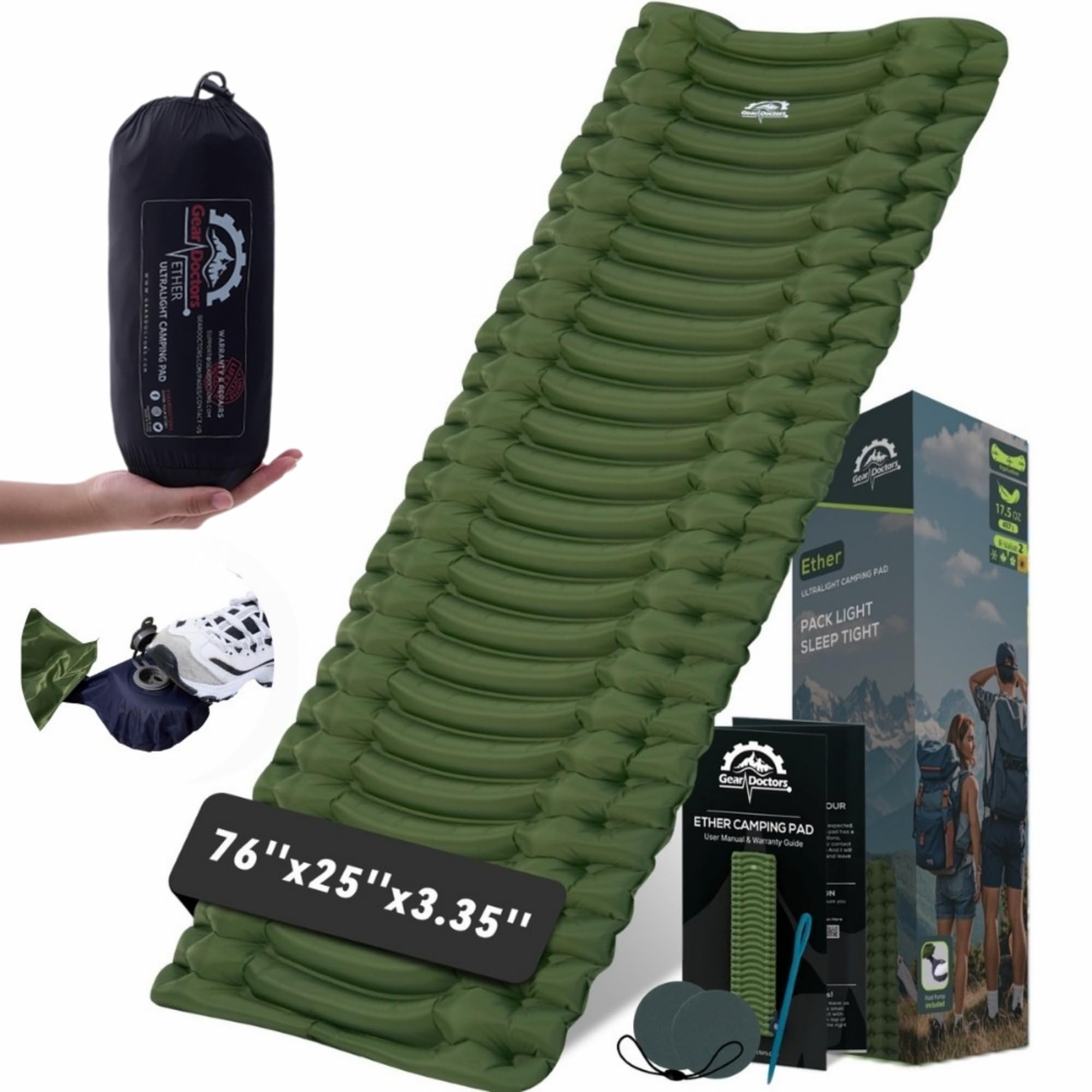
Gear Doctors Ether
Key Features
- Weight & Packed Size: 17.5 oz, compact
- Thickness & Comfort: 2.36-3.35 in contoured
- Construction Type: Inflatable air pad
- Price: $
The Gear Doctors Ether uses a contoured thickness profile—thicker at the edges and thinner in the center—to relieve pressure on hips and shoulders, a design that side sleepers will appreciate. At 17.5 oz with a detachable foot pump, it packs small and inflates easily. This pad is a warm-weather-only option; its low R-value keeps it out of cold-weather use, but for summer backpacking on a budget, the comfort-to-weight ratio is impressive.
Pros
- Contoured edge-to-center thickness relieves pressure on hips and shoulders.
- Lightweight 17.5 oz design with a detachable foot pump for easy inflation.
- Budget-friendly price for an ultralight sleeping pad with ergonomic shape.
Cons
- Air retention can be inconsistent; some units may develop pinhole leaks that require patching.
For warm-weather backpackers who prioritize comfort and low weight on a budget, the Gear Doctors Ether is a smart pick.
Best for Ultralight Summer
Sleepingo Ultralight
Key Features
- Weight & Packed Size: 14.4 oz, water-bottle pack
- Thickness & Comfort: 2 in
- Construction Type: Inflatable air pad
- Durability: Ripstop nylon
- Price: $
At 14.4 ounces and roughly the size of a water bottle when packed, the Sleepingo Ultralight disappears into any loadout. Mouth inflation is fast, and the 2-inch thickness provides noticeable cushion on warm ground. It’s built for bare-bones backpackers, summer car campers, and travelers who need an emergency sleep surface. The trade-off is clear: no insulation means it won’t keep you warm on cold earth, and the thin nylon can develop holes on rocky terrain — use a tent footprint to protect it.
Pros
- Weighs just 14.4 oz and packs smaller than a water bottle — disappears in a pack.
- Budget-friendly without cutting essential comfort for warm nights.
- Inflation takes only a few breaths, deflation is equally quick.
Cons
- On rocky ground, the thin nylon can develop punctures — a tent footprint or groundsheet is essential.
For warm-weather weight savings at the lowest cost, the Sleepingo solves the ultralight equation — just pack a groundsheet and keep it far from winter.
Best for Luxury Car Camping
FNARMW 5" Thick Pad
Key Features
- Weight & Packed Size: 4.2 lbs, bulky
- Thickness & Comfort: 5 in
- Construction Type: Inflatable with foot pump, pillow
- Durability: 50D nylon TPU
- Price: $
The FNARMW 5-Inch Thick Pad brings resort-style padding to the campground with its towering 5-inch loft, built-in foot pump, and integrated pillow — all at a fraction of the price of premium brands. This is car camping luxury for large and tall individuals who need extra space; the 79-by-28-inch deck and 800-pound capacity eliminate shoulder drop and bottoming out. But the comfort comes with a serious bulk penalty: at over 4 pounds and the packed size of a small duffel, it belongs in a trunk, not a backpack.
Pros
- 5-inch thickness provides plush cushioning, ideal for side sleepers and uneven ground.
- Built-in foot pump eliminates separate inflation gear.
- Spacious 79×28-inch surface supports up to 800 lbs, accommodating tall and large campers.
Cons
- Foot pump inflation can be slow, taking several minutes to fully inflate.
- At 4.2 lbs and the packed size of a large sleeping bag, this pad is too heavy for backpacking.
For car campers who want maximum cushion on a budget, this pad delivers exceptional comfort; its weight confines it to vehicle-accessible sites.
Best for Cot Camping
Teton Outfitter Camp Pad
Key Features
- Weight & Packed Size: 6 lbs, roll-up
- Thickness & Comfort: 2 in
- Construction Type: Open-cell foam, canvas
- Durability: Puncture-proof
- Price: $$$
The Teton Outfitter layers two inches of open-cell foam under a removable canvas cover, turning a bare cot into a cushioned sleep surface that rivals a bed at home. Designed to fit TETON cots and other wide camping cots, the pad stays securely in place. It’s built for car campers and cot users who value thickness and durability over portability. The pad’s firm, supportive foam works well for back sleepers, though side sleepers may find it less plush than expected.
Pros
- Thick open-cell foam cushioning feels like a home mattress on a cot.
- Removable canvas cover is machine-washable and built to last.
- Sized to fit TETON and wide cots without overhang.
Cons
- Heavy and bulky — at 6 lbs, impractical for backpacking or hiking to a campsite.
For car campers and cot users who want a thick, puncture-free pad and don’t need to carry it far, the Teton Outfitter delivers dorm-room comfort in the outdoors. Backpackers should look to lighter closed-cell foam options.
Best for Budget Backpacking
Therm-a-Rest Z Lite Original

Key Features
- Weight & Packed Size: 14 oz, accordion fold
- Thickness & Comfort: 0.75 in
- Construction Type: Closed-cell foam
- Durability: Puncture-proof
- Price: $
This 14-oz closed-cell foam pad is nearly indestructible and folds small, providing puncture-proof warmth at the lowest cost. The R-value of 1.7 is adequate for summer use, but falls well below the top-pick Sol’s 2.6, so shoulder-season trips will feel the chill. It’s a budget-friendly choice for ultralight hikers who need a bombproof sit pad and warm-weather sleeping surface.
Pros
- 14-ounce accordion-fold design straps easily to any pack.
- Closed-cell foam cannot puncture or deflate, no matter the terrain.
Cons
- Side sleepers may experience pressure points due to the 0.75-inch foam on hard ground.
A go-to for warm-weather backpacking where durability trumps cushion—but if you plan to camp into fall or sleep on your side, the thicker, warmer Sol is a better match.
Best for Lightweight Foam
NEMO Switchback

Key Features
- Weight & Packed Size: 14.8 oz, 20x5x5.5 in
- Thickness & Comfort: 0.75 in
- Construction Type: Closed-cell foam, reflective film
- Durability: Puncture-proof
- Price: $$
The NEMO Switchback uses dual-density foam and reflective film to provide R-2.0 warmth at 14.8 ounces. The hexagonal nesting pattern improves packability over basic foam pads. But its $60 price is high, and the comfort gain over the Z Lite Sol is minimal — side sleepers will still feel the ground. Packed size remains bulkier than an inflatable.
Pros
- Lightweight design that easily straps to a backpack
- Solid R-2.0 insulation for three-season use
Cons
- Firmness can create pressure points for side sleepers accustomed to thicker inflatable pads
A good fit for foam loyalists who value refined packability and consistent warmth, but the Z Lite Sol offers nearly identical performance at a lower price.
Best for Thick Comfort
TREKOLOGY UL80

Key Features
- Weight & Packed Size: 19.8 oz, compact
- Thickness & Comfort: 3.9 in
- Construction Type: Inflatable air pad
- Durability: 40D nylon
- Price: $$
At 3.9 inches thick and 19.8 ounces, the UL80 gives side sleepers generous cushioning. Air retention may vary, so be ready to add air during the night. Its compact size and budget-friendly price suit car campers and backpackers who can handle occasional reinflation.
Pros
- Thick 3.9-inch cushioning relieves pressure for side sleepers
- Weighs just 19.8 oz and packs down small for minimal pack space
Cons
- Inflating the pad by mouth requires many breaths; a pump sack cuts setup time significantly
For campers who prioritize thick cushioning over plug-and-play convenience, the TREKOLOGY UL80 delivers at a reasonable weight and price — as long as you’re willing to handle the manual inflation.
Best for Four-Season Camping
Gear Doctors Oxylus

Key Features
- Weight & Packed Size: 35.2 oz, self-inflating
- Thickness & Comfort: 1.5 in
- Construction Type: Self-inflating hybrid
- Price: $$
The Oxylus pairs a foam core with self-inflation for shoulder-season and winter use, opening the valve and needing only a few breaths to reach firmness. At 2.2 pounds and a packed size larger than ultralight air pads, it’s better suited to car camping or short backcountry trips where weight matters less than cozy, no-fuss sleep.
Pros
- High 4.3 R-value insulates against frozen ground
- Self-inflating foam provides cushioned comfort without a separate pump
Cons
- Packed size may be cumbersome for minimalist backpackers compared to pure air pads
For cold-weather campers who value warmth and simplicity over weight, the Oxylus fits car camping and weekend winter treks where bulk isn’t a dealbreaker.
Best for Plush Car Camping
CYMULA 3" Memory Foam

Key Features
- Weight & Packed Size: 7.5 lbs, roll-up
- Thickness & Comfort: 3 in
- Construction Type: Memory foam
- Durability: Puncture-proof
- Price: $$
The CYMULA’s 3-inch CertiPUR-US memory foam provides deep cushioning that relieves pressure well for back sleepers during car camping, guest stays, or sleepovers. Thickness may measure slightly under 3 inches on some units, and the price sits above budget foam options. For those who value mattress-like softness and don’t mind the weight, it’s a compelling pick.
Pros
- Memory foam relieves pressure points for back sleepers during car camping.
- CertiPUR-US certified foam ensures low emissions and durability.
Cons
- At 7.5 lbs, this pad is too heavy and bulky for backpacking.
A smart choice for car campers who want a bed-like feel and don’t need to carry gear far; leave it behind for backpacking.
Best for Easy Inflation
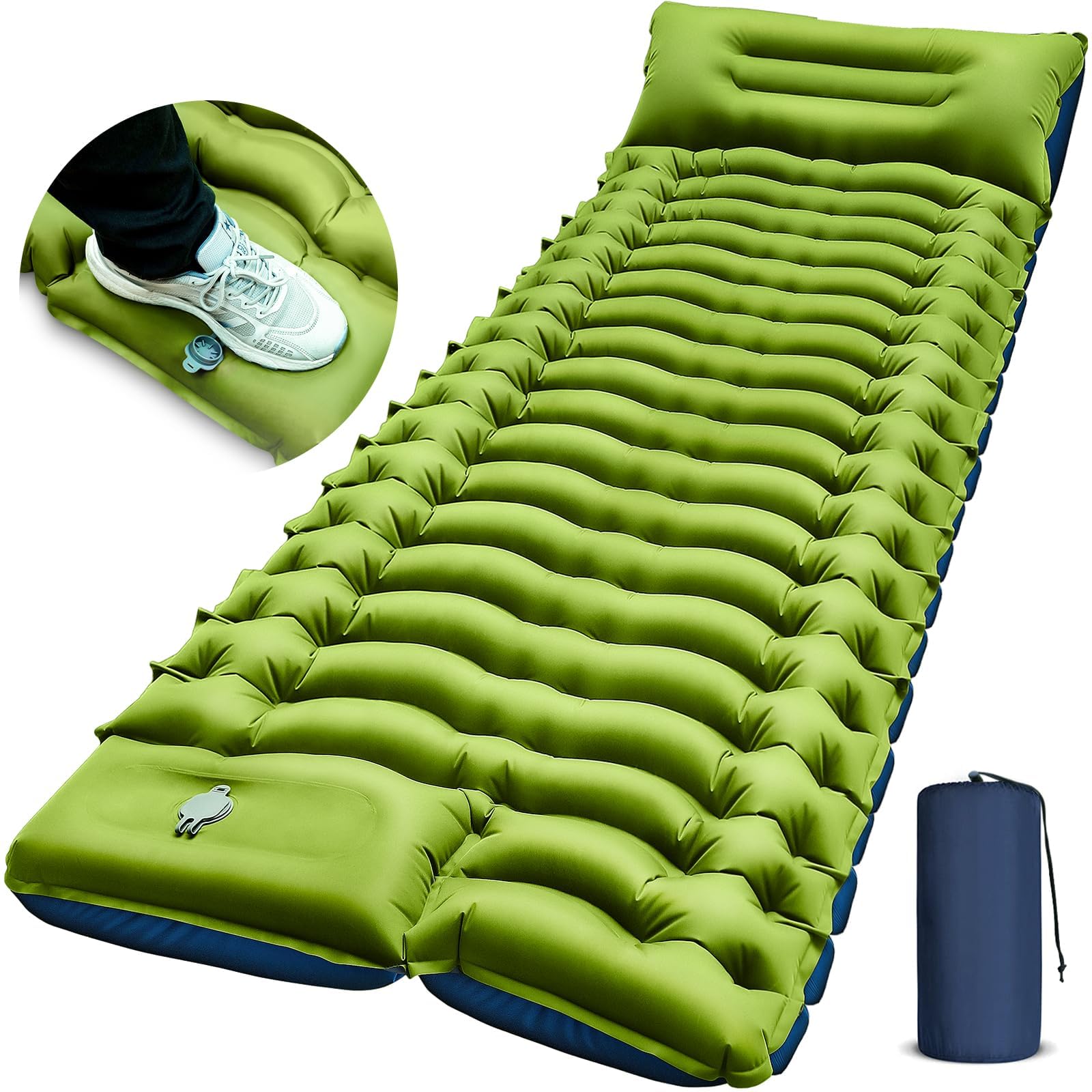
FUN PAC with Foot Pump
Key Features
- Weight & Packed Size: 1.5 lbs
- Thickness & Comfort: 3 in
- Construction Type: Inflatable, foot pump, pillow
- Price: $
The 27-inch width and built-in foot pump simplify camp setup, while the 3-inch thickness adds cushioning for side sleepers. Insulation is minimal, so cold nights will be uncomfortable, and long-term pump durability remains unproven.
Pros
- Built-in foot pump makes inflation easy and lung-free.
- Extra-wide 27-inch surface accommodates tall or broad sleepers comfortably.
Cons
- Foot pump inflation may be slower than expected, and air retention can be inconsistent on some pads.
This pad suits fair-weather car campers who want a wide, no-breath-inflation mattress at a budget price.
Best for Occasional Car Camping
Coleman Self-Inflating Pad

Key Features
- Weight & Packed Size: 6.4 lbs, roll-up
- Thickness & Comfort: 2.5 in
- Construction Type: Self-inflating hybrid
- Price: $$
The Coleman self-inflating pad offers thick cushioning and no-pump inflation at a mid-range price—ideal for car campers who don’t need to carry it far. At 6.4 lbs and bulky, it’s a poor fit for backpacking. The straps and buckles are a weak point and may break with rough handling. For weekend trips where you park nearby, comfort outweighs these trade-offs.
Pros
- Comfortable 2.5-inch thickness cushions well for car camping.
- Self-inflates with no pump, saving setup hassle.
Cons
- Straps and buckles can be fragile and may break under typical use.
This pad fits car campers seeking a no-fuss, comfy sleep surface who don’t mind a heavy pack size and are willing to handle the straps with care.
Best for Budget Extra Cushion
Wakeman 1.25" Foam Pad

Key Features
- Weight & Packed Size: 5 lbs, carry strap
- Thickness & Comfort: 1.25 in
- Construction Type: Closed-cell NBR foam
- Durability: Puncture-proof
- Price: $
This affordable 1.25-inch foam pad adds welcome cushion to a hard cot or tent floor. The closed-cell foam is waterproof and includes carry straps, but expect a chemical smell that needs a few days to dissipate. Its firmness provides structure, not plushness — side sleepers will want something softer. As an extra layer or emergency pad, it’s a practical budget choice.
Pros
- Affordable and decent thickness for a foam pad
- Works well as a cot topper or for car camping
Cons
- Too firm for side sleepers; lacks cushioning for pressure points
This pad works for car campers who need extra cushion on a cot and can air it out before use; side sleepers and those bothered by initial odors should look elsewhere.
Best for Glamping Comfort
Gaialoop 3" Memory Foam
The Gaialoop pad delivers a plush, CertiPUR-US certified memory foam surface that suits car camping and overnight guests. At 12.8 lbs, it’s a non-starter for backpacking, and rolling it back up can require patience. As a dedicated glamping mattress, it commits to comfort over portability.
Pros
- Very comfortable memory foam feel
- Great for car camping and guest use
Cons
- Weighs 12.8 lbs and resists compact rolling — impractical for backpacking or quick storage
Best for car campers and home use where packing size and weight don’t matter — skip it if you need a pad that fits in a backpack.
How to Choose
The right sleeping mat balances insulation, cushioning, and weight for your specific camping style—ignoring one can leave you cold or sore.
R-Value
R-Value measures how well a pad resists heat loss to the ground; a higher number means warmer. A pad with R-1.5 is fine for summer, but by fall you’ll need at least R-2.5 to prevent waking up chilled. Three-season pads typically target 2.5–4, while four-season pads exceed 4.5. Foam pads naturally provide insulation, but some ultralight inflatables skimp on R-value to save weight—so check the spec, not the price tag.
Weight & Packed Size
Backpackers count ounces; car campers can afford pounds. A pad’s weight directly impacts your load, but packed size matters just as much for fitting in your pack. Closed-cell foam pads fold into bulky accordion blocks that strap outside, while inflatables compress to the size of a water bottle. The trade-off: lighter, more compressible pads often use thinner fabrics and less insulation, making them more vulnerable to punctures and less warm.
Thickness & Comfort
Thickness is about more than plushness—it determines pressure relief for side sleepers and isolation from bumpy ground. A 3-inch inflatable can cradle your hips and shoulders, while a 0.75-inch foam pad may leave you tossing. Thicker pads are heavier and take longer to inflate, though. For side sleepers, a minimum of 2 inches is wise; for back sleepers, 1.5 inches may suffice if the ground is smooth.
Construction Type
Sleeping pads fall into three categories: closed-cell foam, self-inflating, and pure air. Closed-cell foam is puncture-proof and inexpensive but firm and bulky. Self-inflating pads combine foam and air for a middle ground, offering some cushion with less risk of total failure, but they’re heavier. Pure air pads compress smallest and can be thickest, but they require a pump or lung power and are susceptible to leaks. Choose based on your tolerance for punctures and packing constraints.
Durability & Puncture Resistance
Air pads develop pinholes from sharp debris, while foam pads shrug off abuse but can compress permanently over years. If you camp in rocky terrain, placing a closed-cell foam pad under an inflatable provides backup insulation and puncture protection. Inflatable pads with thicker denier fabrics (like 40D or 50D nylon) resist tears better, but no air pad is truly leak-proof. Always carry a repair kit for inflatables.
FAQ
Why does my self-inflating sleeping pad not inflate fully?
Self-inflating pads rely on open-cell foam expanding to draw in air; if stored compressed for months, the foam loses memory and won’t spring back. Leave the valve open for 24 hours before a trip, and give a few breaths to top off firmness. If it still won’t inflate, the foam may be permanently ruined—replacement is the only fix.
Can I use a camping foam pad as a yoga mat?
Closed-cell foam pads are too firm and narrow for yoga; they lack the grip and cushion of a yoga mat and often have a slick surface. A yoga mat is a better choice for studio practice, but in a pinch, a foam pad can serve as a barrier against dirt for stretching. Don’t expect stability for standing poses.
What R-value do I need for 3-season camping?
For spring through fall, an R-value between 2.5 and 4 works well; if you camp in shoulder seasons or at altitude, lean toward 4. Lower R-values around 1-2 are suitable only for summer. If the pad doesn’t list an R-value, assume it’s minimal—most unrated air pads are around 1.5.
How do I fix a small hole in my inflatable sleeping pad?
Find the leak by submerging the inflated pad in water or using soapy spray. Once spotted, dry and clean the area, then apply a patch from the included repair kit or tenacious tape. Press firmly and let cure for several hours. For pinholes, a dab of seam sealant often works.