
This post contains affiliate links. We may earn a small commission when you buy through our links — at no extra cost to you.
You buy a ‘breathable’ rain jacket, hit the trail, and end up soaked from sweat. That’s the hidden cost of cheap waterproofing: a jacket that seals rain out but traps moisture in leaves you just as wet.
Under $100, genuine breathability is rare. A handful of jackets use pit zips or mesh liners that actually move heat and humidity away from your body. This guide cuts through the marketing to find the ones that work.
The best choice depends on how you move. High-output runners need ventilation vents; travelers need packability without turning into a sweatbox. You don’t have to sacrifice one for the other if you know what to look for.


Best for Everyday Commuter
Columbia Watertight II
Key Features
- Waterproofing: Omni-Shield DWR
- Breathability: Mesh lining
- Weight: 8 oz
- Packability: Folds into pocket
- Price: Mid-Range
Omni-Shield coating sheds heavy rain and snow while the polyester mesh lining lets trapped heat escape, keeping you comfortable during a steady hike or a walk between errands. At eight ounces, it folds into its own hand pocket — small enough to stash in a daypack or carry-on without a second thought.
In wet weather, the shell holds up: users describe staying dry through prolonged downpours and gusty winds. The mesh liner makes a real difference when you’re working at a moderate pace — less of that clammy feeling common in budget rain jackets. It’s also a strong wind barrier, adding warmth on chilly, rainy days without turning into a sweatbox.
This jacket suits men who need a sturdy everyday rain shell for hiking, commuting, and general outdoor use — especially when moderate activity is the norm. If you’re a runner or cyclist who pushes hard, the lack of pit zips limits ventilation during sustained exertion. The regular fit is generous; those with a slim build may want to size down for a closer feel.
Pros
- Holds up in heavy rain and snow without feeling clammy — mesh liner allows moisture to escape.
- Blocks wind effectively, adding warmth on cool, wet days.
- Folds into its own pocket for easy packing in a bag or suitcase.
Cons
- Lacks pit zips, so airflow is limited during high-intensity activities like running or cycling — fine for moderate hiking or commuting.
- Regular cut runs a bit roomy; those with a lean build may need to size down for a trim fit.
A solid rain jacket for everyday wet-weather use and moderate outdoor activity, as long as you don’t need the extra airflow that pit zips provide for sustained exertion.
Best for Light Hike Commute
OTU Rain Jacket
Key Features
- Waterproofing: PU coating
- Breathability: Mesh lining
- Weight: 10 oz
- Packability: Included pouch
- Price: Budget
The OTU rain jacket stands out for its mesh-lined breathability at a budget price – a rare combination under $40. Lightweight and packable (folds into its own pocket), it’s an easy layer for a day hike or a travel backup. The PU coating provides moderate water resistance; sustained rain can overwhelm the fabric.
This jacket is best for hikers and daily commuters in mild climates where breathability matters and heavy rain is infrequent. The large hood and roomy torso work well for layering, but those seeking dependable waterproofing should look to the top pick for its Omni-Shield coating. Sizing runs generous – consider going down a size if you plan to wear it without thick layers.
Pros
- Lightweight and comfortable for layering in mild weather.
- Breathable mesh lining prevents clamminess during active use.
- Solid build quality at a budget price.
Cons
- The hood is large and may feel floppy; torso fits generously.
- Water resistance can saturate in prolonged heavy rain – best for light showers.
For hikers and commuters who want breathability on a budget and don’t expect downpour protection, this jacket is a smart buy.
Best for Active Women
Outdoor Ventures Women
Key Features
- Waterproofing: PU coating
- Breathability: Pit zips, mesh lining
- Weight: 1.13 lbs
- Packability: Packs into pouch
- Price: Mid-Range
The Outdoor Ventures Women stands apart from many packable rain jackets by including pit zips and a mesh lining — features that actually let heat escape during exertion. While the slimmer travel-oriented options in this price range omit ventilation, this jacket keeps you cooler on climbs and sprints. It’s not the lightest in its class, but the tradeoff makes sense for anyone who sweats during activity.
This jacket suits women who cycle, hike, or run and need a breathable layer that can handle moderate rain. The 1.13 lb weight will be noticeable if you’re used to ultralight shells, but the added features (pit zips, multiple pockets, packability) justify the extra ounces. Chest fit can be snug for those with a larger bust, so ordering one size up is worth considering if you plan to layer underneath.
Pros
- Pit zips and mesh lining provide adjustable airflow during high-output activities.
- Keeps you dry in light to moderate rain without feeling clammy.
- Packs into its own pouch and offers well-designed pockets that stay accessible with a backpack.
Cons
- At 1.13 lbs, it’s heavier than many packable jackets — a consideration if every ounce matters for ultralight trips.
- Chest area may feel snug for some body types; sizing up can resolve this when layering.
A feature-rich rain jacket that breathes where it counts – ideal for active women who prioritize ventilation over minimal weight.
Best for Runners Cyclists
baleaf Rain Jacket
Key Features
- Waterproofing: Waterproof coating
- Breathability: Mesh lining
- Weight: Lightweight
- Packability: Included pouch
- Price: Mid-Range
The baleaf Rain Jacket prioritizes visibility and packability for active use, with reflective elements and a slim cut that reduce wind drag. Unlike the leading waterproof-focused shell, this jacket trades heavy-rain protection for breathable performance—it handles light drizzle well and folds into its own pouch for easy carry.
Runners, cyclists, and hikers who encounter light showers will appreciate the packable design and reflective detailing, which improve visibility in low light. Waterproofing can wear down over repeated use, so this jacket suits drizzle and short bursts of rain, not sustained downpours. The athletic cut runs small—sizing up is recommended if you plan to layer underneath.
Pros
- Lightweight and packable – folds into a small pouch for easy storage in a backpack.
- Reflective details improve visibility for low-light runs and rides.
- Slim athletic cut reduces wind drag during active movement.
Cons
- Athletic cut can be snug – sizing up is recommended if layering a mid-layer underneath.
- In sustained heavy rain, the waterproof coating may wet through over time; better for light showers.
Best for runners and cyclists who need a reflective, packable shell for light rain — not a jacket for heavy downpours.
Best for Cyclists Hikers
33,000ft Cycling Jacket
Key Features
- Waterproofing: Polyester coating
- Breathability: Pit zips, mesh lining
- Weight: 10.9 oz
- Packability: Stuff sack
- Price: Mid-Range
Pit zips are the defining feature of the 33,000ft Men’s Packable Rain Jacket — a rare addition at this price that lets cyclists and hikers dial in airflow during climbs or sprints. The 8‑ounce polyester shell stuffs into its own pocket, making it convenient to carry on commutes or day hikes.
This jacket works best for active users who value breathability over maximum waterproofing. The athletic cut runs slim through the chest and shoulders, and sleeves may feel short on taller individuals — sizing up is recommended if layering or if you have a broader build. The zipper can be finicky at first, though it tends to loosen with use. In moderate rain, the water‑resistant coating holds up well, but prolonged downpours may require a more robust shell. The mesh interior lining helps wick moisture, complementing the pit zips for all‑day comfort.
Pros
- Pit zips provide adjustable airflow during high‑output cycling or hiking.
- Lightweight and packable with an included stuff sack for easy carrying.
- Water resistance holds up in moderate rain, keeping you dry during commutes.
Cons
- Zipper operation can feel stiff or catch initially, requiring a break‑in period.
- Athletic fit can be tight across the chest and shoulders, and sleeves may run short.
For cyclists and hikers who want ventilation without a premium price, this jacket delivers — just check the sizing and give the zipper a few cycles to loosen up.
Best for Serious Hiking Men
North Face Antora

Key Features
- Waterproofing: DryVent membrane
- Breathability: DryVent, mesh lining
- Weight: Lightweight
- Packability: Not packable
- Price: Premium
The North Face Antora delivers strong waterproofing and breathability thanks to its DryVent membrane, making it a capable shell for long hikes or trail runs in wet conditions. However, it lacks a stow pocket, so it takes up bag space rather than folding into itself. The athletic fit and premium price also limit its appeal for travelers or casual users who prioritize packability and budget. For committed outdoor enthusiasts who want high-performance rain protection without worrying about weight or pack size, this jacket fits the bill.
Pros
- Effective waterproofing – DryVent membrane keeps you dry in sustained rain
- Breathable enough for moderate activity – less clammy than budget shells
Cons
- Sleeves may run long and the athletic fit can be snug for broader frames
- Not packable – does not fold into its own pocket, takes up more bag space
Best for hikers who can wear the jacket on the trail and don’t need to stow it away – for travel or emergency use, consider a packable option instead.
Best for Travel Light Activity
Columbia Arcadia II
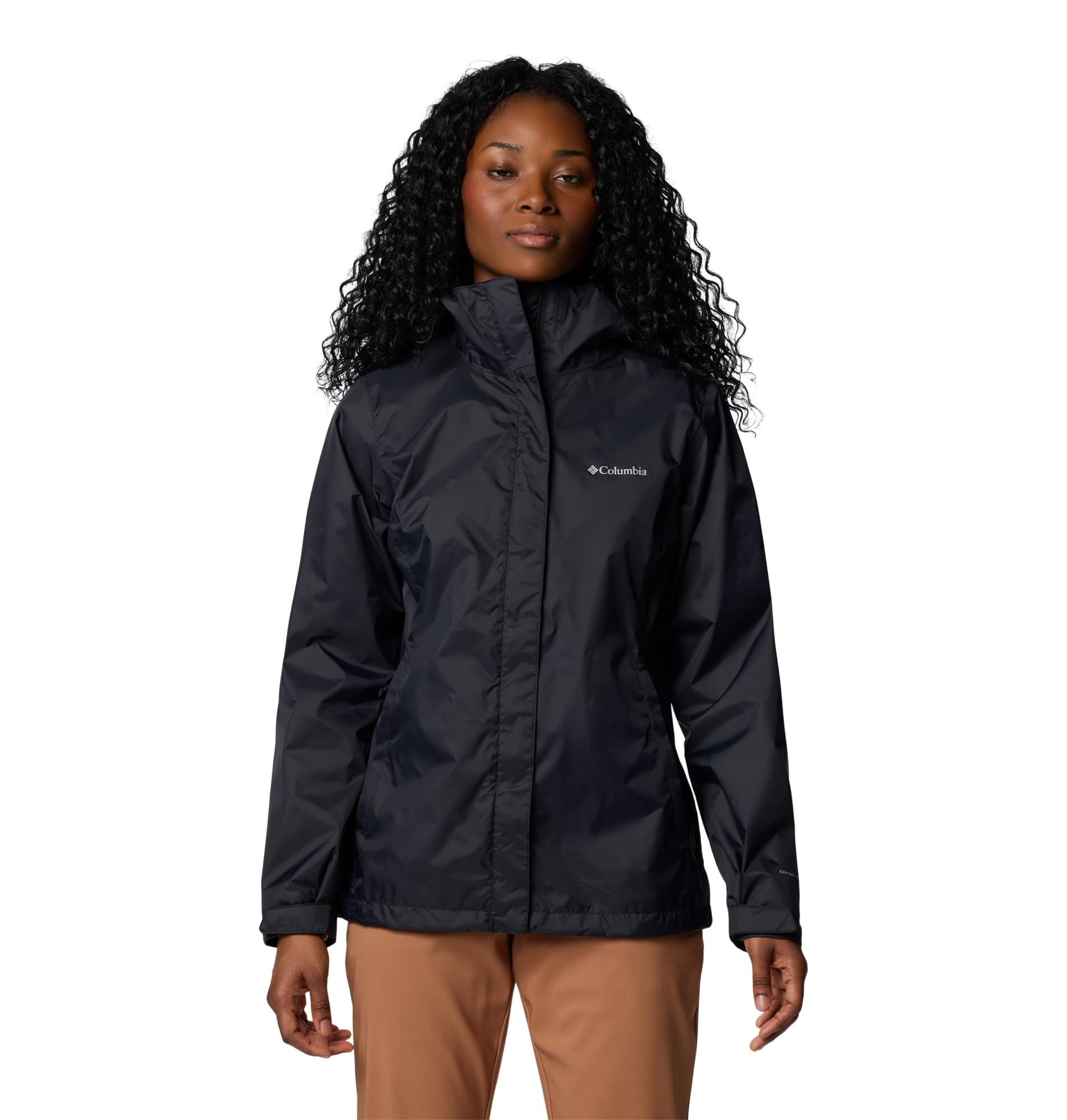
Key Features
- Waterproofing: Omni-Shield DWR
- Weight: 8 oz
- Packability: Folds into pocket
- Price: Mid-Range
The Arcadia II is a lightweight 8-ounce shell that folds into its own pocket, making it a convenient choice for travel and light outdoor activities. Its Omni-Shield coating sheds rain effectively, and the fit is flattering for many body types. However, the hood can be too small for some, leaving the face exposed, and sizing tends to run small — ordering up is recommended if layering. Breathability is adequate for casual walks but lacks the ventilation needed for high-output activities like running or cycling.
Pros
- Reliable water resistance keeps you dry in rain and snow
- Lightweight and packable – folds into its own pocket for easy stowage
Cons
- Sizing may run small – size up recommended for layering
- Hood can be too small for some, leaving face exposed in rain
A good fit for travelers and casual hikers who prioritize packability and price, but check sizing and hood fit before buying.
Best for Ultralight Emergency Shell
Columbia Glennaker II

Key Features
- Waterproofing: Water-repellent finish
- Breathability: Basic mesh liner
- Weight: Lightweight
- Packability: Folds into pocket
- Price: Budget
At a budget-friendly price and a weight that disappears in a bag, this jacket folds into its own pocket for travel convenience. Wind resistance and a comfortable fit add to its appeal for casual use. But water resistance only handles light drizzle – heavy rain soaks through quickly – and breathability is minimal, making it clammy during any physical activity. For buyers who need a breathable rain jacket for hiking or cycling, this is a use-case mismatch; it’s a backup shell for unexpected light showers, not active outdoor performance.
Pros
- Very lightweight and packable – folds into its own pocket for travel.
- Great value at a budget-friendly price point.
Cons
- Water resistance is limited to light drizzle – not suitable for moderate or heavy rain.
- Breathability is minimal, so it can feel clammy during any physical activity.
Best for travelers who need an ultralight backup for unexpected light rain, not for hikers or cyclists seeking breathable waterproofing.
Best for Cool City Walks
Diamond Candy Rain Jacket

Key Features
- Waterproofing: Water-resistant coating
- Breathability: Fleece lining (low)
- Weight: Lightweight
- Packability: Not packable
- Price: Budget
The Diamond Candy Rain Jacket stands out with its soft fleece lining that provides genuine warmth in chilly, drizzly weather, plus a wide color selection that makes it more appealing than standard rain shells. Water beading works well for light to moderate showers. However, the same fleece lining that adds comfort also traps heat and moisture during any movement, making it unsuitable for hiking, running, or cycling. Sizing runs small, particularly around the hips, so ordering up is advisable. This jacket is best reserved for leisurely walks, commuting, or travel in cool, damp conditions.
Pros
- Warm fleece lining keeps you comfortable in chilly, damp weather.
- Available in a wide range of attractive colors that stand out.
Cons
- Fleece lining can trap heat and moisture during any exertion, feeling clammy quickly.
- Sizing runs small, especially around the hips — consider going up one size.
Best as a casual city jacket for cool, drizzly days rather than for hiking or running.
Best for City Wear Raincoat
DECKTIN Rain Jacket

Key Features
- Waterproofing: PU coating
- Breathability: Lined
- Weight: Lightweight
- Packability: Not packable
- Price: Budget
The DECKTIN Rain Jacket offers good style and value with a detachable hood and slimming fit that works well for casual city use. The lightweight polyester construction keeps the price down, but limited breathability means it gets clammy during any sustained activity—fine for short commutes, not for hiking or running. Waterproofing may also struggle in heavy downpours, though it handles light drizzle adequately.
Pros
- Great value at this price point
- Slimming cut that many find flattering for everyday wear
Cons
- During brisk walking or light activity the interior can feel clammy — fine for short errands but not prolonged use
- In heavy rain water may seep through — suitable for light drizzle rather than downpours
Best for women who want an affordable, attractive rain jacket for city commutes and light rain, but not for hiking or other active pursuits.
Best for Cheap Emergency Shell
APEXUP Rain Jacket
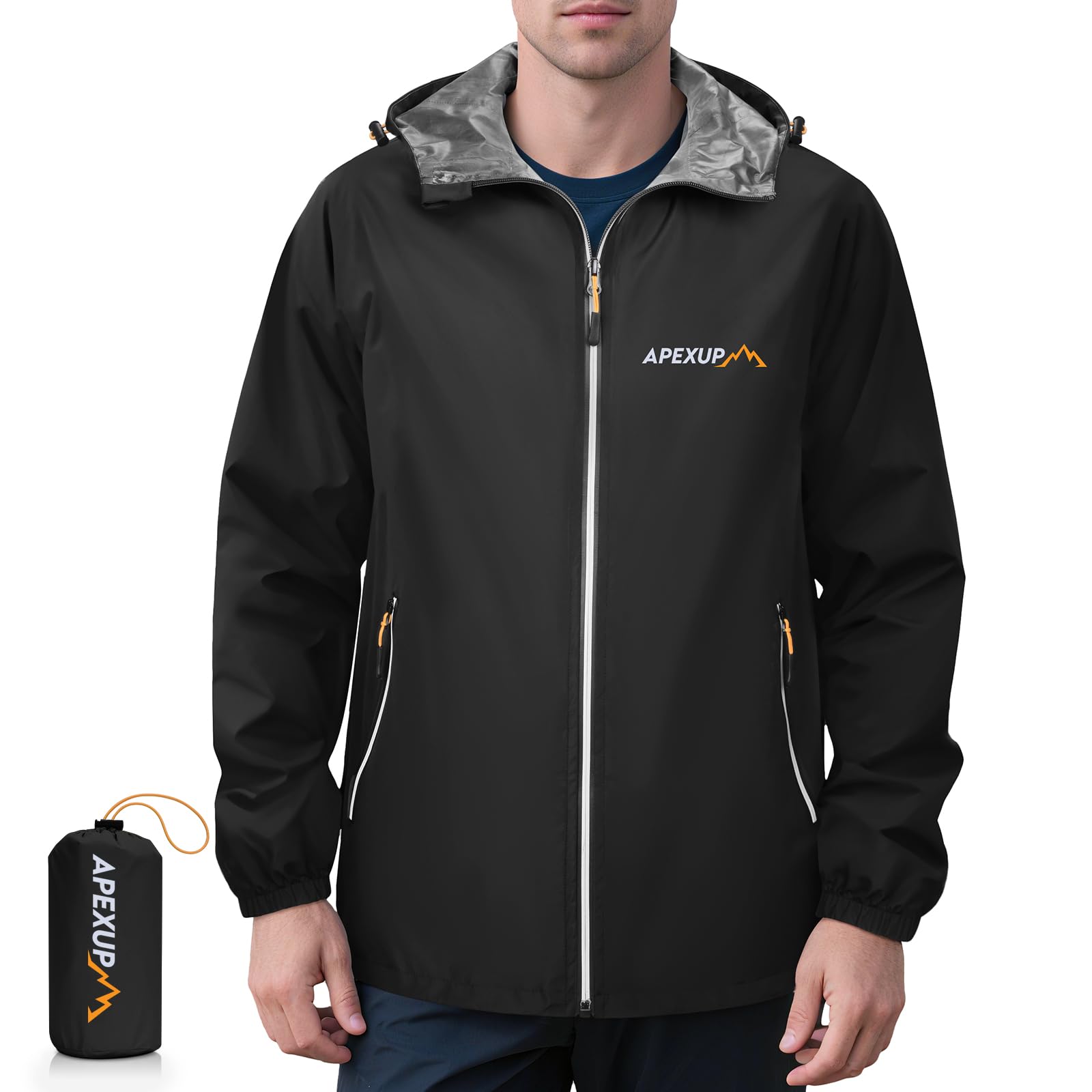
Key Features
- Waterproofing: Polyester coating
- Breathability: Basic mesh
- Weight: 8.8 oz
- Packability: Stuff sack
- Price: Budget
This jacket excels as a compact, affordable backup for unexpected light rain—packs small and adds visibility with reflective details. However, during any activity that raises body temperature, the lack of ventilation turns it into a sweat trap, and sustained rain can seep through. Those needing breathability for hiking or running should look elsewhere.
Pros
- Very affordable and lightweight with included stuff sack for easy carry.
- Reflective zipper improves low-light visibility for cyclists or walkers.
Cons
- Breathability is minimal, making it unsuitable for active use—comparable to a plastic poncho.
- Water resistance is limited to light rain; prolonged exposure may lead to dampness.
Best left in a car glovebox or suitcase for emergency use, not for planned outdoor activities in rain.
Best for Budget Basic Shell
TEZO Rain Jacket

Key Features
- Waterproofing: Polyester coating
- Breathability: Mesh lining
- Weight: Lightweight
- Packability: Foldable
- Price: Budget
The TEZO Jacket is one of the cheapest rain shells available, with a clean fit and lightweight feel that works for casual wear. However, its water resistance holds up only in light rain at best, and the lack of pit zips or breathable fabric makes it stuffy during any physical activity. Zipper durability can also be inconsistent. This makes it a poor match for hiking or running, but fine as an emergency backup or for short walks in a drizzle.
Pros
- One of the cheapest rain shells on the market – notable savings for budget-conscious shoppers.
- Lightweight design with a flattering fit looks polished for daily wear.
Cons
- Lack of ventilation makes it get stuffy during any physical activity.
- Water resistance is limited to light rain; in steady rain it can wet through after a short time.
This jacket works best as a low-cost backup for emergency use or for short walks in light rain where appearance matters more than technical performance.
How to Choose
The biggest mistake buyers make is choosing a jacket based on waterproof rating alone—a fully waterproof but non-breathable shell will leave you just as wet from sweat.
Waterproofing Technology
Waterproofing comes from membranes (e.g., DryVent, Omni-Tech) or coatings (PU, DWR). Membranes last longer and breathe better because they rely on microscopic pores that let vapor escape while blocking liquid water. Coatings are cheaper but degrade with washing and flexing, typically losing effectiveness after a few seasons.
For active use, look for sealed seams and a durable water repellent (DWR) finish that makes water bead off. Budget jackets often skip seam sealing, leading to leaks at stitch lines during sustained rain.
Breathability Features
Breathability is measured by how much moisture vapor can pass through the fabric (MVTR rating), but under $100 that spec is rarely published. Instead, look for mechanical ventilation: pit zips that let you dump heat under your arms, or mesh liners that create an air gap between your body and the shell.
Pit zips are the single most effective feature for high-output activities. Without them, even the best membrane will trap heat when you’re climbing or running uphill. If you plan to move, prioritize pit zips over a trimmer look.
Weight and Packability
A lighter jacket is easier to carry but often sacrifices features like pockets, hood adjustability, or a durable shell. Packable jackets that fold into their own pocket or a stuff sack are convenient for travel, but the storage pouch adds bulk—check if the jacket itself has a stow pocket before buying.
For hikers and travelers, a jacket under 10 ounces that compresses to fist size is ideal. But if you need to layer underneath, a slightly heavier shell (12-16 oz) with a roomier cut may be more practical.
Seam Sealing and Zippers
Seam sealing is critical for waterproof integrity. Fully taped seams prevent water from seeping through needle holes. Many budget jackets only tape critical seams or skip it entirely, leading to wet spots on your shoulders after 15 minutes in heavy rain.
Zippers are a common failure point. Waterproof zippers (with a rubbery coating) keep rain out but can be stiff. Regular zippers with a storm flap are more reliable long-term. Avoid flimsy plastic zippers on ultra-budget jackets—they break after a few uses.
Fit and Adjustability
A rain jacket needs to fit over a mid-layer without restricting movement. Look for adjustable cuffs, hem drawcords, and a hood that can be tightened. A too-loose hood will flap in wind and let rain run down your neck; a too-tight hood limits peripheral vision.
Size up if you plan to layer a fleece underneath. Many budget jackets are cut slim for a flattering look, but that leaves no room for insulation. Check sleeve length: long arms often signal an athletic cut that may be tight across the chest.
FAQ
Why does my breathable rain jacket still get wet inside when I hike?
That’s condensation, not a leak. When you sweat, moisture vapor hits the cold outer shell and turns back into liquid. Even breathable membranes can’t keep up with high-output activity. To reduce this, open pit zips or unzip the front for airflow. If the dampness comes from the outer fabric wetting out, your DWR coating needs reapplication.
Can a $30 rain jacket be truly breathable for running?
Rarely. Jackets under $40 typically use basic PU coatings that have very low moisture vapor transmission rates. They may feel okay standing still but will turn into a sauna within five minutes of running. For running, you need at least a mesh-lined shell with pit zips, which starts around $55.
What does ‘packable’ really mean for a rain jacket – can it fit in a daypack?
Packable generally means the jacket folds into its own pocket or a provided stuff sack, compressing to about the size of a water bottle. Most packable jackets weigh under 10 ounces and take up minimal space. But double-check: some brands label jackets as packable even if they don’t have a stow pocket—they just roll up small.
Is a hood necessary for a breathable rain jacket, or does it just add weight?
A hood is essential if you expect rain—it keeps water off your neck and prevents cold drafts. Adjustable hoods are fine; fixed hoods can be annoying when not in use. The weight penalty is negligible (1-2 ounces). For ultralight travel, some jackets offer detachable hoods, giving you the option to save weight on dry days.