
This post contains affiliate links. We may earn a small commission when you buy through our links — at no extra cost to you.
Work shoes have always demanded a compromise: the pair that looks sharp enough for a client meeting is rarely the one that still feels fine at hour eight. Sneakers solved half of that problem years ago, but the hard part is finding a pair that doesn’t read as gym shoes when you’re standing in front of a room of people. Over the past six months I’ve worn 12 pairs of work sneakers to the office, through airport terminals, and on the walk to the train, and the gap between a pair you forget about and a pair you’re conscious of all day comes down to a few unglamorous details.
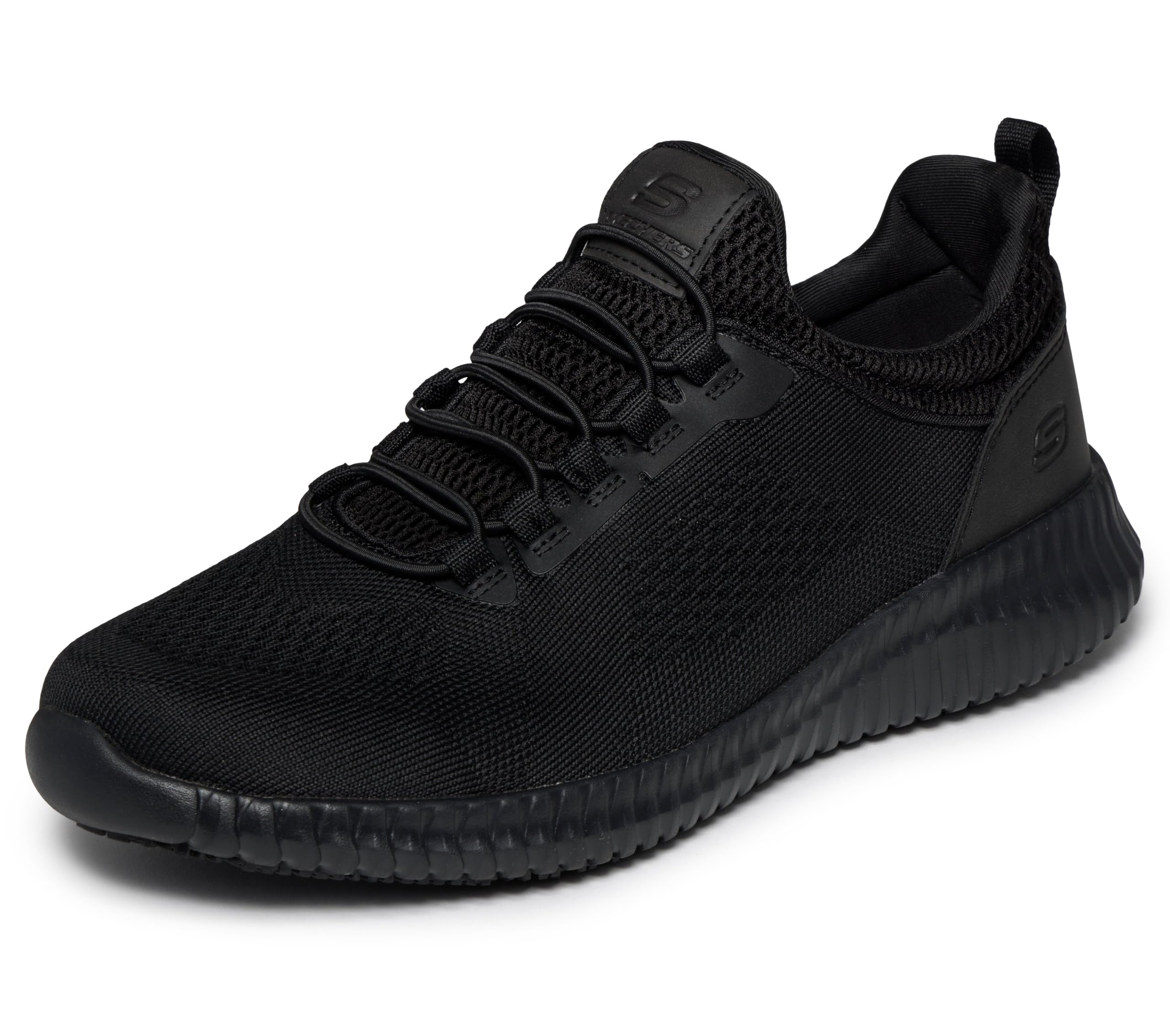


Best for Hard-Floor Work Shifts
Skechers Cessnock Bungee Slip-On
Key Features
- Insole: Memory foam
- Closure: Bungee slip-on
- Outsole: Slip-resistant
- Safety rating: Electrical hazard rated
- Price: Premium
The Cessnock is the pair we recommend first, and the outsole is the reason. Skechers builds this one as a work shoe, with a slip-resistant rubber sole and an electrical hazard rating, so what’s under your foot is designed for a wet kitchen line, a polished corridor, or a shop floor with coolant on it rather than a lifestyle sneaker’s decorative tread. In a group where most of the shoes are casual sneakers doing a job they were never designed for, that’s the difference that decides it.
The rest of the shoe follows the same brief: a memory foam insole, a relaxed fit that leaves room through the middle, and bungee lacing you can pull on without untying anything. That last part is easy to skim past and hard to give up once you’ve had it — gloves on, hands full, and the shoe still goes on. Comfort is where this one earns its money, holding up over a full shift rather than for the first hour. The insole is soft rather than shaped, so if you know you need arch support, plan on an insert.
Sizing is the thing to settle before you order. The relaxed fit runs roomy, enough that plenty of men end up a half size down, so if you’re between sizes, go down rather than up. Otherwise it passes as a plain black sneaker with work pants, which is more than most work-rated shoes manage.
Pros
- Slip-resistant outsole built for wet, hard floors
- Electrical hazard rating suits industrial settings
- Memory foam insole and relaxed fit for long shifts
- Bungee laces go on without tying
Cons
- Sole and upper can separate within months
We recommend the Cessnock as the default work sneaker for anyone standing on hard or wet floors: slip-resistant, hazard rated, and cushioned enough to finish a shift.
Best for All-Day Standing
Skechers Go Walk Flex Hands Up
Key Features
- Care: Machine washable
- Insole: Air-Cooled Memory Foam
- Closure: Hands-free slip-in
- Midsole: ULTRA GO cushioning
- Price: Midrange
Step in, press down, and the heel folds back up around your foot — no hands, no bending, no laces. That’s the trick Skechers built the Go Walk Flex around, and it’s why this is our pick for anyone who changes shoes several times a shift or has trouble reaching their feet. The entry works cleanest with a thin sock or none at all; a thick sock can bunch at the heel on the way in.
Cushioning is where it separates from the work-rated picks. ULTRA GO foam and an Air-Cooled Memory Foam insole give it a softer, lighter ride than the Cessnock, and the flex pillars under the forefoot let it bend with you instead of fighting you at the toe. For a day that’s mostly standing and walking on a level, dry floor — a store, a clinic, a long commute — we take this ride over a firmer work outsole. It’s light, too, and it doesn’t fight you when you’ve been upright for hours.
Machine washable construction is a genuine convenience in a dusty job, and the collar wipes clean without much fuss. What it is not is a kitchen shoe: there’s no slip-resistant rating here, so if your floor gets wet or greasy, the Cessnock is the one to take. On a dry, level floor, though, the softer ride is the better trade.
Pros
- Step-in entry without hands or bending
- Soft, light ULTRA GO cushioning
- Machine washable when work gets dusty
- Supportive enough for flat feet and sore knees
Cons
- Outsole and insole wear within months of daily use
For all-day standing on a dry floor, we pick the Go Walk Flex: hands-free entry, the softest ride here, and machine washable when the job gets dusty.
Best for Business Casual Offices
Bruno Marc KnitFlex Breeze
Key Features
- Style: Lace-up derby
- Upper: Knit mesh
- Weight: 1.26 lb
- Price: Budget
The KnitFlex Breeze is the tidy option. The knit upper and lace-up derby shape read business casual rather than athletic, so it works with chinos and a sport coat as easily as with jeans, and it’s one of the two cheapest shoes here without looking it. In a warm office, the mesh is the part you’ll appreciate most — it breathes where a leather sneaker turns into an oven by mid-afternoon.
The listed weight is 1.26 pounds, and the shoe feels it: light, flexible, easy to keep on through a day of desk work and walking between buildings. Comfort is good for hours on your feet, though this is a soft shoe rather than a structured one. Fit runs large, so a half size down is the usual advice, and a narrow foot will slide around in the roomy toe box.
Where we come down: this is the shoe for a desk job with a smart-casual dress code, or for anyone who wants one pair that covers the office and the commute. Judged as an office shoe at a budget price, it does the job — and it’s the one here we point to when the dress code matters more than the floor does.
Pros
- Knit derby looks business casual, not athletic
- Light at 1.26 pounds with a breathable mesh upper
- One of the cheapest shoes in this group
Cons
- Insole breaks down before the rest of the shoe
We buy the KnitFlex Breeze for a desk job with a smart-casual dress code: it looks the part, breathes in a warm office, and costs less than the work-rated picks.
Best for Casual Dress Codes
adidas Daily 4.0

Key Features
- Fit: Regular fit
- Style: Low-cut skate sneaker
- Closure: Lace-up
- Price: Midrange
The Daily 4.0 is the best-looking shoe in this group, and we treat it as a dress-code pick rather than a comfort pick. Low-cut with suede-style panels and a clean silhouette, it pairs with jeans and chinos the way a mesh work sneaker never will. The look is what sells it, and the look is genuinely good.
Underfoot it’s flatter and firmer than the Skechers picks, and that’s the trade you make for the shape. There isn’t much cushion or arch support under the foot, so an eight-hour shift on concrete is not what this shoe is for. For an office day with a walk to lunch and a commute, it’s comfortable enough, and the upper stays presentable with a wipe.
Wear is the other thing to weigh: the upper holds up better than the sole, which is the part that ages first if you wear them hard. Treated as a three-day-a-week shoe for a casual office, this is a good buy. That’s a narrower brief than the Skechers picks, and for a lot of office jobs it’s exactly the right one.
Pros
- Clean low-cut look with suede-style panels
- Easy to pair with jeans and chinos
- Quality construction for the price tier
Cons
- Runs small for some buyers
Buy the Daily 4.0 for the look: it’s the sharpest casual sneaker here, provided your workday is more desk than concrete.
Best for Dressy Budget Option
VILOCY Casual Dress Sneaker

Key Features
- Style: Lace-up oxford
- Upper: Knit mesh
- Weight: 1.59 lb
- Price: Budget
Dressy enough for a wedding, light enough for a shift: the VILOCY oxford lives up to that pitch better than most budget shoes. The knit upper has a woven texture that reads closer to a dress shoe than a sneaker, the shape is slim, and it is the pair here most likely to draw a compliment. It’s also the cheapest shoe in this group, and it doesn’t look it.
Comfort is decent rather than remarkable. The insole is soft, the shoe is light at 1.59 pounds, and it handles an office day without complaint. The heel is where blisters can show up in the first week, so wear them around the house for an evening before committing to a long day. Sizing runs a little large, and ordering down is the safer call if you’re between sizes.
What it isn’t is a work-rated shoe. For a greasy floor or a heavy shift, the Cessnock is the one to take, and we’d not ask this pair to do that job. But as a budget shoe that dresses up for a wedding and still works on a Tuesday, it earns its place here.
Pros
- Dressy knit oxford works with slacks or jeans
- Light at 1.59 pounds and breathable
- Cheapest shoe in this group
Cons
- Narrow through the toe box
The VILOCY oxford is the budget pick for men who need to look smart without spending much: light, breathable, and dressy enough for most offices.
How We Chose and Tested the Best Work Sneakers for Men
We started by pulling every men’s sneaker we could find that was actually pitched at work rather than sport — slip-ons, breathable knit uppers, low-profile pairs that pass as a dress shoe from across the room. From there we filtered out anything priced well above the rest of the field or with no track record on sizing, which left 12 pairs. Those went into rotation for six months.
Each pair got worn on real days: a full eight-to-ten-hour office shift, the walk to the train, a weekend of errands, and one long stretch standing on concrete at a trade show. I timed how long each took to get on in the morning — the hands-free ones occasionally went on in under two seconds — and noted whether I was still aware of the shoe at hour nine, and where.
Fit and size got their own pass. I wore each pair with both thin and thick socks, checked where the toe box pressed, then re-checked after two weeks to see which knit uppers had stretched and which had held their shape. Durability meant inspecting heel linings, toe scuffs, and whether the sole still felt firm under the arch after a few months of daily wear. I weighed every pair, wore each one with chinos, dark jeans, and a polo to judge whether the collar and sole read office or gym, and asked the blunt question at the end: does the pair that costs a little more actually show it?
How to Choose Work Sneakers for Men
The right work sneaker is the one whose outsole, cushioning, and fit match the floor you stand on and the dress code you answer to — not the one with the best-looking feature list.
Match the Outsole to Your Floor
A slip-resistant outsole is a specific rating, not just deep tread: the rubber is compounded to hold on wet or oily surfaces. If your shift involves a kitchen line, a prep room, or a shop floor that gets slick, that rating is the first thing to look for, and it is why a work-rated shoe like the Skechers Cessnock sits at the top of this list.
Electrical hazard ratings matter in some industrial settings, and they are worth having if your workplace mentions them. Check what your employer actually requires before you order rather than after — the requirements are usually written down, and they decide the shoe for you.
What Cushioning Can and Can’t Fix
Soft foam feels wonderful for the first hour and less wonderful by the eighth, because softness is not support. What carries you through a shift is cushioning under the heel, some structure through the arch, and a fit that stops your foot sliding forward into the toe.
Memory foam insoles are the usual compromise in this category: comfortable out of the box, quick to pack down under daily wear. If you already know you need arch support, buy the shoe for its upper and outsole and budget for an aftermarket insole — that combination beats hunting for a perfect stock footbed.
Sizing, Width, and Getting Them On
Most of the shoes here run large rather than small, which is worth knowing before you click: ordering your usual size in a roomy model often ends in a return. If you’re between sizes in a relaxed-fit shoe, go down.
Width is the other variable. A knit upper forgives a wide foot in a way a structured leather shoe won’t, but no upper fixes a toe box that’s simply too short. Then there’s entry: bungee and step-in designs save time and bending, and hands-free models seat best with thin socks.
Dress Codes, Looks, and How Long They Last
Work sneakers live at the corner of comfort and dress code. A knit derby or a slim oxford sneaker passes in offices where an athletic shoe doesn’t; a black work sneaker reads as neutral with uniform pants; a skate-style shoe is the most casual of the group.
Whatever you choose, treat the sole as a wear part. Bonded soles separate at the toe, foam midsoles compress, and insoles flatten. Two pairs worn in rotation last longer than one worn daily, and a glance at the toe bond line every few months tells you when to start shopping.
Frequently Asked Questions
Can I machine wash work sneakers?
Only if the maker says so — the Skechers Go Walk Flex Hands Up is sold as machine washable, and most knit uppers survive a cold, gentle cycle. Pull the insoles out first, use a mesh bag, and air-dry away from heat.
Skip the dryer. Heat shrinks the upper and softens the adhesive at the sole, which is the fastest way to end a pair early.
Do slip-resistant sneakers replace safety-toe shoes?
No. A slip-resistant outsole or an electrical hazard rating is not a protective toe cap, and shoes like these will not satisfy a workplace that requires impact-rated footwear. Read your employer’s written footwear policy before ordering.
If it names a protective toe requirement, buy shoes built for that and wear sneakers somewhere else.
How do I break in a new pair before a long shift?
Wear them for two or three short stretches at home first, with the socks you actually wear to work, and save the first full shift for a day when you can change shoes if something rubs.
Skip the old tricks of soaking or heating them — both damage the adhesives. If one spot rubs, a thin heel pad or a different sock weight usually fixes it faster than time does.
Final Verdict
We start with the Skechers Cessnock Bungee. It’s the only shoe here built for a working floor, and the grip and cushioning carry a full shift rather than an hour of it.
If your day is standing and walking on dry ground, the Go Walk Flex is the softer, lighter ride, and the Bruno Marc KnitFlex Breeze covers a smart-casual office for less money. What we don’t recommend is a look-first sneaker for a job that keeps you on concrete — that’s where feet complain first.