
This post contains affiliate links. We may earn a small commission when you buy through our links — at no extra cost to you.
The biggest frustration with budget barefoot shoes isn’t the barefoot feel—it’s that the soles can separate or wear through after just a few months of daily use. Sizing inconsistencies between brands add another layer of guesswork.
This guide focuses on the shoes that strike the best balance between low cost and reliable construction—models that let you enjoy zero-drop comfort without replacing them every season.
The key is knowing where to spend a little more (better outsole rubber) and where you can save without sacrificing the experience (simpler uppers).


Best for Trail & Gym
WHITIN Men’s Trail Runner
The WHITIN trail runner grips well on loose dirt, gravel, and pavement, while the zero-drop platform encourages natural stride mechanics. The upper breathes well for warm-weather wear, and the cushioning keeps a middle ground between ground feel and impact absorption — suitable for shorter trail runs as well as gym floor work.
This shoe fits trail runners and gym cross-trainers who want one barefoot model for multiple activities. The toe box may feel snug for those with wider forefeet — trying a half-size up can help. Outsole wear can accelerate under regular rugged use, so high-mileage runners should keep an eye on the tread over time.
Pros
- Grips consistently on mixed terrain, from asphalt to packed dirt.
- Breathable upper and low weight keep feet comfortable for all-day wear.
- Zero-drop design supports natural foot movement across trail, gym, and walking.
Cons
- Toe box runs narrower than many barefoot shoes — may not suit wide forefeet.
- Outsole durability can vary under frequent trail use, with occasional thinning noted.
For runners and gym-goers wanting a single affordable shoe that transitions between trail, weight room, and daily errands — with the caveat that forefoot width and sole wear are worth checking before buying.
Best for Daily & Casual
WHITIN Women’s Barefoot
The WHITIN Women’s Barefoot shoes deliver a genuine zero-drop, wide-toe-box experience in a package that looks like a standard sneaker. The comfortable barefoot feel and fashionable appearance make them a strong choice for daily wear and casual walking — especially for style-conscious women who want the foot health benefits of barefoot shoes without the athletic look. With a wide toe box and zero-drop sole, they allow natural foot movement and toe splay during walks and errands. However, the construction may show signs of wear under regular use within a few months, a tradeoff that matters less for light walking but should be considered if you plan daily all-day wear or intense activities.
Pros
- Very comfortable with a natural barefoot feel
- Stylish appearance that looks like regular sneakers
- Great value for a quality women’s barefoot shoe
Cons
- Sole separation or upper wear may appear after a few months of daily use
Best suited as a casual daily sneaker for style-conscious barefoot fans who value looks and comfort over long-term durability.
Best for Women Hikers
Joomra Women’s Trail Runner
The Joomra Women’s Trail Runner is the most popular barefoot shoe for women, delivering comfort often compared to slippers and traction that handles hiking trails with confidence. It differs from the top pick by emphasizing a women-specific design and lower cost. The zero-drop sole and wide toe box encourage natural foot motion. This shoe suits budget-conscious buyers, first-time barefoot users, and hikers who prioritize comfort over rugged trail performance. Because sizing tends to run small, ordering a half to full size up is recommended for the best fit.
Pros
- Slipper-like comfort that makes long walks effortless
- Reliable grip on dirt trails and packed gravel
- Budget-friendly price for a zero-drop shoe with a wide toe box
Cons
For budget-focused hikers and first-time barefoot buyers, this shoe delivers the comfort of slippers and the grip needed for trail walking at an unbeatable price.
Best for Gym & Water
MIFAWA Men’s Water Shoes
At a fraction of the price of most minimal shoes, the MIFAWA delivers a genuinely flexible, zero-drop sole and a roomy toe box that feels natural from the first step. It’s light enough for gym circuits, poolside walks, or casual errands. The catch is that this ultra-budget construction comes with real limits: the glued insole can separate and the upper mesh may tear after a few months of regular use. For someone who wants to try barefoot shoes without a big investment and doesn’t mind replacing them sooner, that tradeoff is manageable. But if you plan to log miles on pavement or trail, the top pick’s sturdier build is worth the extra cost.
This shoe fits the buyer who needs an entry-level barefoot shoe for light gym sessions, water activities, or short walks — not for long-distance running or high-mileage hiking. Sizing can run a half size small in some cases, so trying them on or ordering a size up is wise. If durability is your first priority, look at the WHITIN trail runner instead.
Pros
- Very low price with a comfortable, flexible barefoot feel
- Lightweight build suits gym workouts and water use
- Generous toe box allows natural splay
Cons
- Insole may separate from the sole after a few months of regular wear
- Upper mesh can develop tears under heavier use
A fine low-cost trial for the barefoot curious — just accept that its lifespan is shorter than pricier alternatives.
Best for Hike & Water
ELETON Unisex Hiking
The ELETON Barefoot Shoes prioritize airflow and drying speed, making them a practical choice for warm-weather walks and water-adjacent use. They shed moisture noticeably faster than typical mesh trainers, and the lightweight build keeps feet from feeling weighed down during a day of casual exploring. For the price, the balance of comfort and drainage is competitive, though the construction lacks the road-to-trail versatility of the top-rated WHITIN model.
This shoe fits best for hikers or walkers who spend time near water—stream crossings, sandy shores, or boat decks—and want a shoe that dries out quickly without holding puddles. Sizing can be inconsistent; some need to order a size larger than their usual fit, so plan accordingly if you’re between sizes. Not recommended for rocky scrambles or technical trail running, but adequate for maintained paths and light terrain.
Pros
- Breathable upper dries fast after getting wet
- All-day comfort for casual walking and day hikes
- Good value for a shoe that handles both land and water use
Cons
- Sizing may run small for some; ordering a half to full size up is worth checking
A solid lightweight option for casual hikers and water-adjacent use, as long as you confirm the fit before committing.
Best for Office Style
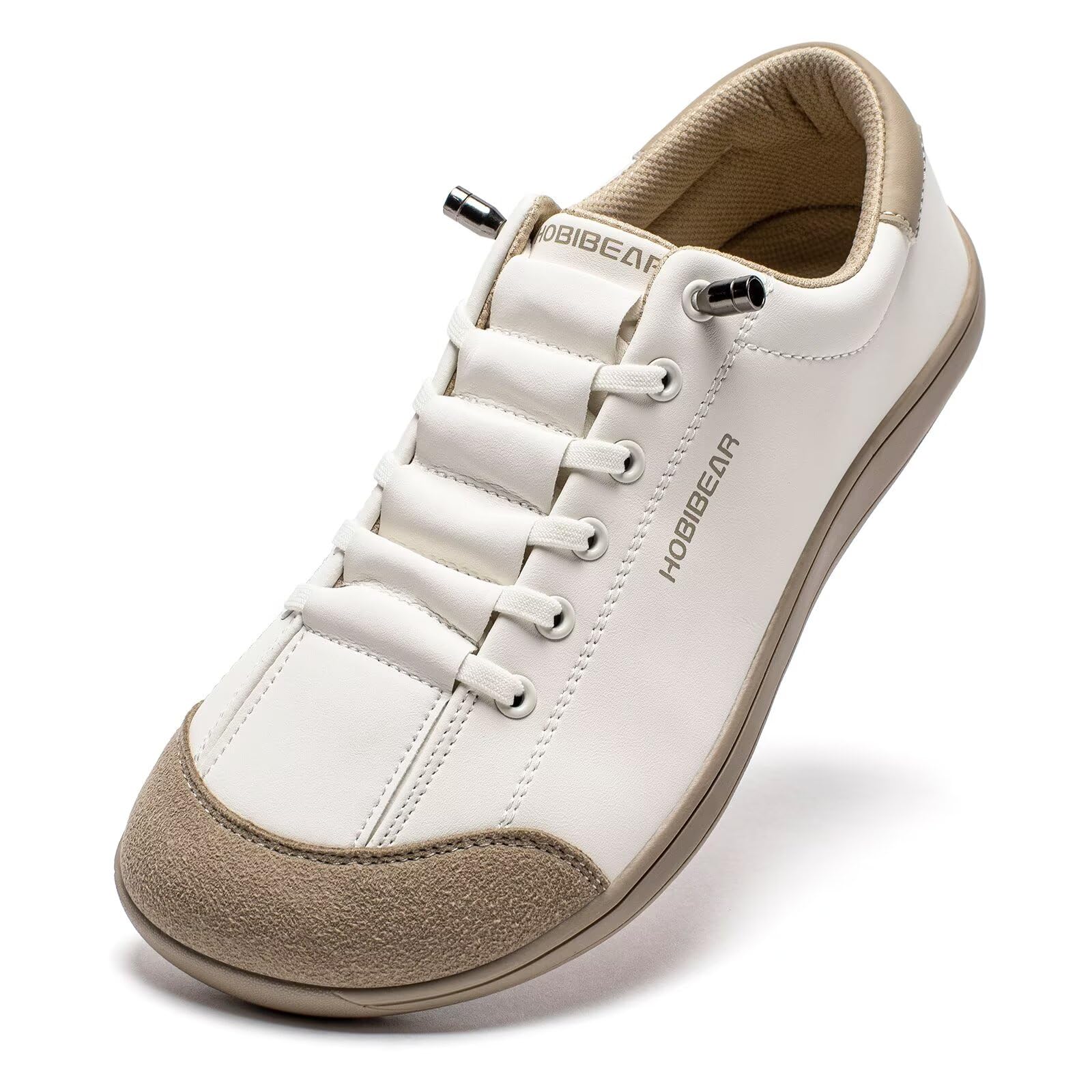
HOBIBEAR Leather
The HOBIBEAR Leather Barefoot Shoe stands out with its genuine leather upper and slip-on design, giving it the look of a conventional sneaker while maintaining a zero-drop, wide-toe box platform. Comfort is a highlight for a barefoot shoe, with some arch support that adds to all-day wearability. However, fit is inconsistent: the shoe may feel too snug across the instep for some, while others find it runs large. This makes it best suited for style-conscious women seeking a casual office option, rather than athletic or outdoor use. Stick to trying a size or two to get the right fit.
Pros
- Leather upper gives it a clean, office-appropriate look that blends in with regular sneakers.
- Better arch support than most barefoot shoes, improving comfort for all-day wear.
Cons
- Fit can vary — some experience tightness across the top, others find the sizing generous.
A rare leather barefoot shoe for the office, provided you confirm the sizing works for your foot shape.
Best for Budget Travel
Barezoey Hiking

At this price, the Barezoey delivers a lightweight, comfortable barefoot feel for short hikes and everyday walking. The zero-drop sole and wide toe box suit minimalist land activities, though the sizing runs small — plan to order a half size up. Durability under frequent use is a known vulnerability, so it’s best for occasional outings rather than daily training or long trails.
Pros
- Lightweight and comfortable with a barefoot feel for walking and light hiking.
- Great value for an ultra-budget barefoot shoe.
Cons
- Sizing runs small; may feel tight — buying a half size up is recommended.
A budget-friendly option for light hiking or casual wear if you size up, but not for heavy use or long-distance trails.
Best for Casual Style
Barezoey Casual

The Barezoey Casual combines a fashionable sneaker look with zero-drop comfort at a budget price. It wears comfortably from the start with no break-in period, making it a good fit for casual walks and daily errands. However, the fit can run large, so sizing down helps. This shoe isn’t suited for trails or high-intensity activity, but for relaxed style it delivers.
Pros
- Comfortable from the first wear, no break-in needed
- Stylish design at an affordable price point
Cons
- Fit can run large; sizing may be inconsistent between pairs
Choose the Barezoey Casual when you want a stylish, comfortable barefoot shoe for daily wear and are willing to order a half-size smaller.
Best for Budget Hike
Jmzb Unisex Hiking

The Jmzb barefoot shoes offer lightweight comfort and solid grip on dry ground, making them a practical choice for budget-conscious hikers who stick to dry trails. Slipperiness on wet surfaces limits their use to fair-weather outings only.
Pros
- Lightweight and comfortable for hiking and water activities
- Good traction on dry surfaces
Cons
- Can be slippery on wet surfaces
A sensible dry-weather hiking shoe on a budget, but leave them at home when rain is forecast.
Best for Ultra Budget
Hi-Y2Kgirls Water Shoe

Extremely affordable and comfortable for water sports and short pavement walks, this shoe offers breathability and a wide toe box. Yet its limited versatility means it’s not suited for hiking, running, or all-day wear. Sizing runs small — size up for a proper fit.
Pros
- Priced well below typical barefoot shoes, with a comfortable fit for short-term wear.
- Lightweight and breathable construction reduces foot fatigue in warm conditions.
Cons
- Sizing may run small, requiring a size up for most buyers.
A fine pick if you need a dirt-cheap shoe for water parks, beach vacations, or quick indoor use — but skip it for any serious land activity.
How to Choose
The biggest surprise for new barefoot shoe buyers is that the "barefoot" feeling comes from a combination of zero-drop, wide toe box, and flexible sole—not just the thinness of the sole.
Wide Toe Box
A wide toe box allows your toes to splay naturally with each step, which improves balance and reduces pressure on the forefoot. Shoes with a tight toe box can cause bunions or numbness over time, especially during long walks. Look for a shape that mimics the natural outline of your foot, not just a wider overall fit.
Many budget barefoot shoes advertise a wide toe box, but the actual shape varies. Check user photos for toe splay room rather than relying on size labels alone.
Zero Drop (Heel-Toe Offset)
Zero-drop means the heel and forefoot sit at the same height, encouraging a midfoot or forefoot strike instead of a hard heel impact. This shifts work to your calves and Achilles, which can cause tightness if you’re new to barefoot shoes. Expect a 2-3 week adjustment period if you’re coming from conventional cushioned sneakers.
Flexible Sole
A flexible sole lets your foot bend and twist naturally, building foot strength over time. Shoes with stiff soles defeat the purpose of going barefoot. To test flexibility, try bending the shoe in your hands—it should fold easily at the ball of the foot. Thicker rubber outsoles reduce flexibility but add durability; thinner soles offer more ground feel but wear faster.
Traction for Trail & Gym
Shallow lugs work well on pavement and gym floors but slip on loose dirt or wet rocks. Deeper lugs give grip on trails but can feel uncomfortable on hard surfaces. If you plan to do both trail and road running, look for a multi-directional tread pattern that balances grip and ground feel. Avoid overly aggressive lugs if you’ll mostly walk on pavement.
Durability of Outsole and Upper
Budget barefoot shoes often use lower-density rubber that can wear smooth or delaminate within 3-6 months of daily use. Check for reinforced stitching at stress points like the toe cap and heel. Shoes with a stitched-on outsole last longer than glued-only models. If you need a shoe for frequent travel or rugged hiking, expect to spend $35-45 for adequate build quality.
FAQ
Do barefoot shoes really improve foot strength or are they just a trend?
Yes, they strengthen foot muscles by allowing natural movement without arch support or cushioning. Studies show that transitioning to barefoot shoes can increase foot arch height and toe strength over several months. The effect is real, but it requires a gradual transition—jumping straight into long walks can cause calf strain or plantar fasciitis. Start with short sessions and increase duration slowly.
How long do cheap barefoot shoes last compared to premium brands?
Most budget barefoot shoes under $30 show significant wear within 3–6 months of daily use—common issues include sole separation, worn-through tread, and upper tearing. Premium brands like Vivobarefoot or Xero Shoes can last 1–2 years with similar use, thanks to better rubber compounds and reinforced stitching. If you need a shoe for frequent travel or rugged hiking, spending $35–45 on a mid-range model often doubles the lifespan.
Can I wear barefoot shoes for hiking on rocky terrain?
Yes, but with two caveats: your feet need to be accustomed to barefoot shoes to avoid bruising on sharp rocks, and the shoe must have adequate tread. Models with aggressive lugs and a slightly thicker outsole (around 8-10mm) provide enough protection for moderate trails. For technical rocky hikes, look for a rock plate or reinforced toe cap—many budget options lack this and will leave your feet sore.
Are WHITIN barefoot shoes true to size?
Sizing varies by model, but the general consensus is that WHITIN shoes run slightly small. Many users recommend ordering half a size up, especially if you have wide feet. The brand provides a size chart based on foot length—measuring your foot against that chart is more reliable than relying on your usual shoe size. Some WHITIN models also have a narrower toe box, so check user feedback for your specific model.