
This post contains affiliate links. We may earn a small commission when you buy through our links — at no extra cost to you.
Every winter boot is a trade-off between warmth and weight, and most pairs force you to pick a side. The ones rated for serious cold feel like cinder blocks by the second block; the lighter, better-looking pairs turn slick on ice and soak through at the first slushy corner. I’ve walked a dog through New England winters at 6 a.m., so I know where boots fail — a collar that lets snow over the ankle, a sole that hardens, and a heel that packs out by February. Twelve pairs have been in rotation with us since fall, and the pattern was clear.
The numbers printed on the box are a claim, not a promise — warmth comes from insulation, a real insole, and enough room left for a thick sock. Fit, weight, and traction decide whether you actually wear them, and water resistance either survives to March or it never existed. We judged all twelve on warmth, comfort, grip, durability, looks, and whether the price felt fair. The ones that earned a permanent spot by the door are below.


Best for Slush and Deep Snow
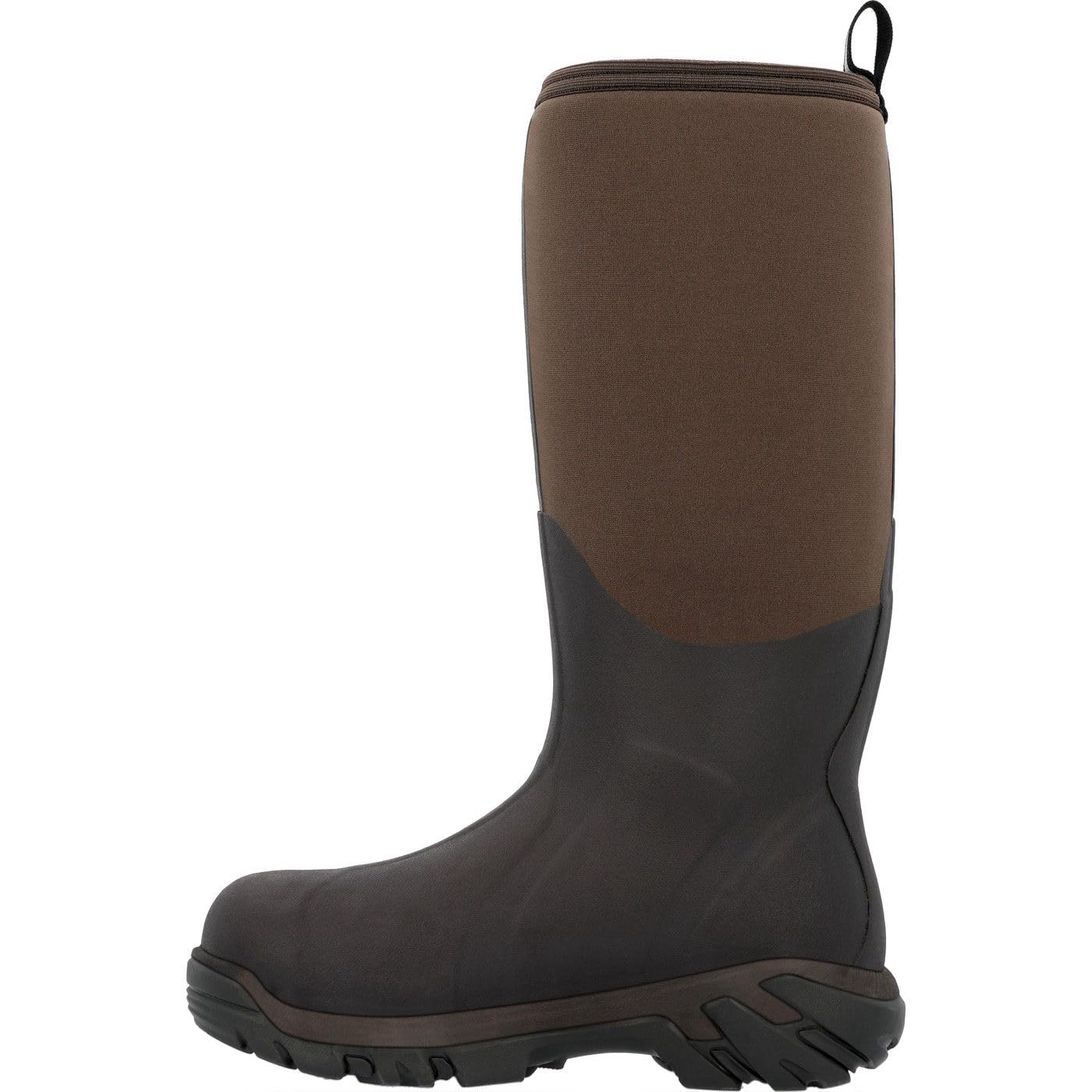
Muck Arctic Pro
Key Features
- Weight: 6.5 lb
- Closure: Slip-on
- Insulation: Insulated
- Water resistance: Waterproof
- Price: Premium
Slush is the test that separates a winter boot from a hiking boot, and the Arctic Pro is the one we trust in it. It’s a tall insulated rubber slip-on, so there’s no lacing to soak through, no tongue to leak, and no seam at ankle height where a puddle can find its way in. On the two things that matter most here, warmth and staying dry, it has the cleanest record of anything in this guide, and it’s the highest-rated boot of the seven.
Rubber has consequences worth naming. The shell doesn’t breathe the way leather does, and a boot that reaches the calf stays warm indoors, so these are boots for outside rather than a day at the desk. They’re substantial on the foot too, at a listed 6.5 pounds a pair, and you feel that on a two-mile walk. What you get in return is a boot you can hose off at the door, step out of without untying anything, and trust when the weather turns nasty.
Sizing is the one decision worth slowing down for. This boot runs large and comes in whole sizes only, so most men drop a full size, and the same volume that makes it generous over thick wool socks will swim around a thin one. Try them with the socks you actually wear in January. Get that right and there’s very little else to think about, which is the quiet appeal of a boot that never asks you to check the forecast twice.
Pros
- Keeps feet dry in slush and standing water
- Warm through long hours outdoors
- Slip-on with no laces to soak or tie
- Roomy enough for thick wool socks
Cons
- Heavy at 6.5 pounds a pair
- Rubber shell holds heat indoors
Our default for a real winter: the Arctic Pro keeps feet dry in slush and warm through hours outdoors, and there’s nothing to lace up with frozen fingers.
Best for Walking in Town
Sorel Caribou
Key Features
- Liner: Removable felt
- Cold rating: -40°F
- Water resistance: Waterproof
- Price: Premium
Where the Muck is a boot you stand in, the Caribou is a boot you walk in. It’s the classic laced Sorel: a waterproof lower, a thick felt liner that Sorel rates to minus 40, and a lugged sole with enough bite for a snowy sidewalk. The lacing is the point. Cinch the ankle and the boot moves with your foot instead of sliding around it, which is what turns a mile in the cold into a walk rather than a wade.
The liner is what we like most. It lifts out in one piece, so a boot that got damp on the morning errand can dry out by evening instead of sitting cold and stiff by the door all season. They also look like boots rather than equipment, and that counts for more than most men admit when the same pair has to work for the office and the sledding hill.
The costs are bulk and width. These are a lot of boot on the foot, and the toe box runs narrow, so wide-footed men should try them with winter socks or look at the Nortiv 8 Tundra instead. The rubber can also crack with age, which is the caveat we pass along. Set against that is a boot that laces snug, walks well, and looks right with a parka, which is why it stays near the top of this set.
Pros
- Removable felt liner dries overnight
- Rated to -40°F
- Laced fit stays with your foot
- Looks right for town wear
Cons
- Narrow through the toe box
- Rubber can crack with age
Buy the Caribou for the winter you spend on your feet: the removable liner dries overnight and the lacing keeps the boot working with you rather than against you.
Best for Deep Drifts
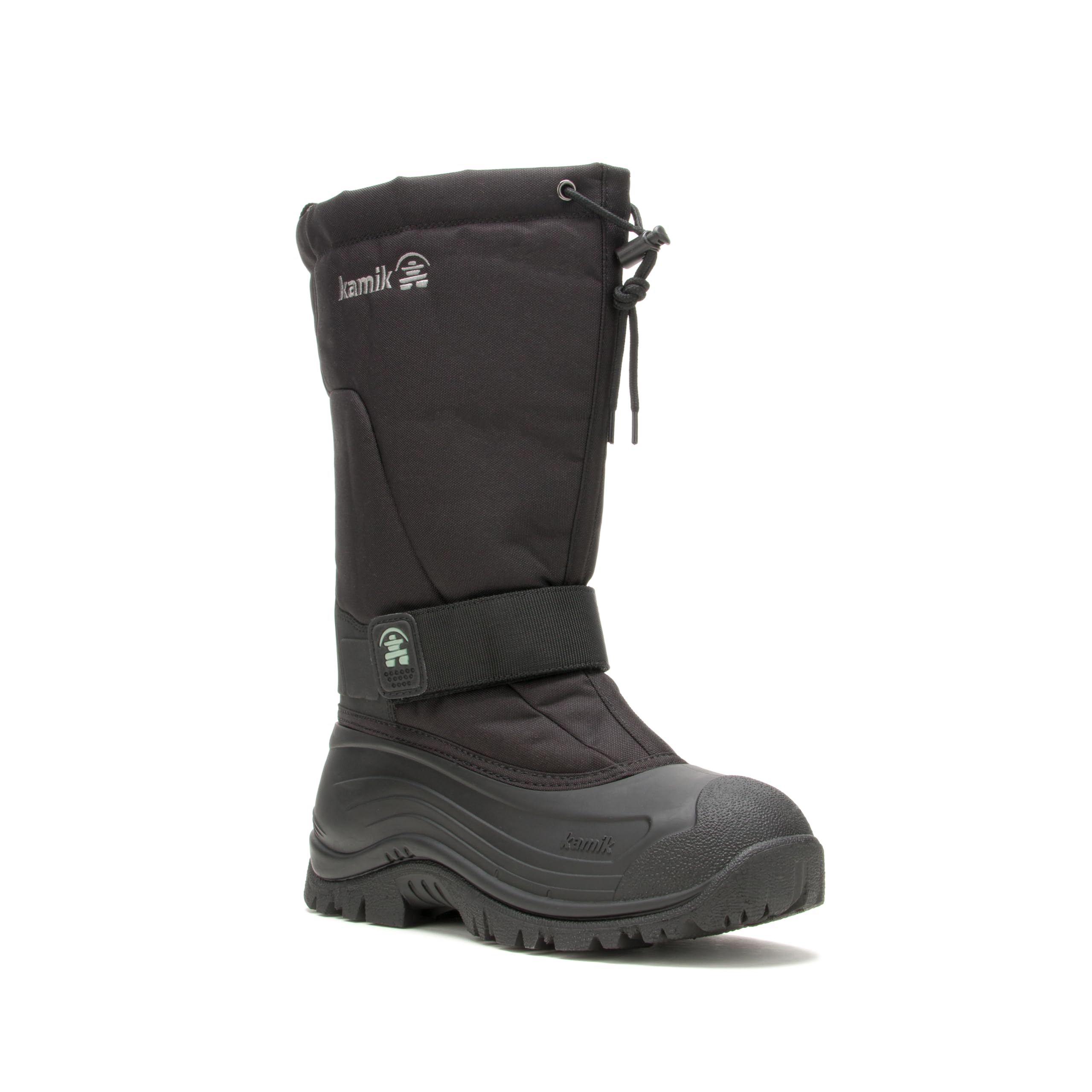
Kamik Greenbay 4
Key Features
- Shell: RubberHe
- Upper: Waterproof nylon
- Collar: Adjustable
- Cold rating: -40°F
- Price: Midrange
The collar is the part of the Greenbay 4 that earns its keep: an adjustable cuff you cinch over your pants, on a tall boot rated to minus 40. Snow that pours over the top of a shorter boot slides off instead of down your sock, and that’s the difference between shoveling the driveway and stopping halfway through to empty your boots.
The rest of the build is aimed at the same job. A waterproof nylon upper sheds snow, the rubber shell takes slush and puddles, and the wide opening means you can step in and out without sitting down, which is a genuine advantage with a shovel in one hand and wet gloves on both. It’s the rare mid-range boot that doesn’t feel like a compromise, and the value is what we keep coming back to.
The one adjustment it asks for is size. The Greenbay runs small and narrow, the most consistent theme in its record, so go up a full size if you wear thick socks or have wide feet, and take the larger option when you’re between sizes. Do that and you have a tall, snow-proof boot you can step into without sitting down, at a price that leaves room for wool socks.
Pros
- Adjustable collar keeps snow out of the shaft
- Rated to -40°F
- Steps on and off without sitting down
- Waterproof nylon upper sheds snow
Cons
- Collar buckle can bend or work loose
We recommend the Greenbay 4 for deep drifts and long driveways: it’s the most snow-proof boot in this guide for the money, once you size up.
Best for All-Day Comfort
Tidewe Neoprene Boot
The interesting number on the Tidewe is the top of its comfort range: minus 4 to 50°F. That upper end makes it a boot for a wet, sloppy, 35-degree day as much as for a cold snap, which is more than most winter boots here can claim. Six millimeters of neoprene flexes with your foot the way stiff rubber doesn’t, the shaft rises to mid-calf with a 13-inch circumference, and the shell is waterproof from sole to cuff.
Comfort is where this boot leads our set. Neoprene over a cushioned polyurethane insole makes it the pair you can stand in for a full day of shoveling, ice fishing, or yard work, and the fit over a heavy calf is better than anything else here. We also appreciate two small pieces of design: the reinforced toe, and the ridge molded into the heel that lets you push one boot off with the other foot instead of bending down with cold, wet hands.
Two things to know before you order. Sizing runs mixed, with some men finding it roomy and others needing to go up, so use Tidewe’s size chart rather than your sneaker size. And the sole bonding is the long-term weak point, with separation showing up after years of hard use rather than weeks. Neither changes the recommendation: this is the boot to take when the day is long and the ground is cold.
Pros
- Comfortable through a full day on your feet
- Neoprene flexes instead of stiffening
- Comfort rated from -4°F to 50°F
- Fits over a heavy calf
Cons
- Sole can separate after years of hard use
We hand the Tidewe to anyone who spends the day standing in the cold: neoprene flexes where stiff rubber fights back, and the cushioning is the best in this guide.
Best for Budget Daily Wear
Nortiv 8 Tundra
Key Features
- Style: Hiking snow boot
- Insulation: Insulated
- Water resistance: Waterproof
- Price: Budget
Not everybody needs a boot that can stand in a puddle. If your winter is a shoveled driveway, a dog walk, and the trudge to the bus, the Tundra does the job for the least money in this guide, and it does it comfortably. It’s a laced, hiking-style snow boot with a warm lining and a toe box roomy enough for wide feet and thick socks, and men put long daily mileage on them without a break-in.
The first thing we noticed is how little they weigh for the warmth. They wear more like a sneaker than a snow boot, which matters if you’re walking rather than standing, and the lining is warm from the first step rather than after a week of wearing them in. That roomy toe box is a real benefit for anyone with wide feet, and it’s the rare budget boot that doesn’t make you choose between socks and circulation.
What you give up is depth. The waterproofing is a treated upper rather than a rubber shell, so snow above the ankle is where it stops, and a long walk in sustained rain can leave you wet. The laces are also more work at the door with gloves on than a slip-on. Keep the Tundra to shoveled pavement, cold dry snow, and short trips and it’s a great deal of boot for very little money.
Pros
- Light enough to walk miles in
- Roomy toe box for wide feet
- Warm from the first wear
- Costs the least in this guide
Cons
- Wets through in sustained rain
- Laces are slow with gloves on
For shoveling, dog walks, and cold dry snow, we think the Tundra is the most boot you can get for the least money here.
Best for Quick on and Off
Aleader Winter Boot

Key Features
- Closure: Hook-and-loop strap
- Insulation: Insulated
- Water resistance: Waterproof
- Price: Budget
One strap, no laces, no zipper. The Aleader closes with a single hook-and-loop band across the instep, one pull and you’re in, one pull and you’re out, and for a boot that comes off six times a day at the door, that’s a design decision we value more than any line on the spec sheet. It’s the quickest boot to get into here, and the one that asks least of cold fingers.
Warmth is the other reason it earns a place. The insulated inner holds heat well below freezing, and the shell keeps snow off the instep where a laced boot lets it settle and melt. It’s also inexpensive enough that keeping a pair by the back door doesn’t feel like an indulgence, which is its own kind of practicality.
The fit is what keeps it out of the top tiers. Half sizes don’t exist, and the sizing splits between men who found them a full size big and men who had to go up, with some finding them narrow across the instep as well. Order from somewhere with easy returns and treat the first pair as a fitting. For quick trips, warm feet, and a price that doesn’t sting, that’s a trade worth making.
Pros
- One strap goes on with cold hands
- Warm well below freezing
- Shell keeps snow off the instep
Cons
- Seams can let water in
We like the Aleader for a warm, cheap boot you step into with one hand, just order it somewhere returns are easy.
Best for Town Winters
Bruno Marc Snow Boot

Key Features
- Outsole: Rubber
- Insulation: 7.05 oz
- Cold rating: -25°F
- Price: Budget
Two hundred grams of insulation, rated to minus 25. That’s a different proposition from the minus-40 rubber boots in this guide: enough for a real winter, not so much that your feet cook the first time the temperature climbs above freezing. For a lot of American winters, the mid-Atlantic, the Pacific Northwest, much of the snowbelt, that’s the more useful number.
The build backs it up. The upper is sealed against snow and rain, the outsole is rubber, and the fur lining is warm from the first step with no break-in at all. It’s also the best-looking boot in the also-consider group, closer to a town boot than a piece of equipment, and light enough that you forget you’re wearing it by the time you reach the car.
Two things hold it back. The last runs narrow, and wide-footed men should look at the Nortiv 8 Tundra rather than hoping these will stretch. Traction is the split topic: fine on packed snow, less reliable on wet ice and slick tile, so take an icy driveway slowly.
What tips it for us is the balance. Warmth this good usually arrives with bulk, and the Bruno Marc stays light enough for a full day of errands and a walk in the park, at a price well below the premium boots here. For a town winter with a few hard cold snaps, it’s the sensible middle.
Pros
- 200g insulation rated to -25°F
- Warm from the first step
- Sealed build keeps snow and rain out
- Looks sharp for a snow boot
Cons
- Narrow through the middle
- Can slip on wet ice
We reach for the Bruno Marc when a full rubber boot is overkill: 200 grams of insulation, a sealed build, and a trimmer, lighter fit.
How We Tested Men’s Winter Boots
We started by pulling every men’s boot we could find with a real waterproof build, a lugged rubber outsole, and a stated cold rating, then filtered by price and by the sizing complaints in customer reviews — fit was the most common gripe we found. Each pair was ordered in the size we’d normally buy, so we could tell which ones ran narrow, short, or too roomy for a thick wool sock. Twelve made the cut, and we wore them for six months, from the first hard freeze through the last slush of the season.
Testing happened where boots actually live: a shoveled driveway and the plowed-in snowbank at its end, a 6 a.m. dog walk on sidewalks that get salted and never quite dry, a weekend in the mountains with knee-deep powder and an icy lot, and the constant in-and-out of a warm house, a cold garage, and a heated car. We weighed every pair on a kitchen scale, and by the end of a mile the gap between the heaviest and the lightest was obvious in the calves.
Warmth was judged with a thin sock: 20 minutes standing still in below-freezing air, noting when toes went numb, then the same route at a walking pace. For water resistance, we stood in ankle-deep slush and checked our socks the moment we got inside, then repeated the test after two months to see whether the seams still held. Traction got logged on packed snow, wet ice, and bare pavement, slips included. Durability came down to creasing at the toe box, wear at the flex point, and whether the lining pilled or the sole stiffened. Comfort was a whole-day call — lacing, ankle support, break-in, and how they felt after four hours upright — and value got the last word.
How to Choose Men’s Winter Snow Boots
Two boots can both be labeled waterproof and still behave completely differently at the end of a shoveled driveway, so start with the winter you actually get rather than the coldest number on the box.
Match the boot to your winter, not to the coldest number
A boot rated to minus 40 is built to trap heat, which is exactly right for a northern January and wrong for a 35-degree slush day, when the same insulation leaves your socks damp by lunch. Think about the morning you actually have: dry cold and deep snow suit a tall insulated boot like the Muck Arctic Pro, while a town winter of plowed sidewalks is better served by something lighter, such as the Bruno Marc and its 200 grams of insulation.
Rubber shells are the most weatherproof choice and the least breathable; leather and nylon uppers breathe better and need more care. Decide which failure you can live with: wet feet or damp socks.
Waterproofing is mostly about the openings
Snow rarely comes through a boot; it comes over the top. Shaft height matters more than the label, which is why a tall boot beats a waterproof ankle boot in a drift. Look at the collar, where the Kamik Greenbay 4 cinches over your pants, and at the lacing and tongue, where a laced boot like the Sorel Caribou gives water more places to work in than a slip-on does.
Hold a depth in your head. A treated upper handles a shoveled sidewalk and a puddle; only a rubber shell you can stand in takes slush above the ankle.
Get the fit right with the socks you’ll wear
Insulated boots are cut for volume, and that volume is meant for wool socks. Order with the socks you wear in January and expect a different size than your sneakers: the Muck runs large in whole sizes only, the Greenbay 4 runs small, and the Bruno Marc runs narrow, so a wide foot is better off in the Nortiv 8 Tundra.
Calf room is the specification nobody checks. Measure the shaft circumference against your leg if you wear bulky pants or have a heavy calf; the Tidewe lists 13 inches, which is generous.
Weight and traction decide how far you’ll walk
Every extra pound is a pound you lift thousands of times on a walk, so treat weight as a real specification rather than a footnote. The rubber slip-ons here are the heaviest and the best for standing in cold; if the boot is also your commute, a lighter laced pair earns its keep.
Traction is a separate question from warmth. Deep lugs clear snow, but wet ice is a different problem, and the Bruno Marc’s traction is the split one in this set. An icy driveway calls for a traction aid rather than a deeper tread.
Frequently Asked Questions
Can you drive in winter snow boots?
It’s doable, but the tall rubber slip-ons are the clumsiest choice behind the wheel: a stiff sole and a thick heel make the brake pedal feel vague. A laced boot with a defined heel, like the Sorel Caribou or the Nortiv 8 Tundra, is easier to modulate. For a long drive, keep a pair of shoes in the car and change at the other end.
How do I dry snow boots overnight without wrecking them?
Pull the liner out if the boot has one, stuff the shell with newspaper, and change the paper once before bed. Keep them off radiators and wood stoves, since direct heat curls rubber and shrinks leather. A boot dryer on its lowest setting works too, and a spoonful of baking soda in a damp boot takes care of the smell.
Do new snow boots need waterproofing spray?
Rubber and neoprene shells don’t. They are the waterproof layer, and a spray just adds a film that wears off. A leather or nylon upper benefits from a treatment at the start of the season and again in spring, with extra attention along the seams, which is where wet finds its way in on any boot.
Final Verdict
The pair we take for a real winter is the Muck Arctic Pro. Nothing else here handles slush, standing water, and a long session outdoors with as little fuss, and the slip-on build is a gift when your hands are cold and wet.
Choose the Sorel Caribou instead if most of your winter is spent walking through town rather than standing in it, since the laced fit and the liner that comes out to dry make it the better hour-long companion. If your snow is dry and the budget is tight, the Nortiv 8 Tundra covers that winter for very little.