
This post contains affiliate links. We may earn a small commission when you buy through our links — at no extra cost to you.
Most travel yoga mats are a compromise you can feel through your knees. A mat thick enough to cushion a lunge is usually too bulky to fold into a weekender, and the ones that pack down to nothing tend to be so thin you can count the floorboards under your palms. The right travel mat sits in the narrow space between those two problems — light enough to carry to a studio, a hotel room, or a patch of grass, and padded enough that you’re not wincing halfway through a sequence.
I’ve spent the past six months folding, rolling, stuffing, and unrolling 12 of these mats, from wafer-thin rubber sheets to extra-thick foam. What surprised me is that packed size is only half the story. A mat that creases along the same lines every time you fold it will struggle to lie flat again, and one that smells like a tire in week one will keep announcing itself from the back seat of a hot car. Below are the mats that held their grip, their shape, and their footing, wherever I put them down.


Best for Carry-On Trips
Manduka eKO Superlite
Key Features
- Weight: 2 lb
- Material: Natural rubber
- Thickness: 1.5 mm
- Dimensions: 71" x 24"
- Price: Midrange
A travel mat has one job: disappear into your bag. The Manduka eKO Superlite does that better than anything else here. At 1.5 mm and 2 pounds, it folds into a bundle about the size of a folded sweater, and its 71 x 24-inch surface still gives you full-length coverage. The closed-cell natural rubber is designed to lock out moisture, and it is 99 percent latex-free.
We packed it with a week’s clothes in a carry-on and stopped thinking about it, which is exactly what we want from a travel mat. The thinness is the point: you give up cushioning, not coverage. On a hard floor, kneeling poses feel every bit as firm as you expect, so add a towel under your knees if that is where you practice. For stretching, mobility work, and a clean place to land, we think the trade is right.
Grip is good when the surface is dry, but natural rubber can turn slick once hands get sweaty, so bring a towel for hot rooms. The rubber smell is strongest when the mat is new, and care is fussier than a foam mat: hand wash, and avoid soaking, direct sun, and soap. If sweat is a regular part of your practice, that towel is not optional.
Pros
- Folds to roughly sweater size
- Full 71 x 24 surface at 2 lb
- Closed-cell rubber resists moisture
Cons
- Minimal padding under knees
- Rubber smell when new
We recommend this for most travelers: it folds small, weighs 2 pounds, and gives you a full-size practice surface in a carry-on.
Best for Cushioned Hotel Practice
Feetlu Foldable Yoga Mat
Key Features
- Weight: 2 lb
- Material: POE
- Dimensions: 72" x 24" x 0.25"
- Fold style: Accordion
- Price: Midrange
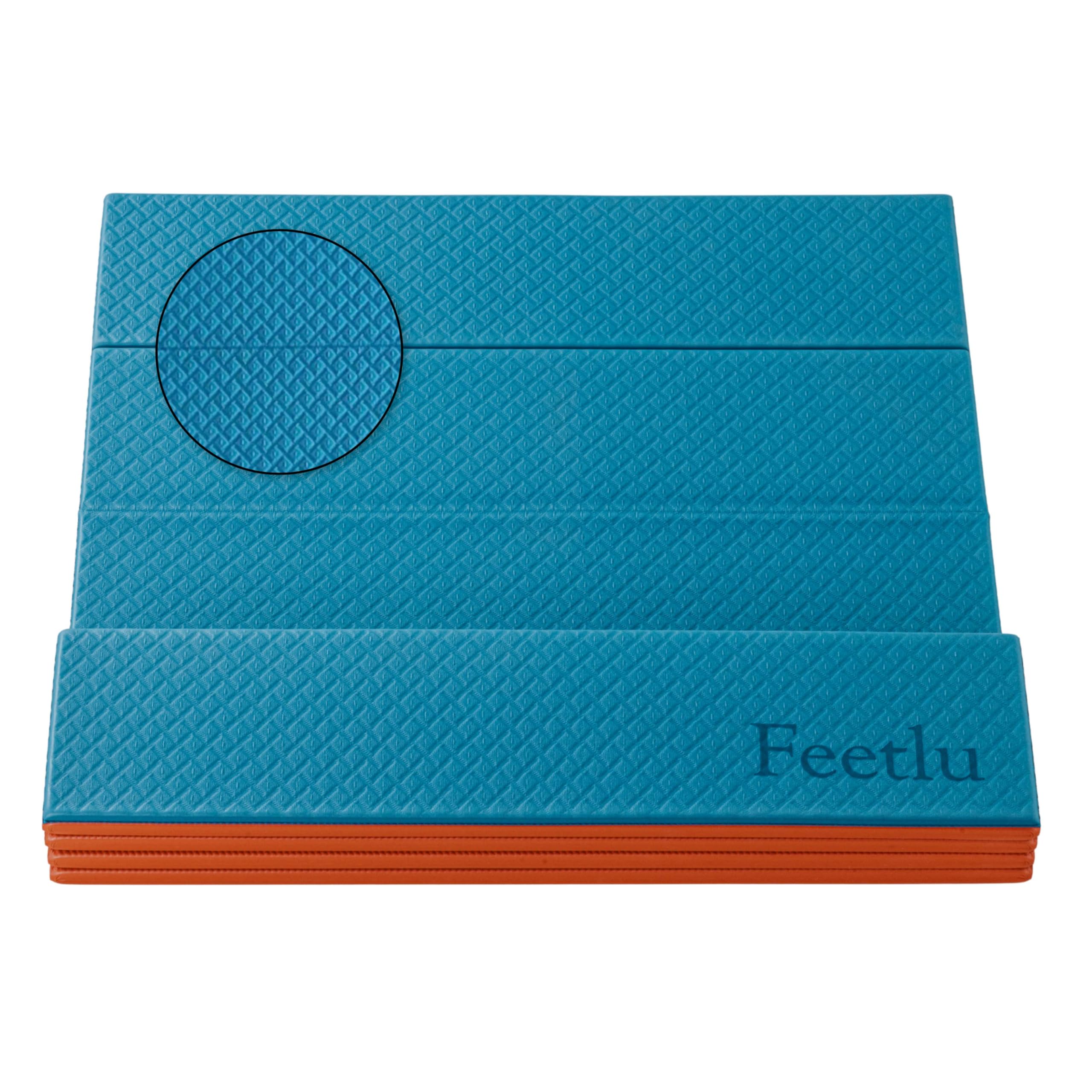
The Feetlu takes the opposite approach to the Manduka: instead of shaving the mat down to a sheet, it keeps a 0.25-inch layer of POE foam and folds that into an accordion stack. At 72 x 24 inches and 2 pounds, it is still a suitcase mat, but the extra foam makes a difference under knees, hips, and elbows. We think that is the right call when your travel practice includes floor work on a hard hotel-room carpet.
One detail we appreciated: because the mat folds across its width, you can leave one section doubled under a knee or elbow while the rest lies flat. The accordion folds also hold the mat together without a strap, so there is no elastic to lose in a suitcase. It opens flat enough for a flow, though the creases can leave slight ridges and the mat may take a few minutes to settle after being compressed.
The surface is double-textured and sweat-resistant, and it wipes clean rather than soaking up moisture. The trade-off is bulk: this is a larger folded package than the Superlite, and 2 pounds is fine for a carry-on but noticeable in a backpack. For a car trip, a rental cabin, or a hotel stay where comfort matters more than the smallest possible pack, the Feetlu earns its place.
Pros
- More cushioning than thin travel mats
- Accordion fold needs no strap
- One section can double under knees
Cons
- Folded package is bulkier
- Fold lines can leave ridges
We reach for this foldable mat when hotel-room floors demand more cushioning and we have suitcase space to spare.
Best for Budget Travel
Primasole Folding Travel Mat
Key Features
- Weight: 1.85 lb
- Material: PVC
- Thickness: 4 mm
- Dimensions: 68" x 24"
- Price: Budget
The Primasole is the mat we point to when the goal is to spend little and still have a real mat in your bag. It measures 68 x 24 x 0.16 inch and weighs 0.84 kg, so it folds into a compact rectangle that slides into a carry-on. The embossed PVC surface is meant to hold traction on a gym floor, and the compact stack keeps the folded mat manageable.
For a first travel mat or a spare that lives in the suitcase, that combination is easy to justify. We like that it opens without deep creases and wipes clean after a session. The 68-inch length is the first thing to check, though: taller practitioners may find hands or feet crowding the ends in long poses, and the 4 mm surface is a barrier more than a cushion.
Grip is the bigger variable. The embossed surface holds on a dry floor, but it can turn slick once hands get sweaty; a towel within reach solves most of that. The PVC also wears along the folds over time, which is why we see this as a light-use travel mat rather than a daily studio workhorse. It is the one to keep packed for hotel-room stretching and short trips.
Pros
- Very light at 0.84 kg
- Folds into a carry-on-ready stack
- Low-cost entry point
Cons
- Shorter 68-inch coverage
- Grip slips in a sweaty practice
Our budget pick for a suitcase, this mat folds into a compact stack and leaves room for the rest of your trip.
Best for Joint Support
PAIDU 10mm Foldable Mat
Key Features
- Weight: 2.6 lb
- Material: TPE
- Thickness: 10 mm
- Dimensions: 75" x 26"
- Price: Midrange
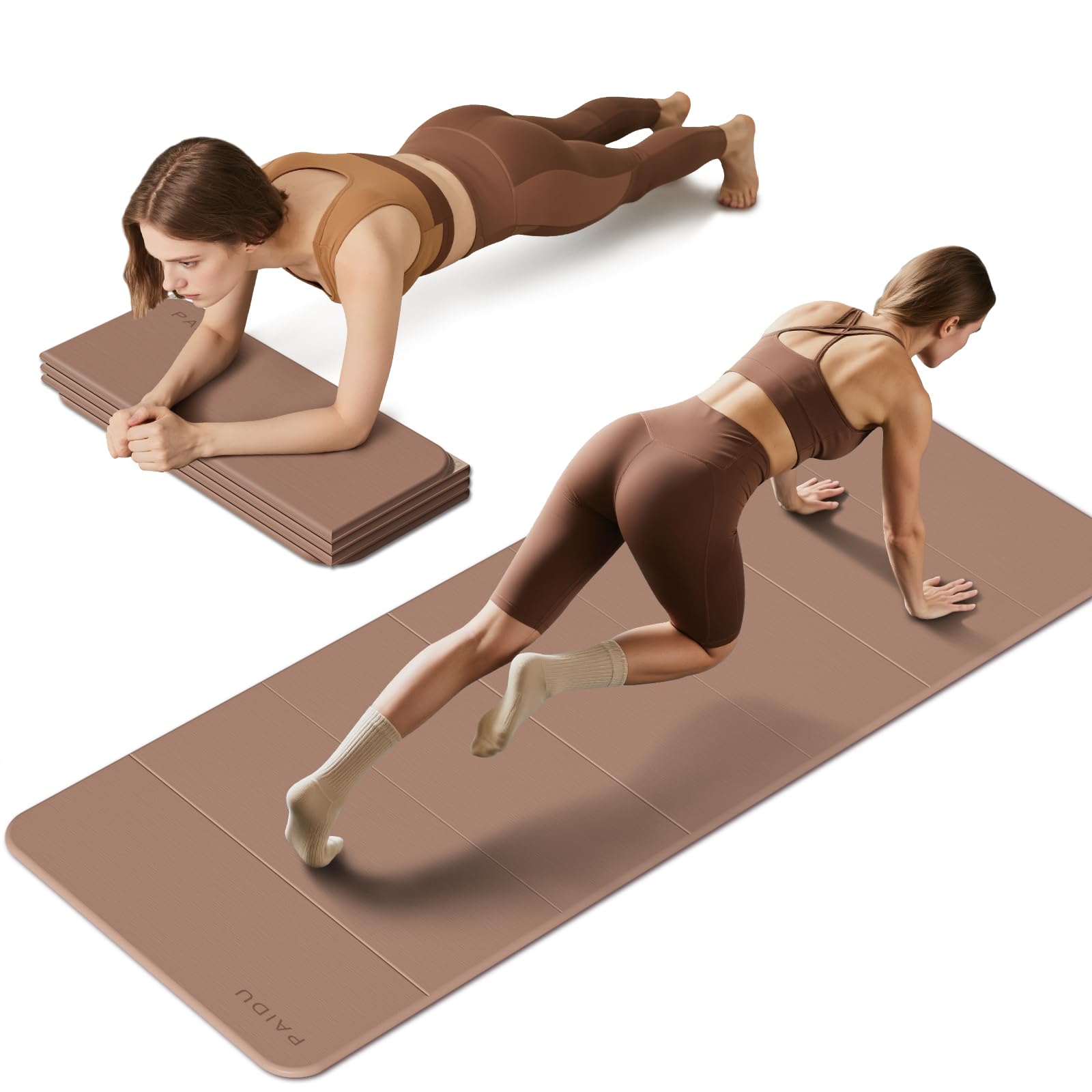
The PAIDU is the outlier here: a 10 mm mat that folds, and the one we choose when joint support matters more than pack size. Its 75 x 26-inch surface is the widest in this group, and the extra foam puts real distance between your joints and a hard floor. The double-sided texture is designed to keep it from sliding, and the mat folds in seconds rather than being rolled and strapped.
We like it for older knees, sensitive joints, and restorative practice, where the cushioning matters more than a low profile. The 2.6-pound weight is the catch. In a carry-on it takes up real space, and in a backpack you feel it on a long walk, so this is a car-trip or checked-bag mat more than a backpacking one. The trade is fair when the floor is the enemy.
The 3-second fold is a genuine convenience when you are moving between a hotel room and a rental car, and the TPE surface wipes clean without much fuss. The thickness has a second edge: standing balance poses feel less grounded than they do on a thin mat. If your practice is mostly floor-based, that softness is the point.
Pros
- Extra-thick 10 mm padding
- Wide 75 x 26 surface
- Folds in seconds without rolling
- Wipe-clean TPE surface
Cons
- 2.6 lb is bulky for a backpack
- Soft surface feels less stable in balance poses
We like this wide 10 mm mat for travelers with sensitive joints who can trade backpack space for real padding.
Best for Everyday Travel
Readaeer Foldable Yoga Mat

Key Features
- Weight: 1.7 lb
- Included: Carrying bag
- Thickness: 6 mm
- Dimensions: 72" x 24"
- Price: Budget
The Readaeer comes with a carry bag, and that small extra changes how the mat travels. Instead of a loose folded stack in your suitcase, you get a contained bundle with a handle for the walk from the car to the park. The mat itself is 72 x 24 x 0.24 inch and 1.7 pounds, with 6 mm of TPE foam and a double-sided textured surface.
That puts it between the thin Manduka and the plusher PAIDU. We found the 6 mm layer enough for a hotel floor without the bulk of a 10 mm mat, and the full 72-inch length gives taller practitioners more room than the 68-inch Primasole. The bag also keeps the folded mat from coming open among your clothes, which matters more than it sounds.
The cushioning and grip are middle-of-the-road rather than plush or tacky. We think it works best as an everyday travel mat for someone who wants a bag included and does not need the thinnest possible pack. It is a fair middle choice, not a specialist’s mat.
Pros
- Carry bag included
- 6 mm cushioning at 1.7 lb
- Full 72 x 24 size
Cons
- Dry-clean-only care is impractical
- Fold lines can be fussy to align
Our middle option for travelers who want a carry bag and more foam than a thin mat without the bulk of a 10 mm design.
How We Tested the Best Travel Yoga Mats
To build the shortlist, I started with the foldable mats sold specifically for travel, then narrowed by packed footprint, thickness, weight, and whether a carry bag or strap came included. Anything heavier than a filled water bottle, or offered in only one size, got cut early. That left 12 mats, which I used over six months — a mix of thin rubber and TPE sheets under 5mm and thicker foams running up to 10mm that promised real cushioning.
Every mat went to the same places. I unfolded each one in a studio class, on a hotel-room carpet, and on a park lawn, then spent a week with it living in a tote bag beside a laptop and a change of clothes, folded along its own seams and left there overnight. Afterward I laid it out and watched whether it relaxed flat or kept a memory of the fold, and I measured each one laid out to see how much floor it actually claimed compared with a standard studio mat.
Grip got checked with wet hands: I spritzed my palms and moved through downward dog, warrior poses, and balance holds, noting where hands and feet drifted. Lunges and side planks on every mat showed whether a thick foam squirmed underfoot or stayed put. I knelt and rolled onto my spine to compare how much floor came through, judged odor at unboxing and again after a day sealed in a warm car, and tracked durability by watching whether the same fold lines started to thin or crack with repeated packing.
How to Choose a Travel Yoga Mat
The best travel mat is the one you will actually pack, and that usually means accepting less padding than your studio mat.
Start With the Folded Bundle
Folding is only useful if the bundle fits where you pack it. A mat that folds into a flat rectangle slides into a suitcase more easily than a rolled cylinder, but check the folded footprint, not just the thickness. The Manduka eKO Superlite at 1.5 mm and 2 pounds is the easiest carry-on bundle in this group; the PAIDU at 10 mm and 2.6 pounds is a different proposition. If the mat will live in a backpack, pack the folded bundle beside your other gear before you commit.
Match Thickness to Your Practice
Thickness is the main trade between comfort and packability. A 1.5-2 mm mat is a clean barrier for stretching and hotel-room flows; 4-6 mm is the compromise for knees and wrists; 10 mm is for joint support and floor work. The thinner the mat, the less it interferes with balance, and the thicker it feels, the more it cushions. We prioritize 1.5-2 mm for carry-on travel and 6 mm or more when kneeling poses matter. More foam is not automatically better for yoga.
Test Grip Against Sweat, Not Just a Dry Floor
Grip changes with moisture. Natural rubber feels tacky when dry but can turn slick once hands sweat; textured TPE, POE, and PVC surfaces vary just as much. If you practice hot yoga, bring a towel and choose a texture you can feel through the sweat; for dry hotel-room stretching, a simple closed-cell surface is enough. The Manduka’s closed-cell rubber resists moisture, while the Feetlu’s double texture is more forgiving under damp hands. Test the surface with a damp palm before you pack it.
Check Size, Care, and Carry Extras
Length and width decide whether the mat fits your body and your bag. A 68-inch mat is compact but tight for taller practitioners; 71-75 inches gives more room, and 26 inches of width helps in wide stances. A carry bag or strap keeps folds contained, though an accordion mat may need neither. Check the care label too: natural rubber needs hand washing without soaking, sun, or soap, and a dry-clean-only instruction is a poor fit for a sweaty mat. We check care before color.
Frequently Asked Questions
Why does my new travel yoga mat smell?
Natural rubber and some foams can have a strong smell when new. Unfold the mat in a ventilated room for a few days before packing it with clothes, and wipe it with a damp cloth if the surface feels tacky. Avoid soaking a rubber mat or leaving it in direct sun, which can damage the material.
Can I fold a regular yoga mat for travel?
Only if it is thin and flexible. A 1.5-4 mm mat folds into a flat bundle, but a thick 6-10 mm studio mat creates a bulky stack and deep creases that may not flatten out. If you already own a thick mat, roll it and check the packed length before relying on it for a carry-on.
How do I get the creases out of a folding mat?
Unfold it fully and let it rest in a warm room, then reverse the fold direction at each crease and press the mat flat for a few hours. A slightly damp towel can help weight it down, but do not iron it or leave it in sun. If a crease stays hard or cracked, stop using that section for support.
Final Verdict
Our default is the Manduka eKO Superlite. It folds to about sweater size, weighs 2 pounds, and gives you a full 71 x 24-inch surface, so you can practice in a hotel room without unpacking half your bag. The thinness is the trade, and for most travelers it is the right one.
If knee comfort matters more, choose the Feetlu; if you want maximum padding and have car space, the PAIDU is the better fit.