
This post contains affiliate links. We may earn a small commission when you buy through our links — at no extra cost to you.
Every winter, the same story: fresh socks go in, holes come out. The heel and toe of budget wool socks often give out within a few months of daily wear. But warmth and comfort don’t have to be short-lived.
The key is knowing which socks reinforce the high-wear areas and which are built to last. Many shoppers assume all merino socks are created equal, but the material blend and construction make a huge difference in longevity. This guide focuses on finding socks that keep feet warm through the season without needing replacement by February.
Whether you’re kicking back at home or hitting the trail in sub-zero temperatures, the right pair depends on how you use them. We break down the trade-offs so you can pick socks that match your routine, not just your budget.


Best for Hikers & Workers
Darn Tough Hiker Midweight
Key Features
- Material: 60% Merino blend
- Height: Micro Crew height
- Cushion: Midweight
- Price: $$$
The Darn Tough Hiker Midweight is built to outlast every other sock in this set. Merino wool blend manages moisture during cold-weather hikes, keeping feet dry and reducing blister risk. The real standout is the unconditional lifetime guarantee — if these socks ever wear through, Darn Tough replaces them. That eliminates the long-term cost concern that hangs over every budget wool option.
This sock suits hikers, outdoor workers, and anyone who spends full days in boots during winter. The midweight cushion balances warmth and boot fit — thick enough for insulation, not so bulky that it crowds toes. The fit is snug, especially around the ankle and instep, which works well for movement but may feel restrictive for those with wider calves or who prefer a looser feel. The upfront price is higher than any competing pair, but the replacement policy shifts the math for heavy users.
Pros
- Stitching and reinforcement hold up through years of heavy use without holes.
- Merino wool blend keeps feet dry and blister-free during long winter hikes.
- Lifetime replacement warranty adds long-term value for frequent buyers.
Cons
- Ankle and instep fit can feel too tight for some wearers.
- Upfront cost per pair is high compared to budget winter socks.
For anyone who wears winter socks hard — day after day on the trail or in work boots — the Darn Tough Hiker Midweight delivers the lowest cost per wear of any option here.
Best for Extreme Cold Use
Darn Tough Full Cushion Boot
Key Features
- Material: 66% Merino blend
- Height: Boot height
- Cushion: Full cushion
- Price: $$$
The full cushion and boot height provide exceptional warmth and impact protection for winter hiking or standing in sub-zero conditions. The reinforced heel and toe hold up to heavy use, while the merino wool blend wicks moisture effectively. This sock is best for hikers and workers who wear heavy boots in extreme cold and want a pair that lasts for years. The thick cushion makes it unsuitable for regular shoes, and the calf fit may feel snug for some – worth checking before buying.
Pros
- Full cushioning provides warmth and comfort in cold boots
- Durable reinforcement in heel and toe extends sock life
- Merino wool blend wicks moisture and resists odor
Cons
- Premium-priced compared to multi-pack alternatives
- Calf fit can be snug for larger legs
The sock to choose when extreme cold and boot compatibility are the priority – the lifetime warranty makes it a cost-effective long-term investment.
Best for Casual Winter Wear
Buttons & Pleats Merino Thermal
Three pairs for under $10 with solid warmth and comfort reviews – that’s the headline for Buttons & Pleats. The merino blend keeps feet toasty without feeling scratchy, and the crew height fits well under boots. Durability is where the tradeoff lives: holes can appear in the toes after a few months of regular use, so this is not a long-term investment. For budget-conscious shoppers who want merino warmth without the upfront cost of a Darn Tough, this pack delivers. Those with larger feet (size 12+) may find the fit too snug on some pairs, but for average-sized feet and casual winter walks, the value is hard to match. A higher merino-content version exists at a similar price, but shares the same durability limit.
Pros
- Excellent warmth for the price – keeps feet toasty without excessive bulk.
- Very comfortable and itch-free, even for those sensitive to wool.
- Great value – one of the cheapest merino options available in a 3-pack.
Cons
- Holes can appear in the toes after a few months of regular use.
- Sizing can be inconsistent, with some pairs running small – especially for larger foot sizes.
If your priority is getting merino warmth at the lowest possible cost, this 3-pack delivers. Just plan on replacing them more often than a premium pair.
Best for Work Boots Cold
Dickies Heavy Weight Crew
Key Features
- Material: Acrylic/wool blend
- Height: Crew
- Cushion: Heavyweight
- Price: $
This heavyweight wool blend sock holds up in work boots with fewer fit complaints than many budget options. The thick cushioning provides ample insulation for cold work sites, and the stretchy knit prevents slipping inside boots. Owners note that holes take longer to appear compared to similarly priced socks. Best for men who need warmth and durability over next-to-skin softness – the wool blend is less refined than merino, but that tradeoff keeps the price low and the sock tough.
Pros
- Warm insulation for cold work environments
- Fewer durability issues than other budget wool socks
- Stretchy fit that stays in place without slipping
Cons
- Wool blend is less soft than pure merino socks
For budget-minded workers needing warm, durable socks for boots, this set offers solid value without the premium price tag.
Best for Budget Warmth Light Hiking
Alvada Merino Wool Hiking

These deliver impressive warmth and a soft, non-itchy feel at a very low price for a three-pack of merino-blend socks. The trade-off is in the heel and toe reinforcement: holes can develop after a few months of regular use, making these a practical choice for occasional winter walks or errands rather than daily hiking or boot work.
Pros
- Keeps feet warm in freezing conditions without the itch of raw wool.
- Three pairs for a budget-friendly price — strong value for casual use.
Cons
- Heel and toe areas may wear through after months of regular use.
Best for budget-conscious shoppers who need warmth for short outings and don’t mind replacing socks every season.
Best for Casual Wear
COZIA Merino Casual Warm

These socks deliver a soft, cushioned feel and solid warmth for lounging or the office. The medium thickness fits under most shoes. Durability is average, with some reports of heel wear. For the same price, Buttons & Pleats offers better longevity.
Pros
- Very warm and comfortable
- Soft and cushioned feel
Cons
- Heel area may show wear sooner than expected
Best for casual indoor or office use where warmth matters more than longevity, and replacement is acceptable.
Best for Lounging & Sleeping
HOT FEET Thermal Socks

Key Features
- Material: Acrylic thermal
- Height: Crew
- Cushion: Fleece lining
- Price: $$
This fleece-lined sock delivers exceptional warmth for stationary use – ideal for lounging or sleeping in extreme cold. However, the thick cushioning makes it too bulky for most shoes, limiting it to house socks or oversized boots. Niche, but effective for its intended purpose.
Pros
- Extremely warm – like wearing blankets on feet
- Very soft and cozy inside
Cons
- Too bulky for most shoes – best as house socks or with oversized boots
For men who need maximum warmth while sitting or sleeping and don’t plan to wear shoes, this sock delivers unmatched insulation.
Best for Occasional Use Budget
Time May Tell Merino Hiking

Key Features
- Material: 80% Merino blend
- Height: Crew
- Cushion: Midweight
- Price: $
These socks deliver solid warmth and softness at a low price, making them a good choice for short trips or casual winter outings. Heel durability has been noted to wear through faster than comparable budget options, so they suit occasional use better than a long-term workhorse.
Pros
- Warmth and softness at a budget-friendly price for cold weather.
- Fit stays in place without slipping during walking or light activity.
Cons
- Heel durability can be a weak point – some pairs develop holes with regular use.
A decent option for occasional winter hikes or as backup socks, but not built for repeated heavy use.
Best for Mild Weather Hiking
Danish Endurance Merino Hiking
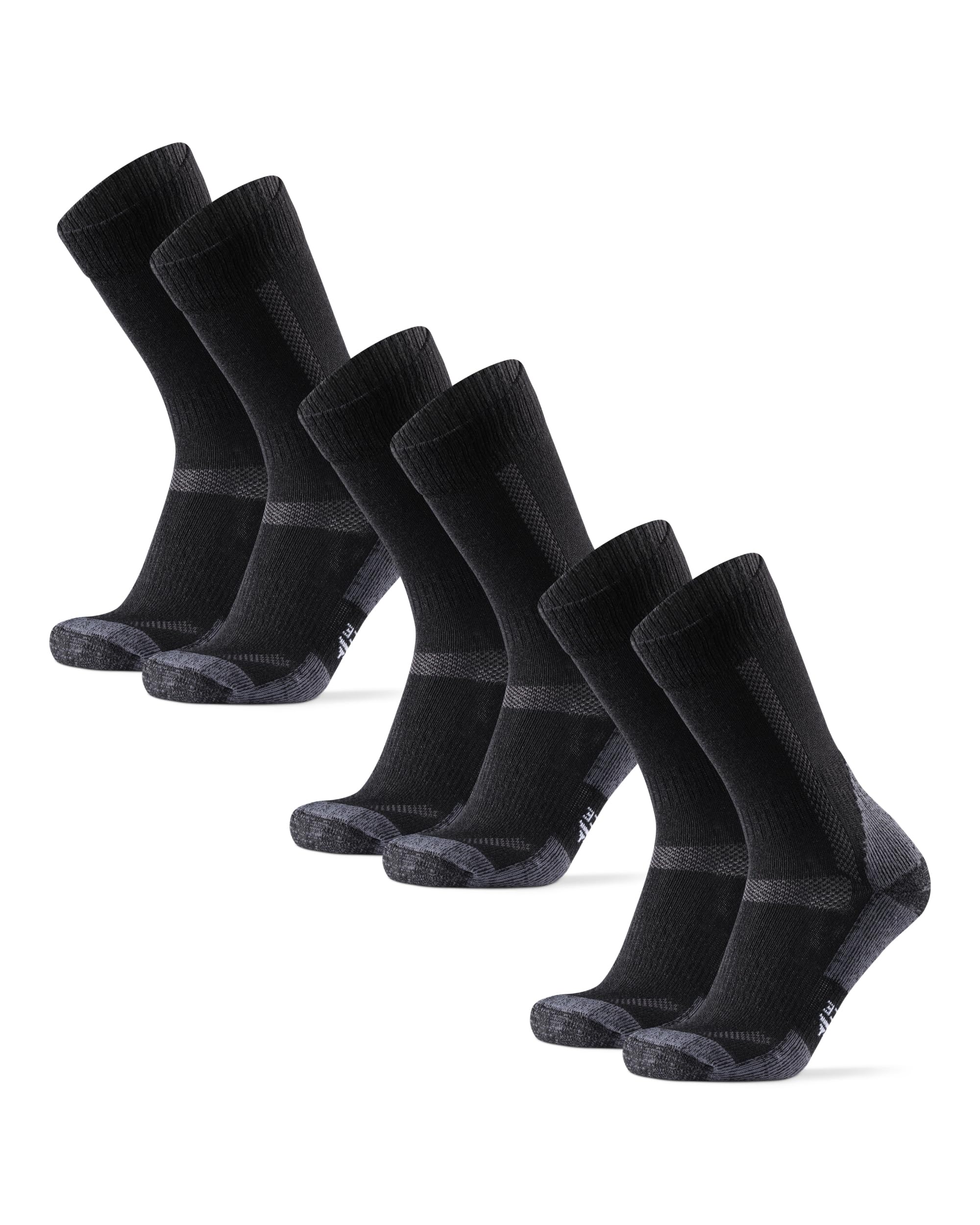
The Danish Endurance Merino Wool Hiking Socks deliver good moisture management and a comfortable blend for active outdoor use in mild conditions. However, the midweight construction lacks the insulation needed for cold weather, and the snug fit around the ankle and calf may feel restrictive for some. This design works best for slim-footed hikers in cool weather rather than as a primary winter warmth sock.
Pros
- Comfortable merino blend with good breathability for active use.
- Durable construction holds up well relative to other mid-range options.
Cons
- Thickness is on the lighter side – not suited for sub-zero or extreme cold conditions.
Best for mild-weather hiking or casual use where maximum warmth isn’t required.
Best for Indoor Short Trips
EBMORE Super Thick Merino

Key Features
- Material: Merino/cashmere blend
- Height: Calf
- Cushion: Super thick
- Price: $
These socks deliver a luxuriously thick, pillow-like feel with a merino/cashmere blend that makes them exceptionally warm and soft. However, the durability is limited – the heel area can develop holes after short periods of active wear, making them best suited for home lounging or brief outdoor trips where maximum comfort is the priority.
Pros
- Extremely warm and soft – thick cushioning feels like walking on pillows.
- High merino/cashmere blend gives a luxury feel.
Cons
- Durability is limited – holes may appear in the heel after short use.
Best for indoor lounging or short trips where softness is the priority, but not for regular active wear.
Best for Short Hiking Budget
Buttons & Pleats Premium Hiking

Key Features
- Material: 80% Merino blend
- Height: Crew
- Cushion: Midweight
- Price: $
These socks deliver solid warmth and breathability for cold-weather hikes, thanks to the high merino content. However, heel durability falls short – holes can develop after limited use, making them a short-term buy best for occasional trips.
Pros
- High merino wool content for warmth and breathability at a low price.
- Comfortable fit that stays in place during activity.
Cons
- Heel durability can be an issue – holes may develop after a few uses.
Best for budget-conscious hikers taking short trips where long-term durability isn’t a priority.
Best for Extreme Cold Warmth
Polar Extreme Thermal Hiking

This synthetic sock provides intense warmth for sub-zero conditions thanks to its fleece-like lining. It’s best for stationary use—sitting or sleeping—rather than active hiking, and the one-size-fits-most fit may not suit all foot shapes. Durability can vary, with some pairs showing wear earlier than expected.
Pros
- Exceptional warmth for extreme cold with a soft, fuzzy interior.
- Comfortable fleece-like lining adds cozy feel without irritation.
Cons
- One-size-fits-most may be too large for smaller feet and too bulky for most shoes.
A viable pick for stationary extreme cold use when warmth is the only priority and you can accept synthetic materials and possible fit issues.
How to Choose
Your winter sock choice boils down to three things: how much warmth you need, how long you expect them to last, and how they fit inside your boots.
Warmth: Merino Content and Thickness
Merino wool is the gold standard for insulation and moisture wicking, but the percentage in the blend matters. A sock with 60% merino offers good warmth; 80% or more feels noticeably toastier but can wear faster because wool fibers are softer than nylon.
Thickness adds insulation but also takes up space. A midweight sock works with most shoes, while full cushion or heavyweight options require roomier boots. Wearing a thick sock in a tight shoe restricts blood flow, making feet colder instead of warmer.
Durability: Reinforcement and Warranty
Heels and toes are the first to fail, regardless of material. Socks with reinforced knit in those areas last significantly longer. Budget options often skip this reinforcement to keep costs down, leading to holes within weeks of daily use.
A lifetime replacement warranty, like Darn Tough’s, changes the cost calculus entirely. Paying $25 for one pair that gets replaced forever can be cheaper than buying four $10 packs every season. If you wear socks hard, the warranty is the durability feature that matters most.
Fit: Height and Calf Tightness
Sock height determines where the warmth ends and whether the sock stays up. Crew height (mid-calf) is the most versatile for both casual and hiking boots. Boot height covers the full calf, providing extra warmth and preventing snow from entering.
Tightness around the ankle or calf is a frequent complaint. A snug fit prevents slipping but can become uncomfortable after hours of wear. If you have larger calves or wide feet, look for socks with stretch panels or size-specific options rather than one-size-fits-all.
Cushioning: Midweight vs. Full Cushion
Cushioning absorbs impact and provides insulation underfoot. Midweight cushioning is the everyday sweet spot: enough padding for comfort without being too bulky. Full cushion extends from toe to calf, ideal for cold boots and long hikes where every step benefits from shock absorption.
The trade-off is that heavy cushioning makes socks impractical for casual shoes. If you only wear winter boots, full cushion is a no-brainer. If you switch between boots and sneakers, midweight gives you more flexibility.
Care: Machine Wash and Drying
Merino wool socks require gentle care to maintain their shape and softness. Most can be machine washed cold, but high heat in the dryer can shrink wool fibers permanently. Even socks labeled ‘tumble dry low’ are safer if air-dried.
Neglecting care instructions is a leading cause of premature holes and shrinkage. The extra three minutes to hang them up can double the life of a merino sock, making the cost-per-wear much lower than it appears at checkout.
FAQ
Why do my merino wool socks get holes in the heels so fast?
The heel is the highest-friction area inside a shoe, and many budget socks don’t reinforce that zone with extra nylon threads. A sock with reinforced heel and toe will last two to three times longer. If you keep getting holes, switch to a brand that explicitly states reinforcement in the construction.
Are Darn Tough socks worth the money for winter hiking?
Yes, especially if you hike multiple times a week. The lifetime warranty means you pay once and get replacements indefinitely. The midweight or full-cushion merino blends hold up to years of abuse, making them cheaper per wear than any budget sock that dies in three months.
Can I machine dry merino wool socks without shrinking?
It’s risky. Even low heat can shrink merino blends by up to 10% after repeated cycles. Air drying is the only reliable method. If you must use a dryer, run it on the lowest setting and remove the socks while still slightly damp to minimize shrinkage.
How thick should winter hiking socks be for insulated boots?
Medium cushion is the sweet spot for most insulated boots. Too thick and your foot will compress the insulation, reducing warmth. Too thin and you’ll lose the insulating air layer. Full cushion is better for uninsulated heavy boots or extreme cold.