
This post contains affiliate links. We may earn a small commission when you buy through our links — at no extra cost to you.
Most waterproof phone pouches claim IPX8, but that rating only guarantees protection against submersion — not a specific depth. A pouch rated for 1 meter will fail long before you reach the bottom of a snorkeling spot, and underwater touchscreen? Expect it to stop working within a few feet.
This guide cuts through the marketing to match cases to real water activities. The core trade‑off is between a pouch that floats (peace of mind if you drop it) and one that doesn’t (slimmer, cheaper). Knowing which matters more to your trip is half the buying decision.
Before you trust any case with your phone, test it with a paper towel. A single leak can destroy an iPhone — and even top‑rated pouches have gaps in quality control.


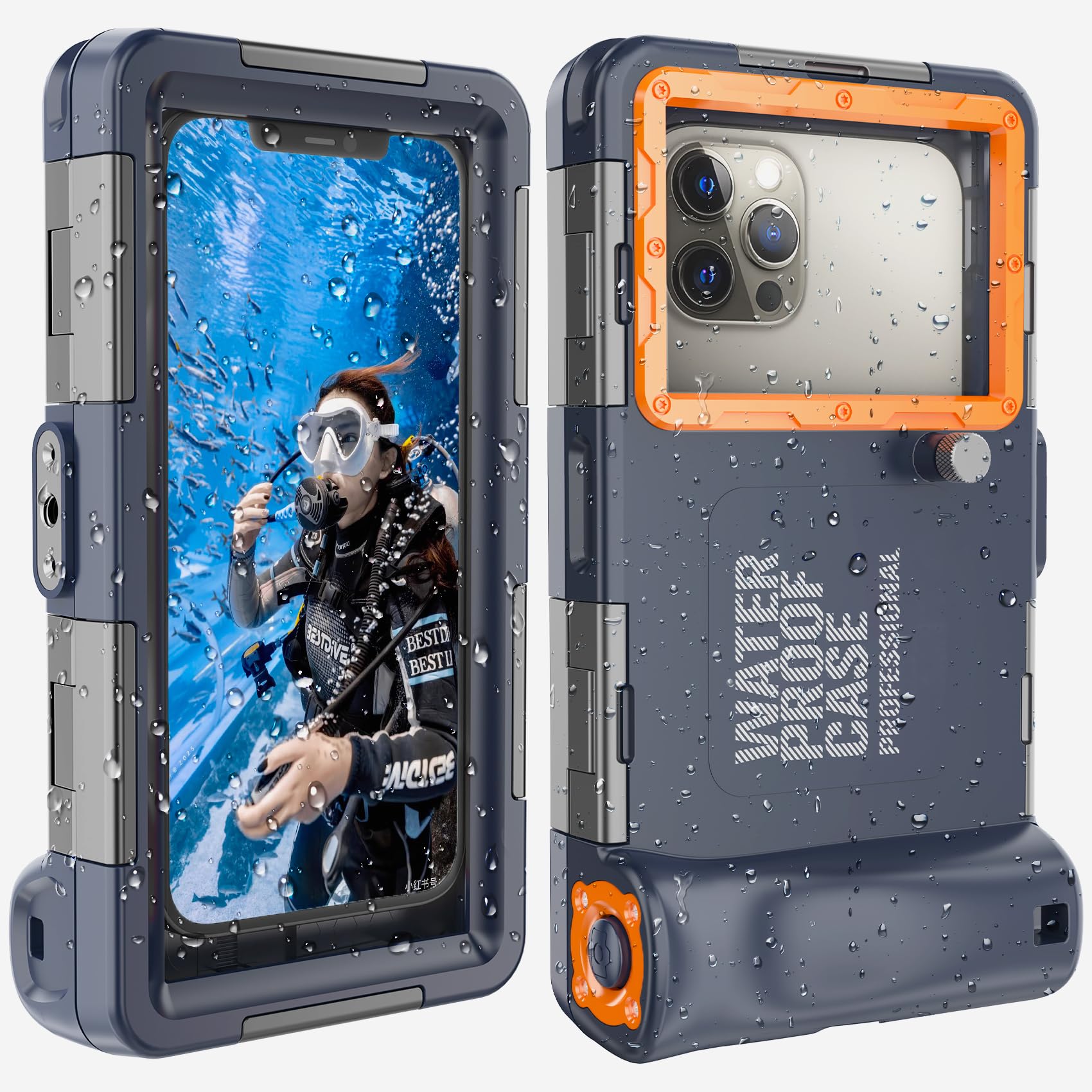
Best for Casual Beach & Cruise
Hiearcool 2-Pack Pouch
Key Features
- Waterproof Rating & Depth: IPX8, depth not specified
- Touchscreen Underwater: Limited – pressure dependent
- Floating: No
- Fit with Case On: Fits up to 8.9" devices
- Camera Window Clarity: Good above water
- Price: Budget
The Hiearcool Waterproof Phone Pouch stands on a foundation of over 110,000 user experiences — a level of feedback that makes its waterproof reliability one of the few certainties in the budget pouch category. The IPX8 triple-layer lock seals the phone dry during splashes, rain, and brief submersion, and the clear window captures photos with minimal distortion when used above water.
In real-world use, the pouch handles the typical beach or pool day without issue. The generous 8.9-inch interior accommodates most phones with their cases still on. Where the tradeoff appears is underwater: the touchscreen becomes unresponsive under pressure, so capturing photos requires switching to the volume buttons. This is a known boundary rather than a defect — it’s simply how soft pouches behave at depth.
This pouch is best suited for the cruise traveler or beach vacationer who wants dependable water protection primarily for above-surface photography and the occasional dip. Those planning serious snorkeling with frequent underwater shots or who need touchscreen functionality below the surface should consider a hard case with a mechanical shutter trigger. Additionally, if you’re worried about dropping the pouch in deep water, the lack of built-in flotation means it will sink — check the floating alternative from the same price tier if that’s a concern.
At a budget-friendly price for a two-pack, the Hiearcool offers a cost-effective way to protect multiple devices or share with a companion. The large size and clear lens make it a practical grab-and-go option for casual water exposure.
Pros
- Exceptional value with high waterproof reliability
- Clear photography through the pouch
- Large size fits most phones with cases
- Two-pack provides backup or sharing convenience
Cons
- Fitting larger phones inside the pouch can require effort, and removing them may feel tight — especially with thick cases
- Underwater, the touchscreen may not register finger taps reliably; using the volume buttons is the workaround
For budget-conscious travelers who need reliable waterproofing for splashes, shallow dips, and above-water photography, this two-pack delivers confidence at a low cost — just keep the touchscreen limitation in mind.
Best for Kayaking & River Tubing
UNBREAKcable 2-Pack
Key Features
- Waterproof Rating & Depth: IPX8, claims 100ft
- Touchscreen Underwater: Use volume buttons
- Floating: Yes
- Fit with Case On: Fits up to 7"
- Camera Window Clarity: Some blur reported
- Price: Budget
The UNBREAKcable 2-Pack floats, a feature absent from the top pick at a comparable per-pouch price. Each pouch carries an IPX8 rating to 100 feet and the sponge air cushion keeps the phone buoyant up to 360 grams — enough for most phones with a slim case. For families or groups who want multiple backups without spending extra, this pack delivers duplication that single-pouch options cannot match.
This pouch prioritizes protection over photographic output. Underwater photos can come out blurry, and the touchscreen stops responding once submerged — you must use the volume buttons to trigger the shutter. Anyone hoping for crisp pool or snorkeling shots will find the results disappointing; this is a water-blocking shell first, not a camera accessory.
The floating mechanism works as advertised during river tubing and pool use — reviewers consistently report the pouch stays afloat and the seal holds. The two-pack price undercuts most single floating pouches, making it a sensible choice for casual water activities where losing a phone to the bottom is the primary concern.
Pros
- Keeps phone dry during shallow submersion
- Floating design prevents loss to the bottom
- Two pouches per pack at a budget price
Cons
- Underwater photos can be blurry — this is a protection-first pouch
- Touchscreen stops responding underwater; volume buttons required for shutter
If you need buoyancy and a backup pouch for family trips, this two-pack delivers reliable protection at a lower cost per pouch than most single floating cases — just don’t expect sharp underwater shots.
Best for Large Phones & Travel
Rynapac Large 2-Pack
Key Features
- Waterproof Rating & Depth: IPX8, depth not specified
- Touchscreen Underwater: Limited
- Floating: No
- Fit with Case On: Fits up to 10" with bulky case
- Camera Window Clarity: Good above water
- Price: Budget
Accommodates phablets up to 10 inches with room for a passport and cards — no other soft pouch in this set offers this much capacity. The extra-large design is deliberate: it’s meant for travelers who carry a big phone in a bulky case and want to consolidate phone, ID, and cash into one waterproof pouch. The included lanyard makes it easy to wear around the neck, though pocket carry is not realistic.
This pouch is best suited for cruise guests, beach-goers, or day-trippers with phablets or phones in OtterBox-style cases. The bulk is a tradeoff — minimalists or those wanting a slim profile should look elsewhere. Underwater, the touchscreen stops responding, so rely on the volume buttons for shutter control.
The IPX8 waterproof seal keeps contents dry during submersion, though the depth rating is unspecified, making it a good fit for snorkeling or pool use rather than deep diving. The two-pouch pack adds convenience for sharing or as a backup, and the card slots eliminate the need for a separate waterproof wallet.
Pros
- Extra-large capacity fits phones with bulky cases and leaves room for a passport.
- Waterproof seal holds up during submersion, keeping contents dry.
- Includes two pouches with card slots for travel organization.
Cons
- Large footprint makes it cumbersome for pocket carry.
- Touchscreen stops working underwater, limiting photo control.
For travelers who need to carry a large phone plus essentials into the water, this pouch offers unmatched capacity at a budget-friendly price — just accept the bulk and use volume buttons for underwater shots.
Best for Snorkeling & Shallow Diving
YNVYFI Dive Case
Key Features
- Waterproof Rating & Depth: 15m / 50ft
- Touchscreen Underwater: Not supported
- Floating: No
- Fit with Case On: Fits 4.7–6.9" with case
- Camera Window Clarity: Crystal clear
- Price: Mid-Range
The YNVYFI Dive Case’s six aluminum alloy clasps and volume-button shutter give you a mechanical trigger for underwater photos without relying on touchscreen or Bluetooth. Unlike the Bluetooth-handled shooter in this roundup, this case is simpler and cheaper—just set your phone’s auto-lock to never and mount the case. The seal is tight; water ingress has not been a concern based on user feedback.
This case suits snorkelers who want a dependable mechanical shutter at a mid-range price. The tradeoff: you must disable auto-lock before diving, which can cause the phone to overheat during extended video recording. For stills and short clips under 10 minutes, the risk is manageable.
The hard shell protects against drops and the polycarbonate window stays clear for sharp underwater shots. The 50-foot depth rating covers recreational snorkeling and shallow dives. Rubberized edges add grip when your hands are wet.
Pros
- Six-latch seal prevents water ingress down to 50 feet.
- Mechanical volume-button shutter captures clear underwater photos without touchscreen.
- Hard shell and rubberized edges protect against drops and impacts.
Cons
- The case is tight and can be difficult to open and close initially.
- Disabling auto-lock can lead to phone overheating during long video sessions.
For snorkelers who want a simple mechanical shutter without Bluetooth complexity, this hard case delivers solid protection and clear photos—just keep recording time short to avoid heat buildup.
Best for Cruise & Pool Days
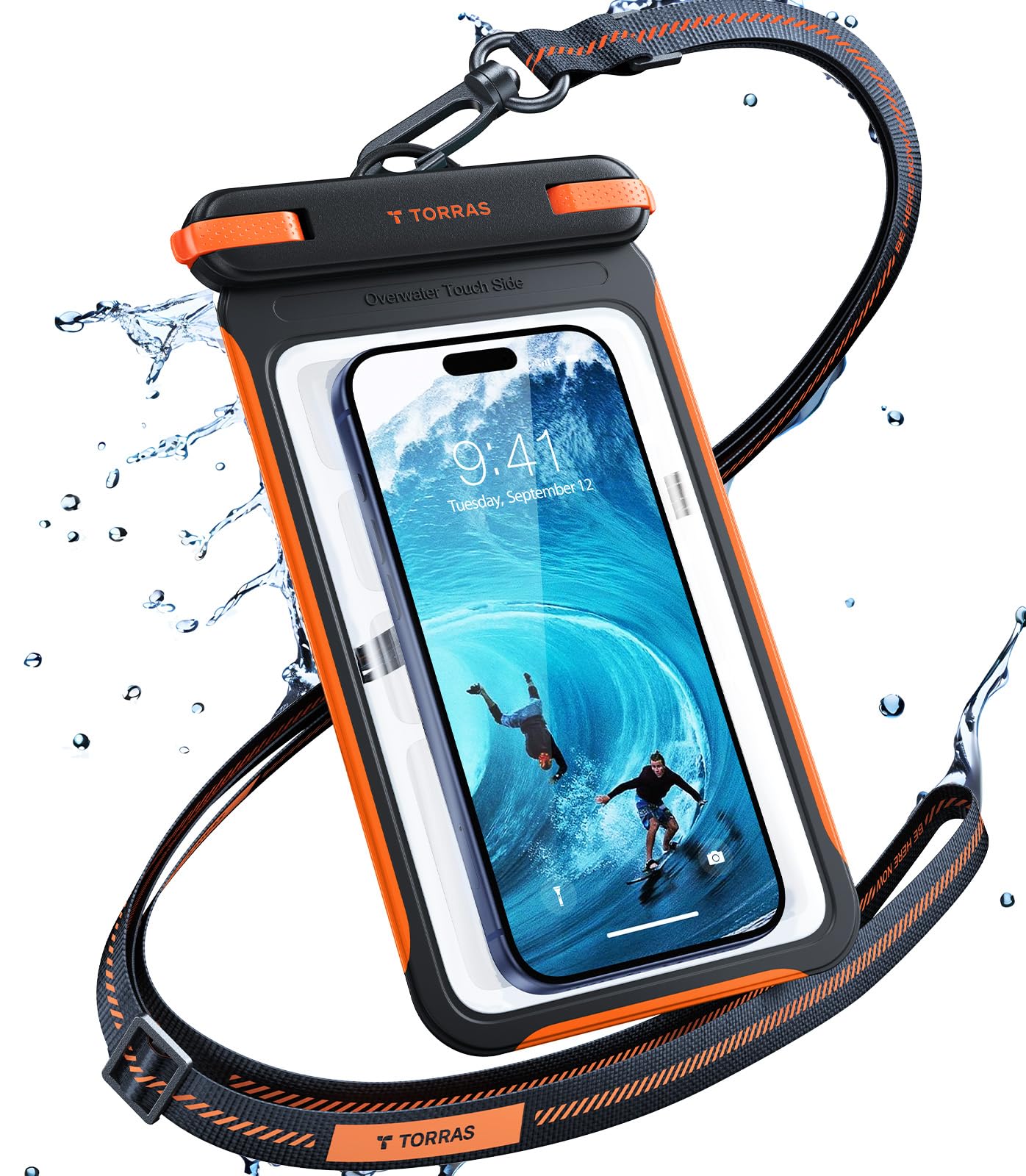
TORRAS Double Space
Two separate compartments make this pouch stand out from single-pouch designs — one for phones up to 7 inches, another for cards, keys, or ID. The floating foam cushion provides up to 500g buoyancy, keeping everything on the surface so you won’t lose valuables if the pouch slips from your hand.
This pouch suits cruise travelers and beachgoers who need a single accessory to carry phone, room key, and credit card. The touchscreen works clearly above water, but once submerged it stops responding. That makes this pouch ideal for snorkeling where you can set up the camera before going under, or for filming at the surface without worry. If your priority is actively controlling the camera underwater, this limitation is a hard stop.
The IP68 rating (100ft/30h) provides solid water protection for snorkeling and pool use. The clasps are secure and the material feels durable — several users have tested it in ocean saltwater without leaks. The extra compartment adds noticeable bulk (nearly 2 inches thick when loaded), so it won’t fit in a pocket, but it’s manageable in a beach bag or cruise-day carry.
Pros
- Dual-compartment design keeps phone and valuables organized
- Strong water resistance and floats reliably
- Good build quality with secure clasps
Cons
- Bulky compared to single-pouch alternatives
- Touchscreen not functional once submerged
For cruise and beach travelers who value organization and floating peace of mind, the TORRAS Double Space delivers. Just be clear on the underwater touchscreen limitation — this is not a photography case.
Best for Experimental Touch Use
TORRAS IceCube Pouch
Key Features
- Waterproof Rating & Depth: IPX8, claims 100ft
- Touchscreen Underwater: Air Button – inconsistent
- Floating: Yes
- Fit with Case On: Fits up to 7"
- Camera Window Clarity: Some fogging reported
- Price: Mid-Range
The TORRAS IceCube Pouch sets itself apart with its Air Button, a rare attempt at underwater touchscreen control in a floating pouch. The IPX8-rated seal and built-in foam layer keep phones dry and afloat during pool or beach use. That said, the touch feature’s consistency varies between units, and interior fogging can interfere with photo clarity — results are not guaranteed.
This pouch fits travelers and casual water users who want to try underwater texting or camera control without risking their phone. The floating design adds peace of mind for snorkeling and pool days, but buyers should accept that touch responsiveness may be unreliable and fogging may occur. It’s not suited for serious underwater photography or deep diving beyond typical pouch depths.
Build materials feel solid for the mid-range price, and the company’s customer service has been responsive when warranty issues arise. For those who value floating security over flawless touch operation, the IceCube offers a practical middle ground.
Pros
- Air Button enables attempted touchscreen control underwater
- Floating foam layer and IPX8 seal keep phone dry and afloat
- Solid build quality with responsive customer service support
Cons
- Underwater touch responsiveness can vary between units; tapping may not register
- Interior fogging may occur in humid conditions, affecting photo clarity
For float-friendly protection at the beach or pool, the IceCube Pouch is a solid choice — just don’t rely on the touch feature for every shot.
Best for Extreme Budget Backup
Lamicall 2-Pack

Key Features
- Waterproof Rating & Depth: IPX8, claims 100ft
- Touchscreen Underwater: Use volume buttons
- Floating: No
- Fit with Case On: Fits 4–7"
- Camera Window Clarity: Some distortion
- Price: Budget
This 2-pack offers the lowest per-pouch cost for IPX8-rated waterproofing, suitable for families or travelers who want several backup pouches for beach days or light snorkeling. However, build quality varies between units, and the touchscreen becomes unresponsive once submerged – you’ll rely on volume buttons for photos. Check each pouch’s seal before use, as occasional leaks have been noted. For primary underwater photography or guaranteed performance, consider a hard case like the Hiearcool instead.
Pros
- Exceptional value – each pouch costs under $10 and provides functional waterproofing for basic water activities.
- Effective waterproofing for typical use – remains dry during snorkeling and pool submersion.
Cons
- Seal can allow water ingress in some units – inspect each pouch before first use.
- Touchscreen stops working underwater – use volume buttons to trigger the camera shutter.
Best for budget-conscious buyers who need multiple backup pouches for casual water exposure – not for underwater photography or situations where a single leak would be catastrophic.
Best for Short Water Activities
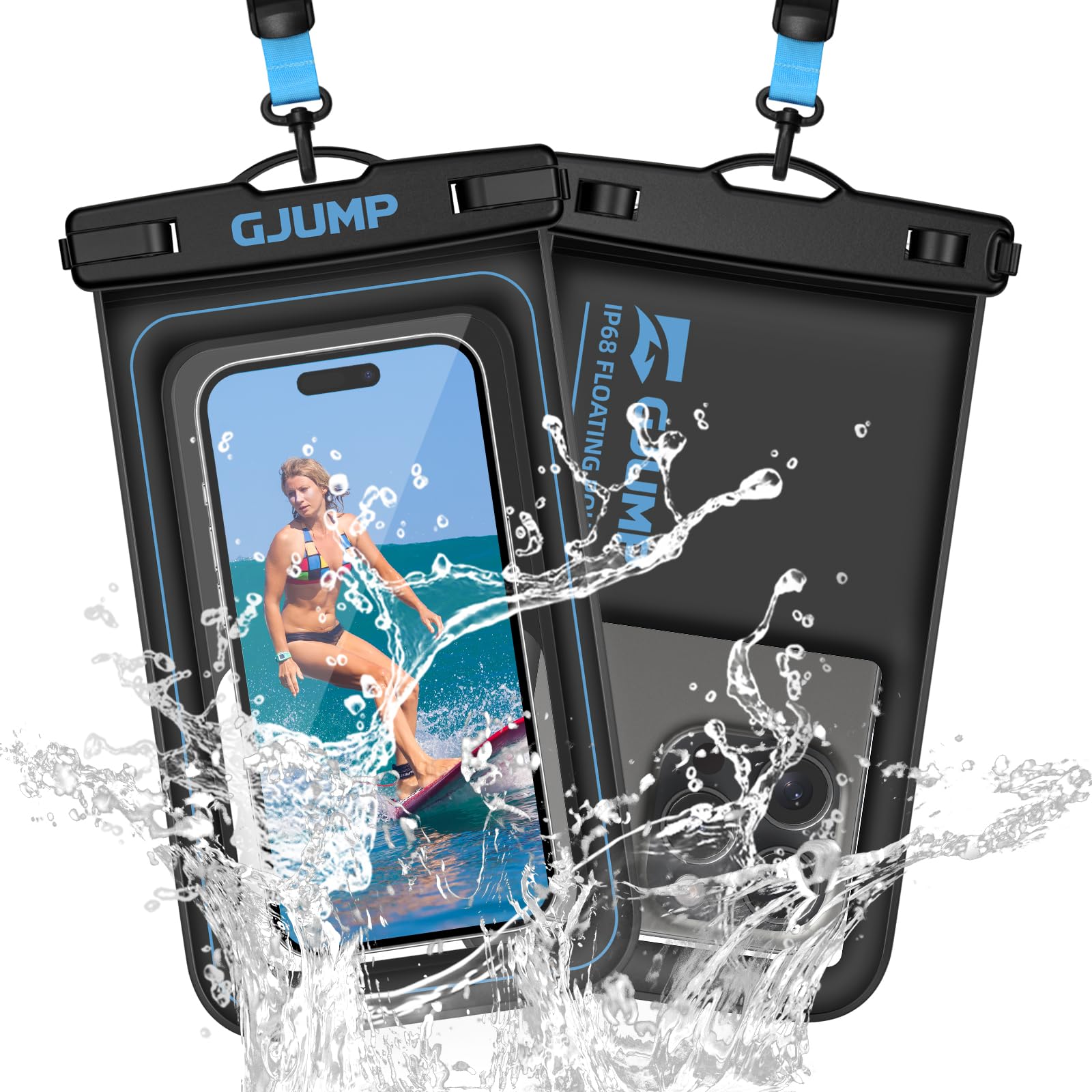
GJUMP 2-Pack
Key Features
- Waterproof Rating & Depth: IP68, 2m for 30min
- Touchscreen Underwater: Limited
- Floating: Yes
- Fit with Case On: Fits up to 8.3" with case
- Camera Window Clarity: Good above water
- Price: Budget
Water resistance and flotation work as intended for casual beach or pool use, and the two pouches offer solid value for the price. Image clarity through the TPU window is acceptable for quick under-sun shots. However, the touchscreen becomes unresponsive once submerged, making intentional underwater photography difficult—rely on physical buttons or preset camera settings. The bigger concern is overheating: the material can cause the phone to heat up during extended use, so this pouch is best limited to short dips under 30 minutes. For longer snorkeling or more demanding underwater photo sessions, the more established floating pouch in this round offers greater peace of mind.
Pros
- Keeps phone dry and afloat in water.
- Delivers clear images through the pouch when above water.
- Two pouches at a budget-friendly price.
Cons
- Underwater touchscreen becomes unresponsive, limiting photo control.
- Material can cause phone to overheat during extended submersion.
Best for short, casual water use where floating peace of mind and low cost matter more than underwater photography control.
Best for Trusted Brand Float
Pelican Marine Floating

Key Features
- Waterproof Rating & Depth: IP68, 1m for 30min
- Touchscreen Underwater: Limited
- Floating: Yes
- Fit with Case On: Fits phones up to 6.1"
- Camera Window Clarity: Good above water
- Price: Mid-Range
The Pelican Marine Floating pouch provides buoyancy peace of mind for kayakers and paddleboarders, with a waterproof seal that holds up in saltwater. However, its regular size fits phones up to 6.1 inches, leaving little room for a case on larger models. The clasp can break after limited use, and touchscreen responsiveness underwater is limited, making it better for protection than underwater photography. This suits those with smaller phones who prioritize floating security and brand reputation over deep-water use.
Pros
- Floating design keeps the phone afloat if dropped in water, reducing worry of losing it.
- Good quality and reliable waterproof seal suitable for saltwater use.
Cons
- Clasp may break after limited use – test seal before each outing.
- Regular size is tight for larger phones with cases – check fit before heading out.
Best for owners of smaller phones who need a floating pouch for casual water activities and are willing to verify the seal before each use.
Best for Style & Light Use
Case-Mate Soap Bubble

Key Features
- Waterproof Rating & Depth: IP68, 1m for 30min
- Touchscreen Underwater: Limited
- Floating: Yes
- Fit with Case On: May be loose
- Camera Window Clarity: Good above water
- Price: Mid-Range
The Case-Mate Soap Bubble’s iridescent finish and TPU flotation make it a visually appealing choice for casual beach or pool outings where the phone stays mostly above the surface. The IP68 rating provides peace of mind for splashes and brief dips. However, the waterproof seal can degrade after a few uses, and some phone sizes fit loosely inside — meaning this pouch is not a reliable tool for intentional underwater shooting or frequent submersion.
Pros
- Iridescent design stands out against typical black pouches
- Floating TPU material keeps phone and accessories buoyant
Cons
- Seal can lose effectiveness after a few uses, especially with full submersion
- Pouch may be slightly oversized for some phones, allowing movement inside
Best for style-conscious users who need a floating pouch for poolside or rainy-day use, not for those who want to shoot photos or video underwater.
Best for Full Touch Underwater
YIXXI Dive Housing

Key Features
- Waterproof Rating & Depth: 30m / 100ft
- Touchscreen Underwater: Silicone oil – works
- Floating: No
- Fit with Case On: Fits up to 6.9"
- Camera Window Clarity: Good, but plastic scratches
- Price: Mid-Range
The YIXXI Dive Housing delivers full touchscreen control underwater, a rare feature that lets divers navigate apps, reply to messages, or frame shots without surface prep. A silicone oil layer inside the housing transmits touch to the phone, and for users who need that capability, it works as advertised. Image quality and water resistance hold up to 30 meters, with several users reporting clear photos.
That said, the plastic body scratches easily, and the silicone oil can develop bubbles or release pressure, sometimes causing fogging. The manufacturer notes bubbles are normal, but they can be distracting during extended use. This housing is best for tech-savvy divers who prioritize underwater touch access over durability and want to experiment with a novel design. For most casual snorkelers, a simpler pouch with mechanical shutter triggers will be less fuss and more reliable.
Pros
- Full touchscreen functionality underwater for apps and navigation
- Decent image quality and water resistance at 30m depth
- Fits phones up to 6.9 inches, including larger models
Cons
- Silicone oil can bubble up or fog the window during dives
- Plastic shell scratches quickly, affecting visibility and appearance
Consider this housing only if underwater touchscreen access is a non-negotiable need — for all other use cases, a simpler non-touch pouch offers better durability and fewer quirks.
Best for Content Creators
TELESIN Dive Housing

Key Features
- Waterproof Rating & Depth: 20m
- Touchscreen Underwater: No – Bluetooth remote
- Floating: No
- Fit with Case On: Fits 5.4–6.9"
- Camera Window Clarity: Crystal clear
- Price: Premium
The TELESIN offers a Bluetooth handle grip that lets you trigger shutter and zoom from a distance, a clear advantage when touchscreens fail underwater. Image quality from the mechanical button actuation is solid, avoiding the blur common with soft pouches. However, the premium price positions it as a niche tool for underwater content creators willing to invest time in mastering the control layout — casual snorkelers may find the learning curve frustrating, and Bluetooth pairing can be spotty. For those who primarily want simple protection without complex controls, simpler waterproof cases are more practical.
Pros
- Mechanical shutter and zoom buttons deliver sharp, consistent stills and video underwater.
- Solid plastic housing with glass lens feels well-constructed for the price.
- Bluetooth handle grip provides reliable remote control for most users.
Cons
- Learning the zoom and mode switching takes patience — expect a few dives before muscle memory sets in.
- The plastic lens area can scratch from sand or debris, and the clamps may not survive rough handling.
Best for dedicated underwater photographers who prioritize remote shutter control over simplicity and budget.
How to Choose
The single most important buying insight is that almost all waterproof pouches lose touchscreen function underwater, so your choice comes down to depth rating, mechanical controls, and floating vs. portability.
Waterproof Rating and Depth Limit
IPX8 means the pouch can be submerged, but the manufacturer sets the depth limit — many pouches only guarantee 1 meter. Hard cases like the YNVYFI and SeaLife are tested to 15–40 meters, while soft pouches rarely exceed 2 meters safely.
If you plan to snorkel deeper than 10 feet, choose a case with a stated depth of at least 10–15 meters. For pool or beach selfies, a budget pouch with an IPX8 label is sufficient — but test it first with a paper towel inside.
Touchscreen Underwater
Water pressure disables capacitive touchscreens below a few feet. Pouches that claim underwater touch (like the TORRAS IceCube air button) are inconsistent. For reliable camera control, choose a case with mechanical shutter buttons or a Bluetooth remote.
If you must use apps underwater, a silicone‑oil housing (YIXXI) is the only design that preserves full touch, but it comes with fogging and scratching trade-offs.
Floating Capability
A floating pouch adds built‑in buoyancy (foam or air cushion) so your phone floats if dropped. This is invaluable for kayaking, paddleboarding, or snorkeling in open water. The downside: floating pouches are bulkier and often have tighter fit tolerances.
Non‑floating pouches are slimmer and cheaper, but if you drop your phone in deep water, it sinks. If you stay in shallow, controlled environments (pool, cruise ship deck), floating isn’t essential.
Fit with a Phone Case On
Many pouches are sized for bare phones, not phones in OtterBox or other bulky cases. Measure your phone’s actual dimensions (with case attached) against the pouch’s internal pocket size. A too‑tight fit makes insertion difficult and can stress the seal.
Extra‑large pouches (like the Rynapac) handle big phones with cases easily but are bulky to carry. For everyday travel, removing your phone’s case improves fit and seal reliability.
Camera Window Clarity
The plastic window over the camera lens can distort or fog under pressure. Hard cases with glass lenses provide the clearest images. Soft pouches with thin TPU tend to cause slight blurring, especially in low light or when the phone shifts inside.
If photography is a priority, invest in a hard case with a dedicated glass lens and mechanical shutter. Soft pouches are fine for video or casual snaps above water.
FAQ
Why does my iPhone touchscreen stop working when I put it in a waterproof pouch underwater?
Water pressure pushes the pouch’s film against the screen, causing false touches and dead zones. At depths beyond a few feet, the pressure is too high for capacitive touch to register. Mechanical buttons or a Bluetooth remote are the only reliable alternatives.
Can I really take clear photos while snorkeling with a waterproof phone pouch?
Yes, but only with the right setup. A hard case with a glass lens and a dedicated shutter button (like the YNVYFI or SeaLife) will give you crisp shots. Soft pouches often produce blurry or foggy images, especially in moving water. For best results, frame the shot above water and press the volume button once submerged.
How deep can I dive with an IPX8 waterproof phone pouch?
IPX8 only guarantees protection at the depth the manufacturer specifies — often just 1–2 meters. Always check the stated depth limit. For snorkeling beyond chest depth, choose a case rated for at least 10–15 meters. Soft pouches with vague “100ft” claims are unreliable past shallow submersion.
Is a floating waterproof phone case worth it for cruise travel?
Yes, if you’ll be near open water (pool deck, tender boats, snorkeling). A floating pouch gives you a safety net if you drop your phone overboard. For cruise port days where you’re mostly on land or in shallow water, a non‑floating pouch is lighter and cheaper.