
This post contains affiliate links. We may earn a small commission when you buy through our links — at no extra cost to you.
Few things can ruin a hike like discovering your ‘waterproof’ rain jacket soaks through in a steady drizzle. Many budget shells rely on a temporary DWR coating that wets out quickly, leaving you cold and damp miles from the trailhead. This is a common frustration for hikers and travelers who need dependable protection.
We focused on jackets that use full seam sealing and proven waterproof membranes, not just fabric treatments, to deliver real all-day dryness. You’ll also face a trade-off: ultralight packability often comes with limited breathability and fewer pockets, while more durable shells add weight. From featherlight emergency shells to alpine-ready ventilation, each pick here serves a different trail priority. Whether you’re counting grams on a thru-hike or need a jacket that won’t quit in mountain storms, you’ll find a match that balances weight, breathability, and solid waterproofing.

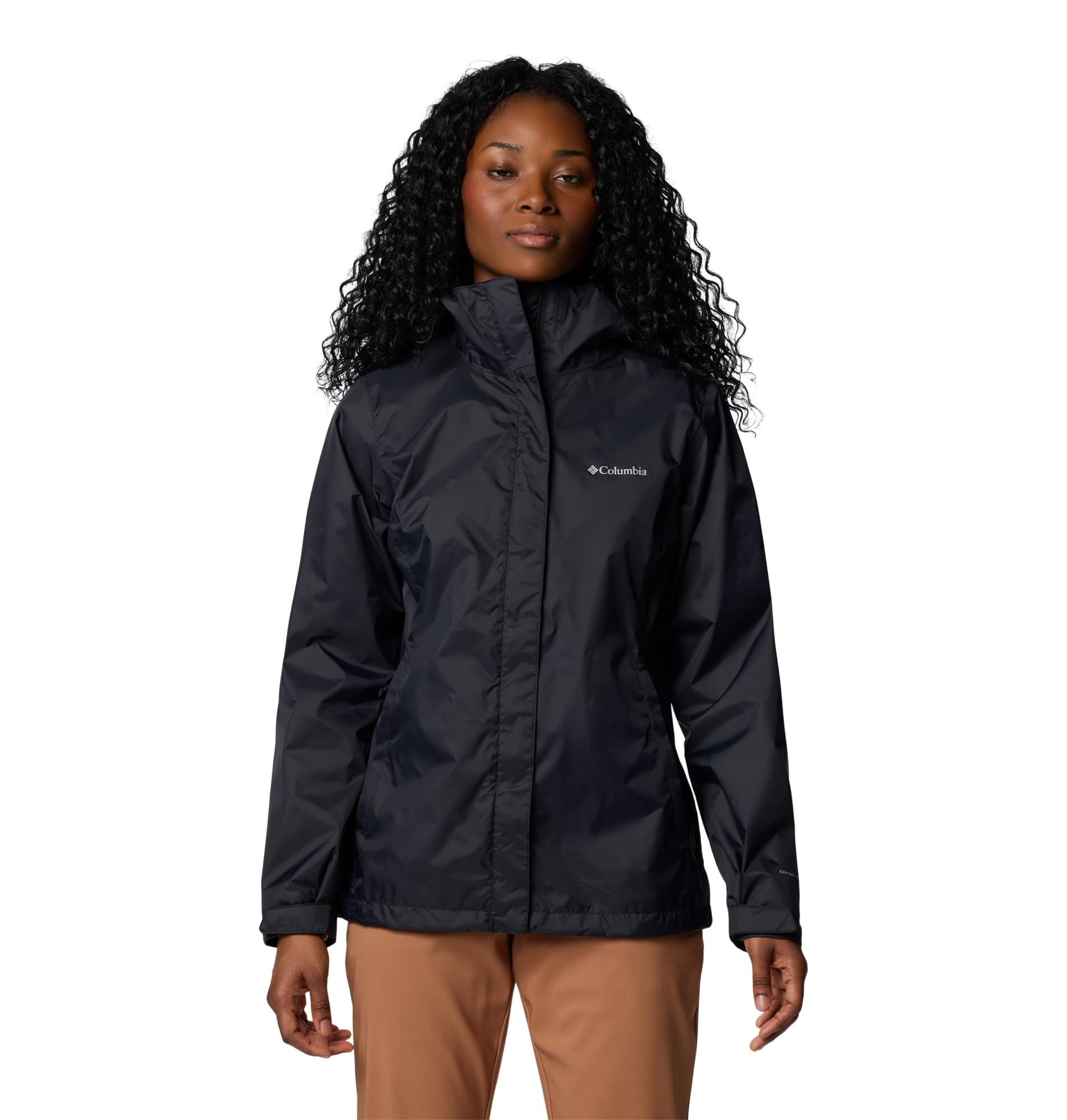


Best for Ultralight Backpacking
Columbia Watertight II
Key Features
- Waterproofing: Omni-Tech membrane, seam-sealed
- Weight & Packability: 250 g, packs into hand pocket
- Breathability: Mesh lining, no vents
- Hood Design: Attached brimmed storm hood, adjustable
At 250 grams (8.8 ounces) and fully seam-sealed, this jacket sheds steady rain without weighing down your pack. The Omni-Tech membrane keeps water out, and the attached hood with drawcord adjusts for helmet-free coverage. When skies open, you stay dry — no wetting out after hours of exposure.
This shell is built for hikers who count grams: it stuffs into its own hand pocket, taking up less space than a water bottle. For high-output climbs, the lack of underarm vents means interior moisture can build up — it suits steady-paced hiking and emergency coverage, not steep lung-busting ascents.
Pros
- Holds up in sustained rain without wetting through.
- Packs into its own pocket — light enough to forget in a pack.
- Stitching and zippers hold up well for a sub-10-ounce shell.
Cons
- During steep, high-output climbs, the lack of underarm vents can lead to interior clamminess.
For the hiker who values weight savings above all, this delivers genuine rain protection in a package you’ll hardly notice.
Best for Travel & Day Hikes
Columbia Arcadia II
Key Features
- Waterproofing: Omni-Tech membrane, seam-sealed
- Weight & Packability: Lightweight, packs into pocket
- Breathability: Breathable membrane
- Hood Design: Adjustable hood with brim
- Price: Mid-Range
Where the ultralight top pick prioritizes featherweight packability, the Arcadia II focuses on a contoured women’s cut that avoids the boxy profile of unisex shells. Its hand-pocket packability keeps it travel-friendly, and Omni-Tech waterproofing handles steady rain on the trail. Sizing can run small, so it’s best for hikers who layer lightly or prefer a trim fit; ordering up accommodates a thicker mid-layer if needed.
Pros
- Omni-Tech waterproofing keeps rain out during sustained drizzle and trail showers.
- Lightweight construction packs down easily into its hand pocket, perfect for unpredictable travel weather.
- Durable build holds up to regular hiking use and abrasion from pack straps.
Cons
- Fit may run small, restricting room for heavier mid-layers.
For hikers and travelers who value a flattering, women-specific silhouette and don’t need the absolute lightest shell, the Arcadia II is a solid, self-packable rain jacket that handles wet weather without fuss.
Best for Cold & Windy Hikes
Helly Hansen Seven J
Key Features
- Waterproofing: Helly Tech membrane, seam-sealed
- Weight & Packability: 2 lb, not packable
- Breathability: Waterproof/breathable membrane
- Hood Design: Adjustable, helmet-compatible
- Price: Mid-Range
Where the top pick strips weight for packability, the Seven J adds heft in exchange for durability and cold-weather comfort. The Helly Tech Protection membrane delivers waterproof and windproof performance that stands up to sustained rain, and the substantial build provides warmth that ultralight shells cannot match. For hikers tackling cold, windy, rainy trails who don’t need to count ounces, this jacket is a weatherproof workhorse. Those seeking a lightweight, packable shell for summer hikes will find it overbuilt.
Pros
- Waterproof and windproof performance that handles sustained rain and gusts.
- Exceptional build quality with robust materials and zippers.
- Warmth that makes this usable as an outer layer in near-freezing wet weather.
Cons
- At 2 lbs, significantly heavier and bulkier than typical hiking shells, limiting packability.
If your hiking involves cold rain, wind, and rugged terrain where durability and warmth outweigh weight savings, the Seven J delivers outstanding weather protection.
Best for Serious Trail Hikers
North Face Antora
Key Features
- Waterproofing: DryVent membrane, seam-sealed
- Weight & Packability: Lightweight, not packable
- Breathability: DryVent breathable
- Hood Design: Adjustable hood with visor
- Price: Premium
The Antora’s DryVent membrane breathes better than the ultralight top pick, so you stay dry without overheating on sustained uphill slogs. Near-perfect waterproofing, a fully adjustable hood, and ample room for layers make this a serious hiking tool.
It suits hikers who prioritize staying dry and comfortable over minimal weight and packability. The generous cut layers easily over a midlayer, but the jacket doesn’t stuff into its own pocket, and the unlined interior can feel chilly against bare arms in cold rain.
Pros
- DryVent membrane keeps you dry even in sustained downpours.
- Breathable fabric prevents clamminess during high-output climbs.
- Durable construction withstands trail abuse season after season.
Cons
- Unlined interior can feel cold against skin in severe weather.
- Does not pack into its own pocket, limiting stowability in a daypack.
For hikers who value breathability and stormproof protection above stowability, the Antora justifies its premium price.
Best for Running & Cycling
baleaf Men’s Reflective Rain Jacket
Key Features
- Waterproofing: Claimed waterproof
- Weight & Packability: Lightweight, packs into back pocket
- Breathability: Back venting design
- Hood Design: Adjustable hood
- Price: Mid-Range
Unlike the ultralight top pick built for weight-conscious hikers, baleaf’s jacket adds reflective safety elements and a back vent that suits runners and cyclists moving at speed. It still stays light and packs into its own pocket for easy stashing on the trail.
Active men who mix trail running or road cycling with day hikes will appreciate the reflectivity during low-light starts, but waterproofing is tuned for light to moderate rain — sustained downpours can eventually soak through. High-output sprints may also feel slightly clammy, though a wicking base layer helps.
Pros
- Well-suited for running, cycling, and layering
- Lightweight and packable for on-the-go storage
- High-reflective accents improve low-light visibility
Cons
- May feel clammy during high-output efforts despite back venting
- Waterproofing can let moisture in during sustained downpours, limiting all-day trail use
For active men who prioritize visibility and ventilation over all-day stormproofing, this reflective, packable jacket is a practical layer for cooler, drizzly outings.
Best for Running & Cycling
baleaf Women’s Reflective Rain Jacket
Key Features
- Waterproofing: Claimed waterproof
- Weight & Packability: 305 g, packs into back pocket
- Breathability: Underarm air vents
- Hood Design: Stowable hood with visor
- Price: Mid-Range
For women who prioritize ventilation and low-light safety, this jacket’s underarm vents and reflective panels set it apart from the ultralight top pick. It weighs 305g, stows into its back pocket, and handles light to moderate rain. Waterproofing may be overwhelmed in sustained downpours — a reasonable tradeoff for the airy, packable build. Ideal for hikers, runners, and cyclists who want a packable layer for intermittent showers; the athletic cut runs small, so size up if layering.
Pros
- Super lightweight and packs into its own pocket (305g, easy to stash on the trail).
- Reflective strips boost safety on low-light roads and trails.
Cons
- Waterproofing may be overwhelmed in sustained heavy rain.
When reflective safety and active ventilation outweigh the need for all-day stormproofing, this packable shell earns its spot for shoulder-season hikes and misty commutes.
Best for Packable Vented Shell
33,000ft Women’s Raincoat (Vented)

Key Features
- Waterproofing: Claimed waterproof (mixed)
- Weight & Packability: Lightweight, packs into pouch
- Breathability: Underarm zipper vents
- Price: Mid-Range
Underarm zip vents and generous zippered pockets define this women’s shell, which stuffs into its own pouch. Waterproofing can start to leak in steady rain beyond half an hour, and occasional zipper quirks give pause for all-day wet hikes — making this a smarter pick for short commutes and active travel in light rain.
Pros
- Underarm zips dump excess heat during brisk activity.
- Abundant zippered pockets secure phone, keys, and travel essentials.
Cons
- Waterproofing can start to let rain through after about 30 minutes of steady rain.
For travelers and bike commuters who face occasional light showers and prioritize packable ventilation, this jacket offers practical features at a mid-range price — with the understanding that it’s not built for persistent downpours.
Best for Emergency Shell
33,000ft Men’s Rain Shell

Key Features
- Waterproofing: Claimed waterproof (mixed)
- Weight & Packability: ~10 oz, packs into storage pouch
- Breathability: No underarm vents
- Hood Design: Adjustable hood
- Price: Budget
The 33,000ft shell weighs about 10 oz and stuffs into its own pouch—a genuine space-saver for travel or day hikes. Wind protection is solid, but the waterproofing isn’t consistent: in steady or prolonged rain, the fabric can soak through. For an emergency layer or light drizzle, it works; just don’t expect it to replace a dedicated hiking rain jacket.
Pros
- Ultra-lightweight and packs into its own pouch for easy storage
- Blocks wind effectively on exposed outings like golf or cycling
Cons
- Seams or armholes may develop small tears with regular use
This packable windbreaker suits travelers and occasional light-rain outings where space is tight and the forecast is mild—not multi-hour downpours.
Best for Casual Cool-Weather
Diamond Candy Women’s Rain Jacket

Key Features
- Waterproofing: Claimed waterproof (mixed)
- Weight & Packability: Lightweight, not packable
- Hood Design: Removable hood with zipper
- Price: Budget
Fleece lining adds warmth and a stylish look, making this budget-friendly raincoat appealing for casual cool-weather wear. However, waterproofing may not hold up in heavy or sustained rain, and sizing runs very small — order 1-2 sizes up for a comfortable fit.
Pros
- Fleece lining adds cozy warmth for cool-weather walks.
- Lightweight design comfortable for day hikes.
Cons
- Waterproofing can fail in heavy or prolonged rain.
A stylish fleece-lined layer for short dog walks or travel in light drizzle, but not the jacket for a rainy multi-hour hike.
Best for Budget Travel
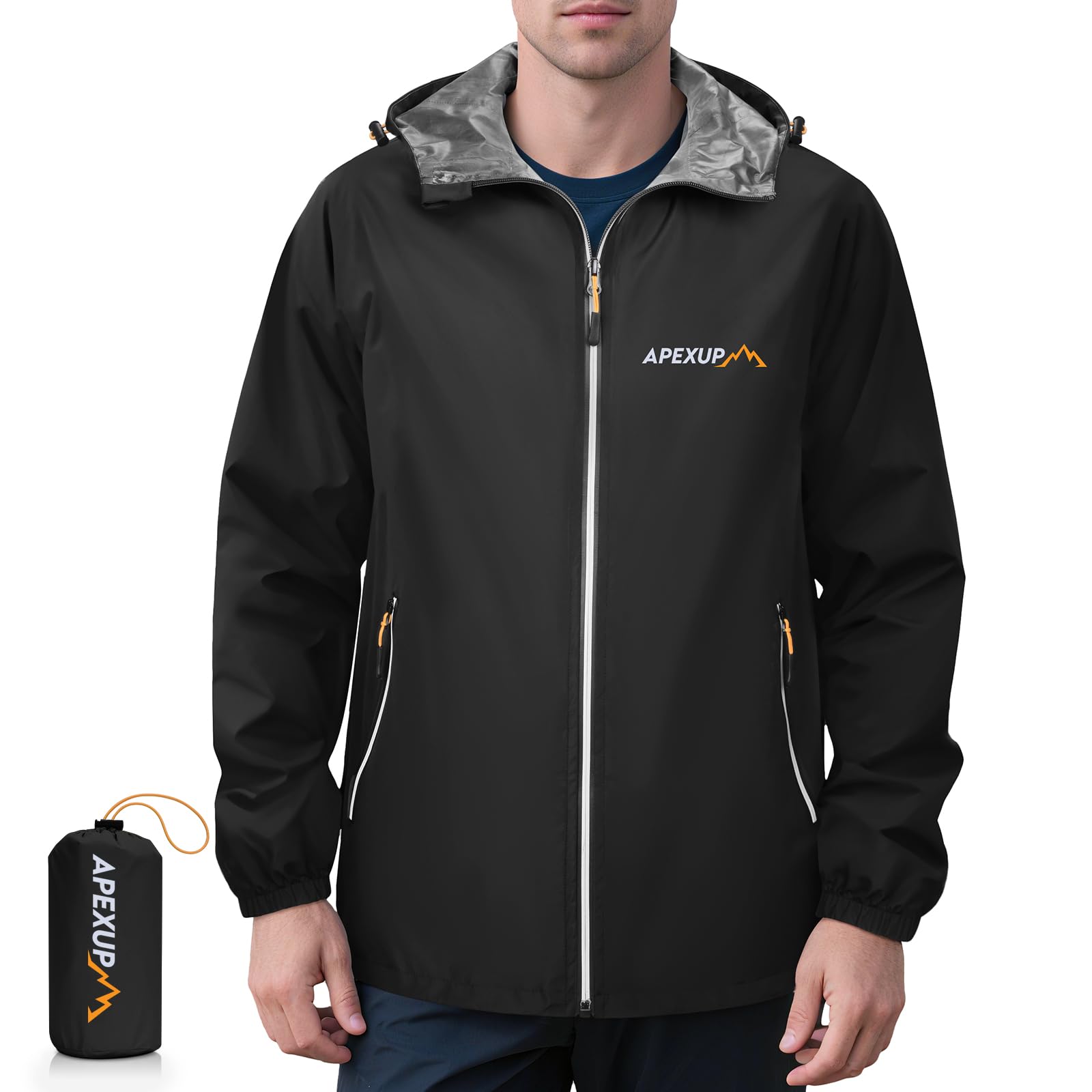
APEXUP Men’s Rain Jacket
Key Features
- Waterproofing: Claimed waterproof (mostly positive)
- Weight & Packability: 8.8 oz, packs into travel bag
- Hood Design: Adjustable hood
- Price: Budget
At 8.8 ounces, this packable jacket is a featherweight emergency layer that stows easily. Its waterproofing handles light showers, but sustained heavy rain can soak through — making it a just-in-case shell, not a primary rain shield. For the price, it’s a capable spare jacket for travelers and day hikers who don’t need all-day protection.
Pros
- Featherweight design packs down small and adds negligible weight to a hiking kit.
- Outstanding price-to-function ratio for an emergency rain layer.
Cons
- Waterproofing may be overwhelmed by steady heavy rain, limiting it to light showers and emergencies.
For budget-conscious day hikers and travelers seeking a just-in-case layer for light rain, this jacket delivers impressive value — just don’t expect it to replace a fully seam-sealed shell in a downpour.
How to Choose
The key to staying dry on the trail isn’t the DWR finish—it’s the combination of a waterproof membrane and fully taped seams that prevent water from seeping through under pressure.
Waterproofing: Membranes vs. Coatings
Jackets marketed as waterproof often rely on a durable water repellent (DWR) coating that causes water to bead up. But DWR alone can fail after 20-30 minutes of steady rain, especially once grime builds up. True waterproofing requires a membrane like Gore-Tex, Omni-Tech, or DryVent paired with seam-sealed construction that physically blocks water at every stitch.
For hikers, this means the difference between staying dry through an afternoon thunderstorm and being soaked on the first mile. Look for ‘fully taped seams’ in the specs—jackets without this will leak, no matter the DWR.
Weight & Packability: The Ultralight Trade-Off
Every ounce matters on long hikes, so ultralight jackets (8-10 oz) that stuff into a pocket are appealing. But that minimal fabric often sacrifices durability, pocket space, and sometimes even reliable waterproofing. Heavier shells at 1-2 pounds add bulk but survive abrasion from pack straps and brush.
If you’re a day hiker or traveler who needs occasional rain protection, a featherweight packable jacket makes sense. For extended trips in rough terrain, that extra weight buys longer life and fewer leaks.
Breathability: Vents and Membranes
A waterproof membrane that doesn’t breathe traps sweat, leaving you clammy even if it’s dry outside. Breathable membranes (like DryVent) permit moisture vapor to escape, while underarm vents offer on-demand airflow during steep climbs.
The trade-off: highly breathable jackets often lack insulation and can feel cold in wind. Mesh linings help but add weight. For high-output hiking, prioritize a jacket with both a breathable membrane and pit zips; for cooler, slower walks, a standard membrane with a mesh backer may suffice.
Hood Design: Fit and Function
A poorly designed hood lets rain in around your face or flops down in wind. Adjustable brims and drawcords keep the hood snug without blocking peripheral vision. Helmet-compatible hoods are essential for climbers but add bulk for hikers.
Stowable hoods that roll into the collar are convenient for travel, but often sacrifice that stiffened brim. Choose a shape that matches your activity—a simple elastic hood works for light rain, while a wired brim excels in storms.
Durability: Seams, Zippers, and Longevity
Even a waterproof membrane fails if the zipper isn’t protected by a storm flap. Look for YKK zippers or reinforced plackets. Seams can delaminate after rough use; taped seams are less likely to split than glued ones.
Budget jackets often skimp on these details, leading to leaking zippers or torn seams after a season. Investing in a jacket with robust construction saves money over time if you hike regularly.
FAQ
Why does my waterproof rain jacket still get wet inside?
Internal moisture is usually condensation, not a leak. When sweat vapor can’t escape through the membrane, it cools and becomes liquid. Jackets with pit zips or more breathable membranes reduce this effect. If you’re noticing wetness on shoulders after hours of rain, however, the jacket’s seam sealing may be failing.
Is a packable rain jacket actually waterproof for hiking in heavy rain?
Some fully seam-sealed packable jackets hold up in sustained downpours, but many ultralight models rely only on DWR and leak after 30 minutes. Look for membrane-backed fabrics with taped seams. Packability alone doesn’t guarantee or preclude waterproofness—the construction details matter.
How can I stay dry if my rain jacket lacks underarm vents?
Choose layers that wick moisture, such as a thin merino or synthetic tee. Open the front zipper slightly when climbing to vent excess heat. If clamminess is a persistent problem, consider upgrading to a jacket with pit zips or a highly breathable membrane for your next purchase.
What is the difference between water-resistant and waterproof for hiking jackets?
A water-resistant jacket repels light drizzle but leaks under pressure or prolonged rain because it lacks sealed seams and a membrane. A true waterproof jacket has taped seams and a membrane that withstands a column of water without penetration. For hiking, always choose waterproof unless you only face mist.
How do I re-waterproof my rain jacket after it soaks through?
If your jacket wets out, the DWR coating has worn off. Wash it with a technical cleaner, then apply a spray-on or wash-in DWR treatment and tumble dry on low heat to reactivate. This restores water beading but won’t fix failed seam tape—if water seeps through seams, the jacket needs repair or replacement.