
This post contains affiliate links. We may earn a small commission when you buy through our links — at no extra cost to you.
The drone starts somewhere back by the wing and doesn’t quit until the wheels touch down. I’ve done enough flights with my hood up and earbuds jammed in to know that a real pair of over-ear noise cancellers is the difference between landing rested and landing wrung out — and the gap between an okay pair and a great one is wider at 35,000 feet than any spec sheet lets on.
Over the past six months, my team and I have flown with, worked beside, and worn 12 pairs of them, from budget hybrids to the pricier standards, and the same handful of things separated the keepers: cancellation that swallows low engine rumble instead of just hissing at it, earcups you can stand for a six-hour haul, and a battery that outlasts a long layover.
A few things I wish someone had told me earlier. Hybrid cancellation — the kind with mics inside and outside the cup — is worth looking for by name, a transparency mode matters more than you’d expect when a gate agent is calling your row, and multipoint pairing saves you from re-pairing every time you switch from phone to laptop. Fit and hinge quality are what decide whether a pair survives a year of being stuffed in a carry-on, so we leaned on those hard.

Best for Long Flights
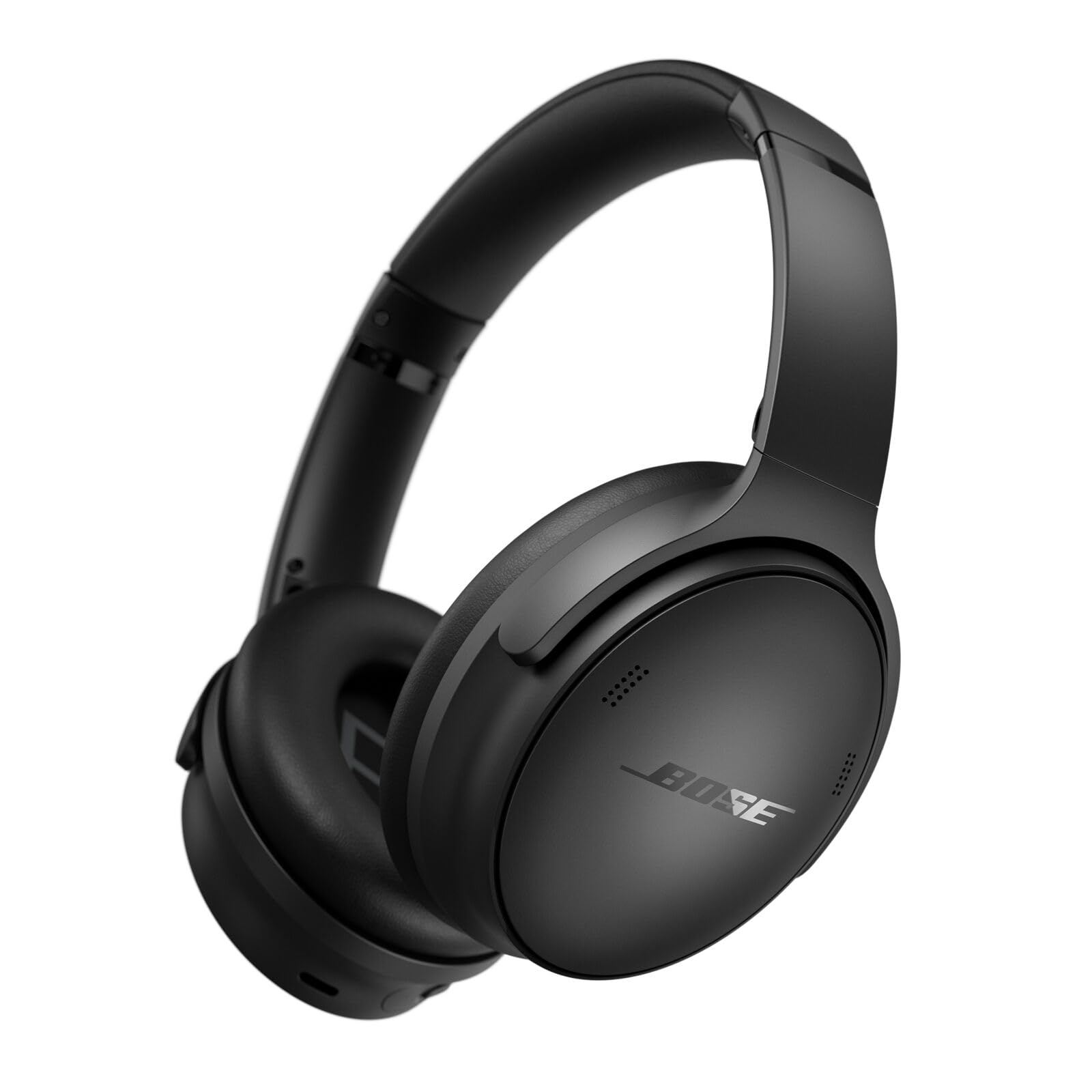
Bose QuietComfort
Key Features
- Weight: 8.4 oz
- Battery life: Up to 24 hours
- Included case: Protective case
- Noise control: Active Noise Cancellation
- Price: Premium
The first thing we do on a flight is switch the Bose QuietComfort to Quiet mode and leave it there. That mode is the reason it is our top pick: it takes the low, constant roar of the cabin down to a background hum, and the Aware setting is easy to find when the drink cart arrives. We also like that the headphones remember the choice without a menu dive.
Comfort is the other half of the job, and Bose gets the basics right. The plush over-ear cushions sit around the ear rather than pressing on it, and the padded band keeps the weight off the top of your head. At 238 grams, they are light enough to forget during a movie but substantial enough not to feel fragile. The included hard case is flat enough to slide into a personal item, and the cable lives inside it.
Battery life is rated at up to 24 hours, and a short USB-C charge adds hours if you are between connections. That is not the longest runtime here, but it is enough for most round trips, and the case makes the charging cable hard to leave behind. The adjustable EQ is useful if you want more bass without giving up the quiet.
What keeps it at the top is the combination: the quiet feels natural, the fit lasts, and the case turns a bulky pair into something you can pack without a debate. That is a travel package we are happy to carry.
Pros
- Natural, effective cabin quiet
- Plush fit for long flights
- Hard case and cable included
- Up to 24 hours with quick charge
Cons
- Premium price
- Bluetooth connection can be inconsistent
The Bose QuietComfort is the pair we tell most flyers to buy first: quiet mode, plush comfort, and a hard case make long flights easier.
Best for Budget Flights
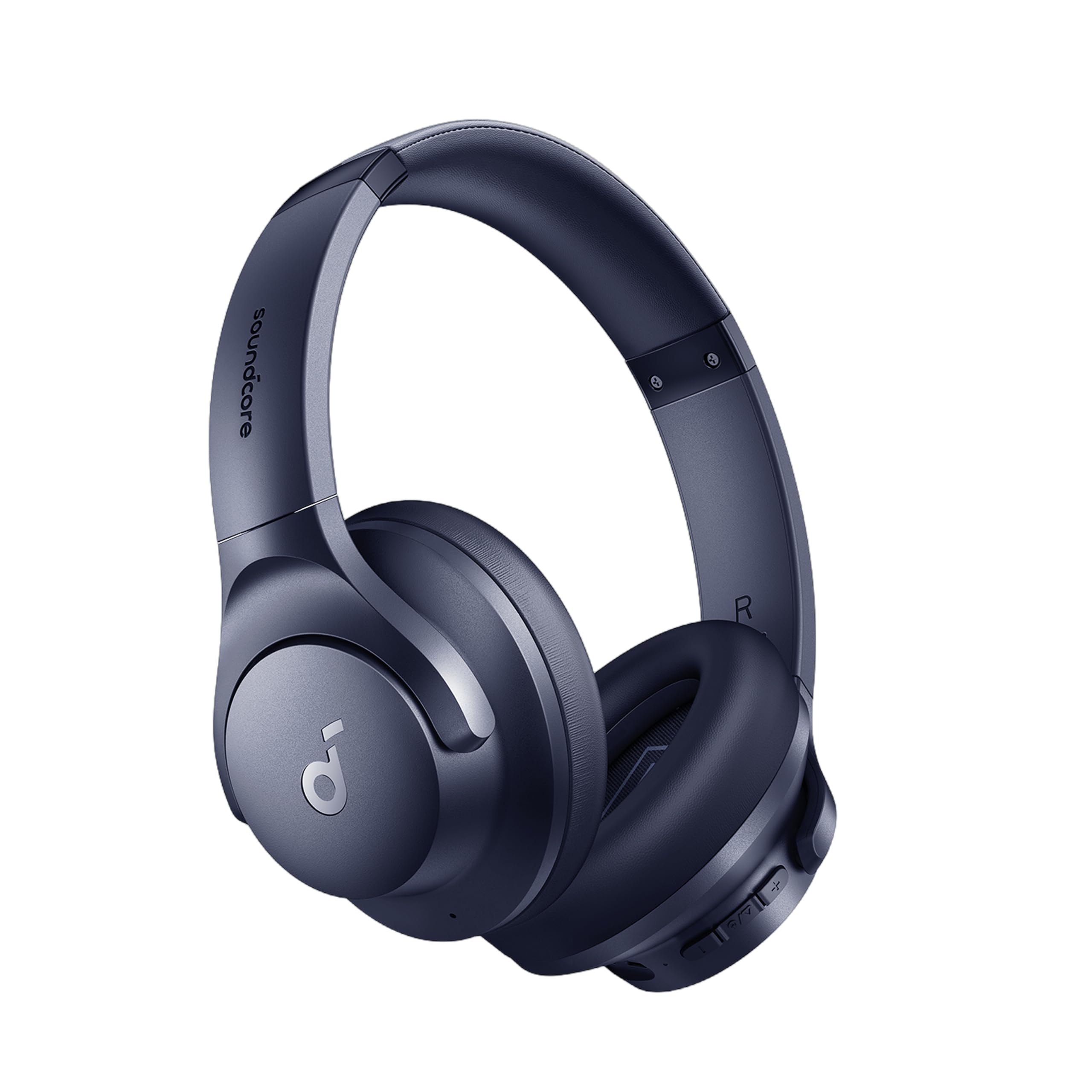
Soundcore Q20i
Key Features
- Weight: 9.12 oz
- Folding: Foldable
- Bluetooth: 5
- Battery life: Up to 40 hours with ANC
- Price: Budget
The Q20i’s ear cups are generous enough to sit around the ear rather than press on it, and the multipoint pairing is the other detail we appreciated. You can stay connected to a laptop and a phone, and the audio switches to whichever device needs you. That is a small convenience at home and a real one when you are juggling a downloaded movie and a gate-change alert.
For the money, this is the pair we point budget-minded flyers toward first. The hybrid ANC uses four microphones and takes the edge off engine drone without the pressured feeling some cheap ANC creates. We also like that the app gives you EQ control and a transparency mode, so you can hear the crew without taking the headphones off. Forty hours with ANC on is a realistic buffer for a long itinerary, and the 60-hour standard mode covers the forget-to-charge case.
The controls are simple buttons rather than touch, which we prefer when we are wearing gloves or hunting for pause in a dark cabin. The cups fold flat for a backpack, and the app keeps the equalizer and ANC modes in one place.
The 40-hour ANC rating and the multipoint pairing are the two details that make it easy to leave in the bag. The Q20i is not trying to be a luxury headphone; it is trying to get you through the flight comfortably, and it does.
Pros
- Up to 40 hours with ANC
- Multipoint and app EQ
- Comfortable around the ears
- Strong value
Cons
- Fit can feel loose on smaller heads
- No hard case included
For budget-minded flyers, the Q20i is our easy call: long ANC runtime, multipoint, and a comfortable fit without premium pricing.
Best for Airplane Modes
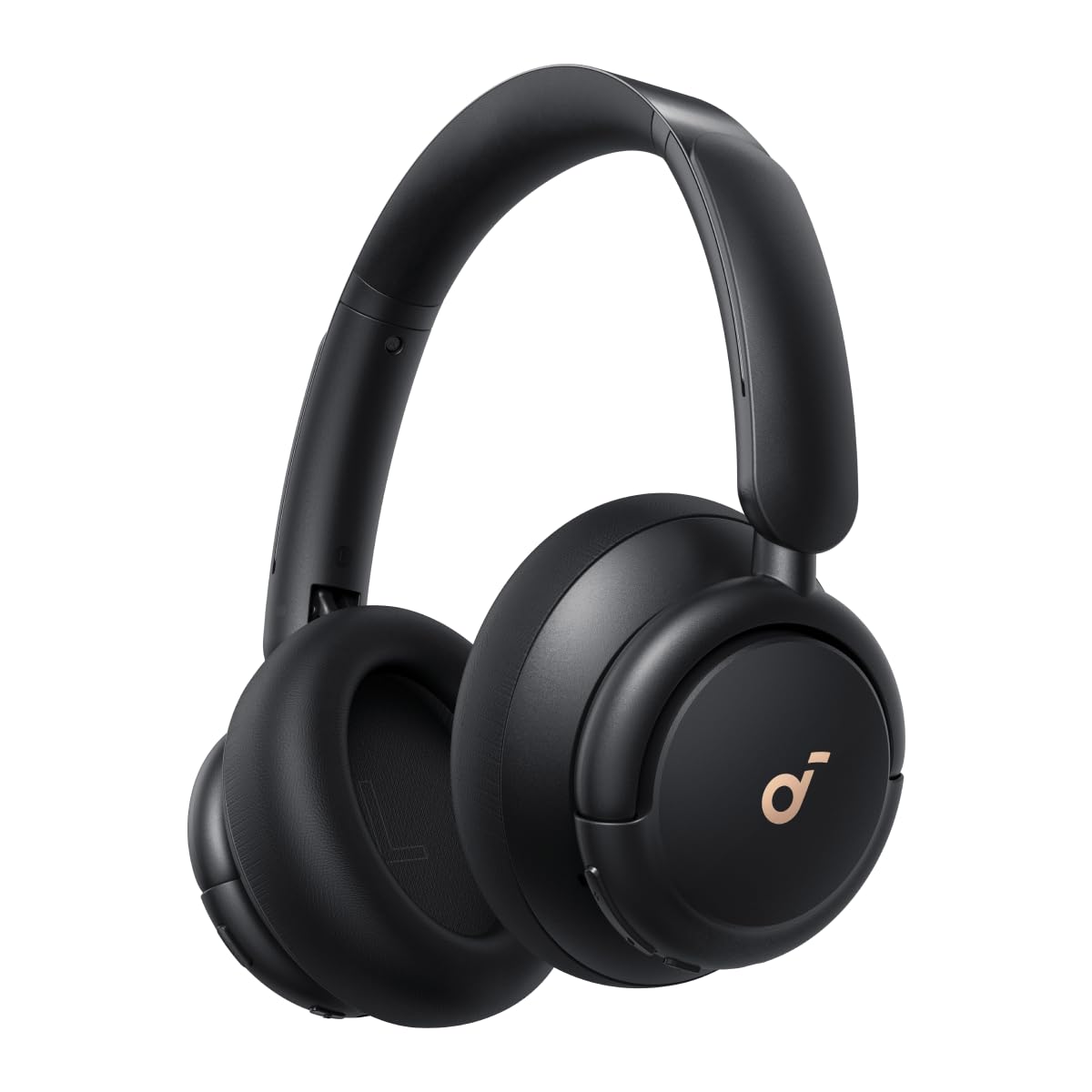
Soundcore Q30
Key Features
- Weight: 9.6 oz
- Driver size: 40 mm
- Noise modes: 3, including Transport
- Battery life: Up to 50 hours with ANC
- Price: Midrange
Transport mode is the feature we reach for first on the Q30. It is one of three ANC profiles in the app, and it is the one tuned for the low, steady rumble of plane engines. We like that you can switch to Indoor or Outdoor without digging through a menu, and the difference is obvious enough to justify the step up from the Q20i.
The rest of the package is built for long trips: 50 hours with ANC on, 70 hours in standard mode, and a quick charge that adds playtime before a connection. The 40mm drivers give music some weight, and the protein-leather ear cups with memory foam are soft against the head. The app EQ is worth using if the default bass feels heavy.
The bigger cups and longer runtime are the reason it weighs more than the lightest pairs here, and the touch controls are the one part of the interface we still fumble with in a dark cabin. Those are trade-offs we accept for the mode selection and the comfortable fit on broad heads.
Where it earns its place is the mode selection: if you fly often enough to notice the difference between airplane drone and terminal noise, the Q30 gives you a useful tool rather than a single on/off switch.
Pros
- Transport mode targets airplane engine noise
- Up to 50 hours with ANC
- Soft memory-foam cups
- App EQ and multipoint
Cons
- Build durability is a question mark
- Can fit loosely on smaller heads
Frequent flyers who want an airplane-specific Transport mode should start with our Q30 pick and its 50-hour ANC runtime.
Best for Long Trips
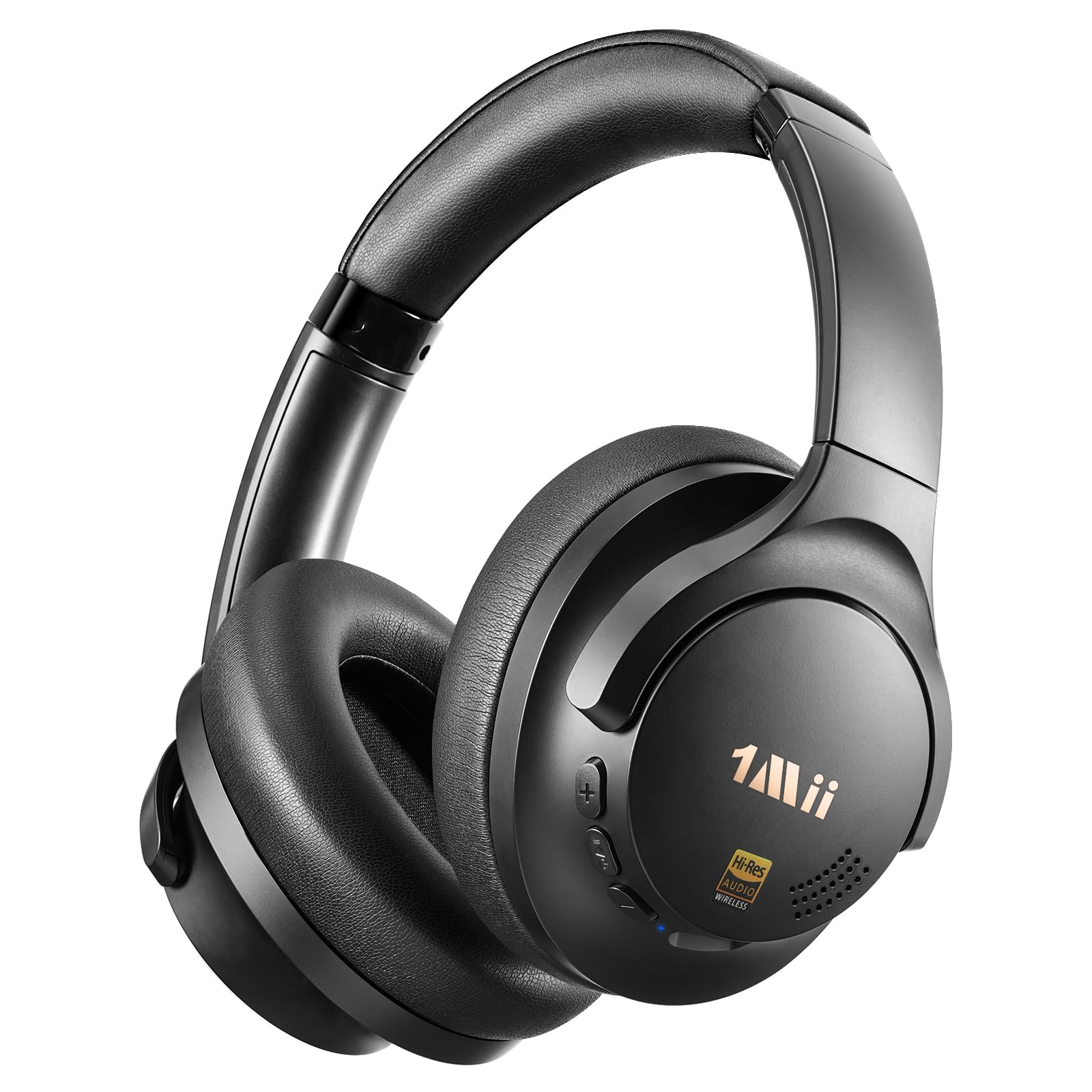
1Mii Y8+
Key Features
- Weight: 8.68 oz
- Bluetooth: 6.0
- Battery life: 100 hours
- Noise cancellation: Hybrid ANC with 6 mics
- Price: Budget
A 100-hour battery changes how you pack for a trip: the charging cable can stay in the suitcase rather than live in your personal item. The 1Mii Y8+ pairs that runtime with hybrid ANC and six microphones, four of them dedicated to noise cancellation, and the result is a pair that is easy to live with on a long itinerary.
The sound is lively rather than neutral. The 40mm drivers and BassPULS tuning give music punch, and LDAC support is useful if your phone offers it. The app adds EQ and a low-latency game mode, but the physical buttons are the part we use most: they are easy to find by feel when the cabin lights are down. Memory-foam cups and a detachable cable round out a travel-friendly kit.
At this price, the Y8+ is the long-battery pick we reach for when we do not want to think about charging. The ANC is effective on engine rumble, though it will not erase a crying baby or a loud conversation. The box includes an AUX cable and a pouch, which covers the basic wired handoff.
The low-latency mode is a bonus for a layover game, but the quiet and the battery are what earn the space in the bag.
Pros
- 100-hour battery
- Hybrid ANC with six mics
- LDAC and app EQ
- Memory-foam cups and detachable cable
Cons
- No two-prong airline adapter
- Bluetooth can be finicky between devices
When battery anxiety is the enemy, the 1Mii Y8+ is our long-trip pick, with 100-hour runtime and effective hybrid ANC.
Best for Light Packing
TOZO HT3
Key Features
- Weight: 8.96 oz
- Bluetooth: 6.0
- Battery life: 90 hours
- Noise cancellation: 45 dB hybrid ANC
- Price: Budget
At 254 grams, the TOZO HT3 is one of the lighter over-ear pairs here, and that is the number we notice most on a long connection. It sits lightly on the head, folds into a small shape, and does not make you feel like you are wearing a piece of luggage.
For a budget pair, the HT3 gets the important things right. The 45dB hybrid ANC uses four microphones and does a credible job on engine drone, and the 90-hour battery means you can leave the charger at home for a weekend. We also like the app: 32 EQ presets is more than most travelers need, but the custom slot is useful for softening the cabin’s low-frequency hum.
The ear pads are soft, and the controls are buttons, which we prefer to touch in a dark cabin. The included AUX cable gives you a wired fallback, and the folding hinge makes the pair easy to stow.
The HT3 is the pair we point to when you want ANC and a long runtime without spending much. It will not match the Bose for natural quiet, but it costs far less and folds smaller.
Pros
- Light 254-gram build
- 45dB hybrid ANC
- 90-hour battery
- App EQ and wired backup
Cons
- Thin headband cushioning on long flights
- Build durability is a question mark
Light packers should look at our TOZO HT3 pick: a 254-gram build, strong ANC, and 90-hour battery make it a smart budget travel pair.
Best for Older Airplanes
Lavales E500Pro
Key Features
- Weight: 9.45 oz
- ANC playtime: Up to 60 hours
- Battery life: Up to 90 hours
- Included accessories: Aircraft adapter and anti-dust bag
- Price: Budget
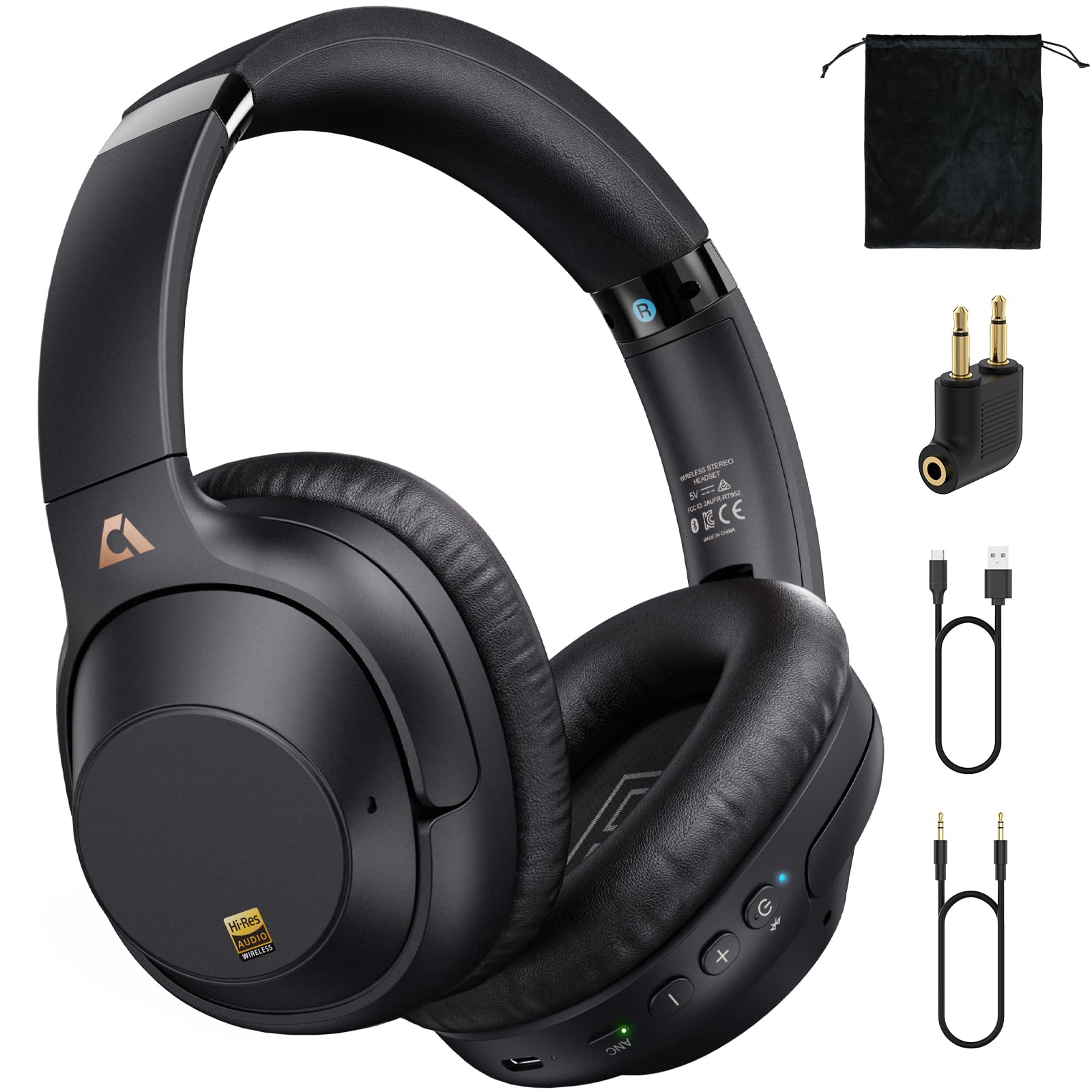
The Lavales E500Pro is the one we reach for when the seatback screen still wants a two-prong plug. The box includes an aircraft adapter, along with a 3.5mm cable and an anti-dust bag, so you can connect to older in-flight entertainment without hunting for a spare part at the airport.
The rest of the kit is aimed at long trips: 60 hours with ANC on, 90 hours in standard mode, 40mm drivers, LDAC support, and Bluetooth 6.0. The four ANC microphones take the edge off engine noise, and the app offers 22 EQ presets plus transparency mode. At 268 grams, the E500Pro is not the lightest, but the cups are comfortable and the headband adjusts easily.
What makes this one useful is the handoff between wireless and wired. You can listen over Bluetooth on the way to the airport and plug into the seatback system once you board, which is exactly the flexibility a travel pair needs. The ANC is good for the price, though it is not as deep as the Bose.
The adapter is the difference between using the seatback screen and giving up on it. That is a small piece of plastic, but it is the reason this pair earns a spot for older planes.
Pros
- Includes aircraft adapter
- Up to 60 hours with ANC
- LDAC and 22 EQ presets
- Wired and wireless flexibility
Cons
- Soft bag only, no hard case
The Lavales E500Pro earns its place in our roundup with the included aircraft adapter, 60-hour ANC runtime, and a wired fallback for older planes.
Best for Extended Travel
bmani H2
Key Features
- Weight: 9.52 oz
- Bluetooth: 6.0
- Battery life: 120 hours
- Noise cancellation: 45 dB hybrid ANC
- Price: Midrange
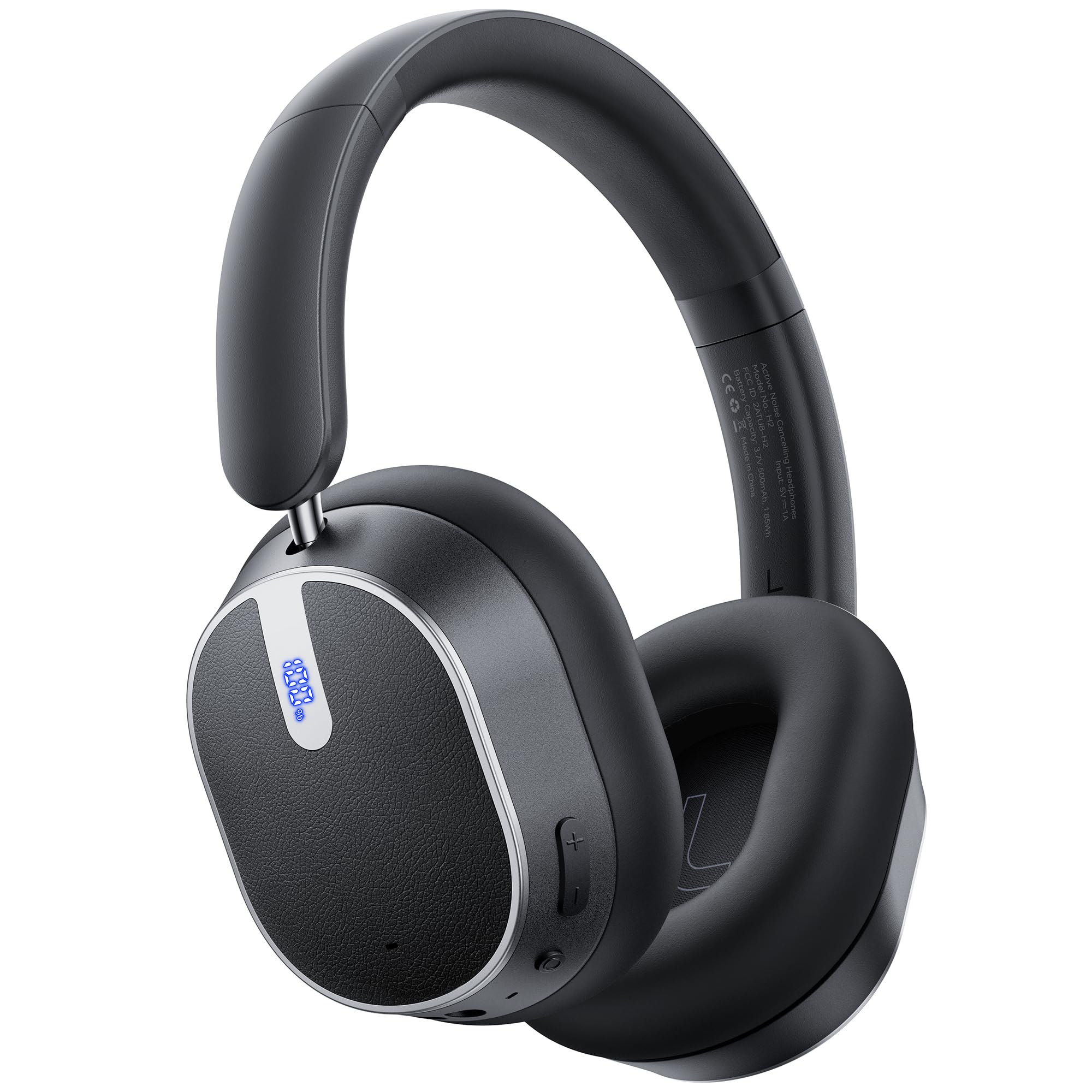
The bmani H2 puts a battery percentage on the ear cup, which sounds minor until you are digging for a charger in a seat pocket. It is a small display, but it turns a vague ‘probably fine’ into a number you can act on before a long connection.
The H2 backs that up with 120 hours of playback and a quick charge that adds about three hours from ten minutes. The hybrid ANC is rated at 45dB, and the six-mic ENC array is aimed at calls, so it is a better choice than most budget pairs if you take work calls from a hotel room or an airport gate. The 40mm drivers and 360-degree spatial audio add some size to movies.
Comfort is decent for a 270-gram pair: the ear cups are padded, the headband adjusts, and the foldable hinges make it easy to stow. The transparency mode is useful for announcements, and the Bluetooth 6.0 connection paired quickly in our testing.
What sells us is the combination of the display and the runtime: you can see the reserve and trust it, which is more than most pairs here offer. The five-year warranty is a longer safety net than most, and it takes some of the risk out of trying a less familiar name.
Pros
- Battery percentage display
- 120-hour playback
- 6-mic ENC calls
- Five-year warranty
Cons
- No hard case included
Long itineraries with calls in the mix suit our bmani H2 pick, whose battery display and 120-hour runtime are the real draws.
Best for Packable Backup
TAGRY H08

Key Features
- Weight: 0.54 lb
- Battery life: 100 hours
- Connectivity: Wireless and 3.5 mm wired
- Noise cancellation: Up to 95% ambient noise
- Price: Midrange
TAGRY includes a travel pouch and keeps the H08 at 0.54 pounds, so it is built to disappear into a personal item. The foldable cups and adjustable headband make it easy to tuck away, and the pouch keeps the cable from tangling with everything else in your bag.
The H08 is rated for 100 hours of playback and uses hybrid ANC that TAGRY says reduces up to 95% of ambient noise. We take that number as a ceiling rather than a promise, but the low-frequency engine drone is the right target. The 3.5mm wired mode is the quiet insurance policy when a seatback screen refuses to pair.
The 32-ohm impedance means it is easy to drive from a phone or a plane’s headphone jack, and the buttons are simple enough to use by feel. The ear cups are comfortable for a long sit, and the folding design makes the H08 a reasonable second pair to keep in a carry-on.
What we like most is the combination of low weight and a pouch at a price that makes it easy to justify as a backup. It will not replace a premium pair for the quietest ride, but it is a sensible choice when you want a packable set you will not baby.
Pros
- 100-hour battery
- Light 0.54-pound build
- Travel pouch included
- Wired 3.5mm backup
Cons
- Pouch only, no hard case
As a packable backup, the TAGRY H08 earns our nod: 100-hour playback, a light build, and a wired seatback option.
Best for Tight Budgets
KVIDIO WH304A

Key Features
- Weight: 12.3 oz
- Bluetooth: 5.3
- ANC playtime: Up to 40 hours
- Battery life: Up to 70 hours
- Price: Budget
The KVIDIO WH304A is the pair we keep as a spare: it does the basic quiet job without making you treat it like jewelry. The ear cups are roomy enough to sit over a hearing aid, which is a useful detail for travelers who do not want to choose between assisted hearing and cabin noise.
The specs are straightforward: hybrid ANC rated to reduce up to 95% of ambient noise, 40 hours with ANC on, and 70 hours in standard mode. A 2.5-hour charge refills it, and the transparency mode lets you hear the gate announcement without pulling the headphones off. Bluetooth 5.3 paired easily with a phone and a laptop in our testing.
The padding is soft and the headband adjusts widely, which helps the fit stay comfortable on a long sit. The controls are touch-based, which is the part we like least when we are wearing a hood or trying to pause quickly.
What it lacks in polish it makes up for in function: the wired cable is included, the cups fold flat, and the battery life is long enough to leave the charger in a suitcase for a short trip.
The hearing-aid-friendly cups and the 70-hour standard mode are the two details that make it worth keeping in the bag. It is not the quietest pair here, but it covers the basics for a spare.
Pros
- Up to 40 hours with ANC
- Roomy cups fit over hearing aids
- Transparency mode
- Low-cost backup
Cons
- Heavier than the lightest pairs
- Build durability is a question mark
The KVIDIO WH304A is the low-cost spare we keep for basics: 40-hour ANC, roomy cups, and a transparency mode.
How We Tested Noise Cancelling Headphones for Flights
We started by scanning listings for the features that actually change a flight: hybrid active noise cancellation, a transparency or ambient mode, app-based EQ, multipoint pairing, a folding hinge, and the option to run wired off an in-flight entertainment jack. From there we filtered by price tier and cut anything with a pattern of complaints about cracked hinges or earcups that clamp too hard, which left us with 12 pairs to test over six months.
Those pairs went where headphones actually live. Each one flew at least once, including a couple of long hauls, and did duty on commutes, in an open-plan office, and in a loud café. Instead of quoting decibel figures, we noted how far we had to push the volume to hear lyrics over cabin noise, whether the cancellation left that pressurized feeling in our ears, and how much of the low rumble survived.
Comfort got measured in hours, not adjectives. We wore each pair for a full four-hour stretch, logged when the earcups started to heat up, and had glasses-wearers in the group check for pressure points behind the ear. Every set was run from full to empty with cancellation on so we could compare real runtime against the claim, then topped up to see how much playtime a short charge bought, and we paired each one to a phone and a laptop at once to see how cleanly it switched devices — and how far we could walk away before the signal stuttered.
Durability was less scientific. We packed each pair loose in a carry-on without its case, twisted the hinges, and let them ride in bags for months. We also ran the same playlist on every set — bass-heavy tracks and sparse vocal recordings — to hear whether the low end muddied the mids, and spent time in each app’s EQ to see if the adjustments were worth making. What we were weighing throughout was value: what a given pair asks you to pay against what it gave us in the air.
How to Choose Noise-Cancelling Headphones for Flights
The right airplane pair is the one that quiets the cabin without making you fidget, and that usually comes down to fit, a wired fallback, and honest battery expectations.
Match the ANC to the noise you actually hear
Cabin noise is mostly low-frequency drone, which is the easiest kind for ANC to attack. Voices, babies, and clanking carts sit higher and are harder; no pair here turns a full cabin into silence. Hybrid ANC, which uses microphones inside and outside the cups, is the setup to look for, and a dedicated airplane or transport mode is a useful shortcut if the brand offers one. The Bose QuietComfort’s Quiet mode and the Soundcore Q30’s Transport mode are the clearest examples in this set.
Fit decides how much quiet you get
Cups that seal around the ear do as much for noise reduction as the electronics, and they are the difference between a comfortable connection and a headache. Generous cups suit broad heads and glasses; smaller heads may need a tighter band or a different shape. Weight matters, but so does clamping force: a 254-gram pair that squeezes can be worse than a heavier pair that sits evenly. Adjust the band before you decide, and give yourself a few minutes to find the sweet spot.
Pack a wired backup
Bluetooth is convenient, but the seatback screen is still often wired. A 3.5mm cable is the basic fallback; older planes may need a two-prong airline adapter, which is easy to forget and annoying to buy at the gate. Some ANC circuits behave differently in wired mode, so if you plan to use the seatback system, confirm that noise cancellation still works with the cable. The Lavales E500Pro is the one here that includes the adapter.
Compare battery life in ANC mode
ANC drains faster than standard listening, so compare like with like: a 40-hour ANC rating is more useful than a 100-hour standard-mode number if you plan to keep the quiet on. For a long-haul itinerary, 24 hours is enough for most round trips, while 40 hours and up gives you a buffer for delays. Quick charge is the unsung feature: a short top-up before boarding can rescue a pair you forgot to charge.
Put the money into quiet and comfort first
LDAC and high-res audio are nice if your phone supports them, but they will not fix a poor seal or weak ANC. Multipoint is more useful for travelers who switch between a phone and a laptop, and a hard case matters more than a fancy codec if the headphones live in a carry-on. We put quiet and comfort ahead of extras, then add features that fit the way you travel.
Frequently Asked Questions
Can I wear noise-cancelling headphones while sleeping on a plane?
Over-ear ANC can help with engine drone, but the cups make side-sleeping awkward and the headphones can get in the way of a pillow. If you plan to doze, keep the volume low, use one cup if you can, and switch to transparency when crew announcements start.
Why do my noise-cancelling headphones feel like pressure in my ears?
Some people feel a slight vacuum or pressure when ANC kicks in, especially with a tight seal. Reseat the cups, switch to a lower ANC level or transparency mode, and give it a few minutes; if the sensation persists, return the pair rather than toughing out a long flight.
How should I clean the ear cups after a flight?
Wipe the pads with a barely damp microfiber cloth and a little mild soap, then let them air-dry fully before folding them away. Do not soak the cups or douse them with alcohol, which can dry out protein leather; a quick wipe is enough for ordinary travel grime.
Final Verdict
For most flyers, the Bose QuietComfort is the pair we recommend first: it makes the cabin feel quieter, stays comfortable through a long connection, and packs in a hard case. The Soundcore Q20i is the smart budget alternative if you want strong ANC and do not need the Bose’s polish.
Choose the Lavales E500Pro when an included airline adapter is the detail that decides it; otherwise, the Bose is the stronger default and the Q20i is the value play.