
This post contains affiliate links. We may earn a small commission when you buy through our links — at no extra cost to you.
Many rain jackets claim waterproof but rely on coatings that wear off after a few months – leaving you wet when you need protection most. The difference comes down to whether the jacket uses taped seams and a laminate membrane or just a DWR finish.
This guide focuses on jackets that actually stand up to rain, from budget packables for travel to heavy-duty PVC coats for work. Each pick is matched to a specific use so you don’t overpay for features you don’t need.
The toughest decision is between a technical shell with excellent breathability and a more affordable jacket that offers nearly identical waterproofing but less airflow. That trade-off defines the top picks in this roundup.


Best for Everyday Rain
Columbia Watertight II
Key Features
- Waterproofing: Omni-Shield
- Packability: Packs into hand pocket
- Hood Design: Attached hood
- Fit: Runs large
- Price: Mid-Range
The Watertight II uses Omni-Shield with taped seams to keep water out in drizzle and moderate downpours, while the 8-ounce shell packs into its own pocket for easy storage. The cut allows for comfortable movement and room to layer a sweater underneath.
This shell fits best for urban commuters who need a straightforward rain jacket they can throw in a bag and pull out when the weather turns. Sizing runs slightly large, so those wanting a closer fit should consider dropping a size. It’s a shell only — no insulation, so plan on a mid-layer when temperatures drop.
Pros
- Quality construction and comfortable fit that holds up over time.
- Solid waterproofing for drizzle to downpour.
- Very lightweight and packs into its own pocket.
Cons
- Sizing runs large; some may need to drop a size for a trim fit.
A balanced rain shell that delivers consistent waterproofing at a mid-range price, suited for daily commuting and layering.
Best for Pacific Nw Rain
North Face Antora
Key Features
- Waterproofing: DryVent
- Packability: Lightweight
- Hood Design: Adjustable hood
- Fit: Runs small
- Price: Premium
The Antora delivers reliable waterproofing and breathability that keeps you dry during active hikes in wet climates. The seam-sealed construction and adjustable hood ensure rain stays out even in persistent drizzle. The generous cut accommodates a fleece or puffy underneath without restricting movement. This jacket is best for hikers and outdoor enthusiasts who already own insulating layers and need a breathable shell that won’t trap sweat during exertion. It is less suited for city commuters seeking a standalone rain coat, as it provides no warmth.
Pros
- Premium construction holds up to frequent use
- Blocks rain and wind effectively during downpours
- Roomy fit allows easy layering without feeling cramped
Cons
- Torso may feel snug for broader builds, especially when layering thick insulation
- No insulation – functions purely as a shell; must be paired with a mid-layer for warmth
A breathable, waterproof shell built for active use in wet climates – bring your own warmth.
Best for Outdoor Activities
Helly Hansen Seven J Jacket
Key Features
- Waterproofing: Helly Tech
- Packability: Lightweight
- Hood Design: Adjustable hood
- Fit: Runs small
- Price: Mid-Range
The Helly Hansen Seven J Jacket delivers the kind of construction and rain protection that makes it a logical choice for hikers and travelers. Its thin, waterproof shell keeps you dry through drizzle and snow without adding bulk, and the adjustable hood fits well under a helmet or cap. The tradeoff is a slim cut that can feel tight when worn over a fleece or mid-layer — ordering a size up resolves that for anyone planning to layer underneath.
This jacket is best for active users who prioritize breathability and packability over heavy insulation. It isn’t a winter coat; it’s a shell meant to be worn with layers underneath. If you need a dependable rain shell for hiking, skiing, or travel and are willing to adjust sizing, it holds up well against far pricier alternatives.
Pros
- Build quality that feels durable after repeated outdoor use
- Reliable waterproofing in rain and light snow without overheating
- Lightweight construction makes it easy to pack for travel
Cons
- Sizing runs small — a tight fit when layering over thicker clothing
A capable, well-made shell that fits best when you size up — ideal for active outdoor use where breathability and rain protection matter more than warmth.
Best for Heavy Downpour
HH Mandal Work Rain Coat
Key Features
- Waterproofing: PVC-coated
- Packability: Heavy, not packable
- Hood Design: Attached hood
- Fit: Runs small
- Price: Mid-Range
The Helly Hansen Mandal delivers genuine storm-proof protection with its heavy-duty PVC-coated shell, built to handle abrasion on job sites and sustained downpours without leaking. This coat is purpose-built for static work in wet conditions – fishermen, construction crews, and anyone who needs to stay dry regardless of weight or movement. The tradeoff is significant: the non-breathable construction causes sweating during any exertion, so it is not suited for hiking, commuting, or casual wear.
Pros
- Extremely durable PVC shell withstands abrasion and rough job-site conditions.
- Bombproof waterproofing keeps you dry in sustained downpours and storms.
- Cost-effective for heavy-duty use compared to similar work-grade rain coats.
Cons
- Sizing runs small – most wearers need to order one to two sizes up for layering.
For sustained wet conditions where staying dry matters more than comfort, this coat delivers – but it’s a specialized tool, not an everyday jacket.
Best for Travel & Outdoor
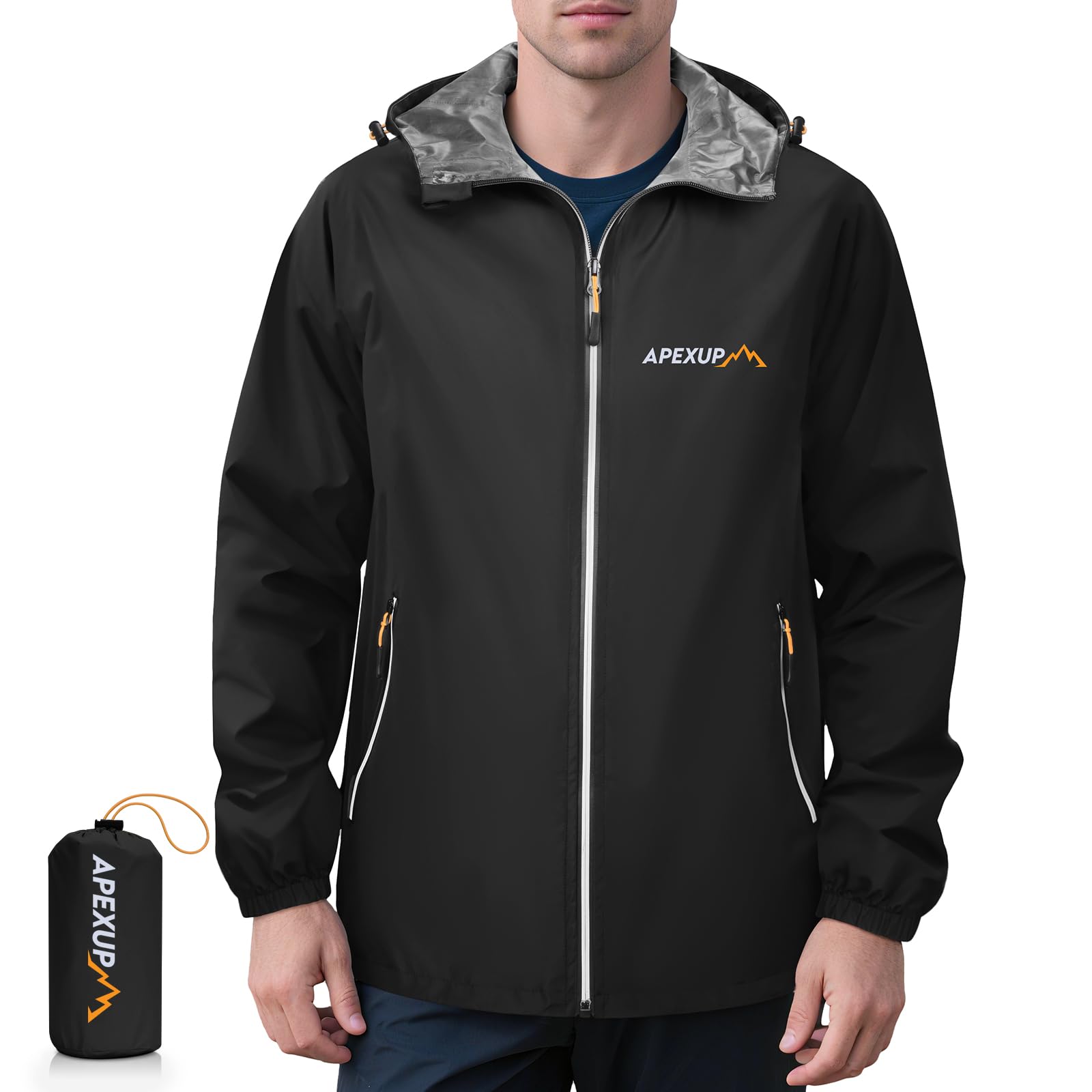
APEXUP Packable Rain Jacket
Key Features
- Waterproofing: Waterproof coating
- Packability: Packable
- Price: Budget
The APEXUP delivers stronger waterproofing for the price than most budget jackets, with a reflective zipper and 8.82-ounce packability. It’s best for travelers and occasional outdoor use who want a lightweight backup for unpredictable showers. Expect dry comfort in drizzle or short rain, but sustained downpours can overwhelm the coating and seep through.
Pros
- Keeps dry in moderate rain showers
- Very lightweight and folds into a small pouch
- Solid build quality relative to the budget price
Cons
- In heavier or prolonged rain the coating can saturate and let water through
A capable budget option for light rain and emergency backup – just don’t push it into a downpour.
Best for Daily Commuters
Columbia Glennaker Lake

Key Features
- Waterproofing: Hydroplus
- Packability: Packs into chest pocket
- Fit: Runs large
- Price: Mid-Range
The Glennaker Lake uses a nylon Hydroplus shell that holds up in light to moderate rain and packs into its chest pocket. Sizing runs generous, especially in sleeves. Water resistance has limits — heavy rain may soak through, making this suited for drizzle or short showers rather than all-day storms.
Pros
- High-quality nylon shell that withstands regular use
- Packs into its own chest pocket for easy travel storage
Cons
- In heavy or prolonged rain, water may eventually soak through the fabric
Best for light to moderate rain and travel backup; not intended for prolonged downpours or outdoor work.
Best for Budget Travelers
OTU Lightweight Rain Jacket

Key Features
- Waterproofing: Waterproof shell
- Hood Design: Large hood
- Fit: Runs large
- Price: Budget
The OTU jacket prioritizes comfort and ease of layering over serious rain protection. Its large hood and loose cut work well for daily commutes or mild drizzly hikes, but water resistance can be overwhelmed in heavy downpours—some owners find it soaks through. This is a capable lightweight shell for dry or light-rain conditions, not a primary rain coat for sustained wet weather.
Pros
- Roomy fit accommodates layers and a large hood provides good coverage.
- Lightweight and breathable for active use without overheating.
Cons
- Water resistance may give out in heavy or prolonged rain, limiting it to mild conditions.
Best for budget-conscious shoppers who need a light jacket for occasional drizzle and casual outdoor use, not for sustained wet weather.
Best for Runners & Cyclists
baleaf Rain Jacket

Key Features
- Waterproofing: Waterproof windbreaker
- Packability: Packable
- Fit: Runs small
- Price: Mid-Range
This jacket delivers the lightweight feel and reflective visibility active commuters need, and its water resistance handles light rain well. However, the cut runs trim—those who want to layer should consider sizing up—and the waterproof coating may lose effectiveness with repeated use, making it better suited for short outings than all-day downpours.
Pros
- Lightweight design keeps you comfortable during runs and bike rides.
- Reflective details improve visibility in low-light conditions.
Cons
- The trim cut may require sizing up for layering under the jacket.
Best for runners and cyclists who need a packable shell for light rain, provided you order one size up.
Best for Slim Cut Style
HH Dubliner Rain Coat

Key Features
- Waterproofing: Waterproof, windproof
- Packability: Lightweight
- Fit: Runs very small
- Price: Premium
Helly Hansen’s Dubliner combines a sleek, lined design with effective wind and rain protection for a dressier alternative to technical shells. The trade-off is sizing that runs very small — even ordering up two sizes may not accommodate average or larger builds, making it a gamble for anyone outside the slim fit range.
Pros
- Well-constructed with quality materials
- Effective wind and rain protection
Cons
- Sizing runs very small; may require ordering two sizes up for a proper fit
Best suited for slim-framed buyers who want a polished city rain coat and don’t need room for heavy layering.
Best for Golf & Travel
Outdoor Ventures Rain Jacket

Key Features
- Waterproofing: Waterproof nylon
- Packability: Packs into bag
- Fit: Runs small
- Price: Budget
Outdoor Ventures delivers a lightweight nylon shell that packs into its own pocket for easy travel. Construction quality is good for the price, making it suitable for golf and light rain. However, water resistance is inconsistent: in sustained downpours the jacket may wet through. This limits it to an occasional backup rather than a primary rain coat.
Pros
- Lightweight and packable design fits easily into a bag for travel.
- Good construction quality holds up well for a budget jacket.
Cons
- Water resistance can vary; some jackets may leak in sustained rain.
A sensible choice for travel and light use where heavy downpours are unlikely.
Best for Emergency Rain
SaphiRose Long Rain Jacket

Key Features
- Waterproofing: Waterproof fabric
- Hood Design: Attached hood
- Price: Budget
The SaphiRose Long Rain Jacket wraps you from hood to below the knee, keeping your torso and legs dry in wet weather. The cut fits easily over bulky layers, making it a practical grab-and-go option. Seams and material may rip after limited use, and the zip can be unconventional – this is a coat for occasional emergency wear, not daily reliance.
Pros
- Below-knee length keeps legs dry in rain.
- Roomy cut fits over heavy clothing without restriction.
Cons
- Seams may rip after limited use, making this better for occasional emergency wear than daily use.
Best for those who need an affordable, long rain jacket for emergency backup or occasional wet conditions, not for regular wear.
Best for Emergency Backup
COOFANDY Packable Rain Jacket

Key Features
- Waterproofing: Lightweight waterproof
- Packability: Packs into pouch
- Hood Design: Attached hood
- Fit: Runs small
- Price: Budget
This jacket packs into a small pouch, making it a convenient emergency layer for travel or hiking when weight matters most. The low price and decent fit are appealing for budget-conscious buyers, but water resistance is variable – soaking through in rain has been noted, so it functions better as a windbreaker than a rain coat.
Pros
- Folds into a compact pouch for easy packing in luggage or a daypack.
- Budget-friendly price for those who only need occasional light-weather coverage.
Cons
- Water resistance can be inconsistent – moisture may soak through in rain.
Best for emergency backup or light drizzle where full rain protection isn’t critical.
How to Choose
The real difference between a jacket that keeps you dry and one that soaks through lies in taped seams and a laminate membrane – not the DWR coating on the outside.
Waterproof Rating & Seam Sealing
Waterproof ratings like 5,000mm or 10,000mm indicate how much water pressure the fabric can withstand before leaking. A jacket with taped seams prevents water from seeping through stitch holes, while a DWR-only jacket will wet out after a few hours in steady rain.
For occasional showers, a DWR finish may suffice, but for prolonged exposure, seek out fully sealed seams and a waterproof membrane. This is the single most reliable indicator of long-term rain protection.
Weight & Packability
Packable jackets are lightweight and can be stuffed into their own pocket or a small pouch, making them ideal for travel. The trade-off is that ultralight fabrics often sacrifice durability and long-term waterproofing, as the thin material is more prone to wear at fold points.
Heavier coats like PVC workwear are nearly indestructible but cannot be stowed. Choose based on whether you need an emergency shell or an everyday workhorse.
Hood Design & Adjustability
An adjustable hood with a stiff brim keeps rain off your face and maintains visibility in wind. Fixed or undersized hoods often flop into your eyes when turning your head.
Look for dual drawcords that cinch both the opening and the crown. A helmet-compatible hood adds bulk but ensures fit over biking or climbing gear.
Breathability & Ventilation
Breathability is measured in g/m²/24h (MVTR). A higher number means moisture vapor escapes, reducing sweat buildup during activity. Non-breathable PVC coats trap heat and moisture, causing clamminess even in cool weather.
Pit zips or mesh-lined pockets provide additional airflow. If you plan to wear the jacket while hiking or biking, prioritize breathability over absolute waterproofing.
Fit & Sizing Consistency
Many brands run small, especially Helly Hansen and North Face, while Columbia often runs large. Order one size up if you want room for a mid-layer underneath, or size down for a trim fit without bulk.
Check the return policy before buying – inconsistent sizing is the top cause of buyer frustration in this category. Jackets that are too tight over layers defeat the purpose of waterproofing by restricting motion and compressing insulation.
FAQ
Why does my rain jacket leak after a few months?
Most budget jackets rely on a DWR coating that wears off with washing and abrasion. Once the coating degrades, the outer fabric wets out and the jacket no longer beads water. To keep it working, reapply DWR spray and look for jackets with a waterproof membrane like DryVent or Helly Tech that provide a second line of defense.
How can I tell if a rain jacket is truly waterproof vs water resistant?
Check the product specs for ‘waterproof rating’ (e.g., 5,000mm or higher) and mention of ‘taped seams’. A truly waterproof jacket will have sealed seams and a membrane. If the description only says ‘water resistant’ or ‘DWR finish’, expect it to fail in prolonged rain. The price also indicates: budget jackets under $40 are almost never fully waterproof.
Should I order a size larger for a rain jacket to fit over layers?
Yes, if you plan to wear a fleece or down mid-layer underneath. Many brands like Helly Hansen and North Face run small, so going up one or two sizes is common. Columbia tends to run large, so check customer fit feedback. If the jacket is too tight, the waterproof membrane can compress and lose effectiveness.
What does ‘packable’ mean in a rain jacket – is it a compromise?
Packable jackets are lightweight and compress into a small pouch for travel. The compromise is durability: ultra-thin fabrics that pack easily can tear at seams and lose waterproofing faster. They are best used as emergency backups or for light drizzle, not as primary rain coats for heavy downpours.