
This post contains affiliate links. We may earn a small commission when you buy through our links — at no extra cost to you.
Most travel first aid kits advertise impressive piece counts, but dig into the reviews and you’ll find a different story: bandages that won’t stay on, missing tools, and supplies that barely qualify as useful. It’s easy to end up with a pouch full of cotton balls and tiny wrappers instead of actual first aid.
A smart buyer learns to look past the headline number. The kits that work well on the road focus on a few key things: adhesive that sticks, a case that protects its contents, and at least one tool that lets you handle splinters or cut tape. This guide pulls together the options that deliver on those basics without inflating their counts.
Whether you need a waterproof hard case for hiking or a lightweight pouch for a purse, knowing which specs actually matter saves you money and hassle when you’re miles from a pharmacy.


Best for Car & Campers
Protect Life 100pc
The hard shell keeps supplies dry and organized even when tossed in a damp car trunk or backpack. It includes a tourniquet and emergency blanket—uncommon at this price point—giving it a preparedness edge over soft-pouch kits with similar piece counts.
Best for budget-conscious travelers and car owners who want a weatherproof kit that can handle moisture without issue. The tourniquet and blanket are basic and better suited for minor scrapes and roadside delays than severe trauma—the hard case also means slightly slower access than a soft pouch if you need items quickly.
Pros
- Waterproof hard case protects supplies from moisture and rough handling.
- Includes emergency blanket and tourniquet for added preparedness.
- Exceptional value under $10 for a hard-shell kit with trauma extras.
Cons
- Tourniquet and blanket are basic; not medical-grade for serious trauma.
- Hard case offers less instant access than soft pouches for frequent users.
For budget-minded travelers and car owners who prioritize a weatherproof shell and trauma extras over sheer piece count, this is the most sensible buy under $10.
Best for Family & Car
First Aid Only 298pc
With 298 pieces, this kit outcounts the top pick by nearly 200 items, covering cuts, scrapes, and burns with adhesive bandages, gauze, and ointments. The soft-sided pouch fits in larger luggage or a car glove box, but it’s noticeably bulkier than the slim hard-shell Protect Life kit. Best suited for travelers who want a one-stop supply without needing to repack for every trip, or as a home base kit to keep in a dorm room or car. Those needing a pocket-friendly or ultralight option should look at slim hard-shell alternatives.
Pros
- Comprehensive contents for minor emergencies – bandages, gauze, ointments, and tools for cuts, scrapes, and burns.
- Exceptional value – 298 pieces at a budget price, widely considered the best bang for the buck.
- Compact and portable for its piece count – fits in backpacks, glove boxes, and suitcases.
Cons
- The soft pouch is bulkier than slim hard-shell alternatives – may not fit a small purse or ultralight pack.
For travelers who prioritize comprehensive supplies over minimal packing, this kit is the obvious choice. If space is at a premium, consider the top-pick Protect Life hard-shell instead.
Best for Outdoor Adventurers
Surviveware 98pc Premium
Key Features
- Piece Count: 98
- Case Type: Rip-resistant 600D polyester
- Price: $$
Labeled compartments and a rip-resistant 600D polyester bag make this the easiest kit to grab supplies from under pressure. The MOLLE backing lets you attach it directly to a pack or vest, keeping weight close to your body rather than swinging loose. At a premium per-piece price, it’s a deliberate investment for adventurers who value quick access over a high bandage count. Those who just want the most items for their money will find better value elsewhere, but for organized on-the-go use, this stands apart.
Pros
- Every pouch is labeled so you find bandages, ointments, or tools in seconds.
- Heavy-duty water-resistant bag withstands scrapes, rain, and pack compression.
- MOLLE webbing allows secure attachment to backpacks, vests, or tactical gear.
Cons
- Priced higher per piece than kits with 200+ items — a tradeoff for quality over quantity.
A thoughtfully designed kit for anyone who needs fast, organized access while moving, and is willing to pay for it.
Best for Day Trips & Desk
Band-Aid Travel 80pc
The Band-Aid Travel Ready kit fits in a palm-sized case with 80 pieces of name-brand wound care – genuine Band-Aid bandages and Neosporin ointment. Unlike the General Medi Mini’s 110-piece kit with scissors and tweezers, this one sticks to cuts and scrapes exclusively. It’s best for a desk drawer, glove box, or daypack where you just need a bandage fast – not for splinter removal or cutting tape.
Pros
- Trusted name-brand bandages and antibiotic ointment – the same quality as standalone products.
- Pocketable size – fits in a purse or glove box without adding bulk.
Cons
- No scissors or tweezers included – for splinter removal or cutting tape, you’ll need separate tools.
For travelers who prioritize brand-quality bandages over tool variety, this is the lightest way to carry Band-Aid and Neosporin. Just don’t expect to handle splinters or cut tape.
Best for Parents with Kids
KeepGoing Kids 130pc
The KeepGoing Kids kit stands out by making first aid supplies genuinely appealing to children – animal prints, stickers, and a lip balm included. While the top pick in this category offers a waterproof hard case and trauma extras, the KeepGoing prioritizes engagement over ruggedness. The premium price reflects the design effort, but adults may find the whimsical look less suitable for their own use.
This kit fits best for parents, teachers, and daycare providers who need a first aid set that children won’t resist. The fabric case is stain-resistant and light enough for a diaper bag, but it lacks the hard-shell protection of travel-focused alternatives.
Pros
- Adorable patterns and stickers encourage kids to engage with the kit rather than avoid it.
- Includes kid-safe extras like lip balm and high-quality bandages that are actually useful for minor scrapes.
Cons
- Price is higher than generic kits with similar piece counts, and the whimsical design may feel out of place for adult-only use.
This is the go-to kit when you need a first aid set that a child will actually carry and use. For adult-focused travel, the top pick offers better value and protection.
Best for Minimalist Backpackers
General Medi 110pc Mini
This kit packs 110 pieces into a 5.6-ounce soft pouch, including scissors — a rare combination for ultralight travel. Where the top pick adds a hard shell and trauma extras, the General Medi Mini saves weight by using a fabric case, making it one of the lightest fully stocked kits available.
Best for minimalist travelers and backpackers who want a backup kit for minor cuts and scrapes. The zipper may wear with repeated opening, so it suits glove box or purse storage rather than daily rummaging.
Pros
- Ultralight enough for a fanny pack or small bag.
- Includes scissors and 110 pieces despite compact size.
- Surprisingly comprehensive for its weight class.
Cons
- Zipper can feel flimsy and may loosen over time with frequent use.
For ultralight travelers needing a compact backup, this delivers surprising capacity in a tiny package — just don’t plan on daily zipper action.
Best for Hiking & Fishing
Vriexsd 150pc Hardshell
The Vriexsd Mini First Aid Kit sets itself apart with labeled sleeves that let you grab what you need without rummaging. Its waterproof hard shell protects contents while packing 150 items into a compact 6.5 x 4.9-inch footprint. This is the kit for travelers who prioritize quick access and organization over shaving every ounce — though the tight fit means repacking takes a bit of patience after use.
Pros
- Labeled internal sleeves keep supplies organized and easy to find.
- High piece count in a compact hard case that fits most bags.
- Waterproof EVA shell protects contents from moisture and crushing.
Cons
- Case is packed tightly; repacking after use requires patience to fit everything back.
For travelers who value organization over minimal weight, this hard-shell kit offers smart compartment design and a solid piece count at a budget price.
Best for Hard-Shell Hikers
THRIAID 100pc Hardshell

Key Features
- Piece Count: 100
- Case Type: Waterproof EVA hard shell with carabiner
- Price: $
At 0.53 pounds, this is the lightest hard-shell kit – easy to clip onto a backpack with its carabiner. The waterproof EVA case protects basic supplies, but lacks trauma extras and offers fewer pieces than similarly priced competitors. It’s a tradeoff for ultralight travel.
Pros
- At 0.53 pounds, it’s the lightest hard-shell case in this set – easy to clip onto a pack.
- Solid starter kit for the price – covers basic cuts and scrapes.
Cons
- Fewer pieces than similar-priced hard-shell kits – no trauma extras included.
Best for ultralight travelers who want hard-shell protection and don’t need trauma supplies or a high piece count.
Best for Car, Rv, Home
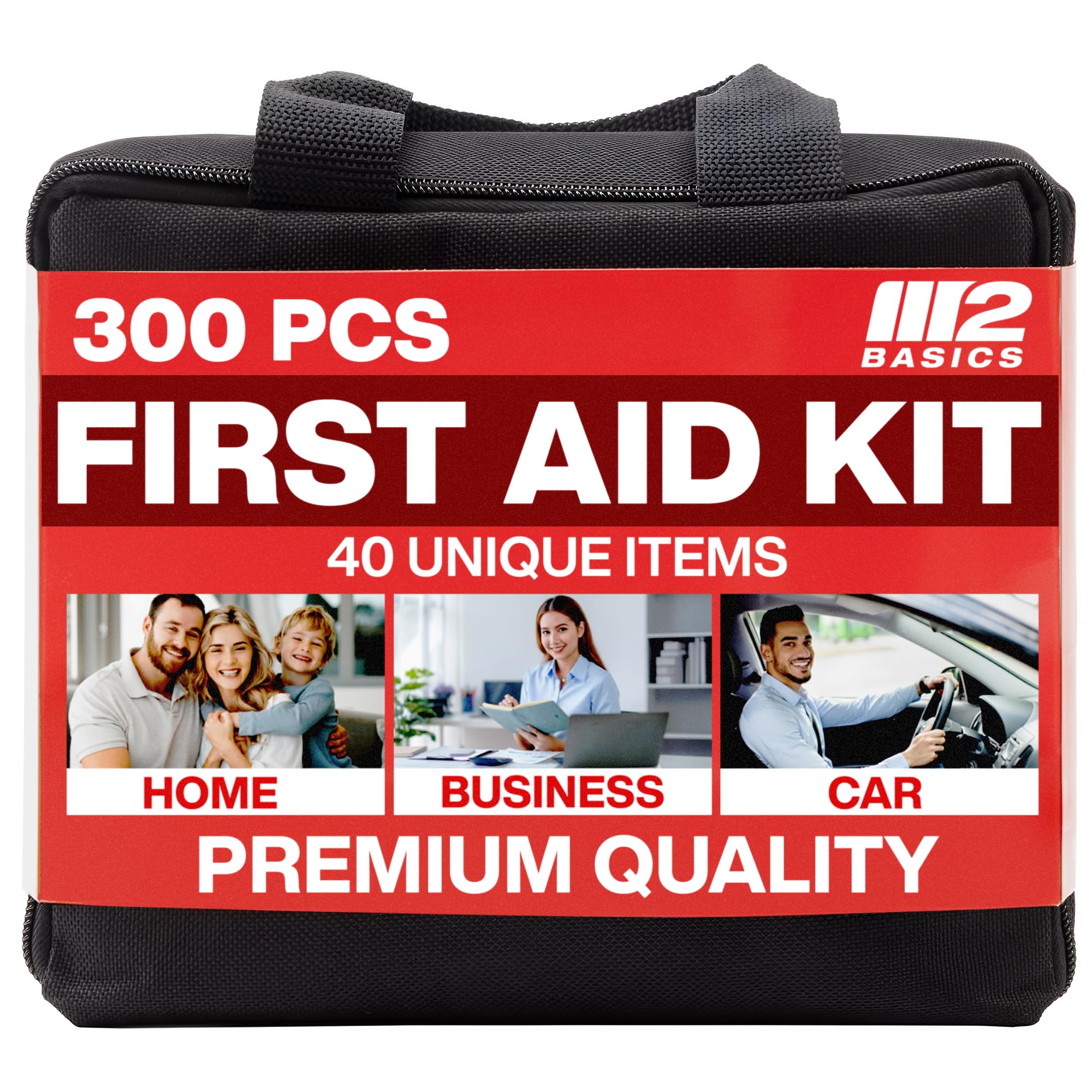
M2 BASICS 300pc
Key Features
- Piece Count: 300
- Case Type: Soft fabric bag with compartments
- Price: $$
With 300 pieces across 40 item types, this kit offers the broadest range of supplies in a durable, organized bag. The soft case keeps everything accessible, but the 9×6.5×3.5-inch size is too bulky for any travel bag. It fits well in a car glovebox or home closet where portability isn’t a concern.
Pros
- Over 300 pieces covering 40 item types — among the most comprehensive kits available.
- Organization-friendly bag with multiple compartments keeps supplies sorted.
Cons
- Bulky for any carry-on or daypack; best stored in a vehicle or at home.
The M2 BASICS 300pc is a solid choice for home or car storage, but not for travelers who need a portable kit.
Best for Families & Group
General Medi 258pc 2-in-1

This two-kit system gives you a full-size 1.5‑lb bag for the car and a separate mini pouch that slips into a backpack for quick outings. The main bag is too bulky for solo travel or ultralight packing, but the mini kit becomes the portable half. Families who want to split supplies between vehicle and day hikes will find the combo useful, though the main bag’s size keeps it out of the ultralight category.
Pros
- Two kits in one – main bag plus separate mini for day trips.
- Well-organized compartments keep supplies sorted.
Cons
- Main bag is 1.5 lbs – not portable for solo travel or small bags.
Best for families or groups who need a car kit and a grab-and-go mini, not for those seeking a single lightweight pouch.
Best for Kids & Families
Welly 130ct Tin

The Welly tin stands out with its fun bandage designs and inclusion of ibuprofen and ointments — a more complete care kit than most basic pouches. However, the metal case is heavier than soft alternatives and may dent, making it better suited for a desk drawer or glove box than an ultralight travel bag.
Pros
- Reusable tin with fun bandage designs appeals to kids and families.
- Includes pain relievers and creams, not just bandages.
Cons
- Tin case is heavier than soft pouches and may dent in a bag.
Works well for families wanting a fun, complete kit for stationary storage; skip if you need a lightweight travel pouch.
Best for Extreme Budget Travelers
DMI 76pc Travel

Key Features
- Piece Count: 76
- Case Type: Plastic water-resistant case
- Price: $
This tiny plastic case holds 76 basics—bandages, wipes, alcohol pads—and weighs almost nothing. It’s ideal as a backup for a purse or diaper bag, but only for minor cuts and scrapes. The plastic case can crack if dropped, and there are no trauma items like scissors or a tourniquet.
Pros
- Fits into any purse, diaper bag, or school locker without adding bulk.
- Budget-friendly price for a basic first-aid kit.
Cons
- Plastic case can crack if dropped, and the kit lacks tools for anything beyond scrapes.
Best for those who need a backup kit for minor cuts in a purse or diaper bag, not for any serious travel first aid.
How to Choose
Before you buy, check whether the kit includes scissors and tweezers—many budget options skip these essential tools entirely.
Piece Count vs. Useful Content
A 300-piece kit sounds impressive until you realize each tiny bandage and cotton ball counts as a separate ‘piece.’ The real measure is how many distinct useful items you get—scissors, tweezers, antiseptic wipes, and rolled gauze matter far more than a pile of adhesive bandages of the same size.
For travel, 50 to 200 pieces is typical, but a well-chosen 80-piece kit can outperform a 200-piece one if it includes the right tools. Focus on the variety of item types, not the total count.
Case Type
Soft pouches are lighter and more packable, but they offer little protection against crushing or moisture. Hard-shell cases—especially those made of EVA or waterproof plastic—keep supplies dry and intact when thrown into a backpack or glove box.
The trade-off is weight and bulk: a hard shell adds about 2-4 ounces and may not fit in a small purse. For car or hiking storage, the protection is worth it. For a pocket or daypack, a soft pouch wins.
Included Trauma Items
Some budget kits add a tourniquet and emergency blanket as a bonus. These items are rarely medical-grade, but they provide a basic layer of preparedness for cuts and shock that standard bandage-only kits lack.
If you’re venturing far from help, a tourniquet and blanket add meaningful capability. For city travel or short day trips, they’re unnecessary weight. Know your trip length before paying for extras you won’t use.
Organization
A single open pouch means you’ll dump everything out to find a bandage. Labeled compartments or separate sleeves let you grab what you need without rummaging, which matters when every second counts with a bleeding child or a sprained ankle.
The downside: organized kits often cost more per piece and have a slightly larger footprint. For outdoor adventures, the speed advantage is clear. For a simple glove-box backup, a single pocket may be fine.
Bandage Quality
Generic bandages in cheap kits frequently peel off within an hour, especially in humid conditions or on moving joints. Name-brand bandages (Band-Aid, Welly) use better adhesive and conform better to fingers and knees.
If you buy a budget kit with unknown bandages, test one before relying on it. Replacing the bandages with a name-brand pack often costs less than $3 and transforms the kit’s usefulness.
FAQ
How many pieces do I actually need in a travel first aid kit?
Between 50 and 150 pieces is plenty for most trips. Focus on variety: scissors, tweezers, antiseptic wipes, and a range of bandage sizes. Anything above 200 pieces often adds padding like extra cotton balls or small wrappers that inflate the count without adding utility.
Why won’t my first aid kit bandages stick?
Cheap kits often use low-quality adhesive that loses grip in heat or on oily skin. Moisture and movement accelerate the failure. If your kit’s bandages don’t stick, replace them with a name-brand pack of bandages for a few dollars—it’s the quickest upgrade you can make.
Can I bring a first aid kit through TSA security on a plane?
Yes, most travel first aid kits are allowed in carry-on bags. Scissors with blades under 4 inches and tweezers are permitted. Liquid antiseptics and ointments must be in containers of 3.4 ounces or less and fit in your quart-sized liquids bag. Check TSA’s current guidelines if you carry a tourniquet or larger trauma items.
Are the tourniquets in cheap first aid kits reliable?
No, the tourniquets included in budget kits are typically basic nylon straps without a windlass mechanism, making them difficult to apply effectively. They are better suited for emergency preparedness training props than actual hemorrhage control. If you need a tourniquet for real use, buy a medical-grade model separately.