
This post contains affiliate links. We may earn a small commission when you buy through our links — at no extra cost to you.
Most backpacks marketed for college students are actually travel bags — luggage straps, USB ports, and slim profiles designed for overhead bins. That’s fine if you’re hopping a flight every weekend, but for daily campus hauling of textbooks, a laptop, and a water bottle, those extra features often come at the cost of real-world durability.
The biggest surprise in the category is how many top-rated backpacks suffer from zipper jams or strap tears within months. A 4.6-star rating can hide a 50% failure rate on a single component. What matters is finding a pack that balances capacity and comfort without cutting corners on the parts that actually break.
This guide focuses on backpacks that fit a standard college load — 20–35 liters, a padded laptop sleeve, and enough pockets to keep you organized — while ignoring the gimmicks that add weight and reduce lifespan. You’ll end up with something that lasts through graduation, not just midterms.


Best for Heavy Loads, Daily Use
TNF Recon Backpack
Key Features
- Capacity: 30L
- Laptop Size: 16"
- Compartments: 5
- Water Resistance: Water Repellent
- Price: Premium
The Recon’s FlexVent suspension system — a padded back panel with a foam lumbar support and breathable mesh — makes carrying a full load of textbooks and a laptop noticeably easier on the shoulders and lower back. The recycled nylon shell resists scuffs and light rain, so it holds up through a semester of campus commutes without looking worn.
The main compartment fits a 16-inch laptop in its padded sleeve plus several thick textbooks, though packing a 3-inch binder alongside other items requires careful arrangement. The front organizer panel has dedicated slots for pens, a phone, and small accessories, and the two stretch water bottle pockets keep containers accessible without adding bulk. Daily use confirms the 30L volume is well-suited for a full course load, not for overstuffing.
This backpack is designed for the student who treats their bag as a tool, not a fashion accessory — someone carrying 15–20 pounds of books across campus daily and expecting that bag to last through graduation. The tradeoff is that the main compartment’s dimensions can make fitting oversized three-ring binders a tight squeeze. If your syllabus requires extra-large binders or a 17-inch laptop, the Recon’s 16-inch sleeve and 30L capacity will feel restrictive.
Pros
- Durable recycled nylon fabric withstands daily campus wear
- Comfort-focused back panel and straps reduce fatigue during heavy loads
- Spacious 30L main compartment fits textbooks and a 16-inch laptop
- Suitable for school, work, and short trips with its balanced organization
Cons
- Main compartment can feel tight when packing large three-ring binders
- Seam stitching may show signs of stress under very heavy loads
If you’re a student who loads your backpack to the brim every day and values long-term durability over a low upfront cost, the Recon delivers the comfort and build to keep you going without second-guessing your gear.
Best for Light Loads, Style
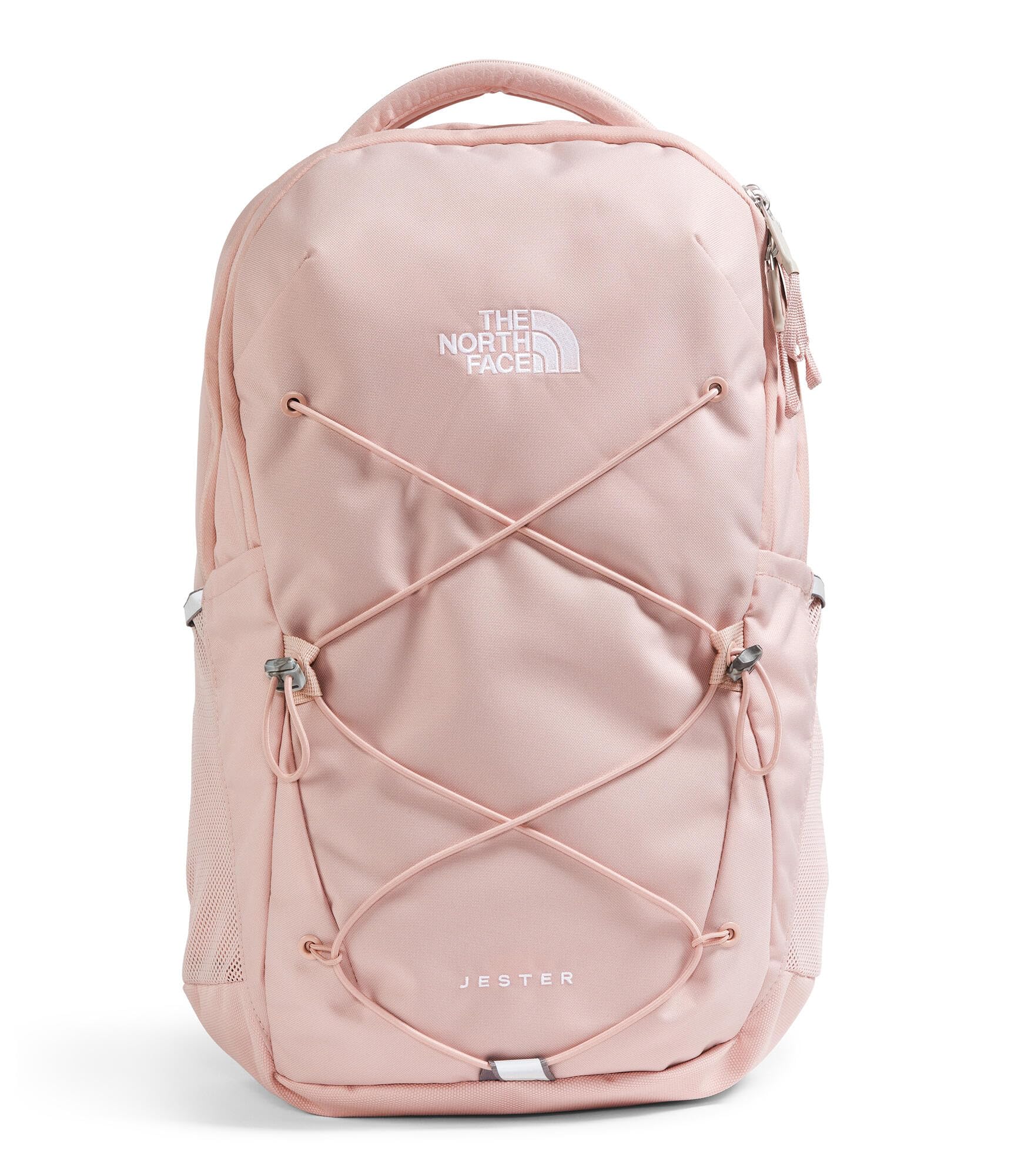
TNF Jester Backpack
Key Features
- Capacity: 22L
- Laptop Size: 16"
- Compartments: 3
- Water Resistance: Water Repellent
- Price: Mid-Range
Unlike the top pick’s heavy-duty capacity, the Jester focuses on a tailored fit and lighter carry. The backpanel and straps are designed to reduce strain—chiropractor-approved comfort is a real advantage for commuters walking or biking to campus. A wide range of color options adds personal style that many alternatives lack.
This 22-liter pack works best for female students carrying a laptop, a few notebooks, and daily essentials. It accommodates a 16-inch laptop in a padded sleeve, plus two extra compartments for organization. But if your schedule includes multiple textbooks or binders, the interior fills quickly—this is a light-load companion, not a textbook hauler.
Construction quality is high for the price: water-repellent fabric holds up well in light rain, and the three-zip layout keeps daily items accessible. However, the 22L capacity means strategic packing is required—a typical binder plus notebook may force the main compartment to bulge. For students with strictly laptop-and-notebook loads, this is a polished, comfortable choice.
Pros
- High-quality fabric and zippers that resist wear from daily use
- Ergonomic back panel and straps reduce shoulder fatigue on longer commutes
- Available in many colors that allow personal style without sacrificing durability
Cons
- 22-liter capacity can be restrictive when carrying more than a laptop and a few notebooks
- Strap and mesh durability may show wear if the bag is regularly packed to its limit
For students with light daily loads who value ergonomic comfort and style, the Jester is a capable carry—just don’t expect it to handle a full textbook schedule.
Best for Tech Organization
OGIO Renegade Backpack
Key Features
- Capacity: 29.5L
- Laptop Size: 15.5"
- Compartments: 2 (23 pockets)
- Water Resistance: Water Resistant
- Price: Premium
The OGIO Renegade packs 23 pockets and an EVA-molded laptop compartment into a build that feels built to last. Fabric and zippers are robust enough to handle years of campus use. The tradeoff is weight: at 3.5 lbs empty, it’s heavier than many college backpacks, including the lighter top pick in this roundup.
This bag suits students who carry multiple tech devices — laptop, tablet, chargers, cables — and need every item in a dedicated spot. The heft is less of a concern for those who drive or take short walks between buildings. However, if you cover long distances on foot or prefer a minimalist pack, the Renegade’s weight will be a daily annoyance. Also, the laptop compartment is designed for up to 15.5" laptops; some 15.6" models may fit tightly.
Dense nylon and reinforced stitching give the Renegade a durability edge over cheaper alternatives. For students who prioritize organized gadget carry over a lighter load, the tradeoff in weight is offset by the peace of mind from structured laptop protection and deep pockets.
Pros
- 23 dedicated pockets keep tech accessories organized and easy to find
- EVA molded compartment provides secure laptop protection against bumps
- Robust nylon and stitching hold up to regular campus use
Cons
- 3.5 lb empty weight adds noticeable heft on longer walks between classes
- Laptop compartment can be too snug for some 15.6" models — test fit first
- Premium pricing puts it out of reach for budget-minded students
If your college loadout revolves around gadgets and you can accept the extra pounds, the Renegade’s organization is unmatched in this price range.
Best for Budget, Travel Crossover
MATEIN Travel Laptop Backpack

Key Features
- Capacity: 30L
- Laptop Size: 15.6"
- Compartments: 3
- Water Resistance: Water Resistant
- Price: Budget
The MATEIN Travel Laptop Backpack packs an impressive amount of organization into a budget-friendly price point with its 30L capacity and numerous pockets. However, its design is optimized for air travel — luggage strap, personal-item sizing — rather than the demands of a college student carrying textbooks daily. Over months of consistent use, strap and zipper durability has been noted as a potential concern, and the 30L capacity may feel tighter than expected for a full course load. For light campus days or as a travel companion, it delivers strong value.
Pros
- Exceptional organization with multiple compartments and pockets
- Great value for money at a budget-friendly price
- Spacious 30L capacity for a slim profile
Cons
- 30L capacity may feel smaller than expected when packing multiple textbooks
- Strap and zipper durability can become an issue after several months of daily use
Best for budget-conscious students who prioritize organization and value over long-term durability and can manage a lighter daily load.
Best for Large Laptop, Budget
DUSLANG 17in Laptop Backpack

Key Features
- Capacity: 28L
- Laptop Size: 17"
- Compartments: 4
- Water Resistance: Water Resistant
- Price: Budget
DUSLANG’s backpack delivers a roomy 28-liter capacity and a well-organized pocket layout, making it easy to carry a 17-inch laptop alongside textbooks and daily essentials at a budget-friendly price. The padded compartment and water-resistant fabric add practicality. However, its travel-oriented design—including a USB port and luggage strap—creates a bulkier profile that may feel excessive for a daily campus commute. Under heavy loads, the materials can show wear over time, so this bag is best for students who want a single pack for both campus and occasional travel without spending much.
Pros
- Spacious 28L capacity fits 17-inch laptop and books
- Well-organized storage with multiple pockets
- Good value for the price
Cons
- Durability may show wear under heavy daily use
- Can feel bulky for daily campus carry
Best for budget-minded students needing a 17-inch laptop backpack who are willing to accept extra bulk and moderate durability in exchange for capacity and price.
Best for Tech Features, Travel
Swissdigital 31L Travel Backpack

Key Features
- Capacity: 31L
- Laptop Size: 17"
- Compartments: 7
- Water Resistance: Water Repellent
- Price: Mid-Range
The Swissdigital backpack delivers 31L of storage with seven compartments, a padded laptop sleeve that fits up to 17-inch computers, and front-panel organization for pens, phone, and keys. The integrated USB cable lets you charge devices on the go, and the RFID pocket protects cards and passport. Construction is solid for its price tier. But the pack’s travel-oriented silhouette adds noticeable bulk compared to slim campus bags, and zipper quality has been inconsistent under daily use. For students who want a single bag for both class and weekend trips and value added tech features, this works — but those seeking a lightweight, minimalist daily driver should look elsewhere.
Pros
- 31L capacity fits textbooks, a 17-inch laptop, and travel essentials
- Seven compartments keep laptop, tablet, phone, and documents organized
- USB charging port and RFID-blocking pocket add convenience for tech-carrying students
Cons
- Zippers may catch or wear under frequent heavy use
- Travel-oriented design adds bulk that can feel oversized for daily campus carry
Best for students who need a travel-ready bag with tech organization and can accept a slightly bulkier build for weekends away.
Best for Ultra-Organization, Water Bottle
LOVEVOOK Tumbler Backpack

Key Features
- Capacity: 23.6L (calc.)
- Laptop Size: 15.6"
- Compartments: 2 (19 pockets)
- Water Resistance: Water Resistant
- Price: Budget
With 19 pockets and a dedicated tumbler pocket, this backpack offers unmatched organization for its price point. The main compartment fits a 15.6-inch laptop and daily essentials, while the varied pockets keep smaller items sorted. However, the seams may separate after several weeks of heavy loads, and the large water bottle pocket cuts into the main compartment’s interior space. For students who need a durable workhorse for textbooks day after day, the top pick delivers better longevity. But if top-tier pocket count and a low price matter more than long-term ruggedness, and you’re careful not to overload the seams, this is a compelling budget option.
Pros
- Exceptional organization with 19 pockets
- Spacious for laptop, textbooks, and daily essentials
- Dedicated tumbler pocket fits large water bottles securely
Cons
- Seams may separate after weeks of heavy use, especially when overstuffed
- Oversized water bottle pocket can reduce the main compartment’s usable space
Best for students who prioritize extensive pocket organization over long-term durability and don’t mind sacrificing some interior space for a large water bottle.
How to Choose
Advertised capacity often differs from usable space because thick padding and compartment dividers eat into the main compartment.
Capacity (Liters)
Capacity is the first number most buyers look at, but it’s rarely a direct measure of how many textbooks fit. A 30L pack with a padded laptop sleeve and a separate tablet pocket may hold only 22L of actual books. The physical shape also matters: tall, narrow bags waste space at the top while short, wide bags bulge awkwardly.
For a typical college load — a laptop, two thick textbooks, a binder, and a water bottle — aim for 25–30L of total volume. Below 25L you’ll struggle with more than one textbook; above 30L the bag becomes heavy and unwieldy for crowded hallways.
Laptop Sleeve Padding
Padded sleeves protect your laptop from drops and bumps, but thick padding also reduces the main compartment’s usable depth. A rigid EVA-molded sleeve like the OGIO Renegade’s offers excellent protection but may not fit 15.6" laptops if the compartment is too snug. Soft foam sleeves are more forgiving but offer less impact absorption.
Check the sleeve dimensions against your laptop model. For most students, a padded sleeve that’s slightly oversized is better than a tight one that forces your laptop in at an angle, which stresses the hinges.
Pocket Organization
The number of pockets isn’t as important as their placement and usability. A front panel with slip pockets for pens, phone, and keys saves time rummaging. Interior mesh zippered pockets keep small items from falling to the bottom. But too many specialized pockets can make the bag heavier and harder to pack efficiently.
Look for at least one quick-access external pocket for your phone and ID, and a dedicated padded tablet or laptop sleeve. Avoid bags where all pockets are on the inside — you’ll have to open the whole bag to grab a charger.
Comfort Features
Shoulder straps with foam padding and a sternum strap distribute weight better than thin unpadded straps. A breathable mesh back panel (like the Recon’s FlexVent) reduces sweat on warm days. The pack’s fit to your torso length matters more than padding — if the bag hangs too low, the straps dig in.
For heavy loads (over 10 lbs), a hip belt relieves pressure on shoulders. On daily campus carry where you’re constantly taking the bag on and off, a hip belt can be a nuisance — prioritize padded straps and a supportive back panel instead.
Water Resistance
Water resistance is typically achieved with a DWR coating on the exterior fabric or a separate rain cover. DWR wears off over time, especially at friction points like the bottom corners. A waterproof zipper or a rain cover built into the bag is more reliable than relying on the fabric alone.
For rainy commutes, look for a bag with coated zippers or a dedicated rain cover pocket. For occasional drizzles, a simple water-repellent coating is sufficient. Don’t expect any non-sealed backpack to survive a downpour — protect electronics with a dry bag inside.
FAQ
How do I prevent the zipper on my JanSport backpack from getting stuck?
Clean the teeth regularly with a soft brush to remove grit, and lubricate with a silicone-based spray or a pencil graphite stick. Avoid overstuffing the pack, which stresses the zipper track. If the zipper already jams, try gently wiggling the slider while pulling the fabric taut — but if teeth are misaligned, lifetime warranty replacement is the simplest fix.
Will a 22-liter backpack be enough for college classes with a laptop and two textbooks?
Probably not. 22L is fine for a laptop and a couple of notebooks, but two standard college textbooks will fill the main compartment and leave no room for a binder or lunch. If your schedule requires carrying multiple heavy books, choose at least 25L to avoid cramming and stress on the zippers.
Why do some backpack straps tear after a few months even with light use?
Straps tear when the stitching attaching them to the bag is weak or the strap webbing itself is low-density polyester. Many budget packs cut costs here, using single-layer stitching at stress points. Even light loads create repeated tension, and the seam gradually pulls apart. Look for bar-tack reinforcements at the strap attachment — a sign the manufacturer expects the bag to be used.
What’s the real difference between a 30L and a 25L backpack for college?
The extra 5L usually means you can fit a second textbook and a larger binder without compressing the laptop sleeve. In practice, many 30L packs have thick internal padding that reduces actual book space to about 25L anyway. The real difference is in the bag’s depth — a deeper bag handles bulky items, while a shallower bag stays trim but limits what you can pack vertically.