
This post contains affiliate links. We may earn a small commission when you buy through our links — at no extra cost to you.
A 75-liter pack sounds like plenty of room for a 3-day trip — until you stuff in a sleeping bag that doesn’t fit the bottom compartment. That mismatch between marketing specs and real-world use is one of the most common frustrations in backpacking gear.
At the same time, strap slippage and durability trade-offs plague packs under $100, while premium options demand a steep price for lighter weight. The real question isn’t which pack is “best”—it’s which one fits the length of your trip and the weight of your gear without forcing compromises you’ll regret on trail.
This guide focuses on internal-frame packs from 40 to 75 liters that actually support multi-day hiking. We’ve sorted them by use case so you can prioritize comfort over capacity or value over weight without second-guessing.


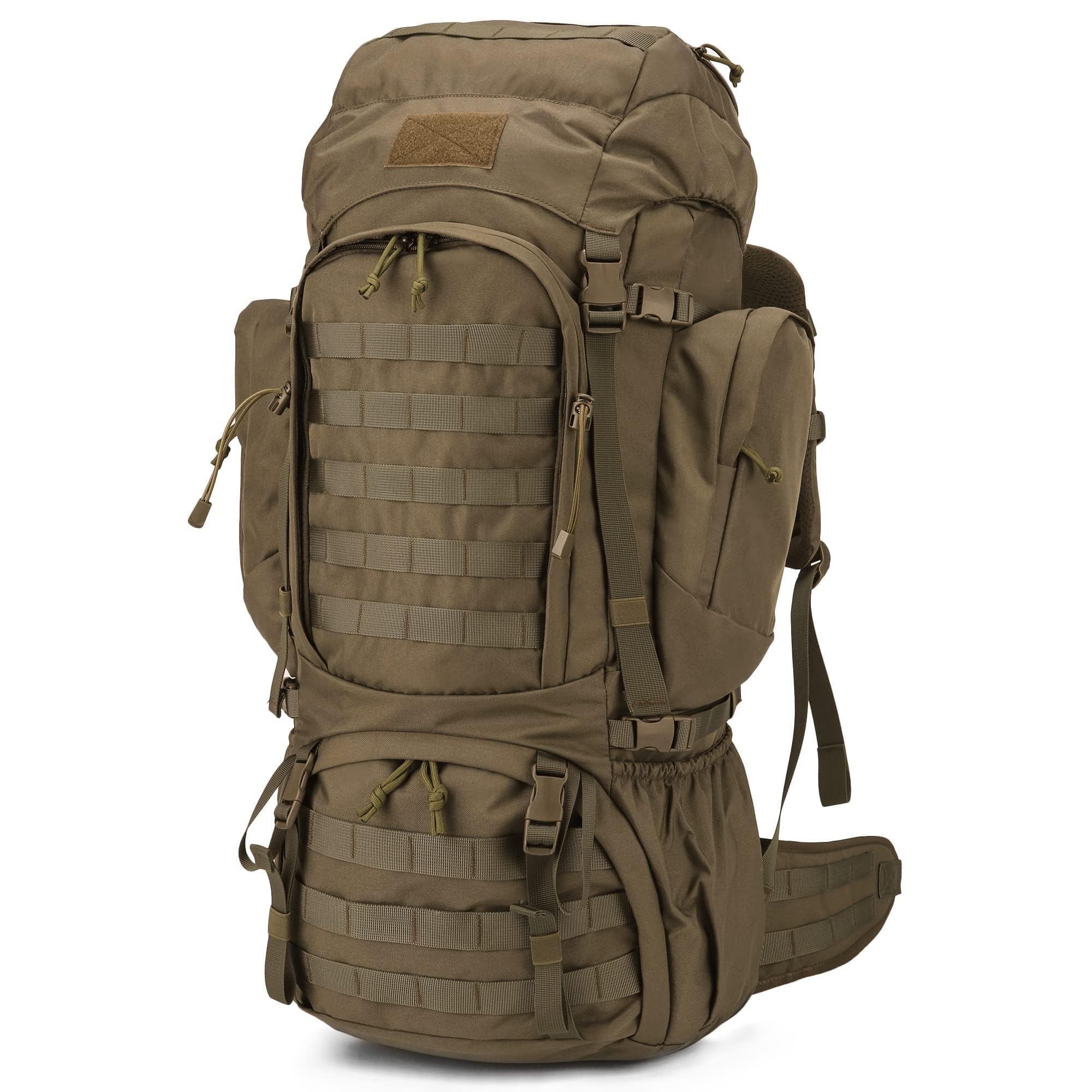

Best for Budget Large Capacity
Teton Explorer 75L
Key Features
- Capacity: 75L
- Weight: 5.56 lbs
- Frame Type: Internal frame
- Rain Cover: Included
- Price: $$
The Teton Explorer 75L delivers real internal-frame performance and genuinely useful storage for multi-day trips. The main compartment swallows a weekend’s worth of gear, while six pockets keep smaller items organized without digging. An integrated rain cover is a budget-friendly bonus that competitors often charge extra for.
This pack suits hikers who prioritize capacity and cost over light weight. The 5.6-lb build is heavier than premium models, so it’s better for shorter carries or vehicle-assisted trips than thru-hikes. One tradeoff: the sleeping bag compartment is sized for compact bags — if yours is bulky, plan to stow it vertically in the main compartment instead.
Pros
- Spacious 75L interior with organized pockets for multi-day gear
- Comfortable padded hip belt and adjustable torso fit for all-day hikes
- Included rain cover saves $20–30 compared to buying separately
Cons
- Straps and zippers may show wear under consistent heavy loads
- Sleeping bag compartment fits some but not all standard bags — measure before assuming it works
For budget-conscious hikers who need serious capacity and decent comfort without spending on premium brands, the Teton Explorer covers the essentials.
Best for Long Trails
Osprey Rook 65L
Key Features
- Capacity: 65L
- Weight: 3.7 lbs
- Frame Type: Internal frame (AirSpeed)
- Rain Cover: Integrated
- Price: $$$
With an adjustable AirSpeed suspension and 3.7-pound weight, the Osprey Rook 65L is one of the lightest internal-frame packs in its class — a clear step up from heavier budget options like the Teton Explorer 75L. The ventilated back panel and custom fit make it suited for long-distance hikes where carrying comfort matters most. However, the pack lacks traditional elastic side mesh pockets for water bottles; instead it uses zippered side pockets that are less accessible on the move. This limitation is a tradeoff for the streamlined design, and hikers who rely on quick bottle access may find it frustrating.
Pros
- Superior comfort with ventilated back panel and adjustable fit
- Lightweight design for a 65L pack
- High-quality materials and construction
Cons
- Limited side pockets; no elastic mesh pockets for water bottles
For serious backpackers who value suspension and low weight over pocket convenience, the Rook 65L is a premium choice — but check the pocket layout matches your hydration style.
Best for Tactical Heavy Gear
Mardingtop 75L Molle
Key Features
- Capacity: 75L
- Weight: 4.49 lbs
- Frame Type: Internal frame
- Rain Cover: Included
- Price: $$
Storage capacity is a standout, with generous pockets and MOLLE webbing to secure gear externally. Heavier than standard hiking packs at 4.5 lbs, the padded suspension can feel inadequate under loads over 45 lbs. Stitching on the grab handle and some MOLLE loops may show wear — worth inspecting before heavy use. This pack suits preppers or military-style haulers who prioritize external attachment points over minimal weight.
Pros
- Exceptional organization with MOLLE and many pockets.
- Durable construction with heavy-duty fabric.
Cons
- Heavier than many 75L packs, may fatigue on long carries.
- Stitching on grab handle and some MOLLE attachments can be weak.
For tactical users who need maximum external attachment points and don’t mind extra weight, the Mardingtop 75L delivers organization at a mid-range price — just keep heavy loads balanced.
Best for Tactical Shorter Trips
Mardingtop 60L Mil
Key Features
- Capacity: 60L
- Weight: 4.49 lbs
- Frame Type: Internal frame
- Rain Cover: Included
- Price: $
Rugged 60L internal frame with MOLLE webbing at a budget price — this Mardingtop is a compact tactical alternative to the larger 75L version. The 600D polyester and solid webbing hold up well under heavy loads, though the pack itself weighs 4.49 lbs, heavier than typical hiking packs. The 60L capacity offers ample space for gear, with a practical compartment layout that includes a separate sleeping bag section and side pockets, plus an included rain cover for wet conditions.
Best suited for preppers, hunters, or short multi-day trips where external attachment points matter more than weight savings. Zipper quality is decent but not top-tier; occasional sticking has been noted after heavy use, and the pack’s heft makes it less ideal for long-distance hikes.
Pros
- Rugged build with solid MOLLE webbing
- Spacious with practical compartment layout
- Good value for a military-style pack
Cons
- Zippers may stick under heavy loads
- Heavier than standard hiking packs of similar capacity
A solid budget option for tactical users who need MOLLE and don’t mind extra weight — the zipper quality is a tradeoff worth checking before committing.
Best for Weekend Trips
Teton Numa 45L
Key Features
- Capacity: 45L
- Weight: 3.8 lbs
- Frame Type: Internal frame
- Rain Cover: No
- Price: $
The Teton Numa 45L delivers a ventilated, internal-frame design that keeps the pack weight down to 3.8 lbs, making it a natural fit for 2–3 day adventures where every ounce matters. Its organized storage and rain-resistant build handle light to moderate loads without the bulk of larger packs.
This pack suits weekend backpackers and ultralight enthusiasts on a budget who keep their load under 40 lbs. The torso range and hip belt can feel short for taller frames, and the shoulder-strap attachment has shown occasional separation after extended use — something worth inspecting before committing to rugged trips.
Pros
- Lightweight build with comfortable internal-frame suspension for its size
- 45L capacity well-organized for 2–3 day outings
- Great value at the discounted price point
Cons
- Fit can be short for taller torsos; hip belt may not cinch securely on larger waists
- Shoulder-strap attachment can separate from the pack body after moderate use
If your trips are short and your load stays under 40 lbs, the Numa offers a light, well-priced alternative to heavier budget packs — just check the fit before you buy.
Best for Casual Use
Amazon Basics 75L

Key Features
- Capacity: 75L
- Weight: 5.1 lbs
- Frame Type: Internal frame
- Rain Cover: Included
- Price: $
The Amazon Basics 75L offers a spacious main compartment, multiple pockets, and a comfortable hip belt at a price well below most packs this size. For short trips or rucking, it’s a solid choice. However, the shoulder straps can slip and loosen during use, making it less reliable for multi-day backpacking where constant readjustment becomes a hassle.
Pros
- Very affordable for a 75L internal frame pack.
- Spacious main compartment with ten pockets for organization.
Cons
- Shoulder straps can loosen during hikes, requiring frequent retightening.
Best suited for casual day hikes and short trips where occasional strap adjustment isn’t a dealbreaker — not the right choice for long multi-day treks.
Best for Day Hikes Travel
Loowoko 50L

Key Features
- Capacity: 50L
- Weight: 2.2 lbs
- Frame Type: Frameless
- Rain Cover: Included
- Price: $
Extremely affordable for a 50L pack at just over 2 lbs, it offers ample space for a week’s worth of clothing. However, without an internal frame it cannot handle loads over 25 lbs, and some units have shown strap or zipper issues under moderate use. This is best reserved for day hikes or travel, not multi-day backpacking.
Pros
- Very affordable price for a 50L pack
- Spacious enough for a week’s worth of clothing
Cons
- Without an internal frame, loads over 25 lbs may cause strap or zipper issues
Best used as a budget daypack or travel carry-on, not for overnight backpacking trips.
Best for Day Hikes Travel
Maelstrom 40L

Key Features
- Capacity: 40L
- Weight: 2.18 lbs
- Frame Type: Frameless
- Rain Cover: Included
- Price: $
Excellent value and comfort for all-day hiking with 10 pockets. However, the 40L capacity and frameless design limit it to day hikes and light loads; it lacks the support needed for multi-day backpacking.
Pros
- Good value for a feature-packed daypack
- Lightweight and comfortable for all-day hiking
Cons
- Seams may separate under heavy use — better suited for light loads.
Best for day hikes and travel, not multi-day trips.
How to Choose
The most overlooked factor when buying a backpacking backpack is that the sleeping bag compartment size often doesn’t match the listed capacity of the main bag.
Capacity (Liters)
Capacity determines how many days you can carry supplies. A 40-50L pack works for 1-2 nights with ultralight gear; 60-75L suits 3-5 days with bulky items like a winter bag.
The catch: published liter ratings are measured with packing cubes, not actual gear. Sleeping bag compartments are often smaller than advertised, so subtract 5-10L from the number for realistic space.
Weight
Every pound of pack weight is a pound you carry on every step. Light packs (under 4 lbs) reduce fatigue but often use thinner fabric and less padding. Heavier packs (5+ lbs) can have better suspension but tire you faster.
A 3.7-lb pack feels fine on a 10-mile day, but a 5.6-lb pack on the same route adds noticeable fatigue by mile 8. Choose weight based on trip length and your base gear weight.
Frame Type
An internal frame transfers load from your shoulders to your hips, keeping the pack stable on uneven terrain. Frameless packs rely entirely on strap tension and collapse under loads beyond 25 lbs.
For multi-day backpacking, a frame is non-negotiable. Look for a frame that allows torso length adjustment — a fixed frame that doesn’t fit your spine will cause hot spots regardless of padding.
Number of Pockets
Pockets aren’t just for organization — they let you access essentials without unpacking. Side mesh pockets for water bottles, a top lid for snacks, and a front shove-it pocket for a jacket save time on trail.
The trade-off: more pockets add weight and complexity. A pack with 6 well-placed pockets is more usable than one with 12 tiny ones. Check whether the hip belt has zippered pockets for phone and keys.
Rain Cover
A rain cover prevents your pack from becoming a sponge during a downpour. Integrated covers are always attached, while removable ones can be forgotten or lost.
Material matters: cheap covers shred after a few uses. Look for one that clips to the pack straps so it doesn’t blow off in wind. Even with a cover, liner dry bags inside are cheap insurance.
FAQ
Why does my backpacking backpack strap keep slipping?
Budget packs often use smooth plastic buckles that don’t grip webbing tightly, especially under heavy loads. Aftermarket strap locks (like ITW Nexus) cost $5 and fix the issue. If the straps slip on a premium pack, check that the adjuster buckle isn’t worn or cracked.
Is a 75L backpack too big for a 3-day trip?
For most hikers, yes. A 75L pack encourages overpacking, adding 3-5 extra pounds you’ll carry uphill. Unless you’re carrying bulky gear (tent, stove, bear canister) or winter clothing, a 55-65L pack forces lighter, smarter packing and is more comfortable.
How much should a backpacking backpack weigh?
For a multi-day trip, aim for a pack under 4 lbs if possible. Packs between 4.5-5.5 lbs are acceptable for heavy loads but will tire you faster on long days. Under 3.5 lbs is ultralight territory but often sacrifices padding and frame support.
Can I use a daypack for overnight backpacking?
Only with ultralight gear that compresses small (sub-10 lb base weight). A 40L frameless daypack can manage one night, but you’ll carry the load on your shoulders without a hip belt transfer. For comfort beyond one night, an internal frame pack is worth the extra weight.