
This post contains affiliate links. We may earn a small commission when you buy through our links — at no extra cost to you.
Parents shopping for a 9-year-old boy often experience a familiar letdown: the remote-control car that stops steering by day three, the science kit missing a crucial ingredient, or the noise-making gadget that drives everyone up the wall. Meanwhile, the book with vivid photos gets read cover to cover, and the logic puzzle becomes a daily brain workout.
The secret isn’t spending more — it’s matching the gift to how a 9-year-old actually plays: with intense curiosity, repetition, and occasional rough handling. Gifts built around simple, robust mechanisms consistently outlast flashy toys that rely on fragile electronics or flimsy parts.
This guide focuses on presents that withstand that reality, from solo brain teasers that grow with the child to well-engineered building kits that don’t fall apart. Each pick was chosen for its proven ability to keep a kid engaged long after the unboxing excitement fades.



Best for Solo Puzzle Fans
ThinkFun Gravity Maze
Key Features
- Age & Interest: Ages 8+, solo puzzle fans
- Educational Value: Critical thinking, logic
- Quality & Durability: Plastic towers, marble-run game
- Replayability: 60 challenge cards, 4 levels
- Assembly & Instructions: No assembly, single-player
- Price: Mid-Range
Gravity Maze turns a simple marble run into a solo logic challenge with 60 graduated cards. Each card presents a specific tower arrangement that must guide the marble from start to target, teaching spatial reasoning and cause-and-effect through trial and error. The game is genuinely engaging: kids often play through multiple cards in one sitting, and the progressive difficulty keeps the challenge fresh as skills improve.
The nine towers and three marbles feel solid overall, but the fit of some tower pieces can be loose. On an uneven surface or during enthusiastic placement, a tower may shift or topple, requiring a quick rebuild. This is less a durability concern and more a need for a stable, level play area — a kitchen table or desk works fine. Once set up, the marble rolls reliably through the intended path, and the satisfying clack of the marble hitting the target rewards each solved puzzle.
This is a strong pick for a 9-year-old who enjoys quiet, focused problem-solving and solo play. It fits well in classrooms, gifted programs, or as a screen-free STEM activity at home. Kids who prefer action-packed group games or physical building may find it too static. The loose-piece stability means it works best on a flat surface — not ideal for carpet or bumpy tabletops.
Pros
- Engaging solo puzzle that holds attention through varied challenge cards
- Builds critical thinking and engineering logic skills through trial and error
- 60 graduated difficulty levels extend replayability well beyond the first session
- Screen-free play that supports STEM learning without batteries
Cons
- Tower pieces can shift or fall if the game isn’t set on a completely flat, stable surface
If your 9-year-old prefers solo logic challenges over group play, Gravity Maze offers near-endless replay value without screens — just set it up on a steady desk.
Best for Car Fanatics
LEGO Technic Bugatti
Key Features
- Age & Interest: Ages 9+, car enthusiasts
- Educational Value: Mechanical engineering, building
- Quality & Durability: Plastic bricks, working engine
- Replayability: Display and play, moving parts
- Assembly & Instructions: 905-piece build, clear instructions
- Price: Mid-Range
The 905-piece LEGO Technic Bugatti Bolide is a detailed supercar replica with a functional W16 engine, working steering, and signature scissor doors. Unlike simpler entry-level Technic kits that focus on push-and-roll play, this build emphasizes mechanical authenticity and display quality—a true engineering project for young car enthusiasts.
This set suits a 9-year-old who enjoys methodical assembly and wants to understand how things work. The well-organized instruction manual guides each step, but the 905 pieces require patience and careful attention—some younger builders may need occasional help. It’s best for kids ready for a multi-hour challenge, not those seeking quick play or minifigure-driven storytelling.
Pros
- Quality bricks lock together precisely for a satisfying build experience.
- Finished model features working W16 engine, steering, and scissor doors for display and play.
- Cost-effective for a Technic set of this complexity with clear step-by-step instructions.
Cons
- This build demands focused attention and patience—best for kids who enjoy methodical assembly rather than quick results.
For a 9-year-old with a passion for cars and a willingness to follow detailed instructions, the LEGO Technic Bugatti offers an authentic mechanical build that looks great on a shelf.
Best for Curious Minds
Nat Geo Kids Why? Book
Key Features
- Age & Interest: Ages 7-10, curious readers
- Educational Value: Science, nature facts
- Quality & Durability: Hardcover, 224 pages
- Replayability: 1,111 questions, re-read friendly
- Assembly & Instructions: No assembly
- Price: Budget
Over 1,111 questions and answers pair with National Geographic’s signature photography to create a reading experience that feels more like exploration than study. The bite-sized format lets kids jump around, reading about why the sky is blue, then why eagles have sharp talons, without needing to follow a narrative. Each spread feels like a mini discovery, with images that rival any nature documentary.
This book is best for a 9-year-old who reads independently and has a natural curiosity about nature and science. It’s not a hands-on toy — it’s a reading gift that pairs well with a construction set or a puzzle. Reluctant readers who prefer nonfiction over fiction will find the short answers easy to digest, making it a strong option for quiet, independent time. The large hardcover is durable for repeated browsing.
Pros
- Bite-sized questions and answers keep young readers engaged without feeling overwhelmed.
- Full-color National Geographic photos on every page make facts visually compelling.
- Substantial 224-page hardcover at a budget-friendly price offers strong value.
Cons
- Not a toy – a quiet reading experience that doesn’t replace hands-on gifts.
- Question-and-answer format may not appeal to kids who prefer narrative stories.
Best used as a complement to an activity gift; for a child who loves facts, this book delivers hours of independent reading.
Best for Competitive Gamers
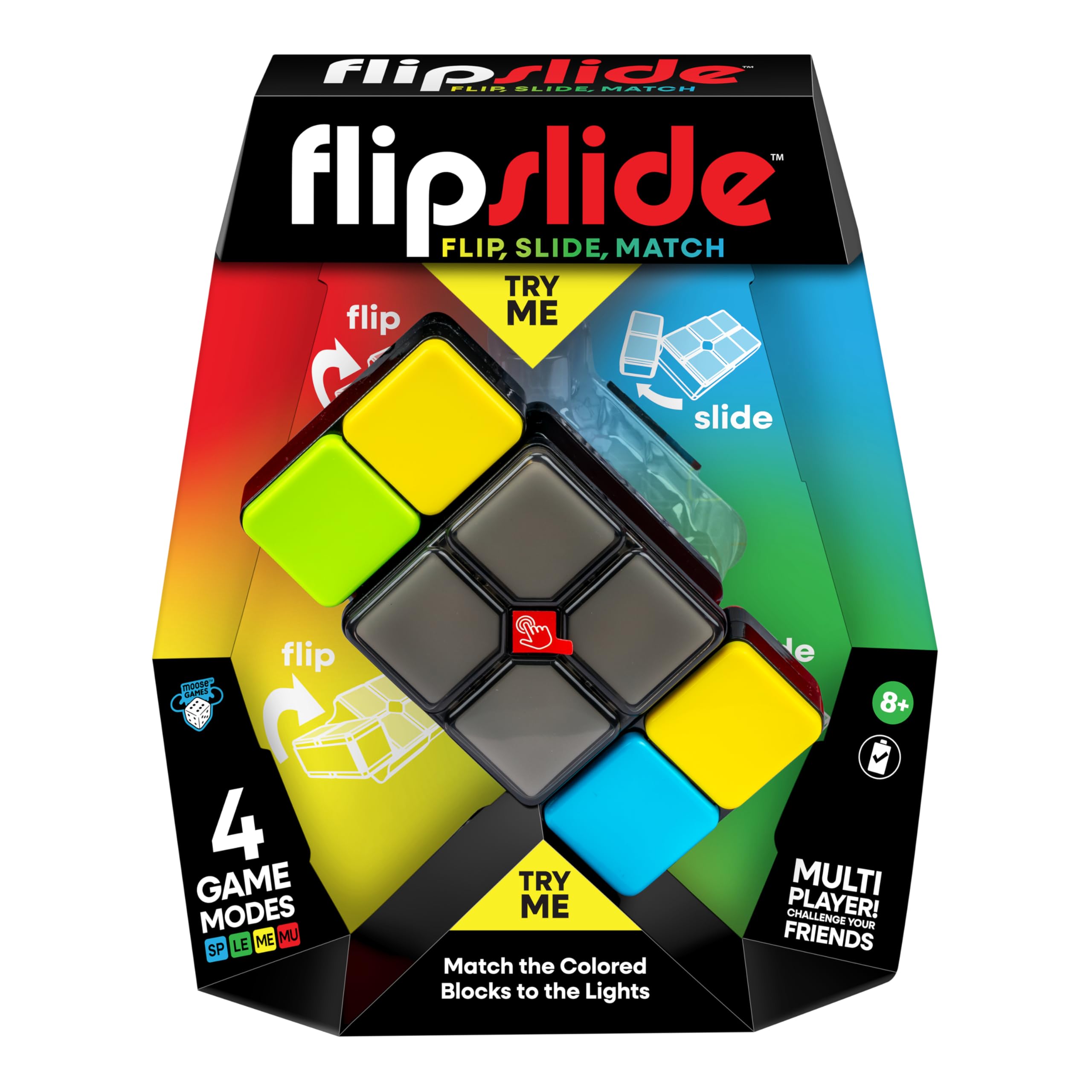
Flipslide Puzzle Game
Key Features
- Age & Interest: Ages 8+, fast-paced play
- Educational Value: Pattern memory, dexterity
- Quality & Durability: Plastic handheld, LED lights
- Replayability: 4 game modes, speed challenges
- Assembly & Instructions: No assembly, instant play
- Price: Budget
Unlike the magnetic fidget puzzle in this guide, Flipslide brings an audible, competitive twist to pattern-matching. Four game modes — speed trials, memory rounds, multiplayer pass-and-play, and levelled challenges — push reaction time without feeling repetitive. The buttons click with a satisfying tactile snap, and the whole device slips easily into a jacket pocket, ready for backseat battles or tournament-style living-room showdowns.
This handheld game suits kids who crave fast feedback, and its fidget-friendly, ADHD-accommodating nature makes it a hit for teens needing an off-screen energy outlet. The trade-off is volume: even the lowest setting remains loud enough to annoy library-goers or classroom neighbors. For car trips, backyard challenges, or households that don’t mind a little noise, it delivers addictive replayability that often outlasts a phone game.
Pros
- Addictive gameplay that hooks kids, teens, and adults alike
- Sturdy build with responsive, satisfying buttons
- ADHD-friendly fidgeting and a great gift for energetic tweens
Cons
- Volume on the lowest setting can still disrupt quiet spaces
- Some units may develop intermittent sound glitches
A peppy, travel-ready game for families that don’t mind noise — useful as a screen-free fidget for active kids, but think twice for a quiet household.
Best for Messy Science Fans
Nat Geo Gross Science
Key Features
- Age & Interest: Ages 8+, slime fans
- Educational Value: Chemistry, gross science
- Quality & Durability: Plastic lab tools, slime
- Replayability: 45 experiments, multiple sessions
- Assembly & Instructions: Instructions, some household items
- Price: Mid-Range
The National Geographic Gross Science Kit packs 45 experiments into one box, from erupting test tubes to fake boogers and dissecting gels. It’s a gloriously disgusting way to get kids excited about chemistry and biology. The included materials cover 15 core experiments, with the rest using household items, making it easy to dive in without extra purchases. Clear instructions guide each step, so parents can supervise without confusion.
This kit is best for kids who relish slime, goo, and yucky humor — and for parents willing to embrace the mess. It also demands a quick inventory check: occasional missing components have been noted, so opening the box early to verify all parts are present avoids disappointment. For homes where mess is strictly controlled, or for gift-givers who can’t inspect before wrapping, this kit may not be the right fit.
Pros
- Engages kids with gross-out experiments that hold attention for hours
- Makes an ideal gift for young scientists who love slime and goo
- Educational design with clear, step-by-step instructions
Cons
- Some kits may arrive missing a few components, requiring an early check
A delightful gross-out science kit that delivers on fun and education — just verify the contents before gifting.
Best for Stem Builders
Smartivity Mechanical Hand
Key Features
- Age & Interest: Ages 8-14, hands-on builders
- Educational Value: Mechanics, robotics basics
- Quality & Durability: Engineered wood, string
- Replayability: Build once, moving fingers
- Assembly & Instructions: Snap-fit, no tools needed
- Price: Mid-Range
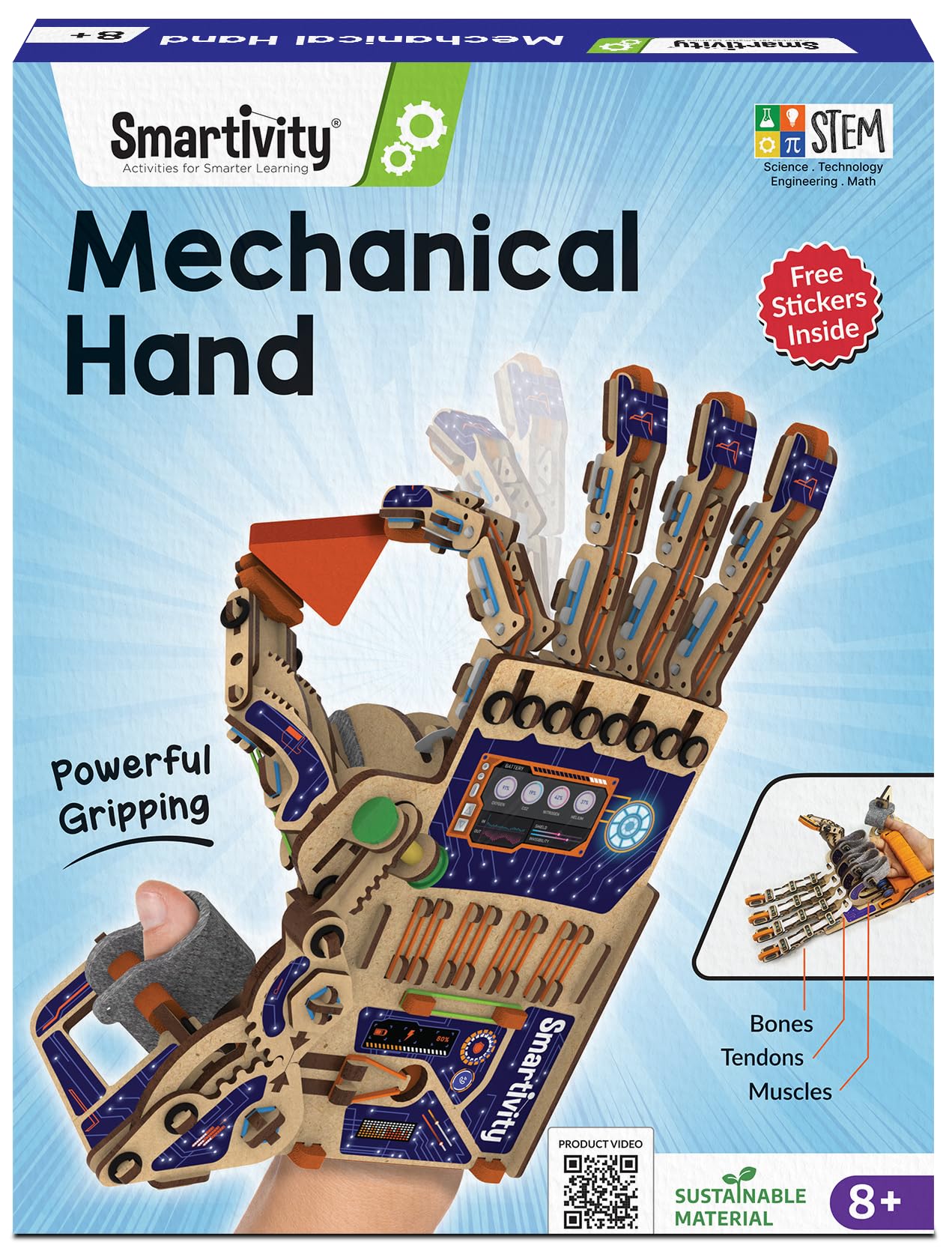
Where a papercraft-LEGO combo requires two materials and more delicate assembly, this all-wood kit uses only snap-fit planks to demonstrate mechanical linkages. Pieces lock together without glue, and pulling the strings curls each finger with a natural motion — a clear, if deliberately fragile, lesson in tension and leverage.
It’s a strong match for a 9-year-old who enjoys methodical construction and wants to understand how things move. The engineered wood, though precise, can crack if force is applied at the wrong angle or if the finished hand is used for rough grabbing. This isn’t for wrestling or energetic outdoor play; it’s a working model suited to a careful builder who will explore finger mechanics slowly.
Pros
- Engaging assembly that demonstrates finger mechanics through a string-and-linkage system
- Fosters problem-solving and patience, making it a rewarding solo project
- Tool-free snap-fit design keeps the focus on construction, not prep work
Cons
- Wooden parts may snap if assembly is rushed or the finished hand is handled roughly
For the careful 9-year-old who prefers building over clicking, this wooden hand kit delivers an absorbing mechanical lesson — but keep it away from rough-and-tumble play.
Best for Quiet Fidgeters
Shashibo Shape Shifting Cube

Key Features
- Age & Interest: Ages 8+, fidget collectors
- Educational Value: Creativity, spatial reasoning
- Quality & Durability: Plastic, 36 magnets, stickers
- Replayability: Transforms into 100+ shapes
- Assembly & Instructions: No assembly, instant play
- Price: Mid-Range
Shashibo’s cube transforms seamlessly between over 100 geometric patterns, providing a quiet, tactile puzzle that works well during travel or classroom breaks. The magnets snap into place with a satisfying feel, and the open-ended design encourages creative fidgeting. However, the sticker decals that give each pattern its vibrant look can peel after limited use, and the plastic construction leads some to feel it’s overpriced for a fidget toy. This cube suits screen-free brain breaks where visual longevity isn’t a priority.
Pros
- Smooth magnetic hinges snap securely, providing a satisfying tactile experience through hundreds of transformations.
- Highly giftable: the surprise of 100+ shapes makes it a hit present for children’s birthdays or holidays.
Cons
- Sticker decals can begin to peel after limited use, reducing the visual vibrancy of the patterns.
- The price may feel steep for a plastic fidget toy, especially when compared to other building or puzzle sets in the same range.
If you need a quiet, portable fidget for car rides or desktops and don’t mind some cosmetic wear over time, the Shashibo cube delivers a unique shape-shifting experience that’s worth grabbing on sale.
Best for Technic Beginners
LEGO Off-Road Buggy

Key Features
- Age & Interest: Ages 8+, beginner builders
- Educational Value: Mechanical functions, Technic
- Quality & Durability: 219 LEGO pieces, push-and-roll
- Replayability: Playable model, moving engine
- Assembly & Instructions: Simple 219-piece build
- Price: Budget
The 219-piece assembly comes together quickly, giving younger builders a clear view of how a piston engine and suspension work without frustration. Once built, the buggy stands up to energetic floor play, with flex steering and a durable frame that handles bumps and rollovers. It’s a smaller-scale set and won’t challenge builders who want a complex, multi-evening project, but that’s by design — this starter kit focuses on accessible mechanics and a rewarding first experience at a budget-friendly price.
Pros
- Easy to assemble, perfect intro to LEGO Technic
- Durable and fun to play with after building
Cons
For a 9-year-old new to Technic, this set offers a manageable build and real suspension action without a big commitment, making it a smart first step before moving to larger models.
Best for Reluctant Readers
Trapped in a Video Game

Key Features
- Age & Interest: Ages 8-10, video game fans
- Educational Value: Reading engagement, adventure
- Quality & Durability: 5 paperback books
- Replayability: 5-book series, re-read value
- Price: Mid-Range
This series delivers rapid-fire action and high-stakes gaming scenarios that keep pages turning — exactly what a screen-focused 9-year-old needs to discover the pull of a good book. The pure text format, however, means it won’t land with kids who depend on illustrations or prefer graphic novels. If your gift recipient already devours manga or heavily visual books, this set will gather dust. For the video-game-obsessed child ready to transition, it’s a frictionless path into independent reading.
Pros
- Captivates video-game-loving kids and reluctant readers with relatable, fast-paced storylines.
- Consistent readability keeps young readers engaged across all five books without frustration.
Cons
- Pure text narrative may not engage children who rely on illustrations or graphic novel formats.
Pick this up only if you’re trying to lure a gaming-obsessed 9-year-old away from the console — and he’s already comfortable with text-based stories.
Best for Magic & Science
Nat Geo Magic Chemistry

Key Features
- Age & Interest: Ages 8+, magic science fans
- Educational Value: Chemistry, magic tricks
- Quality & Durability: Kit with chemicals, wand, gloves
- Replayability: 10 magic experiments
- Assembly & Instructions: Full-color guide, 10 experiments
- Price: Budget
The National Geographic Magic Chemistry Set blends showmanship and science with clear instructions that let kids perform tricks like a real magician. It’s a shorter experience than messier science kits, but the magic theme adds novelty. Some kits may be missing a component, so opening the box early to check is a smart move.
Pros
- Kids love performing the magic tricks while learning basic chemistry.
- Makes a thoughtful gift for children who enjoy both science and performance.
Cons
- Some kits may arrive missing a component, requiring a trip to the cupboard for household items.
Best suited for a low-stakes family afternoon where you can verify the contents beforehand; not ideal if you need a fully self-contained kit with every part guaranteed.
Best for Mechanical Builders
Klutz LEGO Gear Bots
Key Features
- Age & Interest: Ages 8-12, building enthusiasts
- Educational Value: Mechanical engineering, papercraft
- Quality & Durability: 62 LEGO pieces, 10 papercraft
- Replayability: 8 models, rebuild to switch
- Assembly & Instructions: 64-page book, assembly needed
- Price: Mid-Range
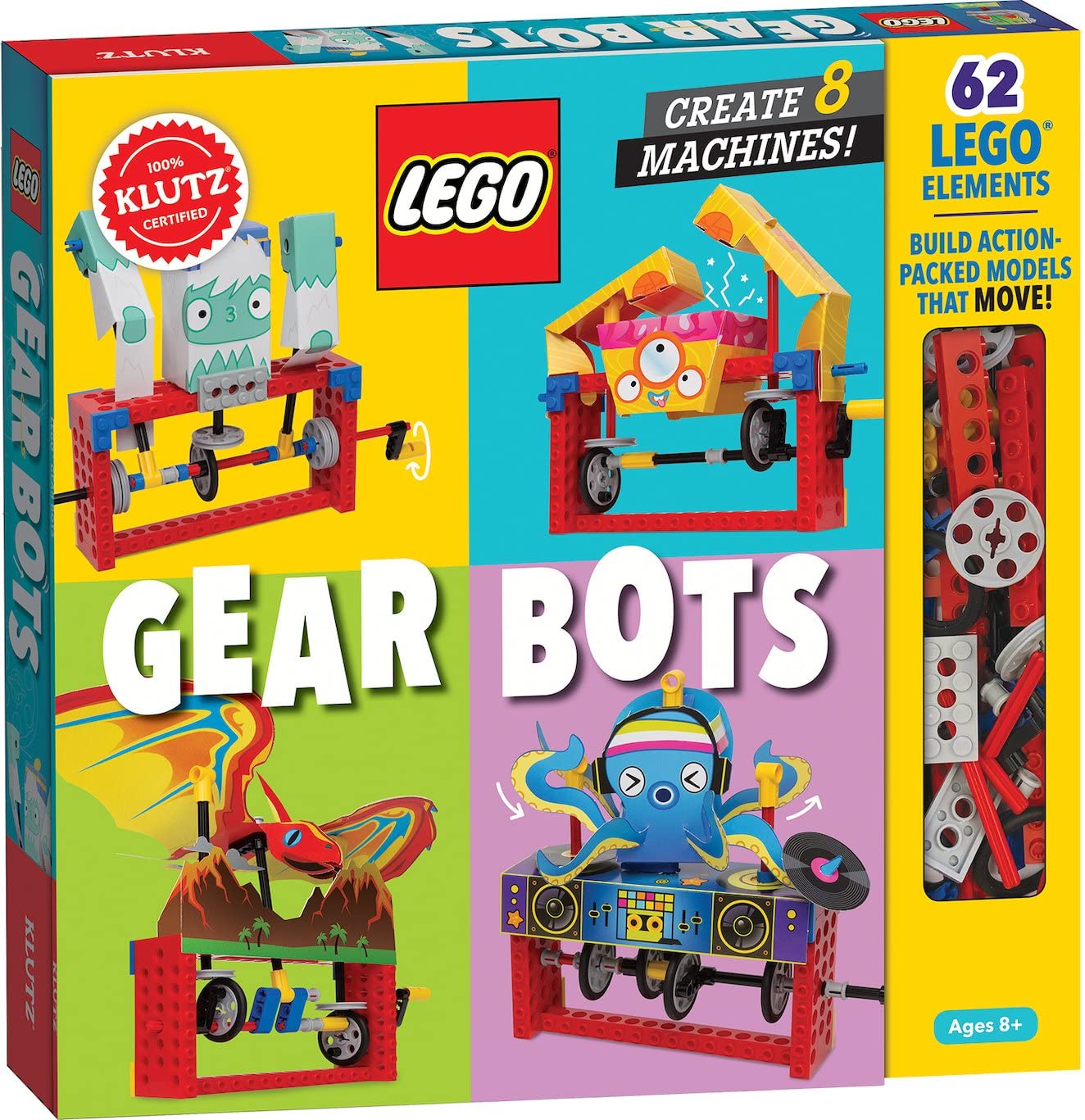
This kit introduces mechanical concepts like gears, cranks, and pistons through eight whimsical kinetic creatures. Combining 62 LEGO elements with papercraft sheets, it offers hands-on learning that feels more like play than a lesson. Papercraft parts are more delicate than all-LEGO builds, and only one model can be constructed at a time—switching creatures means disassembly. This suits kids who enjoy the process of rebuilding and experimenting, rather than those who expect a sturdy, permanent display piece.
Pros
- Introduces basic mechanics (gears, pistons, cranks) through hands-on building.
- Makes an engaging gift for 9-year-olds who love constructing and tinkering.
Cons
- Papercraft components can feel flimsy and may not hold up to repeated handling.
- Only one model can be built at a time; parts must be disassembled to switch creatures.
For a builder who values the iterative process over a permanent display model, this kit provides a creative STEM introduction—just keep expectations in check regarding papercraft durability.
How to Choose
The most reliable gifts for a 9-year-old boy are those built to survive curiosity and rough handling while offering clear progressive challenges or endless re-readability.
Match Age and Interest
A 9-year-old’s interests can shift rapidly, so the best gift aligns with what he’s currently obsessed with — whether that’s building cars, conducting gross experiments, or devouring facts. But age-appropriate isn’t just about the number on the box.
Check whether the challenges are open-ended enough to grow with him; a puzzle set with beginner-to-expert cards prevents boredom, while a book with short, fascinating entries suits both deep focus and casual browsing.
Educational Value Without Feeling Like Homework
Toys that teach STEM or reading skills succeed when they don’t feel like school. A gravity maze sneaks in physics and logic through trial-and-error play; a mechanical hand kit makes robotics tangible. Steer clear of kits that only have one path to a result — multiple experiments or variable builds reward curiosity and persistence.
Look for gifts that ask ‘what happens if?’ rather than demanding a correct answer. The best STEM gifts give kids permission to fail and try again without frustration.
Build Quality That Survives Active Play
Gifts destined for a backpack, bedroom floor, or travel bag need sturdiness. LEGO bricks and hardcover books hold up better than papercraft models or electronic gadgets with fragile circuitry. For science kits, check that vials seal tightly and that included tools are robust rather than flimsy plastic.
A gift that cracks or loses pieces on day two kills the excitement instantly; opt for materials that match the child’s typical handling style — gentle builders may love a wooden mechanical hand, but a rougher player needs chunkier, forgiving pieces.
Replayability: Why It Matters
A gift that’s forgotten by week two is a missed opportunity. Replayability lives in variety: 60 challenge cards mean a marble maze never gets old; five books in a series keep a reader hooked; a LEGO set can be rebuilt, customized, or combined with other bricks. Avoid one-trick toys like single-reaction chemistry demos or puzzles with only one solution.
Ask yourself if the gift can evolve with the child’s growing skills. Products that adapt — by adding speed rounds, creative free play, or expanding content — deliver the best long-term value.
Setup and Instructions That Prevent Frustration
A frustrating setup can sour the whole gift before the fun starts. Kits with clear, illustrated, step-by-step instructions are essential, especially for science experiments where missing a step can ruin a reaction. Before wrapping a science kit, check the contents against the list to avoid disappointment on the day.
For travel-friendly gifts, zero-setup options like handheld puzzles or books shine, since they can entertain in a car, plane, or restaurant without a single piece to lose.
FAQ
Is the Flipslide puzzle game too loud for a classroom?
Yes, Flipslide’s volume is notably loud even on its lowest setting, which can be disruptive in quiet environments like classrooms or libraries. For classroom use, consider a silent fidget tool like the Shashibo cube or solo puzzle books. If you still want the Flipslide, it’s best saved for home or outdoor play.
Why do some National Geographic science kits have missing pieces?
Quality control inconsistencies occasionally result in a missing chemical or tool. Before gifting, open the box and cross-check the contents against the instruction sheet’s list. If something is absent, many retailers offer replacement components or a full exchange. The Gross Science Kit and Magic Chemistry Set are particularly prone, so early inspection is smart.
What is the best LEGO Technic set for a 9-year-old beginner?
The LEGO Technic Off-Road Race Buggy (219 pieces) is an ideal entry point — it has real suspension and a moving engine without an overwhelming piece count. Once a child masters that, the Bugatti Bolide offers a next-level challenge. Avoid starting with a large, complex set like the Lamborghini, which may frustrate a first-timer.
Does the Shashibo cube hold up to rough play?
Moderately. The cube’s magnetic hinges handle many transformations, but the decorative stickers can peel after a few weeks of active use, and the plastic body may feel less premium than the price suggests. It’s better suited for quiet fidgeting during travel or desk play rather than hard throwing or stomping.