
This post contains affiliate links. We may earn a small commission when you buy through our links — at no extra cost to you.
Finding a gift for a 1-year-old boy feels like a minefield of glowing reviews and disappointing arrivals. A ride-on bike that barely fits past the 18-month mark. An electronic book that chews through batteries in a week. A toy with parts too small for a baby who still mouths everything. These aren’t rare flukes—they’re the hidden patterns in this category.
This guide filters out the products that stumble on the basics. Every pick earns its place by proving its size claims hold up, its build quality lasts through daily chewing and tossing, and its engagement doesn’t fade after the first few button presses. You’ll find toys that genuinely match a one-year-old’s abilities and attention span—without leaving you to troubleshoot dead electronics or hunt for lost pieces.



Best for Early Vocabulary
LeapFrog 100 Words Book
Key Features
- Age-Appropriate Size: 18+ months, no small parts
- Educational Value: Bilingual vocabulary
- Durability & Safety: Tear-resistant pages
- Play Longevity: Engaging for toddler years
- Noise Level: Modest volume, may be quiet
- Price: $
The LeapFrog 100 Words Book turns each page into a bilingual activity center — touch any picture and the book says the word in English, then Spanish. The 100+ words cover animals, food, colors, and everyday objects, with fun facts and sound effects that hold a toddler’s attention far longer than a typical board book. The pages are coated and sewn to resist tearing, which matters when a one-year-old’s curiosity outpaces fine motor control. In daily life, the volume works well during quiet one-on-one reading but can fade into background noise in a busy playroom. Battery life under heavy use may drop to a couple of weeks, so having a rechargeable set ready avoids interruptions.
This book fits families raising bilingual children, parents who want interactive language learning without a screen, and anyone picking a first birthday gift that children will actually keep using. It’s not for those who need a silent toy, or households without easy access to replacement batteries. The modest sound level in noisy settings means a quiet reading nook is where this book shines.
Pros
- Touch-activated words build early vocabulary in two languages
- Tear-resistant pages survive rough toddler handling
- Bilingual English/Spanish mode supports dual-language households
Cons
- Volume may be too low for use in loud playrooms
- Batteries can run out in weeks with daily use, requiring replacements
For a budget-friendly bilingual learning tool that survives toddler enthusiasm, keep a pack of rechargeable AAs handy — the language benefits easily outweigh the occasional battery swap.
Best for First Steps
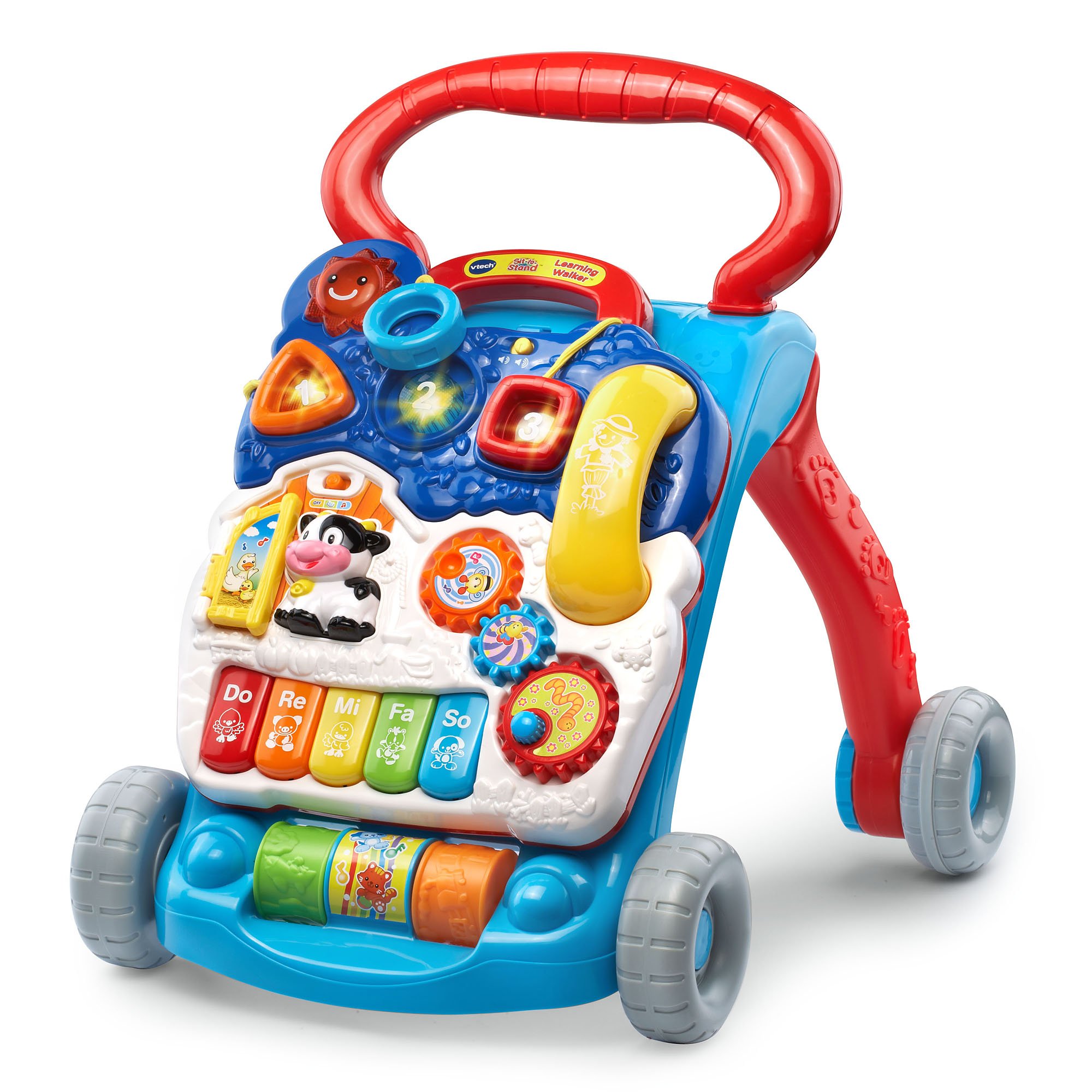
VTech Sit-to-Stand Walker
Key Features
- Age-Appropriate Size: 9+ months, no removable parts
- Educational Value: Shapes & colors
- Durability & Safety: Sturdy, phone detaches easily
- Play Longevity: 9-36+ months
- Noise Level: Loud, no volume control
- Price: $$
Unlike single-skill toys that drill one action, this VTech walker spans sitting and cruising stages. The removable activity center packs five piano keys, a ring-and-rattle phone, and shape sorters that build finger dexterity while keeping a baby occupied in place.
It’s a strong pick for a 1-year-old boy just starting to pull up and move. The walker provides a stable base and encourages cruising without tipping easily. The songs and sound effects loop without a volume control, which can grate in shared living spaces—a fair trade-off given the panel’s long entertainment window.
Pros
- Keeps babies engaged with lights, songs, and sorting tasks, building fine motor skills.
- Sturdy enough to support new walkers during cruising and early steps.
- Quick, toolless assembly gets the gift ready straight out of the box.
Cons
- The phone handset can detach easily and get lost during play.
- Repetitive songs and phrases may become tiresome for parents in the room.
A practical gift for a 1-year-old boy who’s starting to stand—just be ready for a loop of melodies. The activity panel alone still earns its keep if the sounds wear thin.
Best for Imaginative Play
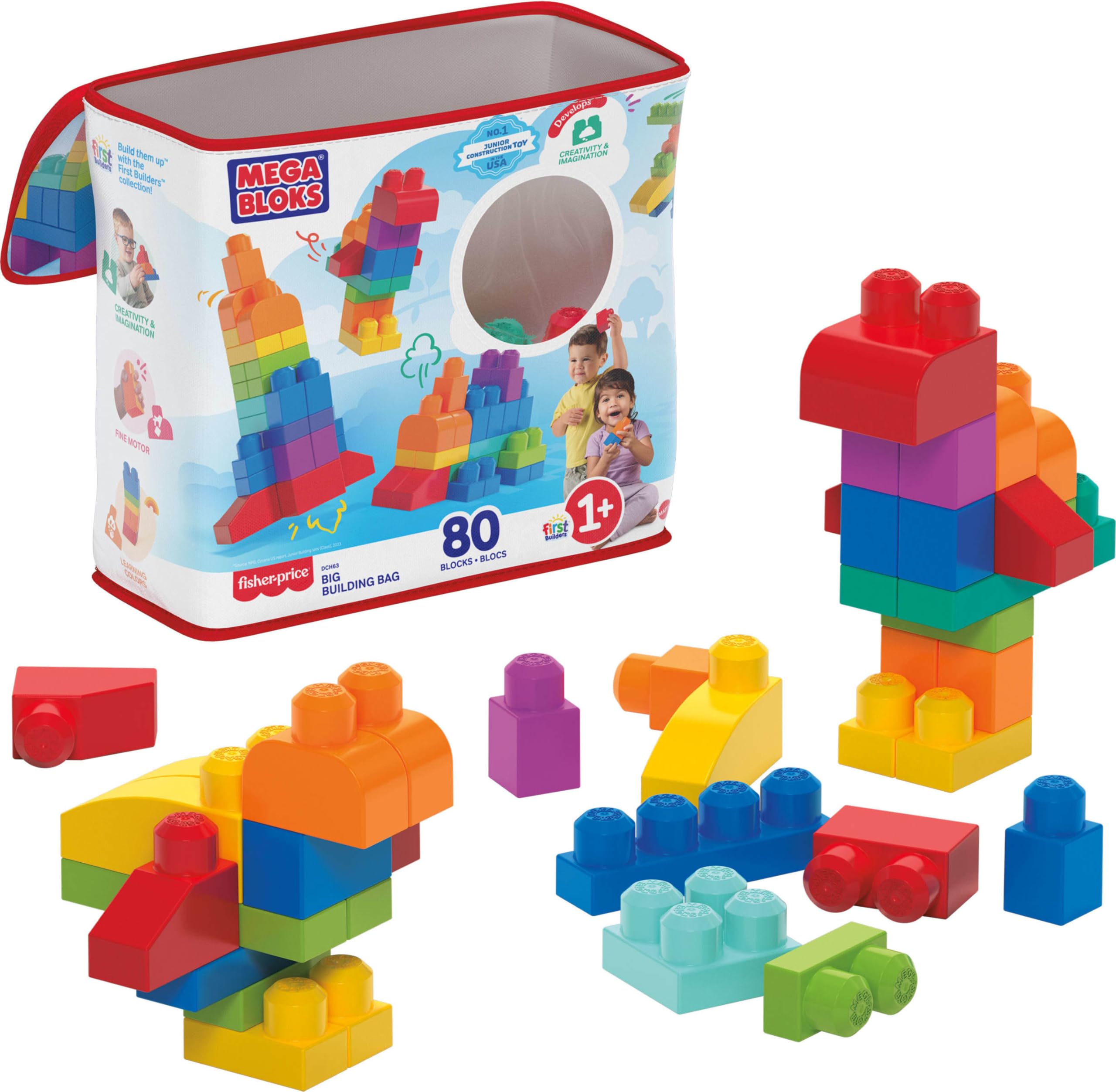
Mega Bloks First Builders
Key Features
- Age-Appropriate Size: Large blocks, no choking risk
- Educational Value: Creativity & motor
- Durability & Safety: Durable, connections loose
- Play Longevity: Open-ended for years
- Noise Level: Silent
- Price: $
With 80 oversized blocks and a reusable storage bag, this set gives toddlers everything they need for screen-free building. The chunky pieces are easy for small hands to grip and stack, and there’s no choking hazard.
The friction connections are intentionally gentle, which can frustrate builders attempting multi-story towers — plastic may slip apart under its own weight. That trade-off delivers a frustration-free experience for the youngest stackers who are still learning to place blocks and delight in knocking things down. It’s a solid first building set for parents prioritizing safe, screen-free fun over structural complexity.
Pros
- Designed as a first building set that toddlers can grip and stack independently
- Oversized blocks eliminate choking risk and are easy for small hands to handle
- Open-ended play sustains long sessions without screens or batteries
Cons
- Friction connections can feel loose, causing taller towers to topple during play
For young stackers who find joy in the building process more than the final structure, this set is a budget-friendly classic — loose connections keep the play gentle and rebuild-friendly.
Best for First Balancing
SEREED Baby Balance Bike
Key Features
- Age-Appropriate Size: 12-24 months, no small parts
- Educational Value: Balance & coordination
- Durability & Safety: Aluminum alloy frame
- Play Longevity: 12-24 month fit
- Noise Level: Silent
- Price: $
The SEREED Baby Balance Bike stands apart for its tool-free assembly and featherlight aluminum frame, making it one of the easiest first ride-ons to set up. Designed for 12–24 month olds who are average or below in size, it offers a stable four-wheel base that keeps new walkers confident. However, the compact dimensions mean toddlers above the 50th percentile for height will likely outgrow it well before the 24-month mark — this is a starter bike for smaller frames, not a long-term fit.
Pros
- Assembles in seconds with no tools required
- Sturdy four-wheel design gives new walkers a stable base
Cons
- For toddlers above the 50th percentile in height, the bike may be outgrown before 24 months
A solid first balance bike for smaller 1-year-olds who need a lightweight, easy-to-assemble ride-on, but it’s not a long-term investment for taller toddlers.
Best for Language Repetition
Ms. Rachel Speak & Sing Doll
Key Features
- Age-Appropriate Size: 6+ months, no small parts
- Educational Value: Language repetition
- Durability & Safety: Soft plush, durable stitching
- Play Longevity: Language companion for years
- Noise Level: Preset volume
- Price: $
This 16-inch plush doll looks just like the beloved Ms. Rachel character and delivers four songs plus 16+ catchy phrases, all in her recognizable voice. Instead of a screen, toddlers get a soft, huggable toy that invites them to mimic words and gestures during floor play. The squeeze points are intentionally firm to prevent accidental noise; for a young 1-year-old, that means an adult may need to press them first. It’s a natural gift for a Ms. Rachel fan’s first birthday, especially when parents want a low-tech companion for early language practice.
Pros
- Soft, high-quality plush that closely resembles the Ms. Rachel character
- Entertaining songs and phrases keep toddlers engaged and encourage imitation
- 16-inch size is easy for small hands to carry and cuddle
Cons
- Press activation can be too stiff for young fingers, often requiring adult help
A cozy, recognizable friend that turns screen-time memories into real-world cuddles—best for little ones who already light up at Ms. Rachel’s voice.
Best for Counting & Colors
VTech Chomp and Count Dino
Key Features
- Age-Appropriate Size: 12+ months, food disks large
- Educational Value: Counting & colors
- Durability & Safety: Durable, feeding pieces precise
- Play Longevity: 1-3 years
- Noise Level: Moderate sounds
- Price: $
Unlike multi-mode activity centers that spread functions across panels, this dinosaur concentrates on one playful mechanic: feeding food disks to trigger counting, color names, and over 130 songs. The repetition and bright dino character keep toddlers returning, making it a strong pick for dinosaur fans who enjoy cause-and-effect play. The feeding action demands precise pushing — younger 1-year-olds still developing fine motor skills may need adult help inserting the disks. Parents seeking a walker or all-in-one activity station will find more utility in the convertible activity center, but for focused early number and color exposure, this budget-friendly toy delivers.
Pros
- Teaches counting and colors effectively through interactive feeding play.
- Dinosaur character and sound responses captivate toddlers during floor play.
- A crowd-pleaser gift for 1-year-old dinosaur enthusiasts, with immediate play appeal.
Cons
- Inserting food disks requires fine motor precision; younger toddlers can struggle.
A charming learning dinosaur for toddlers who love feeding games and are ready to practice their pincer grip — steer toward the activity center if your little one needs walker support or gets frustrated by precise insertions.
Best for Multi-Sensory Play
Radio Flyer Busy Buggy
Key Features
- Age-Appropriate Size: 1-3 years, anti-tip design
- Educational Value: Sensory & fine motor
- Durability & Safety: Sturdy construction
- Play Longevity: 1-3 years ride-on
- Noise Level: No electronic noise
- Price: $$
Unlike screen-free learning toys that build vocabulary, the Busy Buggy gets a newly mobile 1-year-old moving — and busy fingers exploring. Its anti-tip base supports first steps, and the seat flips open to reveal storage for on-the-go treasures. Seventeen built-in activities — including a horn, spinning gears, and bead maze — keep little hands occupied without screen time or batteries.
The buggy is best for beginner walkers who prefer sensory play over electronic sounds. The tradeoff: the steering wheel looks engaging but does not control direction — the buggy moves straight ahead only, so it’s not for kids who want to steer around corners.
Pros
- Sturdy anti-tip design provides stable support for unsteady first steps.
- 17 built-in activities keep hands busy without screens or batteries.
- Converts from walker to ride-on, extending play value as the child grows.
Cons
- Steering wheel is cosmetic only; the buggy moves straight ahead regardless of wheel position.
A durable, battery-free push walker and ride-on that rewards curious new walkers — as long as you’re not expecting a steerable vehicle.
Best for Sensory Exploration
beiens Crinkle Cloth Book

Key Features
- Age-Appropriate Size: 0-18 months, soft pages
- Educational Value: Sensory exploration
- Durability & Safety: Washable, BPA-free
- Play Longevity: 0-18 months
- Noise Level: Crinkle only, quiet
- Price: $
Crinkle pages, a squeaker, and textured tails make this cloth book a favorite for stroller and tummy time. The high-contrast artwork holds a baby’s gaze. Yet at this price for one book, value-conscious shoppers may prefer multi-packs. It fits best as a grab-and-go gift when a single, machine-washable sensory toy trumps bulk.
Pros
- Cute, colorful design with engaging textures
- Crinkle and squeaker sounds captivate babies
Cons
- The single-book price may feel steep next to multi-book cloth sets
Best for gift buyers who want a portable, no-battery sensory book for a 1-year-old boy’s diaper bag or car seat; those seeking more pages per dollar should look at multi-book sets.
Best for Push & Go
iPlay iLearn Press to Go Cars

Key Features
- Age-Appropriate Size: 6+ months, animal vehicles
- Educational Value: Cause & effect
- Durability & Safety: Withstands rough play
- Play Longevity: 6+ months
- Noise Level: Silent
- Price: $
Four adorable animal cars require no batteries—just press down on the head and they zip across the floor. The simple action engages toddlers, but the press-and-go mechanism can falter after limited use on some units, making this a cheerful short-term treat rather than a long-haul staple.
Pros
- Fun and easy for toddlers to operate
- Adorable animal characters with a cute design
Cons
- Press-and-go mechanism may lose propulsion after limited use on some cars
Car-loving toddlers will adore the animal theme and instant push-and-go action, making these a delightful first-birthday surprise—just don’t expect every car to keep zooming indefinitely.
Best for Light-Up Ride
Gamfeiny Lighting Balance Bike

Key Features
- Age-Appropriate Size: 10-36 months, light-up wheels
- Educational Value: Balance & lights
- Durability & Safety: Carbon steel frame
- Play Longevity: 10-36 months
- Noise Level: Silent
- Price: $
Colorful illuminated wheels and tool-free assembly make this balance bike a dazzling first ride. The low seat gives beginners stability, but the compact frame is quickly outgrown by taller toddlers, and sharp turns can cause tipping. It suits smaller kids drawn to the light-up wheels.
Pros
- Snaps together in minutes with zero tools
- Colorful light-up wheels fascinate young riders
Cons
- Compact size may be outgrown quickly; sharp turns can cause tipping
A sparkly first bike for the smallest riders who will delight in the lights, though it has a short window of use before a bigger model is needed.
How to Choose
The most consistent pitfall is a toy that photographs large but arrives undersized or includes parts too small for a baby who still mouth-explores.
Age-Appropriate Size (No Small Parts)
A one-year-old still learns through mouthing, so any gift must have zero swallowable pieces. Look for parts that are at least 1.25 inches across—too wide to fit through a toilet paper tube. Toys labeled for 18+ months are safer bets, but always verify by checking customer photos for scale, not just the age on the box.
For ride-ons, measure the seat height and wheelbase against your child’s height percentile. A bike that says 12–24 months can still be too short for a tall 18-month-old, making them hunch over and lose interest within weeks.
Educational and Developmental Value
At this age, learning happens through repetition and cause-and-effect. Interactive books and shape sorters that reward a press or a flip with a clear sound hold attention better than passive light-up plushies. Bilingual toys in particular give early exposure without extra effort from parents, but prioritize the language your household actually uses.
The underlying mechanism: a toddler’s brain craves feedback loops. A toy that says “blue” or “three” in response to a specific action—like feeding a dinosaur a colored disk—builds connections faster than a toy that randomly sings songs. Skip any toy where the cause and its effect are confusingly delayed or mismatched.
Durability and Material Safety
A one-year-old will chew, throw, and body-slam every toy. Look for thick plastic with smooth welds, securely sewn fabric, and non-toxic water-based paints. In the block category, larger ABS plastic blocks tolerate drops better than thin wooden ramps with splinter-prone edges.
The hidden trade-off: softer plastics can develop bite marks that become sharp edges, while hard plastics resist teeth but may shatter if thrown on tile. Check reviews for mentions of cracking after a few drops—those failures often show up in the first two weeks of use.
Engagement and Play Longevity
A toy that bores a child after three minutes is a gift that collects dust. Seek out toys that have multiple stages of play—like a walker that converts to a sitting activity panel—or open-ended toys that grow with imagination, such as blocks that evolve from stacking to building houses.
The hidden mechanism: novelty wears off when a toy has a single button that plays the same five-second loop. Products that combine physical movement (pushing, pulling, tossing) with changing audio or visual feedback maintain engagement because they tap into gross and fine motor rewards simultaneously.
Noise Level (Parent Tolerance)
A musical walker that keeps your baby dancing is wonderful—until day three when the same two songs loop in your head at 7 a.m. Check whether the toy has a volume dial, a mute switch, or at least a low-battery audio profile that naturally softens. Many electronic VTech items, for instance, ship at max volume with no way to turn them down.
If you live in an apartment or plan to use the toy during travel, prioritize passive noise makers (crinkle books, push-along cars) or electronic toys with documented volume control. A silent push wagon with gears and spinning cylinders can engage a toddler for just as long without the parental earworm.
FAQ
Why does my LeapFrog 100 Words Book drain batteries so fast?
The included demo batteries are often weak and drain within days of heavy use. Swap in fresh high-quality AA batteries and avoid leaving the book on overnight. Even with good cells, expect to replace them every 3–4 weeks if a toddler uses it daily at high volume—so stock up if this becomes a favorite.
Does the Radio Flyer Busy Buggy steering wheel actually turn the wheels?
No, the steering wheel is purely cosmetic; the buggy moves only straight ahead or in a gentle arc when pushed. If a working steering mechanism matters, look for a push car with a functional linkage—this one is best for straight-line cruising along hallways and flat surfaces.
Are the cars on wooden race track toys safe for a 1-year-old?
No. Despite being sold for 12+ months, the mini cars on tracks like the TOP BRIGHT wooden ramps are often small enough to become choking hazards. Multiple parents report scares. Choose large vehicle sets like the iPlay press cars—those animal cars pass the toilet-paper-tube test and don’t require batteries.
How can I reduce the noise level of the VTech Sit-to-Stand Learning Walker?
Place a piece of clear packing tape over the speaker grille to muffle the sound by about 30%. Some parents also remove the batteries and let the walker function as a silent push toy. If you want a musical walker with volume control, consider the LeapFrog book as a quieter alternative for sit-down play.