
This post contains affiliate links. We may earn a small commission when you buy through our links — at no extra cost to you.
Many parents know the drill: you buy a flashy electronic toy, and within a week it’s the soundtrack to dinner while your toddler has moved on to the box it came in. Electronic playthings frequently promise early learning but deliver ear-splitting repetition with no volume escape. Meanwhile, open-ended toys like chunky blocks or a soft first doll tend to outlast the batteries—and the tantrums.
That doesn’t mean you need to avoid all interactive toys. The real win is finding the rare one that balances engagement with household peace, and fits your family’s on-the-go rhythm. Whether the gift needs to slip into a carry-on or survive a restaurant high chair, the best picks for a 1-year-old girl are the ones she’ll still use when the wrapping paper is long gone.


Best for Open-Ended Building
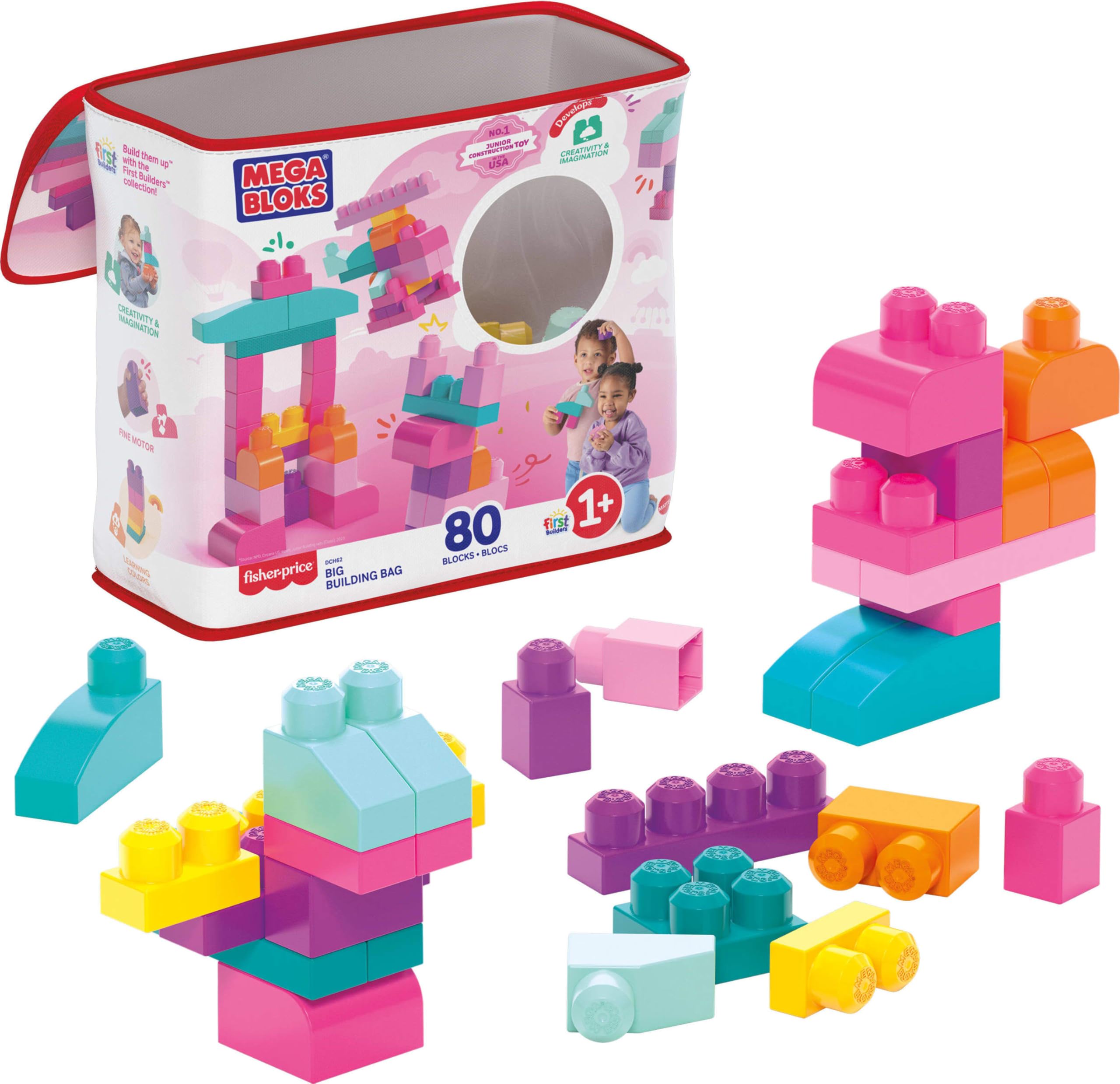
MEGA BLOKS First Builders
Key Features
- Manufacturer Minimum Age: 12+ months
- Material Safety: BPA-free plastic, large blocks
- Educational Value: Fine motor, colors, creativity
- Ease of Use & Storage: Storage bag, lightweight
- Price: Budget
The blocks are sized for little hands to grip, stack, and pull apart with minimal effort — a design choice that makes them frustration-free for 12-month-olds. Bright colors and durable plastic encourage open-ended stacking, sorting, and early imaginative play without flashing lights or noisy electronics. The included storage bag makes cleanup a simple toss-and-zip affair, so the set stays portable between playroom and travel.
This set suits families seeking a quiet, battery-free toy that grows with the child from simple stacking to pretend castles. The loose fit that eases separation for tiny fingers means taller towers may tip over sooner than expected, which can briefly frustrate a toddler — a tradeoff worth accepting for a first building experience. If your child is actively learning to walk, the VTech walker in this lineup adds targeted walking support; if open-ended creative play and minimal noise are the priority, this is the gift.
Pros
- Chunky size designed for easy grip, stack, and pull-apart for 12-month-olds.
- Bright colors and sturdy plastic encourage open-ended play without screens or sounds.
- Includes a reusable storage bag for quick cleanup and portability.
Cons
An affordable, battery-free introduction to creative construction — quiet, portable, and built to last through toddlerhood.
Best for Cruising Support
VTech Sit-to-Stand Walker
Key Features
- Manufacturer Minimum Age: 9 months–3 years
- Material Safety: BPA-free plastic
- Educational Value: Walking, numbers, music
- Ease of Use & Storage: Detachable activity panel
- Price: Premium
Unlike building blocks, this walker supports a baby who is pulling up and starting to walk, while the detachable panel keeps her engaged during seated play with piano keys, a phone, and shape sorters. The sound effects and music can become loud and repetitive, and the phone piece may detach and get lost — parents who prefer quiet play may find the volume control limited.
This walker suits families whose 12-month-old is actively cruising and wants a stable push toy that also offers independent activity time off the walker. It is not the right choice if floor space is tight or if the child already walks confidently and no longer needs support.
Pros
- Stable push design with two speed settings adjusts as walking confidence grows.
- Detachable activity panel includes piano keys, phone, and shape sorters for seated play.
Cons
- Music and sound effects can become loud and repetitive, and the phone piece may detach and risk loss.
If your 1-year-old girl is pulling up and eager to walk, this walker delivers developmental value and extended use through the detachable activity panel — just be prepared for the noise level.
Best for Pretend & Learn
LeapFrog Shapes Picnic Basket
Key Features
- Manufacturer Minimum Age: 6 months–4 years
- Material Safety: BPA-free plastic
- Educational Value: Shapes, colors, sharing
- Ease of Use & Storage: Pieces store inside basket
- Price: Mid-Range
Unlike alphabet wheels or ABC toys, this picnic basket invites a 1-year-old into pretend tea parties with shape-sorting food that triggers polite phrases like ‘please’ and ‘thank you.’ The interactive sorting teaches shapes and colors, and the 15 pieces—plates, cups, tablecloth—pack neatly inside the basket. The lid can be tricky for tiny hands to prop open, so an adult may need to hold it during play.
The set suits a 12-month-old girl who loves dolls and tea-time play. Lights, songs, and a cheerful voice add festive flair for a Christmas morning gift.
Pros
- Interactive sorting teaches shapes, colors, and polite phrases like ‘please’ and ‘thank you.’
- Cute, gift-ready design with pieces that store inside the basket for easy cleanup.
- Lights and cheerful songs make it an engaging Christmas morning surprise.
Cons
- The lid design may frustrate toddlers trying to open it themselves; adult help is often needed.
For a 1-year-old girl’s Christmas gift, this basket delivers pretend play, shape learning, and music in a tidy, portable set that cleans up fast.
Best for Balance Bike
SEREED Baby Balance Bike
Key Features
- Manufacturer Minimum Age: 12–24 months
- Material Safety: Aluminum, BPA-free plastic
- Educational Value: Balance, coordination
- Ease of Use & Storage: Tool-free assembly, light
- Price: Mid-Range
Four widely spaced wheels and a restricted turning radius keep this bike upright during early balancing attempts. Unlike light-up wheel ride-ons, this design trades adjustable growth for immediate stability at slow speeds. It’s sized for a 1-year-old who is just beginning to scoot on smooth floors or gentle sidewalks; the fixed seat height means the bike will be outgrown once a child is walking confidently, typically before age two. For parents who prioritize a safe, no-fuss introduction to riding over long-term use, that short lifespan is an acceptable trade-off.
Pros
- Four-wheel base resists tipping, giving new riders confidence as they learn to balance.
- No-tool assembly takes minutes, and the 3.6-lb frame is light enough for a toddler to push independently.
- 135° steering limit prevents sharp turns that could cause sudden falls.
Cons
- Fixed seat height means the bike is outgrown quickly once a child is steady on their feet.
- On hard floors, a toddler may slide forward off the seat, so supervision is needed.
A short-term ride-on that gives wobbly new walkers a safe, stable scooting experience — just plan to pass it along within a few months.
Best for Ms. Rachel Fans
Ms. Rachel Speak & Sing Doll
Key Features
- Manufacturer Minimum Age: 12+ months
- Material Safety: Polyester plush, no small parts
- Educational Value: Speech, songs, phrases
- Ease of Use & Storage: Lightweight, carryable
- Price: Budget
The Ms. Rachel Speak & Sing Doll brings the familiar voice of Ms. Rachel directly into a toddler’s hands, setting it apart from simpler lovey dolls. The 16-inch plush speaks over 16 phrases and sings four songs that children who watch her videos immediately recognize.
This doll is best for families whose 1-year-old girl already enjoys Ms. Rachel’s content — the soft, lightweight body is easy to carry, and the encouraging speech can support early language development. The activation buttons require a firmer press than some 12-month-olds can manage, and the maximum volume may be quiet in a noisy room. It’s a budget-friendly option for fans of the brand.
Pros
- Delivers Ms. Rachel’s actual voice and songs, instantly engaging toddlers who love her videos.
- Soft, lightweight 16-inch design that’s easy for a 1-year-old to hug and carry.
Cons
- Activation buttons require a firmer press than some 12-month-olds can manage.
- Maximum volume is lower than some parents prefer, potentially lost in noisy rooms.
If your 1-year-old girl is already a Ms. Rachel fan, this doll brings her voice into playtime — just be prepared to help with the buttons at first.
Best for Pretend Tea
VTech Pretty Party Playset
Key Features
- Manufacturer Minimum Age: 6 months–3 years
- Material Safety: BPA-free plastic
- Educational Value: Shapes, colors, sharing
- Ease of Use & Storage: All-in-one set, compact
- Price: Mid-Range
The VTech Pretty Party Playset pours pretend tea and plays over 70 songs while the light-up pitcher and shape-sorting treats engage a 1-year-old in shared play. Best for families who want a battery-powered tea set that encourages turn-taking and fine motor sorting — ideal for a child who already enjoys cups and food toys. Songs repeat and the volume may not drop low enough for noise-sensitive households, but this is typical of the electronic toy category.
Pros
- Adorable tea set with shape-sorting treats that teach colors and sharing during pretend play.
- Sturdy construction with food pieces that fit into matching spots, promoting fine motor skills.
Cons
- Songs and melodies can become repetitive during extended play, and the volume may not go low enough for quiet spaces.
A capable tea set that makes sharing and sorting fun — best for families who don’t mind battery-powered play.
Best for Role-Play Purse
Fisher-Price My Smart Purse

Key Features
- Manufacturer Minimum Age: 6–36 months
- Material Safety: Plastic, fabric
- Educational Value: Counting, opposites, Spanish
- Ease of Use & Storage: Carry handle, stores accessories
- Price: Mid-Range
This smart purse teaches counting, opposites, and Spanish with lights and songs, and the included accessories fuel pretend play. The electronic base makes it noticeably heavy, which can be cumbersome for younger or unsteady toddlers; a few plastic pieces can show wear over time. It’s best for older 1-year-olds who walk confidently and love carrying a bag like a grown-up.
Pros
- Cute role-play purse that teaches counting, opposites, and Spanish through lights and songs.
- High entertainment value; toddlers love carrying it around and mimicking adults.
Cons
- The electronic base adds weight that can make the purse cumbersome for younger or unsteady toddlers.
A role-play toy that rewards older toddlers who can handle the weight and enjoy mimicking daily routines.
Best for First Cuddly Doll
Baby Starters Snuggle Buddy

Key Features
- Manufacturer Minimum Age: Newborn–toddler
- Material Safety: Polyester, machine washable
- Ease of Use & Storage: Machine washable
- Price: Budget
Exceptionally soft and with a gentle rattle, this plush doll is machine washable — a practical first comfort object for a 1-year-old. At 11 inches, it’s smaller than some anticipate, not a large cuddle companion, and lacks interactive features. It fits best as a washable lovey for naps and car rides.
Pros
- Exceptionally soft fabric and multiple textures offer sensory engagement for a first doll.
- Machine washable and durably stitched with a built-in rattle for gentle sound.
Cons
- 11-inch height may feel undersized for toddlers expecting a larger cuddle doll; better matched to a 12-month-old grip.
A practical, supremely soft first doll for a 1-year-old who needs a machine-washable comfort object — less suited if you want a bigger, more interactive toy.
Best for Light-Up Bike
Gamfeiny Light-Up Balance Bike

Key Features
- Manufacturer Minimum Age: 10–36 months
- Material Safety: Carbon steel, BPA-free plastic
- Educational Value: Balance, coordination
- Ease of Use & Storage: Tool-free assembly
- Price: Mid-Range
The light-up wheels spark immediate curiosity without needing batteries, and the bike assembles in minutes. The fixed seat height and narrow wheelbase, however, mean most toddlers outgrow it quickly, and tipping can occur during enthusiastic turns—similar stability trade-offs to the other four-wheel ride-on in this set. Indoor use on smooth floors with close supervision keeps the riding window fun but brief.
Pros
- No-battery light-up wheels grab a 1-year-old’s attention and encourage push-along play.
- Tool-free assembly gets the bike ride-ready quickly, with no frustration for parents.
Cons
- Fixed seat height limits use to a narrow age window; can tip during sharp turns if not supervised.
A short-term light-up ride-on for a 12-month-old pushing toys on smooth indoor floors, best when visual excitement matters more than long-term adjustability and close supervision is a given.
Best for Abc Spinning
LeapFrog Alphabet Zoo

Key Features
- Manufacturer Minimum Age: 6+ months
- Material Safety: BPA-free plastic
- Educational Value: Letters, animals, motor
- Ease of Use & Storage: Compact
- Price: Mid-Range
The spinning wheel and animal sounds hold a 1-year-old’s attention, making it an engaging learning toy. Occasional electronic glitches may cause sound or lights to stop working. It’s a vibrant Christmas gift for a baby girl who enjoys cause-and-effect play, as long as the possibility of early failure is acceptable.
Pros
- Spinning wheel captures attention and encourages fine motor skill development.
- Three learning modes introduce letters and animal names, keeping playtime educational and engaging.
Cons
- Occasional electronic hiccups can cause sound or lights to stop working.
Suited as a cheerful holiday surprise for babies who love spinning, provided you’re comfortable with the small chance of early electronic hiccups.
How to Choose
The best gift for a 1-year-old girl isn’t the one with the most flashing lights—it’s the one that matches her developmental window and won’t drive parents crazy by December 27.
Check the Age Label, Not the Marketing
Manufacturers often list a wide range like ‘6 months to 3 years,’ but the features that engage a 9-month-old differ from those that challenge a 2-year-old. A toy labeled 18+ months may be frustrating or unsafe for a 12-month-old who still mouths everything. Look for products that specifically state 12+ months and have no removable small parts until she’s out of the mouthing phase.
What’s Under the Paint and Plastic
For a child who chews everything, choose BPA-free, phthalate-free materials and avoid hard plastic pieces with sharp seams. Fabric toys should be machine washable and have embroidered, not glued-on, features. A quick check of negative reviews for ‘sharp’ or ‘cut’ can spare you from a scary moment.
Pick Learning That Feels Like Play
At this age, learning is physical—stacking blocks teaches gravity and physics, pushing a walker builds coordination. Flashy electronic ABCs may recite letters, but a child gains more from using her hands to sort shapes or mimic a tea party. The key is open-ended activities that grow with her, not fixed scripts she’ll outgrow in weeks.
Surviving the Drop Test
1-year-olds are not gentle—toys will be dropped, thrown, and chewed. Lightweight plastic that flexes rather than cracks is ideal, and fabrics that can go through the wash repeatedly. Beware of electronic toys with exposed batteries or thin plastic tabs that snap off. A toy that works after two years of abuse is a real gift to parents.
Storage and Portability
A toy that takes up half the living room or can’t be packed for a trip loses its appeal fast. Look for built-in storage like baskets that hold the pieces, or designs that fold flat. Lightweight construction with a carry handle makes it practical for car rides and stroller walks. If you can’t toss it into a bag without losing parts, it may spend more time in the closet than in play.
FAQ
Are balance bikes safe for a 1-year-old just learning to walk?
Yes, four-wheel balance bikes with a 135° steering limit and a low center of gravity are appropriate for early walkers. They help develop balance without pedals, but always supervise on flat surfaces. Look for models that prevent tip-overs and have a wide wheelbase.
How can I turn down the volume or stop a VTech or LeapFrog toy from making constant noise?
Most electronic toys have a volume switch (often on the bottom or inside the battery compartment) with two or three levels. If even the lowest setting is loud, placing a piece of clear tape over the speaker muffles sound. To prevent accidental activation, remove batteries when not in use, or simply rely on the off switch—some toys lack an easy off, so plan accordingly.
Why is the pull string on the VTech puppy so short that my toddler can’t walk and pull it?
The VTech Pull and Sing Puppy’s string is about 20 inches, which is too short for a standing toddler to drag behind. Many parents extend it by tying a longer ribbon to the existing cord, making it usable as a real pull-along toy. If that’s not something you want to DIY, consider a push toy instead.
What should I check to make sure a sorting toy won’t cut my baby’s fingers?
Run your finger along the edges of any plastic or wooden sorting barns before giving them to a child. Hard plastic seams and sharp corners are common in lower-cost sets and can cause cuts. Stick to brands with rounded, thick plastic and avoid sets where reviews mention “sharp” or “pointy.” A fabric or silicone alternative is safer for mouthing.