
This post contains affiliate links. We may earn a small commission when you buy through our links — at no extra cost to you.
Every ski trip starts with a compromise: roof racks keep gear out of your way but bring wind noise and the hassle of lifting skis overhead. Hitch racks offer easy access but can wobble and may block your trunk. The real challenge is picking a rack that fits how you actually drive and how often you go.
This guide breaks down the trade-offs between mounting style, capacity, noise, and lock reliability — the factors that matter most once you’re on the road. Whether you need a family-sized carrier for six pairs or a temporary solution for a rental car, the right choice depends on your vehicle and your routine.


Best for Year-Round Enthusiasts
Rhino-Rack Carrier
Key Features
- Capacity: 6 skis/4 boards
- Mount Type: Roof, universal
- Ease of Install: Tool-free install
- Wind Noise: Moderate
- Lock Reliability: Difficult to close
- Price: $$
The Rhino-Rack carrier’s corrosion-resistant aluminum frame holds up to six pairs of skis or four snowboards, and the crossbar-friendly U-bolt mounting fits most factory and aftermarket racks. The build is solid enough for repeated winter exposure without rusting, and the added ability to carry fishing rods or boards makes it a genuine multi-sport tool.
Installation on standard crossbars takes minutes with the included hardware, and the modest 10.3-pound weight reduces roof load strain. The design prioritizes capacity over aerodynamics, so empty-rack wind noise is noticeable but within typical levels for this type of rack.
Where this rack stumbles is during loading: the locking mechanism can require considerable force to close when skis or snowboards are already in place, and repositioning the gear is sometimes needed. In addition, a small number of units may arrive missing mounting bolts or keys, so checking the package immediately after purchase is a practical step. Some bolts have shown surface rust after a season, though the aluminum frame itself resists corrosion.
This rack is a strong fit for anyone who carries multiple gear types throughout the year and doesn’t need a lock that works effortlessly every single time. The occasional fiddling with the locking mechanism and the need to verify hardware completeness are boundaries to accept rather than deal-breakers. For buyers who prioritize a foolproof lock above all else, a different model may be a better match.
Pros
- Corrosion-resistant aluminum frame handles wet snow and road salt season after season.
- Holds six pairs of skis or four snowboards, plus fishing rods for year-round use.
- Installs quickly on factory and aftermarket crossbars with included U-bolts.
Cons
- Some units may arrive missing mounting hardware or keys.
- Bolts may show surface rust and plastic components can crack after a season of exposure.
- Locking mechanism can be difficult to close when gear is loaded, requiring force and repositioning.
A capable multi-sport rack that delivers on capacity and build quality, with locking and QC quirks that are manageable for the right buyer.
Best for Hitch Mount Families
Tyger Auto Hitch Rack
Key Features
- Capacity: 6 skis/4 boards
- Mount Type: Hitch mounted
- Ease of Install: Easy assembly
- Wind Noise: Moderate
- Lock Reliability: Fiddly, freezes
- Price: $$
The Tyger Auto Hitch Rack uses an alloy steel frame with powder coating that feels solid once mounted. Assembly takes minutes with the included hitch pin, and the rack folds flat when not in use. This is a practical alternative to premium slide-out racks that cost twice as much — it fits both 1.25" and 2" receivers and holds up to six pairs of skis or four snowboards.
This rack suits drivers who prefer hitch mounting over roof loading, especially families who load gear from the trunk and don’t want to climb. The tilt mechanism allows access to the rear hatch, though clearance varies — check your vehicle’s hatch arc before relying on it. At highway speeds, some wobble is present without an aftermarket stabilizer; budget for one if you drive above 60 mph regularly. The locking mechanism can be sticky in cold weather and may freeze; occasional lubrication helps.
With 34.8 pounds of steel and security straps, the Tyger Auto Rack handles gear securely for most road trips. It folds down to reduce drag when empty, and the mid-range price undercuts Thule and Yakima by a noticeable margin. For families who value easy loading over absolute silence or zero-movement, this is a capable option.
Pros
- Sturdy steel construction feels solid on the hitch
- Easy to assemble and install with included hitch pin
- Excellent value compared to premium hitch racks
Cons
- May wobble at highway speeds without an aftermarket stabilizer
- Lock can be difficult to turn and may freeze in cold weather
- Tilt angle is limited – may not clear some rear hatches
A capable hitch rack for families who prioritize easy gear access over premium stability — just add a stabilizer for highway use and keep the lock lubricated in winter.
Best for Budget Occasional Skiers
Thule 91725B
Key Features
- Capacity: 6 skis/4 boards
- Mount Type: Roof, universal
- Ease of Install: Tool-free install
- Wind Noise: Moderate
- Lock Reliability: Standard
- Price: $
Thule’s 91725B brings the brand’s tool-free clamp design to a budget-friendly price point, making it one of the easiest ski racks to install on factory or aftermarket crossbars. The aluminum body feels solid and looks clean on the roof. Compared to premium slide-out racks, this model trades the convenience of a sliding tray for a lower cost and simpler setup.
This rack suits budget-conscious buyers who ski or board a few times a season and don’t need heavy-duty daily use. The plastic mounting brackets may snap if over-tightened, especially in cold weather — a limitation that matters less for those who install once in moderate temperatures. Frequent long-distance travelers or those driving in subzero climates will want a sturdier design.
Installation is straightforward: the clamps grip most crossbar shapes securely without tools. A small number of units may have alignment issues or missing hardware, so checking the package before starting is wise. Once fitted, the rack holds six pairs of skis or four snowboards reliably for typical weekend trips.
Pros
- Tool-free installation on factory and aftermarket crossbars with included hardware
- Good value for a Thule-branded rack with solid aluminum construction
- Clean appearance and lightweight at 6 lbs
Cons
- Plastic mounting brackets may snap if over-tightened, especially in freezing conditions
- Some units arrive with alignment issues or missing hardware, adding setup friction
Best for occasional skiers on a budget who don’t mind light maintenance — the Thule delivers a branded rack without the premium cost, as long as you avoid over-tightening the brackets.
Best for Budget Families Access
BougeRV Ski Rack
Key Features
- Capacity: 6 skis/4 boards
- Mount Type: Roof, crab mount
- Ease of Install: Tool-free crab
- Wind Noise: Loud at speed
- Lock Reliability: Stiff, freezes
- Price: $
Most roof racks lock your skis into a fixed position, forcing you to reach across the roof. The BougeRV rack sidesteps that with a sliding crab-mount system that extends the bars to the vehicle’s edge — you load gear from the side, then slide it back into place. This is a meaningful advantage for anyone driving an SUV, van, or lifted truck where roof access is a stretch.
The trade-off for that convenience comes in two areas. The locking mechanism uses a keyed cylinder that can feel stiff, especially in cold temperatures — some owners keep a can of de-icer handy. At highway speeds the rack generates noticeable wind noise whether loaded or empty, which is typical for open-profile designs. Neither issue affects security or function, but they set expectations for a budget-priced rack.
Installation is genuinely tool-free: the crab arms clamp onto aero, oval, or square crossbars in minutes. Once mounted, the rubber arms hold up to six skis or four snowboards firmly, and the aluminum frame has held up well on long-distance trips. The sliding mechanism adds a few seconds to the loading process but is far easier than balancing gear overhead.
Pros
- Tool-free crab mounting installs quickly on most crossbar shapes.
- Sliding bars let you load skis and boards from ground level.
- Holds gear securely on long highway drives with no shifting.
- Budget-friendly alternative to premium sliding racks like Thule or Yakima.
Cons
- Lock cylinder can be stiff and may freeze in sub-zero weather without de-icer.
- Wind noise is audible at highway speeds, especially with an empty rack.
If roof access is a hassle and you don’t mind a bit of noise, this sliding rack delivers the convenience of a premium design at a fraction of the cost.
Best for Urban Light Users
Kuat Switch 4
Key Features
- Capacity: 4 skis/2 boards
- Mount Type: Roof, universal
- Ease of Install: Easy install
- Wind Noise: Quiet
- Lock Reliability: Freezes in cold
- Price: $$
The Kuat Switch 4 stands apart with its fold-down mechanism: when not carrying gear, the rack flips flat against the roof, cutting wind noise and drag significantly. This makes it one of the quietest options for daily driving compared to traditional roof racks or the premium slide-out alternatives that remain upright.
This rack suits urban drivers and light users who carry one or two sets of gear regularly and prefer to leave the rack mounted. Capacity tops out at four pairs of skis or two snowboards — enough for a couple, but tight for groups. The rubber arms are noticeably stiff, which makes loading a second snowboard or multiple skis feel forced rather than smooth. In cold weather, the lock cylinders may freeze, requiring extra attention before unlocking.
Installation is simple, fitting round, square, and aero bars up to 4.25 inches wide without frustration. At highway speeds the rack remains quiet even when empty, a benefit that the foldable design delivers consistently. For those who primarily carry a single board or one pair of skis, the stiffness of the rubber arms is a minor inconvenience rather than a dealbreaker.
Pros
- Fold-down design cuts wind noise and drag when the rack is empty
- Very simple to install and remove without tools
- Quiet operation at highway speeds, both loaded and empty
Cons
- Locks can freeze in sub-zero temperatures, requiring care in winter
- Rubber arms are stiff, making it difficult to load multiple boards without extra force
For anyone who wants a roof rack that lives on the car year-round without the aero penalty, the Kuat Switch 4 delivers quiet, easy storage — just keep the loads light and the locks lubricated.
Best for Lifted Vehicle Users
Thule SnowPack Ext
Key Features
- Capacity: 6 skis/4 boards
- Mount Type: Roof, universal
- Ease of Install: Slide-out install
- Wind Noise: Moderate
- Lock Reliability: Standard
- Price: $$$$
The SnowPack Extender’s 29-inch slide-out tray brings skis and boards within arm’s reach, eliminating the stretch-and-tiptoe routine common with roof racks on tall vehicles. It holds up to six pairs of skis or four snowboards and mounts to most factory and aftermarket bars. Build quality is consistent with Thule’s reputation — the mechanism glides smoothly and locks securely in place.
This rack is best suited for owners of lifted SUVs, vans, or tall trucks who prioritize loading convenience over quick strap adjustments. The rubber hold-downs are stiff and can require a tool or significant effort to cinch tight, especially with gloves on. That, combined with the steep price, means it’s a specialized solution rather than a universal upgrade.
The slide-out mechanism is the standout feature, but it does require a deliberate lock to stay extended during loading — the tray can slide back if the release isn’t fully engaged. For drivers who face a daily struggle to reach their roof, the convenience gain outweighs these extra steps.
Pros
- Slide-out tray extends 29 inches, bringing gear within easy reach for tall vehicles
- Build quality from Thule ensures secure mounting and long service life
- Works naturally with lifted vehicles like Jeeps, solving a reach problem fixed racks ignore
Cons
- Rubber straps are stiff and can require a tool or significant effort to tighten properly
- Slide-out tray may retract partway during loading if not locked, adding an extra step
If you drive a tall vehicle and roof access is your main friction point, the SnowPack Extender delivers a genuine convenience lift — but only if you’re willing to work around the strap system.
Best for Families with Skiers
Yakima PowderHound 6
Key Features
- Capacity: 6 skis/4 boards
- Mount Type: Roof, clamp mount
- Ease of Install: Tool-free clamp
- Wind Noise: Loud empty
- Lock Reliability: Prone to failure
- Price: $$
The PowderHound 6 mounts in under a minute using its tool-free clamp design, and holds six pairs of skis — top capacity in its price range. Unlike the year-round utility top pick, this Yakima focuses purely on winter gear, making it a dedicated family solution for ski trips.
Build quality is solid: the alloy steel frame feels secure at highway speeds, and rubber grips protect ski edges during transport. The rack stays stable on crossbars even in crosswinds, adding confidence on long drives.
Best suited for families who carry multiple skis regularly and value tool-free convenience. Note: the rack produces significant wind noise when empty, and the locking mechanism can fail to engage or hold — treat the lock as a deterrent rather than a primary security feature.
Pros
- Tool-free clamp design for fast installation and removal
- Alloy steel construction with rubber grips feels durable
- Holds up to 6 pairs of skis or 4 snowboards
- Stays secure on crossbars at highway speeds
Cons
- Loud wind noise above 45 mph, especially when empty
- Locking mechanism may fail to engage or pop out
The PowderHound 6 delivers on capacity and ease of use, but its noise and lock quirks make it a targeted choice for families who can accept those tradeoffs.
Best for Style-Conscious Users
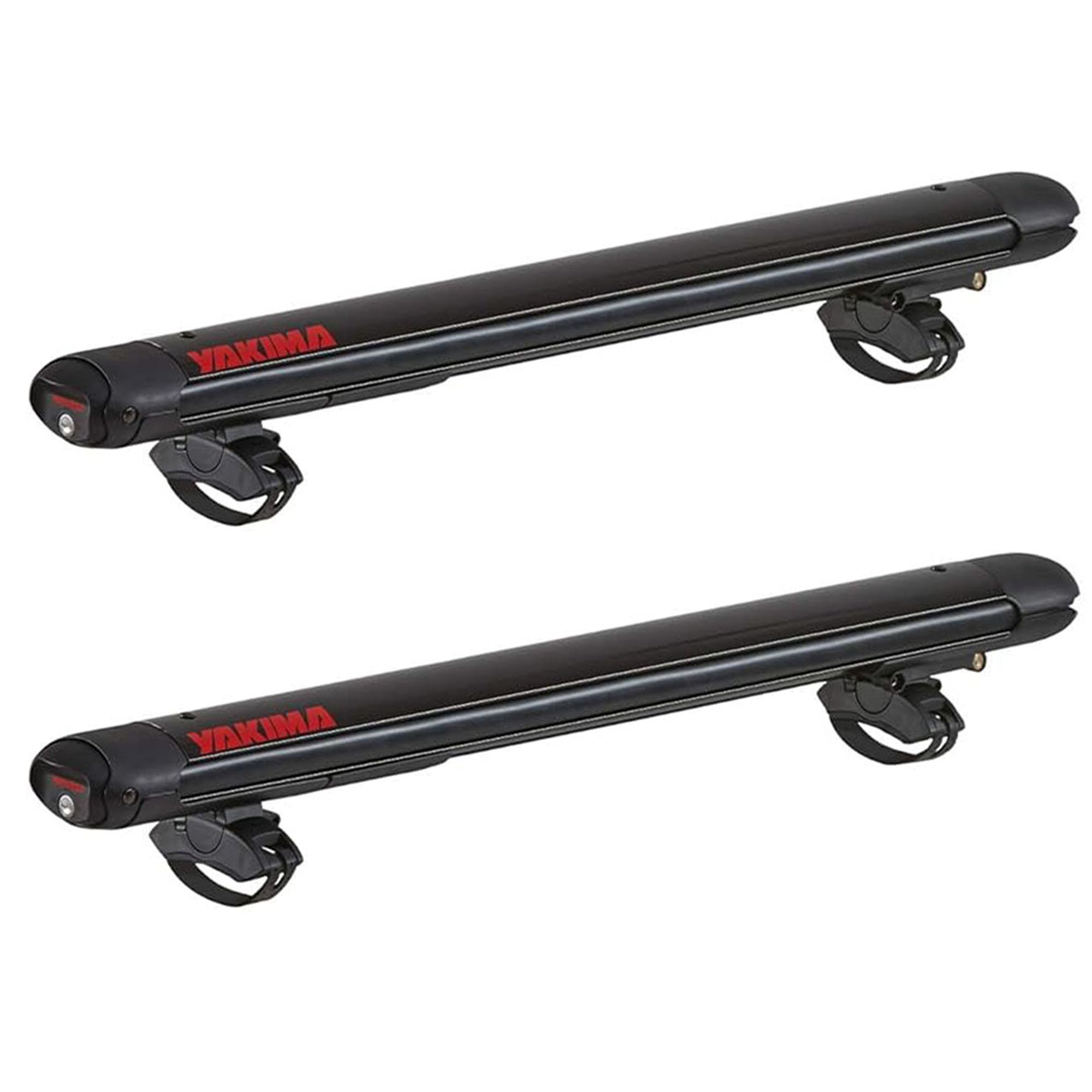
Yakima FatCat EVO 6
Key Features
- Capacity: 6 skis/4 boards
- Mount Type: Roof, universal
- Ease of Install: Tool-free snap
- Wind Noise: Quiet
- Lock Reliability: Difficult lock
- Price: $$$
The Yakima FatCat EVO 6 stands out for its aerodynamic profile that reduces wind noise on the highway, while its sleek appearance complements modern vehicles. Installation is tool-free with a snap-on design, and the construction uses robust plastic and metal. However, the plastic clamps and latches may crack under stress, and the advertised capacity of six pairs of skis assumes standard-width gear — thicker powder skis or multiple snowboards may not fit as claimed. The locking mechanism can also require some effort to operate.
Pros
- High-quality construction with a sleek, low-profile look
- Tool-free installation with snap-on design
- Relatively quiet ride compared to other roof racks
Cons
- Plastic clamps and latches may crack under stress
- Locking mechanism can be difficult to open and close
Best for style-focused skiers with standard-width gear who prioritize a quiet, low-profile rack over maximum durability or capacity.
Best for Convenience Enthusiasts
Kuat Grip 4

Key Features
- Capacity: 4 skis/2 boards
- Mount Type: Roof, flip mount
- Ease of Install: Moderate install
- Wind Noise: Moderate
- Lock Reliability: May seize
- Price: $$$$
The Kuat Grip 4 makes loading skis and snowboards easier with a slide-out tray that extends past the roofline — a real help for taller vehicles or if you’re lifting gear overhead. The build quality looks premium, and the low-profile design keeps wind noise and aesthetic impact low. That slide-out mechanism, however, can seize up when exposed to freezing rain or road salt, requiring regular lubrication to stay smooth. Paint chipping and surface corrosion have also appeared after a few seasons in wet climates, so this rack rewards owners who keep it clean and maintained. For someone who carries boards only a handful of weekends each winter and parks indoors, the convenience outweighs the upkeep. For year-round, heavy-duty use in snowbelt states, the durability track record raises questions.
Pros
- Slide-out tray extends past the roofline for easier loading of skis and snowboards.
- Quality materials and a low-profile appearance reduce wind noise and look clean.
- Low-profile design when mounted maintains the vehicle’s lines and aerodynamics.
Cons
- Slide-out mechanism can seize up or freeze in cold, wet conditions without regular maintenance.
- Paint chipping and corrosion can develop after a few seasons, especially in wet climates.
Consider the Grip 4 if loading convenience is your top priority and you live in a mild, dry climate — but expect to invest a little time in upkeep to keep it working and looking good.
Best for Couples Light Users
Yakima FreshTrack

Key Features
- Capacity: 4 skis/2 boards
- Mount Type: Roof, clamp mount
- Ease of Install: Easy install
- Wind Noise: Moderate
- Lock Reliability: Good locks
- Price: $$
For couples or solo skiers who prioritize a compact footprint and integrated security, the Yakima FreshTrack delivers. Installation is quick, the SKS lock system works with a single key, and the clamp mount holds firm on crossbars even in freezing temperatures. The trade‑off is capacity: at 4 pairs of skis or 2 snowboards, it cannot match the 6‑pair haulers favored by families. While Yakima’s build quality is evident, the limited user base means less accumulated feedback on long‑term performance. This is a focused rack for those who carry light loads and want Yakima’s lock convenience.
Pros
- Tool-free clamp mount secures quickly onto most crossbars.
- Integrated SKS lock system uses one key for all Yakima accessories, providing added security.
Cons
- Holds only 4 pairs of skis or 2 snowboards, which limits use for families or groups.
Best for solo skiers or couples who want a compact, lockable Yakima rack for light loads – not a family hauler.
Best for Rental Car Use
Yakima EasyTop

Key Features
- Capacity: Up to 80 lbs
- Mount Type: Soft roof straps
- Ease of Install: Very easy
- Wind Noise: Minimal
- Lock Reliability: No locks
- Price: $
The Yakima EasyTop delivers exactly what it promises: rapid, tool-free installation on any car, making it a go-to for rental cars or last-minute trips. Its soft straps and buckles secure a variety of gear — skis, boards, kayaks — up to 80 pounds. However, this temporary system isn’t built for high-speed highway use or long-term durability. Straps can slip, allowing gear to shift, and plastic components may wear after repeated installations. This is a budget-friendly emergency solution, not a replacement for a rigid roof rack.
Pros
- Installs on virtually any car in under five minutes with no tools
- Works with skis, snowboards, kayaks, and more — a true multi-sport carrier
Cons
- Plastic buckles and straps show wear with repeated use — not built for long-term durability
- Straps can slip over time, allowing gear to shift — not suitable for high-speed highway use
A practical stopgap for rental cars or one-off trips when you need to haul gear without a permanent rack — but not the choice for regular, high-speed ski transport.
How to Choose
The most important decision is whether you need a roof or hitch mount, as it affects loading ease, vehicle compatibility, and wind noise.
Capacity
Capacity ratings assume standard-width skis. If you carry wide powder skis or multiple snowboards, size up to a 6-pair model even if you need only 4 pairs. A rack that lists ‘6 pairs’ may hold only 4 powder skis due to width constraints.
Mount Type
Roof mounts keep gear out of the way but require lifting skis overhead and can increase wind noise. Hitch mounts lower the loading height and leave the roof free, but they add length to your vehicle and may block the rear hatch when folded. Check your vehicle’s hitch receiver size (1.25 or 2 inches) before buying.
Ease of Install
Tool-free clamps or snap-on designs let you install and remove the rack in minutes without wrenches. Models that require U-bolts or permanent mounting take longer and may need adjustments after initial setup. For seasonal use, prioritize quick on-off systems.
Wind Noise
Wind noise is common with roof racks, especially when empty. Loading gear actually reduces noise by breaking up airflow. If you leave the rack on year-round, a low-profile or foldable design (like the Kuat Switch) minimizes drag and whistling. Hitch racks produce minimal wind noise by design.
Lock Reliability
Locking mechanisms are the weakest link across all brands. Plastic parts can freeze, break, or resist turning in cold weather. If you park overnight in high-theft areas, consider a separate cable lock. Some racks let you replace locks easily; others require drilling if the lock fails.
FAQ
How can I reduce wind noise from my roof ski rack?
Loading skis or boards onto the rack breaks up the airflow and quiets noise significantly. If you must drive empty, use a fairing or choose a low-profile or foldable rack like the Kuat Switch 4. Hitch racks avoid wind noise entirely.
Do I need crossbars for a roof ski rack?
Yes, nearly all roof ski racks require a set of crossbars (factory or aftermarket) to mount. The rack clamps onto the crossbars. If your vehicle doesn’t have them, factor $100–$300 into your budget for a compatible crossbar system.
Why does my ski rack lock keep freezing?
Condensation enters the lock cylinder and freezes in cold temperatures. Apply a silicone-based lubricant or use a lock de-icer before inserting the key. Some racks have drain holes that help, but periodic maintenance is the only reliable fix.
Can I put a hitch ski rack on a 1.25-inch receiver?
Yes, many hitch ski racks come with adapters or are designed for both 1.25-inch and 2-inch receivers. Check the product specifications — some racks reduce capacity when used with a smaller receiver. For heavy loads, a 2-inch receiver is more stable.