
This post contains affiliate links. We may earn a small commission when you buy through our links — at no extra cost to you.
Duck boots are a staple for wet winters, but many budget models leak at the first puddle or crack within months. Shoppers face a maze of claims—’waterproof shell,’ ‘insulated’—with little guarantee of performance when snow turns to slush.
The boots that hold up share a few critical traits: sealed rubber-leather joints, adequate insulation for your climate, and treads that grip icy pavement. By focusing on these, you avoid the most common failures and get a boot that stays dry and intact season after season.


Best for Warm Winter Wear
London Fog Ashford
Key Features
- Waterproofing: Sealed seams, waterproof membrane
- Warmth: Fur-lined, insulated
- Traction: Lugged rubber outsole
- Fit & Sizing: Runs large, size down
- Durability: No reported issues
- Price: Budget
The fur-lined insulation and waterproof rubber lower punch above their price class. The insulation holds heat in single-digit temperatures, and the sealed construction shrugs off slush and standing water without leaking. A cushioned footbed and soft interior lining make extended wear comfortable, not just tolerable.
The fit runs about a half size large, so ordering a half size down secures the heel and prevents slipping. This tradeoff is easy to manage, but it does mean the boot favors average to slightly wide feet. Narrow-footed buyers and anyone unwilling to size down may find the interior too roomy even after adjusting.
Pros
- Traps heat even in single-digit temperatures, keeping toes toasty in bitter cold.
- Sealed seams and rubber lower keep feet dry through puddles, slush, and wet snow.
- Cushioned footbed and soft lining remain comfortable for hours of winter walking.
Cons
- Runs about a half size large; heel can slip if you don’t size down.
A budget duck boot that keeps feet warm and dry all day — just order a half size down for the right fit.
Best for Casual Light Snow
ALEADER Duck Boot
Key Features
- Waterproofing: Shell waterproofing (no membrane)
- Warmth: Fur-lined, insulated
- Traction: Standard rubber tread
- Fit & Sizing: True to size
- Durability: Sole separation risk
- Price: Budget
The ALEADER Duck Boot prioritizes plush, out-of-the-box comfort over rugged weather protection. Where the top pick seals out wetness with sealed seams, these boots wrap your feet in a soft fur lining and cushioned footbed that feel broken-in from the first wear.
For short commutes, errands, and tailgating in temperatures down to about 40°F, the warmth and value are hard to beat. Waterproofing can falter in heavy rain or deep snow, and soles may separate after a season or two of frequent wear — better suited to occasional light use than daily workhorse duty.
Pros
- Plush fur lining wraps feet in warmth suitable down to about 40°F.
- Cushioned footbed delivers a soft, comfortable feel right out of the box.
- Budget-friendly price makes it an accessible option for casual winter wear.
Cons
- Water resistance inconsistent in standing water or heavy precipitation.
- Sole or heel separation can occur after limited wear, shortening longevity.
If you want a soft, warm boot for occasional light winter use at a low price, the ALEADER delivers — just don’t expect it to withstand harsh conditions or years of daily wear.
Best for Convenient Daily Wear
Guide Gear Side Zip
Key Features
- Waterproofing: Waterproof membrane
- Warmth: 400g insulation
- Traction: Rubber lug sole
- Fit & Sizing: Runs small, size up
- Durability: Sole cracking possible
- Price: Budget
The side zipper sets these apart from traditional pull-on duck boots — slide in and out without wrestling laces. The 400-gram insulation adds warmth that uninsulated boots lack, making them a solid choice for cold, wet commutes.
Sizing runs small; ordering a full size up is necessary for most. The rubber sole may crack over time, so these boots work best for occasional winter errands rather than heavy daily wear in harsh conditions.
Pros
- Sturdy leather and rubber build that handles casual winter wear well.
- Side zipper makes on/off quick and convenient, even with gloves on.
Cons
- Sizing runs small; order a full size up for a proper fit.
- Rubber sole may develop cracks over months of use, limiting lifespan.
For quick trips in slush when easy on/off matters more than permanent waterproofing, these boots provide warmth and convenience at a budget-friendly price.
Best for Mild Style
UGG Emmett Duck
Key Features
- Waterproofing: Water-resistant leather
- Warmth: Leather upper, mild insulation
- Traction: Smooth rubber sole
- Fit & Sizing: Runs large, heel slip
- Durability: Durable leather
- Price: Premium
Handsome leather uppers and a cushioned sole set the UGG Emmett Duck apart from classic heritage boots — here, all-day city comfort takes priority over sub-zero warmth. The premium pricing reflects the leather-rich build and plush cushioning rather than heavy insulation or sealed seams, so it’s best saved for rainy sidewalks and days above freezing. Style-conscious buyers in mild, wet climates will appreciate the elevated look, though narrow-footed wearers may find the fit roomy and truly cold snaps will expose the lack of insulation.
Pros
- Premium leather and solid construction give a high-end look and feel.
- Plush cushioning and easy break-in keep feet comfortable through long days.
- Sleek design pairs well with jeans and casual outfits, elevating wet-weather style.
Cons
- Insulation is too light for sub-freezing weather; feet may get cold in sustained low temperatures.
A stylish choice for city commutes in damp, mild winters, but those needing reliable warmth should look to the top pick’s 400g insulation.
Best for Casual Style
Sperry Avenue Duck

Key Features
- Waterproofing: Unsealed rubber-leather join
- Warmth: No insulation
- Traction: Rubber sole
- Fit & Sizing: Inconsistent sizing, often large
- Durability: Durable
- Price: Mid-Range
Solid build quality and classic Sperry styling define this duck boot. The fit, however, can be inconsistent—running large and narrow—and water resistance falters at the leather-rubber seam in heavier rain. It works for light wet weather where appearance matters more than all-day comfort or true waterproofing.
Pros
- Solid, durable construction that holds up well in general use.
- Classic duck boot styling with appealing color options.
Cons
- Water resistance is unreliable: moisture can seep in at the stitching during sustained wet conditions.
A heritage-styled choice for light drizzle and errands, provided you can sort out the tricky fit—those needing true waterproofing should look elsewhere.
Best for Pull-On Convenience
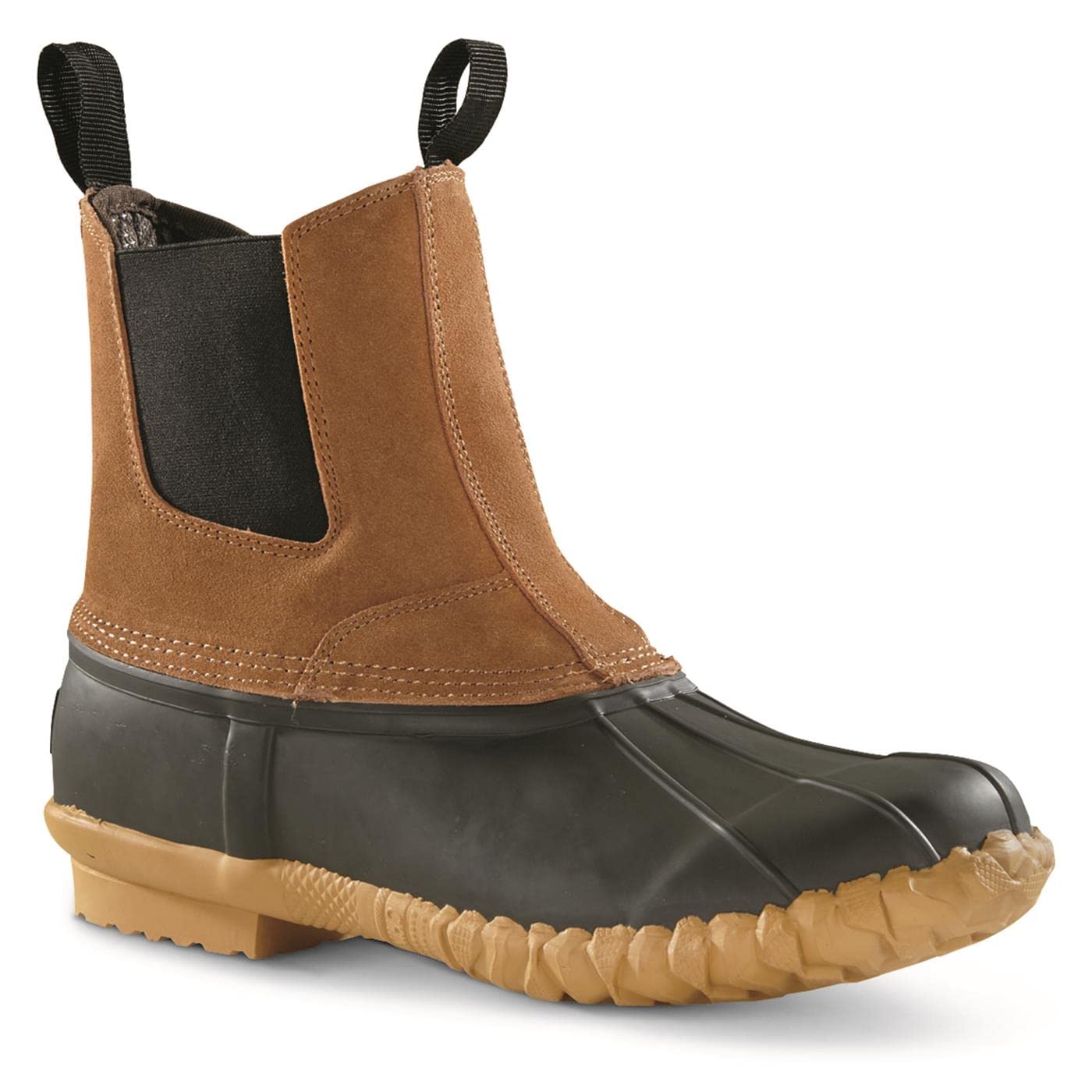
Guide Gear Pull-On
Key Features
- Waterproofing: Waterproof membrane
- Warmth: 400g insulation
- Traction: Rubber tread
- Fit & Sizing: Size up, tight instep
- Durability: Heel wear reported
- Price: Budget
The leather upper and 400-gram insulation deliver classic duck boot warmth and a timeless look. As a pull-on without a side zipper, it’s simpler but lacks the quick entry of its zippered counterpart. Heel wear may appear after a season of regular use, limiting long-term durability.
Pros
- Leather upper and rubber lower feel well-constructed for the price.
- After the break-in period, they pull on with minimal effort.
Cons
- The instep can be uncomfortably tight, making the initial pull-on a struggle.
A classic pull-on duck boot for occasional cold-weather outings, where the lack of a zipper and a break-in period are acceptable trade-offs.
How to Choose
Duck boots share a common weak spot: the rubber-leather joint where water seeps in unless it’s sealed with a waterproof membrane.
Waterproofing
Look for sealed seams or a gusseted tongue; a simple ‘waterproof shell’ label isn’t enough. Even a rubber lower can let water through the stitch line if not properly bonded.
In real-world use, walking through slushy puddles tests the seam above the toes—without a membrane, dampness creeps in within minutes.
Warmth & Insulation
Insulation thickness matters: 400g keeps feet warm in single-digit temperatures, while unlined leather suits mild winters above freezing. Too much insulation leads to sweaty feet; too little means cold toes.
If you stand still at a bus stop in freezing conditions, prioritize 400g or fur lining. Active shoveling or hiking calls for moderate insulation to avoid overheating.
Traction
Tread depth and pattern determine grip on snow and ice. Deep lugs with siping—thin slits in the rubber—channel slush and reduce slipping, while smooth soles compact snow and become slick.
For icy sidewalks, standard rubber outsoles often fail. Boots without specialized winter tread may require aftermarket grips or crampons to prevent falls.
Fit & Sizing
Duck boot sizing is notoriously inconsistent; some brands run a full size large, others small. A loose heel leads to blisters, while a tight instep makes pulling them on painful.
Always check recent fit reviews for your specific model. Many buyers size down for London Fog or up for Guide Gear Side Zip—a half-size adjustment can make or break comfort.
Durability
Rubber sole cracking is the most common point of failure. Cheaper synthetic blends separate from the leather upper after months of daily use, while natural rubber or Goodyear-welted construction lasts longer.
For occasional wear on cleared pavement, budget soles hold up. If you trudge through salted slush daily, expect to replace boots every season or invest in a higher-grade construction.
FAQ
Do duck boots have good traction on ice?
Most duck boots don’t come with ice-specific siping or metal studs, so they slide on slick ice. In snow, the tread can clump and reduce grip further. For truly icy conditions, look for deep siping in the rubber or add removable crampons.
How should duck boots fit? Should I size up or down?
Fit varies by brand—London Fog Ashford runs large, so order a half size down; Guide Gear Side Zip runs small, so size up. Measure your foot length and consult the brand’s size chart before ordering. A snug heel with room to wiggle toes is ideal.
Are cheap duck boots waterproof?
Cheap duck boots often rely on a water-repellent coating that wears off after a few uses. Genuine waterproofing requires sealed seams and a membrane like a waterproof lining—boots labeled ‘waterproof shell’ without seam sealing will eventually leak at the rubber-leather junction.
How long do duck boots typically last?
Budget duck boots often develop sole cracks or separation within one winter of regular use. Higher-quality builds with natural rubber soles and leather uppers can last 3–4 seasons, especially if you condition the leather and dry them properly after wet wear.