
This post contains affiliate links. We may earn a small commission when you buy through our links — at no extra cost to you.
Classic DEET sprays work, but they leave you sticky and smelling like chemicals. Many campers dread reapplying mid-trip. You don’t have to choose between protection and comfort anymore.
Picaridin and permethrin-treated gear now deliver all‑day bite protection without the greasy residue or strong odor. The real choice is between a lotion that feels like nothing on skin versus an aerosol that’s faster but sometimes finicky. Both beat the old trade‑off.
For stationary evenings, a zone device adds a buffer – but only in still air. No single product covers every scenario; the best strategy pairs a skin repellent with treated clothing. That’s the framework this guide is built around.



Best for All‑purpose Skin
Sawyer Picaridin Lotion
Key Features
- Active Ingredient: 20% Picaridin
- Application: Lotion
- Duration: Up to 12 hrs
- Scent: Fragrance‑free
- Price: $$
Sawyer’s 20% Picaridin lotion disappears into skin without any chemical scent, making it the only repellent you’ll forget you’re wearing. It holds up through sweat and rain, delivering full‑day protection against mosquitoes and ticks without the need to reapply. The lotion spreads smoothly like body lotion and dries quickly, so there’s no sticky residue to deal with at camp.
This is the go‑to for campers who prioritize comfort and zero odor over cost. The higher price per ounce compared to spray repellents is the tradeoff — but the 12‑hour protection and non‑greasy feel justify the premium for long days in the woods. If you prefer a spray or need maximum volume for a group, look elsewhere; this lotion shines best as a personal, one‑and‑done application.
Pros
- Odorless – no chemical smell when dry
- Non‑greasy, dries quickly and feels comfortable on skin
- Lasts all day even through sweat and rain
Cons
- Higher cost per ounce than most spray repellents — budget-minded buyers may prefer a larger-volume spray
If you want a repellent that works without the sensory downsides, this is the one. It’s not the cheapest, but it is the most livable.
Best for Gear Treatment
Sawyer Permethrin Spray
This spray bonds to fabric for up to six weeks, creating a durable barrier against ticks and mosquitoes. Unlike skin-applied repellents, it treats clothing, tents, and gear — a foundational layer for campers in tick-heavy regions. The key catch: permethrin is highly toxic to cats when wet, so treat gear away from pets and let it dry fully before use.
Pros
- Creates a lasting barrier against ticks and mosquitoes on clothing and gear.
- Treats multiple outfits per bottle, offering good value for frequent campers.
- Protection holds up through sweat and light rain during outdoor activity.
Cons
- The trigger spray mechanism can deliver uneven coverage if the pump malfunctions.
For campers who want a tick-proof gear layer, this is the fabric treatment to pair with a skin repellent — just keep it away from cats until dry.
Best for Deet‑free Spray
OFF! Clean Feel Picaridin
Key Features
- Active Ingredient: 20% Picaridin
- Application: Aerosol
- Duration: Up to 8 hrs
- Scent: Fragrance‑free
- Price: $
OFF! Clean Feel offers a fragrance-free, non-greasy spray that dries quickly — a lighter feel than the top pick lotion. This budget-friendly option suits campers who want a DEET-free repellent that doesn’t leave a sticky residue.
Pros
- Effective mosquito repellent without DEET
- Fragrance-free and non-greasy – feels natural on skin
- Dries quickly with no sticky residue
Cons
- Skin irritation has been noted in some users, possible for sensitive skin
- Spray nozzle may malfunction, drip, or fail to spray
A solid DEET-free pick for camping when you prioritize comfort and price, though the nozzle consistency is worth a quick check before heading out.
Best for Travel‑friendly
OFF! Deep Woods Wipes
Key Features
- Active Ingredient: 25% DEET
- Application: Wipes
- Duration: Up to 8 hrs
- Scent: Pleasant
- Price: $
Individually wrapped wipes eliminate the risk of leaks and aerosols, making them a no-fuss choice for carry-on bags or backpack pockets. Each single-use towelette delivers 25% DEET with up to eight hours of protection, and the gentle scent won’t compete with campfire smoke. For campers who prioritize convenience over bulk liquid bottles, these wipes slot neatly into any load.
Pros
- No spills or aerosols – each wipe stays sealed until use
- TSA-friendly size fits easily in a carry-on or hip belt pocket
- Effective mosquito protection with a mild scent
Cons
- Individual wipes can dry out quickly after the packet is opened
The best option for campers who want DEET protection without the mess or liquid restrictions — just plan to use each wipe within a few hours of opening.
Best for Budget High‑deet
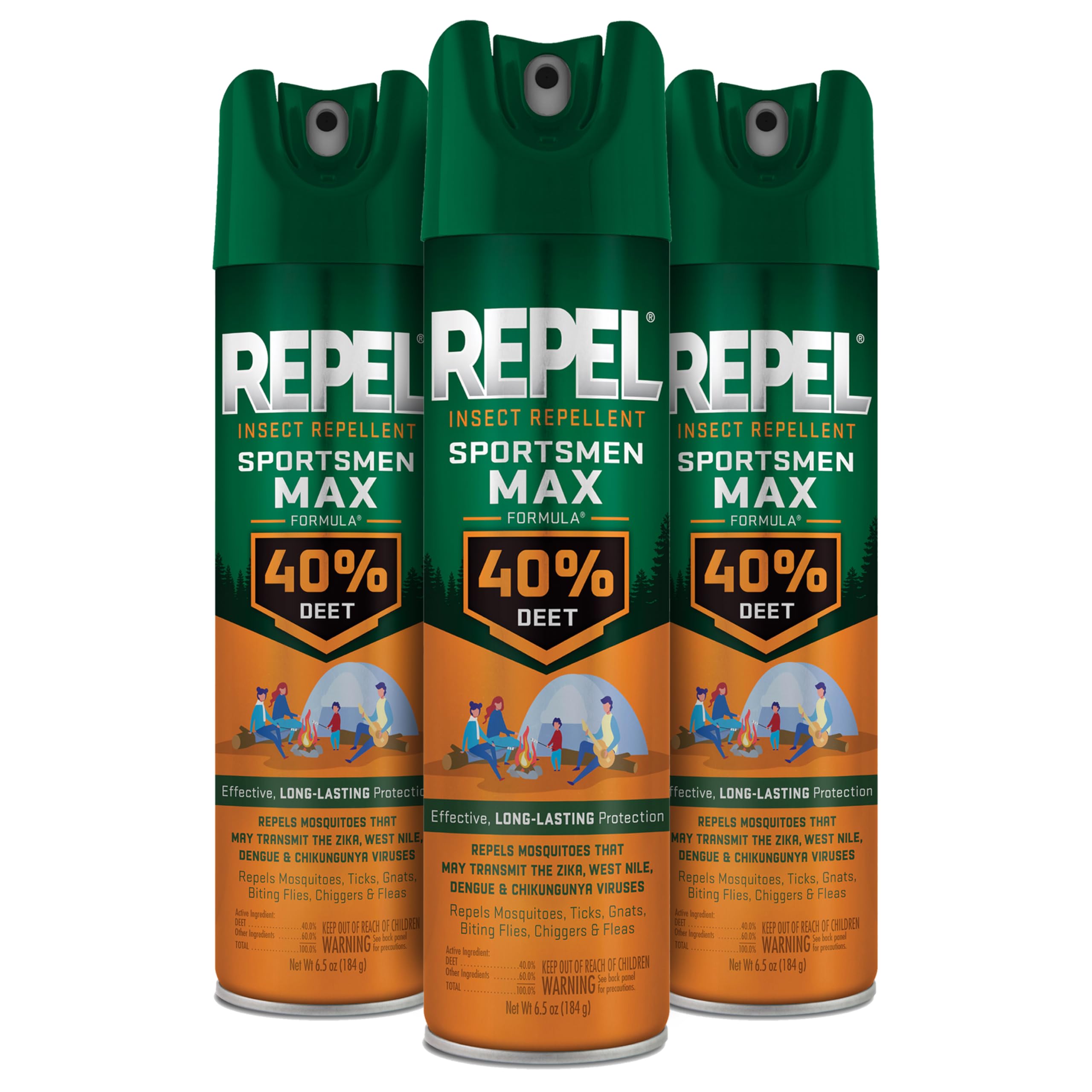
Repel Sportsmen 40% DEET
Key Features
- Active Ingredient: 40% DEET
- Application: Aerosol
- Duration: Up to 10 hrs
- Scent: Chemical (some)
- Price: $$
Three 6.5 oz cans of 40% DEET cost roughly the same as a single can from competitors, making this the obvious choice when packing for a group or a long trip into heavy bug territory. The aerosol delivers all-day protection against mosquitoes, ticks, and biting flies—enough coverage for multiple people. Unlike a zone device that works only in still air, this spray follows you into wind and brush. The spray nozzle can clog before the can runs out, so this is best for campers who prioritize budget and efficacy and don’t mind a possible mid-trip transfer to another container.
Pros
- Covers mosquitoes, ticks, gnats, biting flies, chiggers, and fleas with one spray.
- Three 6.5 oz cans deliver more than enough repellent for a group camping trip.
- A single application typically lasts through a full day of outdoor activity.
Cons
- The chemical odor is noticeable and may be unpleasant for those sensitive to strong smells.
For groups or heavy bug pressure, the Repel Sportsmen 3-pack offers unmatched value per can — just keep a backup spray method handy for when the nozzle acts up.
Best for Stationary Zone
Thermacell MR300F
Key Features
- Active Ingredient: Allyl isothiocyanate
- Application: Zone repeller
- Duration: 4 hrs per mat
- Scent: Scent‑free
- Price: $$
The Thermacell MR300F generates a 15-foot zone of protection using a heated mat and fuel cartridge, with no scent or skin contact. Effectiveness relies on still air – a breeze or walking around can reduce coverage. The unit is simple to set up and performs well for stationary activities like sitting at a picnic table or in a hunting blind. Refill mats and fuel cartridges add ongoing expense compared to a single bottle of spray repellent.
This device suits campers and hunters who stay in one spot and want to avoid applying repellent. It is not a replacement for personal repellents when wind, movement, or dense vegetation are factors.
Pros
- Simple to set up and start – no complicated assembly.
- Scent-free and DEET-free – no sticky residue or odor on skin or gear.
- Works well for stationary outdoor settings like camping, hunting blinds, and backyard seating.
Cons
- Effectiveness drops in wind or moving air – the zone does not follow you.
- Refill costs accumulate over time, making it more expensive than typical repellents.
A convenient option for stationary outdoor use where still air is likely, but not a substitute for personal repellents when wind or movement is involved.
Best for Spf Combo
Avon Bug Guard SPF30

Key Features
- Active Ingredient: IR3535
- Application: Lotion
- Duration: Up to 8 hrs
- Scent: Gentle Breeze
- Price: $$$
This lotion combines SPF30 sun protection with IR3535 bug repellent in one step, saving you from layering products. The gentle breeze scent is pleasant and the formula leaves skin soft. At a premium price for a 4.2 oz bottle, it works best for day trips where convenience outweighs cost. However, the lotion can feel greasy in humid conditions, and a small number of individuals with sensitive skin may experience irritation.
Pros
- Combines SPF30 sun protection and DEET-free insect repellent in a single application.
- Moisturizing formula with a pleasant scent that most users appreciate.
Cons
- Lotion can feel greasy or sticky after application, especially in warm or humid weather.
Best for daytime outings where you want to minimize gear, but not for heavy mosquito areas or if you have sensitive skin.
Best for Natural Plant‑based
Repel Lemon Eucalyptus

Key Features
- Active Ingredient: 30% OLE
- Application: Pump spray
- Duration: Up to 6 hrs
- Scent: Strong lemon
- Price: $$
A popular natural option for campers who want to avoid DEET, this pump spray uses oil of lemon eucalyptus (30%) to repel mosquitoes for around six hours. The strong lemon scent is noticeable and some users experience skin irritation, so it suits short outings where you can reapply and don’t mind the fragrance. For extended trips or sensitive skin, a Picaridin-based repellent is a better fit.
Pros
- DEET-free plant-based formula appeals to eco-conscious campers
- Effective mosquito protection for short outdoor sessions
Cons
- Strong lemon scent may be overpowering in enclosed spaces or for fragrance-sensitive users
Best for campers who prioritize a natural, DEET-free formula and are okay with a strong scent and occasional skin sensitivity—ideal for day hikes, not multi-day trips.
Best for Kids Plant‑based
Babyganics Plant Spray

Key Features
- Active Ingredient: Plant oils
- Application: Spray
- Duration: Short
- Scent: Strong essential oils
- Price: $
Babyganics combines citronella, peppermint, and other essential oils to create a bug spray that feels safer on young skin than DEET-based alternatives. The strong herbal scent is noticeable but fades after application. However, the short duration and variable mosquito protection mean it’s not suitable for camping where bugs are dense. It works best as a backup option or for quick trips in areas with very few mosquitoes.
Pros
- Gentle plant-based formula suitable for toddlers and sensitive skin
- Many users find it effective against mosquitoes in low-pressure conditions
Cons
- Strong essential oil scent can be unpleasant, and protection may vary between uses
Best as a backup spray for toddlers in the backyard or short walks where mosquitoes are scarce – not a primary repellent for camping trips.
Best for Light Duty
Cutter Skinsations 7% DEET

Key Features
- Active Ingredient: 7% DEET
- Application: Pump spray
- Duration: Up to 4 hrs
- Scent: Clean fresh
- Price: $
Cutter Skinsations offers a clean fresh scent and gentle feel, making it pleasant for light outdoor activities. However, reports of bottle leakage and the low 7% DEET concentration mean it’s not a reliable choice for camping trips with heavy mosquito pressure or where leak-free packing matters.
Pros
- Pleasant scent that users like
- Non-greasy and gentle on skin
Cons
- Bottle can leak during shipping or storage, limiting its use for travel
Best for backyard or short walks where mosquitoes are minimal and you prefer a non-greasy, pleasantly scented repellent.
How to Choose
The most effective camping repellent strategy depends on matching the active ingredient and format to your specific activity and environment.
Active Ingredient
DEET is the gold standard for effectiveness, but high concentrations (30%+) dissolve plastics, damage synthetic fabrics, and leave a strong chemical odor. Picaridin performs nearly as well without damaging gear or smelling, though it may require more frequent reapplication in extreme sweat.
Plant‑based options like oil of lemon eucalyptus or citronella work for short periods but often trigger skin irritation and need constant re‑application. For serious camping, Picaridin or moderate DEET (20–30%) offer the best balance of reliability and comfort.
Application Format
Sprays cover large areas quickly but can drift onto skin you didn’t intend, and some nozzles jam or drip. Lotions ensure even coverage but take longer to apply and require clean hands. Wipes are the most portable and spill‑proof, though a single packet may not cover an adult fully.
Zone devices like Thermacell create a quiet bubble but only work in still air. If you move around the campsite, a personal repellent is still necessary. Choose your format based on whether you prioritize speed (aerosol), reliability (lotion), or packability (wipes).
Duration of Protection
Labeled hours are measured in ideal conditions. Real‑world duration drops with sweat, rain, and physical activity. High DEET (40%+) often lasts 8–10 hours, while Picaridin 20% lasts 8–12 on dry skin but may fade faster in humidity.
For an all‑day hike, reapplication at midday is wise regardless of the label. Permethrin on clothing is the only option that stays effective through multiple days and washes, making it a critical complement to any skin product.
Odor and Skin Feel
High DEET repellents have a distinct chemical smell that many find unpleasant, and the oily residue can feel sticky. Picaridin and IR3535 are nearly odorless and dry quickly, making them far more comfortable for long wear.
Plant‑based formulas rely on strong essential oils (citronella, lemon eucalyptus) that some users find nauseating or irritating. If you are sensitive to smells or textures, a Picaridin lotion or fragrance‑free wipe is the safest bet.
Portability and Packability
For backpackers and fly‑in campers, weight and spill risk matter most. Individually wrapped wipes win here – they are TSA‑compliant, take no liquid, and fit in a pocket. Aerosol cans are bulkier and can leak under pressure changes.
Lotion bottles are compact but need a squeeze‑top that may open in a bag. Zone devices require carrying fuel canisters and mats, so they are best reserved for car camping or base camps where space is less constrained.
FAQ
Does Thermacell work in windy conditions?
No. Thermacell relies on a heat‑activated vapor that dissipates quickly in a breeze. In still air it can create a 15‑foot zone, but even a light wind renders it ineffective. Always carry a personal repellent as backup.
Is Picaridin as effective as DEET for mosquitoes?
In most conditions, 20% Picaridin is about as effective as 25% DEET against mosquitoes. It doesn’t damage plastics or dissolve synthetic fabrics, and it has no odor. However, in extreme heat or heavy sweating, Picaridin may need more frequent reapplication.
Can I use permethrin spray directly on my skin?
No. Permethrin is intended only for clothing, gear, and tents. It bonds to fabric and remains effective after drying, but it can cause skin irritation if applied directly. Always follow the label and keep cats away until the treated item is fully dry.
Why does my bug spray smell so strong and how can I avoid it?
High DEET concentrations (40%+) have a strong chemical odor. If you want to avoid the smell, choose Picaridin (which is odorless) or a low‑DEET wipe (which typically uses a milder fragrance). Plant‑based sprays often have a strong essential oil scent that some find worse.