
This post contains affiliate links. We may earn a small commission when you buy through our links — at no extra cost to you.
Many inflatable paddle boards promise a complete kit, but the pump is often the first thing to break. A broken gauge or leaking hose turns a day on the water into a frustrating inflation battle. This guide focuses on boards that minimize that headache and deliver real stability for beginners and families.
Beyond the pump, width determines how stable a board feels underfoot. A wider deck makes learning easier and supports yoga or a dog, but it also makes the board slower to paddle. The right choice depends on how you plan to use it—and how much pumping you’re willing to do.


Best for Beginners & Families
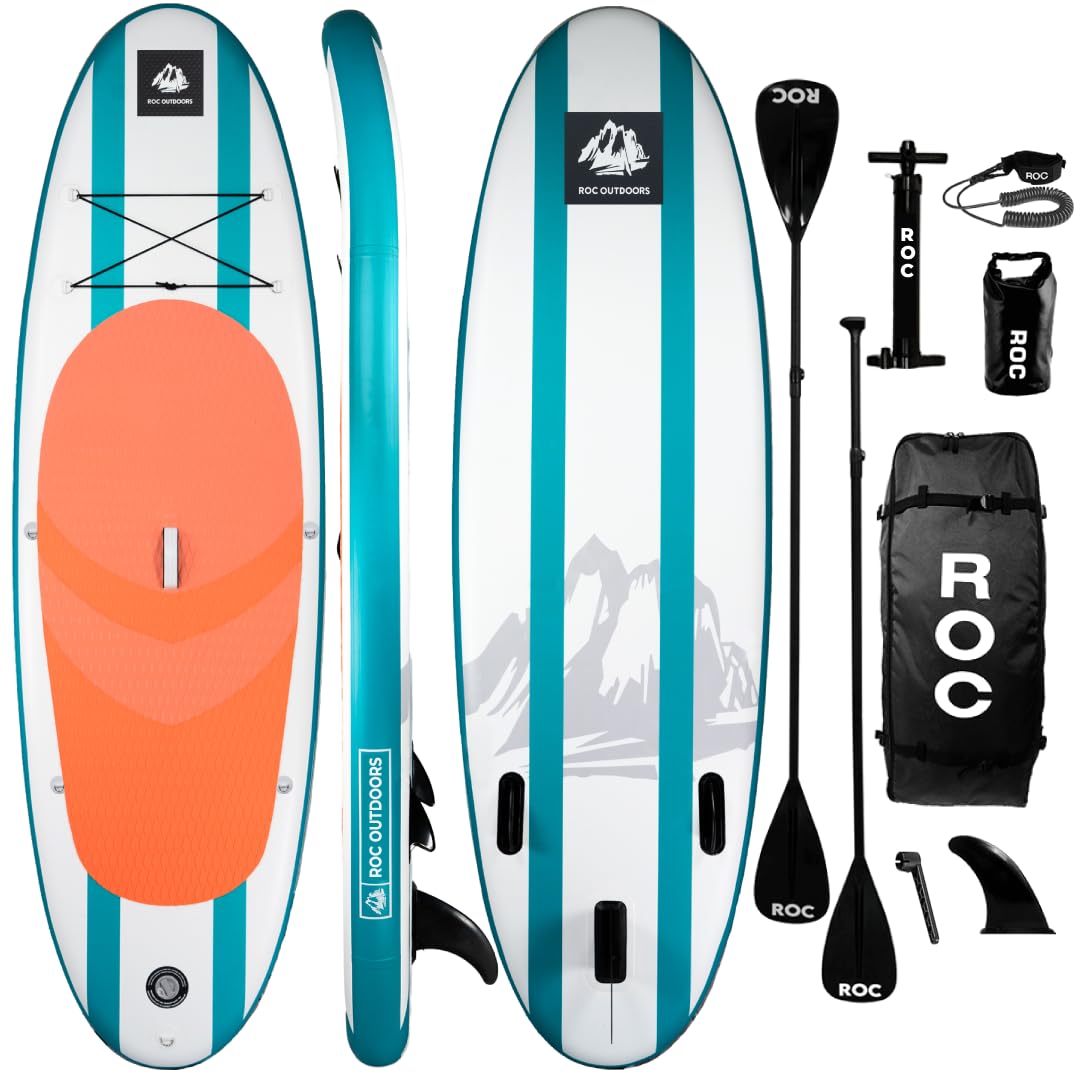
Roc 10′ x 33" SUP
Key Features
- Deck Width: 33"
- Weight Capacity: 350 lbs
- Pump Quality: Manual pump, few complaints
- Thickness: 6"
- Price: $$
The Roc SUP feels solid underfoot. The 10-foot length and 33-inch width provide a stable platform that makes standing up straightforward, even for someone new to paddle boarding. The non-slip deck adds confidence when shifting weight, and the overall finish holds up well against scrapes and sun exposure.
Everything needed for a day on the water arrives in a well-organized kit: the board, pump, paddle, leash, and repair patch all fit inside a durable backpack that zips closed without forcing. Inflation takes about 10 minutes of steady pumping — the manual pump works fine on a calm lake, but reaching the upper PSI range requires noticeable muscle. An electric pump removes that friction entirely.
This board suits recreational paddlers, families splitting weight up to 350 pounds, and anyone who wants a portable setup that stores easily. If you’re after a narrow, performance-oriented board for racing or surfing, the Roc’s stable shape will feel sluggish. The pumping effort is a tradeoff worth accepting for the low storage footprint and generous warranty.
Pros
- Well-constructed board with a clean, durable finish
- Wide deck and balanced shape make standing easy for beginners
- Accessories and board pack into a sturdy, easy-to-carry backpack
Cons
- Inflating to high pressure with the manual pump requires steady effort — less of an issue if you use an electric pump
- A small number of boards may develop seam issues or slow leaks over time — worth inspecting before each trip
For recreational paddlers who value stability, portability, and long-term coverage, Roc’s combination of high ratings and a 5-year warranty sets it apart from similarly priced alternatives.
Best for Families & Groups
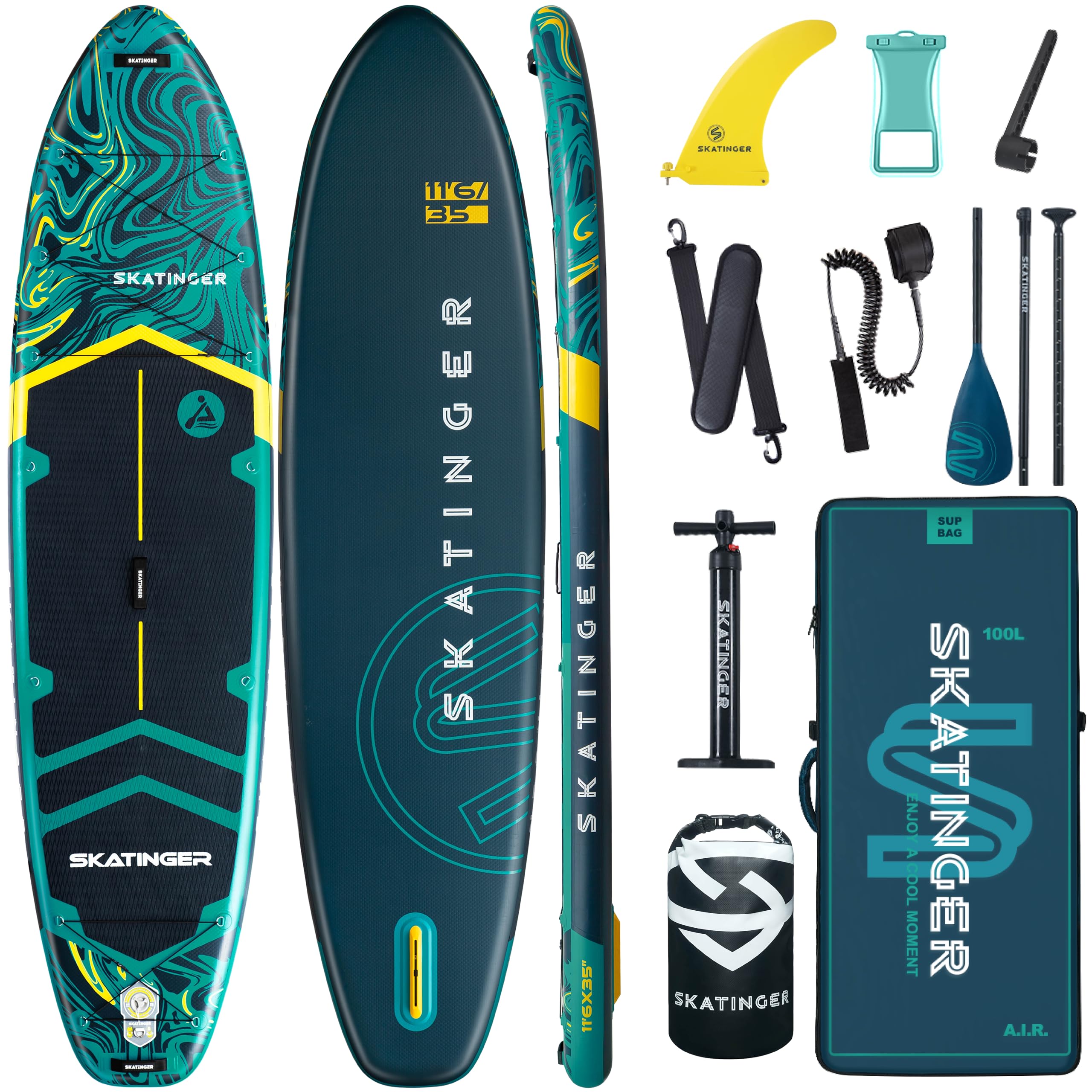
Skatinger 11’6" x 35" SUP
Key Features
- Deck Width: 35"
- Weight Capacity: 450 lbs
- Pump Quality: Manual pump, adequate
- Thickness: 6"
- Price: $$$
The Skatinger’s 35-inch wide deck is the key differentiator here — broader than the top pick’s 33-inch platform. This extra width translates into a remarkably stable feel, even with two adults and a medium-sized dog aboard. The 11’6" length keeps glide reasonable for a board this size, and the 450-pound capacity covers group outings or larger paddlers without hesitation.
This board suits families, beginner groups, or yoga practitioners who prioritize a steady surface over speed or carving. Solo paddlers who prefer nimble handling should look at slimmer options. The tradeoff for all that volume is inflation time: the manual pump requires more strokes than smaller boards. Using an electric pump turns setup into a two-minute task rather than a workout.
Pros
- 35-inch deck provides exceptional stability for two adults plus gear or a pet.
- Sturdy PVC construction holds up well to regular use and minor impacts.
- Heavy-duty 1680D backpack makes transport and storage straightforward despite the board’s size.
Cons
- The large air volume makes hand-pumping a noticeable effort — an electric pump solves this.
The Skatinger is the right call if your main priority is a rock-solid platform for multiple people or a dog on calm water — just budget for an electric pump to keep setup easy.
Best for Serious Paddlers
Atoll 11′ x 32" SUP
Key Features
- Deck Width: 32"
- Weight Capacity: 400 lbs
- Pump Quality: Manual pump, adequate
- Thickness: 6"
- Price: $$$$
The Atoll’s double-layer PVC construction and fixed tri-fin produce a rigidity rarely found in inflatable boards, translating to tracking and glide that feel closer to a hard shell than a typical air-filled deck. This build quality supports stable performance even in light chop, where lesser boards wobble.
This board is built for enthusiasts who plan to paddle regularly and want performance that doesn’t compromise over time. The premium price and adequate manual pump are tradeoffs that make sense for long-term owners who value durability and resale value, but the investment is more than casual users need.
Pros
- Rock-solid rigidity that tracks like a hard board in varied conditions.
- Stable and responsive in choppy water for confident paddling.
- Compact, high-quality backpack and simple setup suit frequent travelers.
Cons
- At a premium price, this board demands a serious commitment — more than casual users need.
- Manual inflation takes a solid 10–15 minutes of effort; those who paddle often may want an electric pump.
For experienced paddlers who value long-term durability and hard-board feel, the Atoll justifies its cost — but budget-focused buyers will find better value in the top pick Roc.
Best for Budget Families
MOUSA 10’8" x 35" SUP
Key Features
- Deck Width: 35"
- Weight Capacity: 430 lbs
- Pump Quality: Manual pump, adequate
- Thickness: 6"
- Price: $$
At 35 inches wide, this board delivers a noticeably more spacious platform than typical recreational SUPs, supporting two adults or gear-heavy trips without tipping. The full EVA deck covers the entire surface, so standing barefoot or moving for yoga poses feels secure. Paired with a 430-lb weight capacity and a 100L backpack, it’s a lot of board for the price.
Families on a budget or those fishing or doing yoga will appreciate the stability and generous deck space. The tradeoff is a 6-month warranty — shorter than many rivals — which means less protection against long-term wear. For occasional lake or calm-water use, the risk is minimal, but frequent paddlers may want a board with stronger coverage.
Pros
- 35-inch width creates a notably stable platform for two people or standing activities
- Packs family-sized capacity and a full EVA deck at a budget-friendly price
- Full EVA deck for comfortable footing; 100L backpack makes transport easier
Cons
- Limited 6-month warranty offers less coverage than competitors, a consideration for regular use over multiple seasons
- Manual pump requires sustained effort to inflate the large-volume board — an electric pump reduces this hassle
Best for budget-conscious families who prioritize stability over long-term warranty coverage.
Best for Ultra-Budget
FunWater 10’6" x 33" SUP
Key Features
- Deck Width: 33"
- Weight Capacity: 330 lbs
- Pump Quality: Manual pump, poor durability
- Thickness: 6"
- Price: $
The FunWater stands out as the most budget-friendly inflatable SUP in our roundup, pairing a lightweight 25.7 lb board with a 330 lb weight capacity and a 3-year warranty on the board itself. Its low price and easy portability make it an inviting option for first-time buyers who want to try paddleboarding without a large investment.
That said, the pump and paddle are where the cost-cutting shows. The pump’s pressure gauge may lose accuracy, and the paddle can feel flimsy – accessories you will likely want to replace. This board is best suited for occasional use on protected lakes or bays, where the risk of punctures is lower. If you plan to paddle regularly or in rougher conditions, consider a sturdier alternative like the top pick.
Pros
- Very affordable price point
- Lightweight construction makes carrying and setup easy
- 330 lb capacity accommodates most adults and youth
Cons
- Pump gauge accuracy may degrade, making inflation harder to gauge
- Board material can be vulnerable to punctures in rocky or shallow waters
A functional entry-level board that needs accessory upgrades – best for infrequent use on calm, protected waters.
Best for Lightweight Travel
Niphean Ultra-Light 10′ SUP
Key Features
- Deck Width: 33"
- Weight Capacity: 400 lbs
- Pump Quality: Manual pump, gauge failure
- Thickness: 6"
- Price: $$
At 17.8 pounds, this board is noticeably easier to carry from car to shore than most inflatables, which usually weigh over 20 lbs. The 33-inch width and non-slip EVA deck provide a stable platform for standing or yoga, while the 400-lb capacity accommodates a wide range of paddlers. That stability also supports yoga sessions, a use case the deck pad handles well thanks to its cushioned texture.
Solo paddlers and yoga enthusiasts who carry their board to remote spots will appreciate the weight savings. The catch is the included pump: its pressure gauge can stop working after initial use, so a hassle-free out-of-box experience isn’t guaranteed. If you prefer a setup that works reliably from day one without additional purchases, consider a board with a sturdier accessory kit. Some owners also note minor deck pad peeling over time, though this appears to be case-specific rather than widespread.
Pros
- Lightweight at 17.8 lbs simplifies transport and storage
- Multiple color options add visual appeal
- Good value – combines low weight, high capacity, and stable deck at a mid-range price
Cons
- Pressure gauge on the included pump can stop working after first use
- Deck pad may peel or seams show wear with extended use – not universal but noted
If you value a lightweight board for easy carrying and don’t mind checking the pump gauge, this is a capable and attractive option at a reasonable price.
Best for High Capacity
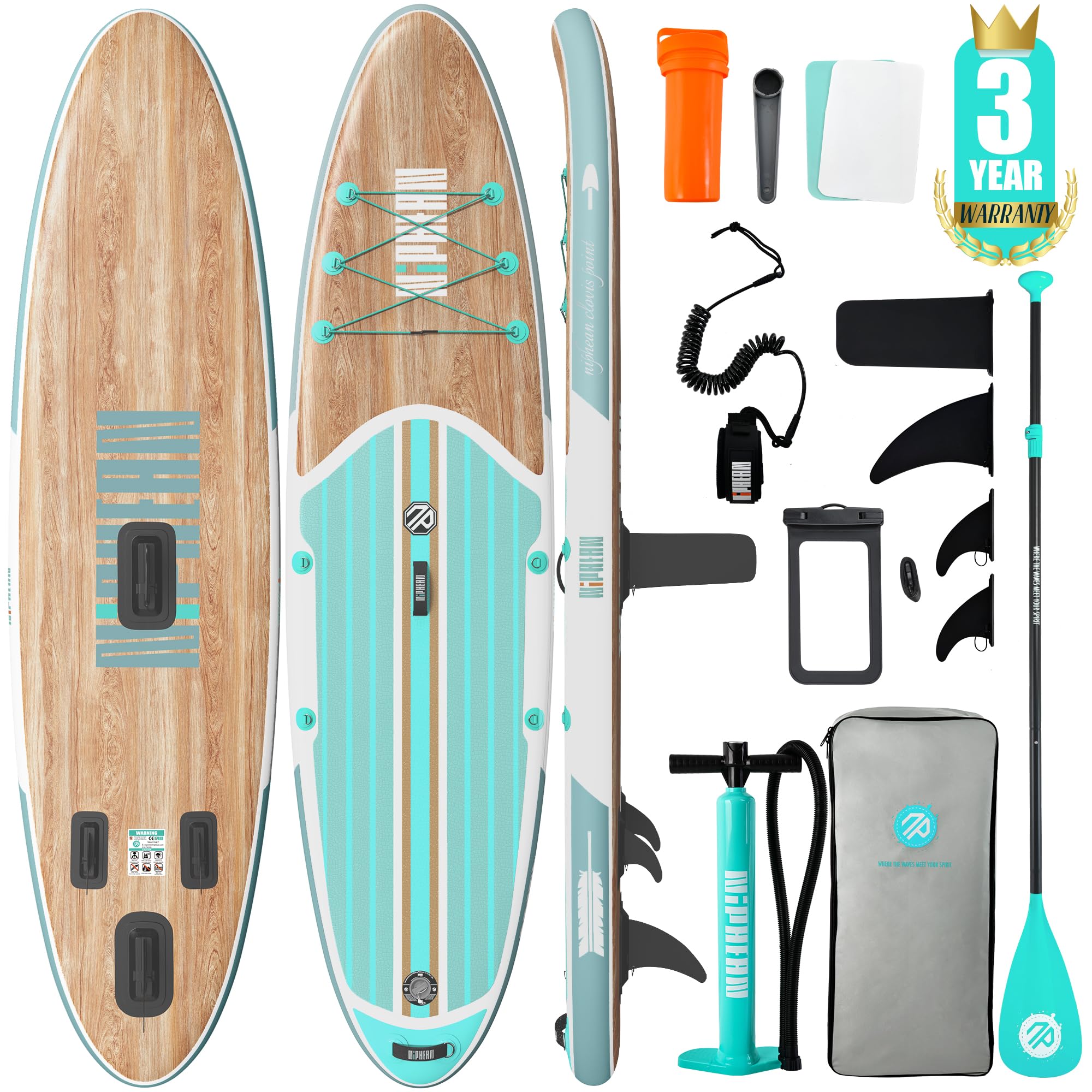
Niphean 10’6" x 33" SUP
Key Features
- Deck Width: 33"
- Weight Capacity: 450 lbs
- Pump Quality: Manual pump, frequent failure
- Thickness: 6"
- Price: $$
The Niphean SUP provides a generous 450-pound weight capacity at a mid-range price, accommodating two adults or a parent with child comfortably. The included accessory set is complete, but the hand pump can arrive damaged or malfunction early, and the board’s long-term durability under regular use is uncertain. This limits its appeal to buyers who are willing to replace the pump and treat the board as a seasonal recreational tool rather than a long-term investment. While it suits budget-conscious beginners who need the weight capacity for shared use, those seeking better stability or reliability will find stronger options from Skatinger or Roc.
Pros
- Great value with a complete accessory set for an affordable entry into paddle boarding.
- Board and accessories feel well-made, offering good overall quality and comfort.
Cons
- The board may develop leaks or delamination over time with regular use.
- The supplied hand pump can arrive broken or fail early, requiring a replacement.
Best for budget-focused buyers who need a high weight capacity for tandem use and are prepared to replace the pump as an accepted tradeoff.
Best for Budget 11′
FBSPORT 11′ x 33" SUP

Key Features
- Deck Width: 33"
- Weight Capacity: 280 lbs
- Pump Quality: Manual pump, defects common
- Thickness: 6"
- Price: $$
For calm-water paddling on a budget, the 11-foot length offers respectable glide for its size. The board packs down into a backpack that fits in a car trunk, making transport straightforward. However, the manual pump demands significant effort to reach full pressure, and the carry bag’s stitching can separate under normal use — these accessories may need to be replaced. Stability is adequate for flat water but less consistent than wider options, so this suits lighter recreational use rather than family outings or choppy conditions.
Pros
- Attractive price-to-quality ratio for an 11-foot board
- Packs down small for the included backpack — easy to carry and store
Cons
- Carry bag stitching can separate under normal use
- Manual pump requires noticeable effort to reach recommended pressure
Consider this if you want the longest board for the money and are prepared to replace the pump or bag — it’s a pragmatic entry point for flat-water learners, not a set-it-and-forget-it kit.
Best for Starter Sup
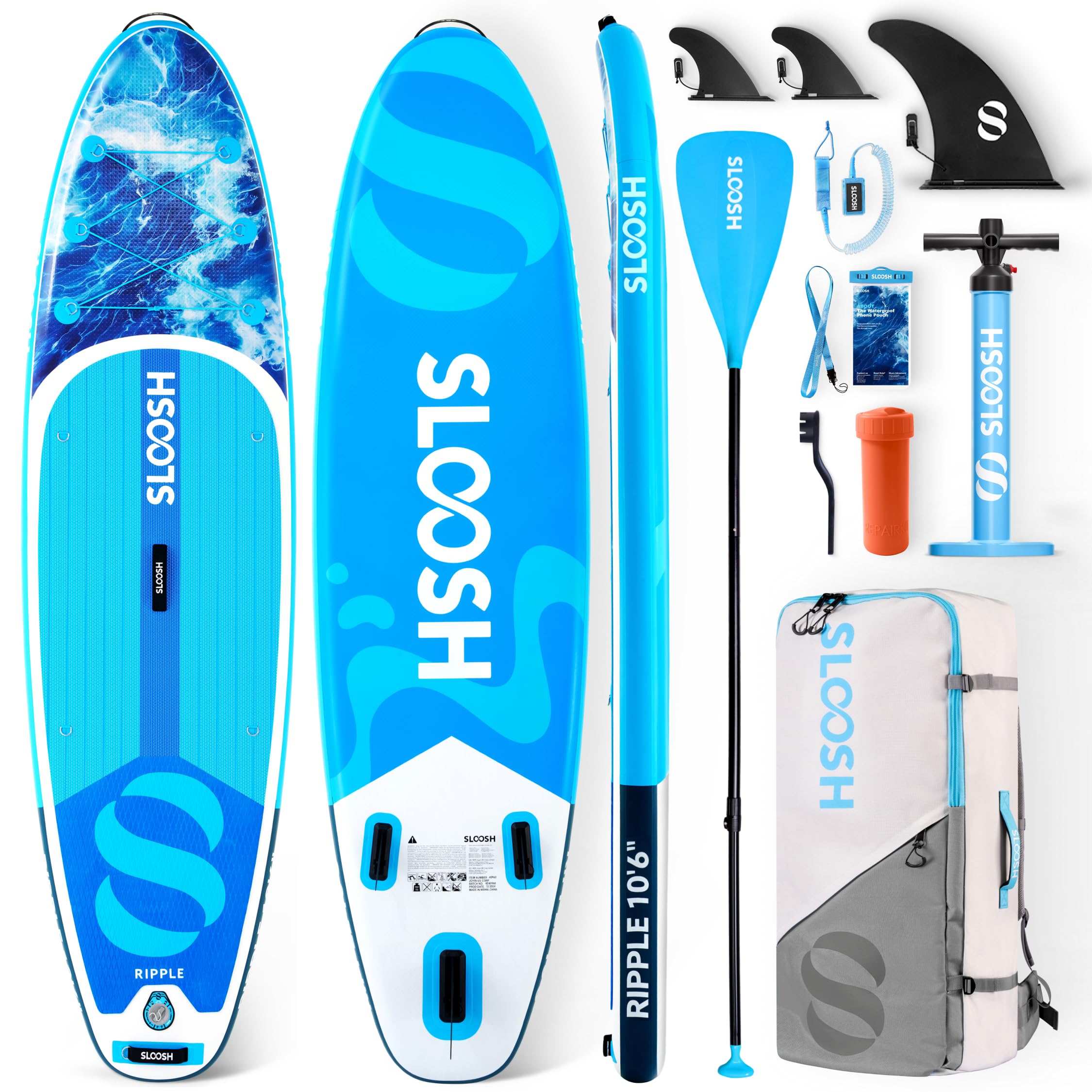
SLOOSH 10’6" x 33" SUP
Key Features
- Deck Width: 33"
- Weight Capacity: 300 lbs
- Pump Quality: Manual pump, adequate
- Thickness: 6"
- Price: $$
The SLOOSH board stands out for its no-leak seams and a backpack that makes transport simple. It’s a well-constructed package at a mid-range price, but two factors hold it back from a higher recommendation: the 300 lb weight capacity and the shorter one-year warranty. Beginners under that weight limit who value accessory quality will find plenty to like.
Pros
- Non-leak seams and durable construction hold up well over multiple seasons.
- Backpack is well-padded and makes carrying the board easy.
Cons
- Stability can feel lower in choppy conditions compared to wider boards.
- Weight capacity of 300 lbs does not accommodate heavier adults.
Best for lighter beginners who prioritize a quality backpack and solid build over maximum capacity or a long warranty.
Best for Large Groups
Niphean XL 11′ x 33" SUP

Key Features
- Deck Width: 33"
- Weight Capacity: 500 lbs
- Pump Quality: Manual pump, adequate
- Thickness: 6"
- Price: $$$
The Niphean XL supports up to 500 lbs, making it one of the few boards that can carry two adults plus a child or heavy gear. Its 11′ length and 3-year warranty add to the value. However, the large volume makes manual pumping a workout — an electric pump is recommended. Stability is adequate for calm conditions but not as reassuring as wider boards like the Skatinger.
Pros
- Carries up to 500 lbs — enough for two adults and gear.
- Priced competitively for its size and included accessories.
Cons
- Manual pumping can be strenuous for the large volume.
- Stability may feel less planted than wider boards in choppy water.
Best suited for families or groups who plan to use an electric pump and primarily paddle on calm lakes or slow rivers.
Best for Calm Waters
Aqua Plus 11′ x 33" SUP

Key Features
- Deck Width: 33"
- Weight Capacity: 350 lbs
- Pump Quality: Manual pump, poor durability
- Thickness: 6"
- Price: $$
The Aqua Plus offers a roomy 11-foot deck with a 350-pound capacity, providing good stability for calm-water paddling. The board itself is solid, but the pump, paddle, and fin may need replacement over time, and inflation requires significant manual effort. These accessory shortcomings prevent it from reaching the top tiers of the mid-range category.
Pros
- Delivers solid value at its price point
- Remains stable even in choppy conditions
Cons
- Included pump and paddle may need replacement sooner than the board itself
- Achieving full inflation through the manual pump can be physically tiring
Best suited for casual paddlers who don’t mind upgrading the accessories to get a sturdy board at a good price.
How to Choose
The most common point of failure on any inflatable SUP is not the board itself but the included pump.
Deck Width and Shape
Wider boards (33" to 35") provide a more stable platform for beginners, yoga, or carrying pets. The trade-off is slower paddling speed and more resistance in the water. Narrower boards (32" or less) track straighter and glide faster but require better balance.
For families, a 35" width allows two adults or an adult plus a child to stand without tipping. For solo fitness paddling, a 32" width is more efficient.
Weight Capacity
Manufacturers list a maximum weight, but that limit assumes ideal conditions. At 80% of the capacity, the board sits lower in the water, reducing speed and increasing drag. A family board should have a 400+ lb capacity to comfortably carry two people and gear.
Pump Quality
The included manual pump is the weakest link on most budget and mid-range SUPs. Plastic pressure gauges fail, hose connections leak, and the pump itself often cracks after a few uses. Budgeting for an electric pump from the start eliminates the most common frustration.
If you stick with the manual pump, look for a dual-action design that inflates on both the push and pull strokes, reducing effort by about 30%.
Thickness and PSI Rating
Most inflatable SUPs are 6 inches thick and rated to 15–20 PSI. A thicker board with higher PSI provides greater rigidity, better tracking, and less flex under load. However, reaching higher PSI with a manual pump is significantly harder—a 20 PSI board can take twice the strokes of a 15 PSI one.
FAQ
Why does my inflatable paddle board pump keep breaking?
Most budget and mid-range boards include cheap plastic pumps with fragile pressure gauges and weak hose connections. The gauge breaks from the vibration of pumping, and the hose splits under repeated bending. Replacing it with a dual-action manual pump or a $40 electric pump solves the problem permanently.
Can I use an inflatable paddle board with a dog?
Yes, but you need a board with a weight capacity of at least 350 lbs and a wide, non-slip deck. Look for a full EVA foam deck for grip, and avoid boards with loose fins or sharp edges. Boards like the Skatinger at 35" wide are ideal for paddling with a medium-sized dog.
How wide should a paddle board be for a beginner?
A width of 33" to 35" provides the best stability for first-time paddlers. Boards under 32" require more balance and are better suited for those with some experience. If you plan to do yoga or bring a child, a 35" board is the safest choice.
Is an electric pump worth it for an inflatable SUP?
Yes, if you inflate your board more than once a month. Electric pumps inflate to the PSI you set in under 8 minutes without any physical effort. The $40–$60 investment eliminates the most common complaint about manual pumps and makes setup feel effortless.