
This post contains affiliate links. We may earn a small commission when you buy through our links — at no extra cost to you.
Many compression socks sold for travel and nursing don’t deliver the steady pressure they claim—or they fall apart after a few washes. The real challenge is finding a pair that balances consistent compression with a fit that stays comfortable all day.
The solution starts with ignoring buzzwords like “copper” and focusing on explicit mmHg ratings. Our picks prioritize verified 20-30 mmHg compression for therapeutic relief, along with construction that holds up through repeated wear.
There’s a trade-off between ease of use and precise fit: firmer socks provide better support but are harder to pull on, while wide-calf buyers need tailored sizing over convenience. This guide matches each scenario to the right sock.


Best for All-Day Support
Physix Gear 20-30 mmHg
Key Features
- Compression Level: 20-30 mmHg
- Pack Size: 1 pair
- Calf Fit: S-XXL
- Price: Mid-Range
Physix Gear delivers reliable compression at a firm 20-30 mmHg that holds up through long shifts and repeated washing. The nylon-spandex blend maintains its shape and pressure after months of use, making it a practical choice for nurses, travelers, and athletes dealing with leg fatigue or shin splints.
Putting them on requires some effort — the tight weave that gives consistent compression also makes them a struggle to pull up, especially for anyone with limited hand strength. Once on, the top band can feel snug on some calves, leaving temporary marks. These tradeoffs are manageable for those who prioritize reliable swelling control, but buyers with dexterity concerns or sensitive skin should look at easier-on options.
Pros
- Firm 20-30 mmHg compression effectively reduces swelling and leg fatigue over long hours.
- High-quality materials hold up to repeated washing without losing compression.
- Comfortable enough for all-day wear during 12-hour shifts or long flights.
Cons
- Tight construction makes getting them on a chore; may be a barrier for those with limited hand strength.
- Top band can feel too snug on some calf shapes, sometimes leaving deep temporary marks.
For anyone who needs firm, dependable compression and can manage the effort of putting them on, this is the pair that delivers relief without early degradation.
Best for Wide Calf
SB SOX 20-30 Wide Calf
Key Features
- Compression Level: 20-30 mmHg
- Pack Size: 1 pair
- Calf Fit: Wide calf (24 in max)
- Price: Mid-Range
Detailed calf measurements up to 24 inches set these apart — the SB SOX delivers reliable medical-grade compression where standard sizes pinch or slip. The 20-30 mmHg pressure holds consistent through long flights and recovery periods, and the build holds up well to repeated washing. Getting them on is the tradeoff: the dense fabric and tight fit require patience or a donning aid, making them a poor fit for anyone with limited hand strength or arthritic hands. This is a purpose-built tool for people with larger calves who prioritize compression integrity over quick on/off convenience.
Pros
- Firm 20-30 mmHg compression effectively manages swelling and leg fatigue
- Durable construction holds shape and compression through repeated wear
- Available in specific wide calf sizes for a tailored fit
Cons
- Putting them on is a struggle — suitable only for those with good hand strength or willingness to use a donning aid
- Top band can feel too tight if calf measurement is at the upper edge of the size range
Stick with these if you have sizable calves and need the compression to stay put — anyone else will find the top pick easier for daily use.
Best for Multi-Pack Value
ACTINPUT 8-Pack 15-20
Key Features
- Compression Level: 15-20 mmHg
- Pack Size: 8 pairs
- Calf Fit: S/M, L/XL
- Price: Budget
This 8-pack provides dependable 15-20 mmHg compression at a per-pair cost that undercuts most competitors, with high marks for quality and comfort across thousands of users. It’s a smarter buy than copper-gimmick multi-packs that skimp on actual pressure.
Ideal for nurses, travelers, or anyone needing a week’s supply without spending premium prices. Fit can vary slightly between color pairs — some may be shorter or looser, so test different ones to find your best match.
Pros
- Consistent compression across the pack
- Excellent value for eight pairs
- Comfortable for all-day wear
Cons
- Some color pairs may fit differently in length or snugness
- Compression can feel slightly lighter than the advertised 15-20 mmHg for some users
The ACTINPUT 8-pack gives you dependable compression at a bargain price as long as you accept minor fit differences between socks.
Best for Budget Firm
FITRELL 3-Pack 20-30
Key Features
- Compression Level: 20-30 mmHg
- Pack Size: 3 pairs
- Calf Fit: S/M, L/XL
- Price: Budget
The FITRELL 3-pack delivers the same compression level as premium options for less, and the cushioned sole is a comfort bonus for all-day wear. Best for those wanting to test firm compression without a big investment, but the top band may feel tight on some calves, and compression can vary between individual socks – less of an issue if you’re not wearing both pairs for a matched feel.
Pros
- Cushioned sole provides comfort during long standing or walking periods.
- Effective 20-30 mmHg compression helps reduce swelling during shifts or travel.
- Three pairs at a budget-friendly price let you test compression without commitment.
Cons
- Top band may leave marks or feel restrictive on some calf sizes.
- Compression feel can differ between pairs – those needing matched pressure across both legs may notice variation.
A solid entry point for firm compression – ideal for budget-conscious users who don’t need exact pair-to-pair consistency.
Best for Style & Daily
CHARMKING 8-Pack 15-20
Key Features
- Compression Level: 15-20 mmHg
- Pack Size: 8 pairs
- Calf Fit: S/M, L/XL
- Price: Budget
CHARMKING’s 8-pack stands out for its huge range of patterns and high comfort ratings. Unlike the top pick’s firm 20-30 mmHg, these offer mild support that suits casual daily wear rather than medical therapy. The compression level can feel lighter than the labeled 15-20 mmHg for some users, and fit may vary between pairs. Best for style-conscious daily users, runners, and cyclists who want a touch of compression with a fashionable look, but not for those needing firm therapy or precise 20-30 mmHg.
Pros
- Wide selection of colors and patterns with high comfort scores.
- Great value for a stylish multi-pack.
Cons
- Compression can feel lighter than the labeled 15-20 mmHg for some users.
- Fit may vary between pairs, with some feeling too tight or too loose.
Great for everyday style and light support, but choose a firmer option if you need reliable 20-30 mmHg compression for travel or nursing.
Best for Ultra-Budget Trial
Laite Hebe 3-Pack
Key Features
- Compression Level: 15-20 mmHg
- Pack Size: 3 pairs
- Calf Fit: S/M, L/XL
- Price: Budget
At roughly $10 for three pairs, the Laite Hebe 3-Pack is the most affordable way to try compression socks. The 15–20 mmHg compression provides mild relief for occasional swelling or light activity. However, the sizing runs small — most buyers should order one size larger than usual. This pack works best for first-time users on a tight budget who need short-term or intermittent wear, not for all-day nursing or travel use.
Pros
- Very low price for three pairs — ideal for testing compression without commitment.
- Comfortable feel and noticeable help with mild swelling during short wear.
Cons
- Sizing can run small; buyers may need to size up for a comfortable fit.
- Top band may feel tight or leave marks on some calf shapes.
A practical entry point for curious first-timers, but only if you size up and keep expectations modest for long-term durability.
Best for Budget Travel
Iseasoo 8-Pack Copper Socks

Key Features
- Compression Level: 15-20 mmHg
- Pack Size: 8 pairs
- Calf Fit: L/XL
- Price: Budget
The Iseasoo pack offers a cost-effective way to try mild compression socks, providing eight pairs for a week’s rotation. Durability can vary between pairs, and the fit may be too snug for larger calves, so this works best as a short-term budget option rather than a long-term investment.
Pros
- Affordable 8-pack that covers a week’s use
- Comfortable for all-day wear during travel or nursing shifts
Cons
- Some pairs may develop holes or lose compression after a few washes
Best for budget-conscious travelers or nurses who need a week’s supply and are okay with possible shorter sock lifespan.
Best for Casual & Fun
Bluemaple 6-Pack Copper

Key Features
- Compression Level: 15-20 mmHg
- Pack Size: 6 pairs
- Calf Fit: S/M, L/XL
- Price: Budget
The fabric breathes well and the patterns are a welcome change from clinical white. The six-pack price is low per pair. However, the compression feels noticeably mild — below what most expect for travel swelling or nursing shifts. Fit can be inconsistent, with some finding the sizing tight or loose.
Pros
- Comfortable, breathable fabric
- Attractive color and pattern selection
Cons
- Compression may feel too light for those needing firm support for travel or medical use
Best for casual everyday wear where light compression and style matter, not for long flights or nursing shifts.
Best for Everyday Comfort
fenglaoda 8-Pack 20-30

Key Features
- Compression Level: 20-30 mmHg
- Pack Size: 8 pairs
- Calf Fit: S/M, L/XL
- Price: Budget
This 8-pack offers soft comfort and a low per-pair price for those wanting a week’s supply of mild leg support. But the compression often feels lighter than the 20-30 mmHg label suggests, and some pairs may show fraying after repeated washes — making this a reasonable pick for casual daily use rather than travel, nursing, or athletic recovery where consistent pressure matters.
Pros
- Very comfortable and soft fabric
- Good value for an 8-pack at a budget price
Cons
- Compression can feel significantly lighter than the 20-30 mmHg rating
This 8-pack works for light daily wear where softness and cost per pair matter more than firm compression or long-term durability.
Best for Short-Term
FuelMeFoot 3-Pack Copper

Key Features
- Compression Level: 15-20 mmHg
- Pack Size: 3 pairs
- Calf Fit: S/M, L/XL
- Price: Budget
The FuelMeFoot 3-pack delivers soft, comfortable compression that supports circulation and reduces swelling at a very low price per pair. Durability, however, is limited — holes in the heel can develop after a few wears, making this a short-term or occasional-use sock rather than a daily option.
Pros
- Soft and comfortable material
- Effective for circulation and swelling
Cons
- Holes in the heel may appear after a few wears
Best suited for short-term recovery or occasional wear where cost is the primary concern and the socks can be replaced after a few uses.
Best for Short-Term Use
Sooverki 8-Pack 15-20
Key Features
- Compression Level: 15-20 mmHg
- Pack Size: 8 pairs
- Calf Fit: L/XL
- Price: Budget
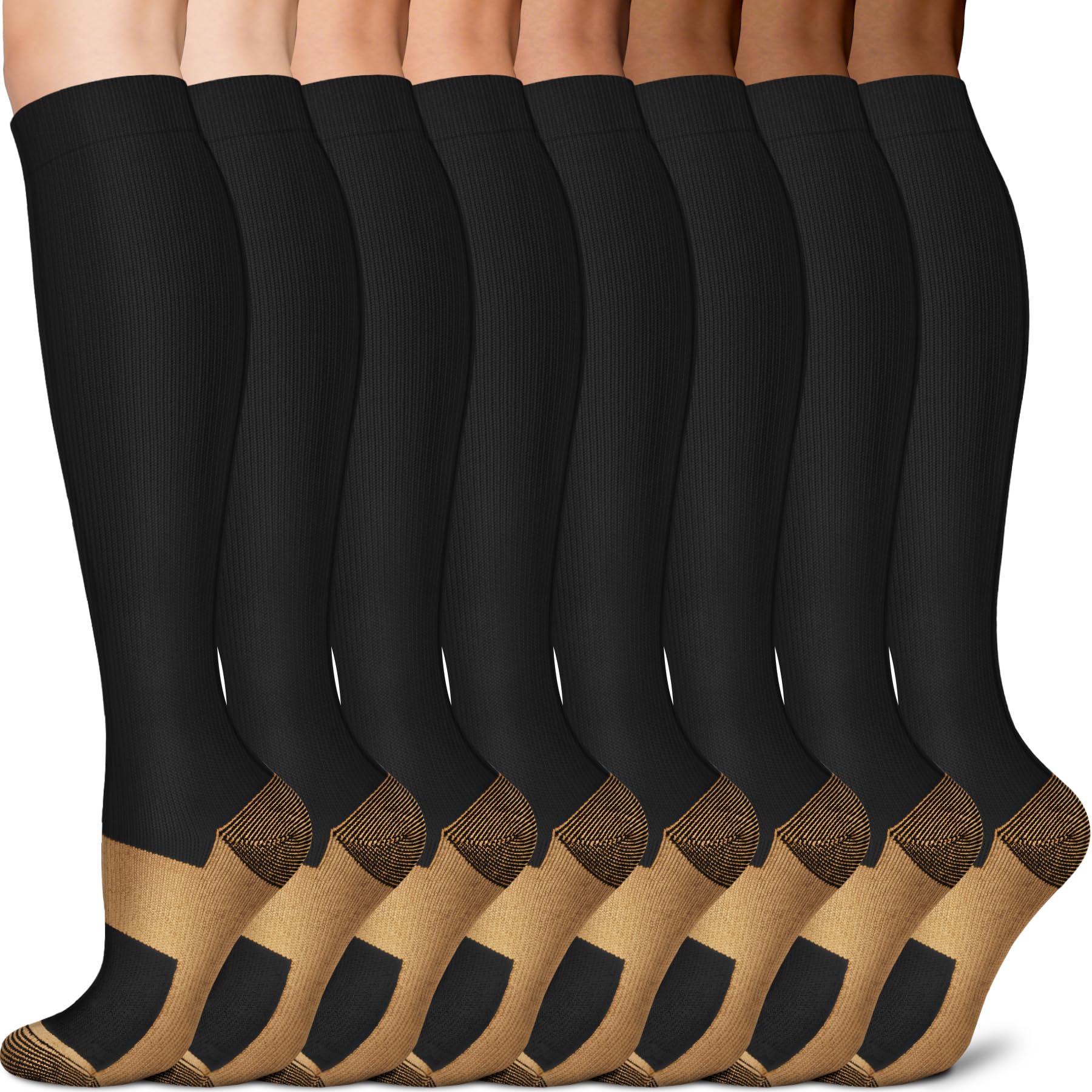
The Sooverki 8-pack offers the lowest cost per pair among compression sock multi-packs and feels comfortable to put on. The compression is mild at 15-20 mmHg, suitable for short-term wear. However, holes can develop in the toes after a few washes, so these are best reserved for occasional events rather than daily use.
Pros
- Comfortable and easy to put on for short sessions.
- Budget-friendly 8-pack delivers a low cost per pair.
Cons
- Toe area can develop holes after a few washes, limiting long-term use.
Best for short-term events or as a disposable option when upfront cost is the priority.
Best for Tight Budget
Aoliks 4-Pack 15-20

Key Features
- Compression Level: 15-20 mmHg
- Pack Size: 4 pairs
- Calf Fit: S/M, L/XL
- Price: Budget
The Aoliks 4-pack is the most budget-friendly option available, offering decent comfort and lightweight feel. However, the sizing runs small — only suitable for smaller feet and calves. Those with average or larger legs may find them too tight. The compression is on the milder side, still fine for light travel or everyday wear.
Pros
- Very affordable for 4 pairs
- Comfortable and lightweight for daily wear
Cons
- Sizing can be too tight for those with larger calves or feet
Best for buyers with slim legs who want the lowest price per pair and are willing to accept a snug fit.
Best for Casual Style
BLUEENJOY 6-Pack Copper

Key Features
- Compression Level: Light
- Pack Size: 6 pairs
- Calf Fit: S/M, L/XL
- Price: Budget
These socks are soft and comfortable with attractive patterns that mimic dress socks. However, the compression is too light to reduce swelling during travel or nursing, and sizing can vary between pairs. Treat them as fashion knee-highs, not medical-grade compression socks.
Pros
- Soft, comfortable fabric suitable for all-day wear.
- Attractive patterns that work well with office or casual outfits.
Cons
- Compression too mild to provide meaningful swelling relief for travel or nursing.
Best for casual wearers who want a light squeeze and fun colors, not for anyone needing therapeutic compression for travel, nursing, or athletic use.
Best for Casual Socks
COOLOVER 6-Pack Copper
Key Features
- Compression Level: Light
- Pack Size: 6 pairs
- Calf Fit: S/M, L/XL
- Price: Budget
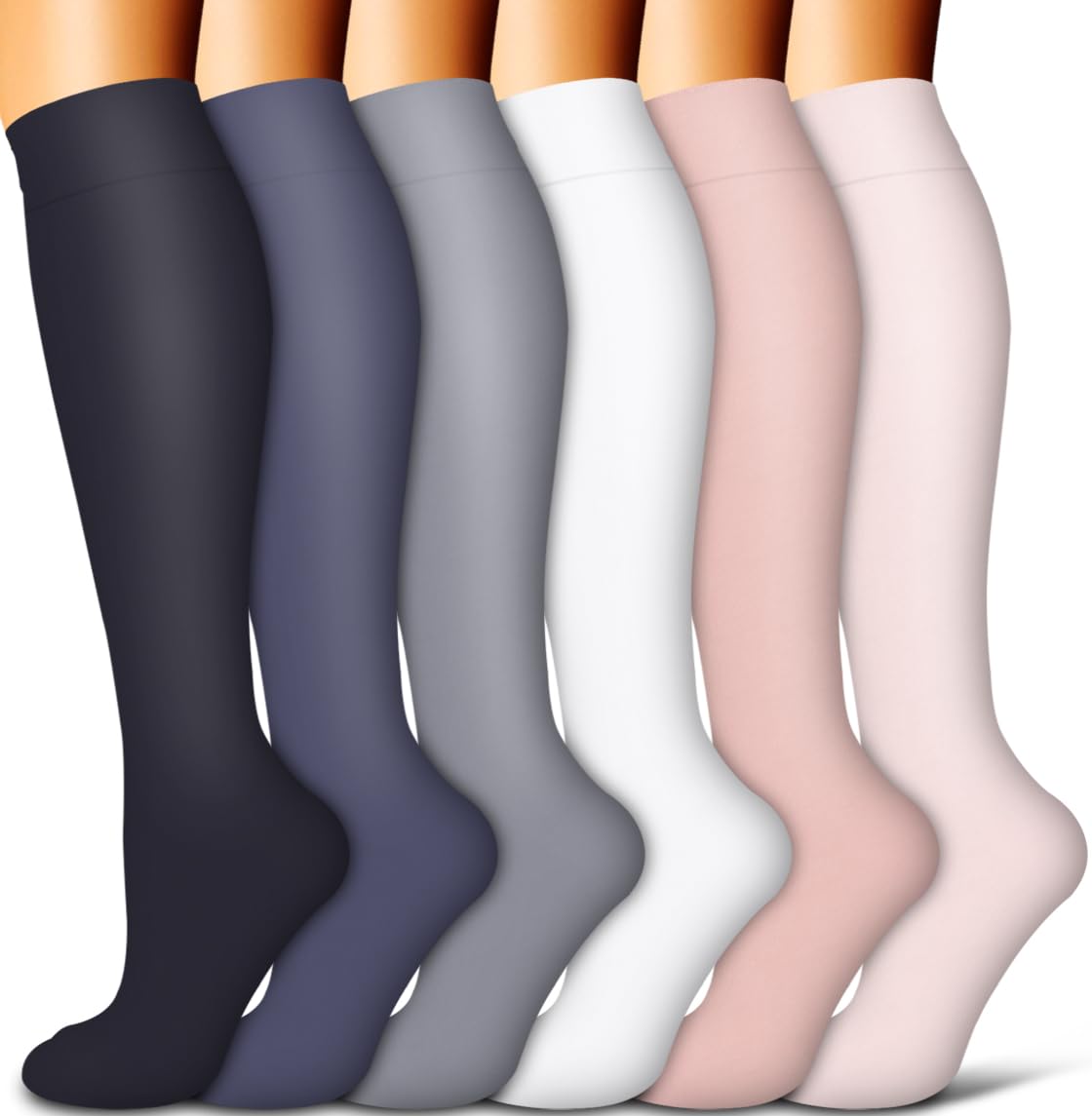
These socks stand out with attractive designs and soft fabric for everyday casual use. However, they provide negligible compression — these are decorative knee-highs, not suitable for travel, nursing, or athletic recovery.
Pros
- Fun patterns and a wide color selection for outfit coordination.
- Soft and breathable fabric for comfortable daily wear.
Cons
- Compression is minimal; not suitable for therapeutic, travel, or nursing use.
Best for those who want stylish knee-high socks without any compression — avoid if you need support for circulation or swelling.
Best for Light Casual
Dickies Light Compression

Key Features
- Compression Level: Light
- Pack Size: 2 or 4 pairs
- Calf Fit: M-XXL
- Price: Budget
The Dickies socks offer a comfortable, easy-to-wear over-the-calf fit with mild snugness, suitable for daily office wear. However, compression is below 15 mmHg, making them unsuitable for travel, nursing, or therapeutic circulation support. They are best viewed as quality casual socks, not a compression solution.
Pros
- Snug fit without being tight, easy to pull on.
- Quality construction holds up for everyday casual use.
Cons
- Compression is too light (below 15 mmHg) for travel, nursing, or circulation needs.
Best for men seeking a snug everyday sock for casual use, not for medical or travel compression needs.
How to Choose
The only reliable indicator of compression strength is an explicit mmHg rating; ignore marketing terms like ‘copper’ or ‘support’.
Compression Level
Compression socks are rated in mmHg (millimeters of mercury). 15-20 mmHg provides mild pressure for travel or daily fatigue; 20-30 mmHg offers firm support for swelling, nursing shifts, or post-surgery recovery.
Higher mmHg means more pressure on your veins to improve circulation, but also makes the socks harder to pull on and can feel too tight for sensitive skin. Choose 15-20 mmHg for occasional use and 20-30 mmHg if you need serious relief during long periods on your feet.
Pack Count
Multi-packs are convenient for travel or weekly rotation, but quality often suffers at lower price points. Many 6- or 8-packs use thinner fabric that loses compression after a few washes.
Buying a single pair first lets you verify fit and compression before committing to a bulk purchase. If you need multiple pairs, look for brands with consistent positive feedback across color variants.
Calf Size Compatibility
Shoe size alone is not enough. Measure your calf circumference at the widest point and compare it to the brand’s size chart. Many socks only accommodate calves up to 15-16 inches, leaving larger builds with tight bands or rolled tops.
If you have wide calves (over 17 inches), seek brands that list explicit calf measurements rather than generic S/M/L. A too-tight top band can restrict circulation and defeat the purpose of compression.
Ease of Putting On/Off
Firmer compression socks are inherently harder to pull on—expect to spend 30-60 seconds per sock. Rubber grip gloves or a sock donner can cut that time in half.
If you have limited hand strength or arthritis, prioritize brands labeled as easier to put on, even if that means a slightly lower mmHg. The best sock is the one you actually wear.
Material and Durability
Nylon/spandex blends are standard and durable when properly cared for. Copper-infused fibers add no proven therapeutic benefit—they are a marketing feature, not a medical one.
The most common failure is toe holes after a few washes, often from thin knit or abrasive toenails. Wash socks inside out in a mesh bag on gentle cycle, and never use fabric softener or heat drying. Hand washing extends life further.
FAQ
Why do my compression socks get holes in the toes so quickly?
Thin knit fabric combined with sharp toenails or friction inside shoes causes premature wear. Wash socks inside out in a mesh bag on a gentle cycle and avoid tumble drying. Many budget multi-packs use thinner yarn that fails faster, so a single premium pair often outlasts three cheap ones.
Can I machine wash and dry compression socks without damaging them?
Yes, but heat is the enemy. Use cold water, gentle cycle, and skip the dryer. Air drying preserves elasticity and prevents compression loss. Fabric softener breaks down spandex fibers, so avoid it entirely.
How tight should 20-30 mmHg compression socks feel on my calves?
They should feel firm and snug but not painful. You should be able to slide a finger under the top band. If you see deep red marks after removal that take hours to fade, the sock is likely too tight or the wrong size.
Are copper compression socks better than regular nylon compression socks?
No. Copper fibers do not enhance compression or circulation in any measurable way. They are a marketing differentiator. Focus on mmHg, fit, and construction quality instead.
How do I put on tight compression socks more easily?
Turn the sock inside out to form a pocket from the heel to toe, insert your foot, then roll the rest up your leg. Using rubber dish gloves gives you better grip. Avoid bunching the fabric—smoothing as you go prevents uncomfortable ridges.