
This post contains affiliate links. We may earn a small commission when you buy through our links — at no extra cost to you.
Many infant toys look adorable in the box but fall apart after a few washes or lose their electronic functions within months. The real test isn’t the first play session—it’s whether the toy survives the diaper bag, the drool, and the inevitable floor drops.
The best infant gifts balance sensory engagement with practical durability. Simple designs without batteries often outlast flashier options, but that doesn’t mean you have to give up musical features entirely—some electronic toys hold up better than others.
This guide focuses on gifts that stay useful through the first year, prioritizing easy-grip shapes, machine-washable materials, and volume controls that parents actually appreciate.



Best for Newborns, Motor Skills
Bright Starts Oball Rattle
Key Features
- Age Range: Newborn+
- Sensory Stimulation: Rattle, easy-grasp
- Grip & Portability: Easy-grasp holes, lightweight
- Teething & Cleaning: BPA-free, wipe clean
- Price: $
The Oball’s open-frame structure gives tiny fingers something to actually hold, and at 0.04 kg it’s light enough for newborns to shake without strain. The BPA-free plastic absorbs drops and throws without cracking, making it one of the few infant toys that holds up through daily use. The 32 holes and flexible material encourage grasping and transfer between hands, supporting motor skill development from the start.
This is a pure sensory-motor tool, not a teether — the 4-inch diameter may feel bulky for the tiniest newborns, but most adapt within a few weeks. It suits newborns up to 12 months and is ideal for budget-conscious gift givers who want a no-batteries, washable toy that actually gets played with. If your baby is already grabbing objects, this ball will be a natural fit.
Pros
- Super easy to grasp for tiny hands
- Lightweight and safe for baby to shake
- Encourages motor skill development
Cons
- Size may feel large for very small newborns
If you want a single infant toy that survives dropping, chewing, and washing without complaint, the Oball is that toy.
Best for Travel, Music, 3Mo+
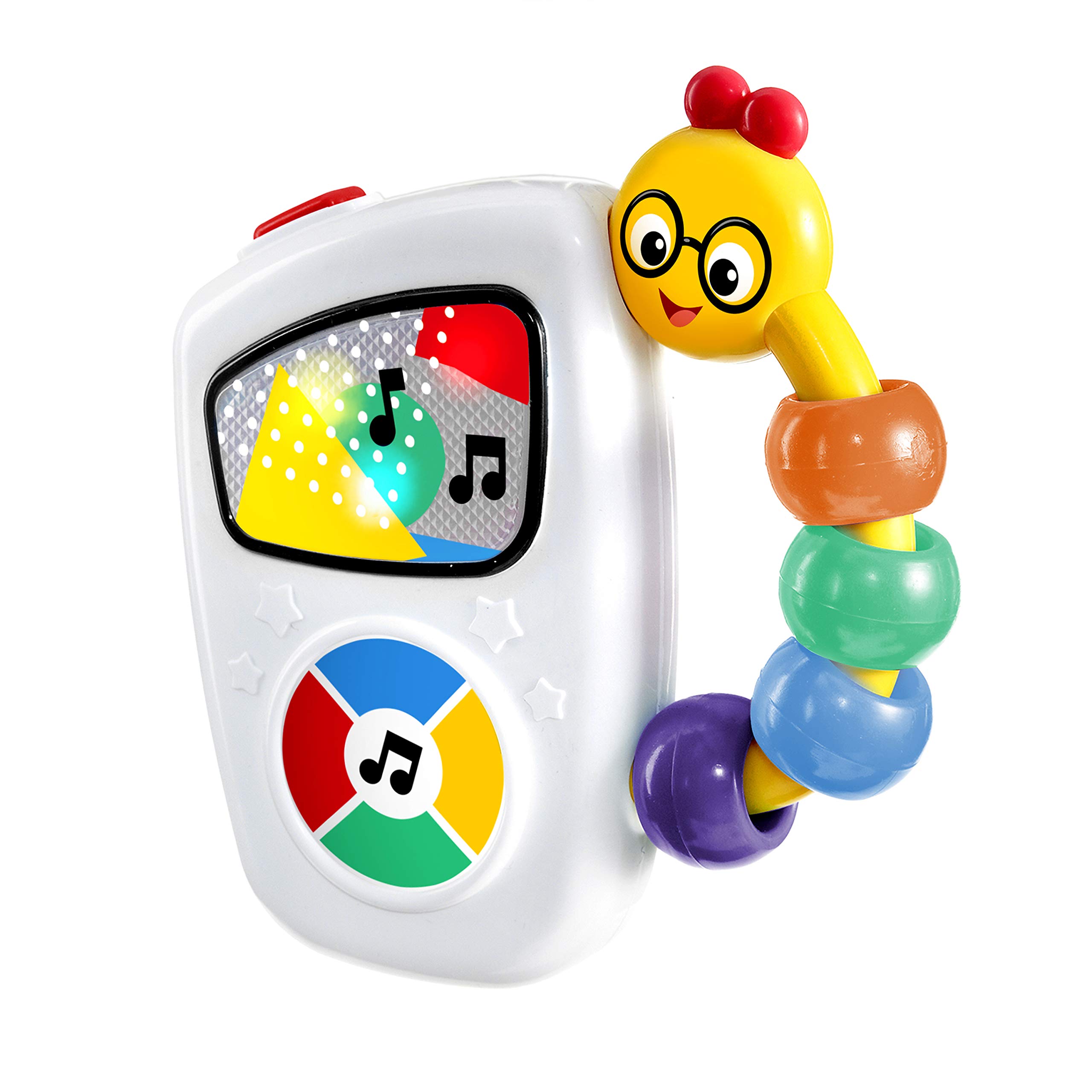
Baby Einstein Take Along Tunes
Key Features
- Age Range: 3–36 months
- Sensory Stimulation: Classical music, lights
- Grip & Portability: Portable, volume control
- Teething & Cleaning: Plastic, wipe clean
- Price: $
Baby Einstein’s Take Along Tunes stands out by offering classical music that parents actually enjoy, not grating nursery rhymes. Its compact size and clip make it easy to attach to strollers or diaper bags, and the colorful lights keep babies engaged during car rides or outings. This is best for traveling families and as a gift for babies 3–12 months old, especially those who respond to sound and light. That said, the toy’s electronics can be vulnerable to repeated drops — some units have experienced button or speaker issues after rough handling.
Pros
- Plays classical melodies that adults can tolerate — no grating baby tunes.
- Compact design clips onto strollers and diaper bags for travel.
- Flashing lights and music hold baby’s attention during car rides.
Cons
- After repeated drops, some units may develop speaker or button issues.
For families who want music that both baby and grown-ups enjoy, the Take Along Tunes delivers where other noisy toys fall short.
Best for Sleep, Calming, Newborn
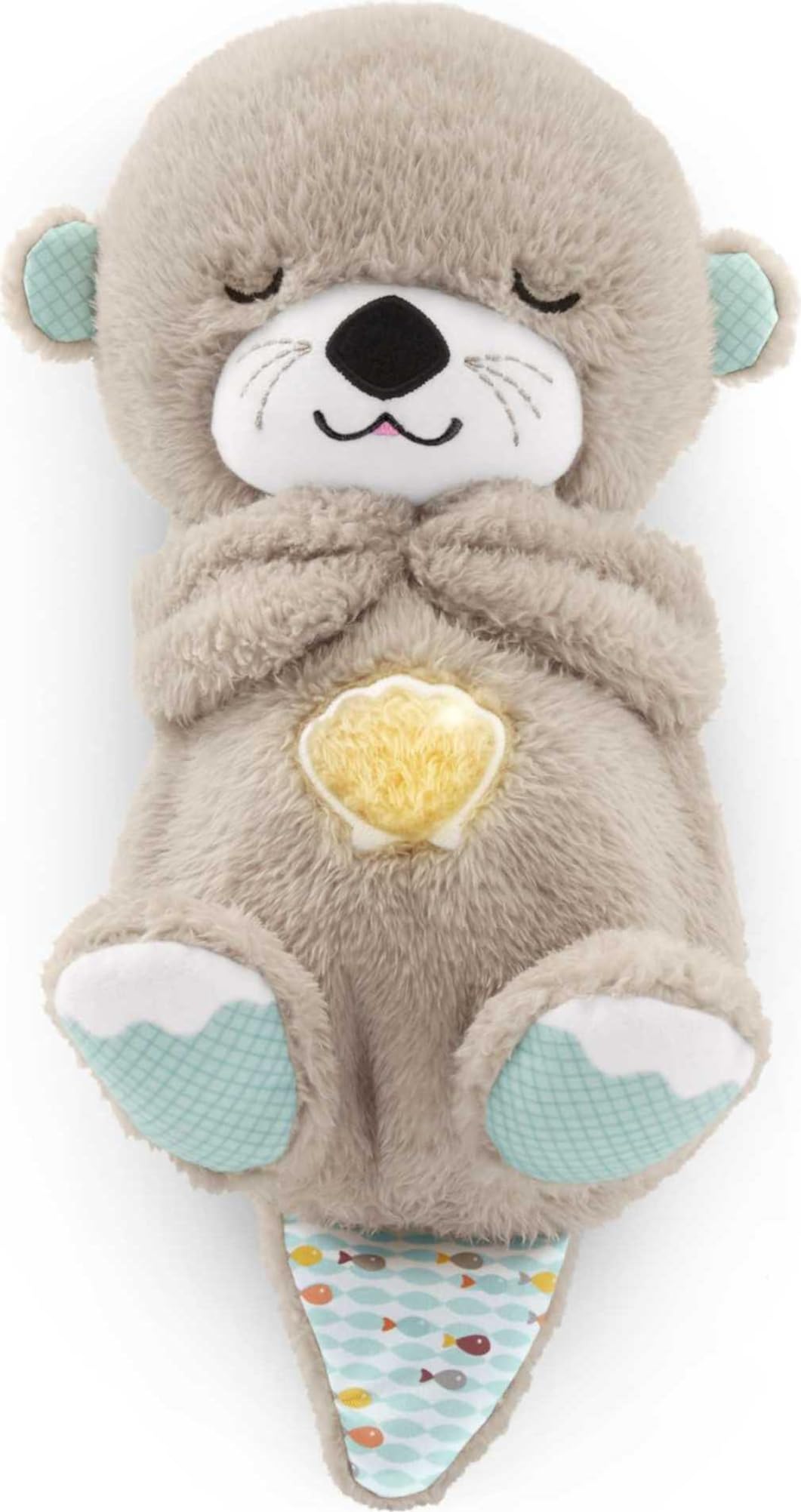
Fisher-Price Soothe ‘n Snuggle
Key Features
- Age Range: 0+ months
- Sensory Stimulation: Breathing motion, white noise
- Grip & Portability: Plush, 4 AA batteries
- Teething & Cleaning: Machine-washable (remove electronics)
- Price: $$
The Fisher-Price Soothe ‘n Snuggle Otter comforts babies with soft plush, adjustable sounds (white noise, heartbeat, lullabies), and a gentle breathing motion that rocks the belly. Unlike the portable Baby Einstein tunes toy, this stays bedside to support sleep routines. It works best for parents seeking a multi-sensory sleep aid, though the breathing motion can be intermittent on some units — worth verifying early.
Pros
- Multiple sound options including white noise and heartbeat suit different preferences.
- Soft, cute design that babies enjoy cuddling during wind-down.
Cons
- Quality control variations can make the mid-range price feel less justified.
A good middle-ground choice for families wanting a cuddly sleep aid with sound variety, but check unit quality early if motion is a priority.
Best for Starter Set, Variety
iPlay iLearn 10-Piece Rattle Set
Key Features
- Age Range: 0–12 months
- Sensory Stimulation: Textures, sounds, colors
- Grip & Portability: Variety of grips, lightweight
- Teething & Cleaning: Wipe clean, some hard plastic
- Price: $$
This set packs ten rattles and teethers into one box, offering more variety per dollar than any single toy can match. While the Oball is a more iconic individual rattle, this set covers multiple developmental stages—grasping, shaking, and texture exploration—all at once. That said, some pieces are hard plastic; babies who prefer soft silicone teethers may find them less satisfying for aggressive chewing.
This is the right choice for parents who want a ready-to-go collection without shopping around, or for gift givers looking for a complete present. It’s less ideal if the baby only uses soft teethers.
Pros
- Ten toys in one set for a cost-effective way to cover multiple developmental stages.
- Variety of textures, sounds, and colors keeps babies engaged across months of growth.
- Encourages motor skill development through shaking, grasping, and mouthing.
Cons
- Hard plastic pieces may not soothe babies who need soft silicone for teething.
For families wanting a complete starter set with broad appeal, this bundle delivers practical value. Just keep a soft teether handy if your baby chews aggressively.
Best for Teething, Comfort, Unisex
Itzy Ritzy Cow Lovey
Key Features
- Age Range: Infant (0+)
- Sensory Stimulation: Crinkle, teether, ribbons
- Grip & Portability: Small, cuddly
- Teething & Cleaning: Machine-washable, silicone teether
- Price: $$
The Itzy Ritzy Cow Lovey stands apart from basic security blankets by pairing exceptionally soft dual-texture fabrics with a built-in silicone teether and crinkle arms. The cow design is instantly charming, and the mix of sherpa, minky, and textured ribbons gives teething infants plenty to explore — without needing a separate teether toy.
This lovey is flatter and smaller than traditional plush toys, so babies who prefer a bulky, weighted comfort object may find it lacking. However, for parents seeking a lightweight, multisensory companion that can be machine-washed and clipped to a car seat, it delivers premium fabric feel and practical teething relief at a mid-range price.
Pros
- Dual-texture sherpa and minky fabric is exceptionally soft for sensory comfort.
- Integrated silicone teether and crinkle arms offer multiple soothing elements in one lovey.
Cons
- Lovey is flatter and smaller than traditional plush toys – some babies may not find it substantial enough for cuddling.
Best suited for teething babies who enjoy textured sensory toys rather than a bulky comfort object.
Best for Teething, Sensory, 3Mo+
TOHIBEE Sensory Teether
Key Features
- Age Range: 0–18 months
- Sensory Stimulation: 12 silicone balls, rattle, click
- Grip & Portability: Easy-grip, small
- Teething & Cleaning: Silicone, wipe clean
- Price: $
This silicone teether combines 12 soft balls, a rattle ring, twisting click, and rotating ball to keep little hands busy. The textured surfaces soothe sore gums during teething, while the lightweight frame is easy for babies to grasp. It’s a good fit for teething babies 3–12 months who enjoy varied sensory input, though the small size means close supervision is needed with aggressive chewers.
Pros
- Multiple textures and interactive elements keep babies engaged
- Soft silicone balls are gentle on sore gums during teething
- Lightweight design is easy for small hands to grip and hold
Cons
- Small size may be a choking concern for babies who mouth objects aggressively
For parents seeking an affordable, battery-free sensory toy that engages multiple senses, this teether delivers strong value — just keep a watchful eye on the smaller pieces during use.
Best for Budget, Teething, 6Mo+
Bright Starts Oball Shaker

Key Features
- Age Range: 6–12 months
- Sensory Stimulation: Rattle beads, teething ends
- Grip & Portability: Easy-grip, lightweight
- Teething & Cleaning: BPA-free, wipe clean
- Price: $
This budget rattle doubles as a teether, with visible beads inside and soft ends for sore gums. The grip-friendly design works well for babies learning to hold objects. However, the rattle sound is quiet — some infants may find it less stimulating than louder alternatives, which limits its appeal for babies who need more auditory feedback.
Pros
- Easy grip design suits tiny hands just learning to hold.
- Safe teething surfaces on both ends provide relief for sore gums.
Cons
- Clear center chamber is difficult to clean thoroughly if liquids get inside.
Worth grabbing as a low-cost backup toy or for babies who don’t require loud rattles.
Best for Sensory, Teething, 3Mo+
Skip Hop Bandana Buddy Elephant

Key Features
- Age Range: Baby (0+)
- Sensory Stimulation: Crinkles, rattle, textures
- Grip & Portability: Detachable bandana, 5×10
- Teething & Cleaning: Machine-washable (bandana)
- Price: $$
The Skip Hop Bandana Buddy Elephant is a plush activity toy that packs crinkles, a rattle ring, and multiple textures into an adorable elephant shape. The real draw is the removable bandana teether – a clever addition that gives babies something safe to chew on while they explore. The design is well-constructed and machine-washable, which helps during messy teething phases. However, the toy is noticeably larger than many infant rattles or loveys. For a newborn who is still working on basic grasping, the size can be cumbersome – it’s better suited to babies who are already sitting up or actively mouthing toys. That minor tradeoff aside, it offers strong sensory variety in one package.
Pros
- Adorable elephant design with crinkles, rattle, and varied textures
- Detachable bandana teether provides convenient teething relief
Cons
- Larger footprint may be cumbersome for very young infants
Worth considering if you want a multi-sensory toy with an integrated teether and don’t mind the size – skip it for newborns who still need smaller, simpler objects to grasp.
Best for Tummy Time, Textures
Melissa & Doug Flip Fish

Key Features
- Age Range: 0–36 months
- Sensory Stimulation: Crinkling scales, squeaker, mirror
- Grip & Portability: Large, 13.5×9.75
- Teething & Cleaning: Machine-washable
- Price: $$
The Flip Fish packs a lot into one stuffed toy: crinkling scales, a squeaker tail, a mirror, and hidden pictures under fins. It’s sturdy enough to survive machine washing and holds up to repeated tummy time sessions. The bulky size, however, limits portability – this is a stay-at-home toy suited for floor play, not stroller clips or diaper bags.
Pros
- Multiple textures, crinkling scales, squeaker, and mirror inside keep babies engaged during tummy time.
- Withstands machine washing and holds up to enthusiastic play without losing shape or features.
Cons
- Large size may be too bulky for tiny babies to carry independently, and it doesn’t clip onto strollers or car seats.
For caregivers who want a feature-packed sensory toy for home-based tummy time, the Flip Fish delivers solid value. If portability or easy travel storage is a priority, a slimmer clip-on book may be a better fit.
Best for Bilingual, Lights, 3Mo+
Baby Einstein Glow & Discover

Key Features
- Age Range: 3–36 months
- Sensory Stimulation: Lights, sounds, 3 languages
- Grip & Portability: Flimsy stand, best flat
- Teething & Cleaning: Plastic, wipe clean
- Price: $$
The Glow & Discover Light Bar introduces babies to colors, animals, and numbers across three languages, with bright lights and engaging sounds that hold attention during tummy time. However, the included stand is not stable enough to keep the bar upright during active play — the toy works best placed flat on the floor or used during seated play.
Pros
- Multilingual mode teaches three languages.
- Bright lights and sounds motivate tummy time and early engagement.
Cons
- Stand can collapse when the bar is upright; intended for floor use.
Best for families who prioritize language exposure and plan to use the bar flat on the floor or during seated play.
Best for Security, Comfort, Neutral
Pro Goleem Elephant Lovey

Key Features
- Age Range: Baby–36 months
- Sensory Stimulation: Crinkly ears, soft fabric
- Grip & Portability: 16×7.5 inches, cuddly
- Teething & Cleaning: Machine-washable (head caution)
- Price: $
This 16-inch lovey combines ultra-soft minky and satin with crinkly ears for sensory play, all at an entry-level price that makes it a natural baby shower pick. The neutral grey unisex look fits any nursery. The main tradeoff: the head can separate from the blanket after machine washing if not handled gently, so it’s best for parents who air-dry or use a delicates bag.
Pros
- Extremely soft minky and satin fabric with silk edge trim for gentle tactile comfort.
- Adorable elephant design with crinkly ears that engage babies during play.
Cons
- Head can detach from the blanket after machine washing if care instructions are not followed closely.
Great for shower givers who want an affordable, soft lovey and can commit to gentle washing — the head detachment risk is manageable with proper care.
Best for Arm/leg Movement
Infinno Wrist Rattle Socks Set

Key Features
- Age Range: 0–12 months
- Sensory Stimulation: Rattles, bright colors
- Grip & Portability: Wrist/ankle straps, lightweight
- Teething & Cleaning: Hand wash
- Price: $
Adorable garden bug designs and soft materials tempt newborns to move. The set includes two wrist rattles and two foot finders. However, socks may slip off very small infants, so fit varies.
Pros
- Bright garden bug patterns hold baby’s gaze during play.
- Gentle rattle sounds reward arm and leg movement, encouraging activity.
Cons
- Socks can slip off smaller newborns, requiring careful monitoring during use.
Best suited for babies with average or larger wrists/ankles, or as a visual stimulation set for supervised play.
Best for Book, Crinkle, Teether
Hungry Caterpillar Crinkle Book

Key Features
- Age Range: 0–24 months
- Sensory Stimulation: Crinkle, squeaker, teether corner
- Grip & Portability: Small, clip-on
- Teething & Cleaning: Machine-washable
- Price: $
This soft book brings beloved Eric Carle illustrations to babies through crinkle sounds, a squeaker, and a teether corner. The clip attaches to strollers or car seats on the go. Limited to five small pages, so it works best as a sensory toy rather than a storybook — ideal for fans of the character who want a portable, budget-friendly teething companion.
Pros
- Classic art parents enjoy, with multiple sensory hooks for babies.
- Built-in teether corner offers relief during sore gums.
Cons
- Small size and few pages may disappoint those expecting a full storybook.
Best for Eric Carle fans seeking a lightweight, multi-sensory teether toy to clip onto gear — not for story time.
Best for Farm, Crinkle, Travel
beiens Farm Tails Crinkle Book

Key Features
- Age Range: 0–36 months
- Sensory Stimulation: Crinkle, textured tails, squeaker
- Grip & Portability: Lightweight, stroller clip
- Teething & Cleaning: Machine-washable
- Price: $$
Bright colors and textured tails keep babies engaged during travel, and the crinkle cover and squeaker add playful sounds. However, the price per page is higher than most single cloth books – better as a portable novelty than a budget-friendly reading option.
Pros
- Bright colors and textured tails engage babies during travel.
- Crinkle and squeaker sounds hold attention on the go.
Cons
- Price per page is higher than most single cloth books – more of a premium travel toy than a value buy.
Best for parents who prioritize portability and sensory engagement over page count.
How to Choose
The key to a lasting infant gift is choosing materials and features that survive daily use, not just the first impression.
Age Range Suitability
Babies develop motor skills quickly, and a toy meant for a 3-month-old may bore a 10-month-old. Look for toys with a wide age range (e.g., 0–36 months) that offer multiple ways to play, such as a rattle that also works as a teether. A narrow age range can mean buying replacements sooner.
Sensory Stimulation
Lights and sounds grab attention, but not all stimulation is equal. Simple crinkle fabrics and squeakers engage without overstimulating, while flashing lights may cause some babies to look away. For travel, choose quiet, battery-free options that won’t die mid-flight.
Grip and Portability
Newborns need toys they can easily hold—holes or textured surfaces help. Portability matters for parents: clip-on toys and lightweight designs are easier to attach to strollers or diaper bags. Bulky toys may stay at home.
Teething-Safe Materials and Easy Cleaning
Teething babies put everything in their mouths, so BPA-free silicone or fabric is essential. Machine-washable toys save time, but check if electronics are removable. Some loveys lose their heads in the wash if not handled carefully.
FAQ
How do I clean a crinkle book without damaging the sound?
Spot clean the fabric with a damp cloth and mild soap. Avoid full submersion; the crinkle material is often paper-based inside. Air dry flat to preserve the sound.
Are clip-on stroller toys safe for a 3 month old?
Yes, as long as the toy is lightweight, securely attached, and has no small parts that could detach. Supervise initially to ensure baby doesn’t pull it into their mouth.
What age do babies start using play gyms with piano mats?
Most babies start using play gyms around 2-3 months, but the piano mat function becomes more engaging around 4-6 months when they can kick intentionally.
Can I wash a lovey with a built-in teether in the washing machine?
Only if the teether is removable; otherwise, hand wash the plush part and wipe the teether separately. Machine washing can damage the silicone or cause the teether to detach.