
This post contains affiliate links. We may earn a small commission when you buy through our links — at no extra cost to you.
The toy aisle overflows with gadgets that promise endless fun, but too many of them crack, fizzle, or fall apart within a week. Parents know that heartbreak: a birthday gift tossed aside because the LED stopped flashing or the tower won’t stay upright.
A truly great gift for boys isn’t about the most lights or the biggest box. It’s about a toy that stays interesting after the unboxing—something that survives being dropped, built, and rebuilt, keeping their hands and brains busy without a screen.
This guide cuts through the flash to pinpoint toys with genuine staying power: fidget puzzles that get quieter instead of louder, outdoor toys that whistle without tearing, and STEM kits that teach patience and problem-solving. These are gifts that match the energy of real kids, not just the promises on the packaging.




Best for Puzzle Lovers
ThinkFun Gravity Maze
Key Features
- Durability: Non-locking towers, falls if bumped
- Ease of Assembly: No assembly, adjust towers
- Educational Value: Logic, spatial reasoning
- Age & Engagement Longevity: Ages 8+, 60 levels, high replay
- Price: $$
The challenge is to arrange nine translucent towers on a grid so the marble drops from start to finish, matching the card’s start and end positions. Cards escalate from simple to expert, and the trial-and-error loop of turning towers to find the hidden path builds spatial reasoning and an intuitive grasp of momentum. There are no timers, no screens — just a physical puzzle that can occupy a tween or teen for a solid hour. The 60-card supply means it grows with the child, not against them.
It’s built for quiet, independent play. Gifted kids who dig into mechanical logic, engineering kits, or chess puzzles will sink into it; classrooms and homeschool enrichment programs use it for individual STEM challenges. The set needs a stable surface — active spaces where pieces get jostled aren’t a match. For a child who can sit still with a problem worth solving, it becomes a go-to screen-free anchor.
Pros
- Engaging, addictive solo puzzle that holds attention through escalating challenges.
- Sharpens spatial reasoning and critical thinking without feeling like schoolwork.
- Practical STEM toy that teaches engineering principles through hands-on play.
Cons
- Towers can tip over if the game grid is bumped, so it needs a careful setup.
For a gift that outlasts a single afternoon and quietly builds real logic skills, Gravity Maze delivers years of replay — just set it up on a desk, not the floor during playdates.
Best for Outdoor Active Play
Nerf Vortex Aero Howler
Key Features
- Durability: Foam body, fins may tear
- Ease of Assembly: Ready to throw
- Educational Value: Hand-eye coordination
- Age & Engagement Longevity: Ages 6+, all ages, endless
- Price: $
The built-in whistle activates with any decent spiral, instantly adding excitement to backyard tosses. The oversized foam body is forgiving to catch and easy to launch even for kids who can’t throw a regulation football properly. Unlike light-up frisbees that can stop working, this ball has no lighting or circuits to malfunction.
It’s ideal for family catch, beach trips, and park play. The soft foam impacts are safe and the main body is surprisingly sturdy. The plastic tail fins can tear if chewed by a dog or abused, so it’s best kept away from pets.
Pros
- Whistling sound turns catch into an event
- Easy for all ages to throw and catch
- Durable foam body withstands normal play
Cons
For a whistle-powered football that any kid can spiral with ease, it’s the standout budget outdoor gift — just keep it out of the dog’s reach.
Best for Fidget & Focus
Shashibo Shape Shifting Cube
Key Features
- Durability: Stickers may peel
- Ease of Assembly: Ready to play
- Educational Value: Spatial reasoning, creativity
- Age & Engagement Longevity: Ages 8+, 100+ shapes, collectible
- Price: $$
Unlike electronic fidget devices that beep and blink, the Shashibo uses 36 silent magnets to fold into 100+ geometric configurations—ideal for classrooms and quiet spaces. The cube appeals strongly to 8–12 year olds and adult collectors, but its decorative stickers can start to peel with frequent handling. This is a desk toy, not a playground companion.
Pros
- Addictive, open-ended shape shifting keeps hands busy without screens.
- Solid magnetic hinges withstand daily folding sessions.
- A universally appealing gift that delights puzzle fans of all ages.
Cons
- The decorative surface stickers can lift or peel with extended handling.
If you need a silent, pocketable puzzle that transforms idle hands into creative focus, the Shashibo delivers—just keep it away from rough-and-tumble play to preserve the artwork.
Best for Stem Builders
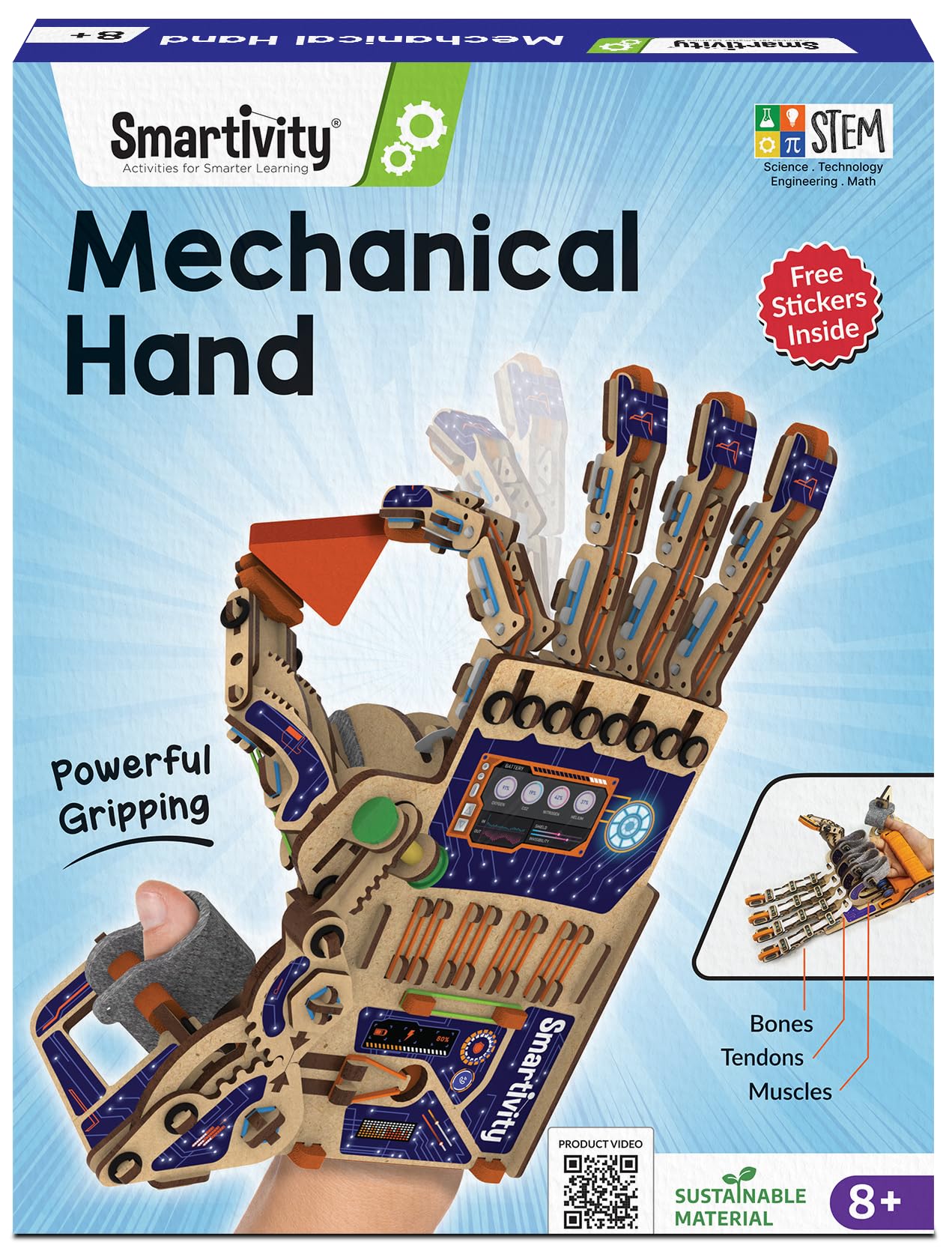
Smartivity Robotic Hand
Key Features
- Durability: Sturdy wood, needs precision
- Ease of Assembly: DIY kit, multi-hour build
- Educational Value: Mechanics, robotics, engineering
- Age & Engagement Longevity: Ages 8-14, build once, lasting play
- Price: $$
Unlike papercraft or snap-together toys, this kit produces a fully articulated wooden hand—each finger moves via sliding controls the builder assembles from laser-cut timber.
The project is best suited to kids 9–12 who enjoy multi-hour builds and following detailed diagrams. Younger children can participate but will likely need an adult to handle the trickier alignment steps. It’s not a grab-and-play gift; the reward comes from the construction itself.
Pros
- The step-by-step illustrated instructions keep even multi-hour sessions on track.
- Sliding finger controls deliver a satisfying mechanical payoff that kids can show off.
- Sustainable wood and real engineering principles turn playtime into a science lesson.
Cons
- Small wooden parts can shift out of alignment and require readjustment; builders who rush may end up with a stiff hand.
A gift for the kid who likes to earn their fun—this transforms a focused afternoon into a moving hand they’ll proudly demonstrate.
Best for Music & Parties
YLL Mini Karaoke Machine
Key Features
- Durability: Compact, durable casing
- Ease of Assembly: No assembly, Bluetooth pairing
- Educational Value: Musical expression
- Age & Engagement Longevity: Ages 4+, immediate fun
- Price: $$
Unlike solo building sets and puzzles, the YLL Mini Karaoke Machine injects interactive performance into any gathering. Two wireless mics, Bluetooth streaming, and an LED light show turn birthdays and family nights into energetic sing-alongs. The speaker delivers clear, room-filling sound that surprises for its size.
It’s a natural gift for music-loving kids ages 4–10, and the rechargeable, compact design makes it ready for trips to the park or hotel. One thing to check: the volume can’t be dialed down very low. In a house or yard, that’s pure fun—but in a thin-walled apartment, even the minimum setting may disturb neighbors. For that scenario, consider headphone use or choose a quieter toy.
Pros
- Surprisingly loud and clear sound for its size
- Hugely fun for kids’ parties and family sing-alongs
- Excellent gift for music-loving children
Cons
- Minimum volume is still fairly loud; may be too intense for small, noise-sensitive spaces
For families with space to let the volume shine, this karaoke set turns any party into a performance—ideal for the birthday boy who craves the spotlight.
Best for Travel Gaming
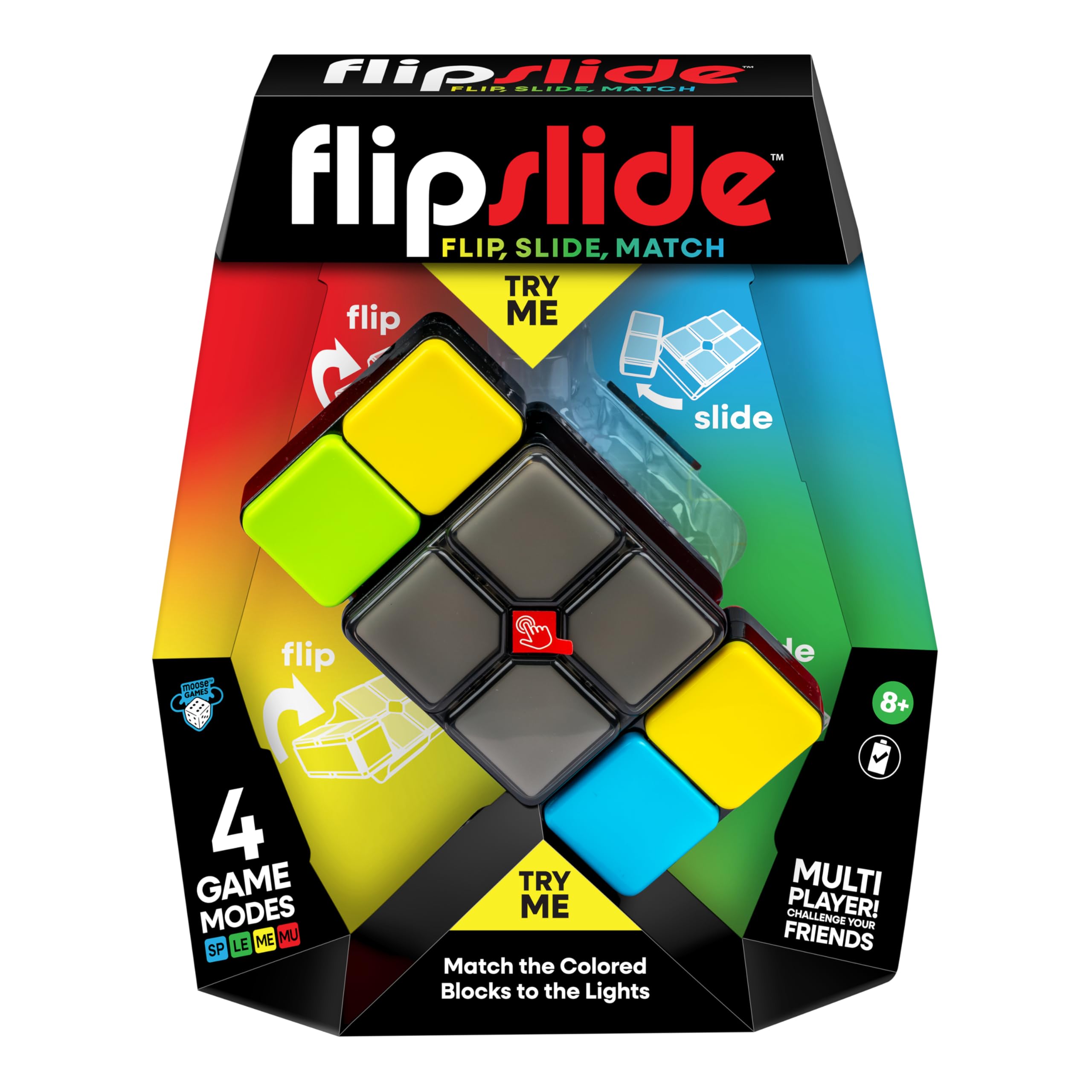
Moose Flipslide
Key Features
- Durability: Electronic, speaker may glitch
- Ease of Assembly: Ready to play
- Educational Value: Speed, memory skills
- Age & Engagement Longevity: Ages 8+, compact replay
- Price: $
Where the top pick challenges spatial logic with 60 physical puzzles, Flipse Slide packs four fast-paced electronic modes into a pocket-size device. It’s a Simon-esque challenge where you flip and slide colored blocks to match patterns, offering Speed, Memory, Level, and Multiplayer modes. It runs on two LR44 batteries (included) and slips easily into a jacket pocket. The clicky block-flipping action is addictive and the build stands up to constant tapping, making it more social and energetic than deep puzzle-solving. Ideal for road trips, waiting rooms, and fidgety hands — similar to the magnetic transformation toy but with structured gameplay and audible feedback. The speaker can be loud, and in some units audio may degrade or stop; headphones or mute are practical workarounds for quiet environments.
Pros
- Addictive, fast-paced fun for all ages
- High-quality build and satisfying gameplay
- Excellent travel-friendly gift, especially for ADHD and fidgety hands
Cons
- Speaker volume may be too loud; audio can degrade or stop on some units.
Great portable brain-teaser at a low price, but be prepared for potential sound glitches.
Best for Curious Readers
NG Kids Why? Book
Key Features
- Durability: Hardcover
- Ease of Assembly: Ready to read
- Educational Value: Science, nature facts
- Age & Engagement Longevity: Ages 7-10, repeat reading
- Price: $
Unlike the tactile puzzle of the top pick, this hardcover feeds hungry minds with 1,111 answers across science and nature, each paired with full-color photographs that pull even reluctant readers in. It’s the gift for a kid who asks endless questions — and the quiet tradeoff is that it sits still on a shelf, not in a toy box. This suits classroom libraries, long car rides, and any child who prefers facts over fidgets.
Pros
- Curiosity-sparking answers paired with vibrant photos that make every page a discovery.
- Stunning full-color photography and illustration that draw even reluctant readers in.
- An easy-to-read layout that’s hard to put down, keeping kids engaged without a screen.
Cons
A no-screen gift that outlasts any toy cycle — ideal for the fact-obsessed, the question-askers, and the kid who already has enough building kits.
Best for Glow-In-Dark Builders
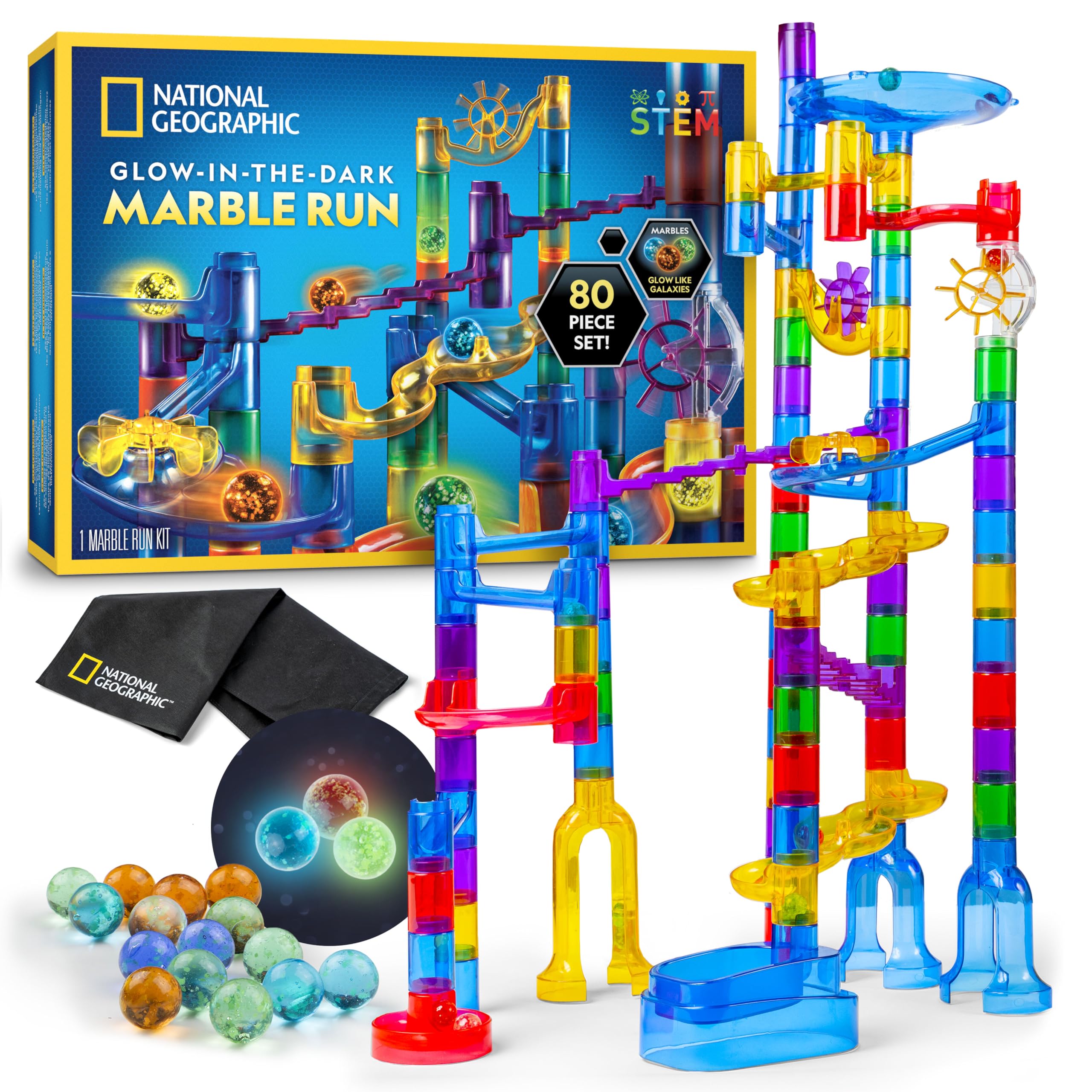
NAT GEO Glowing Marble Run
Key Features
- Durability: Loose connections, tips over
- Ease of Assembly: DIY, adult help needed
- Educational Value: Physics, engineering
- Age & Engagement Longevity: Ages 8+, variable builds
- Price: $$
The glowing track pieces and glass marbles create a mesmerizing nighttime build, with enough configuration options to keep kids engaged across multiple sessions. Connections can be loose, so tall or ambitious structures may topple during play — this set rewards patient builders and adults who enjoy stabilizing tricky sections. Best for collaborative families who see the extra reinforcement as part of the experience, not a dealbreaker.
Pros
- Glowing marbles and translucent tracks deliver a mesmerizing nighttime visual effect.
- Open-ended layout design encourages creativity across multiple builds.
Cons
- Loose piece connections can cause taller structures to tumble during play.
A solid choice for families who treat an occasional collapse as a puzzle to solve rather than a frustration — and who want a glow-in-the-dark spectacle.
Best for Science Magic Fans
NAT GEO Magic Chemistry Set

Key Features
- Durability: Consumable, missing parts possible
- Ease of Assembly: Setup, adult supervision
- Educational Value: Chemistry, science tricks
- Age & Engagement Longevity: Ages 8+, 10 experiments
- Price: $
This kit mixes science with showmanship, giving kids 10 magic tricks using chemical reactions, instant snow, and color-changing liquids. Included wand and gloves set the stage, and instructions support independent play. The smaller experiment lineup is the tradeoff for the performance focus. Some kits ship with a missing component, so a quick inventory check before gifting avoids disappointment.
Pros
- Magic-themed experiments double as performances, adding excitement to basic chemistry.
- Step-by-step guide supports kids doing tricks largely on their own.
Cons
- A missing piece is possible out of the box; verifying contents before gifting prevents surprises.
An ideal gift for aspiring magicians who love science, provided you do a quick parts check before wrapping.
Best for Toddler Indoor Play
BooTaa 29" Dart Board

Key Features
- Durability: Velcro balls lose stick
- Ease of Assembly: Easy to hang, ready
- Educational Value: Counting, hand-eye coordination
- Age & Engagement Longevity: Ages 3+, young kids
- Price: $
The 29-inch fabric board is big enough for toddlers to easily see and hit, and the 12 included balls stick without darts. Color-coded scoring adds a simple math lesson. Velcro balls can lose stickiness over time, so some throws may bounce off—a minor tradeoff for a safe, budget-friendly indoor game.
Pros
- Safe, entertaining indoor game for kids and families.
- Large size makes it fun and accessible for beginners.
Cons
- Sticky balls can lose adhesion with repeated use; some throws may bounce off instead of sticking.
A cheerful first dart board for young children; just plan on replacing the balls when adhesion wanes.
Best for Lego Engineers
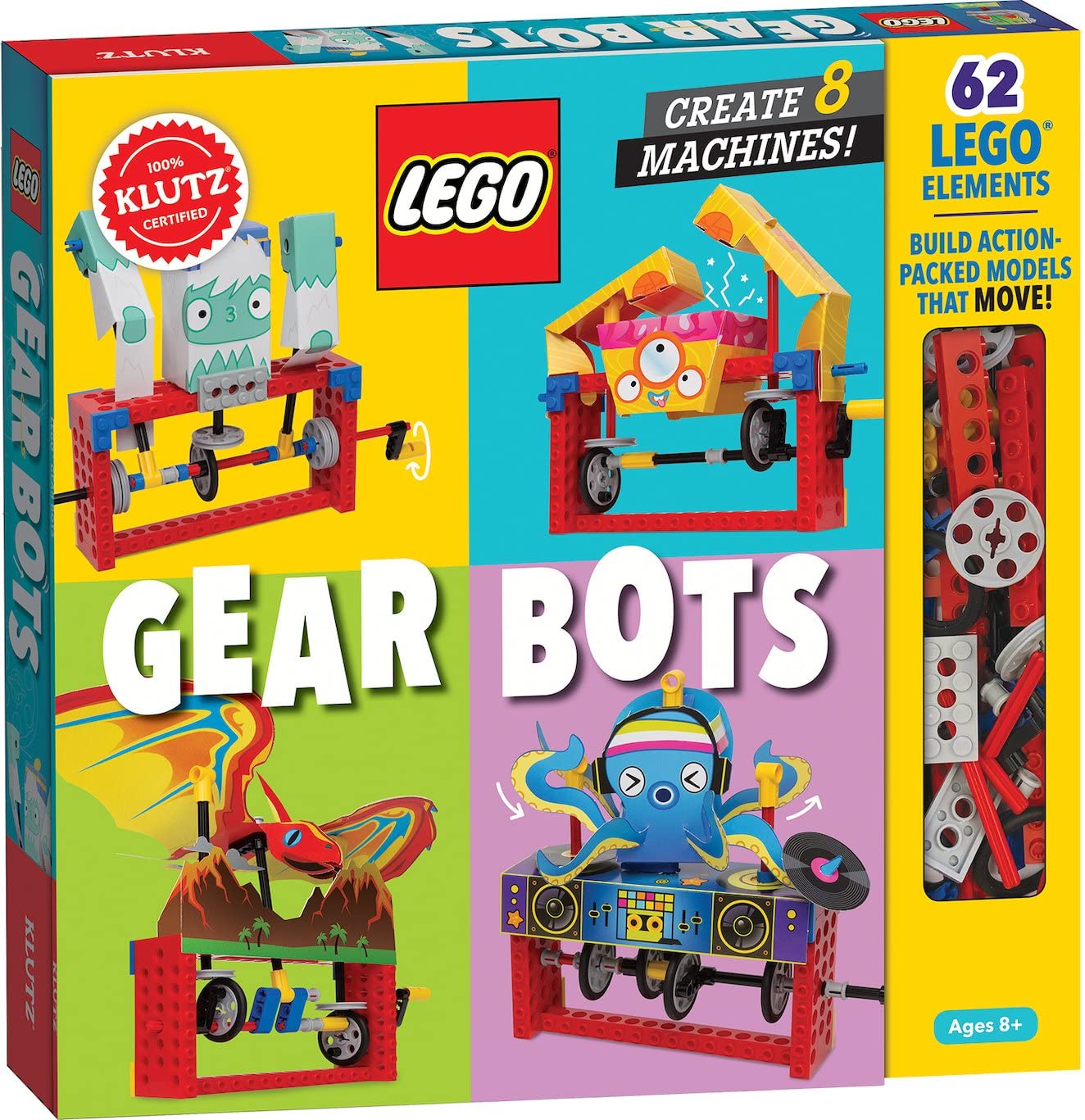
Klutz Lego Gear Bots
Key Features
- Durability: Fragile paper-LEGO joints
- Ease of Assembly: DIY, delicate connections
- Educational Value: Engineering, gears, axles
- Age & Engagement Longevity: Ages 8-12, display after build
- Price: $$
Eight kinetic creatures with functioning gears, axles, and cranks make this kit a hands-on engineering intro. The papercraft-to-LEGO connections are delicate, so finished models are best as display pieces, not rough-play toys. Patient builders ages 8-10 who enjoy the build more than the final product’s sturdiness will find it rewarding.
Pros
- Engaging introduction to gears, axles, and cranks through a build that captivates budding engineers.
- Creative fusion of LEGO and papercraft yields kinetic sculptures kids are proud to display.
Cons
- LEGO-paper connections can be fragile, making models better for display than energetic play.
Choose this if the joy is in the building and the finished model will live on a shelf, not in a toy box.
Best for Craft & Flight
Klutz Paper Airplanes

Key Features
- Durability: Paper, disposable
- Ease of Assembly: Folding required, guide included
- Educational Value: Aerodynamics, design
- Age & Engagement Longevity: Ages 7+, 10 designs
- Price: $
Ten airplane designs and 40 custom paper sheets teach flight through folding. Illustrated steps are accessible to kids, offering a quiet, screen-free activity. Enduring reputation, but lack of current pricing and exact contents in listings means verifying the box before ordering is wise.
Pros
- Ten airplane designs with 40 sheets of patterned, flight-ready paper.
- Illustrated instructions break each fold down for beginners.
Cons
- Price and exact contents may vary; confirm what’s inside upon arrival.
For a mess-free craft that fits in a backpack and teaches basic aerodynamics, this classic kit is a solid bet — just confirm the box contents before gifting.
Best for Nighttime Play
TOSY LED Flying Disc

Key Features
- Durability: Electronics may fail
- Ease of Assembly: Ready to throw
- Educational Value: Active outdoor play
- Age & Engagement Longevity: Ages 8+, night play
- Price: $$
The 36 RGB LEDs create a vibrant light show for dusk and nighttime catch. Waterproof and USB-C rechargeable, it’s built for the outdoors. However, the LED module can stop lighting without warning, even after limited use, leaving a standard frisbee. This makes it a risky primary gift unless backed by an easy exchange policy.
Pros
- Bright, colorful light show makes nighttime play visually stunning.
- Fun for kids and adults at dusk, adding a new dimension to outdoor play.
Cons
- LED module can stop lighting without warning, turning it into a plain disc.
A dazzling treat for gift recipients who can exchange a dud, but a gamble for those needing a guaranteed light show.
How to Choose
The most common disappointment with boys’ gifts isn’t a lack of fun—it’s toys that break before the novelty wears off, so prioritize construction and real-world durability over flashy features.
Durability Under Active Play
Many toys with moving parts look more engaging, but each joint is a potential failure point. Simpler designs with fewer breakable connectors—like a one-piece foam football or a solid magnetic cube—tend to survive drops, tosses, and general roughhousing.
Check what happens when the toy is dropped: will stickers peel, towers snap, or electronics crack? For outdoor toys, look for thick foam and flexible fins rather than rigid plastic. For building kits, test connections before handing them to a child; loose fits lead to repeated collapses and frustration.
Ease of Assembly
DIY kits teach building skills, but the assembly time varies from 10 minutes to several hours. A multi-hour build rewards patience with a working model, yet younger kids may lose interest or need an adult to handle tight fittings.
Instant-play toys, like the Nerf football or Flipslide puzzle, let fun begin immediately, which matters for spontaneous play or trips. Decide whether the gift is meant to be an activity completed together or a distraction that works right out of the box.
Educational Value
Not every toy labeled ‘STEM’ delivers deep learning—many are step-by-step recipes masked as engineering. The most educational toys encourage iterative problem-solving where kids figure out why a design fails and adjust on their own.
Look for challenges that scale in difficulty, offer multiple solution paths, and require reasoning rather than following numbered instructions. A logic maze or a mechanical hand that can be reassembled teaches far more than a single-use experiment.
Age & Engagement Longevity
A toy that’s too advanced collects dust; one that’s too simple becomes boring by week two. The sweet spot is a progressive challenge—puzzles with multiple levels, building kits with expandable designs, or books with endless facts that can be revisited.
Toys that physically grow with the child, like marble runs with add-on packs or fidget cubes that connect to form larger sculptures, extend play value beyond the initial gift. Verify the age range matches the child’s current skill, but leave room for growth.
Noise Level
Electronic toys with speakers can liven up a room, but many lack fine volume control. A karaoke machine that won’t go quiet or a puzzle game with a stuck loudspeaker turns into a household annoyance, especially in small spaces or during travel.
Check if the toy has a headphone jack, mute option, or a physical volume slider. For truly silent play, non-electronic options like the Shashibo cube or Gravity Maze deliver engaging, screen-free fun without disturbing anyone nearby.
FAQ
Why did my TOSY LED frisbee stop lighting up after a few throws?
The internal electronics in the TOSY disc can fail after impact due to manufacturing inconsistencies. If it stops working shortly after purchase, return or exchange it under the retailer’s policy. For dependable outdoor fun, consider non-electronic alternatives like the Nerf Vortex football.
How can I prevent the National Geographic marble run from falling apart?
Build on a hard, flat surface and press each connection firmly until it clicks. Some families place a heavy book on the base for extra stability. If tall structures keep collapsing, stick to horizontal layouts—the loose fit is a deliberate tradeoff for creative flexibility and glowing effects.
Can I play the Moose Flipslide without sound?
The Flipslide has no mute button, but headphones can reduce noise. If sound is a dealbreaker, the Shashibo shape-shifting cube offers silent, fidget-friendly puzzle play with zero electronics, making it better for classrooms or quiet car rides.
Why don’t the sticky balls on my dart board stick anymore?
Velcro fibers collect dust and lint, reducing grip. Clean them with a lint roller or tape, and avoid pressing the balls into carpet. If grip is permanently gone, replacement balls are inexpensive, but the board itself remains usable.
Are ‘STEM’ toys actually educational, or just marketing?
The most effective STEM toys, like Gravity Maze, require genuine problem-solving and trial-and-error rather than following simple instructions. Look for open-ended challenges with multiple solution paths and increasing difficulty—these build critical thinking skills that one-shot experiments can’t replicate.