
This post contains affiliate links. We may earn a small commission when you buy through our links — at no extra cost to you.
Buying an active toy for a 2-year-old seems like a sure-fire hit until you open the box — missing screws, cryptic picture-only instructions, or a ride-on that’s already too short for their legs. The category loves the phrase “grows with your child,” but many of these designs are engineered for a much narrower window than the box suggests, leaving parents with an unused gift and a frustrated toddler.
The bright side is that a handful of designs refuse to play that game. They require no tools, skip the parts that can go missing, and deliver the bounce, balance, or ride experience the minute the wrapping paper falls. This guide skims away the assembly horror stories to spotlight the toys that match a typical 2-year-old’s size, coordination, and daily crash-test reality.




Best for Classic Rocking
Little Tikes Rocking Horse
Key Features
- Age/Weight Limits: 12-36 months, 50 lbs
- Assembly Complexity: No assembly
- Material Robustness: Molded plastic
- Stability: Virtually tip-proof
- Durability: Heirloom sturdy
- Price: Budget
The Little Tikes Rocking Horse skips assembly entirely — pull it from the box and it’s ready for action. Its wide, low base makes it nearly impossible to tip, giving new walkers the confidence to rock without help. There are no batteries, no lights, and no noise beyond the gentle rhythm of motion. The durable molded plastic withstands daily sessions, whether used indoors on carpet or outside on the patio. Years of use across multiple kids is the norm; faded color is usually the only sign of age. The 50-pound weight limit covers typical toddlers well past age three.
This toy fits families seeking a classic, screen-free active play option for 1–3 year olds. Its zero setup and proven stability make it a reliable gift that works the moment the wrapping comes off. The rocking motion engages core muscles and balance without requiring coordination beyond holding on. Floor space matters — the 33-inch length and wide footprint need clearance, so a small living room may feel cramped. A quick visual check for sharp plastic seams before the first ride is wise; occasional units arrive with edges that need smoothing. Those wanting a foot-to-floor ride-on or a toy that folds away compactly will be better served by some of the alternatives in this set.
Pros
- No assembly required — just unbox and play.
- Stable design resists tipping, even when toddlers lean hard.
- Withstands years of heavy use and multiple children.
Cons
- Some units have sharp plastic seams that may scratch; a quick visual check eliminates the issue.
For an heirloom-quality rocking toy that requires nothing but a toddler’s enthusiasm, this is the one.
Best for Family Active Play
Monkey Around Game
Key Features
- Age/Weight Limits: 2+
- Assembly Complexity: No assembly
- Material Robustness: Cardstock, beanbag
- Durability: Beanbag seam may tear
- Price: Budget
Unlike solo ride-on toys, this game brings a 2-year-old and an adult together for active, giggly play guided by picture cards. Forty cards prompt hopping, balancing, hugging, and more — no reading skills needed, so even the youngest players can lead the action.
It’s ideal for family game nights, rainy day indoor energy burns, or any moment when a toddler craves movement and connection. The banana beanbag can split at the seam with rough handling, so this game suits gentle play; an adult’s participation keeps things under control.
Pros
- Laugh-out-loud fun that gets toddlers moving and giggling.
- Perfect for 2-year-olds; simple picture cards, no reading required.
- Promotes motor skills, following directions, and family bonding.
Cons
- The banana beanbag may split at the seam with rough tugging; calm handling extends its life.
Monkey Around is a low-cost ticket to active giggles for parent-toddler duos; replace the banana if it tears and the fun continues.
Best for Big Thrill Sliding
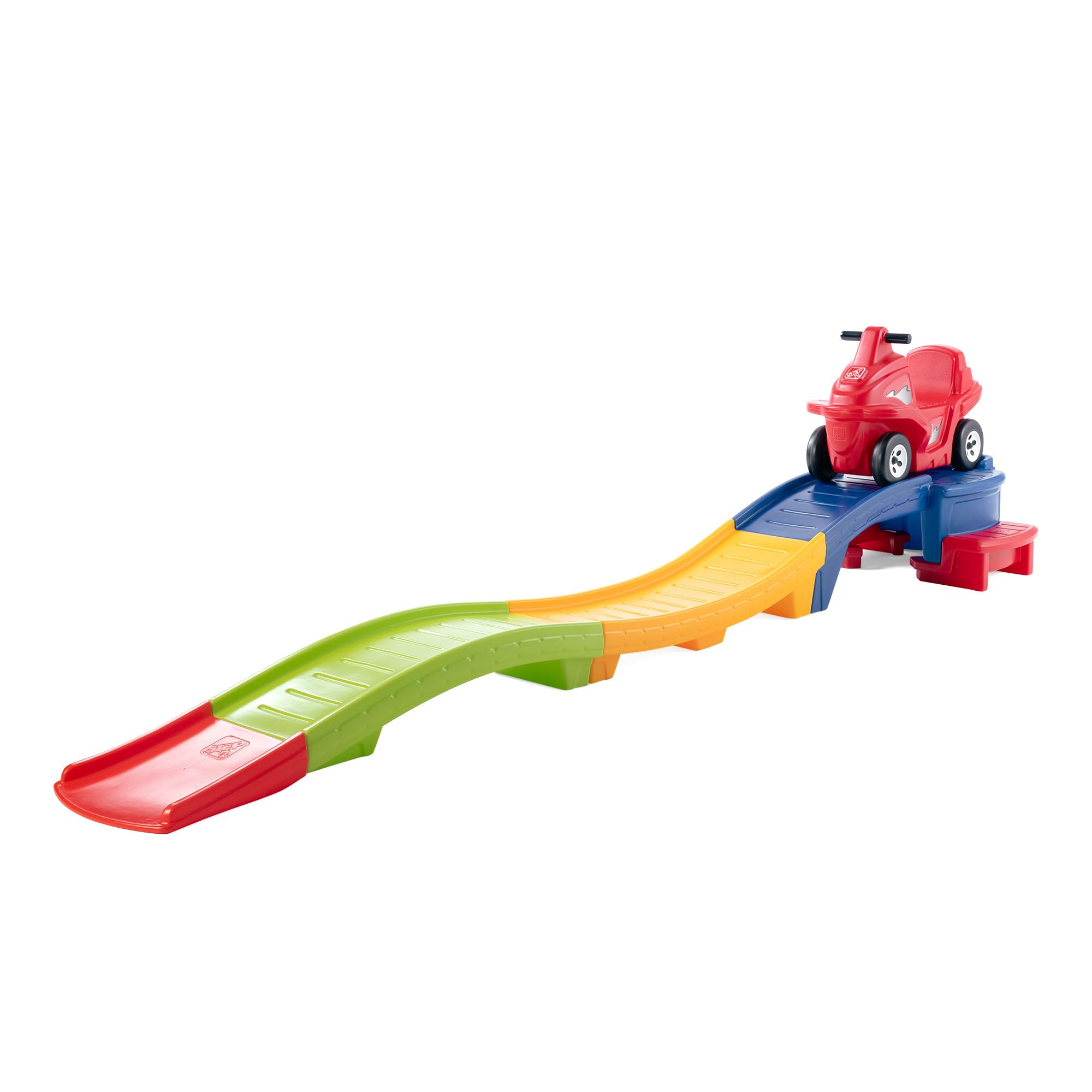
Step2 Roller Coaster
Key Features
- Age/Weight Limits: 2-5 years, 50 lbs
- Assembly Complexity: Tools-free snap together
- Material Robustness: Plastic
- Stability: Track may wobble
- Durability: Holds multiple kids up to 98 lbs
- Price: Premium
The 9-foot track snaps together without tools, and the self-resetting car returns to the top after each run. That creates a nearly self-serve sliding loop — a toddler scrambles up, rides down, then repeats, sustaining high-energy play on their own.
This coaster needs a level playroom or backyard with ample clearance for its 9-ft length. Toddlers who crave motion and repetition will use it endlessly. A caution: some deliveries arrive with missing track sections or steps. Opening the box and inventorying parts before a birthday or holiday spares everyone the letdown.
Pros
- Lets toddlers slide, climb off, and go again in a self-driven loop of continuous play.
- Tool-free snap assembly gets the 9-ft track ready quickly, no frustration with hardware.
- Sturdy enough for multiple toddlers; the car has even carried an adult up to 98 lbs without issue.
Cons
- The track may wobble or separate during energetic play, requiring an occasional realignment.
- Some deliveries arrive without all track pieces or steps, making a pre-gift inventory essential.
If you have the floor space and are okay doing a pre-gift parts check, this coaster creates an at-home amusement park experience that static toys can’t match.
Best for Light-Up Scooter
Gotrax KS1 Scooter
Key Features
- Age/Weight Limits: 2-8 years, 110 lbs
- Assembly Complexity: Easy assembly
- Material Robustness: Aluminum, plastic
- Stability: 3-wheel, wide deck
- Durability: Brake/wheels may fail
- Price: Budget
With tool-free snap-together assembly and three adjustable handlebar heights, this scooter grows with a child. The wide anti-slip deck and two-front-wheel design offer stable confidence for first-time riders. Light-up wheels create excitement without batteries, and the smooth glide suits paved paths. The scooter is not built for aggressive riding or bumpy terrain; brakes and wheels can wear down with hard use, so it’s best reserved as a gentle starter on smooth pavement.
Pros
- Smooth ride with dazzling light-up wheels that thrill kids
- Easy assembly and adjustable height to grow with the child
- Stable 3-wheel design with wide anti-slip deck for beginners
Cons
- Brake can snap and wheels may detach after months of hard riding
A fun, affordable introduction to scooting that thrills toddlers with lights, provided the riding stays calm and on smooth ground.
Best for First Trike Pedaling
KRIDDO Tricycle
Key Features
- Age/Weight Limits: 24 mo-5 yr, 50 lbs
- Assembly Complexity: Tools-free easy
- Material Robustness: Carbon steel, plastic
- Stability: Wide wheelbase
- Durability: Pedals may loosen
- Price: Mid-Range
Tool-free carbon steel construction snaps together in minutes, a genuine relief for gift-givers who dread multi-hour builds. The silent, non-marking wheels and wide wheelbase make indoor rides smooth and stable, giving a tentative 2-year-old the confidence to pedal. The rear basket and cheerful green paint add kid appeal without clutter. The compact frame fits 24–30 month olds well; taller 3-year-olds will feel cramped, so it’s a first-trike experience rather than a long-term ride. Pedals can work loose with regular use, but a quick check before each ride resolves it.
Pros
- Effortless tool-free assembly; ready to ride in minutes
- Solid build quality and stable design for early pedalers
- Cute design and solid value make it a gift-worthy first trike
Cons
- Pedals and wheels may loosen after a few weeks of use
A quick-to-build trike for toddlers just starting to pedal, with a narrow age window that demands early introduction. Plan to tighten components occasionally and it delivers a cheerful, steady ride.
Best for Soft Plush Hopping
Bouncy Pals Fox Hopper
Key Features
- Age/Weight Limits: 18 months+
- Assembly Complexity: Inflate, no tools
- Material Robustness: Soft plush, rubber
- Stability: Low center, stable
- Durability: Durable, bounce varies
- Price: Budget
The Fox stands out with its plush, machine-washable cover — a design that keeps floors scratch-free and legs comfortable during indoor hopping sessions. Inflation is quick with the included pump, and the gentle bounce is enough to get a toddler giggling without high-impact landings. Despite daily use, the seams and inflation valve hold up reliably.
For a 2-year-old, the main limitation is size. With a shorter stature than typical hoppers, the Fox suits children under 2.5 years best; a toddler already on the taller side may find their feet drag. Bounce firmness can also vary between units, with some feeling less springy right away. This is a cozy first hopper for younger, lighter toddlers who will enjoy it intensely before graduating to a larger bouncer.
Pros
- Durable construction withstands daily, enthusiastic bouncing.
- Soft plush cover is gentle on skin and won’t scuff hardwood or tile.
- Quick inflation with the included pump, and the hopping motion holds a toddler’s attention.
Cons
- Bounce firmness can differ between units; some may feel low on elasticity.
- The hopper runs small, fitting toddlers under 2.5 years best; older or taller children may be too large.
A plush, floor-safe hopper that brings gentle bouncing fun to the smallest toddlers, but it’s best given early — by the time a child turns 2, the window of use may be narrow unless they are on the smaller side.
Best for Early Balancing
SEREED Balance Bike

Key Features
- Age/Weight Limits: 12-24 months, 55 lbs
- Assembly Complexity: Tools-free
- Material Robustness: Aluminum alloy, TPU
- Stability: 4 wheels, tip-safe
- Price: Budget
Four wheels and a low 3.5-pound frame give the youngest toddlers a stable first riding experience. Snap-together assembly gets them rolling in minutes, but the 12–24 month size limit means many children will outgrow it before they turn two. For a 2-year-old gift, the usable window is tight.
Pros
- Snap-together assembly with no tools needed
- Four-wheel design supports early balancing
Cons
- Fits only up to 24 months; may be outgrown quickly by a growing 2-year-old
Best as a first bike for a 1-year-old who needs stability; for a 2-year-old, consider a larger balance bike that offers a longer ride time.
Best for Walker & Hauler
Radio Flyer Walker Wagon

Key Features
- Age/Weight Limits: 1-4 years, 35 lbs
- Assembly Complexity: Tools-free
- Durability: Wheels may pop off
- Price: Budget
Radio Flyer’s walker wagon assembles in minutes without tools and charms toddlers with its classic design and garden tool set. The bed is sized for toys, not passengers — a deliberate design that makes it a supportive walker and pull-along, not a ride-on. For a child learning to walk and haul treasures, it hits the mark; for an active play gift seeking running, riding, or bouncing, it’s the wrong tool.
Pros
- Snaps together in minutes without tools; sturdy build withstands daily toddler use.
- Adorable retro look and included garden tools inspire imaginative play.
Cons
- Wheels can detach if not fully pressed into place — requires firm, attentive assembly.
Ideal as a first walking aid and toy hauler for a child still mastering steps, but skip it if the goal is a ride-on or climbing toy.
Best for Budget Bouncing
INPANY Bouncy Horse

Key Features
- Age/Weight Limits: 18 mo-3 yr, 100 lbs
- Assembly Complexity: Inflate, pump not included
- Material Robustness: Heavy-duty rubber
- Durability: Air retention unpredictable
- Price: Budget
The horse’s soft ears and sturdy rubber body make it a charming, giggle-inducing toy for occasional indoor hopping. Air retention can be unpredictable, and the small size fits only toddlers well under 2.5 years — but with a quick pump-up before play, it delivers bouncing fun. Investing in a better hand pump minimizes the frustration.
Pros
- Classic bouncing fun that gets toddlers giggling and moving.
- Cute horse design with durable rubber that holds up to enthusiastic hopping.
Cons
- Air retention can be inconsistent; you may need to re-inflate before each play session.
For a toddler under 2.5 who finds bouncing hilarious and won’t mind a quick pump-up before play, this budget horse delivers smiles — just pair it with a sturdy hand pump.
Best for Dino Ride-On
Little Tikes T-Rex Coupe

Key Features
- Age/Weight Limits: 18 mo-5 yr, 50 lbs
- Assembly Complexity: Difficult, many parts
- Material Robustness: Plastic
- Stability: Stable, wide base
- Durability: Decals peel, parts missing
- Price: Mid-Range
With a removable floorboard and rooftop parent handle, it fits toddlers ready to cruise and parents wanting control. The T-Rex styling sparks giggles, but assembly is a multi-hour project with poor instructions — a gift that requires an adult to build ahead of time.
Pros
- T-Rex spikes and bright decals make it an instant favorite for dinosaur fans.
- Hard-shell body withstands bumps and outdoor play without cracking.
Cons
- Decals may start peeling within days, and some kits arrive with missing hardware.
Specifically for dinosaur-obsessed toddlers when an adult is willing to tackle a lengthy assembly before gifting; the payoff is a sturdy, grin-inducing ride.
Best for Quiet Push Car
Step2 Whisper Ride II

Key Features
- Age/Weight Limits: 18-48 mo, 50 lbs
- Assembly Complexity: Difficult, missing screws
- Material Robustness: Plastic
- Stability: Stable push, smooth
- Durability: Steering wheel snaps off
- Price: Mid-Range
This push car rolls quietly on smooth surfaces, making strolls pleasant indoors and out. The adjustable safety belt, cup holders, and easy-to-push handle make it a practical stroller alternative. Assembly can be a headache: unclear instructions, and screws sometimes missing. The steering wheel may crack over time, but careful use extends its life. For those seeking a calm push ride rather than active play, it’s a thoughtful gift — just account for assembly time.
Pros
- Silent wheel operation makes it suitable for both indoor and sidewalk strolls.
- Easy-to-push handle and cup holders make it a convenient stroller substitute.
Cons
- Assembly instructions are unclear and screws may be missing from the box.
Suited for gift-givers who want a stroller alternative for quiet strolls and can set aside extra time for assembly.
Best for Electronic Sports
VTech Smart Shots Sports

Key Features
- Age/Weight Limits: 12-36 months
- Assembly Complexity: Some assembly
- Material Robustness: Plastic
- Price: Mid-Range
This center’s LED scoreboard reacts to baskets and goals, giving toddlers instant feedback as they shoot and kick. Two sports modes keep play varied, and the compact footprint (under 2 feet wide) fits tight indoor spaces. Long-term durability under active play is unverified, and the design favors gentle indoor activity over outdoor roughhousing.
Pros
- LED scoreboard provides instant audio-visual feedback, encouraging repeated shots and kicks.
- Small-scale design takes up minimal floor space, ideal for apartments or shared rooms.
Cons
- Not suited for outdoor play or rough handling; the electronic, plastic construction is meant for gentle indoor use.
Fits homes where a screen-free, sports-themed diversion is wanted for a 2-year-old, as long as outdoor durability and long-term heavy use aren’t deal-breakers.
Best for Older Kids Fort
Hide N Side Ball Pit

Key Features
- Age/Weight Limits: 3+ years
- Assembly Complexity: Pop-up, easy
- Material Robustness: Polyester fabric, steel
- Durability: Fabric tears around poles
- Price: Mid-Range
The multi-piece play structure pops up quickly, offering tunnels, tents, and a target toss game that spark active crawling and imaginative fort play. However, the manufacturer recommends ages 3+ due to fabric that can tear near poles with rough use. For a 2-year-old gift, this set needs close adult presence and gentler handling than most toddlers bring.
Pros
- Quick pop-up assembly lets you rearrange tents and tunnels into multiple layouts.
- Crawl-through design and ball pit compatibility encourage hours of active, screen-free play for multiple children.
Cons
- Fabric may tear around pole connections during rough play or if children lean heavily on the walls.
For a supervised child aged 3 or older who enjoys crawling and hideouts, this set delivers cooperative active play; it’s a mismatch for a gift aimed at a 2-year-old without an adult right there.
How to Choose
The real choice isn’t between a ride-on and a bouncer; it’s whether the toy will actually fit your child’s size and development stage for more than a few months.
Age & Weight Limits vs. Real Fit
Printed age ranges on boxes often overstate how long a toy stays usable. A label that says “2–5 years” can mean a 2-year-old’s feet barely touch the pedals and a 3-year-old already rides with knees near the handlebars.
Check real user photos and height comments before buying; a short seat height limits active play almost immediately. Prioritize designs with a deeper, more adjustable seat or a generous maximum weight that matches a taller toddler’s growth curve.
Assembly Complexity
Many active toys come with dozens of parts and cryptic instructions — missing hardware is a surprisingly common complaint. Tools-free, snap-together designs reduce the chance of a gift that stalls at the unboxing stage.
Even ‘easy’ assembly can be sabotaged by poorly packaged screws or misaligned holes. If you’re not handy, choose products flagged as ‘no assembly required’ or confirm that the brand includes clear, tested instructions and spare fasteners.
Material Robustness
Thin, flexible plastic may crack on the first curb strike, while a chunky, thick-walled body absorbs collisions and keeps its shape. For inflatables, rubber thickness and valve quality determine whether you’ll be pumping air daily.
Soft plush covers feel gentle but are vulnerable to seam rips, especially around beanbag inserts or high-stress pull points. Look for double-stitched or reinforced areas if the toy will see aggressive hugging and tugging.
Stability & Tip Resistance
A 2-year-old’s center of gravity is unpredictable. Wide-set wheels, low decks, and forward-leaning handlebars prevent tipping when a toddler suddenly shifts weight. Rocking horses need a base wide enough to stay rooted during enthusiastic rocking.
Three-wheel scooters with a lean-to-steer mechanism improve balance but can still feel tippy on uneven concrete. On smooth floors, the stability difference is night and day — wide bases are worth it for beginners.
Durability Under Daily Abuse
The first sign of a weak design is pedals that loosen, wheels that detach, or brakes that snap. These aren’t always catastrophic, but they turn daily play into a maintenance chore and can erode a toddler’s confidence.
Hard plastic seams that are sharp or poorly finished can scratch skin; inspect edges before the first ride. Stickers peeling within days signals poor surface prep, and while cosmetic, it drags down the gift’s shelf life.
FAQ
Why does my toddler’s tricycle pedal keep falling off?
Budget tricycles often use press-fit pedals that loosen with forward pedal motion. Check and tighten the crank bolt after every few rides; applying a drop of thread-lock compound can help. If it still happens, consider a model with a one-piece crank system rather than separate pedals.
Is a balance bike safe for a 2-year-old who just started walking?
A four-wheel balance bike with a low stand-over height like the SEREED design can be stable enough for early walkers, but only if they can walk steadily without support. Pediatric physical therapists generally recommend waiting until a child can walk quickly and squat down without falling before starting on any balance bike.
How do I stop my toddler’s bouncy hopper from leaking air?
Submerge the inflated toy in water or apply soapy water to locate the leak — often around the valve stem. A tight valve insert with a dab of silicone sealant can cure small leaks, but if the rubber itself is porous or the seam is split, it’s best to replace the hopper with a plush-covered version that uses a thicker bladder.
Is the Step2 roller coaster too big for an apartment?
The 9-foot track plus the step module demands a clear run of about 10 x 3 feet, so it fits a dedicated playroom or large living area. It can be disassembled into two pieces for corner storage, but in a small apartment the track will dominate the floor. Opt for it only if you have a planned open zone or easy access to an outdoor space.