
This post contains affiliate links. We may earn a small commission when you buy through our links — at no extra cost to you.
Shopping for an 11-year-old boy often means sorting through flashy, battery-powered toys that lose their appeal within days. The quietest gifts in the room—a logic puzzle, a cookbook, a deck of cards—tend to deliver the longest smiles.
This guide focuses on gifts that hold up to actual use, not just unboxing. Each pick earned its spot because it stays engaging beyond the first session, without relying on electronics that break or hype that fades.
Whether he loves building, reading, cooking, or flying paper planes, the options here share one trait: they reward patience and curiosity, not just instant gratification.


Best for Logic Puzzles
ThinkFun Gravity Maze
Each of the 60 challenge cards requires building a marble run that delivers a marble to a target. The puzzles start simple and ramp up in complexity, forcing the player to visualize paths and test layouts. No batteries, no screens—just gravity and the satisfying click of towers snapping onto the grid.
This is a single-player activity best suited for kids who enjoy logic puzzles and quiet, focused play. The towers can be nudged out of alignment if bumped—a minor nuisance that’s easy to work around by placing the game on a stable surface. For an 11-year-old who likes building and thinking through problems, this delivers hours of screen-free engagement with clear progression.
Pros
- Engaging marble-run puzzles with strong replay value across 60 challenges
- Develops spatial reasoning and critical thinking through hands-on trial and error
- Fully independent play with no batteries or small parts to lose
Cons
- Towers can shift out of place when the base is bumped during play
A logic game that respects the player’s time—no fluff, just a reliable difficulty curve in a durable package.
Best for Fidgety Kids
Shashibo Shape-Shifting Cube
The Shashibo cube delivers over 100 shape-shifting combinations in a silent, palm-sized package — ideal for kids who need a discreet desk fidget. It’s a different kind of engagement compared to logic-based games: pure tactile exploration rather than problem-solving. For an 11-year-old who fidgets during homework or class, this can be a helpful focus aid. However, the stickers may peel with regular handling, and the cube can separate if dropped or twisted forcefully. Some buyers also feel the price is high for a plastic toy. This works best for gentle users or as a low-stakes gift, not for kids who tend to roughhouse their belongings.
Pros
- Hundreds of shape combinations provide endless tactile engagement.
- Well-suited for gifting across a wide age range, from kids to adults.
Cons
- Some may find the price high for a toy made of plastic.
- Stickers that give the cube its colorful look may peel over time, and the cube can separate during rough play.
A solid fidget toy for kids who need a quiet desk distraction, but not the best pick if durability is a top priority.
Best for Learn Cooking
Cookbook for Young Chefs
This cookbook is a skill-building resource rather than a disposable toy. With over 100 recipes tested by America’s Test Kitchen, each one includes real photographs and clear directions that let an 11-year-old work independently. At a budget-friendly price, it’s a low-tech alternative to electronics that still delivers tangible results.
It’s best for kids who already enjoy cooking or are curious about making their own meals. The reading level and recipe complexity suit ages 8 and up, so an 11-year-old can handle the majority of dishes solo. The main boundary is interest: if the child has no desire to be in the kitchen, this cookbook won’t change that.
Pros
- Clear, kid-friendly instructions that build confidence.
- Accessible recipes with real photos guide independent cooking.
Cons
- Requires a prior interest in cooking—not a universal fit for every 11-year-old.
A smart gift for the 11-year-old who already enjoys helping in the kitchen—teaches real skills without screens.
Best for Reluctant Readers
Trapped in a Video Game Series
The series taps into video game mechanics—leveling up, respawning, boss fights—to create a reading experience that feels familiar to kids who prefer screens. Each book is short enough to finish in a few sittings, and the complete box set of five volumes gives a sense of progression without overwhelming. The reading level is best for ages 8-10; 11-year-olds may find the text too easy, but for a reluctant 11-year-old gamer who avoids books, this can serve as a low-pressure entry point. It’s a lighter, narrative-driven alternative to dense fact books like the NatGeo trivia collection — better suited for travel or winding down.
Pros
- Engaging story that captures reluctant readers
- Series format encourages continued reading without prompting
- Short chapters fit bedtime or road trip sessions
Cons
- Reading level is best for ages 8-10; some 11-year-olds may find the text too simple.
Best for the 8-10 year old gamer who needs a fun reading entry point; older reluctant readers may still enjoy it, but expect lower complexity.
Best for Science Lovers
NatGeo Magic Chemistry Set
This set contains everything for 10 experiments that produce visible reactions — ideal for show-and-tell moments. The included wand and gloves add a performance angle that appeals to kids who enjoy science as a spectacle. While designed for ages 8+, some units may have missing pieces that require contacting customer service to replace. It suits curious children who don’t mind a bit of mess, but less ideal for those who need strict supervision or a frustration-free unboxing.
Pros
- Fun, entertaining experiments that captivate young science enthusiasts.
- Great gift option for kids curious about chemistry — low price, high engagement.
Cons
- Some units arrive missing a piece or two, which may prevent an experiment from working until the replacement arrives.
If your child loves magic shows and hands-on science, this kit offers immediate fun at a low price — just plan to check the contents early.
Best for Craft Lovers
Klutz Paper Airplanes
40 sheets of custom paper and step-by-step diagrams produce planes that actually fly — no batteries or screens required. Unlike assembly-heavy papercraft kits, this book focuses on pure folding, with clear diagrams that get results quickly. Best for an 11-year-old who enjoys hands-on crafting and wants immediate gratification. A few folding steps may be unclear for younger or less patient kids, but the variety of difficulty levels keeps it engaging for independent play. At a budget-friendly price, it’s a low-risk gift that delivers high satisfaction.
Pros
- Easy-to-follow instructions produce planes that fly well
- Fun for both kids and adults — great for shared play
Cons
- Some folding steps can be tricky for younger users, requiring re-reading
A budget-friendly activity that reliably holds attention — ideal for screen-free travel or quiet afternoons.
Best for Fast-Paced Puzzles
Moose Flipslide
Key Features
- Age Range: 8+
- Power Source: 2 AA
- Key Feature: 4 game modes
- Price: Budget
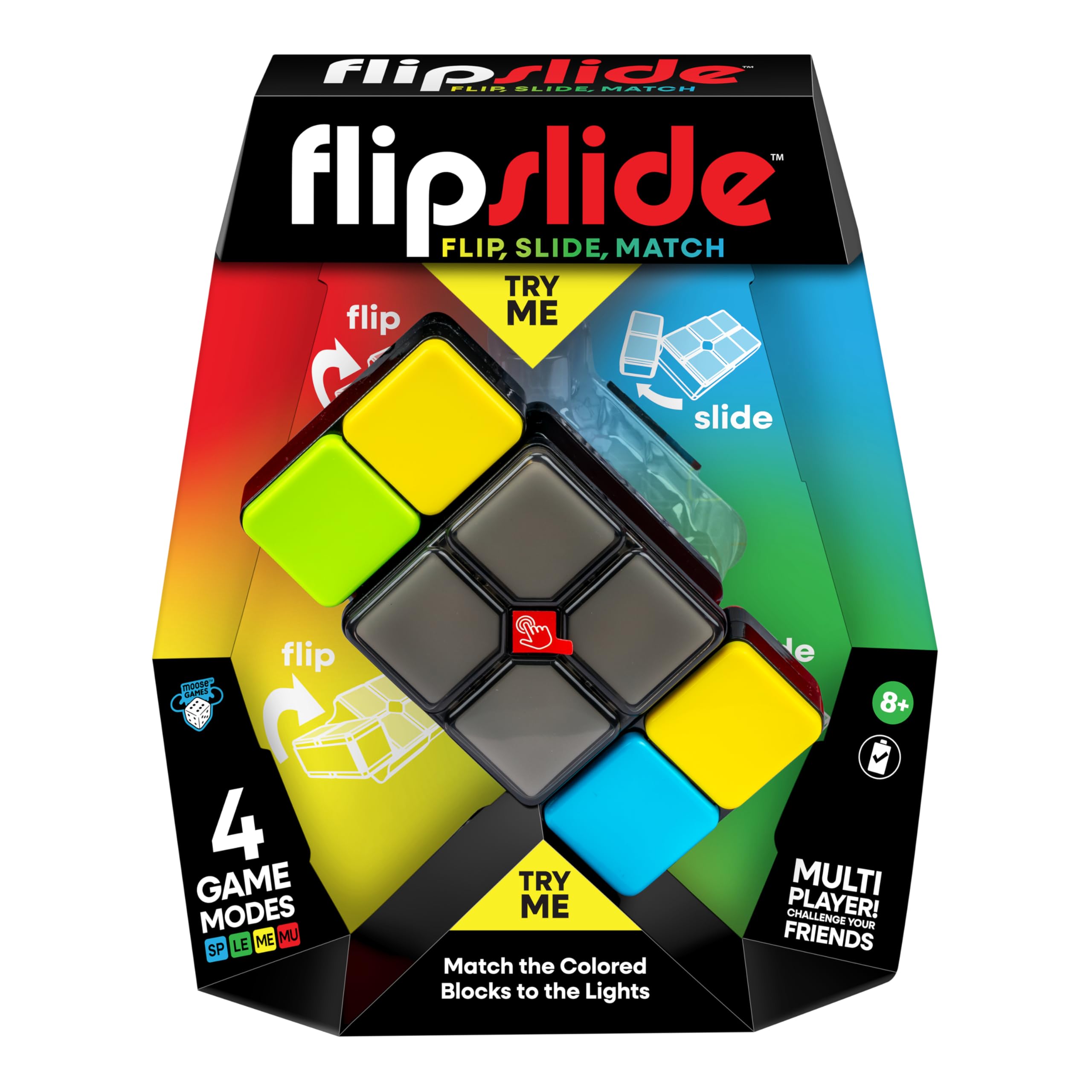
The Flipslide offers a variety of fast-paced puzzle modes in a portable device, making it engaging for solo challenges or group competition. However, the game sounds are loud with limited volume control, and some units may lose sound entirely. This makes it better suited for noisy play areas or kids who don’t mind audible feedback.
Pros
- Fast-paced addictive play that appeals across age groups.
- Well-suited as a gift for kids who enjoy handheld puzzles.
Cons
- Loud game sounds with limited volume control; possible sound loss on some units.
Fits well for kids who enjoy electronic puzzles and play in lively environments where sound isn’t a concern.
Best for Curious Minds
NatGeo Kids Why?

This book delivers over 1,111 answers to common kid questions, each paired with vivid NatGeo photography. The bite-sized format encourages browsing and sparks curiosity. It’s best for ages 7-10; 11-year-olds who want deeper dives into topics may find the answers too brief.
Pros
- Packed with fascinating facts and beautiful National Geographic photos
- Encourages reading and curiosity in kids
Cons
- Best suited for ages 7-10; 11-year-olds may want more depth in explanations
Works well for a fact-loving 7-10 year old; for an 11-year-old, pair it with a more detailed reference to satisfy deeper curiosity.
Best for Social Teens
SUSSED What Would You Do?

This game packs 230 conversation-starting questions into a small box, making it easy to take on trips. The questions are silly and fun for groups, though some may feel repetitive after a few rounds. The ‘would you rather’ style won’t appeal to every kid, particularly those who prefer strategy or more structured play.
Pros
- Fun and engaging social game that sparks conversation
- Easy to learn and portable for travel
Cons
- Some questions can feel repetitive, reducing replay value
Best for road trips or family gatherings where the goal is shared laughter rather than deep strategy.
Best for Group Laughs
Moose Master Card Game

This party card game guarantees big laughs once the slightly confusing rules click—players act out ridiculous prompts while everyone else guesses. For an 11-year-old who enjoys hosting sleepovers or large family gatherings, it delivers solid entertainment. But the learning curve and requirement for at least four players make it a poor fit for solo play or smaller households.
Pros
- Guarantees loud laughter in group settings
- Ideal for parties and family game nights
Cons
- Initial rules can be confusing, requiring a few rounds to grasp
Best for an 11-year-old who regularly has friends over or a large family, not for solo or quiet play.
Best for Geology Fans
NatGeo Break Open Geodes

Cracking open these geodes can be a memorable family activity when the crystals inside reveal themselves, but the experience depends on luck and effort. The geodes are difficult to break – most kids will need adult help – and some contain solid rock instead of crystals. This makes it better suited for patient geology enthusiasts than for children expecting immediate results.
Pros
- Exciting family activity with beautiful crystals inside
- Popular as a gift for science-minded kids
Cons
- The geodes are hard to crack; adult help may be needed to open them
Best for families who enjoy the process of discovery and are prepared for the possibility of solid rocks, rather than for those seeking guaranteed crystal treasures.
Best for Night Play
TOSY RGB Flying Disc

Key Features
- Power Source: Rechargeable
- Key Feature: 108 RGB LEDs
- Price: Mid-Range
The TOSY Flying Disc lights up the night sky with 108 RGB LEDs and smart modes, flying true at regulation weight. It’s waterproof too. The excitement is real — but some units may lose their glow after a few rounds, and the plastic can crack on hard impacts. For a gift that sees occasional use, the spectacle is worth it; for regular backyard battles, look for something more robust.
Pros
- Thrilling night-time play with bright, colorful lights visible from far away
- Regulation weight and waterproof design for consistent flight
Cons
- For consistent night-time use, the lights may stop working after a limited number of sessions
A good pick for occasional camping trips or evening park visits where a broken disc is a minor disappointment, not a crisis.
Best for Patient Lego Fans
Klutz Lego Gear Bots
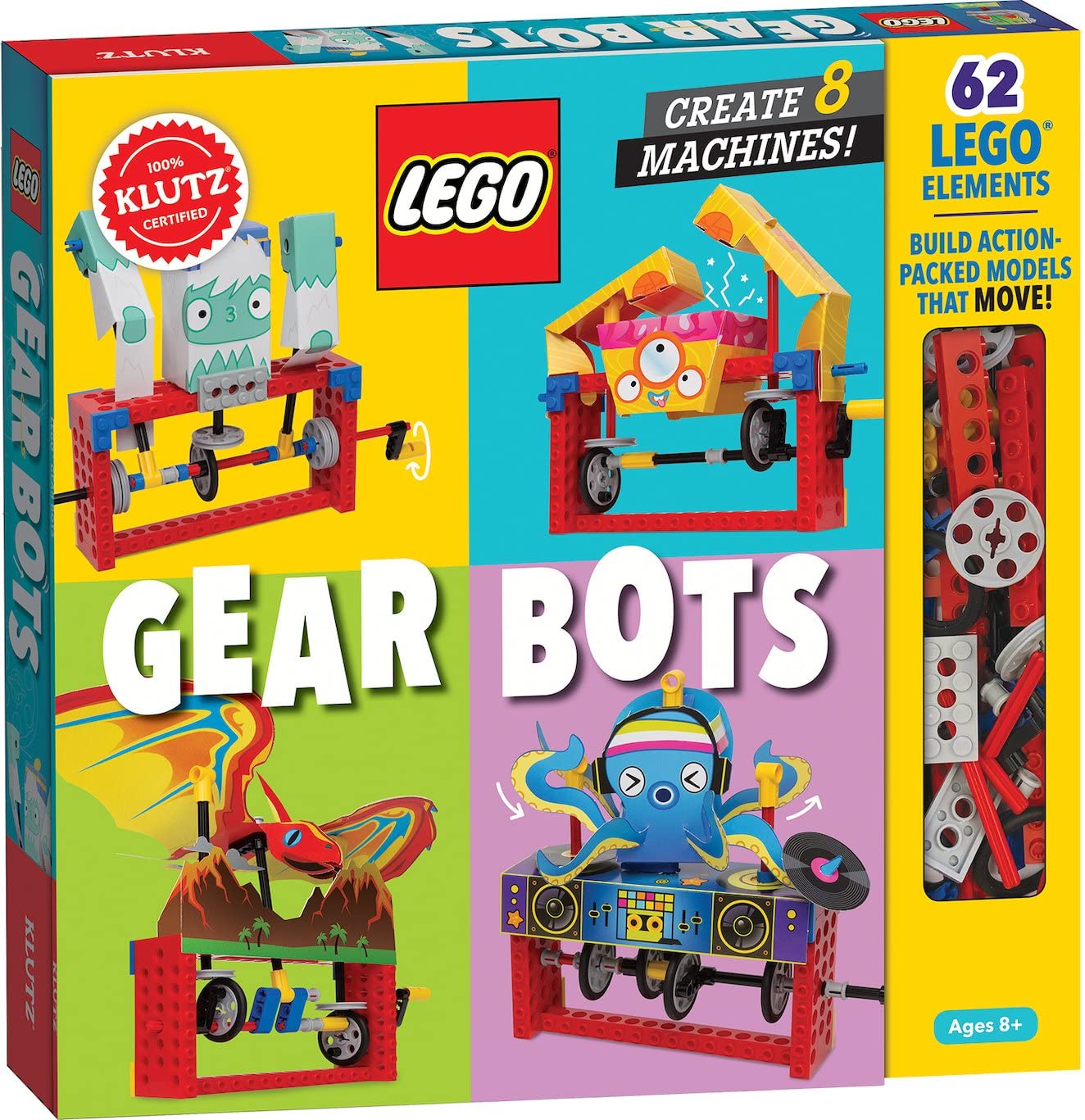
This kit successfully teaches gear mechanics through eight imaginative papercraft creatures built with 62 LEGO Technic elements. The instructions can be unclear, and some connections may not hold during play — patient kids who enjoy tinkering with an adult will get the most from it. Only one bot can be built at a time, reinforcing each mechanism but limiting immediate variety.
Pros
- Creative STEM concept that kids enjoy building
- Good gift for LEGO fans
Cons
- Parts can be hard to keep together, and the instructions may leave you guessing
Ideal for kids who enjoy the process of building and troubleshooting rather than instant gratification — especially with an adult nearby.
Best for Novelty Gift
Refasy ATM Piggy Bank

Key Features
- Age Range: 3+
- Power Source: 3 AA
- Key Feature: Password lock
- Price: Budget
Kids enjoy the password-protected lock and watching coins get sucked in. The concept encourages saving in a playful way. However, the motor and plastic components can become non-functional shortly after first use, making this better suited as a short-term novelty than a long-term savings tool.
Pros
- A playful way to introduce saving habits
- Makes a fun gift that kids enjoy unboxing
Cons
- Motor and plastic parts can become non-functional after limited use
Best as a novelty gift for a child who will enjoy the gimmick without relying on it for long-term savings.
How to Choose
Most 11-year-old boys already have access to screens—the best gifts offer something hands-on, durable, and progressively challenging.
Age Recommendation
Most products label 8+ as the starting point, but an 11-year-old’s dexterity and patience vary widely. A 10+ game may still frustrate if the instructions are unclear or the pieces are tiny.
Check the reading age for books and the complexity of assembly for kits. A gift that requires constant adult help can become a chore rather than a joy.
Type of Play
STEM kits and logic puzzles reward focused, solo play. Card games and frisbees thrive in groups. Before buying, think about when and where the gift will be used—solo quiet time, family game night, or outdoor adventure.
A gift that matches the child’s natural play style—builder, socializer, explorer—is far more likely to be used beyond the first few days.
Durability and Build Quality
Electronic components (lights, motors, batteries) are the weakest link in this category. A well-made non-electronic gift often outlasts a flashy one by years. Plastic parts that snap together under tension, like fidget cubes or marble towers, need tight tolerances to hold up.
Look for metal or thick plastic in moving parts. Avoid units where thin stickers or glued seams bear the load—they peel or separate with regular use.
Replayability and Long-Term Engagement
The best gifts have a built-in progression: challenge cards that escalate, recipes that build skills, or multiple designs to master. Pure novelty fades after a few sessions.
Count the number of unique configurations, challenges, or uses. A book series with five installments or a logic game with 60 puzzles offers weeks of engagement, not minutes.
FAQ
Is the Shashibo cube really worth $25 for a plastic fidget toy?
It depends on how much your child values quiet, repetitive movement. The cube offers over 100 shapes and is genuinely engaging for restless hands, but the plastic stickers peel with heavy use and the toy can come apart if dropped. For $25, you’re paying for a desk-friendly distraction with near-universal appeal, not heirloom durability.
Why does my kid’s 3D printing pen stop working after a few uses?
Most budget 3D pens, including the SCRIB3D P1, suffer from clogged nozzles and motor failure because the plastic filament isn’t perfectly consistent. The heating tip also gets hot enough to cause minor burns, making supervision mandatory. For reliable 3D printing on a budget, look for a pen with a metal body and a warranty—or consider a used entry-level 3D printer instead.
Can an 11-year-old actually break open a geode without adult help?
NatGeo’s geodes are notoriously hard to crack—many require a hammer and protective goggles, and even then some rocks are solid inside with no crystals. If the child enjoys the process of working with tools and doesn’t mind a messy, unpredictable outcome, it’s a fun project. For instant gratification, choose a mineral dig kit instead.
Which gift keeps an 11-year-old boy entertained without screens for hours?
The ThinkFun Gravity Maze consistently delivers solo, screen-free engagement for 30-minute sessions or longer, thanks to its 60 escalating challenges. For group play, the Moose Flipslide or SUSSED card game can fill an afternoon. Non-electronic gifts like these avoid the reliability complaints that plague many battery-powered toys.