
This post contains affiliate links. We may earn a small commission when you buy through our links — at no extra cost to you.
Finding a gift that survives past the New Year’s letdown is harder than it should be. The toy aisle is packed with blinking gadgets and plastic fidgets that promise the world but end up in a drawer when the batteries die or the stickers peel. For 12-year-old boys, the sweet spot is a present that balances independence with a real challenge, and maybe even fits in a carry-on bag for holiday travel.
This list skips the short-lived electronics and gimmicky builds. Instead, it focuses on durable, screen-free gifts that spark genuine curiosity and skill-building—whether that’s mastering a marble maze on the car ride to Grandma’s or flipping through an illustrated book of 1,111 weird facts during quiet time.
The result: presents that don’t just wow on December 25th, but keep a tween entertained well into 2026.


Best for Logic & Marble Runs
ThinkFun Gravity Maze
Key Features
- Age Range: 8+ years
- Educational Focus: Critical thinking, spatial reasoning
- Durability & Build: Plastic grid and towers
- Assembly: Ready to play, no assembly
- Portability: Requires flat surface, not pocket-sized
- Price: Mid-Range
The 60 challenge cards start simple—place a few towers, drop a marble, see if it reaches the target—and ramp up to multi-tower layouts that demand planning several moves ahead. Each card shows only the starting positions, so kids must figure out where the remaining pieces go to complete the path. The game grid holds towers securely enough for careful play, and the reward of a marble clacking through plastic channels keeps the puzzle loop satisfying.
This is a solo STEM puzzle built for a 12-year-old who enjoys calm, focused problem solving rather than fast-paced action. Towers can be wobbly on uneven surfaces, requiring a steady hand and a flat table—so it’s a better fit for patient tinkerers who don’t mind resetting a fallen tower every now and then. As a gift, it’s quiet, portable, and delivers hours of brain-building play without a single battery.
Pros
- Progressive challenges keep kids engaged for hours, moving from beginner to expert logic puzzles.
- Builds genuine spatial reasoning and critical thinking skills through hands-on trial and error.
- A well-loved gift that appeals to a wide age range, especially STEM-focused kids.
Cons
- Towers can wobble and tip over if the playing surface isn’t perfectly flat, slowing down the puzzle.
A screen-free logic toy that rewards patience and planning. Best for a 12-year-old who genuinely likes puzzles and steady, methodical play—not for those who get frustrated by structures that need careful handling.
Best for Fidget & Travel
Shashibo Shape Shifting Box
Key Features
- Age Range: 8+ years
- Educational Focus: Problem solving, creativity
- Durability & Build: Plastic with magnets, sticker surface
- Assembly: No assembly, instant play
- Portability: Pocket-sized, travel-friendly
- Price: Mid-Range
The Shashibo cube delivers silent, addictive shape-shifting in a pocket-sized package, twisting into 100+ forms without any setup. Unlike structured puzzle games, it encourages freeform fidgeting and creative exploration.
This makes it a suitable Christmas gift for a 12-year-old boy who enjoys magnetic toys, fidgeting, and screen-free activities. The cube fits in a jacket pocket, works well during car rides or waiting. Stickers can peel with rough handling and some units may loosen over time; gentle play extends its life. The mid-range price point might give pause, but the hours of engagement it provides can justify it for the right recipient.
Pros
- Addictive, screen-free fidget toy that transforms into 100+ shapes, keeping kids engaged for hours.
- Sturdy build holds up to twisting and fidgeting, with strong internal magnets.
- Widely praised as a gift for all ages, from kids to adults.
Cons
- Stickers may peel over time, and the cube can loosen with heavy use — gentle handling extends life.
- Mid-range price feels high for a plastic puzzle, impacting perceived value.
For a 12-year-old who loves magnetic shape-shifting, this cube offers quiet, portable entertainment. Accept the sticker and looseness tradeoff with gentle use, and the price is the main hurdle for a toy that can captivate for hours.
Best for Aspiring Chefs
Young Chefs Cookbook
Key Features
- Age Range: 8+ years (reading)
- Educational Focus: Cooking skills, life skills
- Durability & Build: Hardcover, 208 pages
- Assembly: Instant reading, no assembly
- Portability: Home use, not travel-oriented
- Price: Budget
The Complete Cookbook for Young Chefs turns kitchen curiosity into real cooking competence. Recipes are written so clearly that a motivated 12-year-old can handle them solo, from pancakes to roast chicken, without an adult hovering nearby. America’s Test Kitchen tested every dish with thousands of kids, so the instructions avoid the usual pitfalls that leave young cooks stranded. The hardcover binding stands up to drips and splatters, though its weight can cause the book to slide flat or feel unwieldy one-handed. A simple cookbook stand solves that, and the reward is a durable reference that will last through years of meals.
Pros
- Recipes are so clearly written that a 12-year-old can cook them with minimal help.
- Tailored to young cooks, boosting independence and essential kitchen know-how.
- Full-color photos and illustrated technique tutorials make the process engaging and easy to follow.
Cons
- The hardcover adds weight, making it prone to sliding flat or being awkward to hold while cooking.
For a 12-year-old showing interest in the kitchen, this book strikes the right balance of clear instruction and fun recipes without condescension.
Best for Curious Kids
Nat Geo Kids Why?
Key Features
- Age Range: 7–10 (readers 8–12)
- Educational Focus: Science, trivia, curiosity
- Durability & Build: Large hardcover, 224 pages
- Assembly: No assembly
- Portability: Large format, not travel-friendly
- Price: Budget
Full-color National Geographic photos and bite-sized facts pull curious kids away from screens. The large hardcover layout makes skimming easy, and the trivia spans science, history, and culture — enough to keep a 12-year-old dipping in for five minutes or an hour.
The reading level is tuned for ages 7–10, so a 12-year-old looking for deeper content may not find it a page-turner. That said, the sheer volume of surprising facts and high-quality imagery still appeals to older kids who treat it as a casual browsing book rather than a core read.
Pros
- Fascinating content that sparks curiosity and keeps kids turning pages
- Stunning National Geographic-quality pictures and vibrant layouts
- Easy to read and engaging for both kids and adults, making it a family favorite
Cons
- Reading level skews toward children ages 7–10, so 12-year-olds may not find it challenging enough for sustained reading
A reliable, screen-free fact book that suits a 12-year-old who still loves random trivia and National Geographic photos — but not a deep read.
Best for Diy Arcade Fun
Smartivity Pinball Machine
Key Features
- Age Range: 8–14 years
- Educational Focus: STEM, physics, engineering
- Durability & Build: Engineered wood, rubber bands
- Assembly: Assembly required, step-by-step
- Portability: Tabletop, not travel-friendly
- Price: Mid-Range
Unlike the abstract logic puzzles in this set, the Smartivity Pinball Machine delivers a tactile, classic arcade experience you build from laser-cut wood. Rubber-band bumpers, a spring launcher, and a mechanical scoreboard come together without batteries — the payoff is a fully playable pinball table that rewards precise shots. The assembly project spans several hours and requires attention to detail; 12-year-olds with patience and steady hands can complete it independently, but younger builders will need adult guidance. For kids who love constructing complex mechanisms and then enjoying the results, this kit bridges the gap between a creative build and real gameplay.
Pros
- Build is genuinely fun and delivers hours of arcade gameplay afterward.
- Durable engineered wood construction stands up to repeated launches.
- Well-illustrated manual makes solo assembly feasible for focused 12-year-olds.
Cons
- Multi-hour build demands concentration and precise finger work; rushed assembly can lead to flipper misalignment.
For kids who want to build their own arcade machine and then chase a high score, this kit provides a satisfying build-and-play loop that outlasts most STEM toys.
Best for Portable Gaming
Flipslide Handheld Game
Key Features
- Age Range: 8+ years
- Educational Focus: Memory, reaction skills
- Durability & Build: Plastic, electronic
- Assembly: No assembly, instant play
- Portability: Compact, travel-friendly
- Price: Budget
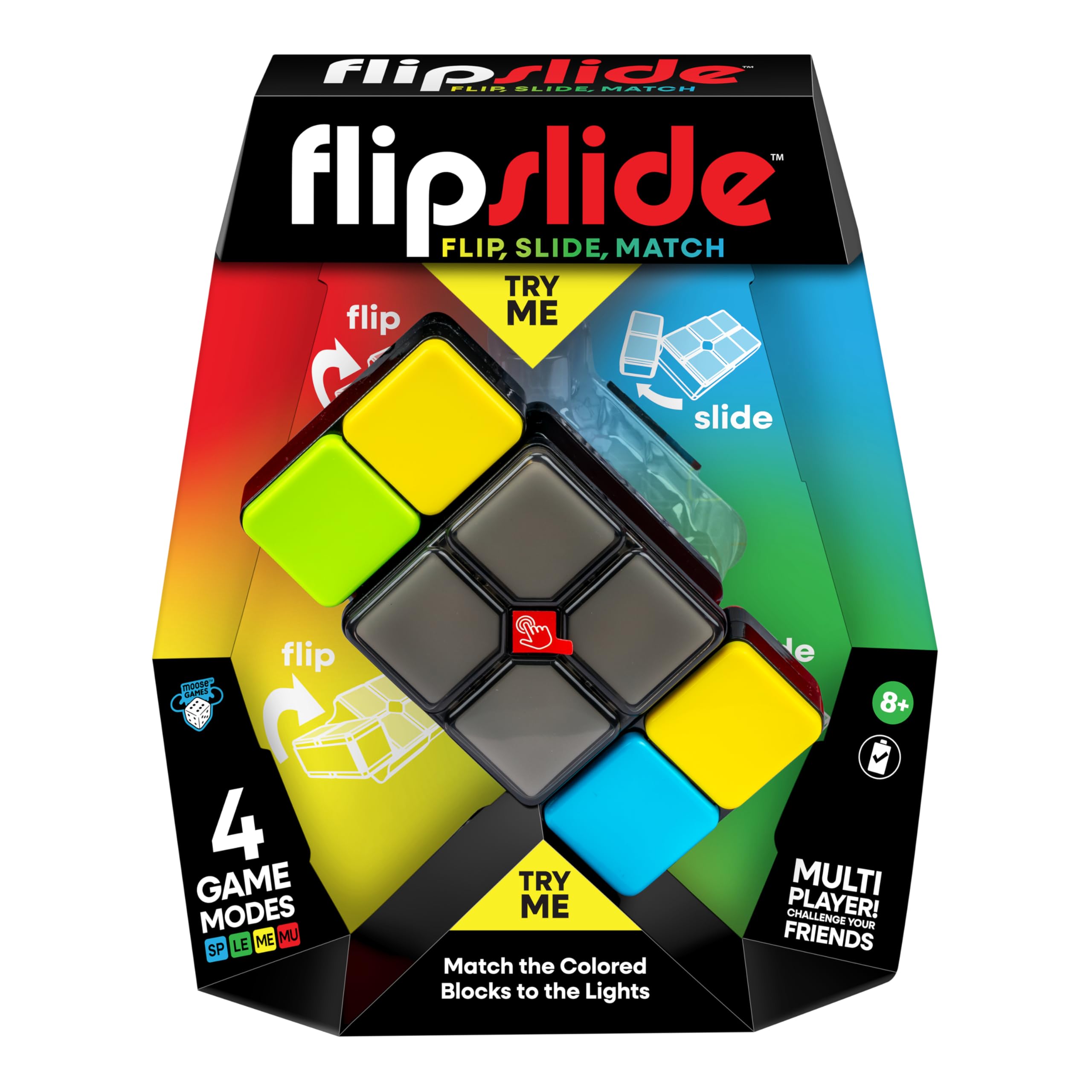
Unlike the top pick’s methodical logic challenges, Flipslide goes all-in on speedy electronic reactions — flip and slide colored blocks to match patterns across four game modes including a head-to-head multiplayer. No building, no papercraft, just instant play from a battery-included cube.
The sound effects are the main friction. Even on its lowest setting, volume can overpower quiet rooms, making it a better fit for car rides or lively kitchens than silent waiting areas. For the right 12-year-old who thrives on fast hands and faster thinking, it’s a grab-and-go electronic puzzle that feels premium and rarely gets boring.
Pros
- Addictive speed-and-memory gameplay that hooks kids and adults alike.
- Sturdy build quality feels like a premium electronic puzzle.
- Great gift for pre-teens who enjoy Simon-style reaction games.
Cons
- Volume may be uncomfortably loud even on the lowest setting, and speaker can cut out intermittently.
An energetic handheld puzzle for kids who prefer rapid-fire electronic games to quiet building projects — just be ready with speaker tape if silence matters.
Best for Lego Mechanics
Klutz Lego Gear Bots
Key Features
- Age Range: 8–12 years
- Educational Focus: STEM, engineering, creative
- Durability & Build: Lego bricks & papercraft
- Assembly: Assembly required, complex
- Portability: Home project, not portable
- Price: Mid-Range
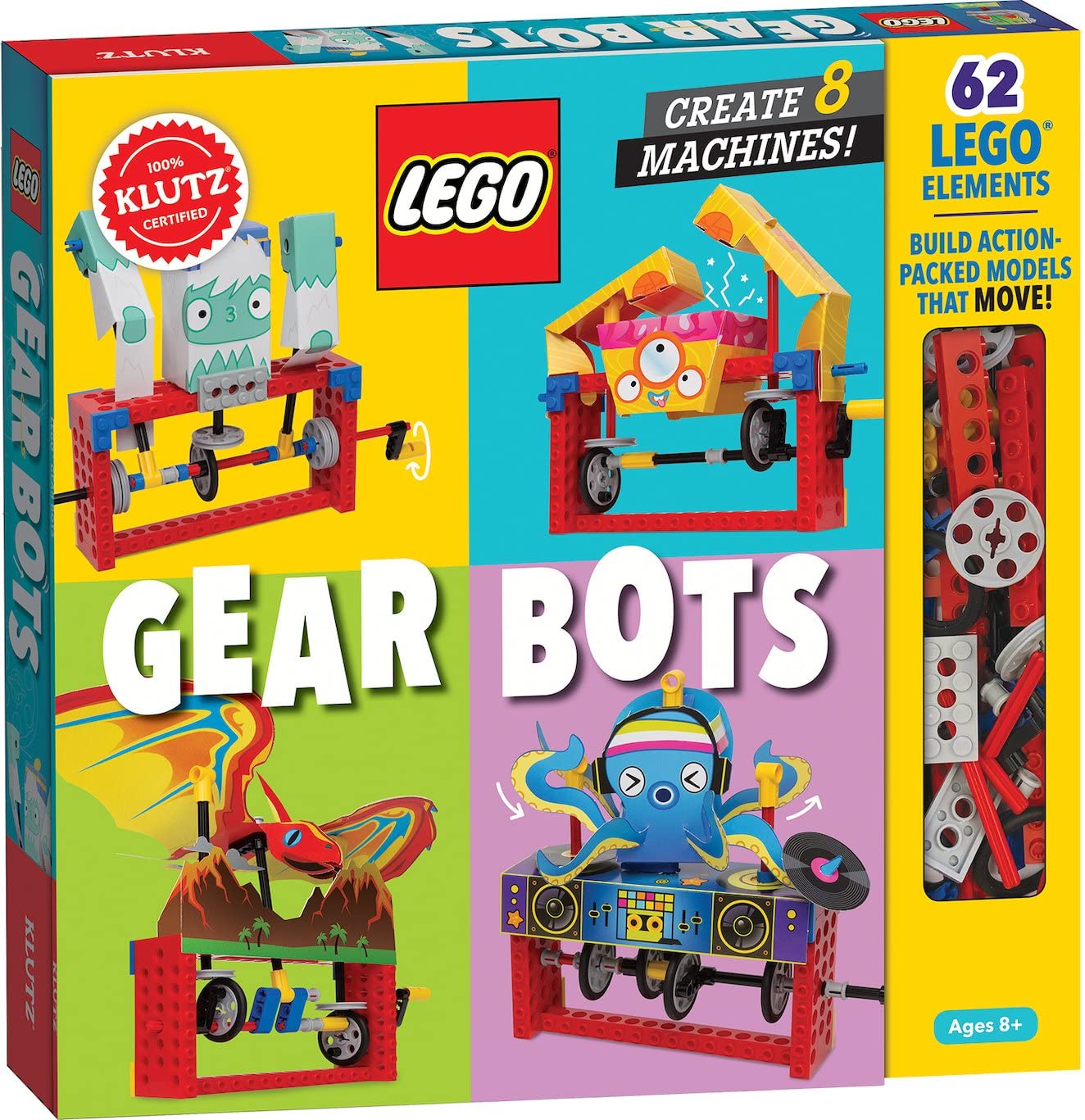
Kids snap together 62 genuine LEGO Technic pieces and papercraft bodies to make models like a stomping dinosaur or flapping phoenix. The craft-plus-engineering concept adds a fresh twist to standard brick building. However, the paper components can tear during careful assembly and the finished structures may not withstand rough handling, so the kit works best for patient, dexterous builders who treat it as a display project rather than an action toy.
Pros
- A creative blend of LEGO building and moving papercraft models.
- An engaging gift for LEGO fans looking beyond standard brick sets.
Cons
- Papercraft components can tear during construction or detach from the Technic frame with active play.
For a crafty 12-year-old who enjoys delicate assembly and wants to see paper and LEGO come alive in moving models, this kit offers a one-of-a-kind project.
Best for Coding Robotics
ELEGOO Robot Car Kit

Key Features
- Age Range: 8+ (adult help needed)
- Educational Focus: Coding, robotics, engineering
- Durability & Build: Plastic and electronics
- Assembly: Significant setup required
- Portability: Medium, not travel-oriented
- Price: Premium
The kit delivers a substantial hands-on build with an array of sensors, making it a compelling deep dive into robotics and programming. Setup is not plug-and-play: the Arduino environment can require adult guidance and troubleshooting when pre-loaded code doesn’t behave as expected. This suits a technically inclined 12-year-old who enjoys problem-solving and has a parent or mentor ready to assist, not a child seeking an instant toy.
Pros
- Comprehensive sensor suite and sturdy components create a satisfying build experience.
- Teaches genuine Arduino programming and sensor integration through direct, hands-on experimentation.
Cons
- Initial programming setup can be complex and may require adult troubleshooting when pre-loaded code behaves unexpectedly.
For a 12-year-old already curious about coding and supported by an engaged adult, the ELEGOO kit delivers genuine STEM depth. If the child wants a toy that works right out of the box, a non-electronic puzzle or build will be a safer bet.
Best for Travel Puzzles
FOLDOLOGY Origami Puzzles

Key Features
- Age Range: 10+ years
- Educational Focus: Spatial reasoning, logic
- Durability & Build: Paper puzzle pad
- Assembly: No assembly, fold puzzles
- Portability: Ultra-portable, 6×6 pad
- Price: Budget
FOLDOLOGY delivers 100 origami brain teasers in a portable pad that requires no surface — ideal for travel. Puzzles are well-printed and progressively challenging. However, the fold squares are quite small, making precise folding tricky for larger hands or less dexterous fingers. Best for puzzle purists who enjoy fine-motor challenges and don’t mind the compact format.
Pros
- Endlessly engaging brain-twister with hours of solo satisfaction
- Ultra-portable, mess-free travel game perfect for flights or car rides
Cons
- Puzzle squares are very small — folding can feel fiddly for larger hands or less dexterity
A thoughtful stocking stuffer for the puzzle-loving 12-year-old who enjoys fine-motor origami and doesn’t need a large workspace.
Best for Wearable Build
Smartivity Robotic Hand
Key Features
- Age Range: 8–14 years
- Educational Focus: STEM, mechanics, anatomy
- Durability & Build: Engineered wood
- Assembly: Assembly required
- Portability: Not portable, wearable build
- Price: Mid-Range
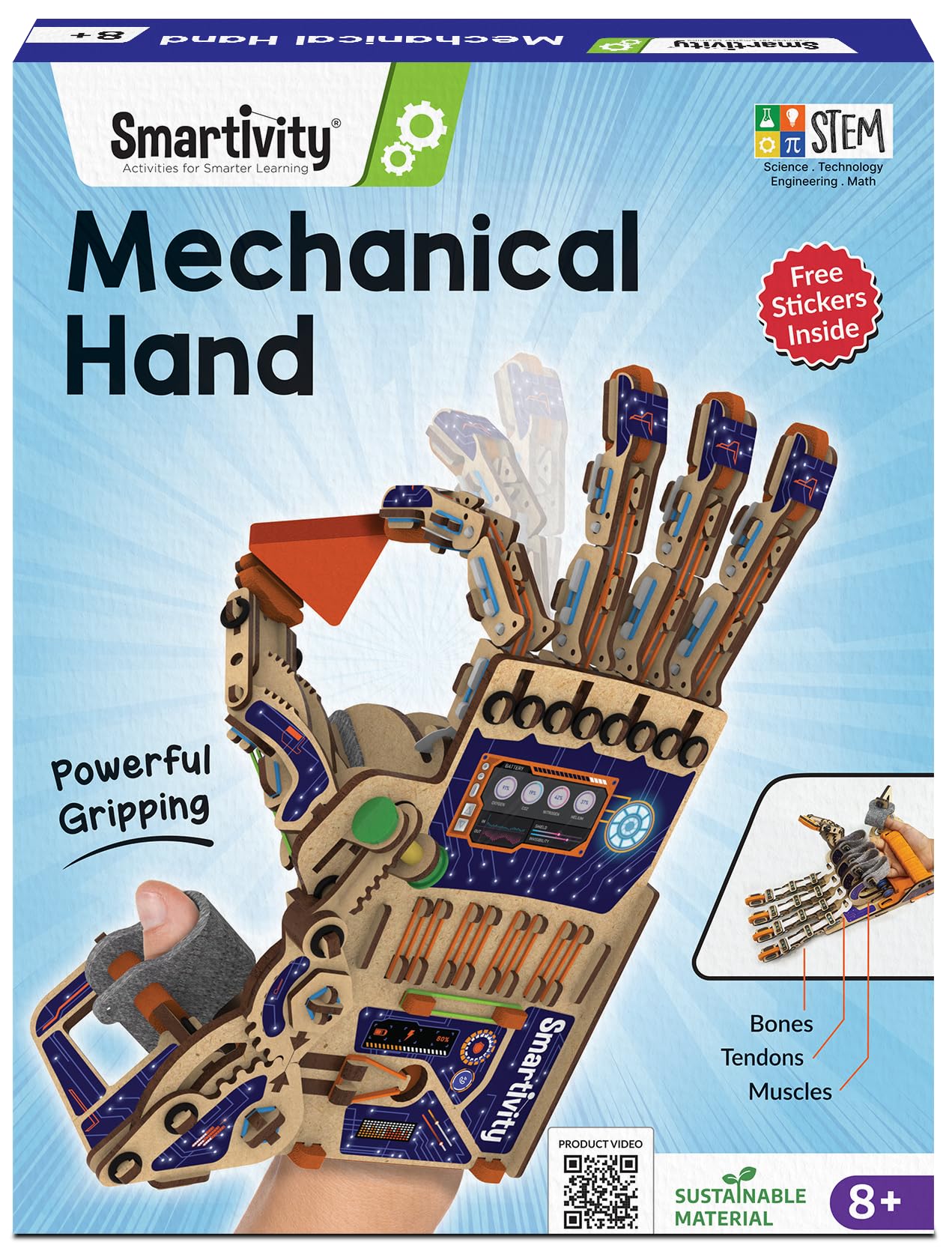
The kit rewards patient builders with a hand that moves via string-pulled linkages—a memorable tour of mechanics and anatomy. It’s more of a one-and-done project than a toy; once assembled, it lacks the long-term replay of the wooden pinball machine. Some small pieces can test younger builders, so adult help may be needed.
Pros
- Satisfying build yields a functional mechanical hand that demonstrates real finger movement.
- Clear instructions and high-quality wooden parts make the engineering challenge accessible.
Cons
- Younger builders may need adult help with smaller, more intricate pieces.
For a 12-year-old who enjoys a detailed build and would display the finished hand, this kit delivers a rewarding STEM afternoon—but it won’t match the ongoing play of a wooden pinball machine.
Best for Screen-Free Games
Ninja Blast Game Cube

Key Features
- Age Range: 6–12 years
- Educational Focus: Brain games, memory
- Durability & Build: Plastic, rechargeable
- Assembly: No assembly, instant play
- Portability: Compact cube, travel-friendly
- Price: Mid-Range
The Ninja Blast Game Cube packs nine memory and logic challenges into a pocket-sized, USB-C rechargeable device with multiplayer modes, giving a 12-year-old screen-free entertainment on the go. Quality control inconsistencies, however, mean a unit may fail to charge or switch on after short use, keeping it from being a dependable gift.
Pros
- Keeps kids entertained with nine brain and memory challenges for screen-free fun.
- USB-C battery lasts through long trips, making it a handy travel companion.
Cons
- Quality control inconsistencies mean a unit may not charge or power on after short use.
If you’re buying for a child who loves handheld brain games and you’re comfortable with the possibility of an exchange if the unit misbehaves, this cube delivers mobile screen-free fun.
How to Choose
A smart gift for a 12-year-old boy balances a challenge he can conquer independently with the durability to survive repeated use—and ideally, it’s something he’d actually pack for a trip.
Age-Appropriateness & Skill Alignment
Many gifts labeled for ages 8+ assume a 12-year-old has the same fine motor skills or patience as a younger child. A build that frustrates a tween because instructions are too childish or steps are too delicate will be abandoned. Look for kits that offer a clear range of difficulty or modular challenges, so he can start at the right level and not feel talked down to.
If he’s borderline, a logic game with 60 progressive puzzles lets him skip ahead to the hard stuff, while a one-assembly model might be too simple and lose his interest quickly.
Educational Value & STEM Focus
STEM toys range from genuinely educational to thinly disguised plastic blocks. The real value comes when a toy teaches a concept through hands-on trial and error—like how gear ratios affect speed in a Lego bot, or how circuit connections turn code into robot movement. A screen-free puzzle that requires spatial reasoning can be more educational than a flashy app.
For a 12-year-old who’s curious about how things work, look for projects where mistakes teach as much as success, rather than kits that only demand following pictured steps without any discovery.
Durability & Build Quality
Cheap plastic and flimsy papercraft won’t survive a road trip or a younger sibling’s grab. The best gifts use thick engineered wood, strong magnets, or sturdy binding. Pay attention to the weak links: a build-it-yourself toy with paper parts can rip during assembly, and magnetic cubes with weak magnets collapse at the slightest touch.
When traveling, a wooden pinball machine that uses rubber bands instead of batteries is likely to outlast any electronic alternative, while a hardcover book shrugs off being tossed in a backpack.
Assembly Complexity vs. Immediate Play
Some 12-year-olds dive into a multi-hour build with glee; others want to press a button and start. Kits that require fine motor bending of tiny paper flaps or deciphering dense diagrams can sour the experience if the kid lacks patience. Immediate-play toys like handheld puzzles or books win for car rides and waiting rooms.
If you’re gifting right before a long trip, choose instant play; if you have downtime at the destination, a build kit can be a welcome screen-free anchor that becomes a memorable family activity.
Portability for Travel or Quiet Play
A gift that tucks into a backpack without losing pieces makes every trip smoother. Puzzle cubes, fold-up paper games, and compact electronic cubes thrive in planes and cars because they demand no table and stay quiet. Books and cookbooks, while heavier, offer hours of absorption.
Avoid anything that requires a flat surface or makes noise that might annoy fellow passengers. The ideal travel gift keeps a 12-year-old engaged without needing an outlet or Wi-Fi, transforming dead time into discovery.
FAQ
Why does my light-up basketball stop working after a few uses?
The LED connections in novelty light-up balls often rely on cheap soldering that cracks after repeated bouncing or even minor impacts. Once the light fails, the ball becomes an ordinary rubber basketball. If you want nighttime play that lasts, skip electronic balls and consider a durable non-electronic alternative like a high-visibility orange ball instead.
Are 3D pens safe for kids, and why do they get so hot?
3D pen tips can reach 200°C to melt plastic filament, which poses a serious burn risk even with built-in safety features like auto-sleep. Despite manufacturer age labels, these pens are not safe for unsupervised use and are better suited to older teens or adults. For a 12-year-old, stick with building toys that don’t involve hot melting elements.
How can I fix a magnetic toy that keeps falling apart?
Weak magnets or misaligned polarity are the usual culprits—they can’t usually be repaired at home. If the magnets are simply weak, returning the product and choosing a model known for strong internal magnets (like the Shashibo cube’s reinforced system) is the best move. Avoid sets with tiny individual magnetic stones that rely on surface contact alone.
What’s the best low-mess travel toy for a 12-year-old boy?
Toys that require no loose pieces and stay silent are ideal. The Shashibo cube transforms in your hand without falling apart, Flipslide’s electronic challenges keep hands busy without any parts to drop, and FOLDOLOGY’s origami pad folds itself into puzzles—no glue, no crumbs, and no cleanup needed in a car or plane seat.