
This post contains affiliate links. We may earn a small commission when you buy through our links — at no extra cost to you.
Every parent or relative wants the gift that lights up a 12-year-old boy’s face. Yet too often, the flashiest gadgets—light-up frisbees, glowing basketballs, motorized papercraft kits—pack heartbreak into the box. The LEDs stop working, the suction cups don’t stick, or the pieces snap before the third use.
The gifts that last tend to be simpler: a soft foam football that whistles, a marble maze that gets harder with each card, a cookbook designed for tween hands. This guide leans into those picks—products that don’t just survive the first weekend but keep a kid captivated without a screen or a recharge.
For a 12-year-old, the right gift isn’t about maximum flash. It’s about fit—matching their curiosity, energy, or emerging independence with something solid enough to outlast their enthusiasm.


Best for Logic & Stem
ThinkFun Gravity Maze
Key Features
- Age Range: 8+
- Build Material: Plastic towers, game grid
- Replay Value: 60 challenge cards
- Skill Focus: Logic & spatial
- Play Mode: Solo (cooperative)
- Price: Mid-Range
Gravity Maze turns spatial reasoning into a solo challenge: place the towers, map the marble’s path, and let gravity do the rest. The 60 challenge cards start with simple setups and gradually demand multi-tier cascades, keeping a preteen’s logic muscles engaged without feeling like homework. The tactile snap of each tower and the roll of the marble add a hands-on element that pure paper puzzles lack.
For a kid who loves puzzles and screen-free brain-teasers, this is a gift that scales with their skill. The towers slot into a grid but don’t lock, so a bump can reset a solve — a nuisance on a busy kitchen table, but manageable on a dedicated flat surface. It’s a solo brain-teaser, not a group toy, and rewards careful setup. The puzzle-minded preteen who enjoys methodical problem-solving will find it deeply absorbing; those who expect sturdy, jostle-proof components may get frustrated.
Pros
- Engaging solo gameplay that sustains attention without screens.
- Builds spatial reasoning and critical thinking — a genuine educational bonus.
- Graduated difficulty curve from beginner to expert never feels overwhelming or stale.
Cons
- Towers aren’t locked in place; a bumped grid can shift pieces and break a run mid-solve.
A gift for puzzle enthusiasts who value focus over flash — this marble maze rewards patience and spatial thinking, but the non-locking towers mean it’s not suited for rough-and-tumble play spaces.
Best for Outdoor Sports
Nerf Vortex Aero Howler
Key Features
- Age Range: 6+
- Build Material: Soft foam
- Replay Value: Unlimited catch
- Skill Focus: Throwing & catching
- Play Mode: 1-on-1, group
- Price: Budget
Unlike trick-shot gadgets that demand skill, the Aero Howler is built for instant success: a lightweight foam ball with a whistle that tracks its flight, letting any kid make easy catches. It’s a casual play toy, not a performance football, which makes it a low-stress gift for 12-year-old boys who just want to toss something around. Use it indoors or out; the soft foam handles missed catches and walls without drama. Tail fins can tear under aggressive, tackle-style play, but gentle tossing keeps them intact for months. That boundary makes it right for kids who don’t treat every toss like the Super Bowl.
Pros
- Effortless to throw and catch, even for kids who struggle with regular footballs.
- Foam body withstands drops and bounces off walls without damage.
- Whistling sound tracks the ball mid-air and adds excitement.
Cons
- Tail fins can tear with aggressive play — gentle tossing avoids this.
For active kids who want a soft, flight-tracking football that makes any backyard game fun, this is an affordable gift that delivers — just steer clear of tackle-style play.
Best for Fidgety Creators
Shashibo Shape Shifting Cube
Key Features
- Age Range: 8+
- Build Material: Plastic, magnets
- Replay Value: 100+ shapes
- Skill Focus: Creativity & focus
- Play Mode: Solo fidget
- Price: Mid-Range
The Shashibo 4-pack offers free-form, tactile creativity — a distinct gifting angle from a structured logic puzzle. Each cube transforms through 100+ geometric shapes with 36 magnets that snap satisfyingly into place, delivering a silent, screen-free fidget experience that feels well-made.
Best for a 12-year-old who enjoys quiet, creative manipulation and exploring patterns, not for roughhousing. Stickers may peel with regular use, and hinges can separate if twisted aggressively. That makes it a poor choice for destructive play, but a strong desk toy for doodlers, puzzle lovers, and those who enjoy a soothing outlet.
Pros
- Engaging, addictive fidgeting with 100+ shape transformations that appeal across ages.
- Quality magnetic clicks and satisfying snap that feel well-made.
- Highly recommended as a gift for a wide range of ages and occasions.
Cons
- Stickers on the surface may peel after moderate use; hinges can separate if twisted with excessive force.
A soothing, hands-on fidget toy for a 12-year-old who enjoys creative, quiet play — but skip it if they’re likely to twist it like a puzzle box.
Best for Science Magic
Nat Geo Magic Chemistry Set
Key Features
- Age Range: 8+
- Build Material: Plastic, paper, chemicals
- Replay Value: 10 experiments, tricks
- Skill Focus: Chemistry & magic
- Play Mode: Solo/parental guidance
- Price: Budget
Unlike a dry chemistry set, this kit frames every reaction as a magic trick — vanishing water, color-changing liquids, and hidden messages feel like a show, not a class. The included wand and white gloves make it easy to go straight from unboxing to performance. It’s a strong pick for a 12-year-old who’d rather perform for family than quietly mix solutions, though the 10 guided experiments offer spectacle over scientific depth. Occasional missing pieces have left some gift-givers scrambling — check the contents before wrapping.
Pros
- Each experiment builds to a magic trick reveal, keeping a 12-year-old invested in the science.
- The wand, gloves, and full-color guide make it feel like a complete magician’s kit right out of the box.
- Instructions slip in real chemistry vocabulary without turning the experience into a lecture.
Cons
- Some kits ship with a missing component, so open the box and inventory everything before gifting.
A gift that turns a kitchen table into a stage — just budget a few minutes beforehand to confirm all parts are accounted for.
Best for Aspiring Chefs
Cookbook for Young Chefs
Key Features
- Age Range: 8+
- Build Material: Hardcover
- Replay Value: 100+ recipes
- Skill Focus: Cooking independence
- Play Mode: Solo cooking
- Price: Budget
Where gimmicky food kits treat cooking like a one-off craft, this hardcover cookbook from America’s Test Kitchen Kids takes young chefs seriously. Over 100 recipes range from breakfasts to dinners, each photographed in full color with clear, step-by-step visuals that guide a 12-year-old from prep to plate. The focus is on real meals the whole family will eat, building skills and confidence along the way.
The book suits a tween who genuinely wants to cook rather than just snack. Parents who value screen-free, life-skill gifts will appreciate how it fosters kitchen contribution. For kids who need highly simplified snacks or have no interest in cooking, it will sit unused.
Pros
- Fabulous recipe selection that makes cooking approachable and fun, from snacks to full dinners
- Clear, step-by-step instructions with full-color photos for every dish, boosting tween confidence
- Recipes are specifically designed for ages 8+, with many that a 12-year-old can execute independently
Cons
- Recipes using the stove or sharp knives may require an adult nearby at first, so full independence isn’t immediate
For a 12-year-old ready to graduate from microwaved snacks, this cookbook delivers dishes worth sharing — with just enough adult backup to keep things safe.
Best for Social Groups
SUSSED Cool Blue Card Game
Key Features
- Age Range: 10+
- Build Material: Card stock
- Replay Value: 230+ questions, 3 modes
- Skill Focus: Social conversation
- Play Mode: 2-8 players, group
- Price: Budget
Where the top pick rewards solitary focus with marble runs, this card game ignites group energy. Over 230 ‘What would you do?’ prompts get kids debating silly scenarios, with three ways to play that keep things moving. The travel-sized box and pocketable cards make it effortless to pull out during car rides, restaurant waits, or sleepovers—no setup required.
It fits the 12-year-old who thrives on social interaction and family banter. Tweens who strongly prefer solo play, video games, or serious topics may dismiss the goofy hypotheticals. But for mixed-age game nights and screen-free gatherings, this deck turns awkward silences into shared laughter.
Pros
- Sparks instant laughter and conversation among friends and family
- Works across ages and settings—game nights, car rides, sleepovers
- No learning curve; pick up and play within seconds
Cons
An easy win for the extroverted tween—budget-friendly, group-fueled, and ready to break the ice anywhere.
Best for Creative Flyers
Klutz Book of Paper Airplanes
Key Features
- Age Range: 8+
- Build Material: Paper, spiral binding
- Replay Value: 10 designs, 40 sheets
- Skill Focus: Paper engineering, flight
- Play Mode: Solo/family
- Price: Budget
Forty double-sided patterned sheets and 10 plane styles put flight performance front and center — no gears, no motors, just the satisfying result of a well-executed fold. Unlike the top pick’s engineering-heavy building, this kit zeroes in on precision papercraft and the thrill of lofting a glider across the room. The spiral-bound instructions use difficulty ratings, so a 12-year-old can pick a quick dart or tackle a more advanced stunt plane independently.
This is the gift for a crafty kid who’d rather make something fly than follow a screen. It’s a low-cost, packable activity that turns a rainy afternoon into a family distance competition. Kids who need instant gratification or dislike step-by-step folding won’t stay engaged — the reward comes from careful creases, not push-button action.
Pros
- Ten clearly diagrammed designs with difficulty ratings let kids progress at their own pace.
- Heavy, attractively patterned paper produces planes that genuinely glide and loop well.
- Hours of screen-free, hands-on fun that works equally well solo or in a family pile-up.
Cons
- A few advanced folds demand patience; rushed assembly can yield poor in-air results.
For a boy who loves building with his hands and watching his creation take flight, this kit delivers exceptional value — a classic, screen-free gift that entertains for hours at a budget-friendly price.
Best for On-The-Go Puzzle
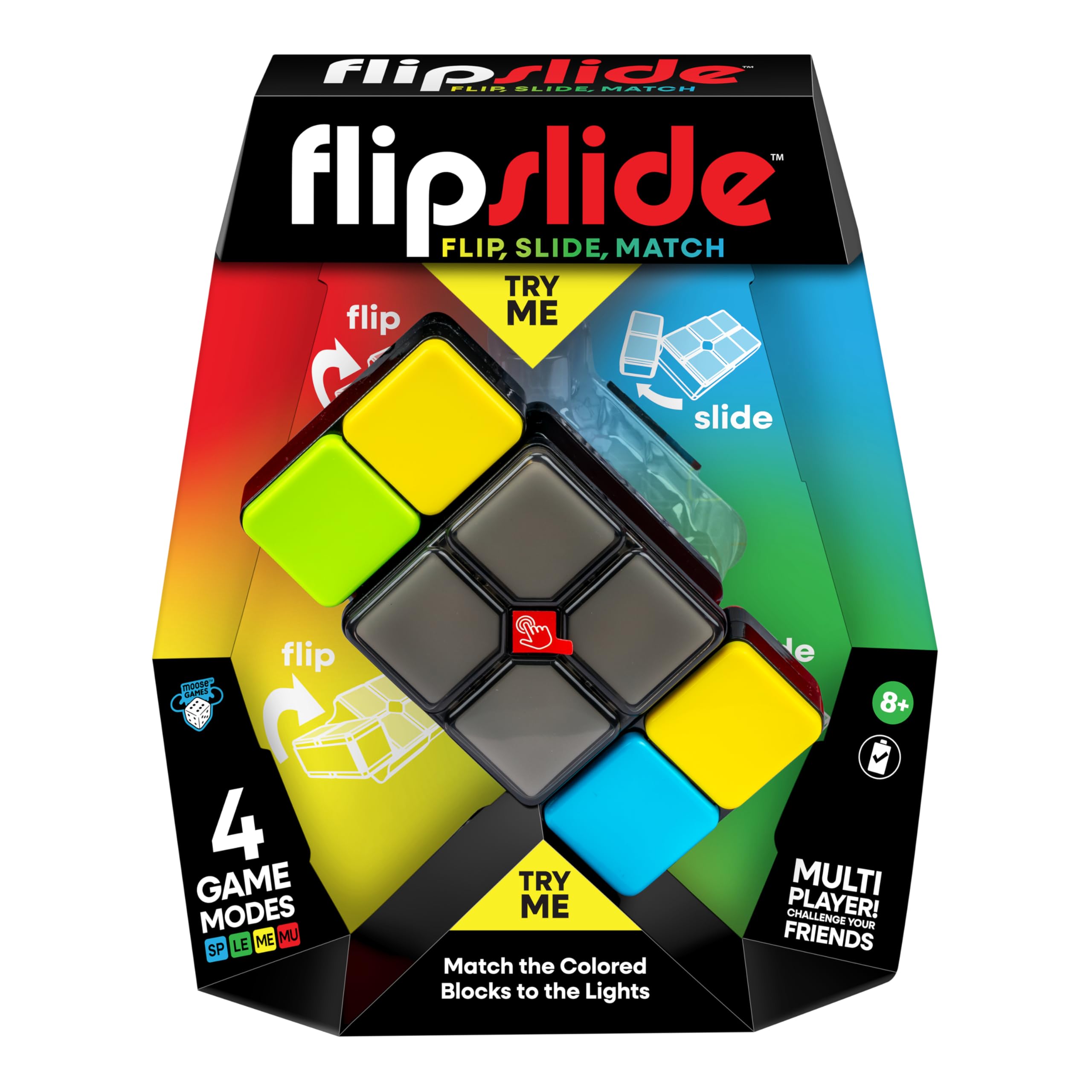
Moose Flipslide
Key Features
- Age Range: 8+
- Build Material: Plastic
- Replay Value: 4 game modes
- Skill Focus: Reaction & memory
- Play Mode: Solo, multiplayer 2
- Price: Budget
Flipslide challenges a tween’s reaction speed and memory with four game modes in a sturdy, pocket-size handheld. The built-in speaker runs loud even on the lowest volume setting, which rules out library or classroom play, and audio may cut out over time. For car trips, waiting rooms, or a rowdy family room, the game’s fast pace and portability outweigh the noise.
Pros
- Four game modes (Speed, Multiplayer, Level, Memory) keep reaction and memory challenges fresh for long trips.
- Sturdy construction holds up to drops and frequent travel, no fragile screen.
Cons
- In quiet settings like a library or quiet car, the speaker can be too loud even on the lowest volume, and audio may cut out.
For road trips and busy waiting rooms, Flipslide’s speed and memory play outshine its audio quirks; avoid it only if silence is a must.
Best for Nighttime Hoops
GlowCity Glow Basketball

Key Features
- Build Material: Rubber
- Replay Value: Dusk games
- Skill Focus: Basketball skills
- Play Mode: 2+ players outdoor
- Price: Mid-Range
The GlowCity Glow Basketball delivers a bright red glow that extends driveway games into dusk, and the grip feels like a standard outdoor ball. However, the LEDs can dim or stop working, and occasional air loss or peeling stripes may occur. For a gift that gets a tween outside for casual night play, it’s a fun novelty — just don’t expect a long-lasting everyday ball.
Pros
- Bright, impressive glow for nighttime basketball games
- Exciting gift that encourages outdoor play after dark
Cons
- LED lights may stop working or dim quickly; occasional air loss and stripe peeling are possible
Best for casual twilight games or as a cool-tech gift for a basketball-loving tween; accept that the lights might not last like a regular ball.
Best for Smooth Surface Play
Popdarts PRO Pack

Key Features
- Build Material: Silicone, plastic
- Replay Value: Score to 21
- Skill Focus: Accuracy & strategy
- Play Mode: 1-4 players
- Price: Premium
Popdarts PRO Pack includes six silicone darts, a target marker, and cancellation scoring in a travel bag. It shines on smooth, glossy surfaces, but darts may not stick to textured walls, wood, or dusty glass. Gift only if the 12-year-old has that kind of surface handy, or the premium cost feels hard to justify.
Pros
- Quick to learn with easy cancellation scoring, keeping all ages entertained.
- Mesh bag and compact design make it effortless to take on trips or to a friend’s house.
Cons
- Suction works only on very smooth, glossy surfaces; on textured walls or wood, darts may not stick at all.
Good fit for a 12-year-old whose home has large, smooth glass doors or glossy cabinets — otherwise, the game may rarely come out of the bag.
Best for Trivia Readers
NG Kids Why? Book

Key Features
- Age Range: 7-10
- Build Material: Hardcover
- Replay Value: 1,111+ Q&A
- Skill Focus: General knowledge
- Play Mode: Solo reading
- Price: Budget
Stunning photography and over 1,111 fact-driven Q&As make this hardcover a browser-friendly trove for curious minds. It’s purely a reading experience — best for a 12-year-old who genuinely enjoys trivia and solo discovery, not hands-on building. The format rewards dipping in and out, though kids who want an activity rather than a book may lose interest quickly.
Pros
- Packed with fascinating facts that captivate both kids and adults
- Stunning National Geographic-quality photography brings every page to life
Cons
A gift that fits a 12-year-old boy who loves trivia and reading over active, hands-on items — hours of solo discovery for the right kid.
Best for Puzzle Solvers
Difficult Riddles for Smart Kids

Key Features
- Age Range: 8+
- Build Material: Paperback
- Replay Value: 300 riddles
- Skill Focus: Critical thinking
- Play Mode: Solo/group
- Price: Budget
The riddles push kids into wordplay and lateral thinking, making car trips and waiting rooms more lively. Some are genuinely tricky, and solo attempts can lead to giving up. The book works best as a shared activity with a parent or sibling, not a solo challenge for the easily frustrated.
Pros
- Sparks laughter and lively discussion among all ages
- Encourages critical thinking and verbal reasoning in kids
Cons
- Some riddles are so tough that solo attempts can lead to frustration
A great pick for road trips and family game nights when an adult or older sibling can step in — less ideal for a 12-year-old who wants to solve puzzles alone.
Best for Lego Builders
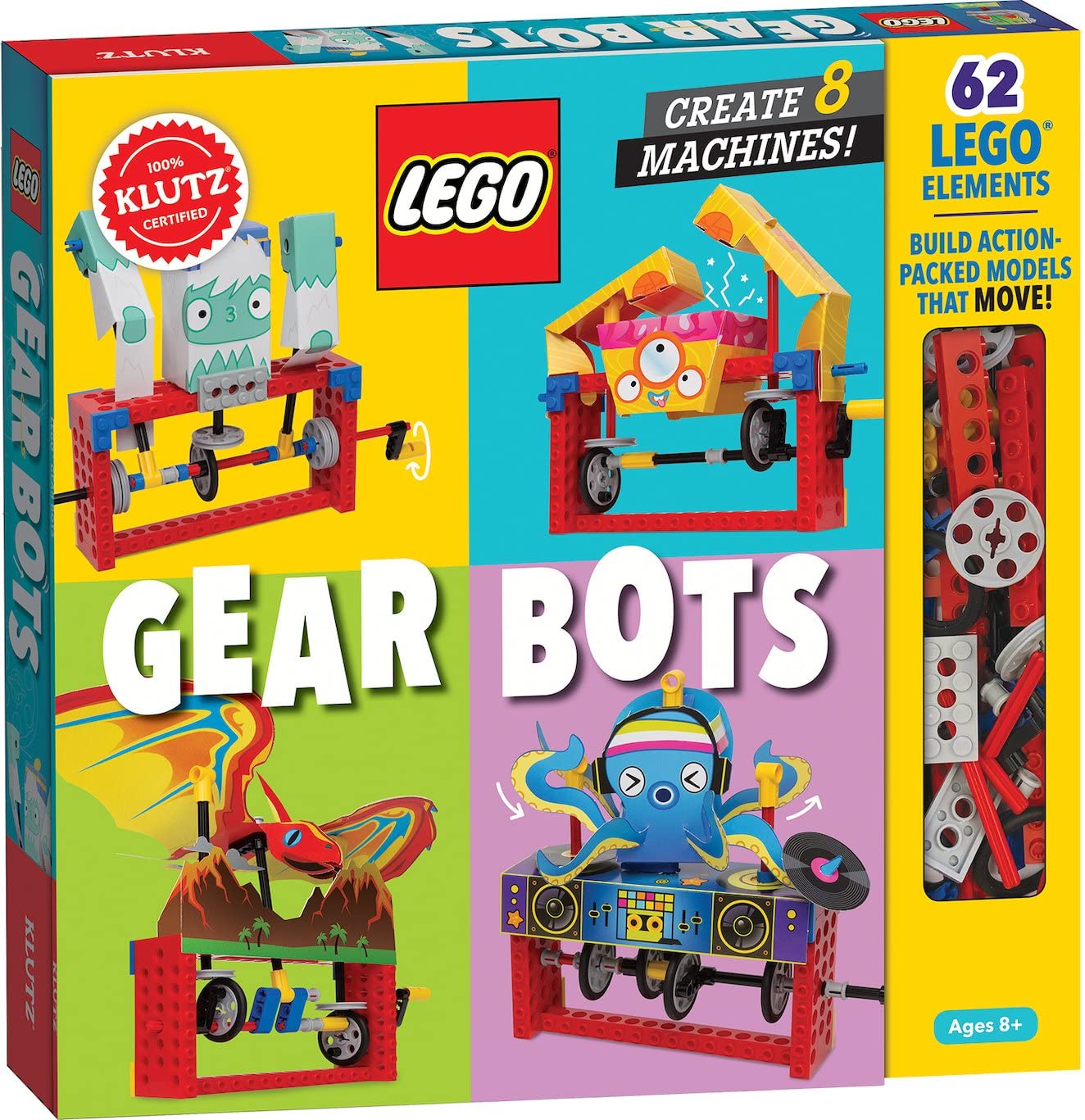
Klutz Lego Gear Bots
Key Features
- Age Range: 8-12
- Build Material: Paper, LEGO Technic
- Replay Value: 8 builds
- Skill Focus: Mechanical engineering
- Play Mode: Solo building
- Price: Mid-Range
The concept combines LEGO building with papercraft engineering to produce eight kinetic sculptures that demonstrate gears, cams, and linkages. The build process engages kids who like tinkering, but the finished models are delicate: paper elements tend to pop loose with handling, and the instruction booklet can be ambiguous on complex steps. This is a rainy-day construction activity, not a keepsake toy.
Pros
- Merges LEGO Technic pieces with papercraft for a unique engineering challenge
- Introduces gear and cam mechanisms in an engaging, hands-on way
Cons
- Papercraft parts can detach during handling, making builds fragile and unsuitable for active play
Best suited as a parent-assisted build project for a LEGO-loving 12-year-old who values the assembly challenge over a lasting toy.
How to Choose
The most reliable gifts for 12-year-old boys are often the ones without a battery compartment—prioritize build quality and skill match over novelty lights.
Match the Gift to His Actual Skill Level, Not His Age
A toy labeled 8+ might no longer challenge a tween’s problem-solving ability, while one with ‘adult assembly’ can overwhelm. Look for systems that scale—like a puzzle game with progressive difficulty cards—so the challenge stays just ahead of his growing skills.
If he’s a deep thinker, opt for a logic maze with beginner-to-expert cards. If he’s hands-on but impatient, a construction kit with forgiving pieces prevents the frustration that kills interest.
Durability: What Survives the Backpack Test
Look at the joints and seams. Magnetic cubes with exposed stickers will shed after heavy fidgeting; papercraft bots that rely on paper hinges will loosen over time. The best gifts use materials that flex without breaking—soft foam that absorbs impact, thick paper with secure folds, or sturdy plastic snaps that aren’t just glued.
If the gift will travel in a backpack to school or bounce around a car, choose gear that can take a drop. A foam football or a hardcover book is far more forgiving than a rechargeable gadget with a delicate charging port.
Replay Value: How to Pick a Gift That Doesn’t Gather Dust
A 12-year-old’s interest can be fleeting. Replayability isn’t just about having more content; it’s about how the experience changes. A build-it-once model becomes a shelf decoration, but a marble maze with 60 challenge cards grows with the player. Look for open-ended or progressive systems—like a cookbook with 100+ recipes or a card game with unlimited conversation—that keep pulling him back.
The Hidden Learning in a Good Gift
The best gifts don’t feel like homework. They embed lessons in the play itself. A magic chemistry set hides reaction science behind showmanship; a paper airplane kit teaches aerodynamics through trial flights. The key is that the learning happens by doing, not by reading. Choose a skill you want to nurture—spatial reasoning, cooking, engineering—and find a toy that makes it an active pursuit.
Solo vs. Group: Knowing Who He’ll Play With
Whether he’ll use it alone or with friends changes everything. A single-player logic game can absorb a solo thinker for hours, but a boy who thrives on group energy will get far more from a card game or an outdoor football. Gifts that work both ways—like a frisbee that’s fun for catch or solo throws—offer the most flexibility.
FAQ
Why does my son’s LED frisbee keep turning off after 10 throws?
The TOSY Flying Disc uses a rechargeable battery that can fail to hold charge, especially if the unit arrived defective. Many users report LEDs cutting out mid-throw. For a reliable glowing disc, consider the GlowCity basketball instead, which uses impact-activated lights, though it too has mixed durability. The safest bet is to skip light-up toys unless you’re prepared for possible early failure.
Do Klutz Lego Gear Bots stay together or do the paper parts fall apart?
The papercraft components, especially the paper hinges and cutouts, are the weak point. Many builders find the paper parts don’t hold under the tension of the LEGO mechanisms, causing bots to collapse. If your boy still wants a LEGO-related building experience, the Klutz Paper Airplanes kit (which uses paper in a way that’s designed to fold and fly, not bear mechanical stress) is a safer, more satisfying choice.
Is the Gravity Maze too easy for a 12-year-old or will he get bored?
The 60 challenge cards range from Beginner to Expert, with the later puzzles requiring multi-step spatial planning that can stump adults. Most 12-year-olds will find the initial levels a warm-up but quickly hit their stride in the intermediate and advanced tiers, giving months of logical challenge. It’s often listed as one of the best STEM gifts precisely because it scales well with age.
What happens when Shashibo cube stickers peel off – can I fix it?
Stickers can peel with heavy use, especially if the cube is twisted aggressively or stored in hot places. You can try reapplying with a tiny dab of clear glue, but the underlying plastic may also show wear. The magnets and hinge mechanism usually survive sticker loss, so the cube remains functional, albeit less colorful. It’s more of a cosmetic issue than a functional failure.