
This post contains affiliate links. We may earn a small commission when you buy through our links — at no extra cost to you.
Shopping for a 10-year-old boy often means choosing between a flashy electronic gadget and a gift that will still hold his interest months later. Many toys in this category promise excitement but fall short on build quality, leaving both kids and parents disappointed.
The toys and books that consistently win over kids in this age group aren’t always the newest releases. They’re the ones built around hands-on discovery, real creativity, and robust construction—gifts that survive being tossed in a backpack or played with roughly a hundred times.
We zeroed in on the products that combine genuine fun with the kind of durability that means they won’t end up in the donation pile by summer vacation. From screen-free STEM projects that teach circuits to an outdoor football you can’t help but chase, these picks are chosen to keep a 10-year-old building, reading, and moving long after the wrapping paper is gone.



Best for Stem & Tinkering
Snap Circuits Jr. SC-100
Key Features
- Age Range: 8+
- Learning Focus: STEM, electronics
- Durability: Snap-together plastic
- Play Style: Solo
- Screen-Free: Yes
- Price: Mid-Range
The Snap Circuits Jr. SC-100 gives a 10-year-old a genuine electronics lab without the risk of soldering irons or loose wires. Each piece clicks onto the plastic grid with a satisfying snap and stays put through repeated builds. The picture-based instructions walk kids through a light-controlled alarm, a spinning fan, and dozens more projects — each one demonstrating a real circuit concept like series vs. parallel or a switch action.
This kit is built for focused, independent tinkering. It works best for kids who enjoy following a sequence and seeing cause and effect — less so for those who need constant motion or group interaction. The four AA batteries required aren’t included, so factor in that extra stop at the drawer before gifting. Children who prefer outdoor play or cooperative games will find this too quiet; it’s a solo adventure into how electronics actually work.
Pros
- Hands-on introduction to circuit concepts through 100+ building projects
- Components snap together securely and withstand repeated disassembly
- Picture-based instructions allow independent play for most kids aged 8 and up
Cons
- Requires 4 AA batteries not included — an extra purchase for families who don’t have them on hand
- Designed for solo play; kids who prefer building or playing with others may find it less engaging
For a 10-year-old with a curious mind and the patience to follow step-by-step instructions, this is one of the most rewarding screen-free STEM gifts available — reliable, reusable, and a proven starting point for future engineers.
Best for Active Families
Nex Playground
Key Features
- Age Range: 5+
- Learning Focus: Active gaming
- Durability: Electronic console
- Play Style: Multiplayer up to 4
- Screen-Free: No
- Price: Premium
The Nex Playground turns screen time into whole-body activity. Its built-in camera tracks movements so kids dodge, jump, and swing to play Fruit Ninja or Starri—no controller needed. Setup takes minutes, and children as young as 5 can jump in. For families with multiple kids stuck inside on rainy days, this delivers genuine active fun.
The catch: only five games come included. Unlocking the full library requires an annual subscription ($49–$89/year), and the base unit itself carries a premium price tag. That ongoing cost makes this a better fit for households already spending on family entertainment subscriptions than for budget-conscious shoppers. It pairs naturally with a quiet solo activity like the ThinkFun Gravity Maze as a balanced gift basket.
Pros
- Leaps and swings make this far more physically engaging than TV or handheld games
- Quick setup and intuitive controls work for kids and adults alike
- Keeps multiple children moving indoors when weather keeps them home
Cons
- Full game library requires an annual subscription on top of the already high base price
A unique active-play system for families who can absorb the subscription cost and want an indoor substitute for outdoor running around.
Best for Puzzle Lovers
ThinkFun Gravity Maze
Key Features
- Age Range: 8+
- Learning Focus: STEM, critical thinking
- Durability: Plastic, marbles
- Play Style: Solo
- Screen-Free: Yes
- Price: Mid-Range
With 60 challenge cards that ramp from beginner to expert, Gravity Maze turns a simple marble drop into a brainteasing construction puzzle. Kids arrange nine colorful towers on a grid, release the marble, and watch it cascade — if it hits the red target, they’ve solved it. Unlike the active-tech family gaming system that relies on AI and a subscription, this is entirely analog, quiet, and self-contained.
It’s a natural fit for 10-year-olds who love logic puzzles, LEGO building, or any kind of solo problem-solving. Because it’s purely a one-player experience, it won’t entertain kids who need group play or fast-paced action. The game rewards patience and trial-and-error, so a child who gets discouraged easily might set it aside.
Pros
- Keeps puzzle-loving kids absorbed for hours with 60 escalating challenge cards.
- Builds spatial reasoning and engineering thinking without screens.
- Well-made towers and marbles stand up to repeated trial-and-error.
Cons
- Purely solo play — if the birthday kid prefers group activities, this won’t engage them.
For the puzzle-minded 10-year-old who enjoys working through challenges independently, Gravity Maze is a screen-free STEM option that earns its place in the gift lineup. If the birthday kid prefers action-packed, social play, look to the outdoor or multiplayer picks in this guide.
Best for Outdoor Fun
Nerf Vortex Aero Howler
Key Features
- Age Range: 6+
- Learning Focus: Active play, throwing
- Durability: Foam, plastic fins
- Play Style: Group
- Screen-Free: Yes
- Price: Budget
The Nerf Vortex Aero Howler delivers a classic outdoor throwing experience with a built-in whistle that kids love. Best suited for active outdoor play, the foam body is easy for smaller hands to grip and throw accurately. The fins hold up under normal use but may tear if handled roughly or chewed by a pet. The loud whistle makes it a poor choice for quiet indoor time — stick to the backyard or park.
Pros
- Pure fun — easy to throw and catch for all ages
- Distinctive whistle adds excitement
- Perfect size for smaller hands, easy to grip
Cons
- Fins can tear if subjected to rough play or pets
For $14, this is an easy win for outdoor-loving kids who want a noisy, active throw-and-catch game.
Best for Budding Chefs
Young Chefs Cookbook
Key Features
- Age Range: 8+
- Learning Focus: Cooking, life skills
- Durability: Hardcover
- Play Style: Solo or family
- Screen-Free: Yes
- Price: Budget
America’s Test Kitchen’s 208-page hardcover turns the kitchen into a classroom. Each of the 100+ recipes has been tested with thousands of kids, so instructions are broken into clear steps accompanied by full-color photos. The result is a screen-free activity that builds a useful life skill, unlike any toy or gadget.
This cookbook is ideal for the budding foodie who wants more independence in the kitchen. Adult supervision is still required for the stove and ingredient shopping, so it’s best for families who enjoy cooking together rather than a solo project.
Pros
- Teaches real cooking skills through kid-tested, delicious recipes
- Recipes are well-organized, easy to follow, and beautifully photographed
- Covers kitchen techniques, food science, and nutrition in an engaging way
Cons
The rare gift that leaves a kid with a plate of food they made themselves — and the confidence to do it again.
Best for Reluctant Readers
Trapped in a Video Game
Key Features
- Age Range: 8–10
- Learning Focus: Reading, engagement
- Durability: Paperback box set
- Play Style: Solo
- Screen-Free: Yes
- Price: Budget
Fast-paced storytelling mirrors the logic and reward loops of a video game, making this 5-book paperback series a magnet for kids who normally avoid reading. The action-adventure plot pulls readers forward screen-free, building momentum chapter by chapter.
It’s an ideal gift for 8- to 10-year-old boys, especially those glued to controllers. Parents get a low-cost, substantial present that quietly builds reading stamina. Older 10-year-olds with advanced reading skills may find the vocabulary a bit easy, but reluctant readers hit the sweet spot where engagement outweighs any simplicity.
Pros
- Hooks reluctant readers with video-game-style storytelling
- Tailor-made for 8- to 10-year-old boys, especially gamers
- Short chapters and fast pace build reading confidence quickly
Cons
For a screen-obsessed 10-year-old, this series channels gaming energy into a reading habit that keeps giving across five books.
Best for Magic & Science
Nat Geo Magic Chemistry Set

Key Features
- Age Range: 8+
- Learning Focus: Chemistry, magic tricks
- Durability: Plastic tools, chemicals
- Play Style: Solo or group
- Screen-Free: Yes
- Price: Budget
This magic-themed kit turns science into a performance with 10 tricks that demonstrate real chemistry. All necessary props and clear instructions are included. Some kits arrive missing a component; checking contents before gifting avoids disappointment. The experiment count caps at 10, so kids who crave extended play may move on quickly.
Pros
- Experiments feel like magic shows, keeping kids engaged and surprised.
- Clear instructions make experiments easy to follow.
Cons
- Limited to 10 experiments, so the curiosity may fade faster than larger kits.
Best for a magic-loving 10-year-old who enjoys spectacle, provided you open the box to ensure all parts are inside before wrapping.
Best for Messy Science
Nat Geo Gross Science

Key Features
- Age Range: 8+
- Learning Focus: Gross chemistry experiments
- Durability: Tools, chemicals
- Play Style: Solo or group
- Screen-Free: Yes
- Price: Mid-Range
The gross theme turns learning into messy entertainment, teaching real chemistry with homemade slime and fake puke. Kits can arrive with missing components that prevent some experiments — verify the contents right away. For parents who don’t mind a little (okay, a lot of) mess, it’s a playful, educational gift for any occasion.
Pros
- Gross slime, booger, and vomit experiments keep kids engaged and laughing
- Teaches genuine chemistry principles through hands-on gross-out fun
Cons
- Kits may ship with missing parts, blocking certain experiments; verifying contents first is wise
If your 10-year-old loves all things disgusting and you’re willing to open the box early to confirm no missing parts, this kit turns slime and boogers into a memorable science gift.
Best for Curious Minds
NG Kids Why? Book

Key Features
- Age Range: 7–10
- Learning Focus: General knowledge, reading
- Durability: Hardcover
- Play Style: Solo
- Screen-Free: Yes
- Price: Budget
This hardcover packs over 1,111 answers with vibrant National Geographic images, keeping a fact-hungry kid absorbed for hours. It’s a rich reading experience, not a hands-on toy, so the excitement may feel quieter than an interactive gift. For a main present that makes a 10-year-old jump, it pairs better with something tactile.
Pros
- Fascinating content and colorful photos captivate curious readers.
- A big, high-quality hardcover at a budget-friendly price.
Cons
- May feel less exciting than a hands-on toy for kids who prefer active play.
Pair this with a hands-on toy to turn a quiet reading gift into a complete present for a facts-hungry kid.
Best for Travel & Quick Play
Flipslide Puzzle Game
Key Features
- Age Range: 8+
- Learning Focus: Puzzle, speed
- Durability: Plastic handheld
- Play Style: Multiplayer 2-4
- Screen-Free: Yes
- Price: Budget
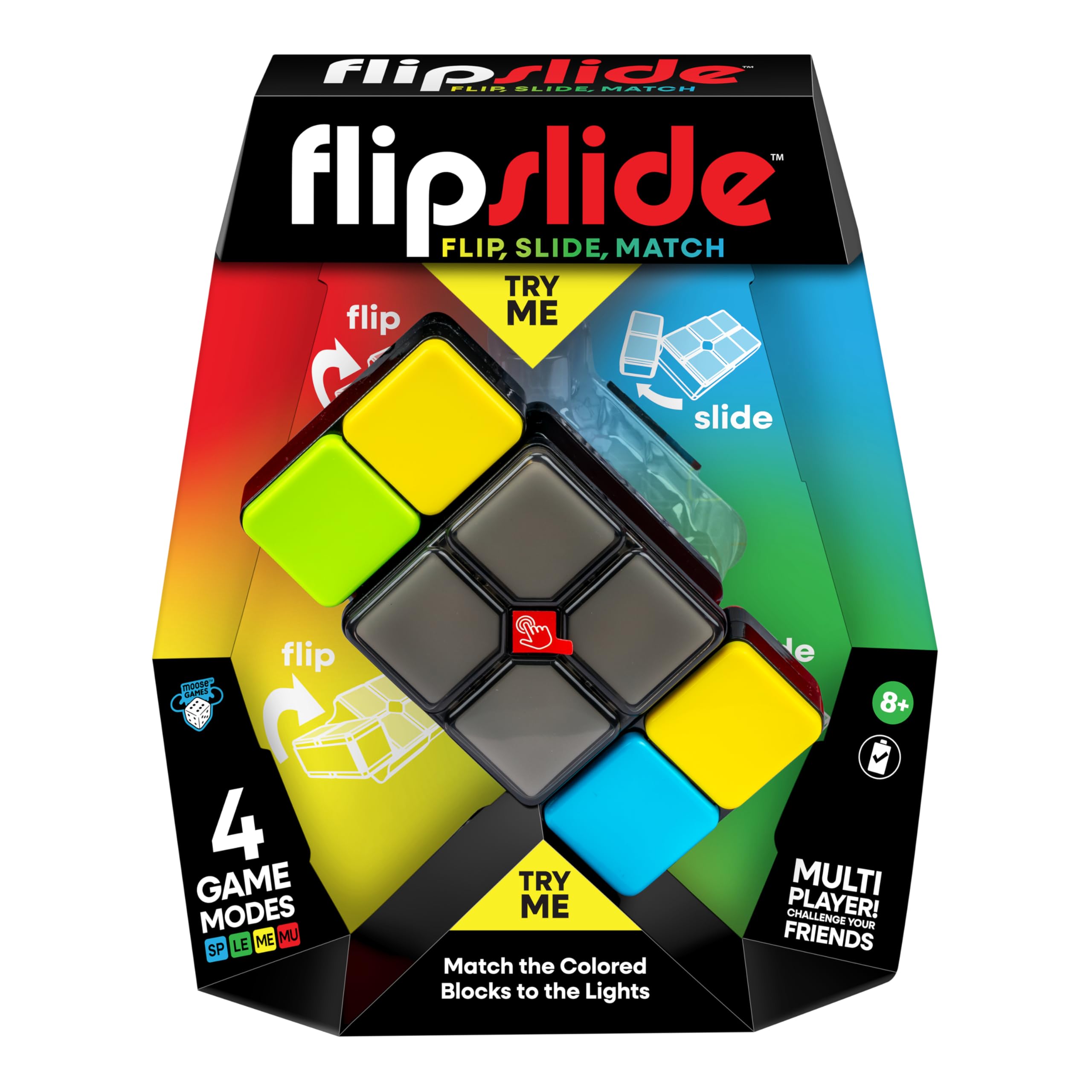
The Flipslide packs a fast-paced puzzle challenge into a handheld device that travels well. Four modes test speed and memory, and the rechargeable battery is handy. The speaker is loud and lacks a true quiet mode, so it may not suit quiet environments. For active households and car rides, it’s an addictive, budget-friendly gift.
Pros
- Fast-paced speed and memory puzzle keeps kids engaged on the go
- Travel-friendly design with rechargeable battery ready for car rides
Cons
- Loud speaker with no true quiet mode limits play in quiet settings
A great travel companion for kids who love fast-paced puzzles, as long as the volume won’t be an issue where it’s played.
Best for Lego Tinkerers
Klutz LEGO Gear Bots
Key Features
- Age Range: 8–12
- Learning Focus: STEM, engineering
- Durability: LEGO, papercraft
- Play Style: Solo
- Screen-Free: Yes
- Price: Mid-Range
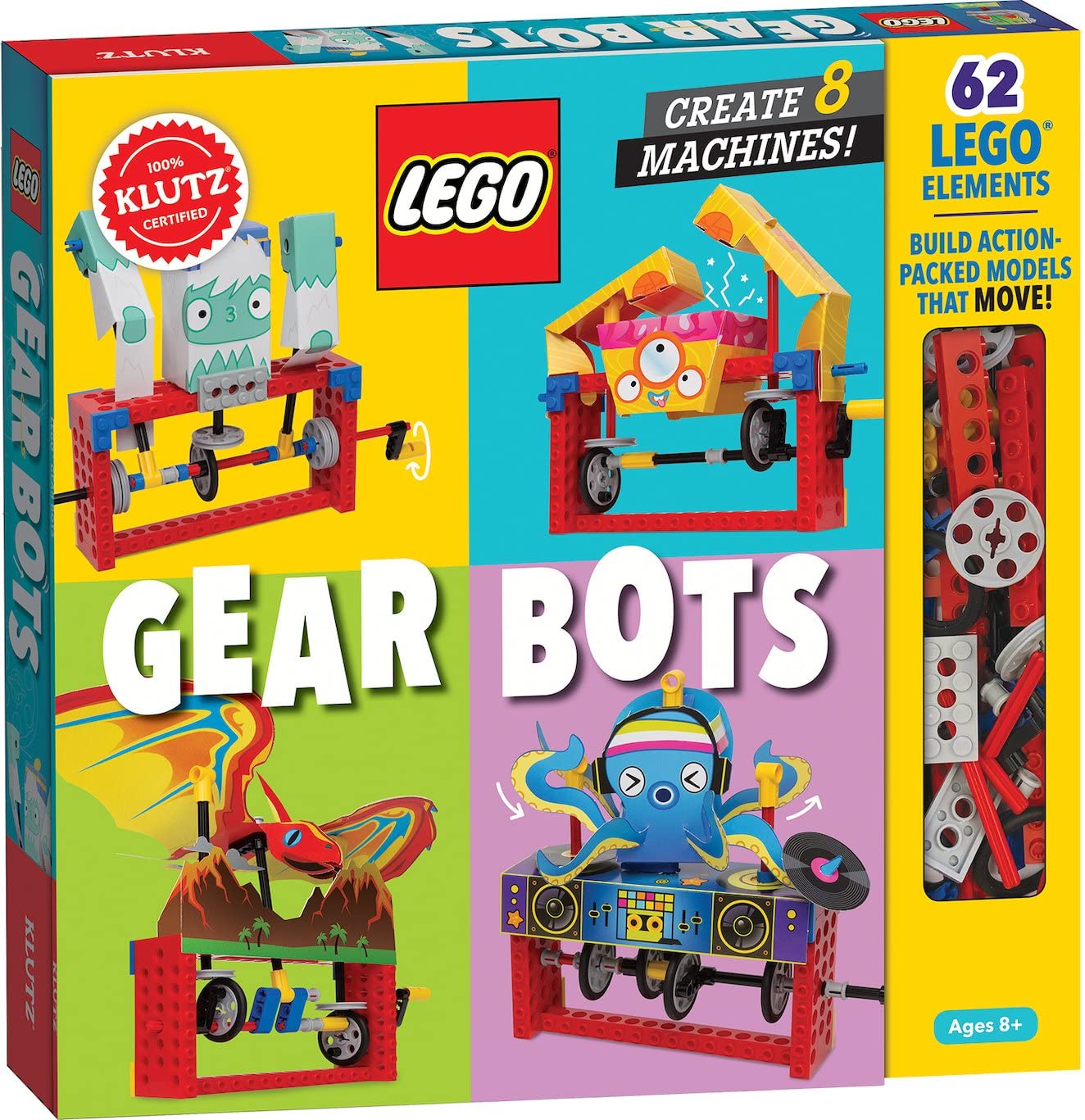
Eight kinetic creatures with axles, cams, and cranks turn building into a real engineering lesson. The papercraft-and-brick hybrid design is creative, though the illustrated instructions can stump younger builders without adult help. This kit rewards kids who like tinkering and improvising; perfectionists who want everything to snap tight will be frustrated.
Pros
- A creative gift for LEGO fans who love mechanical builds.
- Moving parts bring playful physics concepts to life.
Cons
- Some connections may pop loose during play, leading to wobbly final models.
Best for LEGO fans who prefer inventive, open-ended building over polished, rock-solid models — adults may need to help with instructions.
Best for Night Play
TOSY LED Flying Disc

Key Features
- Learning Focus: Night play, active fun
- Durability: LED disc, battery
- Play Style: Group
- Screen-Free: Yes
- Price: Mid-Range
At dusk, the TOSY disc throws a vivid 108-LED light show with motion-reactive color shifts that make every catch feel cinematic. The 175g weight and waterproof build hold up for beach and lakeside play. Electronic components can be inconsistent over time, making this better suited as an occasional night-trip highlight than a daily thrower.
Pros
- 108-LED array creates stunningly bright, colorful patterns for night games
- Motion-reactive smart modes turn a simple throw into an engaging visual experience
Cons
- LED longevity is inconsistent; lights can dim or become unresponsive over time
For families who prioritize an unforgettable light show over longevity, this disc delivers magical evenings at the beach or campground — just don’t expect it to become a backyard staple.
How to Choose
The most reliable predictor of a gift’s success with a 10-year-old boy is not how flashy it looks out of the box, but how well it holds his attention—and physically holds up—after dozens of uses.
Matching the Right Age Level
A 10-year-old typically needs more than just basic assembly; look for kits with graduated challenges that allow him to advance from beginner to expert. Products labeled “8+” often fit the bill, but check that the highest difficulty still engages a tween—a circuit set with 100 projects offers far more runway than a 10-experiment kit.
Pay attention to reading level when choosing books. A series aimed at ages 8–10 may feel too simplistic for an advanced 10-year-old, while a technically dense manual can crush confidence. The best gifts match a child’s current ability with a gentle stretch.
Real Learning, Not Just Entertainment
Some STEM toys promise education but deliver a single, fleeting experiment. The ones that stick embed learning in repeatable play: a circuit kit that lets him build a radio, not just light a bulb, or a logic maze where each new challenge teaches a spatial concept.
Books that teach a life skill, like cooking, often outlast another action figure. They offer a productive screen-free alternative and a sense of accomplishment that pure entertainment rarely matches.
Durability and Materials That Survive
Ten-year-old boys can be rough on gifts. Snap-together plastic connectors avoid the broken wires common in cheap electronic kits, while dense foam footballs withstand hundreds of throws—though fins may still tear if a dog gets involved. For indoor items, hardcover books and sturdy plastic puzzle pieces far outlast papercraft or peel-prone stickers.
Solo Focus vs. Social Play
A solo puzzle maze can captivate one child for hours, but if he thrives on competition, it may gather dust. Multi-player handheld games or an outdoor football channel that same energy into family fun, while solo STEM projects build deep concentration. Gauge whether the child prefers independent focus or the chaos of group challenges before choosing.
Screen-Free Options and Active Engagement
For pure unplugged fun, books, cookbooks, and classic outdoor toys eliminate all screen temptation. An active gaming system like Nex Playground reduces sedentary screen time by turning the living room into a movement zone, yet the TV is still on. Decide whether the goal is zero screen exposure or simply more physical activity within a tech-friendly household.
FAQ
Why won’t my Bop It Extreme turn on?
The Bop It Extreme has a high out-of-box failure rate, with many units arriving dead or dying within days due to quality-control issues. If yours won’t power on, try fresh AAA batteries first. If that fails, return it or request a replacement, but for gift-giving, it’s a risky choice.
Does the Nex Playground need a subscription to play all games?
The included five games are playable out of the box, but the full library of titles requires an annual Play Pass subscription (typically $49–$89 per year). Without it, you’re limited to a handful of experiences, so factor that recurring cost into the overall value.
How durable is the National Geographic air rocket?
The launcher legs and firing mechanism are prone to breakage, with many reports of legs snapping or the rocket never launching. It offers outdoor fun when it works, but the high failure rate makes it a gamble that frequently leads to disappointment.
Are Shashibo cubes worth the money for a 10-year-old?
The magnetic shape-shifting is initially engaging, but the surface stickers peel quickly with regular use and the plastic feels flimsy compared to the price. For a lasting fidget toy at a similar cost, consider a high-quality Rubik’s Cube or mechanical puzzle instead.
Why do some science kits arrive with missing parts?
Packaging inconsistencies mean a small percentage of kits ship without a promised chemical or tool. Always open the box before wrapping to inventory the contents, and contact the manufacturer directly for any missing pieces—most brands will send replacements.