
This post contains affiliate links. We may earn a small commission when you buy through our links — at no extra cost to you.
An 11-year-old’s Christmas list is a minefield of flashy packaging and short-lived thrills. The toy that dominates YouTube unboxing videos often winds up in a closet by February, defeated by confusing instructions or fragile parts that break within days. It’s a pattern parents know too well — and it’s why the real measure of a gift isn’t the initial “wow,” but whether it stays in heavy rotation long after the tree comes down.
This guide cuts through the noise to spotlight toys, games, and kits that hold an 11-year-old’s attention well into spring. The picks prioritize clear step-by-step instructions, durable builds, and the kind of challenge that grows with a child — not just flash-in-the-pan novelty. Many are compact enough to slip into a backpack for car trips, making them allies for screen-free travel. Choosing a gift that matches a tween’s growing independence, without setting them up for frustration, is the sweet spot these recommendations hit.



Best for Puzzle Lovers
ThinkFun Gravity Maze
Key Features
- Age Range: 8+
- Play Type: Logic puzzle
- Ease of Use: 60 challenge cards
- Durability: Plastic towers, marbles
- Educational Value: STEM logic
- Price: Mid-Range
ThinkFun Gravity Maze transforms a marble run into a solo logic puzzle with 60 challenge cards that scale from beginner to expert, engaging a tween mind without screens or batteries. The clear goal cards and sturdy towers let kids start solving within minutes, no adult hand-holding needed. Each card requires placing towers to guide the marble from start to target, building spatial reasoning and sequential thinking as the difficulty ramps up. With challenges ranging from easy to expert, it stays rewarding as skills improve, offering hundreds of hours of brain-challenging entertainment.
This game hits the mark for an 11-year-old who enjoys quiet, brain-teasing puzzles and methodical problem-solving. It’s not a group activity—the design is for one player at a time. Towers can shift or pop loose during excited play, requiring a quick reset that may briefly interrupt the flow. Kids who take a deliberate approach will barely notice; those prone to impulsive movements might find it mildly annoying. But for a screen-free Christmas gift that grows with a child’s logic skills, Gravity Maze delivers months of independent challenge.
Pros
- Immersive single-player puzzle play that keeps kids absorbed for hours
- Strong educational value in logic and spatial reasoning, ideal for STEM learning
- 60 graduated challenge cards from beginner to expert sustain engagement over many months
Cons
- Towers may shift or dislodge during enthusiastic play, needing a quick readjustment
A screen-free puzzle that deepens logic skills as the challenges advance, making it a gift that outlasts many flashier toys.
Best for Active Kids
Nerf Vortex Aero Howler
Key Features
- Age Range: 6+
- Play Type: Active outdoor
- Ease of Use: Easy throw & catch
- Durability: Soft foam
- Educational Value: Physical activity
- Price: Budget
Unlike the solo brain-teaser in this set, the Aero Howler thrives on group energy and open space. Its soft foam construction is forgiving enough for any age, and the loud, echoing whistle makes even a simple game of catch feel like an event. It’s the right pick for an active 11-year-old who wants to burn off energy outside, not sit quietly. The tail fins can eventually tear with aggressive play, so treat it as seasonal outdoor entertainment — not a lifetime sports tool.
Pros
- Soft foam build is gentle on hands and easy to catch at any speed, even for beginners.
- The loud whistling sound adds a crowd-pleasing twist that gets kids sprinting and laughing.
- Compact and featherlight — easy to grab for a park trip or spontaneous backyard game.
Cons
- Tail fins are the weak point and may tear with rough outdoor play — expect to replace it after a season of heavy use.
For a screen-free holiday gift that gets an 11-year-old sprinting and laughing in the backyard, this noisy foam howler delivers exactly what it promises — just keep it on grass and away from the dog.
Best for Family Game Nights
Taco vs Burrito
Key Features
- Age Range: 6+
- Play Type: Card game
- Ease of Use: 15-min rounds, rules
- Durability: Cardstock
- Educational Value: Strategy & humor
- Price: Budget
Where the top pick rewards solitary focus, Taco vs Burrito thrives on group chaos. The simple rules and silly action cards mean an 11-year-old can outmaneuver adults, and a full round wraps in about 15 minutes — perfect for holding attention spans. The rulebook can be a stumbling block; a quick video tutorial or practice hand sorts the confusion before it derails the fun. It’s a fit for family game nights, stocking stuffers, and kids who enjoy the humor-meets-strategy of Exploding Kittens. Those wanting deep, balanced tactics or who dislike looking up rule clarifications will find it too light.
Pros
- Addictive, fast-paced fun that appeals to kids and adults alike.
- Simple rules let younger children join in quickly, keeping the game moving.
- Laugh-out-loud humor bridges age gaps, making it a hit for mixed-age gatherings.
Cons
- The included rulebook can be confusing; a practice round or watching a tutorial helps get started.
For families looking for a light, competitive laugh-fest that gets everyone around the table, Taco vs Burrito delivers — just budget a few extra minutes to figure out the rules together.
Best for Creative Crafters
Klutz Paper Airplanes Book
Key Features
- Age Range: 7+
- Play Type: Craft & activity
- Ease of Use: Illustrated instructions
- Durability: Paper
- Educational Value: Creativity & engineering
- Price: Budget
Where the top pick keeps a tween quietly puzzling, this paper airplane book gets them folding and flight-testing in minutes. The 40 patterned sheets and intuitive illustrated guides produce planes that glide, loop, and stunt—backed by over 160 flight tests per design. Most folds are independent-able for an 11-year-old, though a few advanced creases may need an adult’s steady hands on the first attempt. It’s ideal for creative kids who thrive on making something and seeing it work, and the screen-free payoff lasts far beyond assembly.
Pros
- 40 brightly patterned sheets and durable binding make it feel like a premium craft kit.
- Step-by-step diagrams are clear enough for an 11-year-old to follow without screen tutorials.
- Planes perform actual stunts—loops, glides, and boomerangs—thanks to designs tested in over 160 flights each.
Cons
- A handful of the most advanced folds can frustrate young builders; initial adult guidance may be needed.
A low-cost, screen-free gift that rewards patience with planes that actually fly—best for creative tinkerers who don’t mind tackling a tricky fold with a bit of help.
Best for Gross-Out Fun
Nat Geo Gross Science Kit
Key Features
- Age Range: 8+
- Play Type: Science kit
- Ease of Use: Experiment booklet
- Durability: Plastic, chemicals
- Educational Value: Chemistry
- Price: Mid-Range
Unlike a book of science facts, this kit leans into slime, fake vomit, and bubbling potions that get kids laughing while they learn. The 15 guided experiments are deliberately disgusting, and the extra 30 bonus activities use common kitchen supplies to extend the fun. It’s a great fit for an 11-year-old who loves making a mess and doesn’t want school-like lessons. The trade-off: kits occasionally ship with a missing vial or scoop, so it’s wise to verify contents before wrapping.
Pros
- Absurdly fun, hands-on experiments that make chemistry feel like play
- Especially appealing to kids who love slime, fake vomit, and all things gross
- Great for homeschooling or supplementing science class with real reactions
Cons
- Some kits may arrive missing components like vials or scoops; check before gifting
For the kid who’d rather mix slime than read about it, this kit delivers genuine learning wrapped in giggles — just check the contents beforehand to avoid gift-day disappointment.
Best for Brain Teaser Fans
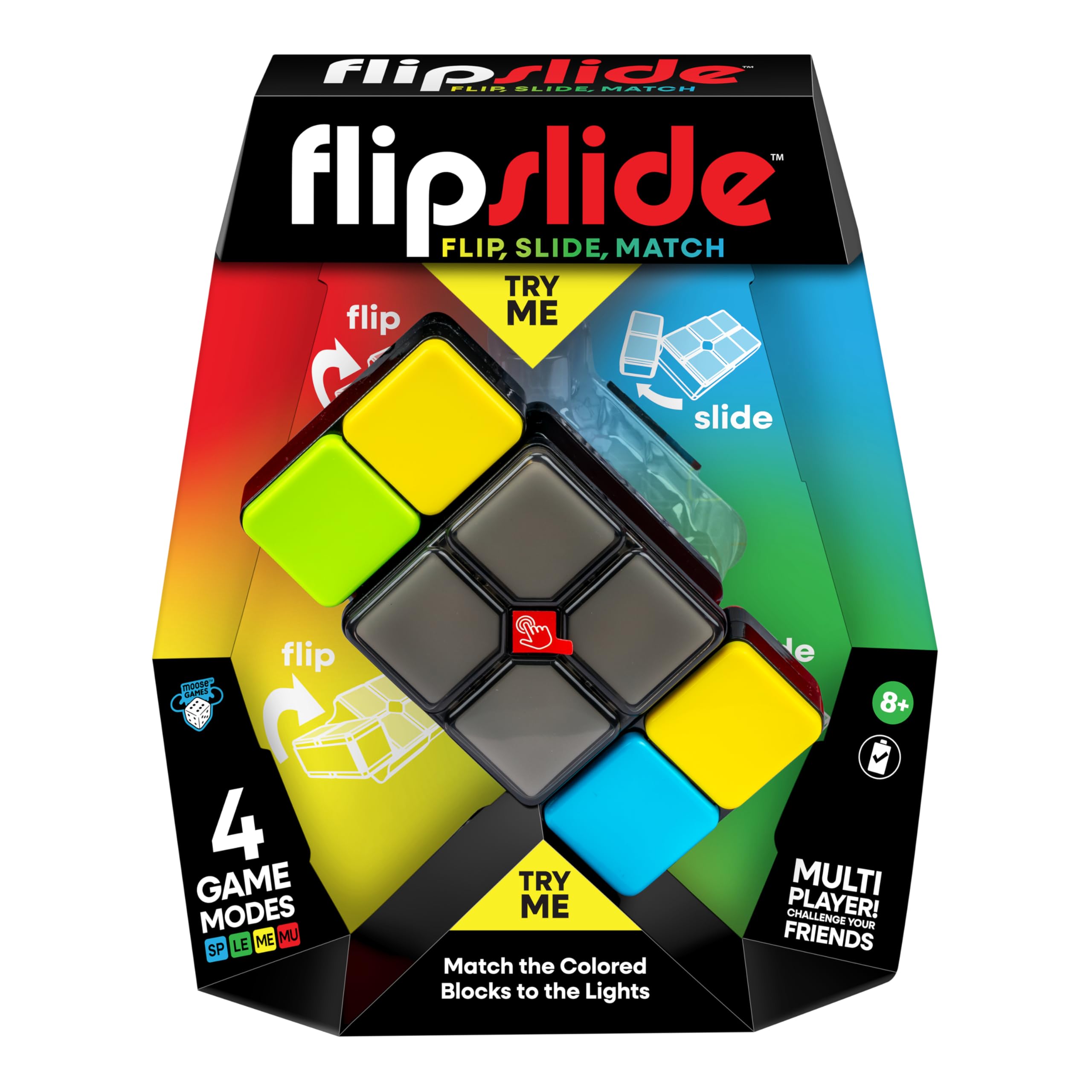
Flipslide Game
Key Features
- Age Range: 8-13
- Play Type: Handheld puzzle
- Ease of Use: 4 game modes, no reading
- Durability: Electronic plastic
- Educational Value: Reflexes & memory
- Price: Budget
Four game modes (Speed, Multiplayer, Level, Memory) keep the challenge fresh, making this a step up from silent fidget toys. The fast-paced lights-and-sounds gameplay appeals to kids who enjoy electronic handheld games, but the volume is noticeable even on the lowest setting — a drawback in quiet households or shared spaces. Ideal for solo play or quick travel distractions when noise won’t be an issue.
Pros
- Addictive puzzle that engages players across four distinct game modes.
- Compact and portable, easy to bring on car trips or visits.
- Recommended as a gift for tweens who enjoy fast-reflex challenges.
Cons
- Audible beeps persist even at the lowest volume, which may disturb others in quiet settings.
A solid choice for active solo gamers who don’t mind some noise, but less suitable for shared quiet spaces.
Best for Curious Readers
NG Kids Why? Book
Key Features
- Age Range: 7-10
- Play Type: Reading & browsing
- Ease of Use: No assembly required
- Durability: Hardcover
- Educational Value: General knowledge
- Price: Budget
Over 1,111 curious questions get crisp, photo-rich answers that make flipping through pages irresistible. Unlike messy science kits, this hardcover rewards idle curiosity with short, digestible facts across an enormous range of topics—animals, space, the human body, and more. Kids who already devour textbooks may find some explanations brief, but for casual, wide-eyed readers the sheer variety keeps the book fresh long after the first read.
Pros
- Engaging content that pulls in both kids and adults for shared browsing.
- National Geographic-quality photos that make every page pop.
- Bite-sized facts that encourage casual reading without overwhelming.
Cons
For the curious 11-year-old who loves random facts and gorgeous visuals, this hardcover delivers years of quiet browsing that outlasts any holiday break.
Best for Fidget Toy Lovers
Shashibo Shape Shifting Box

Key Features
- Age Range: 8+
- Play Type: Fidget puzzle
- Ease of Use: Intuitive manipulation
- Durability: Plastic, magnets
- Educational Value: Spatial reasoning
- Price: Mid-Range
The Shashibo rewards fidgety fingers with over 100 magnetic shape shifts, making it a compact, screen-free companion for an 11-year-old. Stickers on the surface can wear and peel with heavy play, so it suits those who value the transformation puzzle over a polished look.
Pros
- Over 100 magnetic transformations keep hands busy with near-endless variety.
- Compact and quiet design fits stockings and travel bags seamlessly.
Cons
- Surface stickers may peel with frequent use, exposing plain plastic underneath.
Ideal for an 11-year-old who wants a morphing puzzle above cosmetics — the Shashibo delivers addictive fidgeting that outweighs its eventual wear.
Best for Nighttime Active Play
TOSY LED Frisbee

Key Features
- Age Range: 6+
- Play Type: Outdoor flying disc
- Ease of Use: Simple throw
- Durability: LED disc, rechargeable
- Educational Value: Outdoor fun
- Price: Mid-Range
108 RGB LEDs produce a bright, color-shifting light show that makes dusk and dark play exciting. The disc feels solid and throws like a regulation frisbee, while USB-C recharging provides plenty of glow time for a campout or backyard session. The lights can stop after limited use, though, so it’s a spectacular short-term toy for evening fun rather than a disc that will last for multiple seasons.
Pros
- Bright, multi-color light modes create a dazzling display for evening play
- Balanced weight and grip mimic a regulation Frisbee, making throws feel natural
Cons
- The LED lights may stop working after limited use, turning it into a standard frisbee sooner than expected
A gift that delivers a few memorable nights of glowing play; just have a backup disc ready for when the lights eventually fade.
Best for Patient Builders
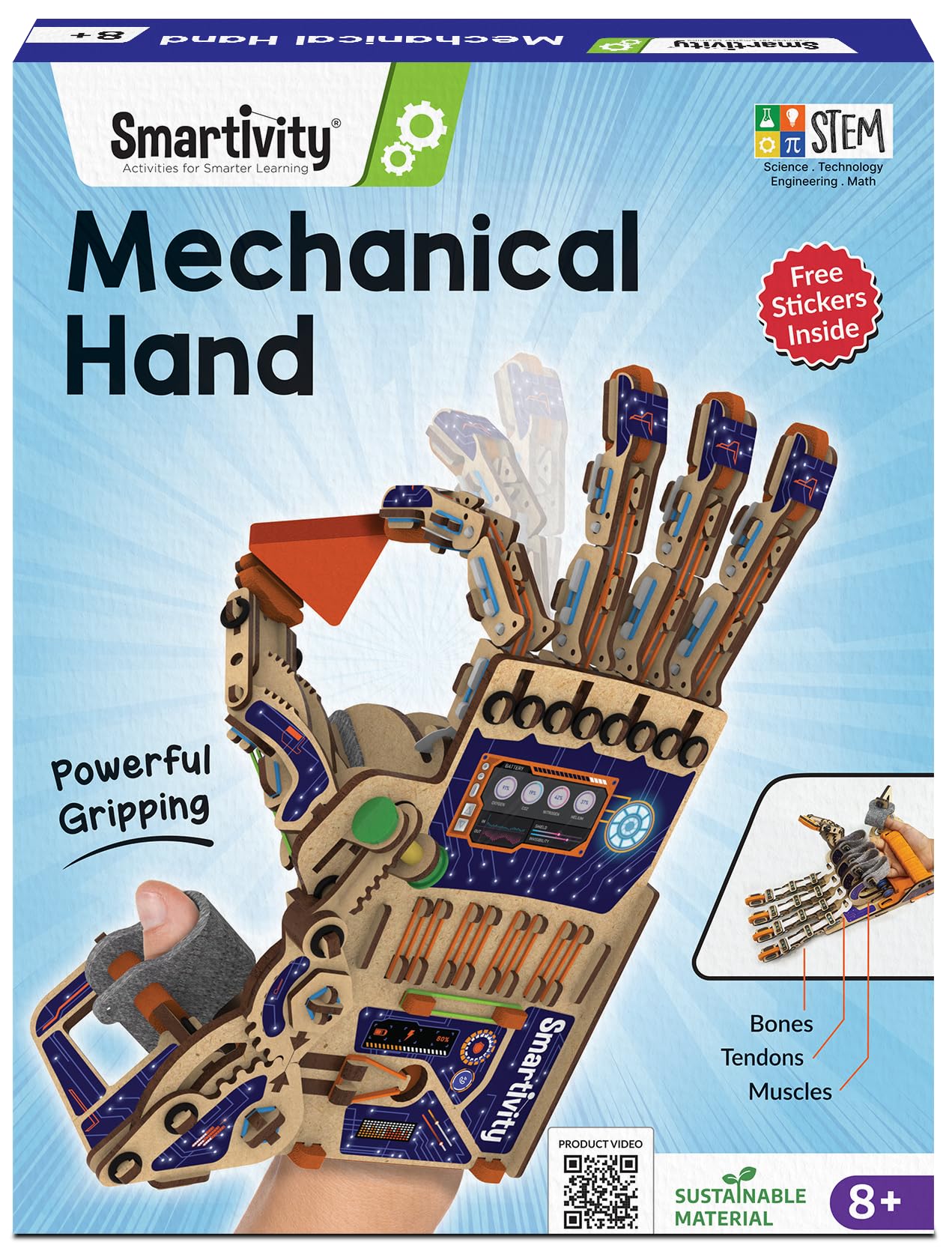
Smartivity Robotic Hand
Key Features
- Age Range: 8-14
- Play Type: Building kit
- Ease of Use: Instructions, assembly
- Durability: Engineered wood
- Educational Value: Mechanics & building
- Price: Mid-Range
The assembly process invites an 11-year-old to explore mechanical linkages and tension systems, offering a genuine sense of achievement. The finished hand moves with surprising dexterity, but its wooden construction is delicate — it’s a project to display, not a toy to battle. Perfect for the builder who values the making as much as the model.
Pros
- Engaging build that teaches mechanical concepts through hands-on assembly.
- Satisfying to operate and demonstrate once assembled, moving via simple gestures.
Cons
- The finished model is fragile and intended as a display piece, not an active play toy.
This kit hits the mark for a child who prefers careful construction over active play — the build is the gift, and the resulting hand earns a spot on a shelf or desk.
Best for Lego Crafters
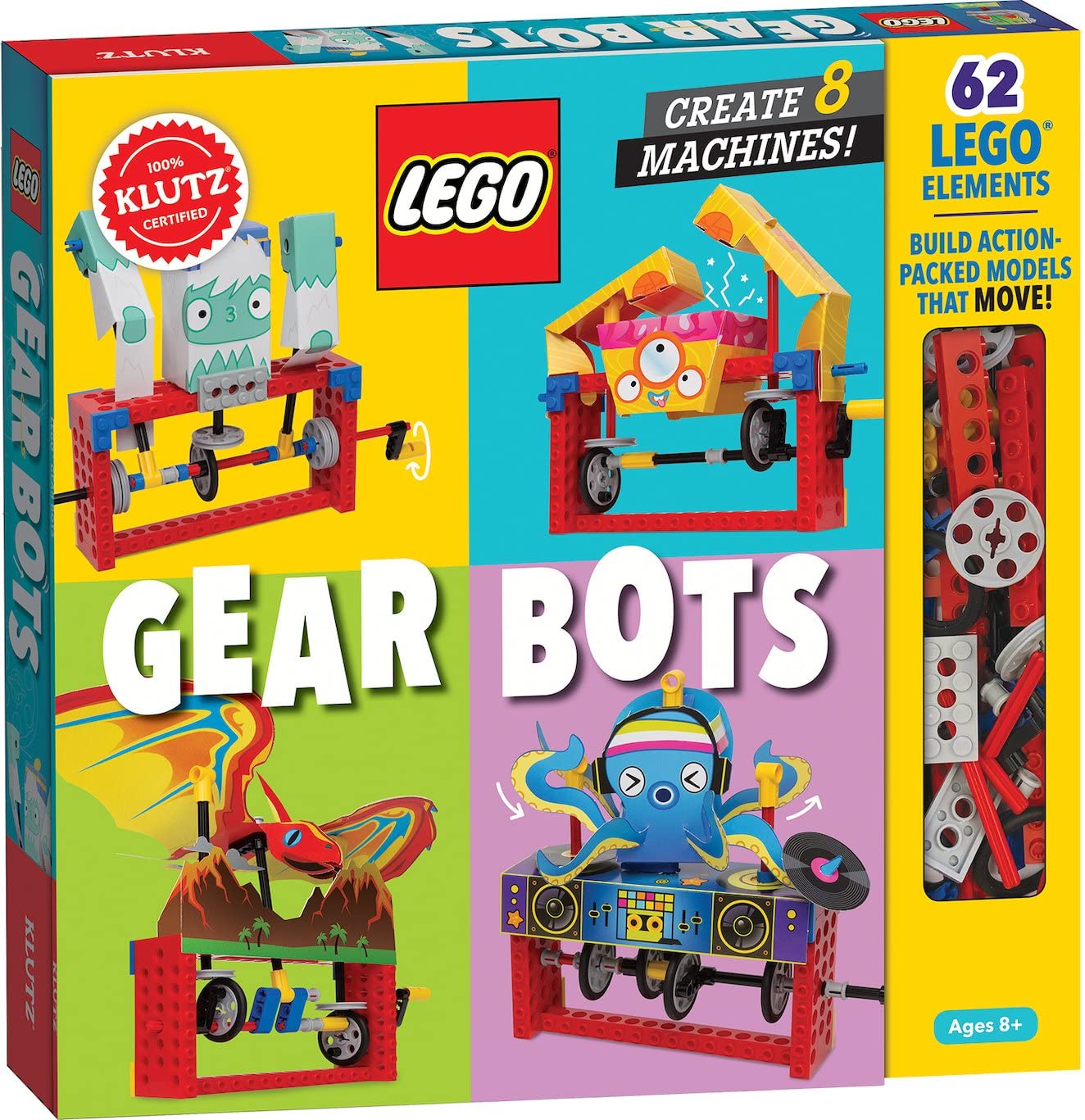
Klutz Lego Gear Bots
Key Features
- Age Range: 8-12
- Play Type: LEGO & paper craft
- Ease of Use: Assembly, adult help
- Durability: LEGO Technic, paper
- Educational Value: Mechanics & creativity
- Price: Mid-Range
With 62 LEGO Technic elements and papercraft sheets, this kit builds eight gear-driven creatures that move as you crank. The process introduces gear mechanics and hands-on engineering, which LEGO enthusiasts will enjoy. Instructions can be confusing, and some connections may not stay secure — this shifts the activity from a solo build to a rewarding parent-child project.
Pros
- A hit with LEGO-loving kids, merging building with kinetic papercraft.
- Hands-on introduction to gears and motors that feels more like play than a lesson.
Cons
- Instructions can be confusing, and pieces may not always connect securely.
Best for a LEGO fan who enjoys tinkering alongside an adult, rather than a solo holiday project.
Best for Coding Teens
ELEGOO Robot Car Kit

Key Features
- Age Range: 8+ (rec. 12+)
- Play Type: Robotics & coding
- Ease of Use: Assembly & programming
- Durability: Electronic components
- Educational Value: Programming & robotics
- Price: Premium
The kit’s labeled components and wiring guide walk an aspiring engineer through assembling a sensor-packed rover. The payoff is real Arduino programming, not drag-and-drop blocks. Sensor calibration and USB driver setup can demand adult troubleshooting, making this a poor fit for anyone wanting a gift that works on Christmas morning without effort. It rewards the kind of kid who thrives on diagnosing why something won’t compile.
Pros
- Components feel sturdy and well-organized, making a first electronics build less intimidating.
- Assembly steps build a clear mental model of how sensors, motors, and microcontrollers interact.
Cons
- Sensor readings can drift or fail, and the driver installation may trip up first-time programmers, requiring adult help.
A satisfying deep-dive for a teen who already enjoys tinkering and has a patient adult willing to help debug, but too finicky for a surprise gift that needs to work instantly.
Best for Stocking Stuffer
Magic 8 Ball

Key Features
- Age Range: 6+
- Play Type: Novelty toy
- Ease of Use: Shake to answer
- Durability: Plastic, liquid
- Price: Budget
The classic retro design adds a touch of silly fun to any gift pile, and kids get a kick out of the shaking ritual itself. The viewing window is too dark and the printed triangle faint, so the fortune can be frustratingly hard to read — but for a tween who will laugh regardless of answer clarity, it’s a low-stakes novelty that fits the stocking brief.
Pros
- Nostalgic, silly fortune-telling toy that still sparks laughs during group hangouts or family gatherings.
- Compact retro design makes it an easy stocking stuffer or white elephant gift for tweens and adults alike.
Cons
- The dark viewing window and faint printed triangle can make the answer difficult to read, especially in low light.
Best as a lighthearted gag gift for an 11-year-old who will enjoy the shaking ritual more than the actual fortune, or for retro collectors who value the classic look over function.
Best for Young Savers
Refasy ATM Piggy Bank

Key Features
- Age Range: 3-12
- Play Type: Electronic bank
- Ease of Use: Password entry
- Durability: Electronic plastic
- Educational Value: Money basics
- Price: Budget
The interactive lights and sound effects turn depositing money into an engaging activity, sparking early savings habits. The locking door can jam or electronics may stop working, so treat it as a novelty bank for occasional use, not a permanent money holder. For a tech-curious 11-year-old, it’s a lighthearted stocking stuffer with gadgety appeal.
Pros
- Excites kids about saving with its visual and audio deposit feedback.
- Interactive lights and sounds turn deposits into a rewarding game.
Cons
- Door can jam or bill feeder may stick, limiting long-term usability.
A fun stocking stuffer for a kid who will enjoy the gadgety feedback during the holidays, but plan on replacing it if a permanent bank is the goal.
How to Choose
The trick isn’t picking the most popular toy, but matching the gift to how an 11-year-old actually plays, thinks, and persists.
Age-Appropriate Engagement
An 11-year-old balances a desire for independence with the need for a challenge that isn’t babyish. Gifts that work offer clear goals but room to experiment — like a puzzle with escalating difficulty or a craft kit where success is visible. If a toy feels too simple or too juvenile, it’s discarded within a week, no matter how flashy the box.
Type of Play: Active, Puzzle, or Creative?
Active outdoor toys burn energy and encourage social play, but they depend on weather and space; a foam football works in a small yard, while a complex robotics kit needs a clean table and quiet focus. For screen-free travel, compact handheld puzzles or a deck of cards slip into a backpack and keep a tween occupied during long drives without demanding a Wi-Fi connection.
Ease of Use and Instruction Clarity
A great gift can be ruined by instructions that read like a technical manual written in a different language. 11-year-olds are old enough to build independently, but only if the steps are visually mapped and logically sequenced. Products with illustrated fold guides or numbered challenge cards drastically reduce frustration. When in doubt, check whether a quick YouTube tutorial exists — sometimes that’s the better manual.
Durability and Build Quality
Foam and paper survive drops differently than plastic gears or LED strips. An outdoor toy that gets thrown repeatedly needs soft, forgiving materials, while a building kit assembled once can be more delicate. Understanding the expected abuse level — backyard wrestling versus careful tabletop construction — helps you pick materials that match the environment.
Educational vs. Pure Fun
The most effective educational gifts hide the learning inside play. A logic maze that secretly teaches spatial reasoning lasts longer than a workbook labeled “STEM.” At this age, if the learning feels like a side effect of the fun, the toy gets used; if it feels like homework, it collects dust.
FAQ
Why is my Magic 8 Ball so hard to read?
The plastic answer triangle inside is faint and the viewing window is dark, a known design issue in current versions. Tilt the ball under a bright lamp or gently rotate it to coax the die into a clearer angle. If it remains illegible, treat it as a silly novelty rather than a serious fortune-teller.
How do I fix an ELEGOO robot car that won’t move after assembly?
Check that the battery pack is fully seated and the Arduino code uploaded without errors, then recalibrate the line-tracking sensors by adjusting the small potentiometers. Verify the motor driver wiring against the manual and make sure no chassis parts are binding. Many movement issues trace back to a loose jumper wire or a single plugged-in sensor, so online video walkthroughs are often quicker than written troubleshooting.
Is the Taco vs Burrito game too complicated for an 11-year-old?
The basic rules take about 10 minutes to absorb, but the printed rulebook can feel scattered. Watch a 3-minute instructional video together and play a practice round without keeping score. After that first hand, most 11-year-olds grasp the food-fight strategy and enjoy the surprise action cards.
How long does the TOSY LED frisbee battery really last?
A full charge delivers up to 90 minutes of continuous light or roughly 1,000 throws, though bright color modes drain the battery faster. A USB-C recharge takes about two hours, and turning the lights off between tosses significantly extends play time. If the lights begin flickering after a short session, the internal battery may be degrading and a replacement may be needed.