
This post contains affiliate links. We may earn a small commission when you buy through our links — at no extra cost to you.
Shopping for an autistic 4-year-old means cutting through toys that promise sensory benefits but deliver assembly marathons, choking hazards, or loud noises that ruin travel calm. Many busy books claim ‘preassembled’ yet require hours of Velcro work, and fidget multi-packs often include tiny pieces best left for older kids.
The best gifts work instantly, match the child’s sensory needs, and hold up to real use – whether that’s a quiet fidget for airplane trays, a spinning chair for home vestibular input, or a sturdy building set. This guide focuses on toys that fit your travel and daily routine without misleading marketing.
No hype, just picks that deliver on their promise and let you spend more time playing, less time troubleshooting.


Best for Budget Sensory Play
BUNMO Pop Tubes
Key Features
- Age Range: 3+
- Sensory Type: Tactile, Auditory
- Travel Ready: Yes (portable)
- Durability & Safety: Moderate (may tear)
- Price: $
Over 40,000 customer reviews speak to the near-universal appeal of these stretch-and-pop tubes. The satisfying tactile feedback and bright colors engage children across ages and sensory preferences, making them one of the most reliably loved toys on the market. Parents report that the simple cause-and-effect action holds attention for long stretches without screens or batteries.
The popping sound is part of the attraction, but it can be noticeable in quiet spaces like classrooms or therapy offices. Some tubes may lose shape or develop tears if stretched aggressively – a tradeoff of the lightweight plastic construction. For typical play, they hold up well enough for the price point.
This 4-pack suits parents of a 4-year-old with autism who wants a portable, engaging sensory tool for calming and focus. The noise and occasional durability limits make it better suited to playrooms and supervised use than silent environments or heavy-duty chewing.
Pros
- Highly engaging stretch-and-pop action appeals across ages.
- Excellent tactile and auditory stimulation for sensory play.
- Budget-friendly price for hours of reusable entertainment.
Cons
- Popping noise can be disruptive in quiet environments like classrooms.
- Some tubes may tear or lose shape with rough play over time.
If you want a near-guaranteed hit for sensory fun that won’t break the bank, these pop tubes deliver. Just keep them in rooms where the popping sound is welcome.
Best for On-The-Go Fidget
Cevioce Fidget Slug
Key Features
- Age Range: 3+
- Sensory Type: Tactile, Auditory
- Travel Ready: Yes (pocket-sized)
- Durability & Safety: Good (segments may pop)
- Price: $
Unlike the near-silent pop tubes that top our list, the Cevioce slugs produce a distinct click-clack when bent — a feature that appeals to children who seek audible feedback during repetitive, calming motions. The smooth plastic segments hold together well for normal fidgeting but can pop apart if yanked aggressively; they snap back together easily. This three-pack fits into a diaper bag or car cup holder, making it a natural choice for travel or restaurant waiting. The clicking is a deliberate part of the experience — fine for casual settings, but possibly distracting in a library or during circle time. For a 4-year-old with autism who craves both tactile and auditory input, these slugs provide focused engagement without batteries or screens.
Pros
- Smooth, sturdy build with satisfying click as you bend it.
- Keeps restless hands busy during car rides or quiet play.
- Calming repetitive motion that helps with focus and anxiety.
Cons
- In a quiet classroom or library, the clicking will be noticeable.
- Segments can separate if a child pulls hard, though they reconnect easily.
A durable, sensory-rich fidget that suits active, everyday use — best for families who don’t need total silence.
Best for Quiet Calming
Pushpeel Activity Board
Key Features
- Age Range: 3+
- Sensory Type: Tactile, Visual
- Travel Ready: Yes (with bag)
- Durability & Safety: Excellent (silicone)
- Price: $$
The Pushpeel Activity Board offers a quiet, tactile push-pull experience that keeps a 4-year-old with autism focused without adding sensory overload. Its sturdy silicone build and included travel bag make it a natural fit for calm-down corners and road trips. The mid-range price reflects the quality, but it’s not the right buy if your child craves loud or highly active fidgets.
Pros
- Silent, mess-free sensory play that holds attention during travel or calm-down time.
- Sturdy non-toxic silicone feels premium and withstands repeated use.
- Portable with carry bag, easy to clean, and simple to take anywhere.
Cons
- At a mid-range price, some families may find it costly for a single silicone board.
- Quiet, push-pull action may not engage children who prefer noisy or high-movement fidgets.
If your 4-year-old responds well to quiet fine-motor stimulation and you value build quality, this board is a worthwhile calm-down tool for home and travel.
Best for Educational Travel
iHarPro Busy Book
Key Features
- Age Range: 3-6
- Sensory Type: Visual, Tactile
- Travel Ready: Yes (needs assembly)
- Durability & Safety: Good (pages may bend)
- Setup Required: Significant (Velcro)
- Price: $$
The iHarPro Busy Book packs 14 learning themes — letters, numbers, shapes, colors, and more — which provides structured educational content for a 4-year-old working on preschool readiness. However, the “preassembled” claim is misleading: each page requires attaching Velcro pieces, taking 1–2 hours of setup before first use. The cardstock pieces may also bend with heavy or aggressive handling. This book suits parents willing to invest that setup time for a comprehensive learning binder, and it works well in homeschool or therapy settings where guided, quiet activity is the goal.
Pros
- Covers 14 learning topics (letters, numbers, shapes, etc.) for preschool prep.
- Keeps toddlers busy for hours during travel or quiet time.
Cons
- Pieces can bend over time with frequent use, especially with enthusiastic handling.
- Marketed as preassembled, but requires 1–2 hours of Velcro attachment before first play.
If you’re after a structured educational binder and don’t mind an evening of setup, this delivers strong content. For instant-out-of-box use, a simpler sensory toy may be a better fit.
Best for Active Spinning
FERUERW Spinning Chair
Key Features
- Age Range: 3+
- Sensory Type: Vestibular
- Travel Ready: No (needs space)
- Durability & Safety: Sturdy (screws may loosen)
- Setup Required: Easy assembly
- Price: $$$
The FERUERW Spinning Chair stands out for its 220-lb weight capacity and easy assembly, making it a fit for both children and adults who crave vestibular input. Unlike the no-assembly spinning chair in this set, this model requires you to tighten screws periodically, but it costs less and holds more weight. Best for families with a dedicated play area on a hard floor where spinning is safe.
Pros
- Sturdy build supports up to 220 lbs, stable even for adult use.
- Easy to assemble with clear instructions, quick setup.
- Provides effective vestibular input that helps with focus and self-regulation.
Cons
- Screws can loosen over time, requiring periodic tightening to maintain stability.
A sturdy vestibular chair for families who can dedicate floor space and don’t mind occasional maintenance.
Best for Fine Motor Skills
Panda Brothers Screw Board
Key Features
- Age Range: 3+
- Sensory Type: Tactile, Fine Motor
- Travel Ready: Yes (small)
- Durability & Safety: High (wood)
- Price: $
The Panda Brothers Screwdriver Board offers a hands-on tool experience that engages children in practical problem-solving. Unlike pop tubes or fidget slugs, this compact wooden board requires deliberate twisting and turning — a focused, calming activity for a 4-year-old with autism who enjoys manipulating objects. The board is only 7.7 inches long, so it works best on a table or lap rather than as a floor toy, and some units arrive with screws that are missing or malformed — worth inspecting before first use.
This is a solid choice for kids who want to feel like they’re doing grown-up work. The natural wood has smooth edges, and the included screwdriver, hex key, and wrench offer real resistance that builds hand strength. For children who still mouth objects, the small parts are a safety concern, but for tool-oriented preschoolers in homeschool or therapy settings, the board provides independent, repeatable practice.
Pros
- Develops fine motor skills and hand-eye coordination through real screwdriver use.
- Wooden construction is sturdy and smooth, holding up to daily use.
- Keeps children focused for extended independent play, ideal for calm-down routines.
Cons
- Some units arrive with screws that are missing or malformed — inspect before gifting.
- The compact size (7.7 inches) may frustrate children who prefer a larger workspace.
Best for tool-obsessed kids who need a quiet, hands-on fine motor challenge — just verify the hardware upon arrival.
Best for Creative Art
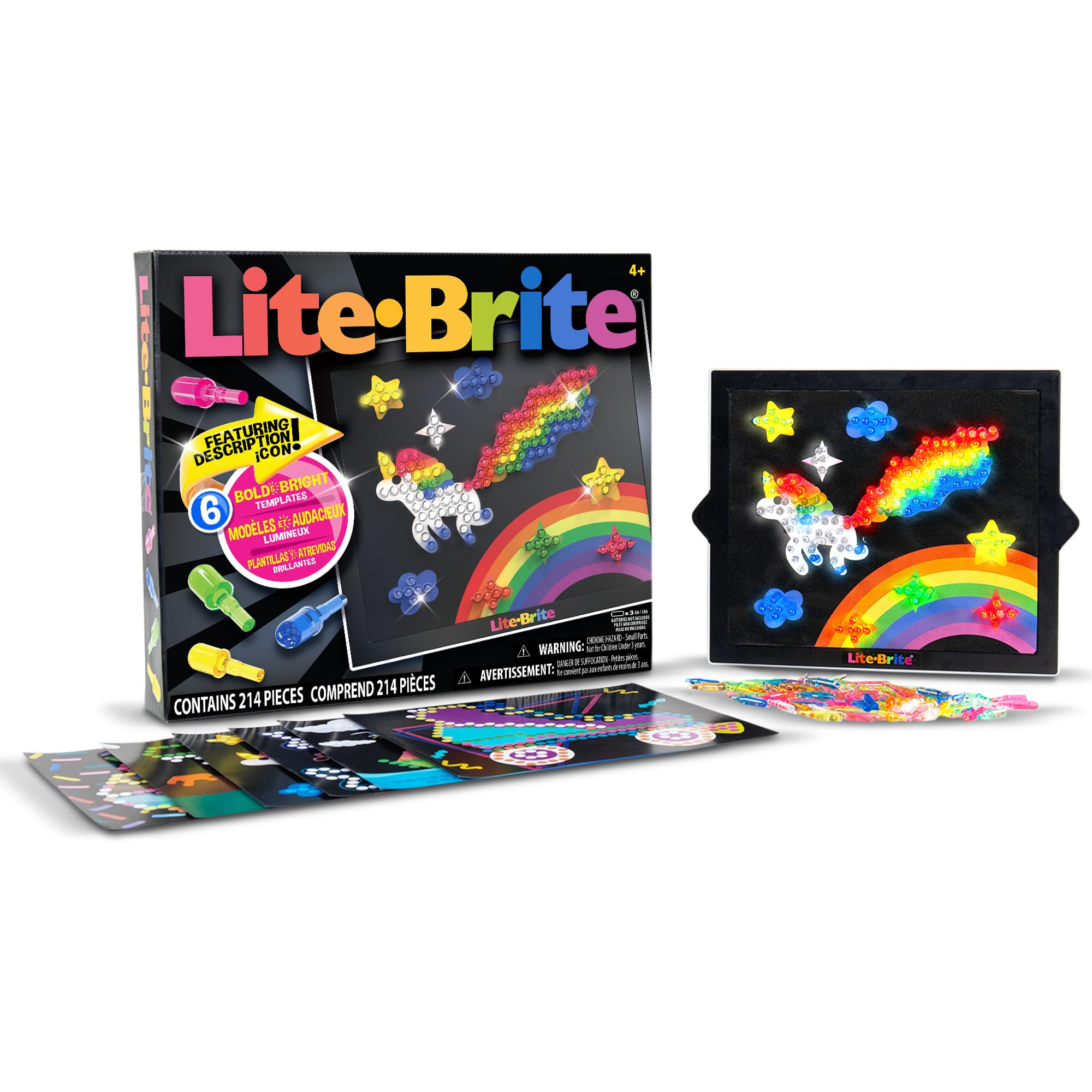
Lite Brite Classic
Key Features
- Age Range: 4+
- Sensory Type: Visual
- Travel Ready: Yes (requires batteries)
- Durability & Safety: Good (choking hazard small pegs)
- Setup Required: Batteries not incl
- Price: $$
The Lite Brite Classic delivers a bright, colorful light display that can captivate visual sensory seekers and encourage pattern following. However, it lacks specific autism-sensory features like tactile or oral stimulation, and the 206 small pegs require adult supervision to avoid choking hazards. Batteries are not included.
Pros
- Bright light display appeals to visual sensory seekers
- Encourages hand-eye coordination and fine motor skills through peg placement
Cons
- Small peg pieces pose a choking hazard for children under 4, requiring constant adult supervision
Suits families who value a classic visual art activity and are comfortable supervising peg play and supplying batteries.
Best for Emotional Learning
hand2mind Feelings Mirror

Key Features
- Age Range: 3+
- Sensory Type: Visual, Emotional
- Travel Ready: Yes (small)
- Durability & Safety: Good (mirror may distort)
- Price: $$
This mirror with replaceable emotion slides gives children a concrete way to connect facial expressions with feelings. Mirror clarity can vary between units, and slides may be stiff for small hands. It is a focused tool for emotional vocabulary work, not a general sensory toy — best for therapy settings or calm-down corners with adult guidance.
Pros
- Teaches children to identify and express emotions through facial mirroring.
- Durable shatterproof plastic withstands drops and active use.
Cons
- Mirror reflection quality can be inconsistent, with some units appearing distorted or foggy.
This mirror works well for structured emotional learning when a parent or therapist guides the activity, despite mirror clarity that can sometimes be off.
Best for Budget Building
Apluses Magnetic Blocks

Key Features
- Age Range: 3+
- Sensory Type: Visual, Tactile
- Travel Ready: Yes (small box)
- Durability & Safety: Moderate (magnets may loosen)
- Price: $
These 1-inch magnetic cubes come in bright colors that support color recognition and basic stacking at a budget-friendly price. The magnets hold simple structures but may not support complex builds, and the small size may feel less engaging for children who prefer larger pieces. Plastic chipping and loose magnets have been noted, so durability is a consideration for daily play. Other options in this price range offer stronger magnets or larger pieces for more creative exploration.
Pros
- Bright colors help with color recognition and visual sorting.
- Simple stacking play introduces basic STEM concepts.
Cons
- Plastic may chip and magnets can come loose with heavy use.
This set fits best as a low-cost introduction for a child who enjoys simple color sorting and basic stacking, rather than complex or sturdy building projects.
Best for Kinetic Sand
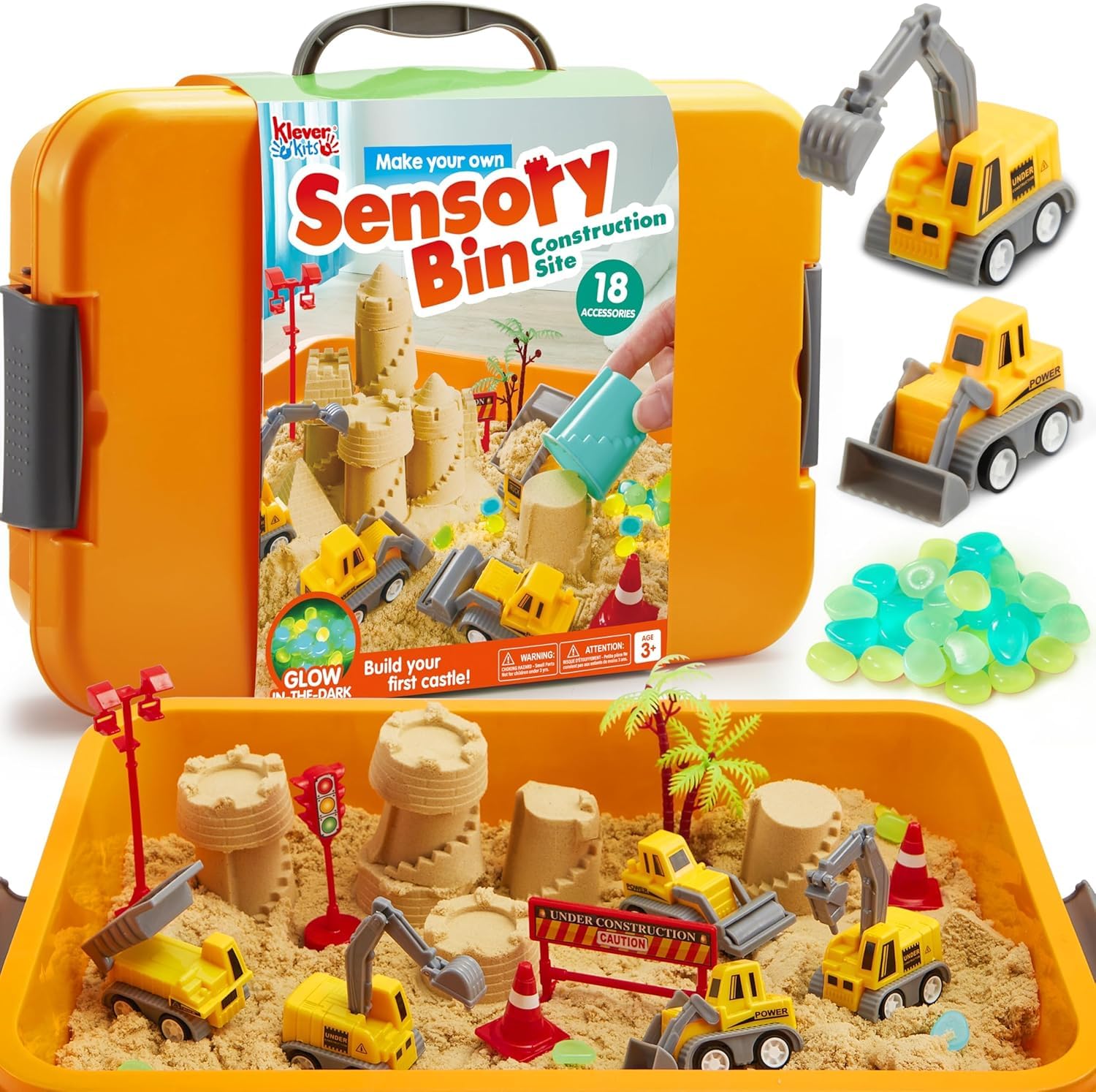
Klever Kits Sensory Bin
Key Features
- Age Range: 3+
- Sensory Type: Tactile, Visual
- Travel Ready: Yes (bin with lid)
- Durability & Safety: Good (sand quantity small)
- Price: $$
The Klever Kits Construction Sensory Bin offers a contained play experience with low-dust kinetic sand, construction toys, and molds — a compact setup that supports digging and creative molding. The sand quantity is less than the bin can hold, limiting full coverage, and an initial chemical smell may be noticeable for children with sensitive noses. For a 4-year-old who needs generous sand or is scent-sensitive, this bin works best as a compact supplement rather than a primary sensory tool.
Pros
- Keeps toddlers engaged for hours with digging, molding, and imaginative play.
- Low-dust sand and included toys promote fine motor skills and sensory exploration.
Cons
- Sand amount is smaller than the bin; a temporary chemical smell may affect sensitive noses.
Works best for 3–4 year olds who enjoy contained sand play and don’t need large sand volume; for a 4-year-old with autism seeking more sensory material, consider a larger bin or odor-free alternative.
Best for Extended Travel
URMYWO Busy Book

Key Features
- Age Range: 3-6
- Sensory Type: Visual, Tactile
- Travel Ready: Yes (needs assembly)
- Durability & Safety: Moderate (pages tear)
- Setup Required: Significant (Velcro)
- Price: $$
This busy book packs 36 learning themes into one portable binder, making it a strong option for keeping a 4-year-old engaged during extended travel. The Velcro setup contradicts the ‘no assembly’ claim, and the cards can tear with rough handling – best for supervised use with a child who is gentle with paper materials.
Pros
- 36 themes covering letters, numbers, tracing, and more – broad educational scope.
- Keeps children occupied for long periods – especially useful during flights or car rides.
Cons
- Cards and pieces can tear with rough handling – not ideal for children who are hard on paper materials.
This busy book fits best for parents who don’t mind an hour of prep and want a wealth of activities for travel – but consider a sturdier option if your child is rough on paper.
Best for No-Assembly Spin
Zhenx Spinning Chair

Key Features
- Age Range: 3-18
- Sensory Type: Vestibular
- Travel Ready: No (needs space)
- Durability & Safety: Sturdy (base issues reported)
- Setup Required: None (no assembly)
- Price: $$$
This chair works straight out of the box, ideal for parents of a 4-year-old with autism who want immediate vestibular input without assembly. It costs more than comparable models, and a few owners note that base or seat durability can decline over extended use. For those who prioritize zero setup over budget and accept possible long-term maintenance, it fits the need.
Pros
- Sturdy construction supports children and light adults
- No assembly required – open the box and use immediately
Cons
- Base or seat integrity may degrade after months of regular use
Best for families who value zero assembly above all else and are comfortable with occasional long-term wear.
How to Choose
The most important factor is matching the toy’s sensory type to your child’s specific needs and your travel lifestyle.
Age Appropriateness
Most sensory toys are labeled 3+, but that doesn’t guarantee safety for every 4-year-old. The key is mouthing behavior: if your child still mouths objects, avoid toys with small parts or those labeled ‘non-mouthable’ like pop tubes. Sturdier wooden or silicone options are safer.
Choking hazards lurk in multi-pack fidget sets – check that each piece is larger than a toilet paper roll. Always supervise play with items that have detachable components.
Sensory Modality
Choose a toy that matches the sensory input your child seeks. Tactile toys (pop tubes, fidget slugs) work for hand stimming. Visual toys (Lite Brite, busy books) appeal to pattern seekers. Vestibular toys (spinning chairs) satisfy whole-body movement cravings.
The trade-off: a toy that offers the wrong modality will be ignored. For example, a quiet silicone board won’t engage a child who craves loud popping sounds. Observe what your child gravitates toward – that’s your best guide.
Portability for Travel
If you need a gift for car rides or flights, compact and mess-free is non-negotiable. Pop tubes and fidget slugs fit in a diaper bag. Busy books are portable but require setup before you leave home – not useful for last-minute calming.
Spinning chairs and sensory bins are home-only toys. Don’t buy them expecting travel use; instead, pair a home spinner with a portable fidget for the road.
Durability and Safety
Durability varies widely at the budget end. Pop tubes can tear under aggressive stretching; fidget slug segments pop apart. If your child plays roughly, silicone boards and wooden screw boards hold up better. Check reviews for reports of breakage after weeks, not days.
Safety hazards often appear as ‘small parts’ warnings. Avoid sets with many tiny pieces – they’re a choking risk even if labeled 3+. Look for products with large, one-piece designs or those explicitly tested for mouthing.
Ease of Use
The biggest hidden trade-off is assembly time. Busy books often require hours of sticking Velcro dots despite claiming ‘preassembled.’ If you want a gift that’s ready to play with immediately, choose fidgets, pop tubes, or the Panda Brothers screw board.
For busy parents, every minute of setup is a minute you’re not playing with your child. Prioritize toys that work right out of the box unless you genuinely enjoy DIY projects.
FAQ
Are pop tubes safe for a 4-year-old who puts everything in their mouth?
Pop tubes are labeled ‘non-mouthable’ because the plastic edges can be rough when chewed. If your child mouths toys aggressively, choose a larger silicone fidget like the Pushpeel Activity Board or a wooden screw board instead.
Why does my busy book say ‘preassembled’ but I still have to attach all the Velcro?
This is a common marketing discrepancy. Many busy books require you to stick Velcro dots on each page and piece, often taking 30 to 60 minutes. Look for truly ready-to-use books that explicitly state ‘no assembly needed’ in recent reviews.
How much assembly does the iHarPro busy book really need?
Despite claiming it’s preassembled, iHarPro requires attaching hundreds of Velcro dots – most parents report 1 to 2 hours of setup. Consider the hand2mind Feelings Mirror or a pop tube set for instant play.
Can a spinning chair help with my autistic child’s sensory needs during travel?
Spinning chairs are not portable – they need floor space and a hard surface. For travel, rely on compact fidgets like pop tubes, fidget slugs, or a sensory activity board. Save the spinning chair for home use.