
This post contains affiliate links. We may earn a small commission when you buy through our links — at no extra cost to you.
A 2-month-old’s world is just opening: they follow faces, start to bat at toys, and bring everything to their mouths. But many baby toys marketed as “newborn+” are too heavy, too large, or have components that frustrate tiny hands before they can even start to explore.
The right gift does not need batteries or flashing lights. It needs to fit a palm that can barely close, weigh almost nothing, and survive a trip through the washing machine. The challenge is filtering out the toys that promise sensory play but fail on the one thing that matters at this age: graspability.
This guide focuses on toys that actually work at two months — where the design matches the baby’s developing motor skills, not the manufacturer’s marketing. The biggest trade-off in this category comes down to musical stimulation versus universal newborn safety; some of the best-rated toys force you to choose between a child who loves sound and a toy that a newborn can truly hold.





Best for Newborn Grasp Training
Bright Starts Oball Rattle Ball
Key Features
- Age Range: Newborn+
- Sensory Features: Rattle sound, bright colors
- Grip Design: Open-hole frame
- Wash Care: Wipe clean
- Price: Budget
The Oball’s flexible lattice of holes is its standout feature: a newborn’s natural grasping reflex catches the openings immediately, making this the most accessible rattle for babies who can’t yet hold a solid toy. At just 0.04 kg and made from BPA-free plastic, it’s light enough to swing without risking a hard bump, and the internal rattle beads provide gentle auditory feedback without overstimulating.
This works best for parents who want a safe, battery-free first toy that builds hand-eye coordination from birth. The 4-inch diameter can feel slightly large for the tiniest newborn hands, though most adapt within a few weeks. It is not designed for chewing—this is a grasping toy, not a teether.
Pros
- Open lattice lets newborns grip immediately without needing precision
- Ultra-lightweight design reduces injury risk during uncoordinated arm movements
- BPA-free plastic construction holds up to drops and throws without cracking
Cons
- 4-inch diameter can feel bulky for newborns with exceptionally small hands
The safest, most graspable first rattle for newborns—no batteries, no small parts, and near-universal appeal as a baby shower gift.
Best for On-The-Go Music
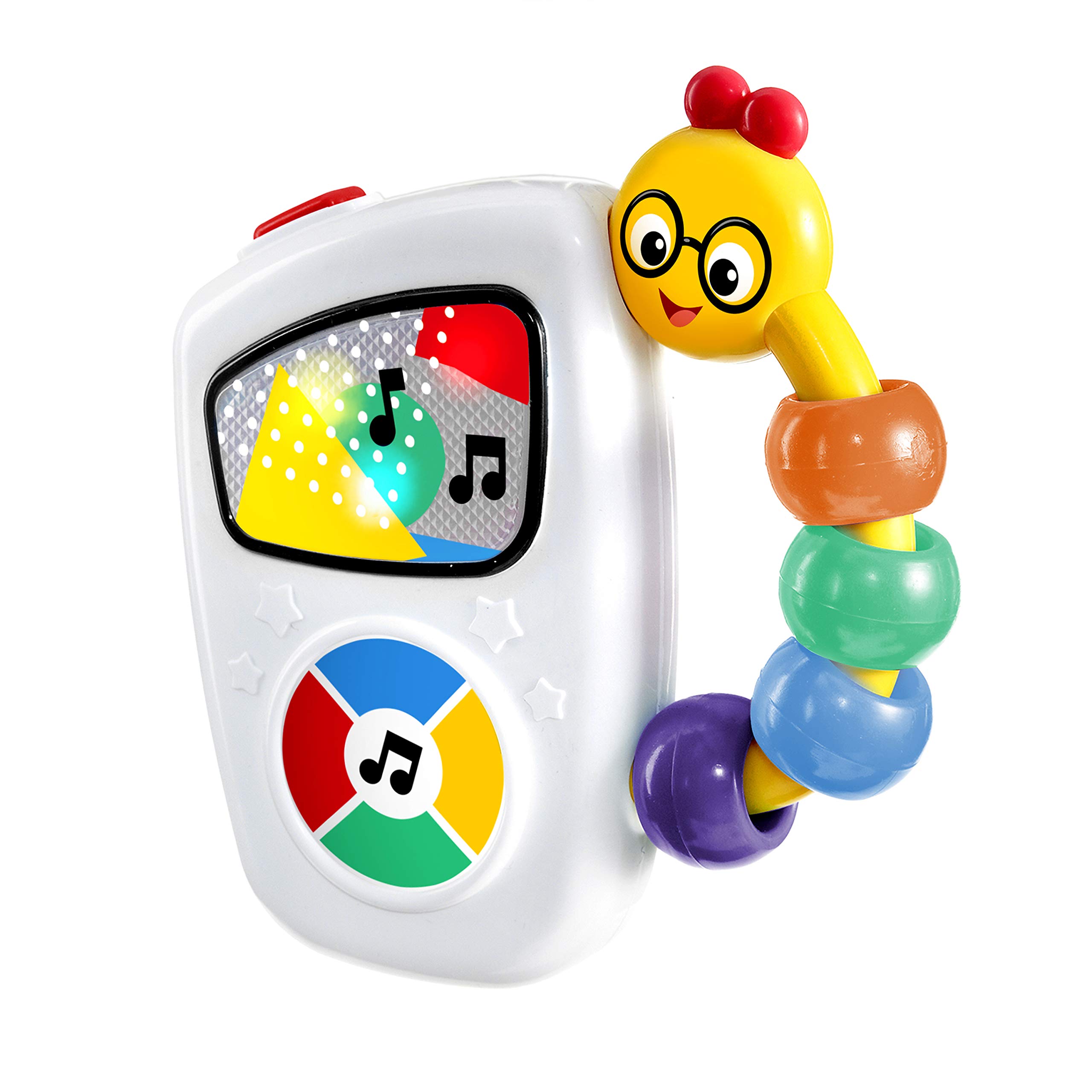
Baby Einstein Take Along Tunes
Key Features
- Age Range: 3 months+
- Sensory Features: 10 melodies, lights
- Grip Design: Handheld, side button
- Wash Care: Wipe clean
- Price: Budget
This little box delivers ten classical melodies that are genuinely pleasant for adult ears – a rare quality in baby toys. The colorful lights and simple button operation keep babies engaged, and the compact size clips onto strollers or diaper bags for entertainment anywhere. Sound does get muffled when placed directly on carpet, so it works best hung or held. At under $10, it’s a budget-friendly intro to cause-and-effect play, though babies under 3 months won’t have the neck control or interest yet. For families who want a portable musical option that doesn’t grate on parental sanity, this is a solid runner-up to the Oball.
Pros
- Classical music tracks that adults find listenable, not grating
- Clips to bags and strollers for easy on-the-go use
- Lights and sound respond to button presses, encouraging cause-and-effect
Cons
- Speaker location can muffle sound when toy is placed on carpet or soft surfaces
- Some units may develop speaker or battery door issues after a few months of use
Best for parents who want a portable musical toy with genuinely pleasant classical tunes – just keep it off the carpet and check the batteries.
Best for Teething Variety
Skip Hop Bandana Buddies Elephant
Key Features
- Age Range: Baby
- Sensory Features: Crinkle, rattle, mirror
- Grip Design: Loop handle, textured feet
- Wash Care: Spot clean
- Price: Budget
This elephant combines crinkly ears, a rattle, a mirror, and a bandana teether that clips onto strollers or car seats — all for a budget-friendly price. It offers more variety than a single-texture lovey, keeping curious babies engaged during tummy time or outings. That said, the toy runs larger than typical teethers; some two-month-olds may find it a bit overwhelming at first. It’s best for families who want a multi-sensory toy that grows with the baby, or as a gift for parents who don’t mind the size tradeoff.
Pros
- Four distinct textures and sounds keep babies engaged during play and teething.
- Adorable elephant design makes it a gift-friendly option.
- Sturdy construction holds up to repeated use and washing.
Cons
- Larger than expected — may feel overwhelming for a very small 2-month-old.
A smart pick for parents who want multiple sensory tools in one toy that can clip onto a stroller, as long as the baby is ready for a slightly larger teether.
Best for Cuddly Comfort
Itzy Ritzy Lovey Cow
Key Features
- Age Range: 0 months+
- Sensory Features: Crinkle, ribbons, teether
- Grip Design: Dangle arms
- Wash Care: Machine washable
- Price: Budget
The Itzy Ritzy Lovey Cow pairs ultra-soft sherpa with a silicone teether, giving babies a comforting texture and teething relief in one. It’s more compact than a full security blanket – better for stroller or car seat than for wrapping. For parents seeking a soft lovey with a built-in teether, this is a safe, well-made option that avoids the safety concerns of some competing loveys.
Pros
- Extremely soft with multiple textures (sherpa, minky, silicone teether)
- Adorable cow design makes a perfect baby shower or newborn gift
Cons
- Smaller than a traditional security blanket – not designed for wrapping
Ideal for babies who want a soft, teethe-able companion on the go, but skip it if you need a full-size wrap blanket.
Best for Sleep Soothing
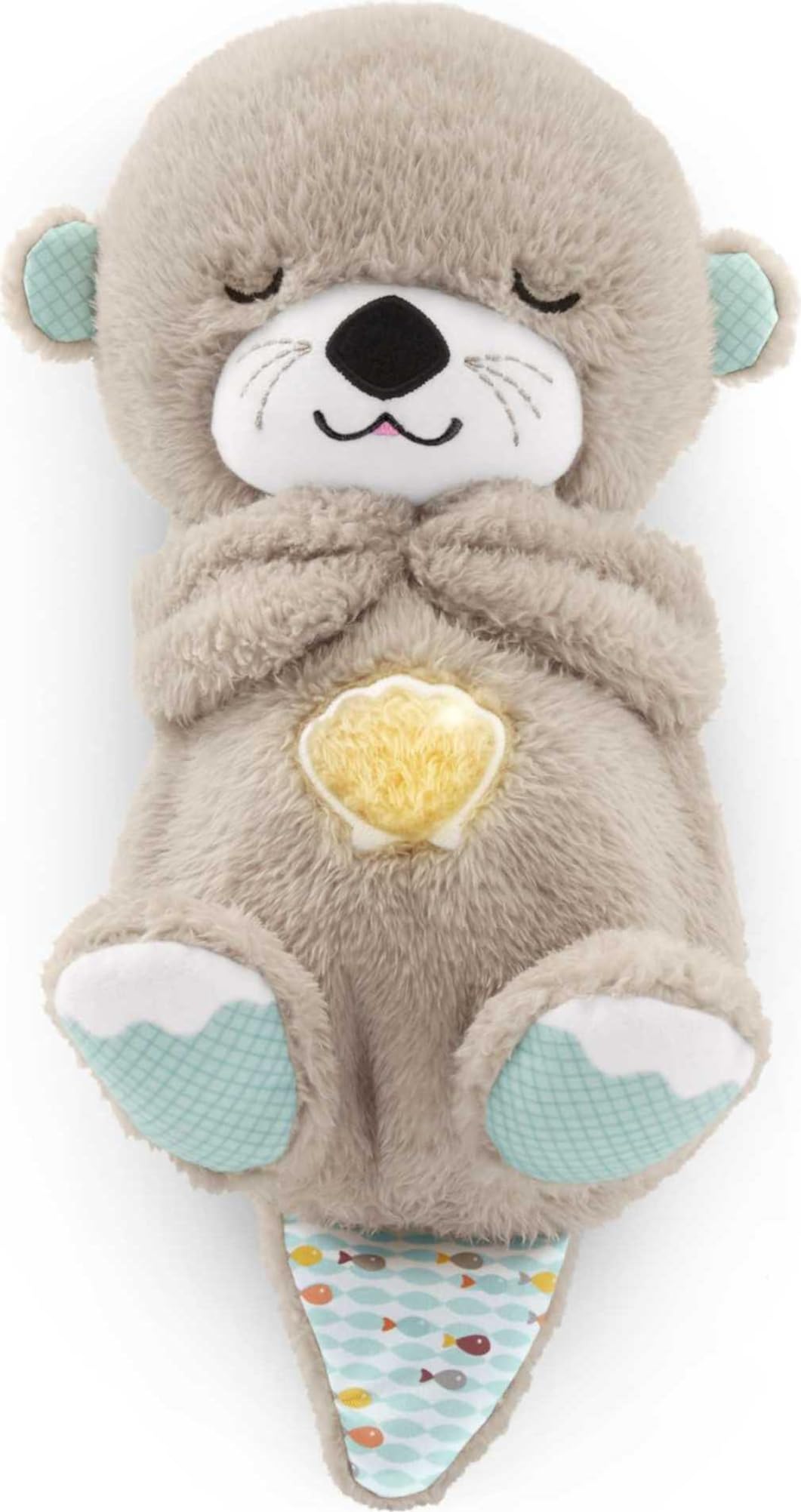
Fisher-Price Soothe ‘n Snuggle Otter
Key Features
- Age Range: 0 months+
- Sensory Features: Breathing motion, lullabies
- Grip Design: Plush body
- Wash Care: Machine washable
- Price: Mid-Range
Unlike portable musical toys like the Take Along Tunes, this otter focuses on replicating a newborn’s rhythmic breathing motion alongside white noise and lullabies. It’s best suited for parents who value that specific calming effect and are comfortable with some inconsistency — the breathing mechanism may cease after short use, and the sound quality can be mechanical in quieter settings. The cuddly, machine-washable body adds everyday practicality.
Pros
- Unique breathing motion that mimics a sleeping baby’s rhythm
- Cute, cuddly design that babies respond to
- Machine-washable with removable electronics
Cons
- Breathing motion may cease after weeks of use
- In a quiet nursery, the breathing sound can come across as mechanical or loud
Choose this otter if the breathing motion is your top priority for soothing, but inspect it early for any issues.
Best for Tummy Time Play
Baby Einstein 4-in-1 Kickin’ Tunes Gym
Key Features
- Age Range: 0–36 months
- Sensory Features: Piano, 4 languages, lights
- Grip Design: Hanging toys, kick pad
- Wash Care: Wipe clean
- Price: Mid-Range
The kick piano turns each baby kick into musical notes and lights, providing clear cause-and-effect feedback that keeps babies engaged during tummy time. Seven included sensory toys and four language modes add variety. This gym suits parents who want an all-in-one activity mat with musical motivation, but the piano legs can feel unstable with active kicking, and the mat padding is thin – placing it on carpet improves comfort.
Pros
- Kick-activated piano rewards movement with music and lights, keeping babies engaged during tummy time.
- Includes 7 sensory toys and 4 language modes for varied play and early language exposure.
- Easy-to-clean mat surface – wipes down quickly after spills.
Cons
- Piano legs can feel flimsy during enthusiastic kicking, and occasional units may lose piano responsiveness over time.
Good for parents seeking a musical activity gym – just be prepared to add extra padding and handle the piano stand with care.
Best for Sensory Reading
Eric Carle Soft Book
Key Features
- Age Range: 0 months+
- Sensory Features: Crinkle, squeaker, teether
- Grip Design: Small square pages
- Wash Care: Machine washable
- Price: Budget
Crinkle pages, a gentle squeaker, and soft teether corners make this small cloth book a hands-on introduction to textures and cause-and-effect play. The beloved caterpillar illustrations and bright colors hold a two-month-old’s attention during diaper changes or tummy time. At only six pages, it’s more of a sensory object than a storybook — perfect for a baby who mouths and bats at things rather than follows a narrative. The attached clip lets it hang from a stroller or car seat, and the polyester fabric survives spit-up and gentle chewing.
Pros
- Crinkle pages and squeaker reward every touch with sound and movement.
- Teether corners are safe for sore gums and easy for tiny hands to mouth.
- Built-in clip keeps the book secure on strollers, carriers, or diaper bags.
Cons
- Only six pages — not enough for any real story; pure sensory play only.
If you want a first book that babies can safely chew, crinkle, and grab rather than read, this Eric Carle soft book delivers exactly that at a budget-friendly price.
Best for Budget Rattle
Bright Starts Oball Shaker Rattle

Key Features
- Age Range: Newborn+
- Sensory Features: Shaker beads
- Grip Design: Flexible ends
- Wash Care: Wipe clean
- Price: Budget
This lightweight shaker combines easy-grip flexibility with teether-friendly ends, making it a safe first rattle for babies who love shaking and chewing. The sound is deliberately soft, which some babies may find less engaging, and the beads inside can trap water after washing, requiring careful drying. It’s less versatile than the top Oball ball but offers unbeatable value at a budget-friendly price.
Pros
- Easy for tiny hands to grip and shake independently
- Lightweight and safe for teething on flexible ends
Cons
- Rattle sound may be too quiet for babies who need louder auditory feedback
Works well as an affordable supplement to a larger toy set, especially for babies who prioritize grip and chewing over loud rattling.
Best for Body Awareness
Infinno Wrist Rattle Socks Set

Key Features
- Age Range: 0–12 months
- Sensory Features: Jingle, high-contrast
- Grip Design: Wearable bands
- Wash Care: Machine washable
- Price: Budget
The Infinno wrist rattle and foot finder set uses high-contrast patterns and soft jingle sounds to help babies discover their hands and feet. However, the socks run large – they may slip off tiny 2-month-old ankles, reducing effectiveness for the very smallest babies. The concept is sound, but the fit limits its utility for newborns.
Pros
- Adorable design with high-contrast patterns
- Helps babies discover their hands and feet
Cons
Best for babies older than 2 months where the loose fit is less of an issue – for a newborn, consider a more snug option.
Best for Jungle Sensory
hahaland Jungle Tails Book

Key Features
- Age Range: 0–12 months
- Sensory Features: 10 textures, crinkle, squeaker
- Grip Design: Hanging strap
- Wash Care: Machine washable
- Price: Budget
The hahaland Jungle Tails Book offers bright colors and multiple textures that engage babies during tummy time, with crinkle, squeaker, and a hanging strap for travel. However, its price sits higher than the classic Eric Carle soft book, and some parents find it less of a value given the limited number of pages. This is a decent option if you specifically want the jungle animal theme and variety of tail textures.
Pros
- Bright colors and multiple textures engage babies during sensory play.
- Cute well-made cloth book with a jungle animal theme.
Cons
- May feel overpriced compared to similar cloth books with fewer pages.
Best for parents who love the jungle animal theme and want a book with multiple tail textures, even if it costs a bit more than alternatives.
Best for Tummy Time Plush
Melissa & Doug Flip Fish

Key Features
- Age Range: 0–9 months
- Sensory Features: Crinkle, squeaker, mirror
- Grip Design: Large plush flaps
- Wash Care: Spot clean
- Price: Mid-Range
The Flip Fish offers a generous spread of textures—crinkle scales, a squeaker tail, and a peek-a-boo mirror—that keep babies engaged during floor play. Its size is a tradeoff: at 13.5 inches, it’s better suited to tummy time on a mat than as a portable toy, and may be too large for a very tiny newborn. For parents who want a compact take-along, other options in this set are more practical.
Pros
- Teems with hidden textures, sounds, and a mirror for sensory play.
- Bright colors and durable stitching hold up to repeated handling.
Cons
Best reserved for tummy-time mats where its generous dimensions and sensory details are an advantage, not a hassle.
Best for Interactive Sounds
VTech Rattle and Sing Puppy

Key Features
- Age Range: 3 months–2 years
- Sensory Features: Lights, songs, crinkly ears
- Grip Design: Handle shape
- Wash Care: Wipe clean
- Price: Budget
Crinkly ears and light-up cheeks make this puppy react to shaking with songs and phrases. But the internal electronics add heft: it’s too heavy for a 2-month-old to hold, and the single volume setting is loud enough to startle a quiet nursery. This rattle works better for older babies (6+ months) who can grip and shake without frustration.
Pros
- Crinkly ears and light-up cheeks add sensory engagement.
- Durable build holds up to repeated use.
Cons
- At 5.3 inches with internal electronics, it’s heavier than most rattles — a 2-month-old may struggle to hold it.
Best for babies 6 months and older who can grip and shake, and for parents who don’t mind a louder toy.
Best for Large Cloth Book
beiens Touch and Feel Book

Key Features
- Age Range: 0–36 months
- Sensory Features: Crinkle, squeaker, tails
- Grip Design: Hanging strap
- Wash Care: Machine washable
- Price: Budget
The book’s oversized 11-inch pages, crinkle fabric, squeaker, and textured tails provide the visual and tactile variety that appeals during tummy time. However, the price is higher than comparable cloth books, and stitching or fabric quality can vary between units, which makes this a cautious pick for buyers who prioritize consistent construction.
Pros
- Bright, high-contrast pages hold a baby’s attention during tummy time
- Includes multiple sensory features – crinkle, squeaker, and textured tails – suitable as a first book
Cons
- Price is relatively high for a single cloth book, and fabric quality or stitching can be inconsistent across units
Consider this if you want an oversized sensory book with varied textures for tummy time and accept possible quality tradeoffs; otherwise, the smaller Eric Carle cloth book offers more consistent value.
How to Choose
At two months, a baby’s ability to interact with a toy is almost entirely determined by its weight, grip-friendly shape, and safety for mouthing.
Age Range and Safety
Most toys labeled “newborn+” are tested to be free of small parts, but not all are actually usable at two months. Check for BPA-free plastic, no detachable components, and machine-washable fabric. A toy that passes these three checks removes the biggest safety anxieties.
The hidden trade-off: plush toys with embroidery or glued eyes can fail after a few washes, creating choking hazards. Avoid any product where features are attached rather than embroidered or molded.
Sensory Stimulation
Babies at this age respond best to high-contrast patterns, crinkle sounds, and gentle rattles. The most effective sensory toys use multiple textures in one item — soft fabric, crinkly plastic, silicone teether — to keep attention cycling.
The catch: too many textures can overwhelm a fussy baby. If a toy has five different surfaces plus lights and music, some infants turn away. Simpler is often better at eight weeks.
Ease of Grasp
A 2-month-old’s grasp reflex is still involuntary; they need a toy that fits into a palm that cannot yet open fully. Open-loop designs (like a ball with holes) work far better than solid shapes that require finger opposition.
Weight is the overlooked factor. A rattle that is too heavy will be dropped and ignored. Aim for under 100 grams — anything heavier becomes a frustration rather than a learning tool.
Washability and Durability
Babies put everything in their mouths, and toys get coated in drool, milk, and floor dust. Machine-washable items save hours of scrubbing. Spot-clean-only toys will develop stains and odors within weeks.
The durability trade-off: plush toys with removable electronics (like sound packs) often have a velcro pouch that can loosen over time. Ensure the electronics compartment stays sealed after repeated washing, or choose a toy with no removable parts.
FAQ
Can a 2-month-old baby play with a rattle?
Yes, but only if the rattle is light enough and shaped for a reflexive grasp. The Bright Starts Oball Rattle Ball is a prime example: its open-holed frame weighs 40 grams and fits easily into a tiny palm. Avoid heavy rattles with solid bodies, as they will frustrate rather than engage.
What toys are safe for a 2-month-old who puts everything in their mouth?
Look for BPA-free, phthalate-free materials and toys with no detachable parts smaller than a toilet paper roll. Soft cloth books with crinkle pages and teether corners (like the Eric Carle soft book) are a safe bet. Avoid plush toys with glued eyes or noses that can be gnawed off.
How do I clean a baby lovey without ruining it?
Check the care label for machine-washable instructions. Many loveys (like the Itzy Ritzy Cow) can be washed on a gentle cycle in a mesh bag, then air-dried. For loveys with a silicone teether, remove the teether if possible before washing. Avoid bleach and fabric softener — they degrade the plush fibers.
Is a play gym worth it for a 2-month-old?
A play gym is worth it if you prioritize tummy time and want a dedicated space for sensory exploration. At two months, babies engage best when lying under an arch with dangling toys. The Baby Einstein 4-in-1 Kickin’ Tunes Gym adds a kick-activated piano that encourages leg movement. However, the piano legs are not very sturdy, and the mat padding is thin on hard floors.