
This post contains affiliate links. We may earn a small commission when you buy through our links — at no extra cost to you.
Many hiking backpacks under $30 are light but fall apart after a few trips, while budget multi-day packs often have strap hardware that slips under load. The key is knowing which trade-offs are worth making for your kind of hiking.
For day hikes, an ultralight packable bag works fine under 10 pounds, but for multi-day trips, an internal frame pack’s weight distribution is worth every extra ounce. The real choice is between a lighter, more versatile 55-liter pack and a larger, heavier 75-liter one that only pays off when you truly need the extra space.
This guide breaks down each pack by trip length, load, and budget so you know exactly what you’re getting into before you hit the trail.
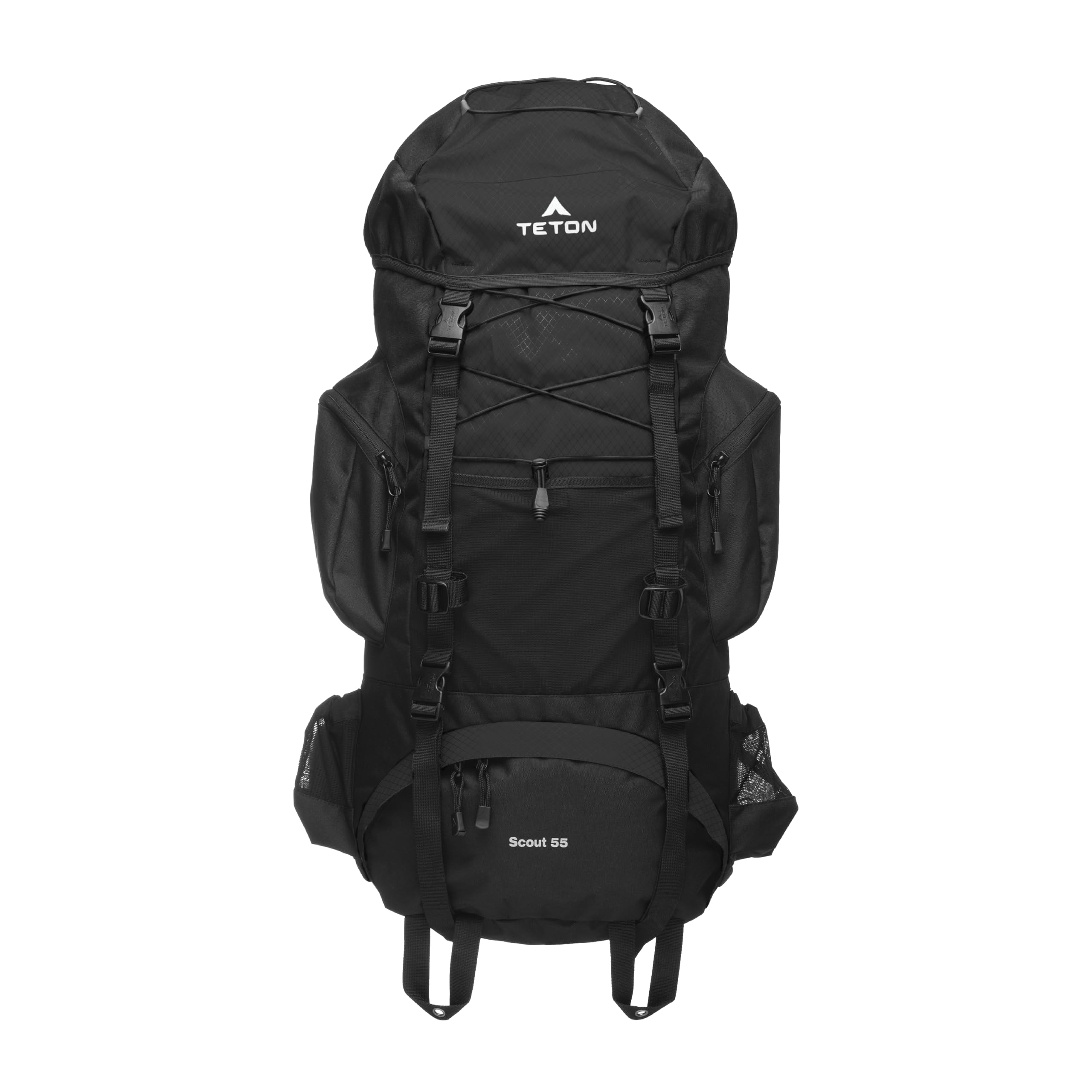


Best for Weekend Backpackers
Teton 55L Scout
Key Features
- Capacity: 55L
- Weight: 4.5 lbs
- Frame: Internal Frame
- Hydration: Yes
- Price: Mid-Range
The Teton 55L Scout keeps weight distributed well thanks to its adjustable torso and padded hip belt, making 3–5 day trips feel manageable. The internal frame and included rain cover add utility without pushing the price higher than comparable packs — a balance that suits first-time buyers moving beyond entry-level daypacks.
This pack fits petite hikers as well as average builds, but the sleeping bag compartment runs tight for larger bags — plan for a compression sack or a smaller quilt. Under heavy loads (40 lbs or more), occasional strap stress has been noted, so this is best for lightweight weekend gear rather than expedition-sized hauls.
Pros
- Adjustable torso fits a range of body sizes comfortably.
- 55L capacity with rain cover covers weekend to week-long trips.
- Build quality and comfort hold up well for the price point.
Cons
- Sleeping bag compartment can be a tight squeeze for larger bags.
- Strap durability may become a concern under consistent heavy loads.
For weekend backpackers and newcomers who want a balanced pack without overspending, the Teton 55L Scout delivers where it matters most: comfort, capacity, and price.
Best for Light Day Hikes
Venture Pal 40L
Key Features
- Capacity: 40L
- Weight: 11.2 oz
- Frame: Packable
- Hydration: No
- Price: Budget
At 11 ounces and folding to pocket size, the Venture Pal 40L packs impressive organization into a carry-on-friendly footprint. Multiple pockets including a wet compartment keep gear sorted without adding bulk. It excels as a travel backup or day hike companion for those who pack light — loads up to 15 lbs are comfortable, but the thin nylon construction shows limits under heavier wear.
Pros
- Incredibly lightweight and packs into its own pocket, ideal for travel or day hikes.
- Multiple pockets and a wet compartment keep gear organized without adding bulk.
Cons
- The lightweight nylon can develop tears at stress points under heavier loads or repeated use.
For travelers and day hikers who value packability and organization over ruggedness, the Venture Pal 40L is a capable ultralight option — but keep the load light to make it last.
Best for Multi-Day Trips
Teton 75L Explorer
Key Features
- Capacity: 75L
- Weight: 5.6 lbs
- Frame: Internal Frame
- Hydration: Yes
- Price: Mid-Range
While the 55L Scout covers weekenders, the 75L Explorer targets backpackers on extended trips where max capacity is necessary. The internal frame and padded suspension keep heavy loads comfortable, and the included rain cover adds practicality. This pack is overkill for short hikes — it’s built for expeditions where space matters more than weight. Some units have experienced strap or buckle failure under very heavy loads, so check condition before extended use.
Pros
- Robust 600D ripstop polyester construction handles rough trail conditions without tearing.
- Generous padding on straps and lumbar support provides all-day comfort under heavy loads.
- Includes a rain cover and sleeping bag compartment — features often missing at this price.
Cons
- Weighs 5.6 lbs — heavier than similarly-sized premium packs, making it less ideal for long mileage days where every ounce counts.
- Under very heavy loads, some units have experienced strap or buckle failure; worth inspecting before a major trip.
For extended backpacking trips on a budget, the 75L Explorer delivers the capacity and comfort of packs costing twice as much — just be ready to carry the extra weight and check hardware before heading out.
Best for Day Hikes & Commute
Osprey Daylite 13L
The Daylite Commuter carries Osprey’s well-constructed stitching and comfortable padding into a small package that handles both a laptop and short trail essentials. The dedicated laptop sleeve and hydration compatibility add everyday convenience, but the 13L capacity means you’ll have to leave behind bulky gear — this pack is at home on urban walks and errands rather than full-day treks.
Pros
- Build quality and stitching consistent with larger Osprey packs.
- Comfortable padding on straps and back reduces fatigue during short carries.
Cons
- The laptop sleeve cuts into usable volume, making it less efficient for pure hiking gear.
A well-built daypack for commuters who need a laptop slot and occasional short hikes, but not the right fit for a day with heavy gear or a multi-day trip.
Best for Hydration Day Hikes
N NEVO RHINO 18L
The N NEVO RHINO hydration backpack provides 18 liters of storage with multiple pockets, making it convenient for carrying extra layers, snacks, and a phone. Unlike simpler runner packs that prioritize weight, this model adds a padded hip belt and shoulder straps for better load distribution. The included 3L insulated bladder is a solid value for the price. This pack fits day hikers and cyclists who want hydration plus storage without carrying a full multi-day pack. Note that the bladder insulation may not keep water cold as long as claimed on hot days, and the mouthpiece and strap attachments can fail under regular handling — acceptable for light to moderate use, but not for rugged extended trips.
Pros
- 18L capacity with numerous pockets for organizing day hike essentials.
- Padded hip belt and shoulder straps improve comfort on longer outings.
- Comes with a 3L insulated bladder at a competitive mid-range price.
Cons
- Bladder insulation may not keep water cold as long as advertised in hot conditions.
- Mouthpiece and strap attachments can fail under regular handling — worth checking before extended trips.
A practical hydration pack for day trips if you accept that the bladder insulation and mouthpiece are not built for heavy abuse.
Best for Ultralight Travelers
ZOMAKE 20L

Key Features
- Capacity: 20L
- Weight: 0.5 lbs
- Frame: Packable
- Hydration: No
- Price: Budget
Carry virtually nothing in weight and size, this 20L daypack fits water bottle and essentials for short, light trips. However, the thin nylon straps and seams can tear under heavier loads, and it’s not waterproof in sustained rain — best as an emergency or travel backup.
Pros
- Weighs only 0.5 lbs and packs into a palm-sized pouch
- Offers enough room for a water bottle, jacket, and snacks for day hikes
Cons
- Straps and stitching may tear if you carry more than 10-15 lbs
Best suited as a lightweight backup pack for travelers or day hikers who keep their load minimal and expect fair weather.
Best for Minimalist Travelers
4Monster 24L

Key Features
- Capacity: 24L
- Weight: 4 oz
- Frame: Packable
- Hydration: No
- Price: Budget
This 4 oz daypack folds to pocket size, making it a convenient spare for short day hikes. Its 24L capacity holds a jacket and water bottles. The thin 30D nylon can tear if snagged on rocks or stressed, so it suits careful use with loads under 10 lbs rather than rugged trails.
Pros
- Weighs only 4 oz and compresses to fist size, easy to stash when not needed.
- 24L capacity fits a jacket and water bottles despite its compact packed size.
Cons
- Thin 30D nylon material may tear under stress from sharp objects or overloading.
Best as a lightweight backup for day hikes where weight matters most, but not for rough terrain or loads above 10 lbs.
Best for Organization Lovers
SKYSPER 20L

The anti-theft zipper and numerous compartments keep small gear secure and easily accessible. The lightweight 1.1 lb build and padded straps make it comfortable for shorter outings. At a mid-range price for 20L, the fabric at stress points may tear under heavier loads — better suited for light day trips than rugged multi-day use.
Pros
- Multiple pockets keep everything organized and easy to find.
- Lightweight and comfortable for short day hikes and urban use.
Cons
- Seams at stress points may tear under heavier loads.
Best for day hikers who prioritize organization and security over long-term ruggedness.
Best for Eco-Friendly Pack
WATERFLY 20L

Key Features
- Capacity: 20L
- Weight: 10.2 oz
- Frame: Packable
- Hydration: No
- Price: Budget
WATERFLY’s 20L pack uses recycled nylon, keeping weight at 10.2 oz and folding into a palm-sized pouch. It has decent pockets and materials for the price. However, durability is average — straps and fabric can show wear under loads over 10 lbs. This makes it a backup option for travel or light walks, not a primary hiking pack.
Pros
- Extremely lightweight and packs into a small pouch for easy storage
- Good material quality and stitching for a budget packable
Cons
- Straps and fabric may show wear when loaded above 10 lbs, limiting it to light loads
Best as a spare daypack for travel or light day hikes where loads stay under 10 lbs.
Best for Tactical Enthusiasts
kookoomia 50L

This 50L tactical pack offers heavy-duty construction and abundant MOLLE webbing for gear customization at a budget-friendly price. At 3.1 lbs it is heavier than typical hiking packs, making it better suited for bug-out bags or range days than multi-day treks.
Pros
- Heavy-duty materials and double stitching for demanding use.
- Large 50L capacity with organized compartments and MOLLE system.
Cons
- Zippers may not hold up to regular use, an area where consistency varies.
For tactical enthusiasts on a budget, this pack delivers on ruggedness and organization, but hikers should look to lighter, more reliable options like the Teton.
Best for Budget Tactical
QT&QY 45L Tactical

This 45L pack delivers a lot of space and tactical styling at an entry-level price. The main compartment and multiple pockets swallow gear for day hikes or travel, and the 900D polyester construction holds up for light to moderate use. However, stitching and zipper quality can vary — some units show seam issues or zipper failure after limited trips, which makes this a better fit for occasional outings or bug-out bag duty than for regular multi-day trekking.
Pros
- Large capacity for the price point
- Decent stitching and build for an entry-level pack
Cons
- Stitching and zippers can show premature wear under regular hiking loads
Fits best for budget tactical enthusiasts or as a backup daypack where durability isn’t the top priority.
Best for Weekend Hikers
Loowoko 50L

The Loowoko 50L offers generous space and organization for weekend camping trips at a low entry price. The included rain cover adds convenience for sudden weather. However, build quality can vary between units—straps and seams may loosen under regular use, making this a better fit for occasional hikers on a strict budget rather than frequent heavy-duty treks.
Pros
- Spacious 50L capacity fits gear for multi-day trips
- Budget-friendly price with useful features including rain cover
Cons
- Strap and seam durability may be inconsistent under heavier use
A solid choice for budget-conscious weekend hikers who can accept occasional build inconsistencies; not recommended for expeditions or heavy pack weights.
Best for Feature-Rich Daypack
Maelstrom 40L

This bag organizes gear well with numerous pockets and included extras like trekking pole holders and a wet pocket. At 2.18 lbs, it carries comfortably on short trips. However, the 210D nylon seams can rip under heavier loads, and the rain cover may not fit when the pack is stuffed — durability is the tradeoff for its low price.
Pros
- Abundant pockets and built-in wet pocket for organized packing
- Lightweight and comfortable for day hikes with padded straps
Cons
- Seams may rip under moderate loads, especially when fully packed
This pack suits budget-conscious day hikers who value organization over long-term durability.
Best for Runners & Short Hikes
N NEVO RHINO 12L

This 12L hydration pack keeps weight low with a 2L bladder and organized pockets for essentials. However, the pack’s nylon construction can show wear quickly, and the side pockets are too narrow for standard water bottles — it’s best for short, light outings where durability is not the priority.
Pros
- Feels nearly weightless during runs or hikes.
- Included 2L bladder performs without leaks and offers good value.
Cons
- Straps and seams may tear after a few outings if used heavily.
Fit for runners who prioritize low weight and don’t require long-term durability or extra bottle storage.
How to Choose
The single most important factor is matching the pack’s frame and capacity to your typical load weight, not just trip length.
Capacity: Matching Pack Size to Trip Length
Capacity determines how many days of gear you can carry, but a bigger pack tempts overpacking. A 20-30L daypack works for sun-up-to-sun-down hikes, 40-55L covers weekend trips, and 60-75L suits 5+ day expeditions.
Hidden trade-off: a fully loaded 75L pack weighs 40+ lbs, which strains shoulders and knees if the pack lacks a proper frame. Pick the smallest capacity that fits your typical gear list.
Weight vs. Durability: The Real Trade-Off
Ultralight packs use thin nylon (30 denier) that tears under 15 lbs of gear, while heavier packs with 600D polyester can handle 40+ lbs. The weight difference is often several pounds, but that weight is distributed across your back.
For day hikes under 10 lbs, a packable bag is fine. For multi-day trips carrying 20-30 lbs, a heavier, more durable pack saves you from a mid-trail blowout.
Frame Type: Internal Frame vs. Frameless
Internal frame packs have a metal or plastic frame that transfers load from shoulders to hips, reducing fatigue on long days. They weigh 4-6 lbs but can carry 40-50 lbs comfortably.
Frameless packs rely on packing technique to distribute weight. Over 20 lbs, the straps dig in and slip loose. If you carry more than a sleeping bag and a few snacks, an internal frame is worth the weight penalty.
Hydration Compatibility: Bladder vs. Bottles
Bladder sleeves and tube ports let you drink hands-free, ideal for trail runners and hikers who don’t want to stop. But bladders are harder to clean and can leak if the mouthpiece fails.
Bottle pockets are simpler and more durable. Many packs have both options – pick based on how often you need to drink without stopping.
Zipper and Strap Quality: Where Budget Packs Fail
Budget packs often use plastic zippers that jam or break after a season, and thin straps that tear at the attachment points. Look for reinforced stitching, metal zippers, and load-lifter straps for heavy loads.
A pack that fails on the trail is worse than spending $30 more upfront. Read reviews for zipper and strap failure reports before buying.
FAQ
How many liters do I need for a 3-day hiking trip?
A 3-day trip typically requires 50-60 liters of capacity if you’re carrying a tent, sleeping bag, and food. For warmer climates with minimal gear, 45 liters may suffice. Always pack your heaviest items first and test the fit before heading out.
Why do my hiking backpack straps keep slipping loose?
Strap slippage usually means the pack lacks load-lifter straps or the torso length isn’t adjusted correctly. Internal frame packs with a properly fitted hip belt transfer weight off the shoulders, preventing straps from loosening. If your pack is frameless and you’re carrying over 20 pounds, the slippage is inevitable.
Can I use a tactical backpack for hiking?
Tactical packs are built for carrying gear short distances and often lack an adjustable torso, breathable back panel, and hydration compatibility. They work for day hikes or as bug-out bags, but for multi-day trips with 30+ pounds, an internal frame hiking pack is far more comfortable and efficient.
Are packable daypacks durable enough for real hiking?
Packable daypacks are fine for light day hikes with under 10 pounds of gear. Their thin fabric tears easily on branches or under heavier loads, and the straps lack padding for all-day comfort. Use them as a backup or for urban travel, not for regular trail use above 10 pounds.