
This post contains affiliate links. We may earn a small commission when you buy through our links — at no extra cost to you.
A day hiking backpack needs two things often missing from lightweight packable bags: a hipbelt to transfer weight off your shoulders and a hydration sleeve for hands-free drinking. Many backpacks sold as ‘hiking’ are really just travel daypacks with thin straps and no load-bearing structure.
That mismatch leads to sore shoulders, water bottles bouncing in side pockets, and stopping to fish out a water bladder that doesn’t fit. The right pack feels like part of your body—stable, ventilated, and organized for trail use, not airport terminals.
The trade-off in this category is between weight and features: lighter packs often skip padding and pockets, while fully-loaded packs can feel bulky. The goal is a pack that balances comfort, capacity, and durability for the kind of hiking you actually do.



Best for Long Day Hikes
Osprey Talon 22L
Key Features
- Capacity: 22L
- Hydration: Internal sleeve
- Hipbelt: Padded w/ pockets
- Weight: 2 lbs
- Organization: Many pockets
- Price: Premium
The Talon 22L’s hipbelt is one of the most functional on a day pack, with zippered pockets ideal for quick-access items like snacks or a phone and a hydration sleeve that keeps the water weight low and centered against your back. The padded hipbelt and contoured frame sheet transfer load to your hips effectively, allowing you to carry a full day’s gear without shoulder strain.
On the trail, the Talon handles loads up to 15–20 pounds with stability. The compression straps keep contents snug, reducing bounce during scrambles or quick descents. The suspension keeps the load close to the body, reducing sway. The fabric resists abrasion from granite and brush, and after a season of regular use, the stitching and zippers show minimal wear. The 22-liter capacity is enough for a hydration bladder, a jacket, food, and small extras without feeling overstuffed.
This pack suits hikers who regularly tackle 8–10 mile day trips with a full water supply and gear. The tradeoff: at a premium price, it’s a commitment for those who hike only a few times a year. Also, the hipbelt pockets are sized for phones up to about 6.5 inches; larger devices may need to ride in the main compartment or a shoulder strap pocket.
Pros
- Comfortable carry even with heavy loads thanks to well-distributed weight
- Durable construction withstands rugged trail use
- Convenient hipbelt pockets keep small items accessible
Cons
- Premium pricing may deter casual hikers
- Hipbelt pockets can be tight for large smartphones
The Talon 22L is built to carry heavy day loads reliably for years – a straightforward pick for hikers who prioritize comfort and organization over low weight or lower cost.
Best for Hot Weather Hikes
Osprey Stratos 24L
Key Features
- Capacity: 24L
- Hydration: Internal sleeve
- Hipbelt: Padded w/ pockets
- Weight: 2.78 lbs
- Organization: Many pockets
- Price: Premium
The Stratos’ defining feature is its AirSpeed mesh backpanel, which lifts the pack off your back and channels airflow to keep you dry on sweaty climbs. That ventilated suspension system is the reason it weighs 2.78 lbs — noticeably more than the Talon 22L — and carries a premium price. The tradeoff is deliberate: you’re not carrying the extra bulk without purpose.
This pack is best for hikers who regularly deal with heat and want to minimize a soaked back on long day hikes with moderate loads (15–24L capacity). If your priority is shaving every ounce or sticking to a tight budget, the lighter, cheaper Talon is a better fit. The Stratos’ construction is durable — nylon fabric and zippers hold up to regular trail use — but the added weight and cost are real boundaries to consider.
Pros
- AirSpeed mesh backpanel keeps back cool on hot hikes
- Padded hipbelt and frame spread weight evenly
- Durable nylon fabric and zippers withstand trail abuse
Cons
- Hipbelt pockets may not fit larger phones or bulky items
- Heavier than similar-capacity packs at 2.78 lbs
If you hike in hot climates and value a dry back over a light carry, the Stratos delivers exactly that — no lighter or cheaper, but purpose-built for the heat.
Best for Value Hydration Pack
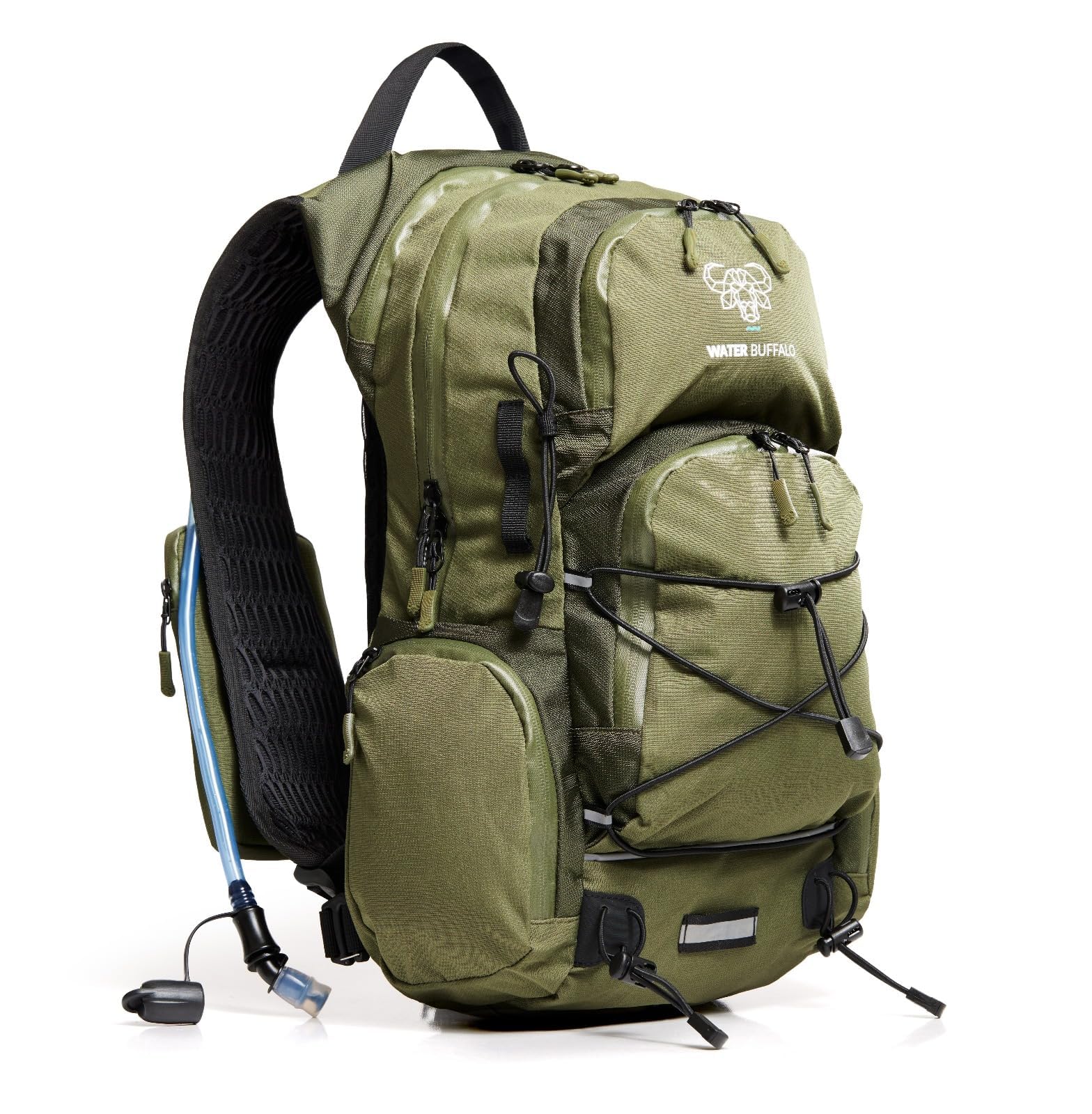
Water Buffalo Sherpa 22L
Key Features
- Capacity: 22L
- Hydration: 2L bladder incl.
- Hipbelt: Adjustable
- Weight: ~1.5 lbs
- Organization: Many pockets
- Price: Mid-Range
The Water Buffalo Sherpa 22L delivers the core day-hiking features—hydration bladder, padded hipbelt, rain cover—at a price that undercuts many competitors. Unlike budget packs that omit a hipbelt or hydration sleeve, this one includes both plus a 2L bladder, so you can hit the trail without extra purchases. The Sherpa also offers multiple pockets and a dedicated phone slot, matching the utility of packs twice its price.
It suits hikers and bikers who want a single-purchase hydration system for day trips and don’t need Osprey-level longevity. The build quality is mid-range; some owners have noted strap stitching or bladder seal loosening after months of regular use, so it works best for occasional outings rather than rugged, frequent backcountry use. The tradeoff in long-term durability is offset by the value—if you hike a few times a month, it should serve you well for a season or two.
Pros
- Included 2L bladder, padded hipbelt, and rain cover offer all-in-one convenience for day hikes.
- Well-organized pockets, including a dedicated phone slot, keep small gear accessible.
- Adjustable hipbelt and shoulder straps provide a comfortable, secure fit.
Cons
- Strap stitching and bladder seal may weaken after several months of regular use.
For the price, the Sherpa 22L offers a complete hydration setup that gets you on the trail immediately—just be aware that its durability is suited to moderate use, not heavy abuse.
Best for Budget Hydration Pack
N NEVO RHINO 18L Hydration
Key Features
- Capacity: 18L
- Hydration: 3L bladder incl.
- Hipbelt: Padded
- Weight: ~1.5 lbs
- Organization: Many pockets
- Price: Budget
This pack stands out among budget options by including a padded hipbelt and chest strap—features many similarly priced packs skip. The 18L capacity and multiple pockets keep day-hike essentials organized, while the integrated 3L bladder provides hands-on hydration without an extra purchase.
First-time day hikers and cyclists on a tight budget will appreciate the value, but the included bladder and bite valve can show wear sooner than premium systems. This pack is best for light, occasional outings rather than rugged, frequent use—where pricier alternatives offer more lasting build quality.
Pros
- Comes with a 3L bladder and padded hipbelt at a budget-friendly price.
- Padded hipbelt and chest strap distribute load comfortably for shorter hikes.
- Multiple storage pockets keep snacks, phone, and layers organized.
Cons
- Bladder bite valve may develop leaks over time with frequent use.
- Pack fabric and zippers are light-duty; rough terrain may accelerate wear.
For hikers who need an affordable hydration pack for short day trips or biking, this delivers the essentials without the premium price—just keep expectations on long-term durability realistic.
Best for Budget-Friendly Storage
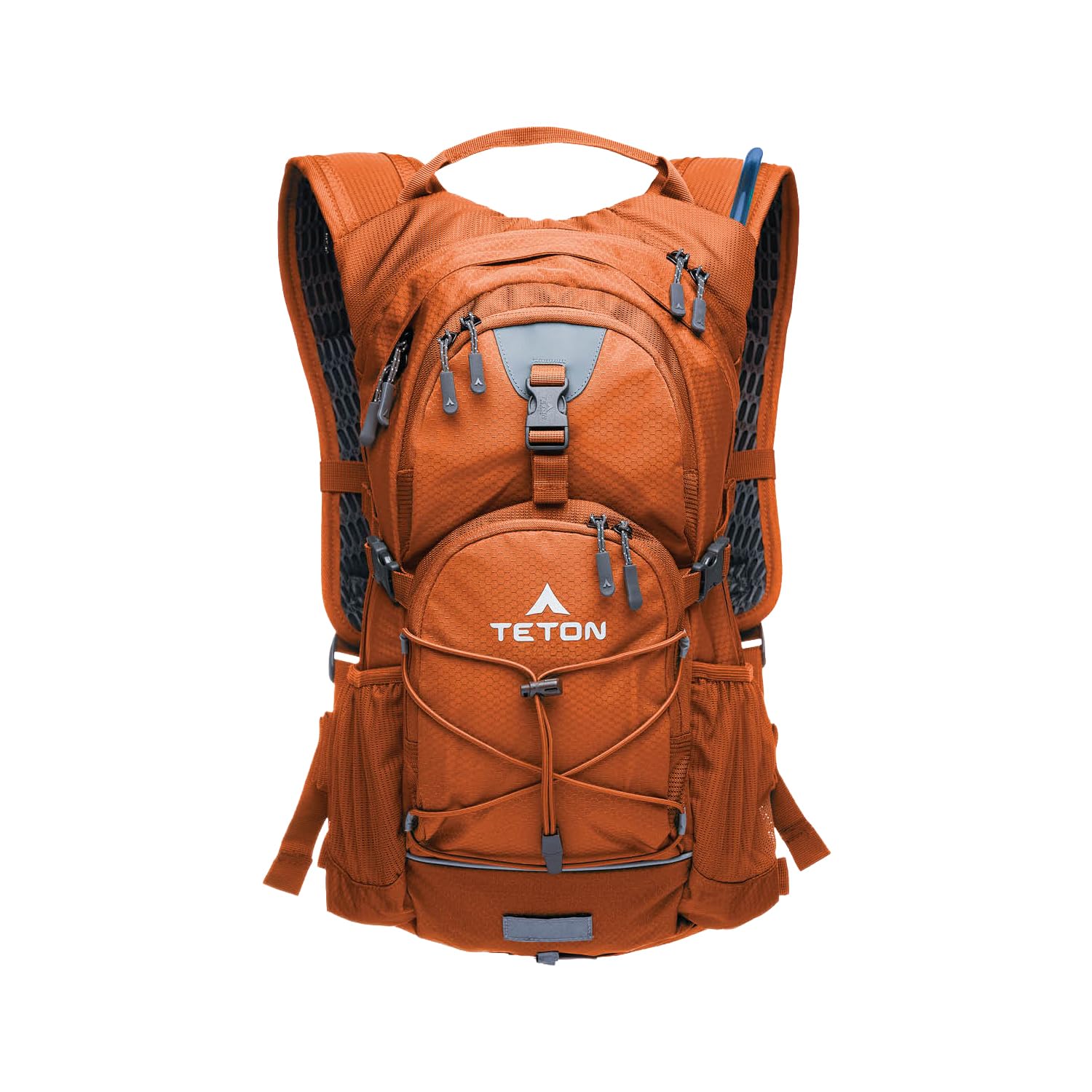
TETON Oasis 18L Hydration
Key Features
- Capacity: 18L
- Hydration: 2L bladder incl.
- Hipbelt: Webbing
- Weight: 2 lbs
- Organization: Many pockets
- Price: Mid-Range
The TETON Oasis packs a 2L hydration bladder, a rain cover, and multiple pockets into a lightweight 2-pound frame that costs well under $60. For day hikers who value organization and don’t need premium build, this backpack provides more storage than similarly priced competitors — including a designated compartment for the bladder, quick-access pockets, and a webbing hipbelt that helps stabilize the load.
Where the Oasis falls short is fit: the hipbelt and chest straps may not cinch small enough for people with narrow shoulders or petite frames, which can cause the pack to shift during movement. The included bladder also has a tendency to impart a plastic taste until thoroughly cleaned or replaced. This backpack suits hikers with average-to-broad builds who prioritize storage and value over refined ergonomics, and who don’t mind putting in a little work on the bladder.
Pros
- Multiple pockets and a dedicated hydration sleeve keep gear organized on the trail
- Lightweight construction at 2 pounds with comfortable carry for moderate loads
- Includes both a 2L bladder and a rain cover, adding value for the price
Cons
- Included bladder can impart a plastic taste that requires multiple cleanings to resolve
- Hipbelt and chest straps may not adjust small enough for narrow shoulders or petite frames
If your torso and shoulders fit the straps, the TETON Oasis offers more storage and included accessories than any other hydration pack at this price point — a smart choice for casual day hikers on a budget.
Best for Minimalist Day Hikes
Osprey Hikelite 18L

Key Features
- Capacity: 18L
- Hydration: Internal sleeve
- Hipbelt: Webbing removable
- Weight: 1.7 lbs
- Organization: Simple design
- Price: Mid-Range
The Osprey Hikelite 18L combines the brand’s build quality with a low weight of 1.7 lbs and an included rain cover. Its AirSpeed backpanel keeps you cool on fast day hikes. But with only 18L capacity and minimal pocket layout, it won’t accommodate extra layers or a water bladder for longer treks. That makes it best for ultralight day hikers and trail runners who value ventilation and simplicity over carrying capacity.
Pros
- Lightweight construction (1.7 lbs) with highly breathable AirSpeed backpanel
- Includes a quality rain cover and has a clean, durable design
Cons
Ideal for fast-and-light day hikers who want Osprey durability without extra weight, but not for those needing to carry more than the basics.
How to Choose
The single most important buying insight for a day hiking backpack is that a hipbelt and hydration compatibility separate genuine hiking packs from travel daypacks.
Capacity
Capacity determines how much gear you can carry. A 15-20L pack holds a jacket, lunch, water bladder, and small first aid kit. A 22-25L pack adds room for an extra layer, snacks, and a camera.
Going too large (30L+) encourages overpacking, which strains the hipbelt and reduces mobility. Match capacity to your typical hike length: 2-4 hours use 15-20L, full-day hikes use 22-25L.
Hydration Compatibility
A hydration sleeve and hose port let you drink without stopping. Many budget packs lack this feature entirely, forcing you to rely on water bottles that shift in side pockets.
Packs that include a bladder often use thin, plastic-tasting bladders. If you want clean-tasting water, plan to replace the included bladder with a quality aftermarket one like HydraPak or CamelBak.
Hipbelt
A hipbelt transfers load from your shoulders to your hips, reducing fatigue on hikes over two miles. Without one, the full weight of the pack pulls on your shoulders, causing discomfort.
Look for a padded hipbelt with at least some adjustability. Hipbelt pockets for phone and snacks are a bonus—they keep essentials accessible without stopping.
Weight
Lighter packs (under 1.5 lbs) are easier to carry but often skimp on padding and features. Heavier packs (2+ lbs) offer better comfort and durability.
The trade-off is real: a 2.8 lb pack with a ventilated frame can be worth the extra ounces if you hike in hot weather, while a 1.7 lb minimalist pack works for cool, short trails.
Organization
Pockets and compartments make a difference on the trail. A main compartment, a quick-access top pocket, and side water bottle pockets cover most needs.
Too many pockets can add weight and complexity. The best organization is simple: one large compartment with internal sleeves for a bladder and a few external pockets for trail essentials.
FAQ
Why does my new hiking backpack’s hipbelt feel loose even after tightening?
The hipbelt should sit on your hip bones, not your waist. If it feels loose, try adjusting the load lifters on the shoulder straps first—they angle the pack closer to your back. If the belt still slips, it may be too large for your frame; some packs come in multiple sizes.
Can I use a 3L hydration bladder in a 20L day hiking backpack?
Yes, but check the sleeve dimensions. Many 20L packs have sleeves designed for 2-2.5L bladders. A 3L bladder may fit if the sleeve is tall enough, but it will take up most of the main compartment, leaving little room for other gear. For a 20L pack, 2L is a more practical size.
How do I stop my water bladder from tasting like plastic?
Rinse with warm water and baking soda, then air dry completely. Avoid dish soap—residue can cause flavor. If the taste persists after several cleanings, the bladder material may be low-grade; replacing it with a name-brand bladder (CamelBak, HydraPak) solves the issue immediately.
Is a hipbelt necessary for a day hike or just for backpacking?
For any hike longer than 2 miles or with a pack over 5-7 lbs, a hipbelt is essential. Without it, the load sits entirely on your shoulders, leading to fatigue and soreness. A padded hipbelt transfers weight to your hips, making the pack feel much lighter and more stable.