
This post contains affiliate links. We may earn a small commission when you buy through our links — at no extra cost to you.
Finding a lightweight jacket that fits well shouldn’t require a return trip to the post office. But sizing across budget puffers and windbreakers varies so wildly that even experienced buyers end up guessing wrong. The same jacket that fits perfectly on one person can be two sizes off on another.
Water resistance claims add another layer of confusion. Many jackets labeled "waterproof" only handle light mist, while some basic windbreakers shrug off a surprising amount of rain. The real decision isn’t about brand or price: it’s about matching the jacket’s actual performance to how you’ll use it — whether that’s a carry-on trip, a day hike, or daily errands.
A common trade-off emerges between weight and durability: ultralight jackets pack smaller but tear easily, while sturdier shells add ounces but last longer. Knowing which compromise fits your travel style makes the difference between a jacket you love and one you replace next season.



Best for Budget Travel Warmth
Amazon Essentials Packable Puffer
Key Features
- Water Resistance: Water-resistant shell
- Insulation Type: Synthetic puffer
- Packability: Packs into pocket
- Style/Fit: Relaxed, size varies
- Price: Budget
This puffer delivers genuine insulation that punches above its weight, compressing into its own pocket for easy travel storage. The shell adds water resistance for light drizzle, making it a practical layer for city commutes or outdoor trips where weight matters.
Best suited for budget travelers who need a warmth layer that disappears into a bag, and for casual cool-weather wear. Big & Tall shoppers will appreciate the extended size range. However, sizing consistency varies between units—some may find the fit runs large or small, so checking recent reviews for your specific size is advisable before ordering.
Pros
- Genuine warmth that feels heavier than the jacket’s weight suggests
- Packs down small, stowing into its own pocket for travel
- Cost-effective alternative to premium puffers with similar performance
Cons
- Fit can vary between production batches—some may need to size up or down
For budget travelers and casual users who value warmth per ounce, this puffer delivers without the premium price tag.
Best for Budget Rain Layer
OTU Rain Jacket
Key Features
- Water Resistance: Light rain only
- Insulation Type: None (shell)
- Packability: Packs small
- Style/Fit: Standard, true to size
- Price: Budget
Breathable mesh lining and effective water resistance make the OTU rain jacket a budget-friendly companion for light to moderate rain. It handles everyday commutes and short hikes without feeling clammy, though sustained downpours can cause moisture breakthrough. This jacket suits travelers and hikers in dry climates who need a packable rain layer — just not for extended wet conditions.
Pros
- Lightweight and breathable construction keeps you comfortable during active use
- Effective barrier against light to moderate rain for daily commutes
- Great value for a functional rain shell at a budget-friendly price
Cons
- In sustained downpours, the jacket may let moisture through — better suited for occasional showers than prolonged wet conditions
A practical rain shell for light rain climates and budget-conscious travelers, but not a substitute for a fully waterproof jacket in heavy weather.
Best for Ultralight Travelers
Eddie Bauer CirrusLite
Key Features
- Water Resistance: DWR treated
- Insulation Type: Down
- Packability: Packs into pocket
- Style/Fit: Trim, athletic
- Price: Mid-Range
At 7.8 ounces, the CirrusLite compresses smaller than any budget puffer – ideal for backpackers counting grams. The trade-off is thin fabric that tears easily; keep this jacket on paved trails and city streets, not brush or heavy use.
Pros
- Weighs just 7.8 ounces and packs to fist size – disappears in luggage.
- Keeps you warm down to 40°F, impressive for the minimal weight.
Cons
For travelers who prioritize weight savings over shell toughness, this jacket delivers exactly that – with careful handling.
Best for Classic Windbreaker
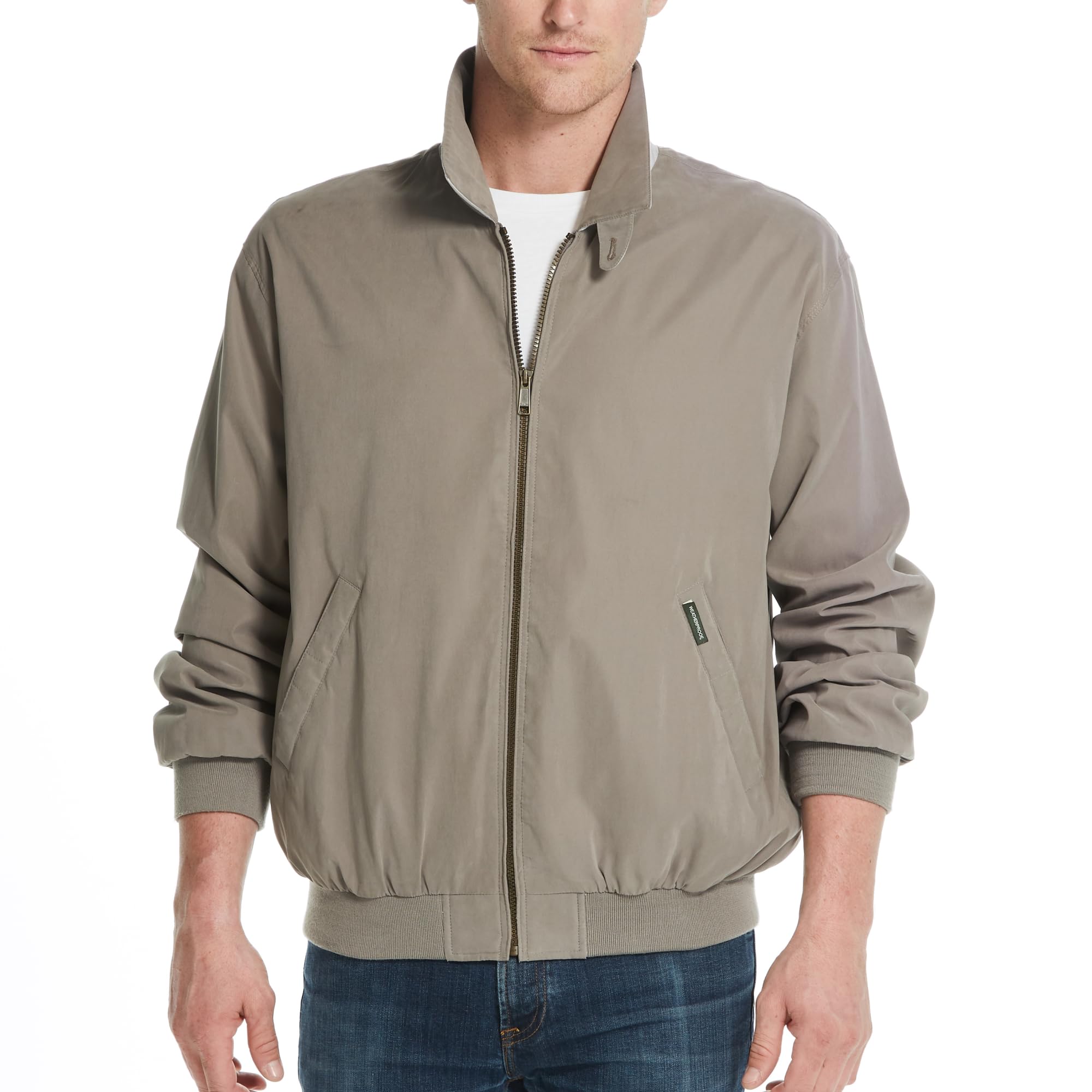
Weatherproof Golf Jacket
Key Features
- Water Resistance: Water-resistant microfiber
- Insulation Type: None (shell)
- Packability: Not self-packing
- Style/Fit: Tailored, athletic
- Price: Mid-Range
Exceptional build quality and durable stitching give this jacket a feel that lasts beyond the typical windbreaker. The tailored fit makes it comfortable for swinging a golf club or running errands. However, the shell is water-resistant, not waterproof – it will handle light drizzle but not a downpour. This makes it a strong choice for casual outdoor wear and travel where you don’t expect heavy rain, rather than a dedicated rain jacket.
Pros
- Durable stitching and build quality that hold up over time.
- Tailored fit designed for active movement on the golf course or daily errands.
- Lightweight microfiber shell that blocks wind and sheds light moisture.
Cons
- Water-resistant only – in sustained rain, the jacket may wet through; best for dry or light drizzle conditions.
This jacket works well for its intended use – golf and casual wear in mild weather – but buyers expecting full rain protection should look elsewhere.
Best for Cool-Weather Hiking
33,000ft Softshell
Key Features
- Water Resistance: Water-resistant
- Insulation Type: Fleece lining
- Packability: Bulky, not self-packing
- Style/Fit: Slim, size up
- Price: Mid-Range
The 33,000ft Softshell wraps you in a cozy fleece interior while the outer shell sheds light rain and blocks wind — all at a mid-range price that undercuts many similar jackets. It feels substantial without being heavy, so it works for day hikes or morning commutes when temperatures hover in the 40s and 50s. Just don’t expect it to stuff into a pocket; this is a jacket you wear, not pack.
This jacket suits day hikers and commuters who need a warm, weather-resistant layer for cool, damp conditions — and who aren’t chasing ultralight grams. The main catch is sizing: the cut runs small, especially if you plan to layer a sweater underneath. Ordering up one size solves the problem and preserves the comfortable fit.
Pros
- Fleece interior keeps you warm without bulk.
- Water-resistant shell handles light rain and mist.
- Light enough for active use but feels durable.
Cons
- Sizing runs small — order up if you intend to wear thick layers underneath.
For cool-weather outdoor activities where packability isn’t a priority, this softshell delivers dependable warmth and water resistance at a fair price.
Best for Budget Fashion Bomber
TACVASEN Bomber

Key Features
- Insulation Type: None (windbreaker)
- Packability: Not self-packing
- Style/Fit: Bomber, runs small
- Price: Budget
This TACVASEN bomber delivers a clean, modern style that punches above its budget price point — it’s a light windbreaker for mild days, not rain or active use. The reversed zipper orientation and flimsy feel can frustrate regular use, and sizing runs small enough that ordering up is worth checking. For a casual, occasional layer that looks sharp without breaking the bank, it’s a decent option.
Pros
- Sharp bomber style that looks more expensive than it is.
- Lightweight and comfortable for mild-weather casual wear.
Cons
- Zipper is reversed (women’s orientation) and can feel flimsy, which may frustrate regular use.
Best for shoppers who want a budget-friendly, style-first windbreaker for occasional mild-weather use and can work around the zipper and sizing quirks.
Best for Style per Dollar
Rdruko Bomber

Key Features
- Insulation Type: None (windbreaker)
- Packability: Not self-packing
- Style/Fit: Bomber, inconsistent fit
- Price: Budget
This jacket delivers the look of a premium bomber at a fraction of the price, with fabric that feels richer than the cost suggests. The catch is sizing: the cut can run tight across the shoulders or loose through the body depending on the size you pick. It’s a fashion piece, not functional outerwear — best for mild spring and fall days when you want to dress up without spending much. Checking recent reviews for your body type is strongly recommended before ordering.
Pros
- Fabric quality that looks and feels above its price tier
- Sleek bomber silhouette works well for casual styling
Cons
- Sizing consistency varies — shoulders may feel restrictive or the body overly roomy depending on the size chosen
Buy this if your priority is style on a tight budget and you’re willing to read size-specific reviews to find the right fit.
Best for Cold-Weather Layering
Outdoor Ventures Softshell

Key Features
- Water Resistance: Water-resistant
- Insulation Type: Fleece lining
- Packability: Bulky, not self-packing
- Style/Fit: Hooded, runs small
- Price: Mid-Range
This fleece-lined softshell provides genuine warmth and light weather protection for cool days, with well-placed pockets for daily essentials. However, the oversized hood and snug fit (order up if layering) reduce its versatility for travel or active use, and the build isn’t as durable as pricier options. It’s a decent casual jacket for fall/winter, not a packable travel layer.
Pros
- Warm fleece lining with water-resistant shell
- Multiple functional pockets for storage
Cons
- Hood can be oversized and lacks enough adjustment for a secure fit
Worth considering for casual cold-weather use if packability isn’t a priority and you’re comfortable with a loose hood and ordering a size up.
Best for Dry Mild Weather
TBMPOY Windbreaker

Key Features
- Water Resistance: None (wind only)
- Insulation Type: None (shell)
- Packability: Not self-packing
- Style/Fit: Slim, runs small
- Price: Budget
Lightweight and stylish for under $32, this jacket works for casual errands or a backup layer. The value is hard to beat, but the fabric feels plasticky and doesn’t breathe, which limits it to dry, mild conditions — not suitable for active use or layering with heavy activity.
Pros
- Lightweight and stylish design for casual wear
- Good value for a basic windbreaker
Cons
- Plasticky fabric that doesn’t breathe — feels cheap against the skin
A cheap windbreaker for dry, mild-weather errands or as an emergency layer in your car, but skip it if you need breathability or long-term durability.
Best for Emergency Rain Backup
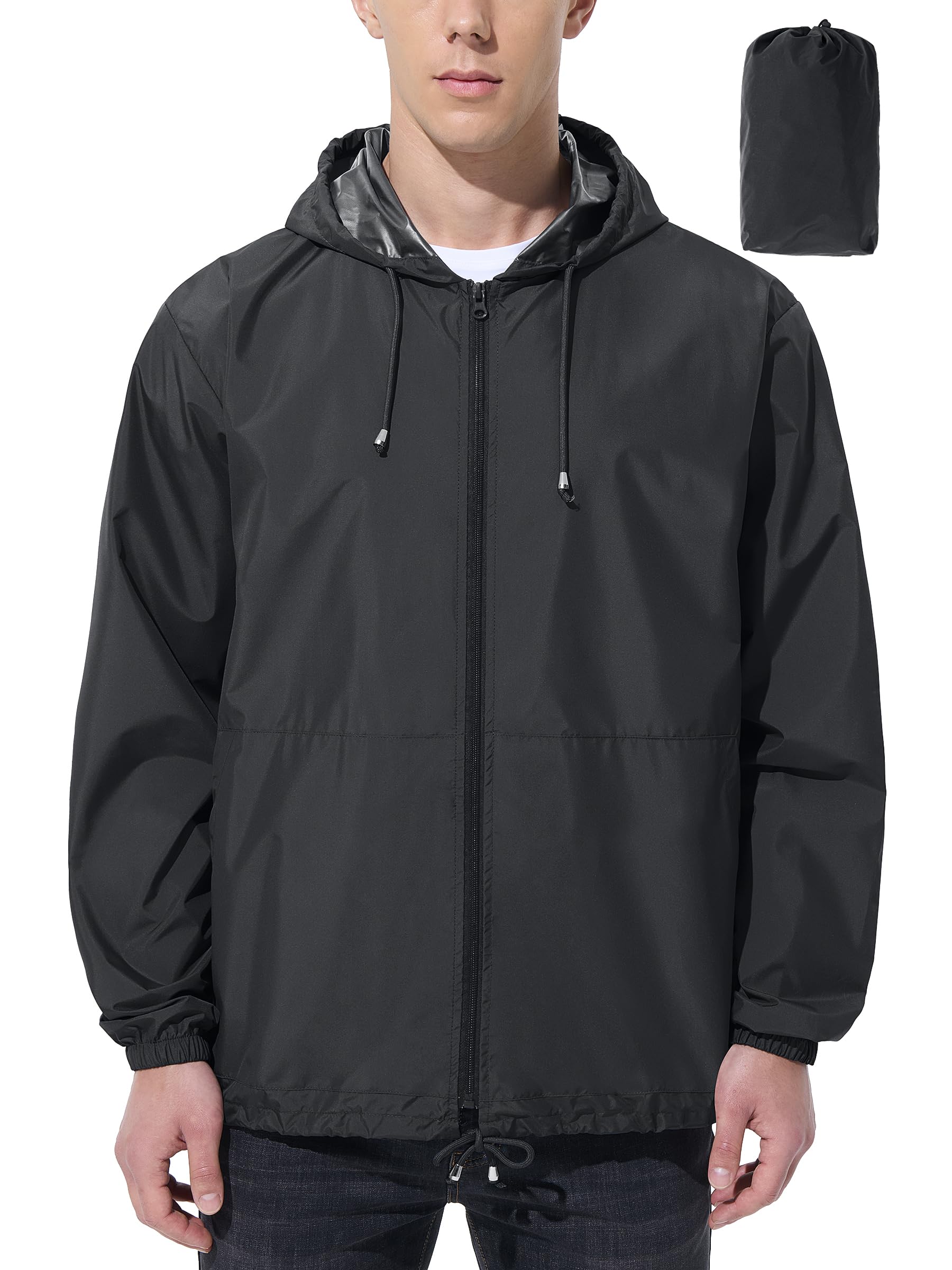
UIQUR Rain Jacket
Key Features
- Water Resistance: Inconsistent, light rain
- Insulation Type: None (shell)
- Packability: Packs into pouch
- Style/Fit: Runs small
- Price: Budget
At under $20, this jacket packs down impressively small and weighs almost nothing — a genuine plus for travelers who want a just-in-case layer. The waterproofing, however, is inconsistent: some units soak through in light rain, making this a backup piece rather than a daily defender. Sizing also runs small, so ordering up helps. Unlike the more dependable budget rain shell in this guide, this one suits only the occasional spit of rain or a wind break, not a proper downpour.
Pros
- Extremely lightweight and packs into a small space for carry-on or daypack.
- Budget-friendly price for emergency rain or wind protection.
Cons
- Waterproofing may not hold up in even light rain for some units — more of a windbreaker than a rain jacket.
Best as a packable emergency shell for dry climates or as a wind layer; skip if you expect actual rain on a regular basis.
Best for Uv Protection
Sejuani Sun Jacket

Key Features
- Insulation Type: None (UPF shell)
- Packability: Not self-packing
- Style/Fit: Slim, runs small
- Price: Budget
The Sejuani Sun Jacket delivers targeted UV protection for long days on the water or trail, with lightweight fabric that stays comfortable in heat. The zip pockets and hood add practicality for fishing or hiking. The catch: the zipper uses a left-side orientation typical of women’s jackets, which may cause sticking and requires adjustment for some buyers.
Pros
- Blocks 98% of UV rays for extended sun exposure
- Breathable fabric keeps you cool during active use
Cons
- Zipper orientation is reversed for men and can stick during use
Worth considering if UV protection is your top priority and you can work around the reversed zipper.
Best for Fashion Rain Bomber
Tommy Hilfiger Regatta

Key Features
- Water Resistance: Waterproof
- Insulation Type: None (shell)
- Packability: Not self-packing
- Style/Fit: Bomber, runs small
- Price: Mid-Range
This Tommy Hilfiger bomber offers waterproofing and a sleek silhouette for light rain. However, sizing can be off (order up) and the zipper may split after a few uses. At a mid-range price, the brand’s own Ultra Loft puffer delivers more value for travel-friendly warmth.
Pros
- Waterproof shell handles light rain
- Stylish bomber design with brand cachet
Cons
- Sizing can run small – ordering up one size is recommended
Best for fashion-forward buyers who prioritize style and occasional light rain protection over daily dependability.
Best for Everyday Softshell
Weatherproof Softshell

Key Features
- Water Resistance: Water-resistant
- Insulation Type: None (softshell)
- Packability: Not self-packing
- Style/Fit: Relaxed, size varies
- Price: Mid-Range
Quality construction and comfortable fit make this a solid everyday softshell for mild weather. The water-resistant shell handles light drizzle, and the style dresses up or down. Sizing varies across sizes — check reviews carefully. It offers less warmth and fewer features than the 33,000ft, leaning more on style.
Pros
- Sturdy build with clean stitching and durable fabric.
- Comfortable layering piece that looks good in both casual and slightly dressed-up settings.
Cons
- Sizing can be off — some find it too small, others too large, depending on the size ordered.
Good for casual use if you find your size, but not a substitute for the warmer, feature-rich 33,000ft.
How to Choose
The single most overlooked detail when buying a lightweight jacket is how the insulation type handles moisture: down loses warmth when wet, synthetic dries faster, and fleece breathes but absorbs water.
Water Resistance Level
"Water-resistant" and "waterproof" are often used interchangeably, but the difference shows up in the first real rain. Water-resistant fabrics (DWR-coated) bead light rain for 15–30 minutes before wetting out. True waterproof jackets use a taped-seam membrane that stays dry longer — but they also trap body heat and moisture.
For travel in drizzle-prone cities, a water-resistant shell with a packable puffer underneath covers more scenarios than a bulky waterproof jacket. If you expect sustained downpours, buy a dedicated rain shell and skip the multi-use claim.
Type of Insulation
Down offers the best warmth-to-weight ratio, but loses all insulation value when wet. Synthetic fill (like PrimaLoft) retains warmth even damp and dries faster, though it’s heavier for the same warmth. Fleece-lined softshells add breathability but little insulation against wind — they work best as active layers.
The trade-off is clear: if you’ll be in humid or rainy conditions, avoid down unless it’s treated with a water-repellent finish. For dry cold, down wins on packability. For unpredictable weather, synthetic is the safer call.
Packability and Weight
A jacket that packs into its own pocket saves precious carry-on space, but the trade-off is fabric thinness. Ultralight puffers (under 10 oz) use 10-denier shells that tear on zippers or branches. Heavier packable jackets (12–15 oz) use 20-denier fabrics that survive airport seats and trail side brushes.
Before buying, decide whether the jacket will live most of its life in a backpack or on your body. Daily-wear jackets can sacrifice packability for durability; travel-only jackets should prioritize weight and compression.
Style and Fit
Fit is the most inconsistent variable across lightweight jackets. A bomber cut suits casual settings but often runs small in the shoulders. Athletic trim works for layering under a shell but restricts range of motion. Relaxed fits accommodate sweaters but can look sloppy.
The most reliable strategy: check recent reviews for your body type and order two sizes if the brand is new to you. Many buyers report needing one size up from their usual, especially for jackets with insulation.
FAQ
Is a packable puffer jacket warm enough for 40°F weather?
Yes, most packable puffers with synthetic or down insulation are comfortable down to around 40°F when worn over a long-sleeve shirt. Below that, you’ll need to layer with a fleece or wear a windproof shell over top. The Amazon Essentials puffer and Eddie Bauer CirrusLite both hold heat well into the 30s with proper layering.
Why does my new rain jacket feel clammy after an hour?
That clammy feeling comes from lack of breathability. Many budget rain jackets use a coated nylon shell that traps sweat vapor inside. Look for jackets with mesh lining or ventilation zippers if you plan to move briskly. The OTU rain jacket includes mesh lining and performs better for active use than solid-film shells.
Softshell vs. rain jacket: which is better for hiking in light rain?
For light rain and active hiking, a softshell with fleece lining is better because it breathes well and provides warmth. Rain jackets are more waterproof but trap sweat, leaving you wet from the inside. Choose a softshell like the 33,000ft for drizzly hikes under 60°F; switch to a rain shell only if the forecast calls for steady rain.