
This post contains affiliate links. We may earn a small commission when you buy through our links — at no extra cost to you.
Every heated jacket promises hours of warmth, but the reality on high heat is often under three hours. Buyers discover this mid‑commute or halfway through a shift — cold and frustrated.
That doesn’t mean heated jackets don’t work. It means matching expectations to use case: short trips and moderate cold tolerate a single battery, while all‑day outdoor work demands a spare or a jacket with proven efficient heating.
This guide cuts through the spec sheets to highlight which models actually hold up to real-world use, where battery life falls short, and which trade‑offs (fit, weight, weather resistance) are worth making for your specific situation.


Best for Moderate Winter Activities
ORORO 4-Zone Heated Jacket
Key Features
- Battery & Charging: USB‑C, less than advertised on high
- Heat Zones: 4 zones
- Weather Protection: Soft shell, not windproof
- Fit & Sizing: Runs small, especially sleeves
- Build Quality: 94% positive build
- Price: Mid‑Range
The ORORO 4-Zone Heated Jacket delivers quick, even heat across chest, back, and both hands, with users reporting comfortable warmth down to 10°F. The soft-shell exterior feels substantial, and the detachable hood adds flexibility for changing conditions.
The USB-C rechargeable battery is a practical modern touch – it charges with the same cable as most phones and tablets. The four heating zones can be adjusted individually, letting you prioritize warmth where you need it most without wasting power on areas that are already warm enough.
This jacket suits men who want dependable warmth for commuting, dog walks, or moderate outdoor activities like hiking and tailgating. It’s a frequently recommended option for buyers looking for a balanced heated jacket from an established brand with a large base of positive user experience.
Pros
- Heats up quickly across four separate zones for targeted warmth.
- Built with durable materials that hold up well to regular wear.
- Priced competitively for the features and overall performance it offers.
Cons
- Battery life on high heat can be shorter than expected for an entire day outdoors.
- Fit may be snug for broader shoulders or longer torsos in some cases.
For most men seeking a reliable heated jacket for moderate winter activities, this is the model to start with.
Best for Style & Warmth on Budget
Genovega Graphene Women’s
Key Features
- Battery & Charging: Large battery, moderate life
- Heat Zones: Not specified
- Weather Protection: Waterproof & windproof
- Fit & Sizing: Stylish, heavier with battery
- Build Quality: 93% positive construction
- Price: Budget
Graphene heating technology provides consistent, even warmth across the jacket, backed by waterproof and windproof protection that handles light rain and gusts. The construction feels well put together for the price point, with a stylish cut that suits casual winter outings rather than rugged outdoor work.
This jacket suits women who prioritize style and advanced heating under $150, and who are willing to accept two tradeoffs. The battery life on high heat may not last a full day of heavy outdoor use – it’s better matched to shorter commutes or moderate heat settings. The jacket also carries noticeable weight with the battery pack, which can feel cumbersome during active movement. Occasional unexpected shutdowns of the heating function have been noted; keeping an eye on the control unit helps avoid surprises.
Pros
- Graphene heating delivers smooth, even warmth across the torso and core.
- Well-constructed shell with a style that works for everyday winter wear.
- Waterproof and windproof protection without the usual $150+ price tag.
Cons
- The jacket’s overall weight, especially with the battery pack, feels noticeable during active use or long walks.
- Battery drain on high heat may cut a day’s outdoor activity short – better suited to shorter trips or moderate settings.
For women who want a stylish, waterproof heated jacket with graphene warmth at a lower price than the top pick, the Genovega offers strong value – as long as you’re comfortable with moderate battery life and a slightly heavier build.
Best for Wet Winter Conditions
Venustas Men’s Waterproof Heat
Key Features
- Battery & Charging: Limited, failures after months
- Heat Zones: Not specified
- Weather Protection: Waterproof & windproof
- Fit & Sizing: Comfortable, hood may be large
- Build Quality: 91% positive quality
- Price: Mid‑Range
The Venustas men’s heated jacket stands out with its waterproof and windproof shell, a detachable hood, and well-constructed build. It handles rain and snow reliably, making it a practical choice for wet winters.
This jacket suits men who need weather protection over extended battery life. The heating elements and battery pack can show reduced performance after months of regular use, so it works best for shorter outdoor sessions rather than all-day exposure.
Pros
- Waterproof and windproof shell handles wet, windy conditions effectively.
- Detachable hood adds flexibility for different weather and style preferences.
- Comfortable fit and attractive design for a weather-resistant heated jacket.
Cons
- On high heat, battery runtime is limited to a few hours — plan for shorter outings.
- Heating consistency can diminish after a season of use, particularly in colder climates.
For wet winter commutes and casual outdoor use, this jacket offers solid weather protection, but those needing all-day heat should consider a model with longer battery life.
Best for Stationary Activities
ARRIS 8-Area Heated Jacket
Key Features
- Battery & Charging: Limited, slow charging
- Heat Zones: 8 zones
- Weather Protection: Waterproof
- Fit & Sizing: Runs slightly small
- Build Quality: 91% positive build
- Price: Mid‑Range
With eight independently controlled heating zones, this jacket provides more coverage than most competitors at a similar price. The waterproof outer layer adds practical protection against light rain or snow, and the detachable hood gives flexibility for different conditions. It’s a value-focused design for someone who wants full upper-body warmth without paying a premium.
That extensive heating comes with a runtime tradeoff. On the highest setting, battery life is limited to roughly two hours — fine for commuting, tailgating, or working a stationary booth, but not for an all-day hike. The power cord connection at the battery pack can also loosen after repeated use, so careful handling is advisable. This jacket suits buyers who prioritize coverage and low cost over marathon battery life.
Pros
- Eight heating zones provide even warmth across chest, back, and arms.
- Waterproof shell and detachable hood handle light winter weather well.
- Comfortable fit that works for many body types at a mid-range price.
Cons
- On high heat, battery runtime is around two hours — enough for short outings but not for full-day use.
- The power cord connection to the battery can get loose over time, requiring careful handling to maintain contact.
A good option for anyone who wants the most heating zones available at this price point and mainly needs warmth for stationary, short-duration activities rather than all-day outdoor work.
Best for Occasional Use
ANTARCTICA GEAR 6-Zone Heat
Key Features
- Battery & Charging: Short, ~2 hours on high
- Heat Zones: 6 zones
- Weather Protection: Not specified
- Fit & Sizing: Inconsistent sizing
- Build Quality: 92% positive
- Price: Budget
Six heating zones cover the chest, back, and both hands – a lot of warmth for a budget-friendly price. The jacket itself is lightweight and comfortable, making it easy to layer without bulk. Heat output is noticeably strong given the cost.
This jacket works best for someone who needs occasional warmth in mild to moderate cold and doesn’t plan to stay out for hours. Battery life on high runs about two hours, and some units may have heating or control glitches. If you need all-day reliability in severe winter conditions, the ORORO Men’s 4-Zone is a safer investment.
Pros
- Strong heat output for the price
- Well-constructed for a budget jacket
- Lightweight and comfortable to wear
Cons
- In severe cold or long outings, battery life may be insufficient – expect roughly two hours on high
- Heating elements or control lights may stop working in some units
For occasional use in mild to moderate winter conditions, this jacket delivers impressive warmth per dollar. If reliable all-day heat is a priority, the extra spend on the top pick makes more sense.
Best for Work & Extreme Cold
Milwaukee Heated Jacket
Key Features
- Battery & Charging: M12, may ship without battery
- Heat Zones: Not specified
- Weather Protection: Not specified
- Fit & Sizing: Runs large
- Build Quality: 96% positive
- Price: Premium
Milwaukee’s heated jacket delivers the rugged construction expected from the brand’s tool lineup. It prioritizes job-site durability over the lightweight design of the top-rated ORORO, making it a better fit for construction workers than casual wear. The jacket runs on Milwaukee’s M12 batteries, so owners of that tool system can swap power packs without carrying extra chargers.
This jacket is best suited for Milwaukee tool users who already own M12 batteries—it requires them to operate. Buyers should note that the jacket often ships without the battery and charger, so verify the package contents upon delivery. The fit runs large, so ordering a size down is recommended for a standard fit. Battery life varies with capacity; smaller 2.0Ah packs may not last a full workday on high heat, but larger Ah packs deliver more runtime.
Pros
- Rugged build quality holds up to demanding work environments.
- Heating performance effectively warms in freezing conditions.
- Seamless integration with Milwaukee’s M12 tool batteries.
Cons
- Jacket may ship without battery and charger; check contents on arrival.
- Sizing runs large; ordering a size down is recommended.
For Milwaukee tool users with existing M12 batteries who need a durable heated work jacket, this is a strong option—just confirm the package includes the battery and size down.
Best for Women’s Warm Winter Jacket
ORORO Women’s 4-Zone Heat

Key Features
- Battery & Charging: Inconsistent, charging issues
- Heat Zones: 4 zones + heated collar
- Weather Protection: Not specified
- Fit & Sizing: Runs large
- Build Quality: 97% positive build
- Price: Mid‑Range
The ORORO Women’s 4‑Zone Heated Jacket delivers consistent warmth with a thoughtful heated collar and a detachable hood, making it a comfortable option for cold-weather outings. Build quality is strong, and the jacket fits into a stylish everyday look. However, battery life on high heat can fall short of a full day’s use, and the sizing runs generous, especially in the sleeves—something to consider if you prefer a trimmer fit or need all-day heating without a battery swap.
Pros
- Heated collar provides extra warmth around the neck on chilly days.
- Detachable hood adds flexibility for changing weather conditions.
Cons
- Sizing runs large, especially in the sleeves—may require sizing down.
- Battery life on high heat can be shorter than expected, requiring a mid-day recharge.
Best for casual winter wear where a slightly oversized fit is acceptable and battery life isn’t a dealbreaker—swap batteries or use moderate heat to extend runtime.
Best for Well‑priced Heat Output
DEWBU Men’s Heated Jacket
Key Features
- Battery & Charging: Short, battery failures
- Heat Zones: Not specified
- Weather Protection: Soft shell
- Fit & Sizing: Small in sleeves
- Build Quality: 92% positive
- Price: Mid‑Range
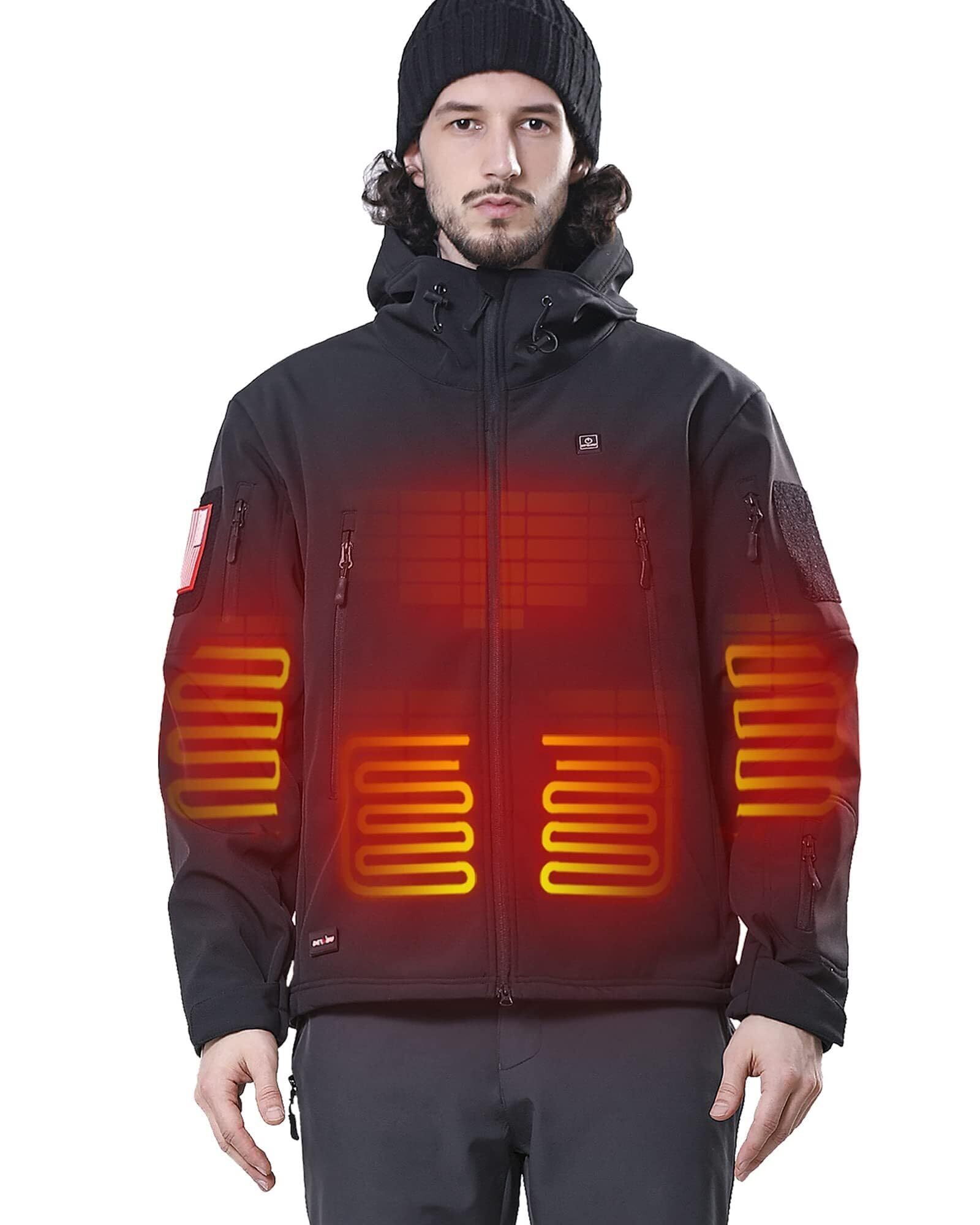
Build quality and heat output are strong selling points, making this a solid choice for cold-weather wear. The price is also reasonable. However, battery life can be short on high heat, and some owners have reported heating elements that stop working after a few uses. If consistent long-term performance is a priority, the top-rated ORORO model offers more dependable battery and heating reliability.
Pros
- Solid build quality for regular use
- Delivers effective warmth in cold weather
Cons
- Battery life can be shorter than expected, especially on high heat settings
- Heating elements may stop working after some months of use
Best for buyers who want good warmth and build at a budget-friendly price and can accept the possibility of battery or heating quirks.
Best for Unisex Lightweight Warmth
Venustas Unisex Heat Jacket

Key Features
- Battery & Charging: Short, charging failures
- Heat Zones: Dual‑control chest/back
- Weather Protection: Water‑resistant
- Fit & Sizing: Sleeves may be tight
- Build Quality: 90% positive
- Price: Mid‑Range
This unisex jacket combines lightweight build with practical dual-zone heat control and a water-resistant outer layer — ideal for cool, dry days. The insulation itself offers decent warmth unpowered. Yet the battery runs down quickly on high settings, and the heating elements may stop functioning over time; these tradeoffs make the jacket a good match for moderate, occasional use rather than daily winter reliance.
Pros
- Lightweight insulation provides warmth even when the heating is off.
- Separate chest and back heating zones let you adjust warmth where needed.
Cons
- Battery life on high heat may not last a full day outdoors.
- Heating elements may cease to produce heat after extended use.
Suitable for those who want a flexible, mid-weight heated jacket for light winter outings, with the understanding that battery life and long-term heating performance have limitations.
Best for Ultra‑budget Mild Cold
OAOA Women’s Heated Jacket

Key Features
- Battery & Charging: Variable, some fast failure
- Heat Zones: Not specified
- Weather Protection: Not specified
- Fit & Sizing: Comfortable fit
- Build Quality: Not specified
- Price: Budget
This jacket warms up quickly and provides comfortable heat for its price point. It’s lightweight and easy to move in, making it a practical choice for casual wear or short outdoor trips in moderately cold weather. However, battery life can vary between units, and occasional interruptions in heating have been noted, so long-term dependability is not yet established. The zipper also requires careful handling to avoid snagging.
Pros
- Affordable price includes battery pack
- Heats up quickly and retains warmth well for its budget-friendly category
Cons
- Battery life may be short in very cold conditions or on high heat settings
- Zipper can be delicate and may need gentle handling
Best for occasional use in mild winter weather when saving money matters more than long-term reliability.
Best for Stylish Moderate Winter
DEWBU Women’s Heated

Key Features
- Battery & Charging: Short, battery failures
- Heat Zones: Not specified
- Weather Protection: Soft shell
- Fit & Sizing: Boxy, sleeves short
- Build Quality: 93% positive quality
- Price: Mid‑Range
This heated jacket offers an appealing design and soft-shell feel that many find comfortable and warm for cold weather. However, battery life may run shorter than expected for extended outdoor work, and the fit can feel boxy for some body types. Additionally, heating elements can stop working after limited use, making it less suitable as a long-term investment. These issues keep it from matching the top-rated women’s option in overall performance.
Pros
- Good quality and attractive design
- Comfortable and warm for cold weather
Cons
- Heating elements can stop working after limited use
For women who prioritize style and comfort over all-day battery life and long-term heating durability, this jacket delivers good value for moderate winter use.
How to Choose
Battery life dictates real‑world usability more than any other spec — plan for a spare if you need more than two hours of high heat.
Battery Life & Charging Reliability
Most heated jackets quote 6–10 hours on low, but high heat drains the battery in under three hours. The actual runtime depends on battery capacity (measured in watt‑hours), heating element efficiency, and outside temperature — cold reduces battery chemistry performance.
Buyers often choose based on advertised runtime, only to find the jacket cold mid‑day. If you plan to use it continuously for work or long outings, budget for a spare battery or a model known for efficient heat distribution.
Heating Zones & Placement
More zones (e.g., 4 vs. 8) don’t automatically mean more warmth — they mean more targeted coverage. Jackets with fewer zones concentrate heat on the core, which is fine for commuting. Eight‑zone jackets distribute warmth to shoulders and arms, better for stationary use where blood flow is low.
Also consider zone control: some jackets let you heat chest separately from back, letting you conserve battery when only one area needs warmth.
Weather Protection
Waterproof and windproof shells add weight and reduce breathability but are essential if you’ll be in snow or rain. A soft shell jacket offers breathability for active use but lets cold drafts through the zipper. The trade‑off: waterproof jackets (like Venustas) handle wet weather but trap sweat, making them less comfortable for high‑output activities.
Fit & Sizing Consistency
Heated jackets vary wildly in fit — ORORO runs small, Venustas runs large, and DEWBU sleeves are often short. Since the battery pack sits in a pocket, a jacket that fits well without the battery can become tight or unbalanced when the pack is inserted. Always check recent fit reviews for your body type, and consider sizing up if you plan to layer.
Build Quality & Durability
The heating elements themselves are generally robust, but failure points are the battery connector, zippers, and the power cord where it exits the jacket. Look for reinforced cord exits and high‑quality zippers. Brands like Milwaukee and ORORO have strong build reputations, but even they see some battery connector failures after months of use.
FAQ
How long does a heated jacket battery last on high?
Most heated jackets deliver between 2 and 3 hours of continuous heat on the highest setting, regardless of brand. Budget models like ANTARCTICA GEAR often drop to 90 minutes. If you need all‑day warmth, plan to carry a spare battery or use a lower heat setting.
Why does my heated jacket battery stop charging after a few months?
This is the most common failure across all brands. The battery management circuit or charging port degrades, especially if the battery is exposed to cold and then charged repeatedly. Avoid draining the battery completely before recharging, and store the battery at room temperature when not in use.
Can I use a power bank instead of the included battery in a heated jacket?
Only if the jacket uses a standard USB‑C or USB‑A input for its battery. Many jackets, like ORORO, accept external USB power banks in place of the proprietary battery. Check the jacket’s port — if it’s a barrel connector or proprietary shape, a standard power bank won’t work.
How do heated jackets compare to regular insulated jackets for warmth?
Heated jackets excel when you’re stationary or in very cold conditions because they actively generate heat. A quality insulated down or synthetic jacket retains body heat but won’t warm you from cold. For active use (skiing, shoveling), a heated jacket can be overkill — you’ll sweat and the battery drains faster.