
This post contains affiliate links. We may earn a small commission when you buy through our links — at no extra cost to you.
A raincoat that can’t handle a steady downpour isn’t just disappointing — it leaves you soaked through in the middle of a commute or a hike. Many jackets labeled "waterproof" lose their resistance after a few wears, or never truly sealed out moisture to begin with. Zippers snag, hoods blow back in the wind, and the fit that looked good online is suddenly impossible to layer over a sweatshirt.
Choosing the right raincoat means matching the technology to how you actually use it. Lightweight packable shells save space but can’t match the durability of a seam-sealed workhorse. A poncho covers both you and your backpack, yet turns into a sail on a gusty day. The difference between staying dry and getting drenched often comes down to a few specific features: a stiffened brim, taped seams, and a reliable DWR coating that doesn’t wash away after a single season.
This guide separates the jackets that hold up from the ones that fold. Whether you need a daily commuter, a backpacking poncho, or an ultralight travel backup, you’ll find a recommendation that fits your activity — and your tolerance for a little wind.


Best for Commuting, Hiking
Columbia Watertight II
The fully seam-sealed nylon shell repels water hour after hour, while the adjustable hood and brim keep it off your face without blocking peripheral vision. Even in persistent downpours, the interior stays dry thanks to a polyester lining that prevents clamminess. The jacket packs into its own hand pocket—no stuff sack required—making it an effortless travel companion that frees up bag space.
It fits right in for commutes, weekend hikes, and unpredictable spring weather. The relaxed cut layers comfortably over a sweater, but high-output runners or cyclists will miss pit zips when body heat builds up. For anyone prioritizing no-fuss rain protection over athletic ventilation, the Watertight II delivers where it counts.
Pros
- Fully seam-sealed Omni-Tech construction keeps you dry in sustained rain.
- Lightweight nylon shell packs into its own pocket for easy travel.
- Durable materials and stitching stand up to regular use without premature wear.
Cons
- Sizing can run slightly large; order down if between sizes.
For everyday rain protection that packs small and shrugs off downpours year after year, the Watertight II remains the jacket to beat.
Best for Backpackers
ANYOO Rain Poncho
The roomy cut and tarp-conversion grommets set this poncho apart from other budget options. Waterproof fabric holds up in steady rain, and the whole thing packs down small for stashing in a glovebox or daypack.
Backpackers and budget travelers who need full pack coverage without a jacket will find this a practical choice. It’s not a fitted raincoat — the poncho can billow in gusty wind, and the hood opening feels restrictive without a baseball cap. At this price, it’s a low-risk emergency layer for a car or backpack.
Pros
- Keeps you dry in heavy rain, holding up through prolonged downpours
- Roomy cut slips over a backpack without restricting arm movement
- Packs down small into its own pouch for easy storage
Cons
- Hood opening can feel tight around the neck without a baseball cap underneath
- Snaps and Velcro attachments may show premature wear with regular use
If you need a rain layer that covers a backpack and can double as a tarp, the ANYOO poncho delivers — just bring a cap to handle the hood and avoid blustery days.
Best for Runners, Cyclists
baleaf Rain Jacket
Reflective strips across the chest and back, along with an articulated athletic cut, distinguish this jacket from basic packable designs that settle for a single reflective zipper. The lightweight polyester/polyurethane shell sheds moderate showers during a run or cycle commute, moving with you rather than catching the wind. Sustained heavy rain pushes past the fabric after extended exposure, so it’s not a substitute for a full storm shell. The trim fit suits runners and cyclists who don’t want excess material, but it runs snug — size up if you plan to wear a midlayer. This is the right pick for active users needing a breathable, packable layer for fleeting rain, not all-day downpours.
Pros
- Stays breathable and doesn’t overheat during high-exertion runs or rides in light to moderate rain.
- Keeps you dry through intermittent showers and drizzly commutes.
- Packs down easily into its own pocket for grab-and-go portability.
Cons
- The slim athletic cut can feel restrictive for broader builds; sizing up is needed for layering comfort.
- Water eventually penetrates in prolonged heavy rain — this is a light- to moderate-rain shell, not a storm jacket.
For runners, cyclists, and active commuters who need a lightweight shell for light to moderate rain, this jacket delivers — just size up and keep a hardshell for true deluges.
Best for Hikers, Backpackers
North Face Antora
The Antora’s fully seam-sealed DryVent fabric delivers waterproofing that holds up in sustained heavy rain and high-output hiking. It’s a focused shell built for wet trail work, not casual city wear — no internal insulation means you control warmth with your layers, but it won’t add any heat on its own. Sizing can run small, so those planning to layer a fleece or puffy underneath should size up. The premium materials and wind-blocking build justify the price for hikers who need a no-compromise rain jacket, though it lacks the packability and budget-consciousness of the top pick in this category.
Pros
- Fully seam-sealed DryVent fabric keeps you dry even in heavy, sustained rain.
- Strong wind resistance and high-quality construction for demanding outdoor use.
- Adjustable, stowable hood adds versatility and easy storm deployment.
Cons
- Sizing can run small, especially if you plan to wear thicker layers underneath.
- No insulating lining means the jacket provides zero warmth on its own — you’ll need a midlayer in cold conditions.
A no-compromise rain shell for hikers who demand trustworthy wet-weather performance and are happy to layer underneath — the premium price reflects that specialist role.
Best for Travel Backup
33,000ft Rain Jacket
At 10.9 ounces, this jacket stuffs into its own palm-sized pouch — an effortless addition to a daypack or carry-on when the forecast is uncertain. It’s an emergency layer, not a heavy-duty daily shell, aimed at travelers and light outdoor activities.
Travelers and day-hikers will appreciate the just-in-case protection, but daily commuters in rainy climates will find durability lacking. Seams can tear with rough use, and water resistance diminishes over time, so this is a backup, not a front-line raincoat for sustained wet weather.
Pros
- Exceptional packability — fits into a tiny storage pouch for effortless travel packing.
- Lightweight and comfortable for all-day wear in mild rain.
- Great value for an emergency rain layer you can stash anywhere.
Cons
- Water resistance can fade after extended use, making it less effective in sustained rain.
- Seams may tear under heavy stress or rough treatment.
The right pick for travelers who need a just-in-case layer; just don’t expect it to replace a full-time raincoat.
Best for Style-Conscious Commuters
Tommy Hilfiger Rain Jacket
The Tommy Hilfiger hooded jacket brings a tailored, stylish silhouette that stands apart from boxy technical shells. An adjustable hood and drawcord waist refine the fit, and the lightweight polyester sheds light rain for dry commutes. It’s aimed at style-conscious city dwellers who need a sharp-looking layer for casual outings and occasional showers. Tradeoffs: the zipper may give out prematurely in some cases, and there are no interior pockets — pack a small bag for valuables if that matters.
Pros
- Sharp enough for a steakhouse dinner or semi-formal office wear
- Sheds rain during short walks and light showers
- Featherlight feel makes it easy to wear all day
Cons
- No interior pockets for storing wallet, phone, or keys
- Zipper may fail prematurely; occasional separation or jamming noted
For style-first commuters who face occasional showers, this jacket delivers a sharp look and enough protection — just don’t expect expedition-grade durability or deep storage.
Best for Camping, Festivals
PTEROMY Rain Poncho

Lightweight and compact, this poncho transforms into a tarp via grommets, with a roomy cut over a pack. Waterproofing is adequate but not best-in-class; the hood flops without a cap and wind catches the open shape. It’s a handy backup shelter for campers and festival-goers, less suited for daily windy commutes.
Pros
- Doubles as a tarp with grommets — adds shelter utility for campers.
- Roomy fit slides over layers and a backpack, with a convenient front pocket.
Cons
- Hood brim flops without a baseball cap — workable for short walks, annoying in steady rain.
If your priority is pack coverage and shelter versatility on backcountry trips where wind is manageable, this poncho earns its place — not for everyday urban commuting.
Best for Sailors, Professionals
HH Seven J Jacket

The Helly Hansen Seven J Jacket is a waterproof nylon shell built for serious outdoor work and sailing. First-rate materials and seam-sealed construction shrug off heavy rain and wind. The active fit runs slim and the jacket lacks a self-stow feature, making it less practical for casual everyday wear or travel. This is a purpose-built tool, not a grab-and-go raincoat.
Pros
- Fully waterproof and windproof construction keeps you dry in sustained downpours.
- Superb craftsmanship with premium materials for long-term durability.
Cons
- Active fit runs small — size up if you plan to layer underneath.
For sailors and outdoor professionals who need uncompromising weather protection, this jacket is a long-lasting investment. Casual everyday users will find it overbuilt and less packable.
Best for Light Hiking, Commutes
OTU Rain Jacket

The OTU Rain Jacket is a lightweight polyester shell with a comfortable fit that layers easily over a hoodie. It breathes well during mild spring and summer showers. However, the waterproofing isn’t built for sustained downpours, and the hood can blow off in wind. For casual dog walks and commutes in light rain, it’s a solid low-cost choice.
Pros
- Comfortable fit with room to layer underneath
- Lightweight, breathable, and easy to pack for mild weather
Cons
- Water may seep through in heavy rain and the oversized hood can blow off in gusts
For light rain in mild climates and casual walks, it’s a comfortable, affordable layer — but don’t expect it to replace a seam-sealed shell.
Best for Travel Backup, Drizzle
Columbia Glennaker Lake

The Glennaker Lake packs into its own chest pocket with a stow-away hood — a handy travel layer for light showers. Waterproofing is less consistent than the seam-sealed Watertight II, and the relaxed cut runs large with a hood that lacks a securing cinch. For drizzly commutes, it’s a practical, affordable choice, but sustained rain exposes its limits.
Pros
- Lightweight, packable design stows into its own chest pocket for grab-and-go travel.
- Keeps you dry in showers and light rain, holding up for everyday commutes and errands.
Cons
- Waterproofing can fall short in extended downpours; fabric may wet out after prolonged exposure.
For light-rain commutes and packable travel protection, the Glennaker Lake gets the job done. Those expecting sustained rain should consider the fully seam-sealed Watertight II instead.
Best for Tall Men, Backpackers
SaphiRose Poncho

The oversized cut covers tall torsos and a backpack, while the snap sides and included pouch make it handy for park days and commuting. Sleeves can be short for longer arms, and the snaps are stiff to fasten, which may be a nuisance if you need quick removal.
Pros
- Oversized fit covers tall people and backpacks
- Portable with included pouch
Cons
For tall men who need a quick rain cover over a backpack, this poncho’s oversized cut and packable design make sense for casual park or commute days.
Best for Windbreaker, Light Rain
Columbia Glennaker II

This nylon windbreaker packs into its own pocket and blocks wind effectively for casual walks and travel. The stow-away hood adds convenience. However, it only provides water resistance — steady rain will soak through, and the fit runs large and baggy. It’s a low-cost layer for breezy, misty days, not a true raincoat.
Pros
- Packable design stuffs into its own pocket for easy travel.
- Blocks wind effectively for cool-weather walks and commutes.
Cons
- Water-resistant only — heavy rain will penetrate; not a substitute for a seam-sealed raincoat.
A budget travel windbreaker for light moisture, but anyone needing waterproof protection for everyday outdoor use should look to a seam-sealed jacket.
Best for Night Visibility, Cyclists
APEXUP Rain Jacket
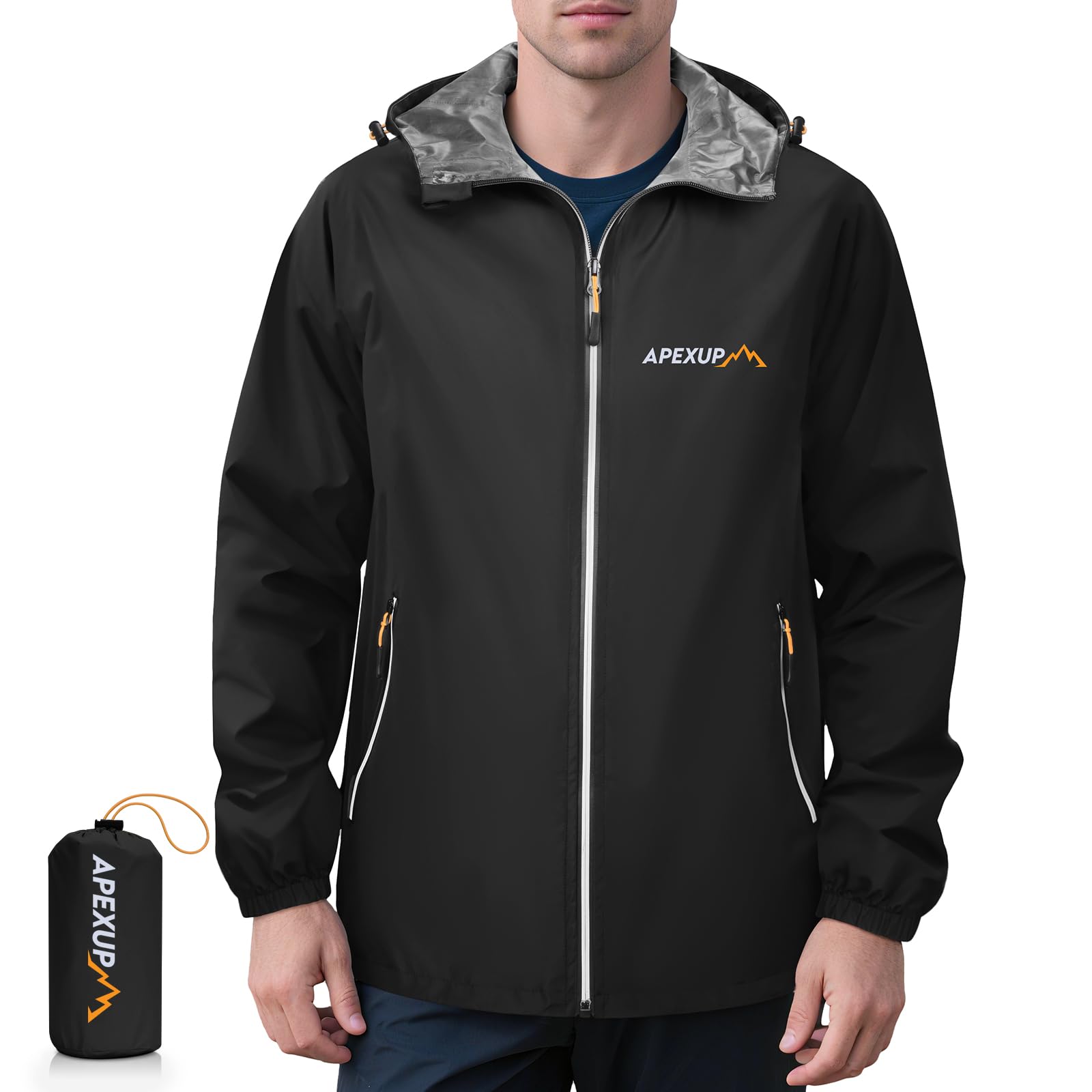
Lightweight and packable, this jacket includes a reflective zipper that improves visibility for evening cyclists. The waterproof coating handles moderate rain, but repacking into its storage pouch requires patience, and the zipper may catch occasionally. A budget-friendly option for travelers who need emergency rain gear and don’t mind a bit of fidgeting to stow it away.
Pros
- Lightweight and easily packable for travel or daily carry
- Reflective zipper enhances visibility for safety at night
Cons
- Repacking into the storage pouch can be fussy
Best for cyclists and budget travelers who value visibility over quick stowage — the reflective zipper is a genuine safety plus, but plan for a few extra seconds to fold it back into its pouch.
How to Choose
The most critical factor in a men’s raincoat is whether it uses seam-sealed construction and a durable water repellent (DWR) coating, because many jackets labeled ‘waterproof’ only resist light moisture.
Waterproofing: Seam-Sealed vs. Water-Resistant
Seam-sealed jackets have tape welded over every stitch hole, creating a physical barrier that prevents water from seeping through. Water-resistant coatings, on the other hand, only cause light rain to bead on the surface and tend to wear off after a handful of washes or abrasion from a backpack.
For daily commuting or hiking in steady rain, insist on fully seam-sealed construction. For occasional drizzle or as a backup layer in a daypack, a water-resistant shell can work — but expect to reapply a DWR spray every few months.
Hoods That Stay Put in Wind
A hood that doesn’t cinch down will blow open in a crosswind, funneling rain onto your face. Look for at least two points of adjustment: a drawcord at the face opening and a volume reducer at the back of the head. A stiffened brim channels water away from your eyes instead of letting it drip down.
If you cycle or walk against the wind regularly, a hood without a brim or tightening mechanism becomes nearly useless. A poncho’s hood can be supplemented with a baseball cap, but a jacket with an engineered storm hood will outperform it in gusty conditions.
Packability: When a Jacket Needs to Disappear
A jacket that stuffs into its own pocket or a tiny pouch saves precious room in a carry-on or trail bag. However, the ultralight fabrics that make deep packability possible often trade away durability — thinner face fabrics can tear if snagged on branches or repeatedly rubbed by a shoulder strap.
Frequent travelers and day-hikers benefit most from a self-stowing shell. If you wear your raincoat daily around town, you’ll likely get more miles out of a non-packable jacket with a tougher exterior, even though it takes up more space.
Balancing Weight, Breathability, and Protection
Lightweight 2-layer shells rarely include pit zips or mesh ventilation panels, so heat and sweat build up quickly during a brisk uphill climb. More breathable membranes like Gore-Tex actively move moisture out, but you’ll pay a premium for that technology.
For running or cycling, prioritize a jacket with back vents or zippered underarm openings. Casual walkers and commuters can get by with a simple shell and just layer underneath — the weight difference on a short trip won’t outweigh the risk of overheating.
Getting the Right Fit for Layering
Sizing across brands is wildly inconsistent. Some label their cut as “active” meaning trimmer in the torso, while others bill “regular” fit but measure two inches too short in the sleeves. Relying on the size chart alone is a gamble.
Always scan recent reviews for notes on sleeve length and shoulder room, especially if you plan to wear a fleece or suit jacket underneath. Order up if you’re between sizes and need to layer — a raincoat that pulls tight across the back restricts movement and can compromise the waterproof membrane over time.
FAQ
Is a rain poncho or a rain jacket better for hiking with a backpack?
A poncho covers both you and your pack in one sweep, keeping your gear dry and letting air circulate underneath. The trade-off is wind performance — ponchos flap and lift in a breeze unless you add a belt. A jacket leaves the backpack exposed but gives you a closer fit and better control in gusty conditions.
Why does my rain jacket leak after a few months of use?
The DWR coating that makes water bead on the surface wears off from abrasion and washing. Once the face fabric absorbs moisture, breathability plummets and you feel damp inside. Restore the DWR with a spray-on or wash-in treatment every season, and wash the jacket with a technical cleaner that won’t clog the membrane pores.
What does ‘fully seam-sealed’ mean and why does it matter for a raincoat?
Fully seam-sealed means every needle hole along the zippers, pockets, and panels is covered with waterproof tape, preventing water from sneaking through. Without it, even a highly waterproof fabric leaks at the stitches during persistent rain. For all-day storms, this is the single most important specification to look for.
Can you machine wash a waterproof rain jacket without ruining it?
Yes, but only with a mild, additive-free detergent and the gentlest cycle. Fabric softeners and regular laundry soap leave residues that clog the membrane and strip the DWR. After washing, tumble dry on low heat to reactivate the DWR coating — the warmth helps re-bond the water-repellent polymers to the fabric.