
This post contains affiliate links. We may earn a small commission when you buy through our links — at no extra cost to you.
Many heated vest buyers discover the hard way that advertised battery life rarely matches real-world use. A vest that promises eight hours on high might deliver two before the battery dies. That gap between marketing and lived experience is the biggest frustration in this category.
But the right vest for you depends on how and where you’ll use it. A commuter needing an hour of warmth has different needs than a hunter spending all day in the field. This guide cuts through the battery hype to match your actual use case with a vest that delivers on its promise.
We focus on fit, real-world heat output, and which vests hold up over time – so you can stay warm without the guessing game.



Best for Daily Cold Weather
ORORO Men’s Lightweight Puffer
Key Features
- Heating Zones: 3 (chest, back, neck)
- Fit Notes: Runs small – size up
- Material: Lightweight puffer
- Battery Included: Yes (USB-C)
- Price: $$
The ORORO puffer reaches temperature quickly and feels noticeably lighter than most heated vests. The three heating zones (chest, back, neck) cover the core well, and the neck warmer adds comfort during longer wear. Build quality is solid – zippers and stitching hold up to regular use, and the fabric resists wind well enough for everyday commuting.
Fit runs snug, especially around the waist, so ordering up one size is worth doing unless you prefer a trim cut. Battery life on high is roughly 2–3 hours – enough for a commute or a round of golf, but plan for a spare if you need full-day outdoor use. On low you get around 6 hours, though some units have shown capacity loss over time. This vest suits men who want a proven, no-surprises heated layer for moderate cold and occasional extended outings.
Pros
- Heats up fast and keeps core warm in below-freezing conditions.
- Sturdy stitching, smooth zippers, and fabric that holds up to daily wear.
- Neck warmer and lightweight build make it comfortable for hours at a time.
Cons
- Sizing runs small; ordering up is advisable for a comfortable fit around the waist.
- Battery life on high is limited to a couple of hours; some units may lose capacity over time.
A well-built, fast-heating vest that does what it says – just account for the snug fit and moderate battery runtime, and it’ll serve you well for daily commutes or weekend activities.
Best for Extreme Cold
ORORO Women’s Down
Key Features
- Heating Zones: 3 (neck, back, pockets)
- Fit Notes: Runs slim – size up
- Material: 800-fill down
- Battery Included: Yes (USB-C)
- Price: $$$
The 800-fill down insulation provides passive warmth, so the vest retains heat even when the heating elements are off — a real advantage in severe cold. A detachable hood and streamlined puffer styling give it a look that fits both outdoor errands and casual office wear. The vest targets women who want maximum warmth without relying solely on battery power, but the slim cut can feel snug with the battery in the pocket; sizing up accommodates layering. Battery life on the highest setting runs about four hours, adequate for commuting but not all-day exposure.
Pros
- Down insulation alone keeps you warm even when the battery is drained or forgotten.
- Stylish puffer design with a detachable hood that works for both casual and semi-formal settings.
Cons
- Battery life on the highest heat setting is around four hours — enough for short trips but not a full day outdoors.
For women who need a vest that functions as both an insulated layer and a heated garment in severe cold, this premium option delivers — just be prepared to size up and manage battery runtime.
Best for Outdoor Sports
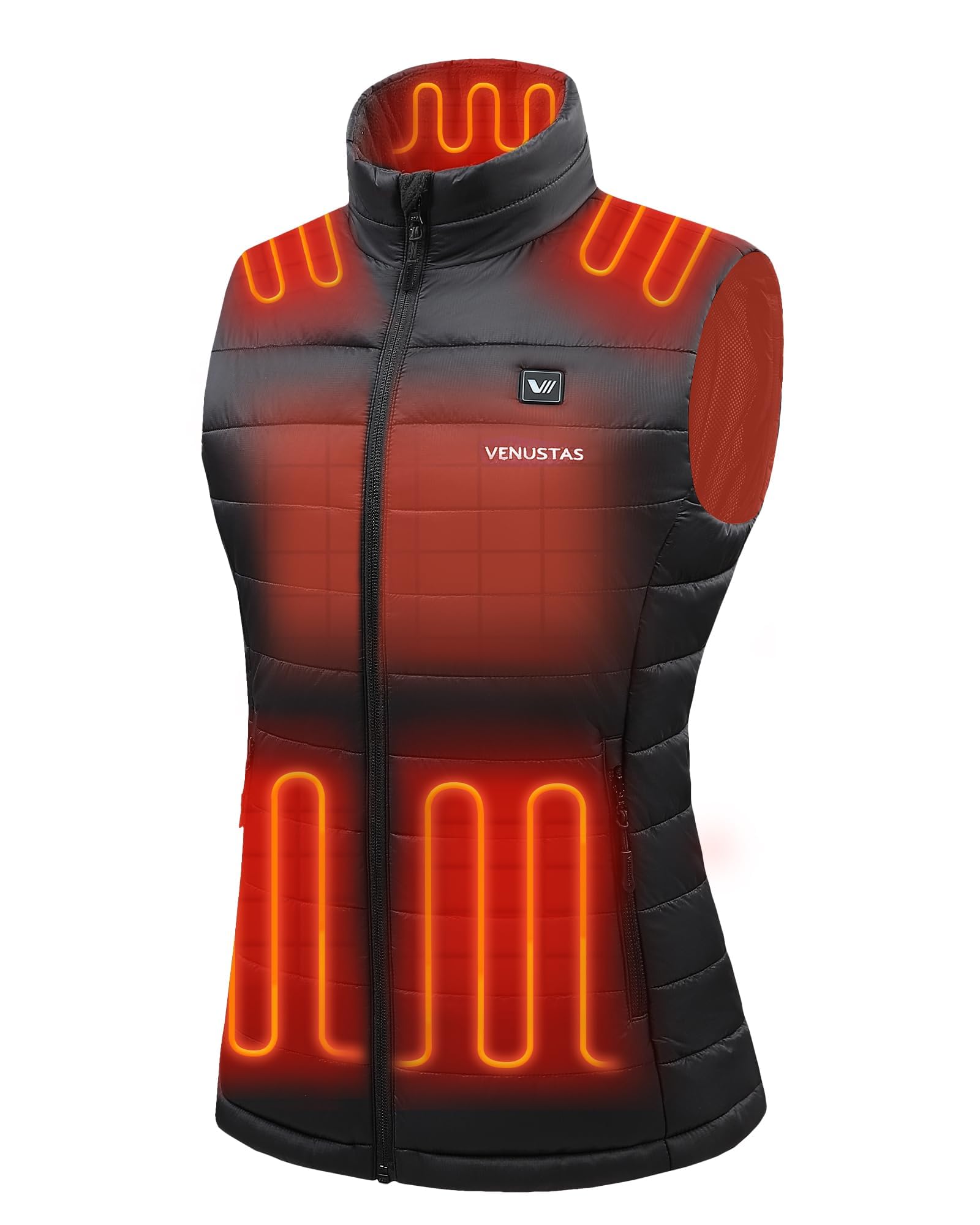
Venustas Women’s Quilted
Key Features
- Heating Zones: 3 (neck, pockets, back)
- Fit Notes: True to size
- Material: Quilted
- Battery Included: Yes
- Price: $$$
The Venustas women’s quilted vest stands out for its material quality and tailored fit — the quilting holds its shape, and three heating zones (neck, pockets, back) distribute warmth evenly. It layers easily over a sweatshirt and feels substantial without being bulky, making it a solid companion for hiking or golf in cold weather.
This vest suits women who value build quality and a polished look for outdoor sports, but the battery performance is a known tradeoff. Run time on high can be shorter than expected, and some units may develop heating issues after months of use. Buyers comfortable managing charging and possibly carrying a spare battery will get good use out of it.
Pros
- Quilted construction with durable fabric holds up well in cold conditions.
- Comfortable fit that layers easily over midweight tops.
- Three heating zones provide balanced warmth for outdoor activities.
Cons
- Battery life on high can be shorter than the advertised window — expect 2–3 hours.
- Heating elements may stop working in a small number of vests over several months.
A well-made quilted heated vest for women who care about construction and fit, provided you’re willing to treat battery life as a planning factor rather than a set-it-and-forget feature.
Best for Hunting, Outdoor Work
Venustas Men’s Quilted
Key Features
- Heating Zones: 3 (neck, back, pockets)
- Fit Notes: True to size
- Material: Quilted
- Battery Included: Yes
- Price: $$$
The Venustas Men’s Quilted Heated Vest stands apart from the top pick with its stitched quilted shell and slightly thicker insulation, built for durability and warmth during hunting or cold-weather work. It heats quickly and fits well under a jacket. This vest suits men who want a reliable heated layer for active outdoor use and can accept that the included battery delivers roughly 2-3 hours on high – enough for a morning or afternoon shift, but not full-day continuous use.
Pros
- Heats quickly and provides warmth even in single-digit temperatures.
- Sturdy quilted construction holds up to repeated outdoor use.
- Tailored fit allows layering without feeling bulky.
Cons
- Battery life on high can be 2-3 hours, which may fall short for extended outings.
- In some cases, heating elements may fail after extended use, requiring replacement.
A solid choice for men who need a warm, well-fitting heated vest for outdoor work or hunting and can manage the battery limitation by carrying a spare.
Best for Budget Short Use
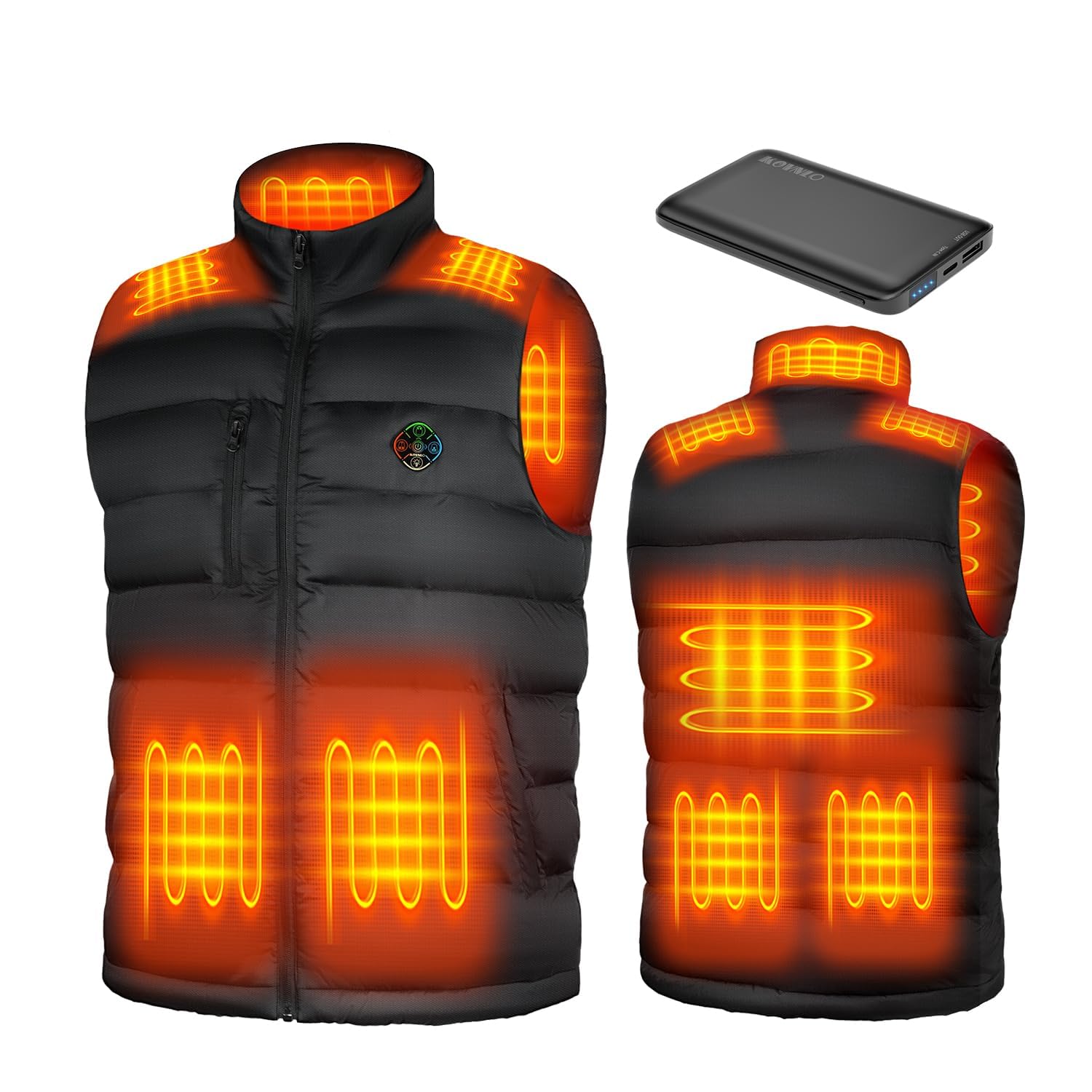
KOVNLO Men’s Budget
Key Features
- Heating Zones: 3 (neck, back, chest)
- Fit Notes: Runs very small – order up
- Material: Fleece
- Battery Included: Yes
- Price: $
The KOVNLO Heated Vest delivers heat within moments of turning it on, and its lightweight build layers easily under a coat – all at a budget-friendly price. Compared to the top pick, this vest costs noticeably less but comes with two tradeoffs: the sizing runs small (order at least one size up) and the battery lasts about 1–2 hours on high, making it best for short commutes or brief outdoor chores rather than all-day use.
Pros
- Heats up quickly and provides decent warmth for the cost.
- Lightweight design layers comfortably without adding bulk.
Cons
A functional entry-level vest for short outdoor stints, provided you order a size up and manage battery expectations.
Best for All-Day Outdoor
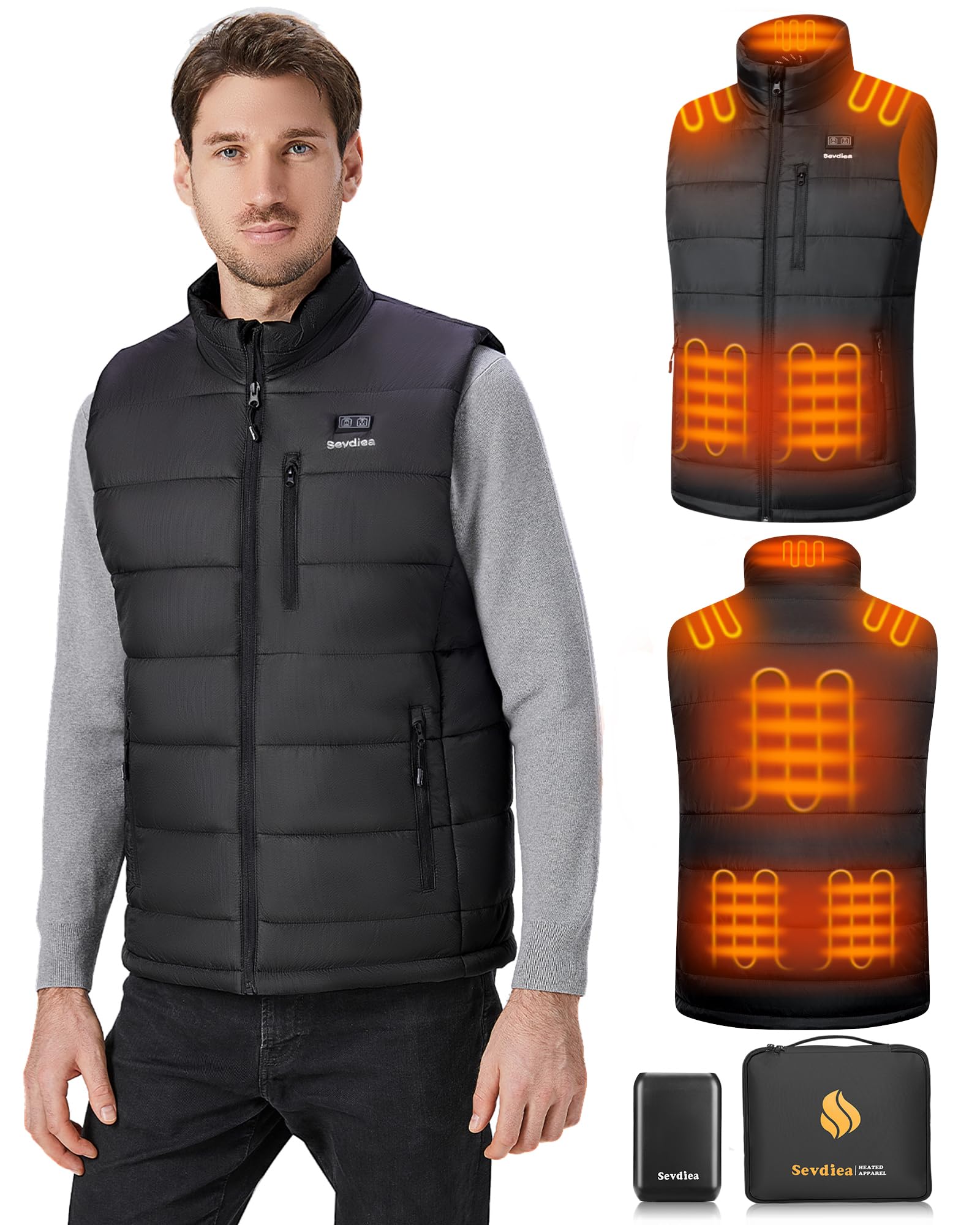
Sevdiea Men’s High-Capacity
Key Features
- Heating Zones: 8 (abdomen, neck, waist, back)
- Fit Notes: True to size
- Material: Polyester shell
- Battery Included: Yes (16000mAh)
- Price: $$
The Sevdiea vest heats up in seconds and its included 16000mAh battery delivers 6-8 hours on low — ideal for all-day outdoor use. On high, however, the battery drains in 2-3 hours, and the power button can be pressed accidentally through a jacket. The large battery adds noticeable bulk, so this works best when warmth matters more than a slim profile.
Pros
- Heats up in seconds with strong heat output
- Included 16000mAh 7.4V battery lasts 6-8 hours on low
Cons
- Battery on high lasts only 2-3 hours, shorter than advertised
Best for long outdoor days on low or medium heat, where the battery capacity and fast warmth outshine the high-mode runtime and bulk.
Best for Custom Fit
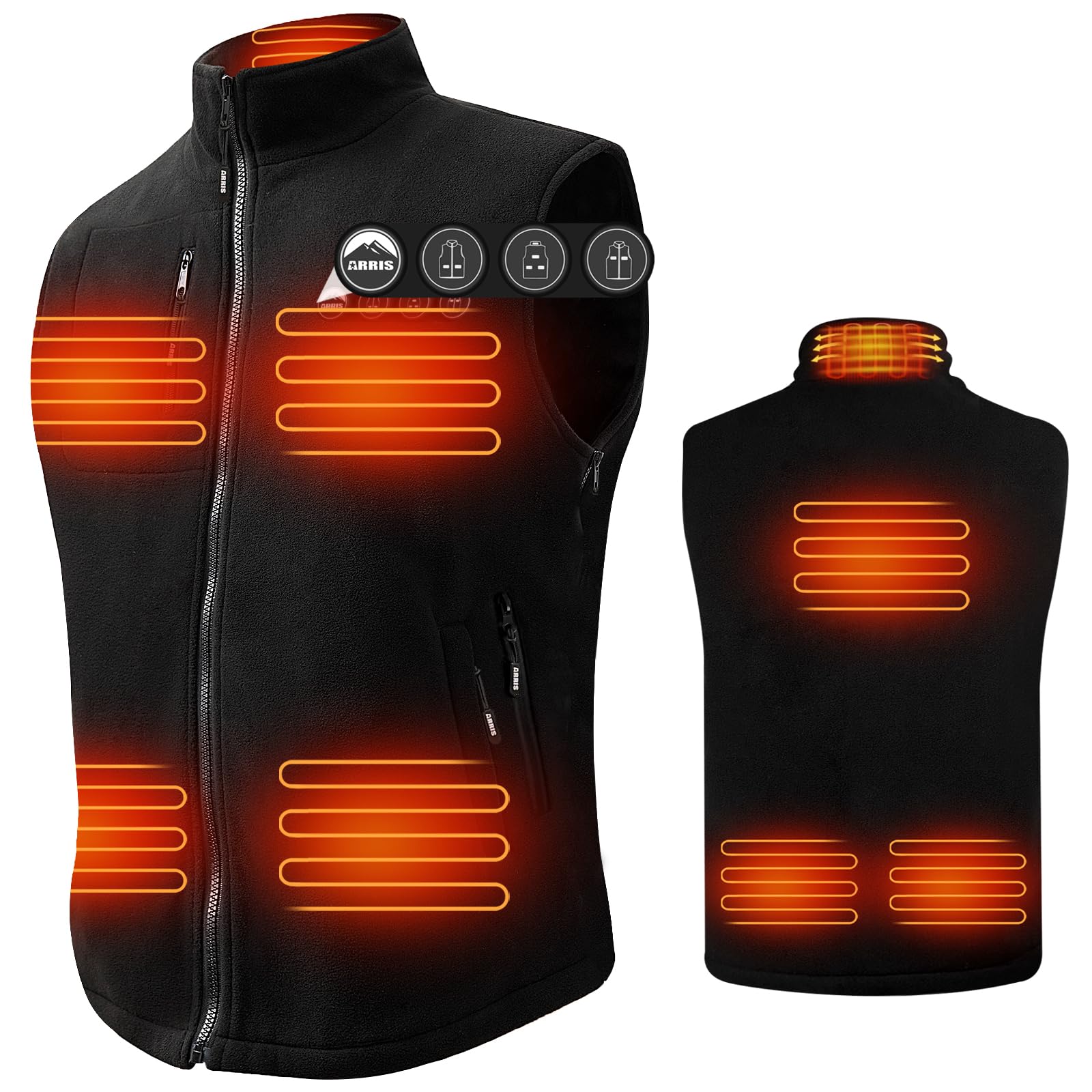
ARRIS Men’s Adjustable
Key Features
- Heating Zones: 8 (3 independent zones)
- Fit Notes: Adjustable side panels
- Material: Fleece
- Battery Included: Yes (LiPo)
- Price: $$
This fleece vest delivers eight heating zones across three independently controlled areas, with side panels that adjust the fit for different body shapes or layering needs. The lithium polymer battery provides adequate warmth below freezing, but run time varies and recharging is slow — a tradeoff for the unique adjustability. It is best suited for hunters or anyone whose build doesn’t fit off-the-shelf sizes; for general use, longer battery life elsewhere makes more sense.
Pros
- Removable side panels let you adjust the fit for different layers or body shapes.
- Eight heating zones with three independent controls target warmth precisely where needed.
Cons
- Battery run time can be short on higher heat settings, and recharging takes several hours.
This vest works well for men who need a custom fit for hunting or layering, but be prepared to manage battery charging for full-day use.
Best for Budget Women
KOVNLO Women’s with Battery
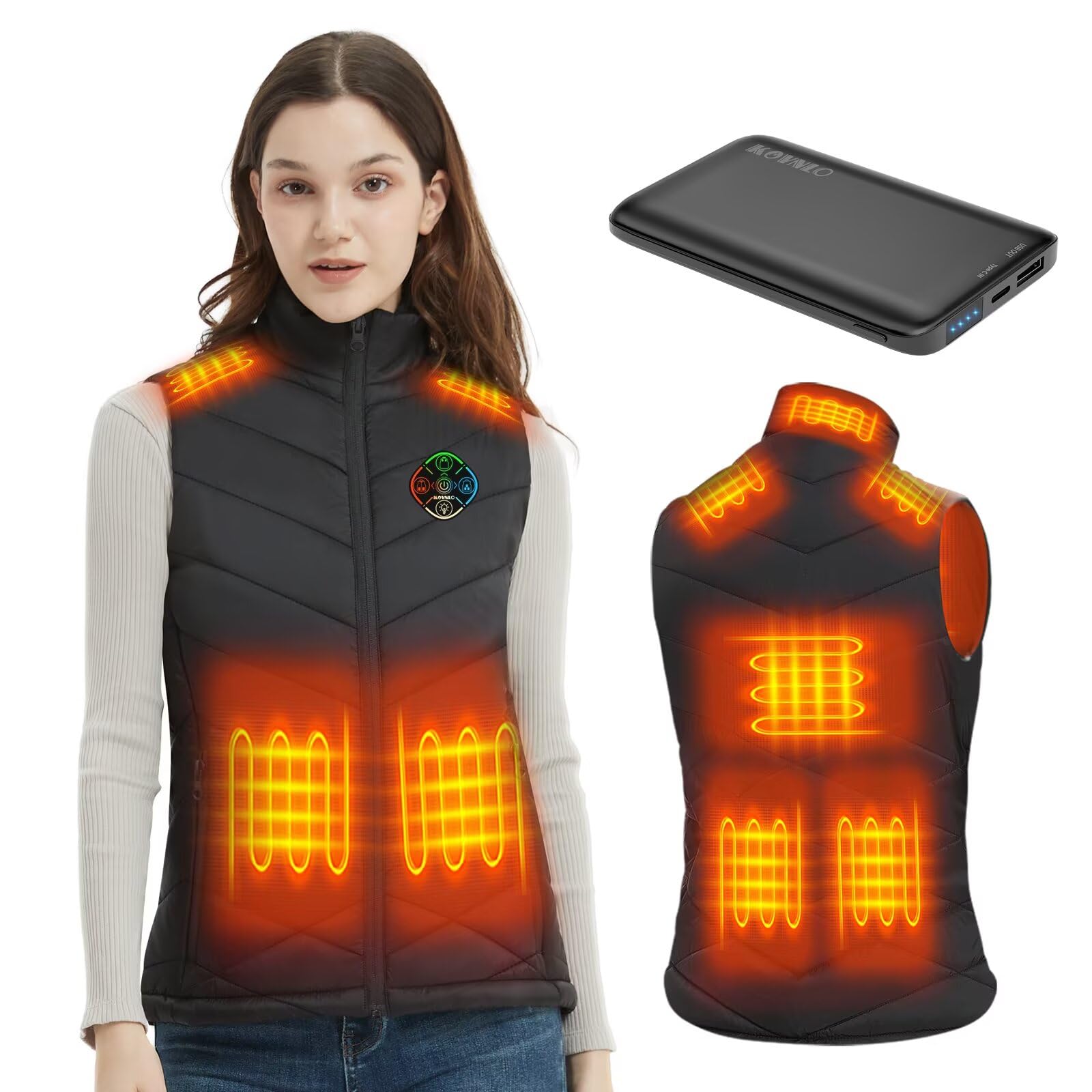
Key Features
- Heating Zones: 3 (chest, back, neck)
- Fit Notes: True to size
- Battery Included: Yes
- Price: $
This vest uses sturdy construction and a comfortable cut that layers well under outerwear. It heats up quickly across chest, back, and neck for short walks or golf. The tradeoff: battery runtime on high can drop to 1–2 hours, and some packs may not hold a full charge. For women needing a low-cost entry into heated clothing with battery included, this works – just plan for shorter sessions or a spare battery.
Pros
- Well-constructed for a budget vest with a comfortable fit under coats.
- Heats up quickly across chest, back, and neck for outdoor activities.
Cons
- Battery life on high may be limited to 1–2 hours; some packs can lose capacity over time.
For short outdoor errands or layering on extra-cold days, this vest provides good warmth at a low price – just consider an extra battery for longer use.
How to Choose
The most important thing to know about heated vests is that battery life on high is typically 2-3 hours, not the 8 hours advertised – plan your use accordingly.
Heating Zones and Coverage
Most heated vests offer 3 to 4 heating zones: usually the chest, back, and neck. Some add a collar or lower back zone. More zones can distribute heat more evenly, but they also increase battery drain.
If you primarily need core warmth (for commuting or casual wear), 3 zones suffice. For activities like hunting where you’re stationary in the cold, extra zones on the collar or lower back make a noticeable difference.
Battery Capacity and Claimed Runtime
The advertised runtime (often 6-8 hours) is almost always measured on the lowest heat setting in a controlled environment. On high, expect 2-4 hours from most included batteries. A vest with a higher voltage battery (e.g., 7.4V) may heat faster but drain quicker.
If you need all-day warmth, look for vests that use standard USB-C batteries so you can swap in a power bank. Some models, like the Sevdiea, include a large 16000mAh battery that extends runtime on low to 6-8 hours.
Fit and Sizing
Heated vests are almost always cut slim to hold heating elements close to the body. That means many run small. The most common buyer regret is not ordering up one or two sizes. Check the size chart and measure your chest and waist.
A vest that’s too tight will feel restrictive and compress insulation; one that’s too loose won’t transfer heat efficiently. If you plan to layer over a thick sweater or under a coat, size up accordingly.
Material and Insulation
Materials range from lightweight puffer (nylon shell) to fleece to quilted fabric. Down insulation provides passive warmth even when the battery dies, but adds bulk and cost. Fleece vests are softer and more breathable but less wind-resistant.
Puffer and quilted styles offer better wind protection and a more structured look. For outdoor use in wet conditions, look for a water-resistant shell – though no heated vest is fully waterproof.
Included Battery vs Sold Separately
Some vests come without a battery, which lowers the upfront cost. However, you’ll need to buy a compatible power bank. The total cost often ends up similar to a vest that includes a battery. For first-time buyers, a vest with a battery included is simpler.
If you already own a USB power bank, a battery-less vest can be a smart way to reduce waste and use your existing gear. Just check the voltage and connector compatibility – most use 5V USB but some require 7.4V.
FAQ
Why does my heated vest only last 2 hours on high when it says 8?
Advertised runtime is measured on the lowest heat setting in a controlled lab environment. On high, the battery drains much faster. Most vests deliver 2-3 hours on high, 4-6 on medium, and 6-8 on low. For longer use, carry a spare battery or use a power bank.
Can I use any power bank with a heated vest?
Most heated vests use a standard 5V USB input, so any power bank works. However, some vests (like the Sevdiea) have a 7.4V battery – those require a matching voltage power bank or a specific replacement. Always check the vest’s voltage before buying a spare.
How do I wash a heated vest without damaging the battery?
Always remove the battery before washing. Most vests can be machine washed on a gentle cycle in cold water, then hung to dry. Do not use bleach or fabric softener, and never put the battery in the washing machine. Check the care label – some down vests require dry cleaning.
Do heated vests actually keep you warm in freezing weather?
Yes, but they are not a replacement for a proper winter coat. A heated vest adds supplemental warmth to your core, allowing you to wear a lighter jacket. In subzero temperatures, combine it with a warm base layer and an insulated outer coat for best results.