
This post contains affiliate links. We may earn a small commission when you buy through our links — at no extra cost to you.
Waterproof gloves are one of those categories where the label often promises more than the product delivers. Many rely on surface coatings that wear off quickly, leaving you with wet hands in slush or rain.
The real difference comes down to construction: latex-dipped gloves create a true seal, while fabric membranes vary widely in reliability. This guide focuses on the specific build details that determine whether a glove will hold up to wet conditions, so you can match the right type to your activity.




Best for Everyday Winter Use
Carhartt Insulated Knit Cuff
Thousands of buyers confirm this glove delivers reliable warmth for shoveling and daily commutes in dry winter conditions. Build quality holds up for regular use, and the price makes it an easy choice for a budget-friendly winter essential.
The warmth is the standout feature, but waterproofing is inconsistent. In light snow, hands stay dry; in slush or prolonged wet snow, moisture can seep through. Sizing also runs small, so trying a size up is common advice.
Best suited for buyers in dry cold climates who prioritize warmth and everyday durability over waterproof performance. Not ideal for rain, slush, or extended wet work where a sealed membrane is needed.
Pros
- Exceptional warmth for cold weather
- Solid build quality and durability for general use
- Good value given the warmth and brand reputation
Cons
- Fit runs small; ordering one size up is recommended for a proper fit
- Waterproofing can be unreliable during extended snow or slush – best for light, dry snow
If your winter routine involves shoveling dry snow and commuting in cold, dry air, this glove delivers reliable warmth at a fair price – just don’t expect it to hold up in heavy wet weather.
Best for Wet Work Tasks
toolant Waterproof Work Gloves
Key Features
- Waterproof Type: Double latex dip
- Insulation: Brushed fleece
- Cuff Design: Velcro & PU skirt
- Price: $
The toolant Work Gloves double latex dip creates a true waterproof barrier that keeps hands dry in rain, slush, and wet cleaning tasks. The brushed fleece lining offers minimal warmth, so sub-freezing conditions will leave fingers cold without liner gloves underneath.
The textured palm provides a solid grip on wet tools and ropes, and the touchscreen-capable fingertips work for quick phone checks. Durability inconsistencies have been noted—some pairs may develop seam tears after limited use, so inspect carefully for heavy-duty needs.
This glove suits anyone who prioritizes dry hands over warm hands: fishing, gardening, and wet work above 32°F. For freezer or winter sports, add thin liner gloves or consider a warmer option. The Velcro cuff with PU skirt keeps water out effectively.
Pros
- Double latex dip keeps hands fully dry in wet conditions
- Silicone palm pattern provides reliable grip on slippery surfaces
- Durable construction holds up for repeated wet work sessions
Cons
- Seam or material failure can occur after limited use in some cases
- Below freezing, the insulation is insufficient – wear liner gloves underneath for warmth
For wet work above freezing, the toolant gloves are a budget-friendly waterproof solution. If warmth is needed, add liners or choose the top pick.
Best for Extreme Cold Work
SHOWA TEMRES 282
Key Features
- Waterproof Type: TEMRES liquid-proof
- Insulation: Acrylic fleece -58°F
- Cuff Design: Pull-on
- Price: $$
The SHOWA TEMRES 282 is built for wet, sub-zero environments where full waterproofing and extreme warmth are non-negotiable. Its TEMRES technology creates a 100% liquid-proof barrier, and the acrylic fleece liner delivers reliable insulation down to -58°F — capabilities the top all-around winter glove cannot match for heavy rain or slush.
This glove suits ice fishing, cold storage work, and outdoor tasks in sustained wet cold. The thick construction provides warmth at the cost of finger dexterity, so it’s not ideal for tasks requiring precise handling. Sizing runs small — most users should size up 1-2 sizes for a functional fit.
Pros
- Exceptional warmth keeps hands comfortable in sub-zero conditions for hours.
- 100% liquid-proof construction prevents leaks and moisture penetration.
- Durable build withstands repeated heavy use in demanding outdoor work.
Cons
- Thick insulation limits finger dexterity for tasks requiring fine motor control.
- Sizing runs small; may need to order 1-2 sizes larger than normal.
If you need guaranteed waterproof and warmth for extreme cold and wet work — and can accommodate the sizing adjustment — the TEMRES 282 is a purpose-built solution.
Best for Light Snow Activities
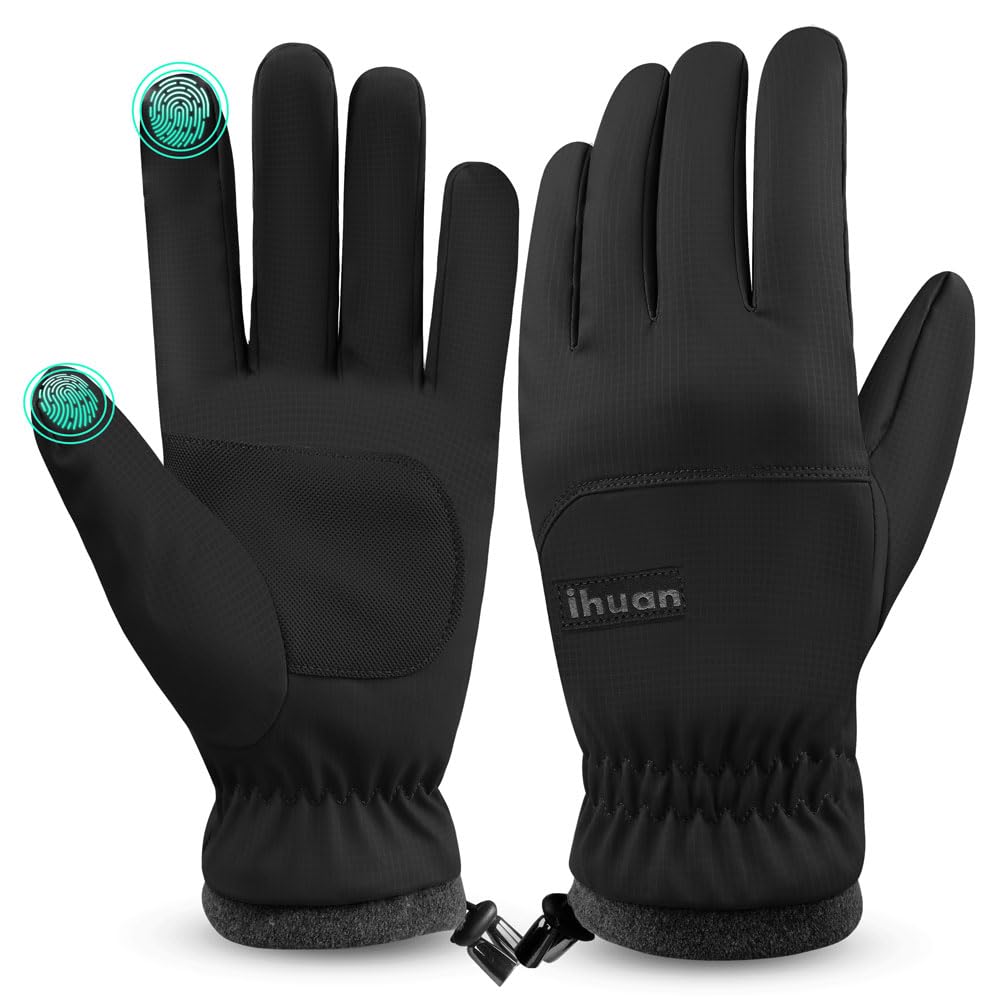
ihuan Winter Ski Gloves
Key Features
- Waterproof Type: Waterproof fabric
- Insulation: Fleece lining
- Cuff Design: Adjustable drawstring
- Price: $
The ihuan Winter Ski Gloves deliver impressive warmth for their price, with a soft fleece lining that feels comfortable against the skin. While the top pick offers more consistent protection for light snow, these gloves emphasize value — ideal for dry, cold days rather than wet weather.
Budget-conscious buyers who need warmth for cycling, running, or commuting in light snow will appreciate the affordability. However, the water resistance is limited: the wrist area lacks a seal and the fabric can wet through in moderate snow or rain. This makes them a warm glove that handles occasional light snow, not a waterproof option for rain or slush.
Pros
- Warmth that holds up well in mild to moderate cold.
- Build quality exceeds expectations for a budget glove — stitching and materials feel solid.
- Soft fleece lining stays comfortable against skin without irritation.
Cons
- Sizing runs small; buyers with larger hands may need to order a size up for a proper fit.
- Water resistance is limited — the wrist area is not sealed and fabric can wet through in moderate snow or rain.
A warm, affordable glove for light snow activities and dry cold days — not suited for wet weather or heavy precipitation.
Best for Large Hands Winter
Tough Outdoors Ski Gloves
Key Features
- Waterproof Type: TPU breathable membrane
- Insulation: SUMMITLOFT
- Cuff Design: Buckle & drawstring
- Price: $$
The Tough Outdoors glove stands out with its roomy fit, accommodating larger hands comfortably thanks to an adjustable wrist buckle and drawstring. The SUMMITLOFT insulation delivers sufficient warmth for active winter sports and snow shoveling in dry cold conditions, and the synthetic leather palm provides solid grip. Compared to the top pick’s more consistent waterproofing, this glove prioritizes hand size accommodation over all-weather sealing.
This glove suits those with larger hands who need a comfortable fit for dry cold activities like skiing, snowboarding, or shoveling. It works well for temperatures typical of winter sports but is best kept to light snow exposure—prolonged wet conditions or rain are outside its design range. At a mid-range price, it offers a practical option for users who value a roomy fit over full waterproofing.
Pros
- Roomy fit with adjustable wrist closure for larger hands.
- Consistent warmth for active winter use.
- Solid grip from synthetic leather palm.
Cons
- Stitching may loosen with regular use, reducing long-term durability.
- In wet snow or slush, water resistance may be insufficient.
This glove is a solid choice for those with larger hands who need warmth and comfort for dry cold activities, provided they don’t push the waterproofing into prolonged wet conditions.
Best for Ski & Snowboard
MCTi Ski Gloves 3M
Key Features
- Waterproof Type: Claimed waterproof
- Insulation: 3M Thinsulate
- Cuff Design: Adjustable wrist strap
- Price: $$
The MCTi Ski Gloves bring strong warmth to the slopes with 3M Thinsulate and a convenient pass pocket on the cuff. In contrast to roomier-fit gloves in this roundup, the cut runs snug—some may need to size up. However, seam and palm durability is inconsistent; certain gloves may develop tears within the first weeks of use.
These are best for skiers and snowboarders who prioritize warmth on dry powder days and are willing to accept that water resistance drops in wet snow or slush. Not intended for heavy-duty work or frequent, demanding use where long-term durability is a must.
Pros
- 3M Thinsulate insulation delivers lasting warmth for high-output winter sports.
- Integrated ski pass pocket on the cuff adds resort convenience.
- Good value for a mid-range ski glove with Thinsulate and removable liner.
Cons
- Water resistance is inconsistent—in wet snow or slush, moisture can seep through the fabric.
- Seam and palm durability can vary; some gloves may develop tears under regular use.
A solid choice for dry powder days at the resort if you size up and accept limited wet-weather performance. Not a work glove or all-weather solution.
Carhartt Work Glove Wb
Carhartt Work Glove WB

This Carhartt glove delivers strong insulation and reliable wind/water protection for freezing outdoor work like snow removal. However, the sizing runs unusually small — wrists in particular can be very tight, and some buyers experience early wear at seams and palms. At a premium price, the standard Carhartt knit cuff glove offers better value for most everyday winter use.
Pros
- Warmth and wind protection for cold weather work
- High quality materials and build
Cons
- Sizing can require ordering 1–2 sizes larger, with wrist area especially tight
- Seams and palms may show early wear under heavy use
Best suited for cold job site work where waterproofing is essential and you can carefully size up; not a general-purpose winter glove for everyday use.
Best for Budget Ski Commuting
TRENDOUX 3M Thinsulate

Key Features
- Waterproof Type: TPU membrane
- Insulation: 3M Thinsulate 200g
- Cuff Design: Elastic knit & strap
- Price: $
These gloves deliver noticeable warmth from 3M Thinsulate at a price well under premium ski gloves, making them a sensible choice for dry winter commutes. However, they fall short of their waterproofing and warmth claims, making a budget competitor like the ihuan a better all-around value for wet conditions.
Pros
- 3M Thinsulate insulation provides noticeable warmth without a premium price tag.
- Solid stitch and material quality considering the budget-friendly price point.
Cons
- Water resistance can be inconsistent – gloves may wet through in rain or slush.
- Warmth rating is overstated; these gloves suit temperatures above freezing, not -20°F.
Best reserved for dry, moderate winter days or as a spare pair – not the choice for wet or sub-freezing conditions.
Best for Occasional Skiing
Odtmger Ski Gloves

Key Features
- Waterproof Type: PU fabric insert
- Insulation: Double fleece
- Cuff Design: Adjustable wrist strap
- Price: $
These gloves offer effective warmth for snowy fun — sledding, snowball fights, and light skiing sessions. The fleece interior feels soft, and the range of bright colors appeals to children. However, the waterproofing is limited: in wet snow or slush, moisture can seep through. Seam construction may also come apart with frequent use, so these are best reserved for occasional outings rather than a full winter season. Sizing runs large for some, so checking the size chart is wise before ordering.
Pros
- Keeps hands warm during typical snow play
- Affordable with a soft, colorful interior kids like
Cons
- In wet snow or slush, moisture can reach the hands — better suited for dry conditions
- Sizing runs large for some, so careful measurement is needed
A decent choice for children’s snow days and sledding when waterproofing and long‑term durability aren’t priorities.
Best for Casual Light Snow
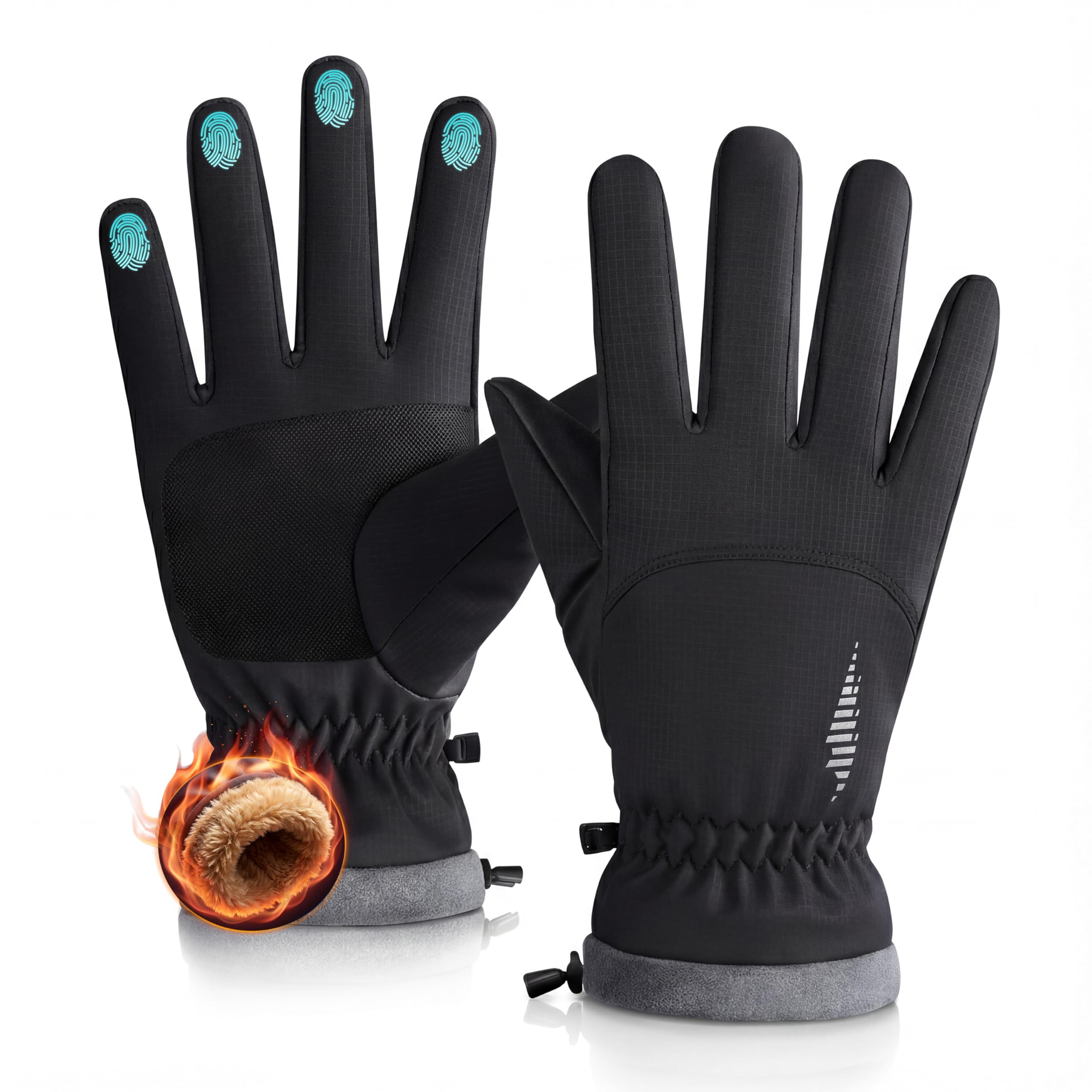
rivmount Winter Gloves
Key Features
- Waterproof Type: Waterproof fabric
- Insulation: Fleece lining
- Cuff Design: Adjustable drawstring
- Price: $
The rivmount Winter Gloves provide full-finger touchscreen and a soft fleece interior at a budget-friendly price, making them suitable for casual walks and runs in dry, mild winter conditions. However, water resistance is inconsistent — moisture can penetrate in wet snow or slush, so these are not a reliable choice for activities where waterproofing matters. Fit may run small for some hand shapes. For a few dollars more, a competing budget glove delivers better warmth and more consistent water resistance, making these best reserved for the lightest of winter days.
Pros
- Soft fleece lining feels warm and comfortable against the skin.
- Offers sufficient warmth for casual winter walks and light outdoor activities.
Cons
- Water resistance can be inconsistent, allowing moisture through in wet snow or slush.
- Fit may be tight for some hand sizes, particularly larger hands.
These gloves suit dry, mild winter days when touchscreen convenience is a priority. If you need dependable waterproofing for wet conditions, consider another option.
Best for Mild Cold Sports
MOREOK -30°F Gloves

Key Features
- Waterproof Type: TPU membrane
- Insulation: 3M Thinsulate 200g
- Cuff Design: Elastic & buckle
- Price: $$
These gloves deliver good comfort and dexterity for cycling and running in temperatures above 20°F, with functional touchscreen support. The 3M Thinsulate insulation provides adequate warmth for active use in moderate cold, and the adjustable cuff keeps cold air out. However, the advertised -30°F rating does not hold up in practice, and water resistance is inconsistent — fine for light snow, but not for rain or slush. The fit runs small, so sizing up is advisable.
Pros
- Decent value for the price
- Comfortable for moderate cold activities
Cons
- Water resistance is inconsistent – not dependable for rain or slush
- Warmth falls short of the -30°F claim – adequate only above 20°F
A suitable choice for dry, moderate-cold commutes and active use above freezing, but not for wet conditions or sub-20°F cold.
Best for Dry Winter Sports
KINGSBOM -40°F Gloves

Key Features
- Waterproof Type: Waterproof fabric
- Insulation: 3M Thinsulate 200g
- Cuff Design: Pull-on
- Price: $
These gloves provide decent comfort and construction for moderate cold activities like cycling or running in dry conditions above 30°F. However, the insulation doesn’t hold up below 20°F, and the fabric soaks through in snow or wet weather. The -40°F rating is exaggerated, and waterproofing is minimal — not suitable for buyers who need reliable protection from rain or slush. This is a budget option for dry winter days only.
Pros
- Good overall construction and materials for the price
- Comfortable fit for active use in moderate cold
Cons
- Warmth is inadequate below 20°F despite the -40°F claim
- Water resistance is weak — fabric wets through in snow or rain
Best suited for dry, above-freezing days; not for wet conditions or real cold.
How to Choose
The majority of waterproof gloves on the market rely on surface coatings that wear off within weeks, making the choice of construction method the single most important factor for long-term dryness.
Waterproof Membrane Type
Gloves use either a waterproof membrane (like TPU) inserted between layers, a surface coating (DWR), or a fully dipped construction (latex, PU). Membranes are more durable than coatings but can still delaminate under heavy stress. Dipped gloves form a continuous rubber barrier — they are the most reliable for wet work but trap sweat and lack breathability.
For winter sports, a membrane glove offers the best balance of waterproofing and breathability. For fishing or car washing, a dipped glove is the only way to guarantee dryness.
Insulation Material
3M Thinsulate is the industry standard for warmth-to-weight ratio, but its effectiveness depends on gram weight — 200g is common for moderate cold, while 100g is better for active use. Fleece linings are cheaper but less efficient at retaining heat when wet. Acrylic fleece, as used in the SHOWA TEMRES, maintains warmth even when damp.
Beware of temperature ratings (-40°F, etc.) on budget gloves; they are often marketing exaggerations. Focus on the insulation material and user feedback for real-world warmth.
Cuff Design
A gauntlet-style cuff with a drawstring or buckle prevents snow and rain from entering the sleeve. Knit cuffs are comfortable for casual use but let in moisture when shoveling or skiing. Elastic cuffs offer a snug fit for light activities but can gap during arm movements.
For wet work, a long elastic cuff with a seal (like the toolant’s PU skirt) is best. For skiing, a wide strap over the wrist keeps snow out.
Palm Material and Grip
Synthetic leather palms offer durability and a natural feel but become slippery when wet. Latex or foam latex coatings provide excellent wet grip and are common on dipped work gloves. Textured polyurethane (PU) balances grip and dexterity.
If you need to handle tools or wet fish, choose a glove with a textured palm. For snow shoveling, a smooth synthetic leather palm is sufficient and more comfortable.
Touchscreen Compatibility
Touchscreen fingers use conductive threads or patches on the fingertips. Quality varies: some gloves work only on the thumb and index, others on all fingers. The best implementation covers the entire fingertip with conductive material for consistent response.
Expect reliability to drop in cold temperatures — touchscreen function can become erratic below 20°F. For heavy phone use, consider gloves with a dedicated touchscreen layer or pull-off fingertips.
FAQ
Are waterproof gloves actually waterproof or just water-resistant?
Most fabric gloves are water-resistant, not fully waterproof. They use a DWR coating that repels light rain but fails under sustained wetness or pressure. True waterproof gloves have a sealed membrane (TPU, PU) or are latex-dipped. Check the construction: if the specs mention a ‘membrane’ or ‘dip,’ it’s likely waterproof; if just ‘coating,’ expect only resistance.
Why do my winter gloves get wet inside even when they claim to be waterproof?
Two reasons: either the waterproof barrier has failed (coating worn off, membrane delaminated), or you’re sweating inside. Gloves that are waterproof often sacrifice breathability, leading to moisture buildup from your hands. If the inside feels wet but there’s no external water, it’s likely sweat. For active use, look for gloves with a breathable membrane like Gore-Tex or ePTFE.
What is the difference between a waterproof membrane and a coating on gloves?
A membrane is a thin, sealed layer inside the glove that physically blocks water. A coating is a chemical layer applied to the outer fabric that repels water temporarily. Membranes last many seasons and can be re-waterproofed; coatings wear off after a few washes or weeks of use. For consistent dryness, choose a glove with a membrane (e.g., TPU) rather than a DWR coating.
How should I dry waterproof gloves without ruining the membrane?
Always air dry gloves at room temperature. Never use a dryer, radiator, or direct sunlight — heat can delaminate membranes and shrink linings. Stuff them loosely with paper towels to absorb moisture, then hang them to dry. For dipped latex gloves, simply wipe them down and let them air out. Avoid wringing or twisting.