
This post contains affiliate links. We may earn a small commission when you buy through our links — at no extra cost to you.
Most travel cameras look good on a spec sheet, but actual use reveals gaps – autofocus that hunts at full zoom, battery life that doesn’t last a day, and units that stop working after a few months. The problem isn’t the category, it’s conflating megapixels with real image quality. Sensor size and lens optics determine what your photos actually look like, especially in low light or at distance. This guide cuts through the noise to highlight the features that truly matter for travel.
Travelers often face a trade-off: extreme optical zoom for wildlife or concerts versus larger sensors for better image quality. There’s no single perfect camera, but understanding this trade-off helps you choose the right tool. Whether you prioritize reach, portability, or video stabilization, the picks below match specific travel styles without the inflated promises.



Best for Travel Photographers
Canon EOS R50
Key Features
- Optical Zoom: 2.5x kit lens
- Sensor Size: APS-C
- Video Quality: 4K uncropped, IS
- Portability: Compact mirrorless
- Price: $$$
The Canon EOS R50’s 24.2MP APS-C sensor delivers sharp, vibrant images with a dynamic range that outclasses any compact point-and-shoot in this price tier. Paired with the Dual Pixel CMOS AF II system, subject detection locks onto eyes, faces, animals, and vehicles with minimal hunting — a clear advantage when shooting moving subjects during travel.
In 4K video, the camera oversamples from 6K to produce detailed footage without crop, making it a strong option for vloggers and content creators. The included RF-S 18-45mm f/4.5-6.3 IS STM lens covers a useful wide-to-portrait range, and in-body stabilization keeps handheld clips steady enough for casual use.
The body is notably compact for an interchangeable-lens mirrorless — light enough to carry on extended walks without fatigue. The vari-angle touchscreen and guided menu system lower the learning curve for beginners, while still offering manual controls for those who want to grow into the system.
This camera is best suited for travelers and vloggers who prioritize image quality and lens flexibility over extreme zoom reach. If 40x optical zoom is your priority, the superzoom point-and-shoot alternative covers that territory more conveniently, but the R50’s larger sensor and faster autofocus produce noticeably better results in everyday shooting and low light.
Two limitations matter in practice. The CIPA-rated battery life is modest — expect to carry at least one spare for a full day of shooting, and note that a separate charger is not included. Additionally, a small number of units may develop operational issues over time; checking warranty coverage is a sensible precaution for long-term ownership.
Pros
- 24.2MP APS-C sensor captures sharp, vibrant images with good dynamic range.
- Dual Pixel CMOS AF II with AI subject detection locks onto eyes, faces, animals, and vehicles quickly.
- Intuitive controls and guided menu system make it easy for beginners to start shooting.
- Compact and lightweight body travels easily without sacrificing lens interchangeability.
Cons
- Battery life requires carrying spare batteries for a full day of shooting; no charger included in the box.
- A small number of units may develop operational issues over time – worth checking warranty coverage.
Travel photographers and vloggers who want superior image quality without the bulk of a DSLR will find the R50 a capable partner – just pack a spare battery.
Best for Travel Vloggers
DJI Osmo Pocket 3
Key Features
- Optical Zoom: None (fixed wide)
- Sensor Size: 1-inch
- Video Quality: 4K 120fps, gimbal
- Portability: Pocket-sized gimbal
- Price: $$
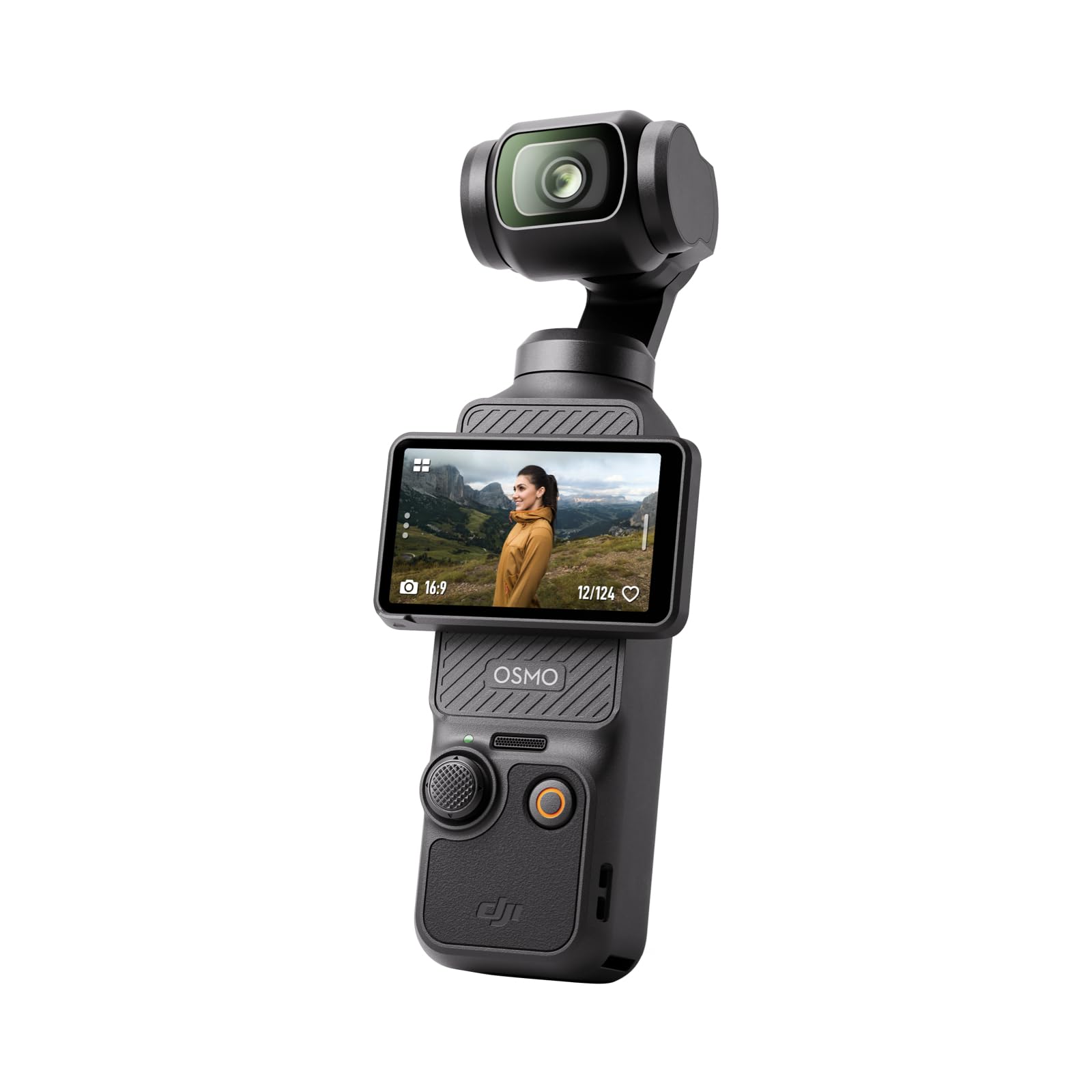
The DJI Osmo Pocket 3 packs a 1-inch CMOS sensor and 3-axis mechanical gimbal into a body smaller than most smartphones, delivering smooth 4K/120fps video that traditional point-and-shoots can’t match without an external gimbal. This design prioritizes stabilization over zoom reach, setting it apart from typical travel compacts.
Travel vloggers who value steady handheld footage over zoom flexibility are the ideal audience. The fixed wide-angle lens means distant subjects require physically moving closer, and the ~166-minute battery covers a few hours of shooting but not a full day. Those comfortable carrying a power bank or spare battery can work around this without issue. Build quality feels premium, and the intuitive touchscreen simplifies on-the-fly adjustments.
Pros
- Superb video quality with effective stabilization – smooth 4K footage, impressive for the size.
- Highly portable and pocket-friendly – discreet, easy to carry anywhere.
- Easy to use for vloggers – intuitive touchscreen, quick setup.
- Great build quality and performance – feels premium, reliable in daily use.
Cons
- Battery life can be short for extended outings without access to charging.
- The unit may occasionally become unresponsive or freeze, requiring a restart.
If buttery-smooth handheld video from a pocket-sized device is your priority, the Osmo Pocket 3 delivers that better than any compact camera – just accept the fixed lens and plan for extra batteries.
Best for Extreme Zoom
Canon PowerShot SX740
Key Features
- Optical Zoom: 40x optical
- Sensor Size: 1/2.3-inch
- Video Quality: 4K UHD, OIS
- Portability: Pocketable compact
- Price: $$$
The Canon PowerShot SX740 HS packs a 40x optical zoom lens into a body that slips into a jacket pocket. In good light, images are sharp and colors are pleasing, making it a capable companion for daytime travel shots.
The compact build and tilt-up LCD are easy to use for quick framing, but the autofocus can hunt at full zoom, especially in dim conditions. Low-light image quality is limited by the small sensor, so expect noise above ISO 800.
This camera suits travelers who prioritize extreme reach for wildlife, sports, or concert photography over low-light performance or fast autofocus. If you need consistent focus in challenging light, the top pick mirrorless offers better reliability.
Pros
- 40x optical zoom captures distant subjects clearly in good light.
- Pocketable size makes it easy to carry on any trip.
- Intuitive controls and useful scene modes suit casual shooters.
Cons
- Autofocus can be inconsistent at maximum zoom, especially in low light.
- After several months of use, the camera may cease to function in some cases.
For travelers who need extreme optical reach in a jacket pocket, the SX740 is unmatched – just accept its autofocus quirks and low-light limits.
Best for Budget Travelers
Kodak PIXPRO FZ55
Key Features
- Optical Zoom: 5x optical
- Sensor Size: 1/2.3-inch
- Video Quality: 1080p HD
- Portability: Compact point-and-shoot
- Price: $
The Kodak PIXPRO FZ55 stands out among budget travel cameras for its combination of 5x optical zoom (28-140mm equiv.) and a 16MP CMOS sensor that delivers punchy, detailed images in good light. While it can’t match the zoom reach or video quality of mirrorless options like the Canon R50, it offers a pocketable alternative for casual shooters who want a dedicated camera without spending more.
This model is best suited for budget travelers and beginners who value portability and ease of use over ruggedness or all-day battery life. The 2.7-inch LCD and straightforward controls make it simple to hand to a novice, but buyers should be aware that reliability can vary between units – a small number of cameras may stop operating within a few months, so an extended warranty is worth considering.
Pros
- Sharp, vibrant images for a budget camera
- Compact enough to slip into a pocket or small bag
- Simple controls that beginners can pick up quickly
Cons
- Some units may stop working within months of purchase
- Battery life can be shorter than expected during a full day of shooting
For travelers who want a low-cost, light camera for occasional snapshots and can accept the possibility of early unit issues, the FZ55 delivers solid value.
Best for Serious Vloggers
Sony ZV-1F
Key Features
- Optical Zoom: None (fixed)
- Sensor Size: 1-inch
- Video Quality: 4K, 1080p 120fps
- Portability: Compact vlogger
- Price: $$$
The ZV-1F’s 20mm f/2.0 lens, eye autofocus, and directional three-capsule mic combine to deliver polished selfie-style video with minimal setup. While the pocket-sized gimbal camera emphasizes stabilization, this Sony leans on its larger 1-inch sensor and dedicated microphone for richer image quality and cleaner audio straight out of the box.
Eye AF tracks faces reliably, and the articulating touchscreen makes framing effortless from any angle. Some units may experience occasional freezing or become unresponsive – an inconvenience that, while not widespread, is worth checking during the return period. Battery life is short, so spare packs become part of the kit.
This camera suits vloggers who shoot selfie-style footage and value audio quality over zoom reach. Travelers expecting to capture distant landmarks should look elsewhere – the fixed wide-angle lens and short battery life require deliberate planning and compromise on versatility.
Pros
- Sharp 4K video and clean audio from the built-in directional mic
- Eye autofocus tracks faces reliably, making selfie-style shooting simple
- Compact body fits easily in small bags or jacket pockets
Cons
- Fixed 20mm wide-angle lens – no optical zoom for distant subjects
- Battery life is short – expect to carry spares for a full day of shooting
A strong fit for vloggers who want high-quality selfie video and audio, but its lack of zoom and short battery life make it a niche tool rather than a general travel companion.
Best for Concert Goers
Panasonic ZS99

Key Features
- Optical Zoom: 30x optical
- Sensor Size: 1/2.3-inch
- Video Quality: 4K, 1080p 120fps
- Portability: Compact zoom
- Price: $$$
The ZS99’s 30x optical zoom (24-720mm) pulls distant subjects into frame, making it a practical choice for concerts or wildlife in a jacket pocket. That zoom reach comes with compromises: the 1/2.3-inch sensor produces soft images in moderate light, and autofocus is slow enough to miss spontaneous shots. For the price, you’re paying for reach over resolution and responsiveness – a tradeoff that limits its appeal beyond specific use cases.
Pros
- 30x optical Leica zoom (24-720mm) in a pocketable body.
- Simple menus and quick image transfer via Bluetooth/WiFi.
Cons
- Photos lack sharpness and detail, especially in moderate light.
- Autofocus is slow, and the camera feels sluggish to start up.
This camera fits anyone who must have 30x zoom in a pocket and can accept soft images and hesitant operation – a niche tool, not an everyday travel companion.
Best for Beachgoers
Kodak WPZ2 Waterproof

Key Features
- Optical Zoom: 4x optical
- Sensor Size: 1/2.3-inch
- Video Quality: 1080p
- Portability: Rugged compact
- Price: $$
The Kodak WPZ2 is a fully sealed compact that goes to 15m without a housing, making it a natural fit for snorkeling and beach days. That said, water ingress around the LCD has been noted in some units, so a quick freshwater rinse and seal check after each outing is wise. Image quality is average — fine for social sharing in good light, but low-light and fast-moving subjects can come out soft. The simple controls are a plus in wet conditions, but unit-to-unit consistency means this camera is best for those who can accept a potential hiccup.
Pros
- Waterproof to 15m without a housing, plus dustproof and shockproof for rugged outings.
- Simple, intuitive interface works well with gloves or wet fingers.
- Built-in Wi-Fi allows quick photo sharing from the beach or trail.
Cons
- Water ingress around the LCD area has occurred in some units.
- Image quality can be inconsistent, with softness in low light and at full zoom.
Best for occasional snorkeling or beach trips where a tough, waterproof camera is needed and average photos are acceptable. If consistent image quality is a priority, a different waterproof model may suit better.
How to Choose
Sensor size and optical zoom range matter far more than megapixel counts for real-world travel photos.
Optical Zoom Range
Optical zoom uses lens elements to magnify the image without losing resolution. Digital zoom simply crops and enlarges the center pixels, reducing sharpness. For travel, a 5x to 10x optical zoom covers most needs — from landscapes to portraits. Beyond that, 30x-40x zooms let you capture distant wildlife or stage performances, but they require steady hands or a tripod as camera shake becomes magnified.
Sensor Size
Sensor size determines how much light the camera captures, directly affecting image quality, especially in low light. Larger sensors like APS-C (found in mirrorless cameras) produce cleaner, more detailed photos with better dynamic range than the 1/2.3-inch sensors common in budget point-and-shoots. A 1-inch sensor hits a sweet spot for compact cameras, offering noticeably better low-light performance than smaller sensors without the size penalty of APS-C.
Video Resolution and Stabilization
4K video is now standard, but stabilization type matters more for handheld travel footage. Optical stabilization (OIS) or sensor-shift stabilization corrects movement inside the lens or body, while electronic stabilization (EIS) crops the frame. For smooth walking shots, a gimbal-stabilized camera like the DJI Osmo Pocket 3 is unmatched. Without stabilization, even 4K footage will look shaky on a moving bus or trail.
Portability
A travel camera needs to fit in a daypack or jacket pocket without becoming a burden. Compact point-and-shoots weigh under 300 grams, while mirrorless kits with a lens typically approach 500-600 grams. For all-day sightseeing, every 100 grams adds fatigue. Consider whether you’re willing to carry a small camera bag or if a pocket-sized model is non-negotiable.
Battery Life
Compact cameras and mirrorless cameras typically offer 200-400 shots per charge, but real-world use (frequent LCD screen use, video recording) drains faster. Many travel cameras don’t include a separate charger, requiring you to charge via USB in the camera — which prevents shooting while charging. Always carry at least one spare battery for a full day of shooting, especially if you plan to record video.
FAQ
Why does my travel camera stop working after a few months?
Many budget point-and-shoot cameras, especially from certain brands, have quality control issues. Components like the lens mechanism or internal wiring can fail after limited use. To minimize risk, choose cameras with a proven track record (high review counts and consistent positive feedback) and consider purchasing an extended warranty or using a credit card that adds protection.
Is a mirrorless camera better than a point-and-shoot for travel?
Mirrorless cameras offer superior image quality due to larger sensors and interchangeable lenses, but they cost more and require carrying extra lenses and batteries. Point-and-shoots are simpler, lighter, and often cheaper, but they’re limited by small sensors and fixed lenses. For travelers who want upgradeable quality and are willing to pack a small bag, mirrorless wins. For casual, one-bag travel, a good point-and-shoot is more convenient.
Can a 40x zoom camera take clear photos without a tripod?
At full telephoto, camera shake is magnified, making it very difficult to get sharp handheld shots. Even with image stabilization, expect blurry results in anything less than bright daylight. For consistent clarity at 40x zoom, use a tripod or brace the camera against a solid surface. Many photographers find that beyond 20x, a monopod is a worthwhile travel companion.
What battery life should I expect from a compact travel camera?
Most compact cameras claim 200-300 shots per charge, but real-world use — especially with frequent video recording, Wi-Fi transfer, and LCD usage — often cuts that in half. Plan for at least one spare battery for a full day of shooting. Cameras that recharge via USB (without a separate charger) are less convenient because you cannot swap batteries and keep shooting.