
This post contains affiliate links. We may earn a small commission when you buy through our links — at no extra cost to you.
Many water shoes marketed as ‘quick-dry’ and ‘barefoot’ turn out to be thin socks that tear after a weekend at the beach. The pair you grabbed for a pool trip might leave you with fabric shreds by the second use. That’s not a reflection of your choice – it’s a category problem where low price often hides fragile construction.
The real decision isn’t between budget and premium; it’s between a shoe built for occasional splashes and one that handles repeated wear. This guide focuses on durability, fit, and traction – the three areas where most water shoes fall short. The picks are organized by use case so you can match the right shoe to your actual beach, pool, or water sport routine.


Best for Water Sports All-Day
Zhuanglin Quick-Dry Aqua
The Zhuanglin Quick-Dry Aqua shoes feel like normal sneakers, not flimsy water socks. The mesh upper drains water in seconds and dries quickly, so feet stay light from pool to car. The silhouette mimics casual tennis shoes, making them suitable for grabbing coffee or walking the boardwalk without looking like you’re still at the beach.
These are best for travelers, pool-goers, and kayakers who want a single shoe that works on wet and dry ground. The main adjustment: sizing runs large, so ordering a half size down is necessary for a secure fit. Those with narrow feet or who prefer a snug feel will find a better match elsewhere.
Pros
- Feels like a standard sneaker, comfortable for long beach walks or all-day wear.
- Water drains in seconds and the shoe dries fast, ideal for moving from pool to dry land.
- Appearance matches casual tennis shoes, so they work in cafes or city strolls without standing out.
Cons
For anyone who wants a water shoe that doubles as a comfortable daily sneaker, the Zhuanglin delivers – just account for the sizing adjustment.
Best for Beach Walking
SEEKWAY Quick-Dry Aqua Sock
This aqua sock delivers a roomy toe box and good grip on wet surfaces, making it a comfortable choice for beach walking and water aerobics. It costs noticeably less than the top pick while still looking like a regular sneaker. The trade-off is that durability can be inconsistent — some owners have noted tearing at the toes after several outings, so it’s best suited for occasional rather than rugged use.
Pros
- Comfortable fit with a wide toe box for natural toe splay.
- Good traction on wet pool decks and sandy beaches.
- Stylish design that blends in with casual footwear.
Cons
- Tearing at the toes may occur after repeated use on rough surfaces.
A budget-friendly choice for calm water settings where comfort matters more than long-term ruggedness.
Best for Beach Walking
DLGJPA Athletic Aqua
The DLGJPA Aqua shoes provide genuine arch support and cushioning that rival sneakers, making them a solid choice for all-day beach walking or water sports where foot fatigue is a concern. They dry quickly and look more like casual sneakers than typical water shoes, so you won’t feel like you’re wearing gear when you grab lunch after a swim. The trade-off is that the fit runs large and wide — most buyers will need to size down by half to a full size to get a secure feel. That sizing quirk makes them less ideal for anyone with narrow feet or who prefers a snug fit straight out of the box.
These shoes suit anyone who prioritizes foot support over minimalist design and doesn’t mind doing a size adjustment. They work well for beach walks, kayaking, or poolside days where you want something that won’t look out of place. Skip them if you need a true barefoot feel or have very narrow feet.
Pros
- Comfortable like sneakers with noticeable arch support for all-day wear
- Lightweight and dries quickly after getting wet
- Stylish design that doesn’t scream water shoe
Cons
- Sizing runs large and wide – plan to order half to one full size down
A rare water shoe with real arch support for long beach days, just account for the generous sizing.
Best for Water Aerobics
DOUSSPRT Quick Dry Aqua
The DOUSSPRT is the lightest water shoe we tested and dries in minutes after a water aerobics session. It passes for a regular athletic shoe, making it easy to wear from the pool deck to a quick errand without looking out of place. The thin sole provides good traction on smooth wet surfaces, but offers little protection on rocky terrain.
This shoe is best for pool workouts, water aerobics, and casual beach strolls — not for all-day walking or rocky shores. Sole separation may occur with heavy use, so reserve it for moderate sessions where its quick-dry convenience and light weight matter most.
Pros
- Feather-light and dries in minutes after water exposure.
- Looks like a regular sneaker, so it works beyond the pool.
- Provides good grip on wet pool decks and smooth surfaces.
Cons
- Sole separation can occur with heavy use – best for moderate pool and water aerobics sessions.
A lightweight pool companion that dries quickly and looks the part, but thicker-soled shoes are better for rocky shores or all-day wear.
Best for Barefoot Walking
WateLves Barefoot Runner
The WateLves Barefoot Water Shoes prioritize ground connection and toe room, offering a thin, flexible sole that lets you feel the surface beneath. Unlike the more structured top pick, this shoe is built for barefoot enthusiasts who want a wide toe box and zero-drop platform. The mesh upper dries quickly, making it suitable for beach walks and light water activities.
This design works best for wide-footed buyers who already favor minimalist footwear. Sizing can be inconsistent – some find the shoes run large, others small – so trying before committing or ordering multiple sizes is wise. The traction handles sand, dirt, and wet rocks well, but on very slick pool decks you may want more grip.
Pros
- Thin, flexible sole delivers a natural barefoot feel with good ground feedback.
- Extra-wide toe box accommodates wide feet comfortably without pinching.
- Outsole provides dependable traction on sand, dirt, and wet surfaces.
Cons
- Fit can be inconsistent – some find the sizing runs large, others small.
For barefoot enthusiasts with wider feet who value ground feel over cushioning, the WateLves is a strong match – just expect to adjust your size.
Best for Beach Walks
WHITIN Feather Water Shoe
The WHITIN Feather Water Shoe offers a thick protective sole that handles rocky shores comfortably, rivaling sneaker-like comfort for narrow feet. Its budget price makes it an accessible option for beach walks and water therapy.
This shoe is not designed for pool aerobics — the sole becomes slippery on wet tile, presenting a safety concern. Stick to natural surfaces like sand, pavement-to-water transitions, or rocky beaches.
Pros
- Comfortable like sneakers, especially for narrow feet
- Thick sole provides good protection on rocks
- Excellent value for money
Cons
- Traction on wet pool floors is poor — not suitable for pool aerobics
A smart buy for beach walks and water therapy if you don’t need pool traction.
Best for Wide Feet
ziitop Barefoot Quick Dry

The ziitop offers a roomy toe box and plush feel that suits wide feet well, especially for casual water park or pool use. Its durability, however, is a boundary — the seams and sole may separate over time, limiting its lifespan compared to more robust options.
Pros
- Roomy toe area that accommodates wide feet comfortably
- Budget-friendly price for short-term water activities
Cons
- Sides may rip or sole can separate after repeated use
Best suited for occasional water park trips or pool sessions where comfort matters more than long-term durability.
Best for Lake Kayaking
Mishansha Quick-Dry Barefoot
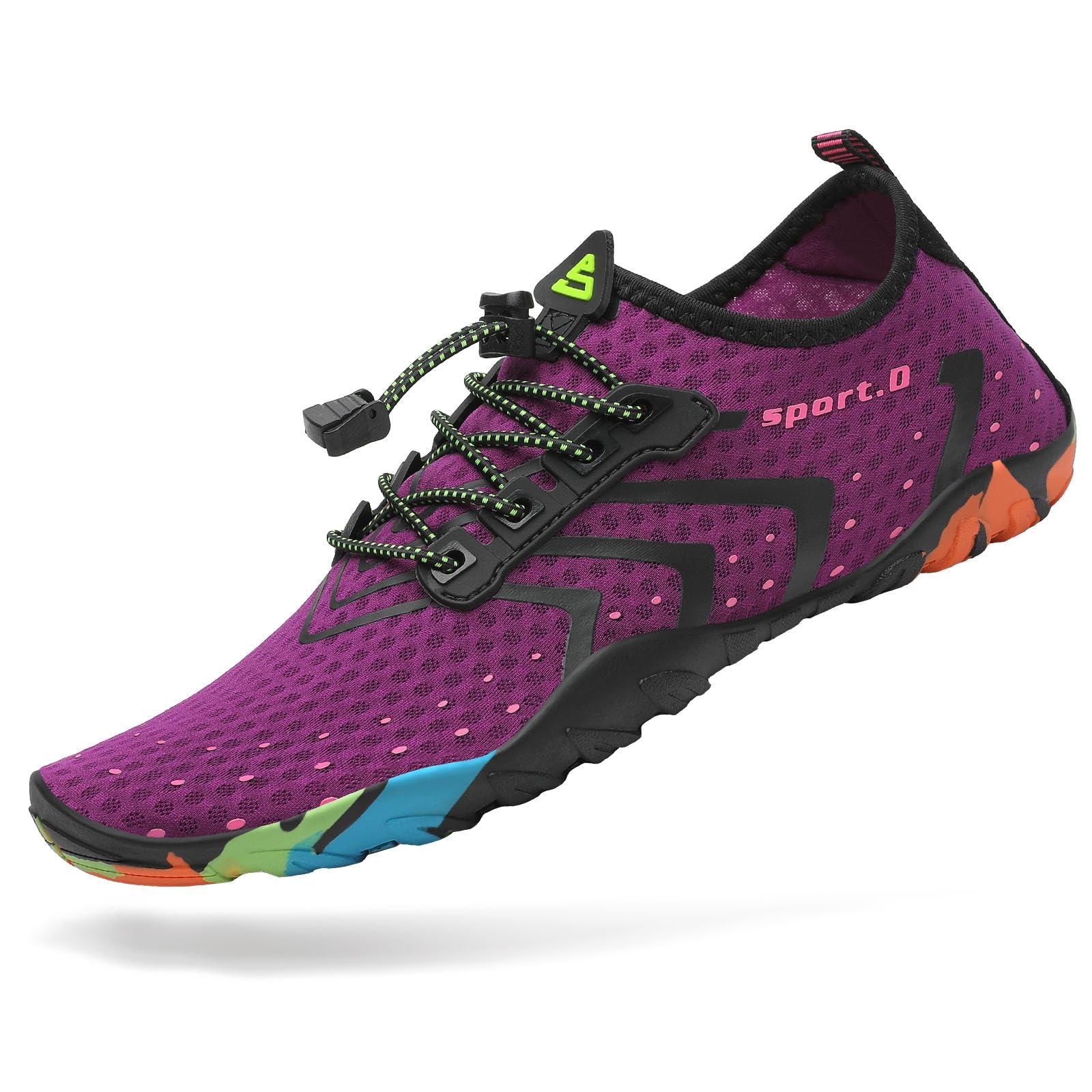
These water shoes combine a stylish sneaker appearance with quick-dry drainage holes, offering comfort for lake kayaking and beach strolls. However, the sole can slip on wet pool decks, and occasional strap durability issues may arise — so they work best as a lake shoe rather than a pool or aerobics choice.
Pros
- Comfortable and lightweight build for all-day wear
- Stylish tennis-shoe look that works out of water
Cons
- Traction on wet surfaces can be slippery, limiting use around pools
Suits calm lake days and beach strolls; less suitable for slick pool surfaces.
Best for Water Aerobics
Racqua Quick Dry Barefoot

The Racqua water shoes offer good cushioning and solid quality for a moderate price, performing well on rocky beach walks. Sizing inconsistencies and occasional laces or sole issues prevent a stronger recommendation, making them best for casual use rather than frequent heavy wear.
Pros
- Cushioned sole protects feet on rocky shores
- Solid build quality at a budget-friendly price
Cons
- Sizing may vary between batches, requiring careful ordering
A reasonable pick for occasional rocky beach walks where cushioning matters more than long-term reliability.
How to Choose
The biggest mistake is buying based on price alone—most sub-$10 water socks fall apart after one or two uses.
Sole Thickness and Flexibility
Thin soles give a barefoot feel but offer little protection on rocks or gravel. Thicker soles cushion and protect but feel clunky for pool use. Your choice depends on where you’ll wear them: smooth pool bottoms need flexibility, rocky beaches need thickness.
Drainage and Quick-Dry Capability
Mesh uppers and drainage holes let water escape fast and air circulate, so shoes dry quickly after a swim. The trade-off is that these holes also let in sand and small pebbles. If you’ll be walking on sandy beaches, look for a tight mesh that still drains.
Traction on Wet Surfaces
Rubber outsoles with deep channels grip wet tile and rocks much better than flat, smooth soles. Many budget shoes use basic rubber that becomes slippery on pool decks. If pool safety matters, choose a shoe with visible tread and wide spacing between lugs.
Fit Consistency
Most water shoes run large because they are meant to be worn without socks. A loose fit causes blisters and heel slip. Check recent reviews for sizing guidance; many brands require ordering a half to full size down. Snug but not tight is the goal.
Durability and Build Quality
Weak points are the toe area where fabric flexes and the sole attachment. Shoes under $10 often use glued soles that separate after a few uses. Look for stitched soles and double-stitched seams if you plan to wear them regularly. Investing $15-25 typically doubles the lifespan.
FAQ
Why do water shoes fall apart so quickly?
Most budget models use thin fabric and glued soles that can’t withstand repeated flexing. Manufacturers prioritize weight and cost over construction. A $5 pair is essentially disposable; spending $15+ usually buys stitched soles and tougher mesh that lasts several seasons.
Should I size up or down for water shoes?
Water shoes should fit snug like socks; loose shoes cause blisters. Many models run large, so check recent reviews. A good rule is to order a half size down, especially for brands with consistent sizing complaints.
Can water shoes be worn for hiking?
Only on smooth, wet surfaces. They lack the ankle support, tread depth, and protection for rocky trails. For light stream crossings or short beach hikes, they work, but not for serious hiking.
How to make water shoes less slippery on wet pool floors?
Choose shoes with thick, channeled rubber soles. Avoid flat-bottomed aqua socks. If you already have slippery ones, adding adhesive grip pads can help, but it’s better to buy a model designed for wet traction.