
This post contains affiliate links. We may earn a small commission when you buy through our links — at no extra cost to you.
Water shoes have a dirty secret: most fall apart after a few outings. The common culprit is sole separation or toe ripping, leaving you with soggy fabric on the sand. That’s especially frustrating when you only needed them for a week-long vacation or a weekend at the lake.
But not all water shoes are built the same. The difference comes down to construction choices — drainage design, sole thickness, and how the upper attaches to the sole. The best options at $15–$20 deliver weeks of use, while cheaper ones often fail in a single day.
This guide cuts through the look-alike sock-style market. We picked shoes that actually balance cost with usable life, so you can hit the water knowing your footwear won’t quit mid-trip.


Best for All-Around Water Use
ziitop Barefoot Water Shoe
Key Features
- Sole Construction: Cushioned
- Drainage: Mesh upper
- Closure: Elastic
- Durability Issue: Side tearing rare
- Price: $
The ziitop water shoe pairs a cushioned sole with a roomy toe box, making it comfortable for hours on sand, pool decks, or lake bottoms. The fabric dries quickly and rinses clean with fresh water, so you can wear it again the same day without feeling soggy.
Best suited for general water activities rather than heavy hiking in sharp terrain, this shoe supports a wide range of foot shapes. Side tearing has been noted in some cases after several outings, a tradeoff common at this price point. Buyers who need arch support should look elsewhere or use an insert.
Pros
- Cushioned sole protects feet on hard surfaces like pool decks and rocky lake bottoms.
- Roomy toe box accommodates wide feet without pinching.
- Quick-drying fabric makes it easy to rinse and wear again same day.
Cons
- Side tearing may appear after several outings in some cases – a tradeoff at this price tier.
- No arch support built in – better suited for flat-footed users or those using orthotics.
A comfortable, well-fitting water shoe that handles most beach and lake activities without breaking the bank. The durability tradeoff is acceptable for moderate use.
Best for Budget Beach Use
SEEKWAY Quick-Dry Aqua Sock
Key Features
- Sole Construction: Thin rubber
- Drainage: Mesh upper
- Closure: Elastic
- Durability Issue: Sole separation
- Price: $
The SEEKWAY Aqua Sock stands out for its reliable grip on wet surfaces — pool floors, slick rocks, and boat decks feel noticeably more secure underfoot than with many barefoot-style alternatives. The snug fit and roomy toe box keep the shoe in place during active water play without rubbing or blistering, which makes it comfortable for hours at the beach or a day of light river walking.
The tradeoff for this traction and comfort is longevity: sole separation has been reported after several outings, so this shoe suits occasional beachgoers and travelers who need a backup pair for a trip or two, rather than someone hitting the water every week.
Pros
- Secure grip on wet surfaces like pool decks and river rocks
- Comfortable for all-day wear with blister-resistant lining
- Snug fit with roomy toe box that stays put during activity
Cons
- Sole separation may occur after moderate use, limiting long-term value
A good value if you need dependable wet traction for occasional beach or pool days, but not the shoe to count on for weekly outings.
Best for Travel & Land Walks
DLGJPA Lightweight Aqua Shoe
Key Features
- Sole Construction: Sneaker-like
- Drainage: Perforated sole
- Closure: Strap
- Durability Issue: Inner sole shift
- Price: $$
Unlike most water shoes that resemble socks, this DLGJPA model uses a perforated outsole and cinch strap to mimic a standard athletic sneaker. It drains quickly and feels like casual footwear on land.
Best suited for travelers who want one pair for both water activities and light walking afterward, especially those who avoid the sock-like look. However, the inner sole can shift and the upper material may delaminate under regular heavy use — fine for occasional trips but less durable for daily abuse.
Pros
- Sneaker-like comfort and support for all-day wear.
- Lightweight and quick-drying with perforated soles.
Cons
- Inner sole can shift and upper material may delaminate under heavy use.
A good choice for travelers who prioritize style and comfort over long-term durability.
Best for Kayaking & Boating
Maxome Barefoot Outdoor
Key Features
- Sole Construction: Cushioned
- Drainage: Mesh upper
- Closure: Elastic
- Durability Issue: Few sole separation
- Price: $
The Maxome stands out for its grip on wet rocks and boat decks—a rare find at this price. The roomy toe box accommodates wider feet, and the barefoot feel with light cushion suits those who want protection without losing ground connection. Durability is the main tradeoff: sole separation has been noted after several heavy outings, and long-term performance is less documented compared to more established models. This is a fit for kayakers and boaters who need reliable wet traction and don’t plan to log miles on jagged terrain.
Pros
- Secure grip on wet rocks and boat decks
- Roomy toe box with consistent sizing
- Comfortable barefoot feel with moderate cushion
Cons
- Sole may separate after several heavy-use outings
Choose the Maxome if wet-surface traction is your top priority—just keep an eye on sole integrity with repeated use.
Best for Family Beach Trips
WateLves Quick-Dry Swim
Key Features
- Sole Construction: Cushioned
- Drainage: Mesh upper
- Closure: Elastic
- Durability Issue: Sole separation avg
- Price: $
Compared to the entry-level WateLves model, this version delivers noticeably better cushioning and a sturdier build that holds up on rocky shores and boat decks. It suits families who spend most of their time on beaches and boats, but those who need grip on wet pool decks should look elsewhere — the sole can feel slippery there.
Pros
- Well-cushioned sole provides all-day comfort on sand and stone.
- Sturdy construction handles rough beach and boat surfaces.
- Lightweight and dries quickly after water exposure.
Cons
- Traction on smooth wet surfaces like pool decks can be insufficient.
- Durability may vary — occasional sole separation has been noted.
A solid upgrade over the cheaper WateLves for beach and boat use, but keep a second pair handy for poolside activities.
Best for Boating & Fishing
DOUSSPRT Quick-Dry Sports
Key Features
- Sole Construction: Cushioned
- Drainage: Perforated sole
- Closure: Strap
- Durability Issue: Sole separation
- Price: $$
An adjustable strap holds the foot firmly, making this shoe a good match for boating, fishing, and yard work where you need footwear that won’t slip off. The perforated sole drains quickly, and the design looks like a normal casual shoe, so you can wear it after leaving the water. Durability, however, can be inconsistent – the sole has been known to separate from the upper after a few weeks of regular use, so heavier or more frequent water activities may accelerate this issue.
Pros
- Lightweight and comfortable for all-day wear.
- Adjustable strap ensures a secure fit during active movement.
- Looks like a normal casual shoe, so it transitions from water to land.
Cons
If boating, fishing, or yard work is your main activity, this shoe’s secure fit and sporty look are a solid match – just be mindful that the sole may separate under frequent use.
Best for Infrequent Swim
SIMARI Barefoot Aqua Socks
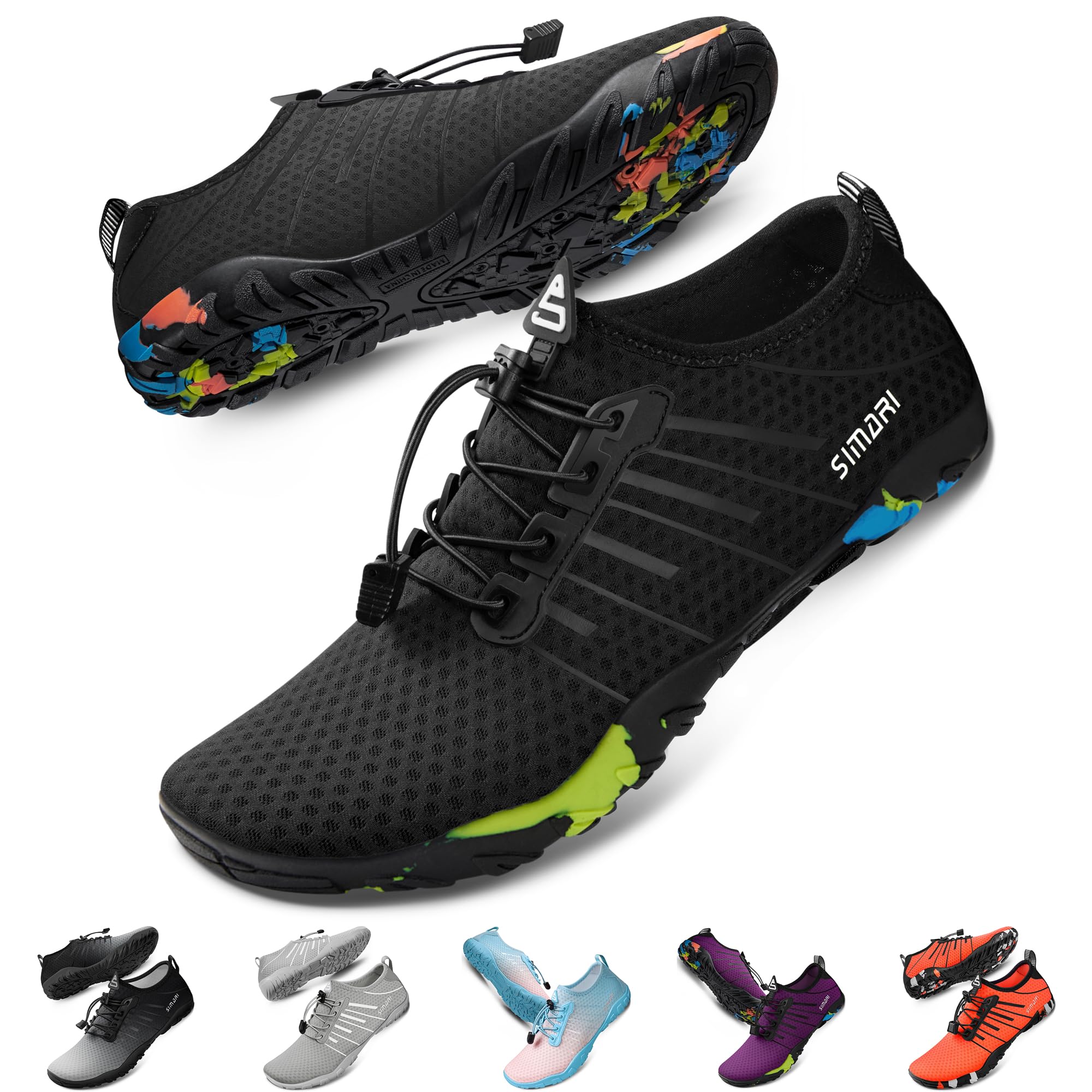
Key Features
- Sole Construction: Thin
- Drainage: Mesh upper
- Closure: Lace
- Durability Issue: Laces & mesh rip
- Price: $
The SIMARI aqua socks deliver a soft, sock-like comfort and a secure lace closure that fits true to size — ideal for a vacation’s worth of beach and pool lounging. However, the construction can show wear quickly: laces may fray, mesh can tear, and soles have been noted to separate after a handful of uses, making them a risky choice for anyone looking beyond a short getaway.
Pros
- Sock-like comfort that feels barely there on feet.
- True-to-size fit with a secure lace system.
Cons
- Laces, mesh, and sole attachments may degrade after moderate use.
Worth considering only if you need a budget-friendly shoe for a single beach or pool vacation and accept that it may not last beyond that trip.
Best for Water Aerobics
Racqua Barefoot Sport Shoe

Key Features
- Sole Construction: Thick
- Drainage: Mesh upper
- Closure: Drawstring
- Durability Issue: Insole glue fail
- Price: $
Racqua’s thick sole provides genuine protection on rocky riverbeds and boat ramps, with a sneaker-like look that works on the boardwalk. However, sizing is inconsistent—some buyers find it runs large—and the drawstrings and insole glue may fail sooner than expected. This makes it a capable budget option for occasional river hikes or water aerobics, but less suitable for all-day wear or those with hard-to-fit feet.
Pros
- Thick sole shields feet from sharp rocks and hot sand during river hikes and water aerobics.
- Athletic design looks like a real shoe, not a water sock, so it transitions from beach to boardwalk.
Cons
- Sizing runs large for some buyers; the included size chart may not correspond to actual fit.
Best suited for budget-conscious travelers who want one pair for light river hiking and casual boardwalk strolls, provided they order a half-size down to compensate for sizing variance.
Best for Budget Travel
Vsufim Barefoot Aqua Sock

Key Features
- Sole Construction: Thin
- Drainage: Mesh upper
- Closure: Elastic
- Durability Issue: Insole/mesh tear
- Price: $
The Vsufim aqua sock delivers comfortable wear in and out of water, with an elastic fit that stays put during active swimming. However, build quality is inconsistent — insoles may detach or mesh tear after moderate use, making this a short-trip option rather than a reliable everyday water shoe. Its limited traction further holds it back compared to the top budget picks in this category.
Pros
- Feet stay comfortable in and out of water without blisters.
- Elasticized opening keeps the shoe secure while wading or swimming.
Cons
- Insoles may detach or mesh can tear after moderate use.
Best for a single vacation or occasional pool lounging where long-term wear isn’t required.
Best for Casual & Kayak
Mishansha Drainage Swim Shoe
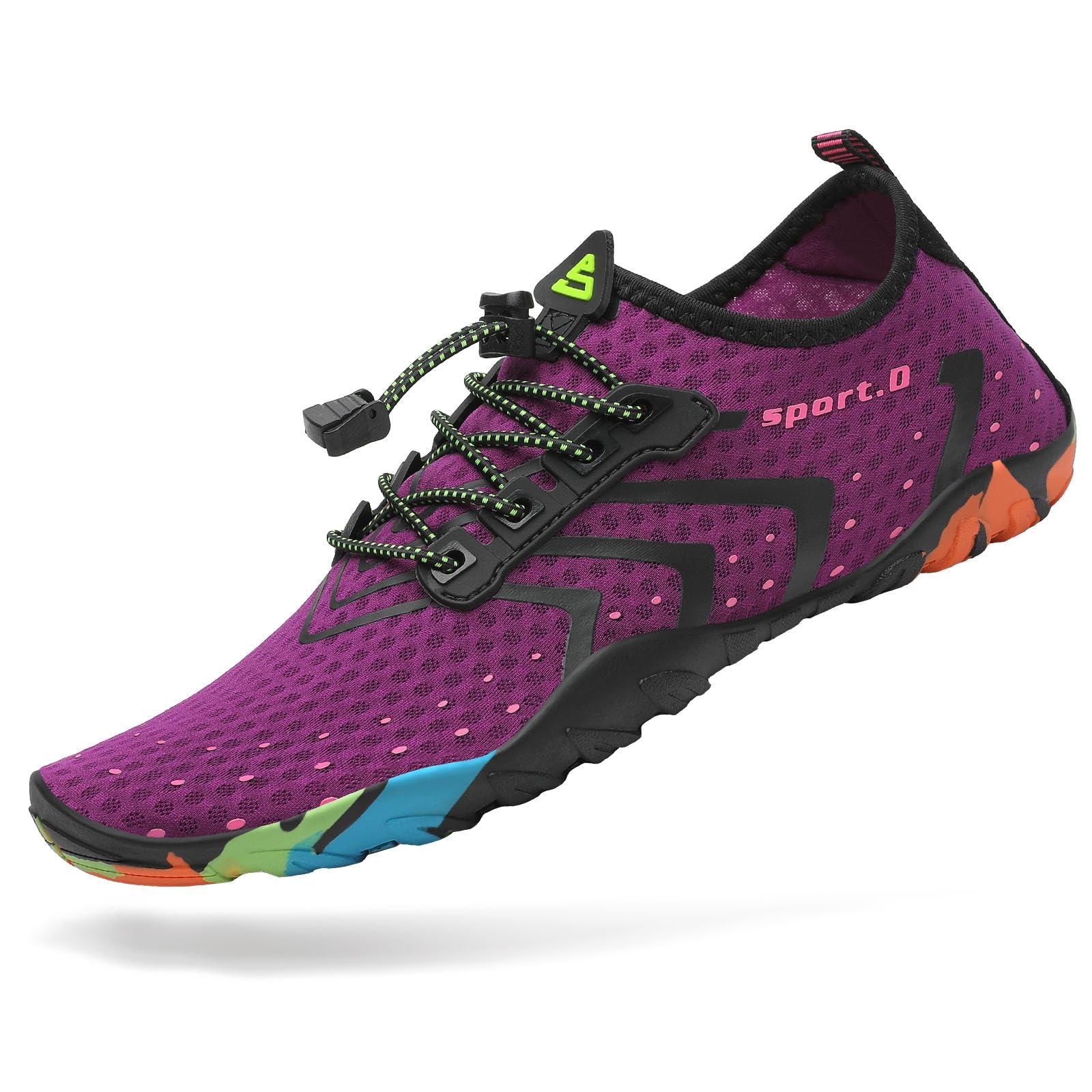
Key Features
- Sole Construction: Cushioned
- Drainage: Perforated sole
- Closure: Lace
- Durability Issue: Drawstring break
- Price: $$
The Mishansha takes a different path from the usual sock-like water shoes: it aims to pass as everyday footwear with its tennis-shoe silhouette and drainage holes. The soft upper and cushioned sole make it comfortable for a full day on your feet, and the water drains out quickly after a dip. That said, it’s a mid-range option where the price is harder to justify given that traction can be slippery on smooth wet surfaces like pool decks or boat floors, and durability may be average compared to better-value alternatives. This makes it a fit for lake or river kayaking where wet traction matters less, but less ideal for poolside or boat use.
Pros
- Comfortable and easy to walk in with soft upper and cushioned sole.
- Attractive tennis-shoe look that passes for casual wear.
Cons
- Slippery on smooth wet surfaces like pool decks or boat floors, and drawstrings may break in some cases.
Best for someone who wants a water shoe that doubles as casual footwear and can accept average wet traction and durability, especially for lake or river kayaking rather than pool decks.
How to Choose
The most important factor in a water shoe is not price or looks — it’s how the sole attaches to the upper, because that’s where failure starts.
Sole Construction
A thick, lugged sole protects your feet on rocky terrain but adds bulk. Thin, flexible soles feel more like a sock but offer little underfoot protection on gravel or oyster shells.
If you plan to walk on rough surfaces or do light hiking, look for a sole with visible tread and at least 5mm of rubber. For pool and sand, a thin sole is fine.
Drainage Design
Mesh uppers let water and sand escape quickly, which is essential for beach use. Perforated soles add drainage through the bottom but can trap small pebbles.
Good drainage means your shoes dry within minutes after leaving the water. Without it, you’ll be squishing around for hours.
Upper Material and Closure
Elastic or slip-on closures are convenient but loosen over time. Laces and straps provide a more secure fit, especially during active water sports like kayaking.
Drawstrings are common but are the first part to break — look for reinforced cords or velcro straps for longevity.
Overall Durability
Most cheap water shoes fail because the sole separates from the upper or the toe mesh rips. This is often due to poor adhesive and thin materials.
To avoid this, check whether the sole is stitched and glued. Also, note that removable insoles can bunch up when wet — gluing them down helps.
FAQ
Why do cheap water shoes fall apart so fast?
Most sub-$10 water shoes use thin mesh and low-quality glue that can’t handle repeated wetting and flexing. The sole separates from the upper after just a few wears. To get more than a single trip, spend at least $15 and look for stitched seams.
Are water shoes with drainage holes worth it for beach walking?
Drainage holes help water and sand exit quickly, which is useful on rocky shores where you walk in and out of the surf. On pure sand, they let sand in just as fast. They’re a plus if you plan to transition from water to pavement, but not essential for beach-only use.
How do I stop the insoles of my water shoes from moving around?
Removable insoles often shift when wet because water gets between the insole and sole. Remove them after each use, let both dry fully, and then reinsert while pressing firmly. Some users glue the insole with a small dab of silicone adhesive for a permanent fix.
Can I wear water shoes for hiking trails after the beach?
Only water shoes with a thick, lugged sole provide enough protection for hiking on rocky trails. Sock-style barefoot shoes offer no underfoot support and will wear out quickly on abrasive surfaces. If you need a dual-purpose shoe, choose one with a sneaker-like construction.