
This post contains affiliate links. We may earn a small commission when you buy through our links — at no extra cost to you.
Seasoned hikers know the cycle: a new pair of cushioned insoles feels springy at the trailhead, but by the halfway point your arches ache and the foam has thinned to a shadow of its former self. At the other extreme, a corrective orthotic can correct alignment yet deliver a punishing break-in period that sends you back to the car early. This tension between instant comfort and lasting structural support defines the hiking insole category.
What many hikers overlook is that a deep, sculpted heel cup stabilizes the foot under a loaded pack far more effectively than general cushioning. And because top fabric wears through long before the arch shell, treating hiking insoles as a replaceable piece of gear—not a one-time upgrade—shifts how you evaluate cost and weight.
Choosing an insole by arch height—and anticipating a break-in period of several day hikes—prevents the most common reason hikers abandon what would otherwise be a reliable support system.
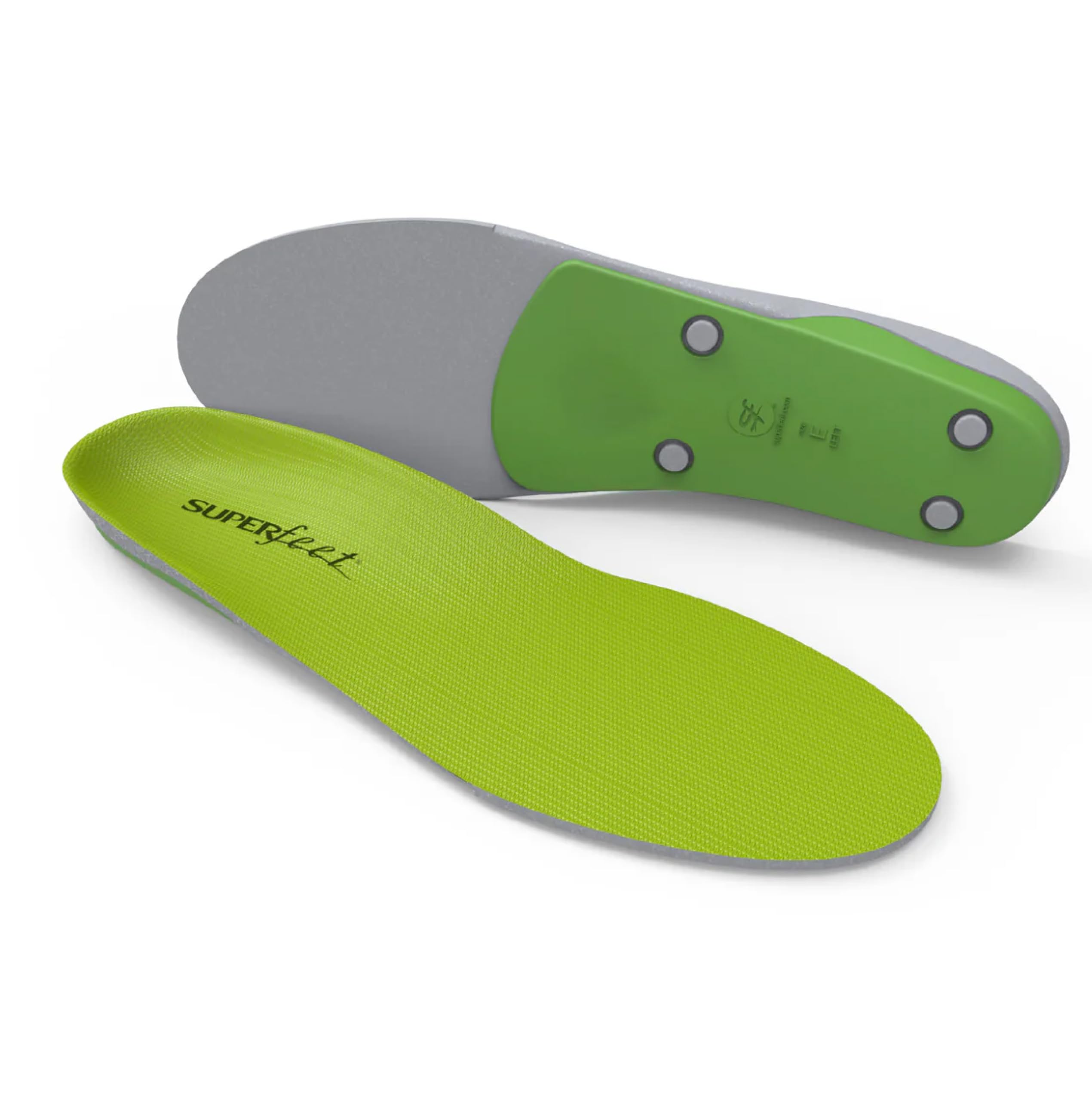


Best for High-Arch Backpacking
Superfeet Green
Key Features
- Arch Type: High
- Firmness: Firm
- Durability: Durable foam structure
- Footwear Volume: Full-length, trim-to-fit
- Heel & Shock Absorption: Deep heel cup, shock absorption
- Price: $$
The deep, sculpted heel cup and rigid high arch lock the foot in place under a loaded backpack, preventing the heel slip and instability that can lead to joint strain on rocky trails. Its high-density closed-cell foam resists packing out, so support stays consistent through long miles, and the moisture-wicking top cover helps keep feet dry. The tradeoff is a firm, unyielding feel under the ball of the foot that demands a gradual break-in over several hikes.
Backpackers and long-distance hikers with high arches will find the trade worthwhile. If you need maximum stability for heavy loads and are willing to endure a stiff break-in for an insole that won’t quit mid-trip, the Green fits. Hikers who prioritize plush step-in comfort right out of the box should consider the medium-arch option in this lineup instead.
Pros
- Excellent arch support stabilizes the foot, reducing knee and back stress on uneven terrain.
- Lasting relief for plantar fasciitis and back pain, even under heavy loads.
- Deep heel cup locks in the heel for secure, shock-absorbing stability when hiking with a pack.
Cons
- May produce a faint squeak or croaking noise as the arch support rubs against the shoe interior.
- Can feel uncomfortably firm under the ball of the foot during the break-in period; those used to plush cushioning will notice the lack of forefoot padding.
For high-arch backpackers who need a locked-in heel and structural support that won’t quit mid-trip, the Green earns its spot — provided you have the patience for a gradual break-in.
Best for Plantar Fasciitis
PowerStep Pinnacle
Key Features
- Arch Type: Moderate
- Firmness: Cushioned
- Durability: Top fabric may delaminate
- Footwear Volume: Standard volume shoes
- Heel & Shock Absorption: Plush heel cushioning
- Price: $$
Unlike orthotics built for rigid arch correction, the PowerStep Pinnacle focuses on plush, immediate relief for plantar fasciitis—its dual-layer cushioning quiets heel pain right out of the box, with no trimming needed. That makes it a strong choice for day hikers and weekend backpackers whose first priority is pain-free miles, not extreme stability under a heavy pack. The trade-off: the blue top fabric can begin to separate from the foam after a few months of trail use, so these are better treated as consumable therapeutic inserts rather than permanent orthotics.
Pros
- Immediate plantar fasciitis relief that often allows pain-free hiking from the first wear.
- Solid arch support that holds up under moderate pronation without collapsing.
- Comfortable right out of the box, ordered by shoe size—no trimming.
Cons
- The top fabric layer can peel away from the foam base after a few months of regular hiking.
For hikers with nagging heel pain, the PowerStep Pinnacle is a budget-friendly way to reclaim miles—just expect to replace them every season as the top fabric wears.
Best for Budget Flat Feet
WalkHero Arch Support
Key Features
- Arch Type: Low/flat
- Firmness: Firm
- Durability: Durable support
- Footwear Volume: Standard
- Heel & Shock Absorption: Deep heel cup, EVA
- Price: $
WalkHero insoles use a deep heel cup and a uniformly firm arch to stabilize flat feet, providing rigid support that rivals far more expensive orthotics. This approach avoids the sharp pressure points of aggressive medial posting found in some heavy-duty orthotics, instead offering steady, corrective alignment. Budget-focused hikers with plantar fasciitis will appreciate the significant pain relief and durable arch support, but the foam can feel rock-hard with minimal forefoot padding. On rocky descents, that firmness is jarring — a fair trade-off for the structural support at this price.
Pros
- Notable pain relief for plantar fasciitis and flat feet, often felt quickly.
- Firm arch support that competes with expensive custom orthotics.
- Durable construction holds up to a full hiking season of regular use.
Cons
- Arch placement sits too far forward for some foot shapes, reducing its corrective benefit.
- Minimal forefoot padding can make descents on rocky terrain feel jarring.
A corrective insole that prioritizes rigid arch support over cushioning — best for flat-footed hikers who need structural stability on a budget and can trade plush step-in feel for pain relief.
Best for High-Mileage Runs
Sof Sole Athlete
Key Features
- Firmness: Cushioned
- Durability: Durable foam, odor possible
- Footwear Volume: Athletic shoes
- Heel & Shock Absorption: Full-length cushioning
- Price: $$
Where the top pick uses a deep heel cup and rigid arch to lock the foot in place, the Sof Sole Athlete prioritizes bouncy comfort. The PU foam and gel layer absorb trail chatter with a soft landing that still resists bottoming out.
This insole suits high-mileage trail runners and fastpackers who value cushioning and energy return over aggressive arch support. The taller heel profile may raise your foot in low-volume shoes, so test fit before a long outing. Foot odor can develop with extended use despite the moisture-wicking cover — rinsing periodically keeps it in check.
Pros
- Soft, stable cushioning reduces impact on long runs and hikes without feeling squishy.
- Maintains support and comfort over many miles, outlasting cheaper foam alternatives.
- Fits most athletic shoes straight out of the box without trimming, saving setup time.
Cons
- Heel height can alter shoe fit, causing rubbing in the heel cup for some.
- Foot odor may build up over time, requiring more frequent cleaning than moisture-control claims suggest.
For long-distance trail running and fastpacking that demands soft, resilient cushioning, the Athlete delivers — just pair with well-ventilated shoes and occasional cleaning.
Best for Work Boot Hikers
Timberland PRO Anti-Fatigue
Key Features
- Arch Type: Low
- Firmness: Cushioned
- Durability: May flatten over time
- Footwear Volume: High volume boots
- Heel & Shock Absorption: Bounce-back cushioning
- Price: $$
Where slim-fit insoles prioritize a precise drop-in feel, the Timberland PRO Anti-Fatigue swaps rigidity for a bouncy shock absorption that eases the impact of long miles on hard-packed trails. That makes it a better match for spacious work boots than for low-volume trail shoes. Hikers who wear roomy Timberland boots and value leg fatigue reduction over arch support will notice the difference immediately. Fit can feel tight in snug footwear, and the cushioning may compress after months of heavy use, but the initial energy return remains strong on concrete and gravel surfaces.
Pros
- Shock-absorbing cushion eases foot fatigue on hard-packed surfaces.
- Drop-in fit revives Timberland work boots and extends their usable life.
- Noticeable reduction in leg and lower-limb pain during long days on your feet.
Cons
- Thick profile can make even wide boots feel tight, demanding extra interior volume.
- Cushioning may compress after a few months of heavy use, reducing rebound.
If you wear bulky Timberland boots and want to relieve leg fatigue on hard-packed trails, this insole delivers bounce-back comfort that lasts—as long as arch support isn’t on your list.
Best for Medium-Arch Hiking
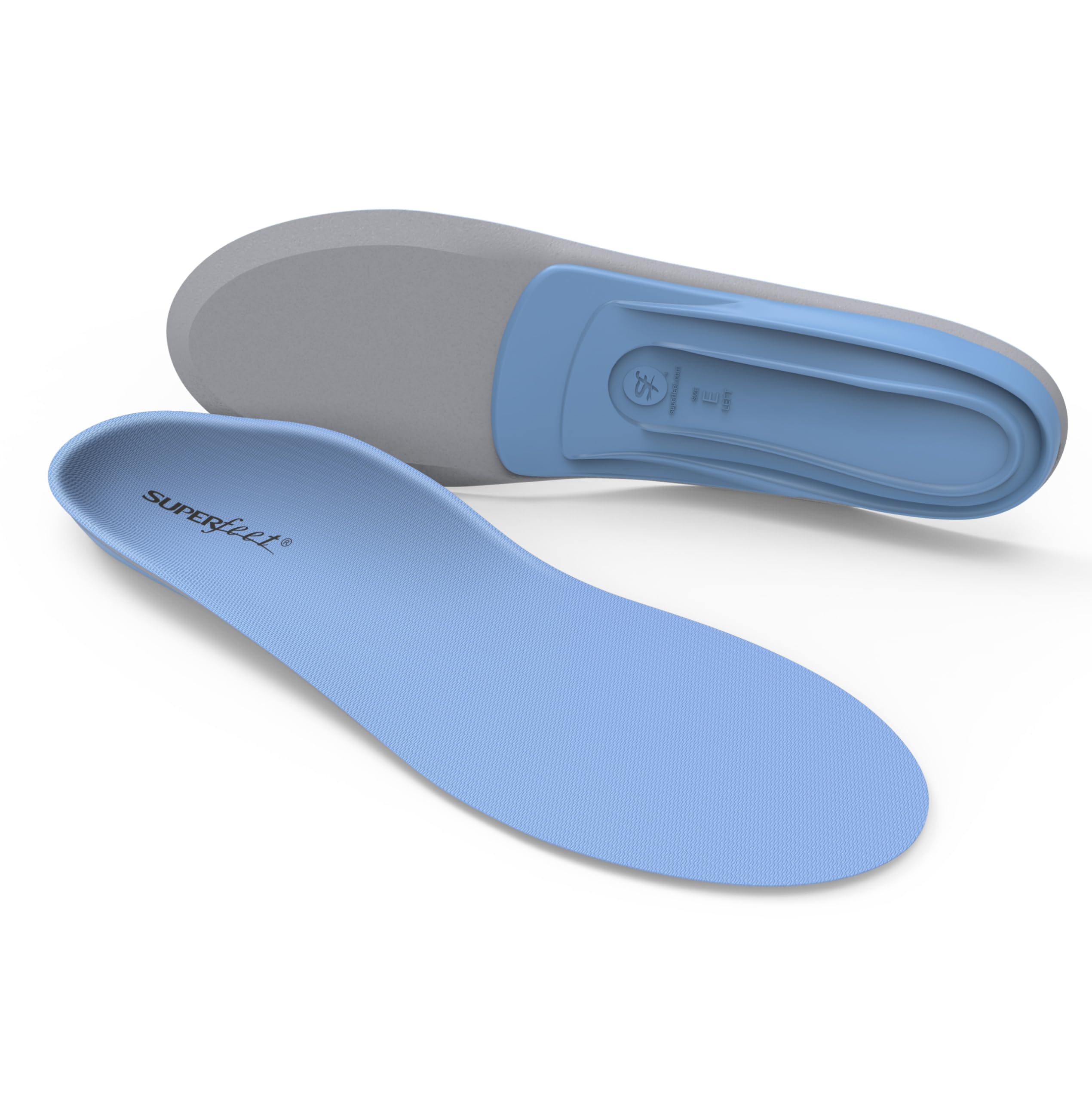
Superfeet Blue
Key Features
- Arch Type: Medium
- Firmness: Firm
- Durability: Durable construction
- Footwear Volume: Versatile volume
- Heel & Shock Absorption: Sculpted heel cup
- Price: $$
The Superfeet Blue insole provides steady medium arch support and lasting shape retention, a more adaptable alternative to the rigid high-arch top pick. Its sculpted heel cup and moisture-wicking top cover suit daily hikes, light backpacking, and multi-sport use on moderate terrain. The trim-to-fit design works across a range of footwear, and the dense foam resists flattening for over a year. Where it gives ground is forefoot cushioning: the ball of the foot gets minimal padding, so rocky trails can produce hot spots under the toes. Hikers who prioritize support over plush step-in comfort will find this a suitable insole for all-day wear on most trails.
Pros
- Medium arch support eases plantar fasciitis pain and foot fatigue on long days.
- Trim-to-fit design adapts to athletic shoes, boots, and hiking footwear without issues.
- Dense foam construction holds its shape for over a year of regular use.
Cons
- Forefoot padding is sparse, which can lead to hot spots under the ball of the foot on hard or rocky surfaces.
- The overall feel is firm, which may feel too hard for those who prefer plush cushioning.
For medium-arch hikers who need all-day support and durability without the aggressive correction of the top pick, the Superfeet Blue is a sensible, long-lasting choice. Just avoid overly rocky terrain if forefoot comfort is a priority.
Best for Severe Overpronation
PowerStep Pinnacle Maxx

Key Features
- Arch Type: Low/flat
- Firmness: Firm
- Durability: Top fabric may delaminate
- Footwear Volume: High volume
- Heel & Shock Absorption: Angled heel stability
- Price: $$$
PowerStep Pinnacle Maxx delivers immediate, aggressive arch correction for flat feet and overpronation, with pain relief comparable to custom orthotics. The top fabric can delaminate within weeks under abrasive trail use, limiting long-term durability. For heavy-duty work boots and hiking boots where arch collapse is the primary concern, the support remains compelling if you plan on occasional replacement.
Pros
- Aggressive arch support stabilizes flat feet and severe overpronation on uneven terrain.
- Immediate pain relief for plantar fasciitis and associated back strain.
Cons
- Top fabric can separate from the foam base within weeks of abrasive trail use.
For hikers with flat feet who prioritize pain relief and arch stability over long-term durability, the Pinnacle Maxx provides immediate correction in heavy-duty boots — just budget for eventual replacement.
Best for Budget Big/tall
Dr. Scholl’s Heavy Duty Support

Key Features
- Firmness: Cushioned
- Durability: Top wear, flattening
- Footwear Volume: Standard, wide feet
- Heel & Shock Absorption: Extra heel cushioning
- Price: $
These insoles absorb shock well under heavy loads, with a heel cushion that eases lower back and foot fatigue right out of the box. The generous design accommodates wide feet and big-and-tall frames comfortably. Durability is the catch: under repeated trail stress the top fabric can wear through sooner than expected, and squeaking may develop inside the shoe — making them more of a temporary comfort upgrade than a long-mileage solution.
Pros
- All-day comfort under heavy loads, with a sensation of walking on air.
- Relieves heel and lower back pain, even during extended wear.
Cons
- Arch placement may not suit flat feet, potentially causing discomfort over time.
For big and tall hikers who prioritize immediate heel cushioning and shock absorption over long-term durability, these are a practical stopgap that won’t break the bank.
Best for Keen Boot Refresh
KEEN Utility K20

Key Features
- Arch Type: Low/medium
- Firmness: Medium cushion
- Durability: Durable
- Footwear Volume: High volume
- Heel & Shock Absorption: Cushioned
- Price: $
The K20 cushioning revives worn Keen boots with factory-like comfort and provides noticeable anti-fatigue relief on hard surfaces. Thickness can steal toe volume, making boots feel snug, and the arch support stays low, which limits effectiveness for hikers with high arches or those needing all-day trail stability.
Pros
- Perfect drop-in replacement for Keen work boots, restoring cushion and fit.
- Anti-fatigue cushioning that eases leg strain on concrete and hard surfaces.
Cons
- Thicker profile can reduce toe room, causing snug fit or toe rub in some boots.
For Keen boot owners seeking a simple, budget-friendly refresh that mirrors the original cushioned feel, the K20 is a solid drop-in—just expect a tighter fit and modest arch support.
Best for Casual Short Hikes
Dr. Scholl’s Prevent Pain

Key Features
- Firmness: Cushioned
- Durability: Flattens quickly
- Footwear Volume: Standard
- Heel & Shock Absorption: Shock absorbing heel
- Price: $
Dr. Scholl’s Prevent Pain insoles deliver cushioned comfort and moderate arch support for everyday walking and gentle trails. The Tri-Protect foam relieves mild strain on knees and back, but it compresses faster than dedicated hiking insoles, so support fades under heavy use. They’re best for casual walkers, not backpackers tackling rugged terrain.
Pros
- Cushioning eases foot, knee, and back discomfort during daily wear and short walks.
- Flexible arch support adapts to walking and light activity.
Cons
- Support may flatten within weeks, reducing effectiveness for longer hikes.
For casual hikers covering short, moderate trails, these insoles offer an affordable way to reduce fatigue—but they’ll likely need frequent replacement.
How to Choose
The most overlooked factor in hiking insoles is heel stability under load, which does more to prevent fatigue than general cushioning.
Arch Type
High arches need a rigid orthotic with a pronounced bump to fill the gap; otherwise the foot collapses inward, stressing the plantar fascia. Low arches or flat feet require a medial post or angled heel to counter overpronation and prevent knee rotation.
A mismatched arch can create painful pressure points on the trail, and even a correct arch height may need a break-in period to let the foot adapt.
Firmness vs. Cushion
Firm insoles correct alignment but demand a break-in of several shorter hikes; wearing them for a full-day trip without conditioning leads to bruising under the arch. Cushioned insoles feel plush immediately but often flatten under repetitive impact, leaving you with the boot’s original thin liner by mile ten.
Durability and Top Fabric
Most hiking insoles fail at the top fabric before the arch structure. Look for moisture-wicking covers that resist peeling, and plan to replace insoles every 500–700 miles as a consumable layer—treating them as a wear item that protects the boot’s midsole.
Footwear Volume
Some insoles are bulky and raise the heel, tightening the fit of low-volume trail runners or approach shoes. If you have snug footwear, choose a low-profile orthotic that doesn’t require sizing up your boot, or be prepared to go a half-size larger to accommodate a thick insole.
Heel Stability and Shock Absorption
A deep, sculpted heel cup cups the calcaneus and prevents side-to-side wobble under a heavy pack, reducing ankle fatigue and improving proprioception on uneven terrain. Gel cushioning alone does not provide this lateral stability and may even increase movement if the heel isn’t locked in.
FAQ
Why do my hiking insoles squeak with every step and how do I stop it?
Squeaking is caused by friction between the hard plastic arch support and the shoe’s interior. To reduce it, apply a thin layer of silicone lubricant or a sprinkle of baby powder between the insole and the shoe bed, and make sure the insole is fully seated and trimmed to the correct outline so it doesn’t shift.
How many miles do aftermarket hiking insoles actually last before they need replacing?
Most hiking insoles lose meaningful support between 500 and 700 miles, with the top fabric often wearing thin first. Treat them as a semi-consumable and replace them before a long trip—once the cover peels or the arch flattens noticeably, the protective benefit is gone.
Should I size up my hiking boots to fit thick aftermarket insoles?
If the insole is over 5mm thick or adds significant volume, going up a half-size often prevents toe bang on descents. Test the fit with the insole in place before buying, and wear the same hiking socks you’ll use on trail to gauge the real-volume feel.
Can high-arch insoles make my feet hurt at first even if they’re supposed to help?
Yes, initial discomfort is normal as your foot adjusts to being supported in a new position. Break them in over several short walks, gradually increasing mileage, and pair them with padded socks to ease the transition—most pain disappears within a week or two.