
This post contains affiliate links. We may earn a small commission when you buy through our links — at no extra cost to you.
Many insoles promise all-day comfort but lose their cushioning within months, leaving you back where you started. Others are too stiff or too thick for your shoes, causing more discomfort than they solve.
The best insoles balance support, durability, and fit without breaking the bank. The real trade-off is between plush initial feel and long-term structure — soft gel wears out fast, while firmer orthotic designs last longer after a short break-in.
Whether you’re on concrete floors all day or dealing with plantar fasciitis, the right insole starts with matching your arch type and activity. This guide breaks down which designs deliver lasting relief and which ones you’ll be replacing too soon.



Best for Plantar Fasciitis Relief
PowerStep Pinnacle
Key Features
- Arch Support: Neutral
- Cushioning Type: Dual-layer foam
- Sizing Method: True-size
- Full-Length: Full
- Intended Use: Everyday/Work
- Price: $$
PowerStep Pinnacle targets plantar fasciitis and heel pain with a design that’s earned the endorsement of podiatrists and a high rate of satisfaction among users who stand or walk all day. The full-length, dual-layer cushioning supports moderate pronation without requiring any trimming — just order by shoe size. Comfort holds up well even after hours of wear, making it a reliable option for work boots, casual shoes, or athletic footwear.
This insole is best for those diagnosed with plantar fasciitis, heel spurs, or general arch fatigue who need structured support rather than soft cushioning. It’s less suited for very flat feet that require extreme arch height. A known tradeoff: the top-layer lining can separate from the foam base after a few months of daily use in occasional units, so durability is not guaranteed across every pair.
Pros
- Targeted pain relief for plantar fasciitis and heel pain
- Podiatrist-endorsed arch support for moderate pronation
- High-quality build with dual-layer cushioning for all-day comfort
Cons
- Top layer may separate from the foam base after several months of daily use
- Not enough arch height for those with very flat feet
The immediate pain relief and podiatrist backing make it a strong choice for plantar fasciitis, but the occasional delamination means it favors symptom relief over long-term durability.
Best for Plantar Fasciitis Budget
WALK·HERO Plantar Insoles
Key Features
- Arch Support: Low/Flat
- Cushioning Type: EVA foam
- Sizing Method: True-size
- Full-Length: Full
- Intended Use: Work
- Price: $
Consistent plantar fasciitis relief is the hallmark of these insoles, offering firm arch support at a budget-friendly price. While the top pick leans on clinical backing, WALK·HERO delivers extreme rigidity that flat-footed users often prefer — a key differentiator for those seeking maximum stability over plush comfort. The stiffness is deliberate: a deep heel cup and strong arch hold the foot in place, but the break-in period can be uncomfortable for anyone used to softer insoles. Best for flat-footed individuals with plantar fasciitis who prioritize support and value; not ideal for high arches or those wanting cushioning.
Pros
- Effective pain relief for plantar fasciitis at a budget-friendly price.
- Strong arch support specifically designed for flat feet.
- Cost-effective alternative to premium orthotics.
Cons
- Very stiff — may cause discomfort during break-in for those used to softer insoles.
A smart budget pick for plantar fasciitis sufferers with flat feet who value firm support over cushioning — just be prepared for a stiff break-in.
Best for Heavy Duty Work
VALSOLE Heavy Duty
Key Features
- Arch Support: High
- Cushioning Type: Firm foam
- Sizing Method: True-size
- Full-Length: Full
- Intended Use: Work
- Price: $$
VALSOLE’s Heavy Duty insoles deliver high arch support specifically rated for individuals over 220 lbs, with a firm base that absorbs shock well in work boots. Unlike the squeaky competitor in this class, these insoles stay quiet while providing the stability heavier frames need.
Best suited for larger men and women with high arches or plantar fasciitis who need reliable support without excessive cushion. The narrow cut means those with wide feet or who prefer soft padding should look elsewhere, and the foam can show compression after months of daily use.
Pros
- Heavy duty support designed for individuals over 220 lbs
- High arch relief helps with plantar fasciitis pain
- Build quality exceeds budget alternatives
Cons
- Narrow profile may not accommodate wide feet
- Foam can compress over time with heavy daily use
For heavy individuals who need firm arch support and don’t have wide feet, these insoles offer strong value at a mid-range price.
Best for Recreational Sports
Dr. Scholl’s Sport
Key Features
- Arch Support: Medium
- Cushioning Type: Gel/foam
- Sizing Method: Trim-to-fit
- Full-Length: Full
- Intended Use: Sports
- Price: $
Dr. Scholl’s Sport provides a flexible, trim-to-fit design with solid arch support and cushioning that suits gym sessions, court sports, and fitness classes. It’s a noticeable upgrade from basic stock insoles at a low price point, offering better energy return for lateral movements. However, the shock absorption is tuned for moderate impact — high-mileage runners and those managing severe plantar fasciitis will find it lacking. This is best for casual athletes who want functional support without breaking the bank.
Pros
- Comfortable cushioning with good arch support for gym and court activities.
- Trims to fit a wide range of athletic shoes.
Cons
- Shock absorption may be insufficient for high-mileage running or heavy impact.
For recreational athletes who play basketball, lift, or take fitness classes, this is a cost-effective way to improve comfort and support — just don’t expect it to handle serious running mileage.
Best for High Arches Outdoor
Superfeet Green High Arch
Key Features
- Arch Support: High
- Cushioning Type: Foam
- Sizing Method: Trim-to-fit
- Full-Length: Full
- Intended Use: Outdoor
- Price: $$$
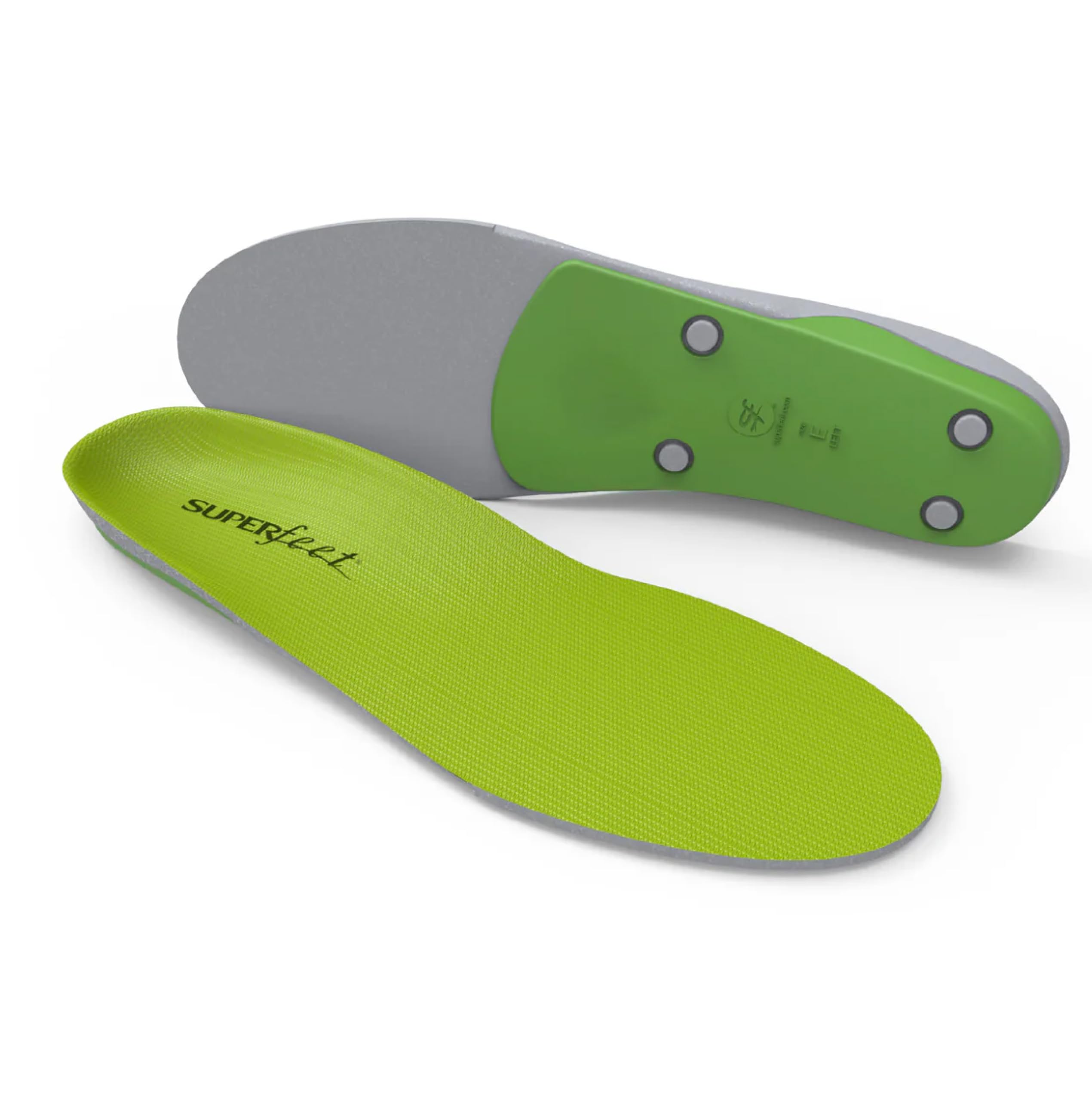
Superfeet Green insoles deliver the most sculpted arch support and deepest heel cup among non-custom options, with a rigid shell that holds its shape over time. That firmness means a noticeable break-in period — some find the first week uncomfortable. These suit high-arched feet, plantar fasciitis sufferers willing to tolerate stiffness, and outdoor enthusiasts who prioritize structure over plushness.
Pros
- Deep, sculpted arch support for high arches
- Pain relief for plantar fasciitis and back pain
- Durable construction outlasts many competitors
Cons
- Very firm – can be uncomfortable during the first week of wear
- Premium price with less cushioning compared to similarly priced alternatives
Best for high-arched, active users who can tolerate a stiff insole — the top pick PowerStep offers comparable relief without the break-in adjustment.
Best for Firm Arch Support
PowerStep Original
Key Features
- Arch Support: Neutral
- Cushioning Type: Firm foam
- Sizing Method: True-size
- Full-Length: Full
- Intended Use: Running/Everyday
- Price: $$
PowerStep Original fits into snug footwear where thicker insoles won’t go, while still providing firm arch support that eases plantar fasciitis pain and mild pronation. That low-profile build means less cushioning than the top pick — the tradeoff is a deliberately stiff feel that some users find uncomfortable.
This insole suits runners or daily walkers with neutral arches who need reliable support in shoes with limited internal space. It is less forgiving for those who prefer soft plushness underfoot, and the arch support can break down over extended heavy use.
Pros
- Relieves plantar fasciitis discomfort in tight-fitting shoes
- Contoured neutral arch support with deep heel cradle for stable gait
- Budget-friendly alternative to custom orthotics without sacrificing structure
Cons
- Firmness may feel hard underfoot for those accustomed to cushioned insoles
- Arch support can degrade over time with daily heavy use
PowerStep Original is the right call for tight shoes and neutral arches that need firm support — provided you don’t mind a stiff feel and are okay with tradeoffs in long-term durability.
Best for Work Comfort
Dr. Scholl’s Work All-Day
Key Features
- Arch Support: Medium
- Cushioning Type: Gel
- Sizing Method: Trim-to-fit
- Full-Length: Full
- Intended Use: Work
- Price: $
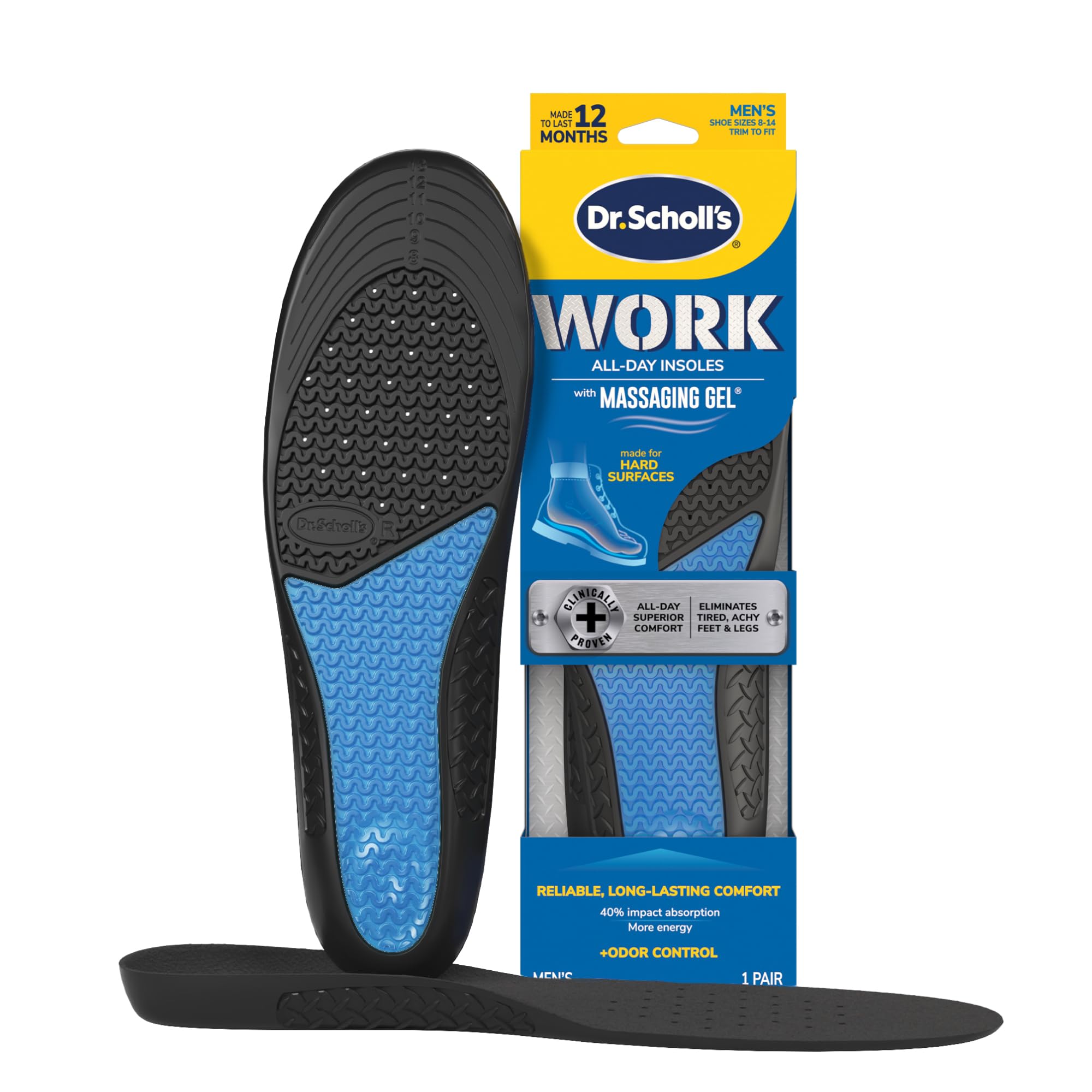
These insoles provide instant comfort for anyone standing on hard surfaces all day, with an affordable price and effective arch support for many. The tradeoff is that the cushioning can lose its shape within four to six months of daily use, making them a short-term fix rather than a long-term support solution.
Pros
- Immediate comfort and pain relief for work-day foot fatigue
- Excellent value for money
Cons
- Cushioning can flatten within a few months of daily use
Ideal for budget-conscious workers needing quick relief for a few months, but not for those expecting long-lasting support.
Best for Boot Anti-Fatigue
Timberland PRO Anti-Fatigue

Key Features
- Arch Support: Low
- Cushioning Type: Foam
- Sizing Method: Trim-to-fit
- Full-Length: Full
- Intended Use: Work
- Price: $$
The Timberland PRO Anti-Fatigue insole reduces foot fatigue for long hours on concrete floors inside Timberland PRO boots. Fit becomes inconsistent when used in other footwear, and the arch support is minimal — best kept within the brand’s own boots.
Pros
- Specifically tailored for Timberland PRO boots to deliver lasting comfort.
- Durable build with effective anti-fatigue technology for long workdays.
Cons
- Fit can be inconsistent in non-Timberland footwear — trimming may not resolve the issue.
A specialized replacement insole for Timberland PRO boot owners who stand on concrete all day, but not a general-purpose option due to fit and arch limitations.
How to Choose
The right insole starts with matching your arch type to your activity, because support that works for standing all day can feel wrong for running.
Arch Support Height and Rigidity
Arch support is the backbone of any insole. Low arch support suits flat feet by cradling the foot, while high rigid support lifts a high arch to reduce strain. Medium or neutral options work for most people.
The trade-off: firmer arch support often requires a break-in period of a few days to a week. Soft arch support feels comfortable immediately but can collapse under heavy use, leading to foot fatigue faster.
Cushioning Type
Gel cushioning delivers immediate plushness but compresses over time, typically flattening within 4-6 months of daily wear. Foam cushioning, especially dual-layer or closed-cell, holds its shape longer but feels firmer.
For work boots or long walks, a firmer foam with shock absorption prevents energy loss. For casual sneakers, gel may be enough if you don’t mind replacing them seasonally.
Sizing Method: Trim-to-fit vs True-size
Trim-to-fit insoles come in a universal size that you cut down. This works for most shoes but can lead to uneven edges or poor fit if you cut incorrectly. True-size insoles are ordered by shoe size and require no trimming — they fit consistently right out of the box.
The hidden cost: trim-to-fit insoles often have a thicker base that can crowd narrow shoes. True-size insoles are precision-cut but limit interchangeability between different shoe brands.
Full-Length vs 3/4-Length Design
Full-length insoles replace your entire factory insole, providing support from heel to toe. They’re best for shoes with removable insoles and offer the most stability. 3/4-length insoles sit under the arch and heel, leaving the toes free — ideal for tight shoes or those with non-removable footbeds.
Most buyers prefer full-length because it prevents the insole from sliding and provides even pressure distribution. 3/4-length is a niche solution for specific footwear like dress shoes or boots with shallow toe boxes.
Intended Activity
Work insoles prioritize shock absorption and cushioning for hard surfaces like concrete. Sports insoles need lateral support and flexibility for quick movements. Everyday insoles balance both but excel at neither.
Using a running insole for standing all day can lead to premature flattening because the foam is tuned for impact, not sustained pressure. Match the insole to your primary activity to get the right material density and support profile.
FAQ
Why do my new insoles make my shoes too tight?
Insoles add thickness, especially full-length ones. If your shoes originally had thin factory insoles, swapping in a cushioned orthotic reduces interior space. Remove the original insole first, and choose insoles with a lower profile if your shoes are already snug. Trim-to-fit insoles can also be cut to a narrower shape to ease pressure.
How long do PowerStep insoles really last before they need replacing?
PowerStep insoles typically last 6-8 months of daily use before the top layer starts separating or the arch support loses stiffness. Some users report delamination within 4 months, but this is not universal. Rotating between two pairs can extend lifespan. If you notice the heel cup feeling shallow or the foam losing its bounce, it’s time for a replacement.
Can insoles for plantar fasciitis be used for running too?
Yes, but choose a model designed for impact. Plantar fasciitis insoles like PowerStep Pinnacle or WALK·HERO have firm arch support that controls pronation, which helps runners with flat feet. However, they lack the forefoot cushioning of dedicated running insoles. For high-mileage running, a hybrid insole with gel in the forefoot may be more comfortable.
What’s the difference between Dr. Scholl’s Work and Sport insoles?
Work insoles focus on standing comfort with massaging gel and pressure distribution for hard floors. Sport insoles prioritize lateral support and shock absorption for movement. The Work line has a thicker heel cushion, while the Sport line has a flexible arch that accommodates pivoting. Use Work if you stand all day; use Sport if you run or play court sports.